OnePlus 15R vs Nothing Phone (3)

OnePlus
Nothing
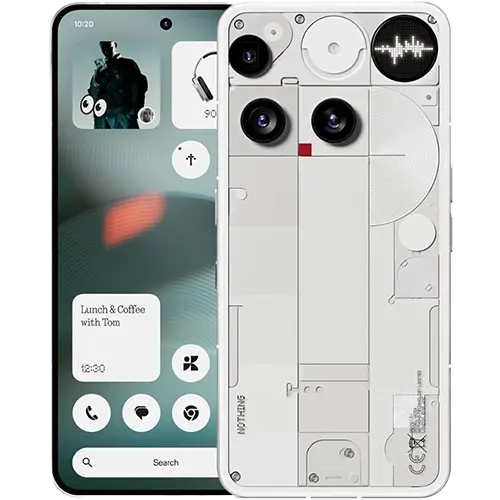
15R
Phone (3)
Ranked #28 of 60
Ranked #37 of 60
Overall
Overall
The OnePlus 15R is a $699.99 upper-midrange phone built around a large battery and fast charging, paired with a flagship-tier processor. It's aimed at people who want strong everyday performance and marathon battery life without paying flagship prices. The Nothing Phone (3) costs $799 and positions itself as a more complete camera and design package, with a three-lens rear system including a dedicated telephoto and Nothing's signature aesthetic. The $100 price gap is meaningful enough to matter but not so large that these phones serve entirely different audiences.
The OnePlus 15R wins on battery life by a wide margin, charges faster, and runs a more powerful chipset. Its display gets dramatically brighter in HDR content. The Nothing Phone (3) has a substantially better camera system across the board, particularly for zoom and color accuracy. Its speaker produces cleaner audio, its touch latency is lower, and it offers wireless charging.
Here’s how the two phones compare in our thorough testing.
Design
| OnePlus 15R | Nothing Phone (3) | |
|---|---|---|
| Specifications | ||
| Dimensions | 163.4 x 77 x 8.1 mm | 160.6 x 75.6 x 9 mm |
| Weight | 213g | 218g |
| IP Rating | IP68/IP69K | IP68 |
| Frame | Aluminum | Aluminum |
| Front | Gorilla Glass 7i | Gorilla Glass 7i |
| Back | Glass / Fiber-reinforced plastic | Gorilla Glass Victus |
| Screen-to-body ratio | 88.8% | 89.0% |
The OnePlus 15R measures 163.4 x 77 x 8.1mm and weighs 213g. The Nothing Phone (3) is slightly shorter and narrower at 160.6 x 75.6mm but thicker at 9mm and a touch heavier at 218g. Both use aluminum frames and Gorilla Glass 7i on the front. The backs differ: the OnePlus 15R uses a combination of glass and fiber-reinforced plastic, while the Nothing Phone (3) has Gorilla Glass Victus on the rear.
The OnePlus 15R carries IP68 and IP69K ratings, meaning it's rated for submersion plus high-pressure, high-temperature water jets. The Nothing Phone (3) has IP68 only, which covers submersion to rated depth but not pressurized spray. Screen-to-body ratios are close: 88.8% for the OnePlus 15R and 89% for the Nothing Phone (3), so bezel thickness should look similar. Aspect ratios differ slightly at 19.8:9 versus 20.1:9, making the Nothing Phone (3) marginally taller and narrower in proportion.
Bandicoot Lab doesn't formally test design or durability, so these are paper specs. Everything else below is tested using lab equipment.
Display
| OnePlus 15R | Nothing Phone (3) | |
|---|---|---|
663/ 881 | 525/ 881 | |
Both phones have AMOLED panels, but they differ in several respects. The OnePlus 15R has a 6.78-inch display at 1264 x 2780 resolution (450 pixels per inch) with a 60–165Hz adaptive refresh rate. The Nothing Phone (3) runs a 6.7-inch panel at 1080 x 2412 (460 PPI) with a 30–120Hz refresh range. Pixel density is close enough that sharpness will look similar in everyday use. The higher 165Hz ceiling on the OnePlus 15R means smoother motion in games and scrolling compared to the Nothing Phone (3)'s 120Hz cap, though whether you'll notice the difference between 120 and 165Hz depends on the content.
Manual brightness is effectively identical: 788 nits for the OnePlus 15R and 790 nits for the Nothing Phone (3). HDR peak brightness is where the two diverge sharply. The OnePlus 15R reaches 3,158 nits at peak, nearly double the Nothing Phone (3)'s 1,602 nits. Small bright elements in HDR video will pop much more on the OnePlus 15R. The Nothing Phone (3) holds 98.7% of its peak brightness over window sizes, which is easier given it has a lower peak brightness. The OnePlus 15R drops to 68.4% of its peak at large window sizes, but even that throttled brightness is higher than the Nothing’s peak.
Color accuracy is better on the OnePlus 15R. In its best calibrated mode, colors drift only slightly from reference, with an average deviation about half of what the Nothing Phone (3) produces. The Nothing Phone (3)'s display has more visible color drift, particularly at the extremes. Neither phone covers the full Display P3 gamut in its most accurate mode: the OnePlus 15R hits 75.1% P3 coverage and the Nothing Phone (3) reaches 71.3%.
Touch latency on the Nothing Phone (3) averages 13.6ms, versus 24.1ms on the OnePlus 15R. In fast-paced games or rapid scrolling, the Nothing Phone (3) will feel more immediately responsive to input.
Performance
| OnePlus 15R | Nothing Phone (3) | |
|---|---|---|
683/ 1012 | 553/ 1012 | |
The OnePlus 15R runs Qualcomm's Snapdragon 8 Gen 5 with 12GB of RAM. The Nothing Phone (3) uses the previous-generation Snapdragon 8 Gen 3 with 12GB or 16GB of RAM depending on configuration.
The generational gap shows up clearly in benchmarks. The OnePlus 15R scores 2,862 single-core and 9,555 multi-core in GeekBench 6, compared to 2,209 and 6,992 for the Nothing Phone (3). That's roughly a 30% advantage in single-core and 37% in multi-core. In GPU testing, the OnePlus 15R posts a peak Wild Life Extreme score of 5,079 with 71% stability, while the Nothing Phone (3) manages 4,459 at 64.4% stability. The OnePlus 15R also runs cooler under load, peaking at 42.6°C versus 48°C for the Nothing Phone (3). In Solar Bay ray tracing, the gap is similar: 9,244 versus 8,126 peak, with 69.6% versus 61.7% stability.
Browser performance is close: Speedometer scores of 18 for the OnePlus 15R and 20.6 for the Nothing Phone (3). The Nothing Phone (3) edges ahead here, meaning web browsing and web-app performance should feel similar or slightly smoother on the Nothing.
In daily use, the CPU difference will be felt when loading apps or doing anything that taxes a single core. The GPU gap matters in demanding 3D games, where the OnePlus 15R will hold higher frame rates more consistently and run cooler doing it.
Camera
| OnePlus 15R (Overall) | Nothing Phone (3) (Overall) | |
|---|---|---|
| Specifications | ||
| Main | 50MP, f/1.8, 24mm, 1/1.56" | 50MP, f/1.7, 24mm, 1/1.3" |
| Ultrawide | 8MP, f/2.2, 16mm, 1/4.0" | 50MP, f/2.2, 15mm, 1/2.76" |
| Telephoto | — | 50MP, f/2.7, 72mm, 1/2.75" |
| Front | 32MP, f/2, 25mm | 50MP, f/2.2, 25mm, 1/2.76" |
The OnePlus 15R has a 50 megapixel f/1.8 main sensor (1/1.56-inch), an 8 megapixel ultrawide, no telephoto, and maxes out at 20x digital zoom. The Nothing Phone (3) has a 50 megapixel f/1.7 main sensor on a larger 1/1.3-inch chip, a 50 megapixel ultrawide, a 50 megapixel 3x telephoto, and extends to 60x digital zoom. The Nothing Phone (3) is the stronger camera phone by a considerable margin.
At longer zoom levels, the Nothing Phone (3) resolves far more detail than the OnePlus 15R, which is cropping digitally from its main sensor. At maximum zoom, the OnePlus 15R's 20x output is soft enough to be useful only for framing reference, while the Nothing Phone (3) holds usable detail well past that point. Even at 60x, the Nothing Phone (3) produces images with more resolved detail than the OnePlus 15R manages at 20x.
Main
| OnePlus 15R (Main) | Nothing Phone (3) (Main) | |
|---|---|---|
360/ 722 | 572/ 722 | |
The Nothing Phone (3)'s main camera is sharper in bright and mid lighting, resolving considerably more detail than the OnePlus 15R. In dark conditions, the OnePlus 15R pulls ahead on sharpness. The OnePlus 15R applies heavy computational sharpening in low light that boosts measured detail, while the Nothing Phone (3)'s approach is more conservative as light drops.
Color tuning differs meaningfully. The Nothing Phone (3) produces nearly neutral saturation in bright light and only slightly muted colors as light dims. Its hue accuracy is strong across all three lighting conditions, and the processing maintains consistent color balance without significant bias shifts between bright, mid, and dark scenes. The OnePlus 15R pushes saturation higher in bright light, creating a more vivid look. Its hue accuracy is moderate in good light but degrades significantly in dark conditions, where colors shift noticeably toward warm pink-magenta tones. That warm push in low light intensifies as the light drops and gets warmer, suggesting the white balance pipeline overcorrects under tungsten-like conditions.
Skin tones show the same pattern. The Nothing Phone (3) renders faces with moderate accuracy across lighting conditions. The OnePlus 15R produces large skin tone errors in both bright and mid light, partly reflecting its saturation boost rather than hue confusion.
The Nothing Phone (3) preserves more detail in both shadows and highlights in high-contrast scenes, resulting in images that look more natural and less compressed. The OnePlus 15R clips highlights earlier and retains less depth in challenging lighting.
Ultrawide
| OnePlus 15R (Ultrawide) | Nothing Phone (3) (Ultrawide) | |
|---|---|---|
421/ 722 | 549/ 722 | |
The Nothing Phone (3) uses a 50-megapixel ultrawide at 15mm, while the OnePlus 15R has an 8-megapixel unit at 16mm. The resolution gap is large and shows in results: the Nothing Phone (3)'s ultrawide resolves substantially more detail across all lighting conditions. This is the kind of difference you can see without pixel-peeping.
Color accuracy on the Nothing Phone (3)'s ultrawide is better across the board. The OnePlus 15R's ultrawide follows the same pattern as its main lens, with reasonable hue accuracy in bright light that deteriorates significantly in dark conditions, with a strong warm shift as lighting gets dimmer. The Nothing Phone (3)'s ultrawide keeps color bias fairly low across all conditions, with only a mild warm lean in dark scenes.
Skin tone accuracy on the OnePlus 15R's ultrawide is poor in bright light but improves as light dims. The Nothing Phone (3) also shows elevated skin tone error in bright light, though less so, and improves substantially in mid and dark conditions.
Dynamic range is similar between the two. Both retain a comparable amount of usable range, with highlights clipping at roughly similar points. The Nothing Phone (3) has a slight advantage in shadow retention, but the gap is smaller here than on the main cameras.
Telephoto
| OnePlus 15R (Telephoto) | Nothing Phone (3) (Telephoto) | |
|---|---|---|
| — | 584/ 722 | |
The OnePlus 15R doesn't have a telephoto lens. Everything beyond its native focal length is a digital crop from the main sensor. The Nothing Phone (3) has a dedicated 50 megapixel 3x telephoto with f/2.7 aperture and a 1/2.75-inch sensor.
At the 3x telephoto's native focal length, the Nothing Phone (3) resolves high detail in bright light and maintains strong output in mid conditions. Dark performance drops, as you'd expect from a smaller sensor at a longer focal length, but it still produces usable images. Color from the telephoto lens is the best of any camera on either phone. Saturation runs slightly vivid in bright and mid light but hues stay accurate, and skin tones are rendered with low error across all conditions. There's minimal color bias shift across lighting, indicating both good sensor behavior and well-tuned white balance.
The telephoto holds detail in highlights and shadows comparably to the main lens. It gives the Nothing Phone (3) a clear compositional advantage that the OnePlus 15R cannot match at any zoom level.
Front
| OnePlus 15R (Front) | Nothing Phone (3) (Front) | |
|---|---|---|
484/ 722 | 673/ 722 | |
The Nothing Phone (3) has a 50-megapixel front camera, while the OnePlus 15R uses a 32-megapixel sensor. Both shoot at f/2-ish apertures with similar focal lengths.
Sharpness strongly favors the Nothing Phone (3) in bright and mid lighting. The gap narrows in dark conditions but the Nothing Phone (3) still leads. Both phones produce good front camera sharpness overall, but the Nothing Phone (3) is a step above.
Color on the front cameras diverges. The Nothing Phone (3) produces close-to-neutral saturation and maintains fairly consistent hue accuracy across lighting levels. In bright light, it leans slightly cool with a minor pink bias, but this corrects itself in mid and dark conditions. Skin tones show moderate error across the board but nothing dramatic. The OnePlus 15R's front camera produces heavily oversaturated output in bright light and muted output in dark conditions. Skin tone error is high in bright light but low in mid and dark conditions, which is the reverse of most phones. Hue accuracy is good in bright and mid light but drops in dark conditions with a noticeable warm shift.
The Nothing Phone (3)'s front camera retains more detail across the tonal range, preserving both highlights and shadows better in high-contrast selfie lighting. Video stabilization is better on the OnePlus 15R's front camera; the Nothing Phone (3)'s front video shows more residual motion.
Battery
| OnePlus 15R | Nothing Phone (3) | |
|---|---|---|
655/ 836 | 593/ 836 | |
The OnePlus 15R packs a 7,400mAh battery, nearly 50% larger than the Nothing Phone (3)'s 5,000mAh cell. That capacity difference translates directly into endurance.
In video playback, the OnePlus 15R lasted 44.2 hours versus 27.5 hours for the Nothing Phone (3). That's roughly an extra full day of continuous video. In web browsing over five hours, the OnePlus 15R drained 22% compared to 30% for the Nothing Phone (3). Gaming drain during a 20-loop stress test took 19% from the OnePlus 15R and 28% from the Nothing Phone (3). Standby is the one area where the Nothing Phone (3) excels — it lost just 1% overnight in eight hours, while the OnePlus 15R drained 12%. Something in the OnePlus 15R's idle power management is burning battery at a rate that's hard to justify.
The OnePlus 15R's 44-hour video runtime means you could comfortably get two full days of mixed use from a single charge, pushing into a third day with light use. The Nothing Phone (3)'s 27.5 hours is solid but more of a reliable one-day phone.
Charging
| OnePlus 15R | Nothing Phone (3) | |
|---|---|---|
356/ 837 | 268/ 837 | |
The OnePlus 15R supports 80W wired charging. The Nothing Phone (3) supports 65W wired and 15W wireless.
At 10 minutes, the OnePlus 15R reaches 26% while the Nothing Phone (3) hits 22%. Given that the OnePlus 15R's battery is 7,400mAh versus 5,000mAh, that 26% represents substantially more energy delivered in the same time. At 30 minutes, both phones land at 63%, which again means the OnePlus 15R has charged a much larger battery to the same percentage.
Wireless charging on the Nothing Phone (3) is slow at 15W: 4% after 10 minutes and 10% after 30 minutes. It's a convenience feature for overnight top-ups, not something you'd rely on for a quick boost. The OnePlus 15R doesn't offer wireless charging.
Speaker
| OnePlus 15R | Nothing Phone (3) | |
|---|---|---|
533/ 897 | 652/ 897 | |
The Nothing Phone (3) reaches 73.1 dBA at maximum volume, slightly louder than the OnePlus 15R's 71.5 dBA. The difference of 1.6 dBA won't be dramatic in most situations.
The two separate meaningfully on distortion. The Nothing Phone (3) produces average total harmonic distortion of 3.46%, while the OnePlus 15R measures 15.98%. The OnePlus 15R's speaker sounds noticeably dirtier at higher volumes, with audible harshness creeping into vocals and percussion. The Nothing Phone (3) stays clean.
The Nothing Phone (3)'s speaker character leans toward clarity and cleanliness over bass depth. Its low-frequency extension doesn't reach as far, with bass rolling off earlier than the OnePlus 15R. The OnePlus 15R has slightly fuller low-end output but produces much higher distortion. For clean, undistorted audio from the phone's speakers, the Nothing Phone (3) is clearly preferable.
Microphone
| OnePlus 15R | Nothing Phone (3) | |
|---|---|---|
497/ 1220 | 437/ 1220 |
Both phones produce below-average microphone quality. The OnePlus 15R is slightly better, with a more even frequency response, but neither phone stands out. Voice recordings and calls will be acceptable on both, but microphone quality is not a strength of either device.
Other
| OnePlus 15R | Nothing Phone (3) | |
|---|---|---|
| Biometrics | 663/ 1181 | 504/ 1181 |
| Data Transfer | 120/ 943 | 102/ 943 |
| Specifications | ||
| Biometric type | Fingerprint | Fingerprint |
| Ports | USB-C 2.0 | USB-C 2.0 |
| Storage | 256GB, 512GB | 256GB, 512GB |
The OnePlus 15R uses an ultrasonic fingerprint sensor that averages 158ms to unlock. The Nothing Phone (3) has an optical sensor averaging 208ms. The OnePlus 15R is noticeably faster. Neither phone has hardware-based face unlock.
Data transfer speeds are similar and modest on both. The OnePlus 15R reads at 42 MB/s and writes at 36 MB/s. The Nothing Phone (3) reads at 38 MB/s and writes at 38 MB/s. Both use USB-C 2.0 ports, which limits transfer speeds equally. Both offer 256GB and 512GB storage options. If you regularly move large files to and from your phone, neither device will feel fast.
Conclusion
The OnePlus 15R is the better phone for performance and battery life. Its Snapdragon 8 Gen 5 chip delivers meaningfully higher CPU and GPU throughput. Its 7,400mAh battery outlasts the Nothing Phone (3) in every active use scenario by a wide margin, and it charges that larger battery faster. Its display reaches nearly twice the HDR peak brightness of the Nothing Phone (3), though it can't hold those highs as consistently. All of this comes at $100 less.
The Nothing Phone (3) is the better phone for cameras and media. Its three-lens system with a dedicated telephoto produces sharper, more color-accurate images across the board. The main camera alone is a step up in sharpness and color fidelity, and the telephoto adds compositional flexibility the OnePlus 15R cannot offer. Its speaker is dramatically cleaner, its touch latency is lower, and it includes wireless charging. Its standby drain is also far better, losing almost nothing overnight.
If you want a phone that lasts two days, runs demanding games smoothly, and gets the basics right for less money, the OnePlus 15R is easy to recommend. If camera quality, audio cleanliness, and a more versatile lens system matter more to you, the Nothing Phone (3) justifies its $100 premium.
Related
Nothing
Phone (3)
OnePlus
15R

OnePlus
15
Nothing
Phone (4a) Pro
Nothing
Phone (4a)
Nothing
Phone (4b)
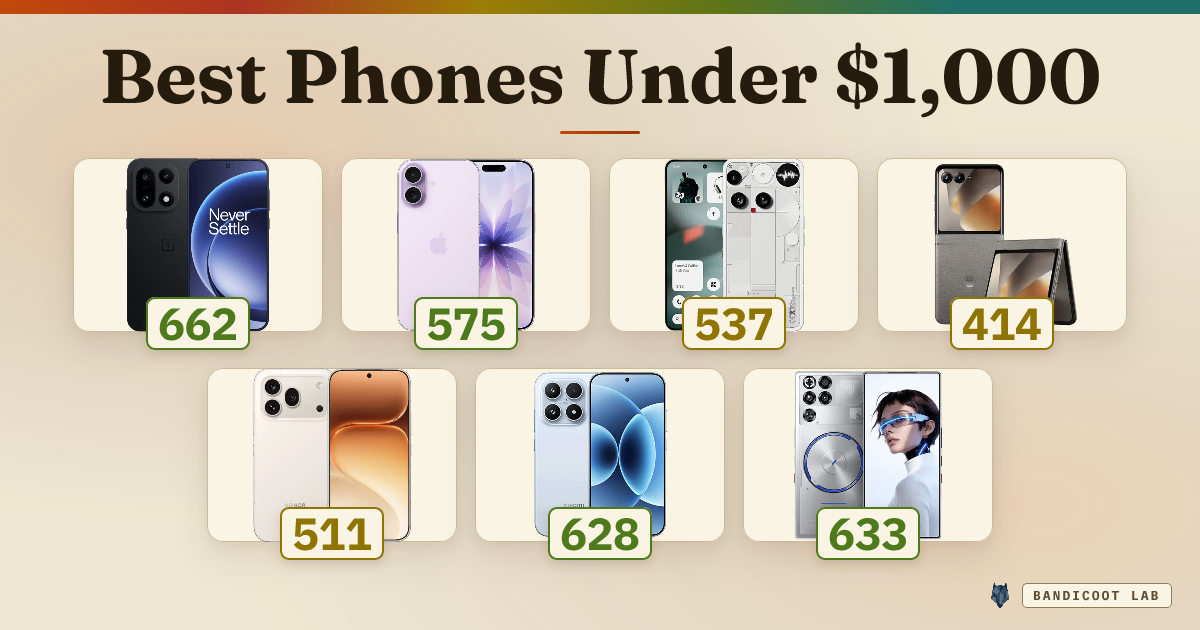
Best Phones Under $1,000
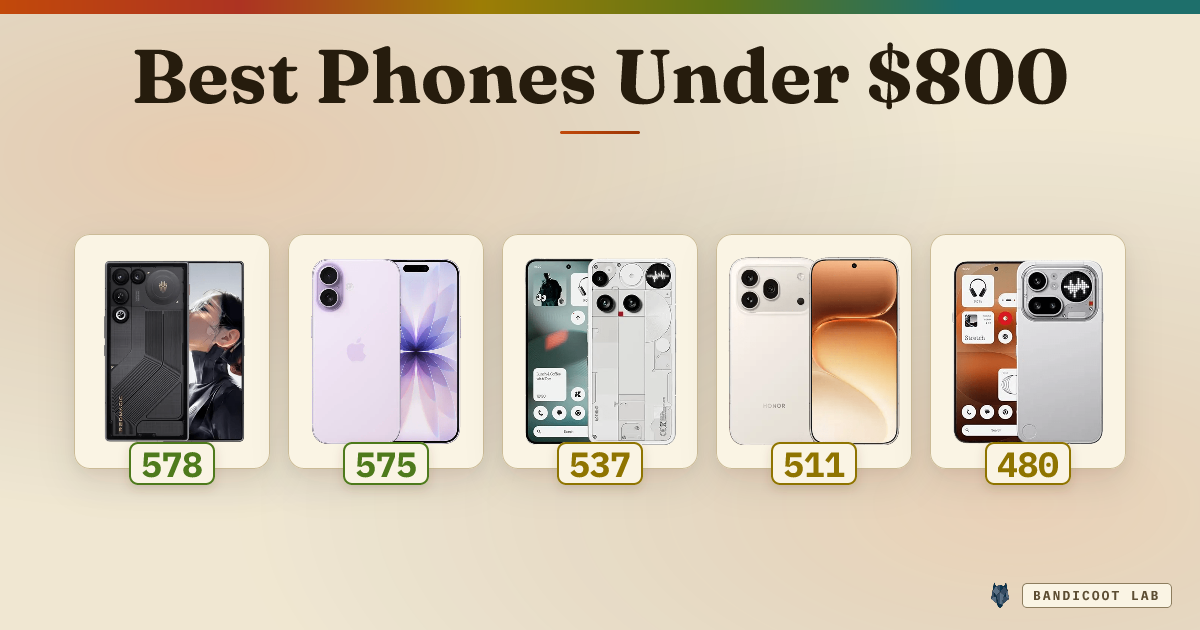
Best Phones Under $800
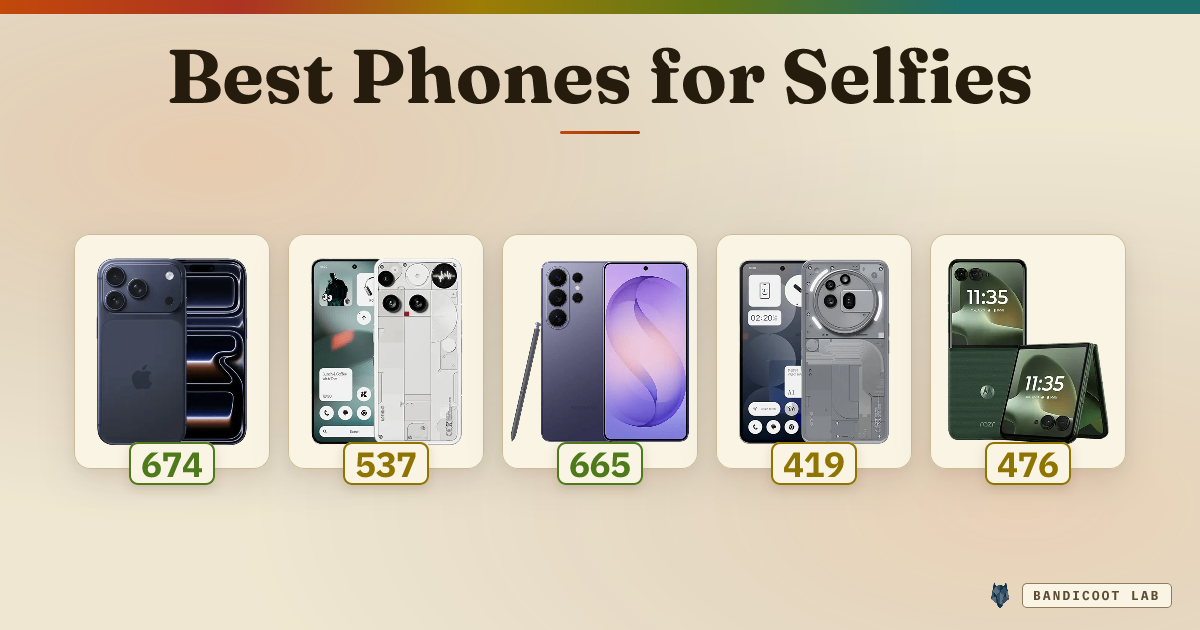
Best Phones for Selfies
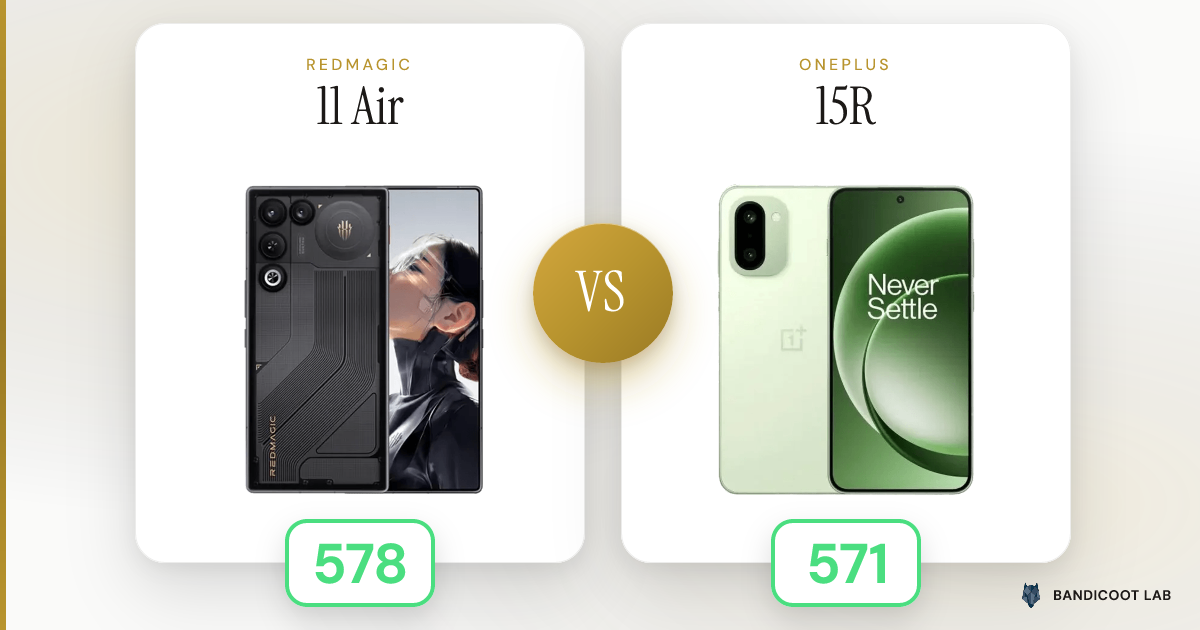
RedMagic 11 Air vs OnePlus 15R
RedMagic 11 Air vs Nothing Phone (3)
OnePlus 15 vs Nothing Phone (3)