RedMagic 11 Air vs Nothing Phone (3)
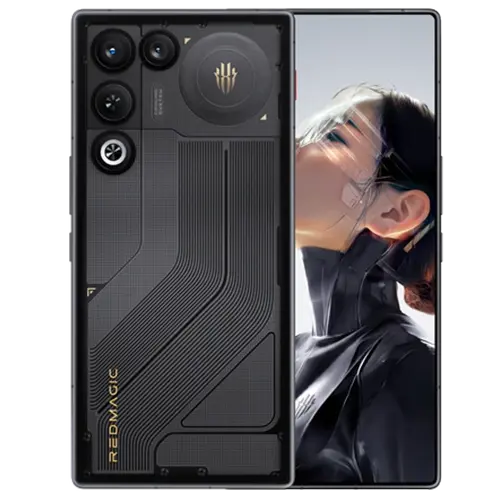
RedMagic
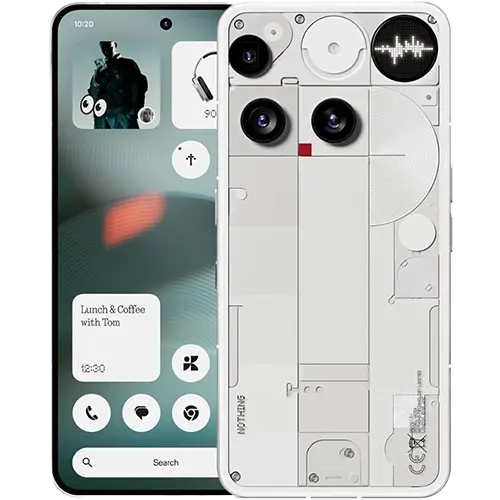
Nothing
11 Air
Phone (3)
Ranked #25 of 60
Ranked #37 of 60
Overall
Overall
The RedMagic 11 Air is a gaming-oriented phone sold at a midrange price. At $529, it pairs a flagship chipset with a large battery and a high-refresh display, targeting people who want raw performance and endurance without spending $800 or more. The Nothing Phone (3) sits at $799 and positions itself as a more well-rounded flagship. It covers more bases, including a three-lens camera system, wireless charging, higher water resistance, and Nothing's distinctive design language.
The RedMagic 11 Air is the stronger performer and has substantially better battery life. Its Snapdragon 8 Elite chip leads in CPU and GPU benchmarks, and the 7,000mAh battery outlasts the Nothing Phone (3) in every endurance test. The Nothing Phone (3) fights back with a meaningfully better camera system across every lens, cleaner speaker output, and a more complete feature set that includes wireless charging and IP68 water resistance.
Here’s how the two phones compared in our thorough testing.
Design
| RedMagic 11 Air | Nothing Phone (3) | |
|---|---|---|
| Specifications | ||
| Dimensions | 163.8 x 76.5 x 8 mm | 160.6 x 75.6 x 9 mm |
| Weight | 207g | 218g |
| IP Rating | IP54 | IP68 |
| Frame | Aluminum | Aluminum |
| Front | Gorilla Glass 7i | Gorilla Glass 7i |
| Back | Gorilla Glass 5 | Gorilla Glass Victus |
| Screen-to-body ratio | 90.7% | 89.0% |
The RedMagic 11 Air is the taller phone at 163.8 x 76.5 x 8mm versus the Nothing Phone (3) at 160.6 x 75.6 x 9mm. The RedMagic is thinner by a millimeter but lighter at 207g compared to 218g. Both use aluminum frames and Gorilla Glass 7i on the front. The backs differ slightly — Gorilla Glass 5 on the RedMagic, Gorilla Glass Victus on the Nothing Phone (3). Victus is rated for better drop resistance.
The biggest practical gap is water resistance. The Nothing Phone (3) carries an IP68 rating, meaning it's rated for submersion in fresh water up to a manufacturer-specified depth. The RedMagic 11 Air is IP54, which covers splashes and dust but not submersion.
The RedMagic's 90.7% screen-to-body ratio is slightly higher than the Nothing Phone (3) at 89%, which translates to marginally thinner bezels relative to screen size. The RedMagic also has a larger 6.85-inch display in a 19.9:9 aspect ratio, while the Nothing Phone (3) uses a 6.7-inch panel at 20.1:9. Both are tall, narrow screens.
Bandicoot Lab doesn't formally test design or durability, so these comparisons are based purely on published specs and materials.
Display
| RedMagic 11 Air | Nothing Phone (3) | |
|---|---|---|
550/ 881 | 525/ 881 | |
The RedMagic 11 Air has a 6.85-inch AMOLED at 1216 x 2688 resolution (431 pixels per inch) with a 60–144Hz refresh rate. The Nothing Phone (3) uses a 6.7-inch OLED at 1080 x 2412 (460 PPI) with a 30–120Hz range. The Nothing Phone (3) is sharper per inch despite its lower resolution, and the RedMagic refreshes 20% faster at its ceiling. Whether you notice 144Hz over 120Hz is a different question (most won’t).
Manual brightness is better on the Nothing Phone (3), at 790 nits versus 665 nits on the RedMagic. For HDR content, the RedMagic peaks higher at 1,896 nits compared to 1,602 nits on the Nothing Phone (3). That advantage narrows when you look at how stable that brightness is across different HDR window sizes: the Nothing Phone (3) holds 98.7% of its peak across window sizes, while the RedMagic drops to 72.7%. The RedMagic's peak brightness only shows up in small, bright highlights. Full-screen bright scenes will look noticeably dimmer. Both panels sustain brightness well over time, with the Nothing Phone (3) at 97.9% stability and the RedMagic at 96.6% during the 30-minute sustained test.
Color accuracy is better on the Nothing Phone (3), but neither display is particularly strong here. The Nothing Phone (3) covers 95.6% of sRGB and 71.3% of DCI-P3 in its best mode. The RedMagic covers 99.8% of sRGB and 97.7% of P3. The RedMagic renders a wider color gamut, but its colors drift more from reference targets. In practice, the RedMagic pushes colors slightly away from where they should sit, while the Nothing Phone (3) has its own accuracy issues. Neither panel is in the same league as the best-calibrated flagships. For P3 content like HDR video, the RedMagic's wider gamut coverage is an advantage.
Both displays handle HDR tone mapping similarly. They clip at the same input level and track the HDR reference curve about equally well. The Nothing Phone (3) renders highlights slightly below their mastered brightness, while the RedMagic pushes them slightly above. Neither approach is dramatically off — you'd need side-by-side comparison to spot the difference.
Touch latency is 11.1ms on the RedMagic and 13.6ms on the Nothing Phone (3). Both are responsive, and the 2.5ms gap isn’t perceptible.
Performance
| RedMagic 11 Air | Nothing Phone (3) | |
|---|---|---|
822/ 1012 | 553/ 1012 | |
The RedMagic 11 Air runs the Snapdragon 8 Elite with 16GB of RAM. The Nothing Phone (3) uses the previous-generation Snapdragon 8 Gen 3, also with 16GB. Both phones offer 12GB and 16GB RAM options and 256GB or 512GB storage.
The generational gap shows clearly in benchmarks. The RedMagic scores 3,147 single-core and 9,961 multi-core in GeekBench 6, compared to 2,209 and 6,992 on the Nothing Phone (3). That's roughly 42% higher in single-core and 43% higher in multi-core. In GPU-heavy tasks, the gap widens further — the RedMagic's peak Wild Life Extreme score of 6,932 is over 55% higher than the Nothing Phone (3) at 4,459. The RedMagic also sustains GPU performance better, holding 79.5% stability compared to 64.4%.
In daily use, both phones handle apps and multitasking without issue. The RedMagic's advantage shows in sustained gaming sessions and heavy workloads. The GPU stability gap is especially relevant for gaming: the Nothing Phone (3) throttles more aggressively, meaning frame rates drop further during extended play.
Camera
| RedMagic 11 Air (Overall) | Nothing Phone (3) (Overall) | |
|---|---|---|
| Specifications | ||
| Main | 50MP, f/1.9, 23mm, 1/1.55" | 50MP, f/1.7, 24mm, 1/1.3" |
| Ultrawide | 8MP, f/2.2, 14mm, 1/4.0" | 50MP, f/2.2, 15mm, 1/2.76" |
| Telephoto | — | 50MP, f/2.7, 72mm, 1/2.75" |
| Front | 16MP, f/2, 1/2.77" | 50MP, f/2.2, 25mm, 1/2.76" |
The camera systems are pretty different. The Nothing Phone (3) has a 50-megapixel main camera with a large 1/1.3-inch sensor, a 50-megapixel ultrawide, a 50-megapixel 3x telephoto, and a 50-megapixel front camera. The RedMagic 11 Air has a 50-megapixel main with a smaller 1/1.55-inch sensor, an 8-megapixel ultrawide, no telephoto at all, and a 16 megapixel front camera. The Nothing Phone (3) scores significantly higher in overall camera quality, with stronger results across every lens.
At deep zoom levels, the Nothing Phone (3) has a big advantage. Its dedicated 3x telephoto lens and 60x maximum digital zoom produce usable detail where the RedMagic's 10x digital-only zoom falls apart. If you ever crop into photos or zoom past 2x, the Nothing Phone (3) is the only viable option.
Main
| RedMagic 11 Air (Main) | Nothing Phone (3) (Main) | |
|---|---|---|
460/ 722 | 572/ 722 | |
The Nothing Phone (3) captures sharper photos in bright and mid lighting conditions, with a clear lead over the RedMagic 11 Air. The gap narrows in low light, where both phones produce similar sharpness levels. The Nothing Phone (3)'s larger 1/1.3-inch sensor pulls in more light, which explains its advantage in brighter conditions where processing can work with cleaner data.
Color tuning is very different between these two phones. The Nothing Phone (3) keeps saturation close to neutral across all lighting. Colors look true to life, occasionally pulling slightly muted in lower light. The RedMagic 11 Air pushes saturation considerably higher. Greens, reds, and blues all look more vivid than they should. In bright light, this gives photos a punchy, oversaturated look that some people prefer for social media but doesn't reflect the scene accurately. In terms of hue accuracy, both phones are similar in bright light. As lighting gets warmer and dimmer, both degrade, but the Nothing Phone (3) maintains better skin tone accuracy throughout. The RedMagic's skin tones drift significantly from reference in all conditions. The Nothing Phone (3) produces skin tones roughly half as far from accurate in mid and low light, which is a substantial gap for portraits. The RedMagic's color bias stays mostly neutral across lighting conditions, so the skin tone error is more of a sensor or processing limitation than a white balance problem.
Dynamic range favors the RedMagic in one specific way — it holds highlight and shadow detail with fewer tonal inversions, meaning smoother gradients in high-contrast scenes. The Nothing Phone (3) captures less total range and shows more tonal compression artifacts.
Ultrawide
| RedMagic 11 Air (Ultrawide) | Nothing Phone (3) (Ultrawide) | |
|---|---|---|
463/ 722 | 549/ 722 | |
The Nothing Phone (3)'s 50-megapixel ultrawide is a significant step up from the RedMagic's 8-megapixel unit. Sharpness on the Nothing Phone (3) is high across all lighting conditions, roughly matching or exceeding what many phones achieve with their main cameras. The RedMagic's ultrawide produces moderate sharpness adequate for casual shots but falls well short of the Nothing Phone (3).
Color on the Nothing Phone (3)'s ultrawide leans slightly undersaturated, with a mild warm shift under artificial lighting. Hue accuracy is good in bright light and degrades gently as light drops. The RedMagic's ultrawide also oversaturates like its main lens, and hue accuracy is weaker, particularly under mid and dim lighting. Skin tones from the RedMagic's ultrawide are noticeably off from reference in all conditions. The Nothing Phone (3)'s ultrawide also drifts in skin tones in bright light, but improves substantially in warmer, dimmer conditions. That pattern suggests the ultrawide's processing overcorrects in bright daylight.
Dynamic range on the RedMagic’s ultrawide is quite a bit better than the Nothing Phone (3).
Telephoto
| RedMagic 11 Air (Telephoto) | Nothing Phone (3) (Telephoto) | |
|---|---|---|
| — | 584/ 722 | |
The RedMagic 11 Air doesn't have a telephoto lens, so this section covers the Nothing Phone (3) only.
The Nothing Phone (3)'s 50-megapixel 3x telephoto at 72mm f/2.7 is a strong performer. Sharpness is high in bright light and holds up reasonably well in mid lighting. Low light drops off, which is expected from the smaller 1/2.75-inch sensor at a longer focal length.
Color from the telephoto is the Nothing Phone (3)'s best lens for accuracy. Skin tones are close to reference across all three lighting conditions. Saturation sits slightly above neutral in bright and mid light, dropping slightly below in low light. Hue accuracy holds well even under warm artificial light, with only a mild warm shift developing as lighting dims.
Dynamic range is good, with decent shadow detail retention in high-contrast scenes. Tonal compression artifacts are present but not severe. Highlights clip, as they do on every lens tested.
Front
| RedMagic 11 Air (Front) | Nothing Phone (3) (Front) | |
|---|---|---|
480/ 722 | 673/ 722 | |
The Nothing Phone (3)'s 50-megapixel front camera is much sharper than the RedMagic's 16 megapixel unit. In bright light, the gap is large. The Nothing Phone (3) holds strong sharpness into mid lighting, while the RedMagic starts moderate and stays there across all conditions, declining slightly in low light.
Color on the Nothing Phone (3)'s front camera is close to neutral, with saturation tracking reference accurately. In bright light, there's a slight cool cast, but this disappears in mid lighting and shifts mildly cool again in low light. Skin tones are reasonably accurate across conditions. The RedMagic's front camera also oversaturates in bright light and undersaturates in low light. In bright conditions, there's a noticeable cool cast. Hue accuracy on the RedMagic's front camera degrades significantly in mid and low light. The bias shifts from cool in bright light to warm in low light, which looks like a white balance correction issue struggling with changing color temperatures.
Dynamic range from both front cameras is good. The RedMagic holds more scene depth overall with fewer tonal artifacts. Both clip highlights.
Battery
| RedMagic 11 Air | Nothing Phone (3) | |
|---|---|---|
707/ 836 | 593/ 836 | |
The RedMagic 11 Air packs a 7,000mAh battery, 40% larger than the Nothing Phone (3)'s 5,000mAh cell. That capacity advantage shows up directly in testing. The RedMagic runs for 29.33 hours in video playback versus 27.49 hours for the Nothing Phone (3). The gap is smaller than the capacity difference suggests, which speaks to the Nothing Phone (3)'s efficiency. Two extra hours of video playback is useful but not transformative. Both phones will last through two full days of moderate use on a single charge.
Web browsing drain over five hours tells a different story. The RedMagic loses 21% of its battery, while the Nothing Phone (3) drops 30%. Over a full workday of web-heavy use, you'd have noticeably more battery remaining on the RedMagic.
Gaming is where the RedMagic's combination of larger battery and more efficient sustained performance matters most. During the one-hour stress test, the Nothing Phone (3) drained 28% while the RedMagic lost 37%. The RedMagic drains more during gaming despite its larger battery, which reflects the much higher GPU output of the Snapdragon 8 Elite running at full tilt. In practice, the RedMagic still has more total battery to burn. Starting from 100%, you'd game longer on the RedMagic before needing a charge.
Standby drain is identical at 1% over eight hours for both phones. Neither has a parasitic drain problem.
Charging
| RedMagic 11 Air | Nothing Phone (3) | |
|---|---|---|
243/ 837 | 268/ 837 | |
The RedMagic 11 Air supports 80W wired charging. The Nothing Phone (3) charges at 65W wired and adds 15W wireless charging.
After 10 minutes on the cable, the RedMagic reaches 25% and the Nothing Phone (3) hits 22%. At 30 minutes, the Nothing Phone (3) leads with 63% versus 52% on the RedMagic. The Nothing Phone (3) is filling a smaller battery, so it reaches a higher percentage faster in the middle of the charge curve even though the RedMagic charges at a higher wattage. In absolute terms, the RedMagic has pushed more milliamp-hours into the cell at the 10-minute mark.
The Nothing Phone (3) adds wireless charging at 15W. It's slow: 4% after 10 minutes and 10% after 30 minutes. This is a top-up-at-your-desk feature, not a fast charging solution. The RedMagic has no wireless charging at all. If wireless charging matters to you, the Nothing Phone (3) is the only option.
Speaker
| RedMagic 11 Air | Nothing Phone (3) | |
|---|---|---|
538/ 897 | 652/ 897 | |
The RedMagic 11 Air is louder, reaching 79.2 dBA versus 73.1 dBA on the Nothing Phone (3). Six decibels is roughly the difference between comfortably filling a room and needing to be a bit closer to hear clearly.
Sound quality tilts toward the Nothing Phone (3). Its total harmonic distortion of 3.46% is much lower than the RedMagic's 9.7%. At higher volumes, the RedMagic distorts audibly. The Nothing Phone (3)'s speaker also produces fuller bass and better high-frequency clarity, giving vocals and instruments more separation. The RedMagic's speaker character is thinner and more treble-heavy, with less low-end presence. If you use your phone speaker for podcasts, music, or video calls, the Nothing Phone (3) sounds cleaner and more balanced. The RedMagic is the better choice when you need to be heard across a room.
Microphone
| RedMagic 11 Air | Nothing Phone (3) | |
|---|---|---|
520/ 1220 | 437/ 1220 |
Both microphones are below average. The RedMagic 11 Air is the slightly better of the two, with more even frequency response. The Nothing Phone (3)'s microphone shows more variation across the frequency range. Neither phone is going to impress on voice calls in noisy environments, but both are adequate for typical use.
Other
| RedMagic 11 Air | Nothing Phone (3) | |
|---|---|---|
| Biometrics | 402/ 1181 | 504/ 1181 |
| Data Transfer | 104/ 943 | 102/ 943 |
| Specifications | ||
| Biometric type | Fingerprint | Fingerprint |
| Ports | USB-C 2.0 | USB-C 2.0 |
| Storage | 256GB, 512GB | 256GB, 512GB |
Fingerprint unlock is faster on the Nothing Phone (3) at 208ms versus 261ms on the RedMagic 11 Air. Both use optical sensors. The difference is perceptible. Neither phone has hardware-based face unlock.
Data transfer speeds are similar and slow on both devices. The RedMagic reads at 42 MB/s and writes at 37 MB/s, while the Nothing Phone (3) reads at 38 MB/s and writes at 38 MB/s. Both use USB-C 2.0 ports, which caps transfer speeds well below what their internal storage can handle. If you move large files to a computer regularly, this is a bottleneck on both phones. Both offer 256GB and 512GB storage configurations.
Conclusion
The RedMagic 11 Air is the better phone for performance and battery life. Its Snapdragon 8 Elite delivers roughly 40–55% more CPU and GPU throughput than the Nothing Phone (3)'s Snapdragon 8 Gen 3, with better sustained performance under load. The 7000mAh battery provides stronger endurance in every test except raw gaming drain percentage, and even there, the larger cell means more total screen time before you need a charger. At $529, it undercuts the Nothing Phone (3) by $270 while outperforming it in raw speed. If your priorities are gaming, longevity between charges, and value for money, the RedMagic is the clear pick.
The Nothing Phone (3) wins on cameras, build quality, and features. Its camera system is significantly better across every lens, with stronger sharpness, more accurate color and skin tones, and a 3x telephoto the RedMagic simply doesn't have. IP68 water resistance, wireless charging, and a cleaner speaker round out a more complete package. Display quality is a split: the RedMagic has a wider color gamut and higher HDR peaks, while the Nothing Phone (3) has more consistent brightness across HDR content and a sharper pixel density.
If you take photos regularly, want a phone that handles water exposure confidently, or value speaker quality and wireless charging, the Nothing Phone (3) justifies its higher price. If you care most about flagship-tier performance and marathon battery life at a lower cost, and cameras are secondary, the RedMagic 11 Air is the stronger choice.
Related
Nothing
Phone (3)
RedMagic
11 Air

RedMagic
11S Pro
Nothing
Phone (4a) Pro
Nothing
Phone (4a)
Nothing
Phone (4b)
Best Phones Under $1,000
Best Phones Under $800
Best Phones For Any Budget
Best Phones for Selfies
RedMagic 11 Air vs OnePlus 15R
RedMagic 11 Air vs OnePlus 15