Samsung Galaxy S26 Ultra vs Galaxy S25 Ultra


Samsung
Samsung
Galaxy S26 Ultra
Galaxy S25 Ultra
Ranked #7 of 60
Ranked #16 of 60
Overall
Overall
The Galaxy S26 Ultra is Samsung's successor to what was already the company's most capable phone. Both share the same $1,299.99 price, the same 200 megapixel main sensor size, the same battery capacity, and the same general ambition — a big-screen flagship that tries to lead in every category. The Galaxy S26 Ultra is the phone you'd buy new, while the S25 Ultra is the phone you might already own and are wondering whether to replace, or the one you'd find discounted.
The S26 Ultra pulls ahead in performance, charging speed, speaker quality, and camera color accuracy across most lenses. The S25 Ultra holds advantages in battery life, microphone quality, and main camera sharpness.
Here’s how the Samsung Galaxy S26 Ultra compares with the Galaxy S25 Ultra in our lab testing.
Design
| Samsung Galaxy S26 Ultra | Samsung Galaxy S25 Ultra | |
|---|---|---|
| Specifications | ||
| Dimensions | 163.6 x 78.1 x 7.9 mm | 162.8 x 77.6 x 8.2 mm |
| Weight | 214g | 218g |
| IP Rating | IP68 | IP68 |
| Frame | Aluminum | Titanium |
| Front | Gorilla Armor 2 | Gorilla Armor 2 |
| Back | Gorilla Glass Victus 2 | Gorilla Armor 2 |
| Screen-to-body ratio | 91.5% | 89.8% |
The Galaxy S26 Ultra is marginally taller and wider (163.6 x 78.1 x 7.9mm) than the S25 Ultra (162.8 x 77.6 x 8.2mm), but it's thinner by 0.3mm and lighter at 214g versus 218g. Both carry IP68 ratings, meaning they're rated for submersion in 1.5 meters of freshwater for 30 minutes.
The material choices are the most visible difference. The S25 Ultra uses a titanium frame and Gorilla Armor 2 on both front and back. The S26 Ultra switches to an aluminum frame, keeps Gorilla Armor 2 on the front, and moves to Gorilla Glass Victus 2 on the back. Titanium is denser and more scratch-resistant than aluminum, which partly explains why the S25 Ultra weighs more despite being smaller. The S26 Ultra's 91.5% screen-to-body ratio is higher than the S25 Ultra's 89.8%, which translates to slightly thinner bezels around the 6.9-inch display compared to the S25 Ultra's 6.8-inch panel. Both share a 19.5:9 aspect ratio.
Bandicoot Lab doesn't formally test design or durability, so these are spec-sheet observations.
Display
| Samsung Galaxy S26 Ultra | Samsung Galaxy S25 Ultra | |
|---|---|---|
634/ 881 | 609/ 881 | |
Both phones run LTPO AMOLED panels at 1440 x 3120 resolution with adaptive 1–120Hz refresh. The S26 Ultra's larger 6.9-inch screen puts it at 500 pixels per inch; the S25 Ultra's 6.8-inch panel sits at 498 PPI. You won't see a difference in pixel density between them.
The S26 Ultra is brighter in both manual and HDR modes. Its maximum manual brightness reaches 976 nits compared to 718 nits on the S25 Ultra. That's a meaningful gap for outdoor readability. HDR peak brightness is 3,023 nits on the S26 Ultra and 2,795 nits on the S25 Ultra. Both phones sustain brightness well over a 30-minute HDR test, with the S26 Ultra at 98.6% stability and the S25 Ultra at 98.8%. Brightness consistency across different HDR window sizes is similar: 48.8% on the S26 Ultra and 51.7% on the S25 Ultra, meaning both drop significantly when HDR highlights cover larger portions of the screen.
Color accuracy is mediocre on both. The S26 Ultra gets slightly closer to reference, but in practice both panels show noticeable drift from accurate colors. Whites and neutral tones may appear slightly off on either phone, and neither qualifies as a reference-grade display for color-critical work.
Both panels clip HDR content at the same input level, but they differ in how aggressively they treat highlights. The S26 Ultra pushes HDR highlights noticeably brighter than the mastered intent, lifting the image more than the S25 Ultra does. The S25 Ultra follows the reference curve more faithfully. If you prefer punchier HDR, the S26 Ultra delivers that; if you want something closer to what the content creator intended, the S25 Ultra is more restrained.
Touch latency is 21ms on the S26 Ultra and 20.6ms on the S25 Ultra. That gap is imperceptible.
It’s worth noting that the Galaxy S26 Ultra has a new “Privacy Mode” display technology that allows for the screen to be less visible when viewed at an angle. Our current testing methodology doesn’t allow us to test how effective this feature is, but anecdotally, it seemed to work quite well.
Performance
| Samsung Galaxy S26 Ultra | Samsung Galaxy S25 Ultra | |
|---|---|---|
908/ 1012 | 783/ 1012 | |
The S26 Ultra runs the Snapdragon 8 Elite Gen 5 with 12GB of RAM (a 16GB option is available). The S25 Ultra uses the previous-generation Snapdragon 8 Elite with 16GB of RAM.
The generational CPU jump is clear. The S26 Ultra scores 3,685 single-core and 11,198 multi-core in GeekBench 6, compared to 3,088 and 10,093 on the S25 Ultra. That's roughly a 19% single-core improvement and an 11% multi-core gain. In browser performance, the S26 Ultra's Speedometer score of 46 versus the S25 Ultra's 32.4 represents a substantial leap. Web-heavy tasks, especially complex web apps, will feel snappier.
GPU performance shows a similar generational gap. The S26 Ultra's peak Wild Life Extreme score of 7,802 beats the S25 Ultra's 6,911, though stability under sustained load is lower: 49.8% versus 56.9%. The S26 Ultra runs hotter under continuous graphics load, which means its peak GPU performance drops more aggressively during extended gaming sessions. For short bursts it's clearly faster; for long sessions the gap narrows. Solar Bay results follow the same pattern, with the S26 Ultra peaking higher at 13,861 versus 12,460 but holding a similar stability split.
Day to day, the CPU and browser gains are where you'll feel the difference most. App launches, multitasking, and anything web-rendered will be measurably quicker. The GPU advantage matters for gaming, though the S26 Ultra's lower thermal stability means extended sessions won't maintain that full lead.
Camera
| Samsung Galaxy S26 Ultra (Overall) | Samsung Galaxy S25 Ultra (Overall) | |
|---|---|---|
| Specifications | ||
| Main | 200MP, f/1.4, 23mm, 1/1.3" | 200MP, f/1.7, 24mm, 1/1.3" |
| Ultrawide | 50MP, f/1.9, 14mm, 1/2.5" | 50MP, f/1.9, 14mm, 1/2.5" |
| Telephoto (Short) | 10MP, f/2.4, 67mm, 1/3.94" | 10MP, f/2.4, 67mm, 1/3.94" |
| Telephoto (Long) | 50MP, f/2.9, 111mm, 1/2.52" | 50MP, f/2.3, 111mm, 1/2.52" |
| Front | 12MP, f/2.2, 23mm, 1/3.2" | 12MP, f/2.2, 26mm, 1/3.2" |
The two phones share the same sensor sizes across every lens position, the same 200 megapixel main camera, and the same 100x maximum digital zoom. The S26 Ultra's main lens is wider-aperture at f/1.4 versus f/1.7, and its 5x telephoto has a smaller f/2.9 aperture compared to f/2.3.
Overall camera scores are close, with the S26 Ultra edging ahead at 569.1 versus 524.4. The S25 Ultra generally captures sharper images from its main sensor, while the S26 Ultra delivers more accurate color across nearly every lens and lighting condition. Dynamic range favors the S26 Ultra from the main and telephoto lenses, with the S25 Ultra doing better from the ultrawide.
At deep zoom levels approaching 100x, both phones produce soft results. Neither is strong here, and the difference between them is minor. Deep zoom remains a marketing showcase rather than a practical tool on either device.
Main
| Samsung Galaxy S26 Ultra (Main) | Samsung Galaxy S25 Ultra (Main) | |
|---|---|---|
711/ 722 | 615/ 722 | |
The S25 Ultra's main camera is sharper in bright and mid light, with high detail that holds up well as conditions dim. The S26 Ultra is close behind in bright light and nearly identical in low light. Both resolve fine detail from the 200 megapixel sensor.
Color from the main camera is where the S26 Ultra gains ground. Both phones push skin tones noticeably off-target in bright light. In mid and dim conditions, the S26 Ultra's skin tones are meaningfully more accurate. The S25 Ultra's processing shifts strongly warm in low light, with a pronounced yellow-orange cast to skin tones and a large spike in hue errors. This pattern, with increasing warm bias as light temperature drops, indicates a white balance correction issue rather than a sensor limitation.
Dynamic range is stronger on the S26 Ultra's main camera. Both clip highlights, but the S26 Ultra retains more usable range between shadows and highlights, giving high-contrast scenes more depth. The S25 Ultra loses shadow detail or highlight information sooner.
Ultrawide
| Samsung Galaxy S26 Ultra (Ultrawide) | Samsung Galaxy S25 Ultra (Ultrawide) | |
|---|---|---|
542/ 722 | 543/ 722 | |
Both phones use a 50-megapixel ultrawide with the same sensor size. The S25 Ultra scores higher for ultrawide sharpness. The S26 Ultra still resolves good detail across lighting conditions, but the S25 Ultra's ultrawide is one of the stronger performers for this lens type.
Color follows the same pattern as the main camera. The S26 Ultra stays more accurate, especially in mid and dim light. The S25 Ultra's ultrawide develops a strong warm and magenta-shifted cast as light dims, with substantial hue errors in low light that suggest the same white balance overcorrection seen from its main lens.
Dynamic range slightly favors the S25 Ultra's ultrawide, which is an unusual reversal from the main camera. Both clip highlights, but the S25 Ultra holds a bit more tonal range. Neither ultrawide matches its respective main camera for dynamic range, which is typical.
Telephoto Short
| Samsung Galaxy S26 Ultra (Telephoto Short) | Samsung Galaxy S25 Ultra (Telephoto Short) | |
|---|---|---|
589/ 722 | 534/ 722 | |
Both phones share the same 3x telephoto hardware: a 10 megapixel f/2.4 lens with a 1/3.94-inch sensor. This is the smallest sensor in either camera system, and it shows.
The S25 Ultra is sharper from this lens in bright and mid light. In low light, the S26 Ultra's sharpness drops more steeply. The small sensor limits both phones here, and neither produces images as detailed as their main or long telephoto cameras.
The S26 Ultra's 3x telephoto delivers better skin tone accuracy in bright light, where the S25 Ultra pushes skin tones well off-target with a cool, slightly yellow character. In mid light, the S26 Ultra maintains good accuracy while the S25 Ultra's skin tones drift further. The S26 Ultra's saturation is more restrained than the S25 Ultra's, which oversaturates noticeably across all conditions.
Dynamic range is stronger on the S26 Ultra, with more separation between shadows and highlights. The S25 Ultra shows some tonal inconsistencies in its rendering.
Telephoto Long
| Samsung Galaxy S26 Ultra (Telephoto Long) | Samsung Galaxy S25 Ultra (Telephoto Long) | |
|---|---|---|
676/ 722 | 617/ 722 | |
Both phones use a 50-megapixel 5x telephoto. The S26 Ultra has an f/2.9 aperture, while the S25 Ultra has an f/2.3 aperture, but the sensor is the same size.
Sharpness is close between the two in bright and mid light. Both resolve high detail at 5x, making this the strongest telephoto on either phone. In low light, both drop to similar levels.
Color accuracy is substantially better on the S26 Ultra's 5x lens. The S25 Ultra's long telephoto shows large hue errors even in bright light, and they grow dramatically as light dims. The pattern here is different from its other lenses: there's a consistent strong magenta-pink shift that doesn't correlate cleanly with increasing warm bias at lower color temperatures. This suggests a sensor-level hue confusion on the S25 Ultra's telephoto, compounded by white balance issues in dimmer conditions. The S26 Ultra's 5x lens keeps hue errors moderate across bright and mid light, with skin tones staying close to accurate. In low light, the S26 Ultra's skin tones do shift significantly, but the overall color rendering is still more reliable.
Dynamic range favors the S26 Ultra, which maintains more usable range between shadows and highlights.
Front
| Samsung Galaxy S26 Ultra (Front) | Samsung Galaxy S25 Ultra (Front) | |
|---|---|---|
415/ 722 | 375/ 722 | |
The front cameras use the same 12 megapixel sensor size with f/2.2 aperture. The S25 Ultra captures sharper selfies in bright and mid light, with noticeably higher detail. In low light, both converge to similar sharpness levels. The wider field of view on the S26 Ultra means slightly more background in frame, which some users will prefer for group shots.
Color from the front camera is where the two phones diverge most dramatically. The S25 Ultra's front camera produces heavily oversaturated images with large skin tone errors across every lighting condition. Skin tones are pushed significantly off-target, with a warm yellow-orange quality in bright light that shifts toward strong pink-magenta in mid and low light. The bias data shows this is primarily a white balance problem: there's a steep increase in warm-axis overcorrection as ambient light temperature drops. The S26 Ultra's front camera is more measured, with near-neutral color in bright light and moderate shifts in dimmer conditions. Skin tones stay closer to natural across the board.
Dynamic range is better on the S26 Ultra's front camera. Both clip highlights, but the S26 Ultra holds more usable range.
Battery
| Samsung Galaxy S26 Ultra | Samsung Galaxy S25 Ultra | |
|---|---|---|
539/ 836 | 625/ 836 | |
Both phones have a 5,000mAh battery. The S26 Ultra lasts 31.57 hours in the video playback test; the S25 Ultra lasts 30.99 hours. That's a negligible difference. Either phone will last through two full days of light to moderate use on a single charge based on video playback alone.
The split becomes more interesting under other workloads. In web browsing over five hours, the S25 Ultra drains 21% compared to the S26 Ultra's 24%. That translates to the S25 Ultra lasting roughly three more hours of web-heavy use on a full charge. Gaming drain during the stress test favors the S26 Ultra: 24% versus 26% on the S25 Ultra, a modest advantage that aligns with the newer chip's efficiency improvements under GPU load.
Standby tells a different story. The S26 Ultra drains 10% over eight hours of idle time, while the S25 Ultra drains just 2%. If you leave your phone on a nightstand overnight without charging, the S25 Ultra will have meaningfully more battery in the morning.
Charging
| Samsung Galaxy S26 Ultra | Samsung Galaxy S25 Ultra | |
|---|---|---|
486/ 837 | 348/ 837 | |
The S26 Ultra supports 60W wired and 25W wireless charging. The S25 Ultra is rated for 45W wired and 15W wireless.
The wired charging advantage is tangible. After ten minutes on the cable, the S26 Ultra reaches 34% compared to the S25 Ultra's 29%. At thirty minutes, the S26 Ultra hits 79% versus 74%. Five extra percentage points at the half-hour mark means you'll get roughly an extra hour of use from a quick midday top-up.
The wireless gap is wider. Ten minutes on a wireless charger gives the S26 Ultra 18% versus just 6% on the S25 Ultra. At thirty minutes, it's 44% versus 18%. If you rely on wireless charging, the S26 Ultra is in a different class. It reaches nearly as much charge wirelessly in thirty minutes as the S25 Ultra manages with a cable.
Speaker
| Samsung Galaxy S26 Ultra | Samsung Galaxy S25 Ultra | |
|---|---|---|
857/ 897 | 807/ 897 | |
The S25 Ultra is louder, peaking at 78.6 dBA compared to the S26 Ultra's 75.3 dBA. That's a noticeable volume difference.
The S26 Ultra wins on cleanliness. Its total harmonic distortion of 3.26% is lower than the S25 Ultra's 4.37%, meaning less crackling or harshness at higher volumes. The S26 Ultra also has fuller bass, which gives music and video audio more body. The S25 Ultra's bass response rolls off earlier, starting from a higher frequency floor. The S26 Ultra sounds warmer and richer overall; the S25 Ultra sounds clearer in the upper frequencies but thinner in the low end.
If you tend to watch content without headphones, the S26 Ultra provides a more balanced, less distorted sound. If raw volume is what you need, the S25 Ultra pushes louder before you hit its ceiling.
Microphone
| Samsung Galaxy S26 Ultra | Samsung Galaxy S25 Ultra | |
|---|---|---|
566/ 1220 | 688/ 1220 |
The S25 Ultra's microphone produces a more even frequency response, scoring higher for recording quality. The S26 Ultra's microphone is below average, with more unevenness across the frequency range. For voice calls this is unlikely to matter much, but for voice memos or video recording where you're relying on the built-in microphone, the S25 Ultra will capture cleaner audio.
Other
| Samsung Galaxy S26 Ultra | Samsung Galaxy S25 Ultra | |
|---|---|---|
| Biometrics | 764/ 1181 | 504/ 1181 |
| Data Transfer | 737/ 943 | 643/ 943 |
| Specifications | ||
| Biometric type | Fingerprint | Fingerprint |
| Ports | USB-C 3.2 | USB-C 3.2 |
| Storage | 256GB, 512GB, 1TB | 256GB, 512GB, 1TB |
Both phones use ultrasonic fingerprint sensors. The S26 Ultra unlocks in an average of 138ms compared to 208ms on the S25 Ultra. That 70ms gap is perceptible. The S26 Ultra's unlock feels near-instant; the S25 Ultra has a brief but noticeable pause. Neither phone has hardware-based face unlock.
Data transfer speeds over USB-C 3.2 are similar. The S26 Ultra reads at 332 MB/s and writes at 274 MB/s; the S25 Ultra reads at 304 MB/s and writes at 243 MB/s. Both are fast enough that transferring large files won't feel bottlenecked. Storage options are identical: 256GB, 512GB, and 1TB.
The S25 Ultra ships with 16GB of RAM at the tested configuration, while the S26 Ultra tested configuration uses 12GB (with a 16GB option available). In practice, both have more than enough memory for any mobile workload, but the S25 Ultra's default higher RAM could benefit heavy multitaskers who keep many apps alive in the background.
Conclusion
The S26 Ultra is the faster phone with better charging, cleaner speakers, more accurate camera color, and a brighter display. The S25 Ultra retains a slightly sharper main camera, a louder speaker, and a better microphone — but as a whole, the Galaxy S26 Ultra is, as expected, a better phone.
Related
Samsung
Galaxy S25 Ultra
Samsung
Galaxy S26 Ultra
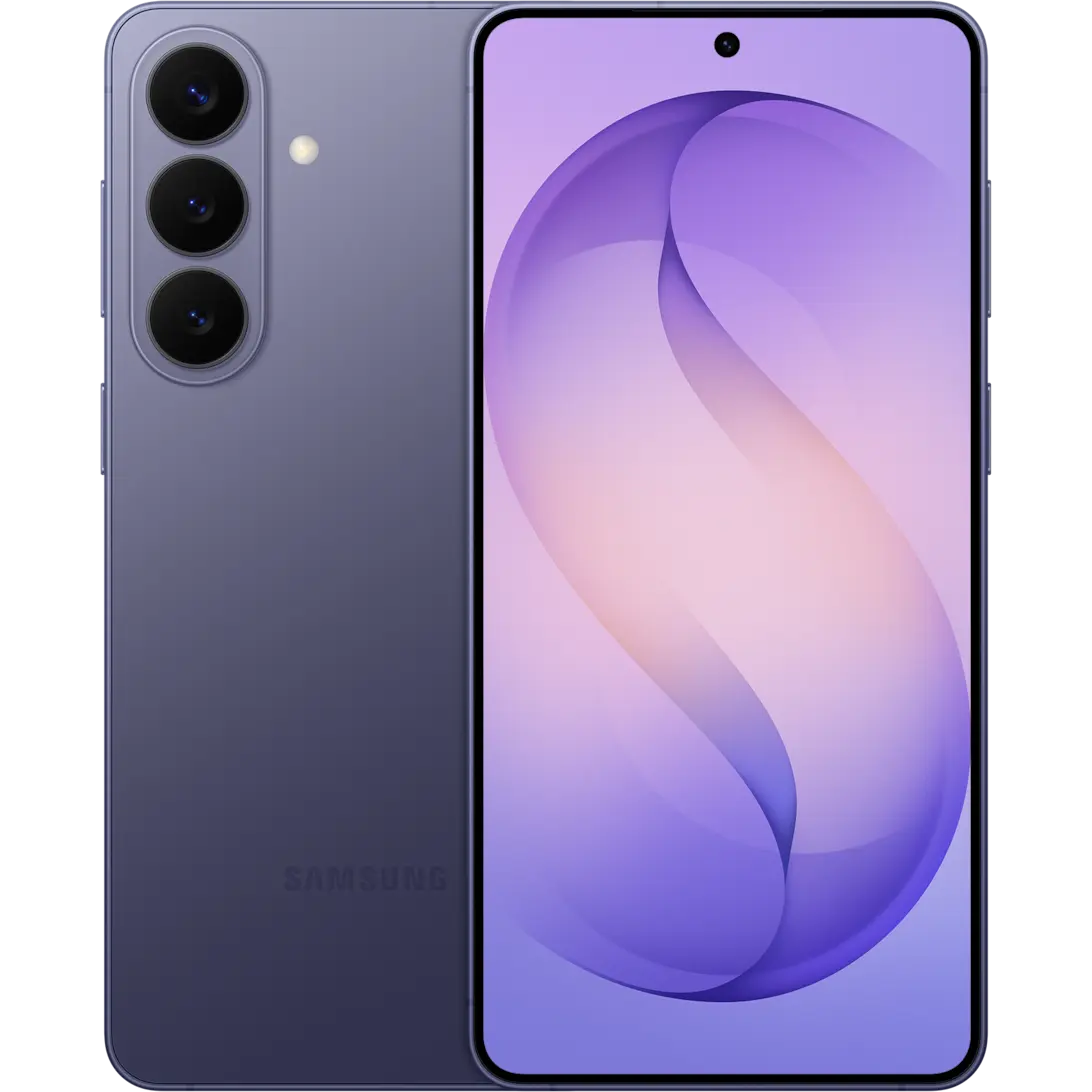
Samsung
Galaxy S26+
Samsung
Galaxy Z Fold 8 Ultra
Samsung
Galaxy Z Fold 8
Samsung
Galaxy S26
Best Android Phones
Best Samsung Phones

Samsung Galaxy S26 Series vs Galaxy S25 Series
The house look: How phone brands tune camera color
How we test speakers and microphones

Samsung Galaxy S26 Series vs Xiaomi 17 Series