Samsung Galaxy Z Fold 8 Ultra vs Samsung Galaxy Z Fold 7
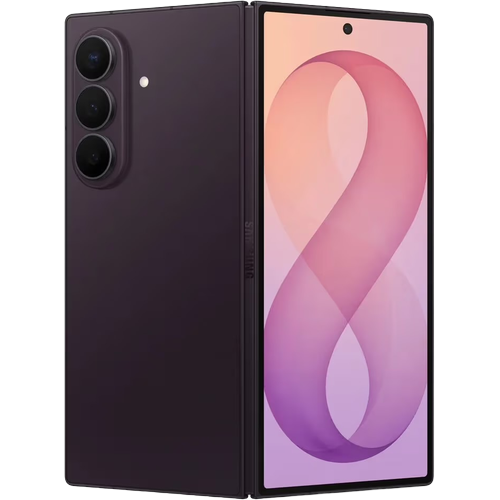
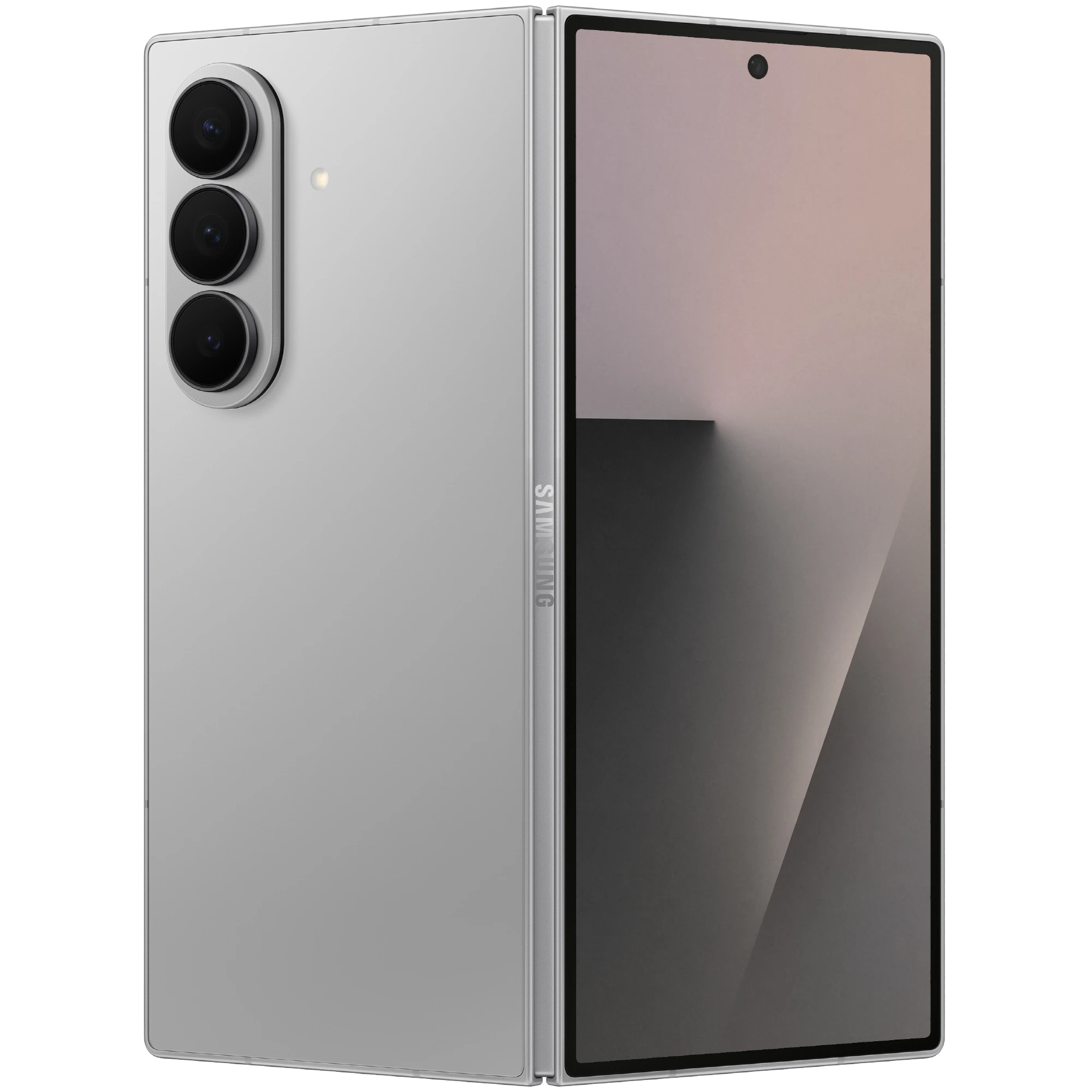
Samsung
Samsung
Galaxy Z Fold 8 Ultra
Galaxy Z Fold 7
Ranked #18 of 61
Ranked #35 of 61
Overall
Overall
Samsung's book-style foldable line splits in two here. The Galaxy Z Fold 8 Ultra is the first Fold to carry the Ultra name, but it’s actually the true successor to the Z Fold 7 — despite the change in naming convention. The two share so much hardware DNA that cross-shopping them is really a question of whether one generation's changes justify the extra hundred dollars.
The Fold 8 Ultra is the better phone in most of the ways that get measured. It has the stronger camera system, longer battery life, faster charging, and a clear performance lead. The Fold 7 answers with a more responsive inner display, a quicker fingerprint sensor, steadier video stabilization, and better-balanced speakers. If you already own a Fold 7, those are the trade-offs. If you're buying fresh, the gap leans one direction.
Design
| Samsung Galaxy Z Fold 8 Ultra | Samsung Galaxy Z Fold 7 | |
|---|---|---|
| Specifications | ||
| Dimensions (folded) | 158.4 x 72.8 x 8.9 mm | 158.4 x 72.8 x 8.9 mm |
| Dimensions (unfolded) | 158.4 x 143.2 x 4.1 mm | 158.4 x 143.2 x 4.2 mm |
| Weight | 215g | 215g |
| IP Rating | IP48 | IP48 |
| Frame | Aluminum | Aluminum |
| Front | Gorilla Glass Victus Ceramic 3 | Plastic (inner) / Gorilla Glass Victus Ceramic 2 (outer) |
| Back | Gorilla Glass Victus 2 | Gorilla Glass Victus 2 |
| Screen-to-body ratio (inner) | 90.5% | 83.9% |
| Screen-to-body ratio (outer) | 85.6% | 85.6% |
On paper, these two are nearly the same object. Both measure 158.4 x 72.8 x 8.9mm folded and weigh 215g. Unfolded, the Fold 8 Ultra is 4.1mm thick against the Fold 7's 4.2mm, a difference you'd need calipers to confirm. Both use an aluminum frame with Gorilla Glass Victus 2 on the back, and both carry an IP48 rating. That means full protection against water submersion but only partial dust protection; particles smaller than 1mm can still get in, which is the standing compromise of hinge-based phones.
The differences sit on the front. The Fold 8 Ultra lists Gorilla Glass Victus Ceramic 3 as its front cover, while the Fold 7 pairs a plastic inner layer with Victus Ceramic 2 on the outside. The bigger practical change is proportions: the Fold 8 Ultra fits an 8-inch inner display at a 90.5% screen-to-body ratio into the same footprint where the Fold 7 fits 7.7 inches at 83.9%. Same chassis, noticeably thinner inner bezels. The outer displays are identical in proportion on both, at 21:9 and 85.6% screen-to-body. Inner aspect ratios are effectively square-ish on both, 10:9 on the Ultra and 9.99:9 on the Fold 7.
Bandicoot Lab doesn't formally test design or durability.
Display
Inner
| Samsung Galaxy Z Fold 8 Ultra (Inner) | Samsung Galaxy Z Fold 7 (Inner) | |
|---|---|---|
552/ 881 | 516/ 881 | |
The Fold 8 Ultra's inner panel is larger and sharper: 8 inches at 2256 x 2504, or 422 pixels per inch, against the Fold 7's 7.7 inches at 1968 x 2184 and 368 PPI. That 54 PPI gap is visible in fine text at reading distance. Both are LTPO AMOLED panels running 1Hz to 120Hz.
Brightness is close. The Fold 7 goes slightly higher in manual mode, 734 nits to the Ultra's 683, while the Ultra peaks slightly higher with HDR content, 2,832 nits to 2,757. Both panels hold their HDR output almost perfectly over a 30-minute stress run, at 98.6% and 98.8% stability. As highlight areas grow, the Ultra retains 46.6% of its peak brightness versus 56.2% on the Fold 7, so large bright scenes dim more on the newer phone. Tone mapping behaves similarly on both: each lifts highlights slightly above the mastered level and starts clipping at the same point well before pure white, with the Fold 7 tracking the HDR reference curve a touch more faithfully.
Color accuracy favors the Ultra's inner screen in its best mode, with errors small enough that most content looks right; the Fold 7's inner panel drifts a little more. The clearest win for the Fold 7 is touch response. Its average touch latency is 8.8ms against the Ultra's 19.5ms, and the inner panel is where the Fold 7's advantage concentrates.
Outer
| Samsung Galaxy Z Fold 8 Ultra (Outer) | Samsung Galaxy Z Fold 7 (Outer) | |
|---|---|---|
576/ 881 | 567/ 881 | |
The outer displays are essentially the same panel: 6.5 inches, 1080 x 2520, 422 PPI, 21:9, 1 to 120Hz on both. Test results track that. The Ultra's cover screen measures a bit brighter, the Fold 7's a bit more color-accurate, and neither difference is large enough to notice outside a side-by-side. The Fold 7 keeps a modest touch-response edge on the outside too, though it's smaller than on the inner panel.
Performance
| Samsung Galaxy Z Fold 8 Ultra | Samsung Galaxy Z Fold 7 | |
|---|---|---|
853/ 1012 | 718/ 1012 | |
The Fold 8 Ultra runs the Snapdragon 8 Elite Gen 5 with 12GB of RAM in the base configuration (16GB optional). The Fold 7 runs the previous Snapdragon 8 Elite, with 16GB standard as tested and a 12GB option.
The CPU gap is a full generation. The Ultra posts 3666 single-core and 10878 multi-core in GeekBench 6 against the Fold 7's 3006 and 9818, roughly a 22% single-core lead. Browser performance shows it more plainly: 45.1 in Speedometer versus 32.3, which translates to visibly snappier heavy web apps.
GPU results are messier. The Fold 7 posts a higher best score in the Wild Life Extreme stress test, 6615 to 5993, but holds only 48.1% of that under sustained load while the Ultra holds 56.3%. In Solar Bay the Ultra wins both peak (12748 vs 11532) and stability (52.6% vs 49.3%). In practice the Fold 7 can match or beat the Ultra for the first few minutes of a demanding game; the Ultra sustains more of its output once things heat up. For day-to-day use, both are fast, but the Ultra's lead will age better.
Camera
| Samsung Galaxy Z Fold 8 Ultra | Samsung Galaxy Z Fold 7 | |
|---|---|---|
518/ 587 | 455/ 587 | |
The Fold 8 Ultra's camera scores comfortably ahead of the Fold 7's overall, and the gap comes almost entirely from color accuracy and dynamic range rather than resolution. Both phones carry the same 200-megapixel f/1.7 main sensor, both top out at 30x digital zoom, and the Fold 7 is actually a touch sharper on most lenses. The Fold 7's white balance falls apart in warm, dim light, pulling images red across every lens, while the Ultra keeps colors close to reference everywhere except its weakest dark-light cases. Neither is a camera flagship; both trail phones like the Galaxy S line and Pixel equivalents at the long end.
Deep zoom is a shared weakness. Past 10x, detail collapses into processing mush on both phones, and the two score within a few points of each other there. The 30x setting exists on both spec sheets; neither produces frames you'd keep.
Main
| Samsung Galaxy Z Fold 8 Ultra (Main) | Samsung Galaxy Z Fold 7 (Main) | |
|---|---|---|
679/ 722 | 591/ 722 | |
Same 200-megapixel, 1/1.3-inch sensor on both, but tuned differently. The Fold 7 resolves slightly more detail in every lighting condition, and both hold up well when cropping through their digital range: the Ultra covers 1x to 3x before its telephoto takes over, the Fold 7 covers 1x to 3.5x, and both have enough sensor resolution that a 2x crop stays clean.
Color is where they diverge. The Ultra shoots close to neutral, with saturation only mildly lifted in bright light and hue errors that stay moderate across all three lighting conditions. Its one real miss is skin tones in very dim light, which drift noticeably. The Fold 7 pushes saturation hard in bright light and misses skin tones badly there, rendering faces visibly off even in good conditions. In dim, warm light its hue errors roughly quadruple, driven by a strong red shift that points to white balance correction failing rather than the sensor running out of information.
Dynamic range also favors the Ultra. High-contrast scenes keep shadow detail and tonal depth; the Fold 7 flattens the same scenes and shows more tonal irregularity through the midrange. Both clip bright highlights.
Ultrawide
| Samsung Galaxy Z Fold 8 Ultra (Ultrawide) | Samsung Galaxy Z Fold 7 (Ultrawide) | |
|---|---|---|
600/ 722 | 565/ 722 | |
The hardware diverges here. The Ultra uses a 50-megapixel f/1.9 ultrawide at 0.6x with a 1/2.5-inch sensor; the Fold 7 uses a 12-megapixel f/2.2 at 0.5x, so it goes slightly wider but with far less resolution to crop into. Measured sharpness is competitive on both, and the Ultra's ultrawide barely loses detail in dim light, finishing closer to its own main lens in the dark than most ultrawides manage.
Color follows the same pattern as the main lenses. The Ultra's ultrawide leans slightly cool and keeps hue errors modest across lighting, though skin tones are a little off in bright light. The Fold 7's ultrawide misses skin tones in bright light and shifts strongly red in dim, warm light, again a white balance problem. Dynamic range is decent on both relative to their mains, with the Ultra retaining more usable scene depth.
Telephoto
| Samsung Galaxy Z Fold 8 Ultra (Telephoto) | Samsung Galaxy Z Fold 7 (Telephoto) | |
|---|---|---|
561/ 722 | 485/ 722 | |
Both phones use the same 10-megapixel f/2.4, 67mm telephoto on a 1/3.94-inch sensor. The Ultra engages it at 3x, the Fold 7 at 3.5x, and both carry it digitally to 30x. Native sharpness is similar, with the Fold 7 marginally ahead, and detail on both degrades steadily past about 6x or 7x before falling off hard at the extremes.
The Ultra's telephoto is the more trustworthy lens. Its colors stay close to accurate in bright and dim light, with skin tones only going wrong in near-darkness, and its dynamic range is strong for a small telephoto sensor; high-contrast zoomed scenes keep their depth. The Fold 7's telephoto shows the familiar red drift in warm light, misses skin tones in bright light, and renders contrasty scenes flatter with visible tonal irregularities.
Stabilization is the Fold 7's counterpunch, and it's a meaningful one. Its telephoto video is markedly steadier handheld, and the same holds for its main and ultrawide. The Ultra's video across all three rear lenses shows noticeably more residual shake. If you shoot a lot of zoomed video, this matters more than the color differences.
Front Inner
| Samsung Galaxy Z Fold 8 Ultra (Front Inner) | Samsung Galaxy Z Fold 7 (Front Inner) | |
|---|---|---|
349/ 722 | 276/ 722 | |
The Ultra's inner front camera is 10 megapixels at f/2.2 and 18mm; the Fold 7's matches the specs with a slightly larger sensor. The Fold 7 is clearly sharper in bright and moderate light but drops hard in the dark, where the Ultra holds more detail.
Color decides this one. The Fold 7's inner selfie camera has the worst skin tone accuracy of any lens on either phone, bad enough that faces look visibly wrong even in good light. The Ultra's skin tones are reasonable across lighting, with only its hue accuracy slipping in near-darkness. Dynamic range is weak on both inner front cameras, with blown highlights common in backlit shots, though the Ultra keeps slightly more.
Front Outer
| Samsung Galaxy Z Fold 8 Ultra (Front Outer) | Samsung Galaxy Z Fold 7 (Front Outer) | |
|---|---|---|
386/ 722 | 330/ 722 | |
Both outer front cameras are 10 megapixels at f/2.2 and 24mm. The Fold 7 is sharper in bright light, the Ultra holds up better as light falls, and the Fold 7 again misses skin tones significantly where the Ultra stays moderate. In very dim light both cameras drift warm and hue accuracy degrades on each, with the Fold 7's shift being the more severe and clearly white-balance-driven. The Fold 7's outer selfie video is steadier; the Ultra's is acceptable but shakier. Dynamic range is the weakest of any lens position on both phones, so expect clipped backgrounds in bright selfie scenes either way.
Battery
| Samsung Galaxy Z Fold 8 Ultra | Samsung Galaxy Z Fold 7 | |
|---|---|---|
616/ 836 | 494/ 836 | |
The Ultra carries 5000mAh to the Fold 7's 4400mAh, and the tests show more than the 14% capacity difference would suggest. In video playback the Ultra ran 27.99 hours on the inner screen and 31.14 on the cover screen; the Fold 7 managed 22.57 and 28.12. Either phone gets through a heavy day, but the Ultra's numbers put a second lighter day comfortably in reach.
Active drain is where the Fold 7 falls behind. Five hours of web browsing cost it 34% of its battery versus 23% on the Ultra. Extrapolated, that's roughly 15 hours of continuous browsing on the Fold 7 against nearly 22 on the Ultra. Gaming drain follows the same direction, 23% versus 19% over the 20-loop stress test. Overnight standby is identical at 2% over eight hours, so neither phone leaks charge while idle. If battery anxiety is part of why you've avoided foldables, the Ultra addresses it more convincingly.
Charging
| Samsung Galaxy Z Fold 8 Ultra | Samsung Galaxy Z Fold 7 | |
|---|---|---|
333/ 837 | 233/ 837 | |
The Ultra steps up to 45W wired from the Fold 7's 25W, and the results show it. Ten minutes on the cable gets the Ultra to 31% versus 19% on the Fold 7; at 30 minutes it's 74% versus 53%. That's the difference between a useful top-up before heading out and needing to leave the phone plugged in through lunch.
Wireless charging is 20W on the Ultra and 15W on the Fold 7, and here the numbers converge: both sit at 20% after 30 minutes on a pad. Treat wireless as overnight-only on either phone. Neither charges fast by flagship standards, but the Ultra's wired speeds are at least respectable where the Fold 7's are genuinely slow for a $2,000 device.
Speaker
| Samsung Galaxy Z Fold 8 Ultra | Samsung Galaxy Z Fold 7 | |
|---|---|---|
698/ 897 | 745/ 897 | |
Maximum loudness is a near-tie: 77.4 dBA on the Ultra, 76.6 on the Fold 7. The character differs more than the volume. The Fold 7's speakers have a fuller low end and a flatter, more even response through the midrange, which makes music sound more balanced. The Ultra reaches further at both frequency extremes but with a lumpier response overall, and its bass sits thinner in the mix despite the wider range.
Distortion slightly favors the Ultra, 4.68% average against 5.82%, and its output stays cleaner at high volume. For podcasts and video either is fine. For music, the Fold 7 is the more pleasant listen.
Microphone
| Samsung Galaxy Z Fold 8 Ultra | Samsung Galaxy Z Fold 7 | |
|---|---|---|
671/ 1220 | 622/ 1220 |
Both phones record with reasonably even frequency response and no glaring coloration. The Ultra sits a bit above average for voice capture, the Fold 7 right around average with slightly less consistency across the range. The gap is small; neither will embarrass you on a call or in a voice memo, and neither is a standout for recording.
Other
| Samsung Galaxy Z Fold 8 Ultra | Samsung Galaxy Z Fold 7 | |
|---|---|---|
| Biometrics | 681/ 1181 | 945/ 1181 |
| Data Transfer | 737/ 943 | 705/ 943 |
| Specifications | ||
| Biometric type | Fingerprint | Fingerprint |
| Ports | USB-C 3.2 | USB-C 3.2 |
| Storage | 256GB, 512GB, 1TB | 256GB, 512GB, 1TB |
Both phones use capacitive fingerprint sensors and neither offers hardware-based face unlock, though software camera-based unlock is available as usual. The Fold 7's sensor is the quicker of the two at 111ms average versus 154ms. The Ultra's is still fast in absolute terms. You'd notice the difference only in a direct comparison, but the Fold 7 wins it.
Both ship with USB-C 3.2 and come in 256GB, 512GB, and 1TB configurations. File transfer speeds favor the Ultra, with 326 MB/s reads and 287 MB/s writes against 276 and 260 on the Fold 7. Useful if you regularly pull large video files off the phone; irrelevant otherwise.
Conclusion
The Fold 8 Ultra is the stronger phone across most of what matters daily: a bigger and sharper inner display, a generational performance lead, several more hours of battery in every test, wired charging that's nearly twice as fast, and a camera system that renders colors you can trust across lighting conditions. The Fold 7's camera hardware is nearly identical and often slightly sharper, but its white balance problems in warm light and its skin tone misses undercut that advantage in real photos.
The Fold 7 keeps a few genuine wins. Its touch latency is less than half the Ultra's, its fingerprint sensor is quicker, its video stabilization is clearly steadier on every lens, and its speakers are the better-balanced pair. For someone who shoots handheld video constantly or plays latency-sensitive games on the inner screen, those aren't trivial.
At a $100 gap, the Ultra's advantages are broad and the Fold 7's are narrow. Buy the Fold 7 if you find it meaningfully discounted below list, or if stabilized video and touch response rank above battery and camera color in your priorities. Otherwise the extra hundred dollars buys real improvements in the areas foldables have historically been weakest, and that's the more defensible way to spend two thousand dollars on a phone.
FAQ
Is it worth upgrading from the Galaxy Z Fold 7 to the Fold 8 Ultra?
The biggest jumps are battery life, wired charging speed, photo color accuracy, and a larger, sharper inner display. The Fold 7 keeps faster touch response, a quicker fingerprint sensor, and steadier video stabilization. Owners who care mostly about battery and photos will see a real change. Owners who shoot a lot of handheld video or play latency-sensitive games may not.
Does the Galaxy Z Fold 8 Ultra or Fold 7 take better photos?
The Fold 8 Ultra renders more accurate color and holds more shadow detail in high-contrast scenes. The Fold 7 shifts strongly red in warm, dim light and misses skin tones even in good light. Both use the same 200-megapixel main sensor, and the Fold 7 is slightly sharper on most lenses, but the Ultra's photos look more natural in everyday shooting.
Which is better for shooting video, the Fold 7 or the Fold 8 Ultra?
The Fold 7 produces steadier handheld video on the main, ultrawide, and telephoto lenses, and on the outer selfie camera. The Fold 8 Ultra shows noticeably more residual shake across all three rear lenses. If you shoot a lot of zoomed or walking video, the Fold 7 has the edge.
How much better is the Fold 8 Ultra's battery life than the Fold 7's?
In video playback on the inner screen, the Fold 8 Ultra ran 27.99 hours against 22.57 hours for the Fold 7. Five hours of web browsing drained 23% on the Ultra and 34% on the Fold 7. Overnight standby drain is identical at 2% over eight hours.
Does the Galaxy Z Fold 8 Ultra charge faster than the Fold 7?
Yes. The Ultra charges at 45W wired against 25W on the Fold 7. After 10 minutes on the cable the Ultra reaches 31% versus 19%, and after 30 minutes it reaches 74% versus 53%. Wireless charging is slow on both, with each phone at 20% after 30 minutes on a pad.
Which is better for gaming, the Fold 7 or the Fold 8 Ultra?
It depends on what you play. The Fold 7's inner screen has much lower touch latency, 8.8ms against 19.5ms, which helps in fast games. The Fold 8 Ultra holds more of its graphics output under sustained load, 56.3% against 48.1% in Wild Life Extreme, so it stays steadier in long sessions. The Fold 7 posts a higher peak in that test, so it can match or beat the Ultra for the first few minutes.
Related
Samsung
Galaxy Z Fold 8 Ultra
Samsung
Galaxy Z Fold 7

Samsung
Galaxy S26 Ultra
Samsung
Galaxy S26+
Samsung
Galaxy Z Fold 8
Samsung
Galaxy S26
Samsung
Galaxy Z Flip 8

Google Pixel 11 Pro Fold vs Samsung Galaxy Z Fold 8 Ultra

Samsung Galaxy Z Fold 8 Ultra vs Samsung Galaxy Z Fold 8

Samsung Galaxy Z Fold 8 Ultra vs Motorola Razr Fold
Samsung Galaxy Z Fold 8 Ultra vs Honor Magic V6
Best Samsung Phones