Samsung Galaxy Z Fold 8 Ultra vs Motorola Razr Fold
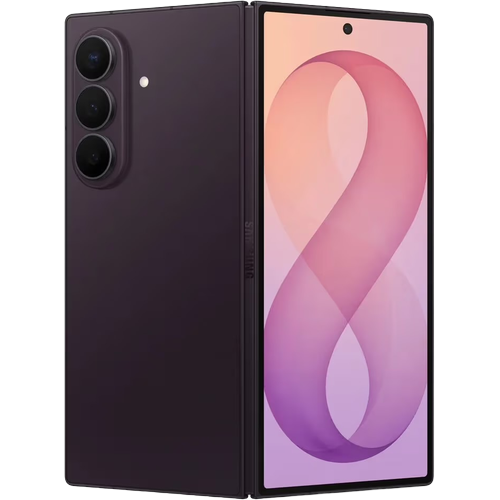
Samsung
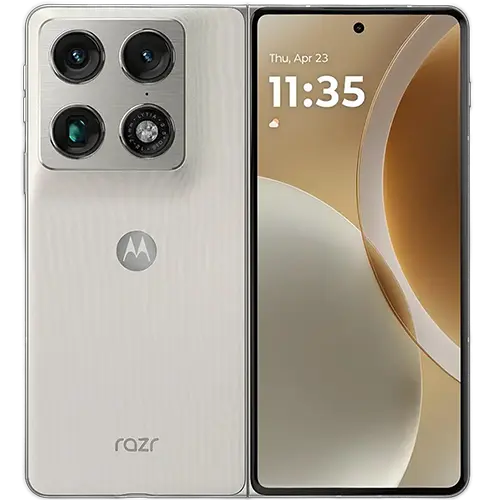
Motorola
Galaxy Z Fold 8 Ultra
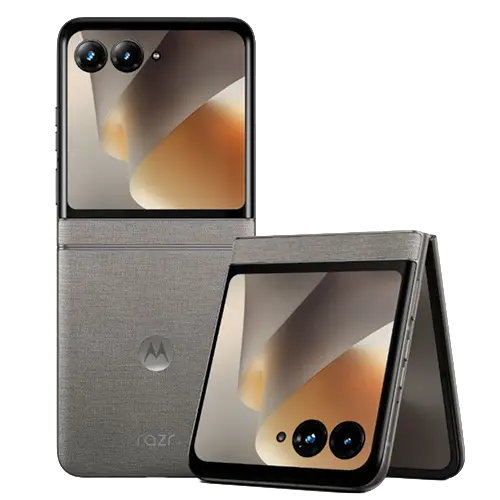
Razr Fold
Ranked #18 of 61
Ranked #27 of 61
Overall
Overall
Both of these are book-style foldables, separated by $200: the Galaxy Z Fold 8 Ultra at $2099.99 and the Razr Fold at $1899.99. Samsung has been iterating on this form factor longer than anyone, and the Fold 8 Ultra is its top-tier expression of it. Motorola built its foldable reputation on flip phones; the Razr Fold is its play for the same big-screen buyer Samsung has had mostly to itself. If you're spending close to two grand on a phone that opens into a small tablet, these two are the obvious cross-shop.
The split between them is unusually clean. The Samsung wins on raw performance, battery efficiency, rear camera sharpness and dynamic range, and microphone quality. The Motorola answers with better displays inside and out, more accurate camera color, a far more capable long zoom, and a lower price. Neither phone is a clean sweep, which makes priorities matter more than usual here.
Design
| Samsung Galaxy Z Fold 8 Ultra | Motorola Razr Fold | |
|---|---|---|
| Specifications | ||
| Dimensions (folded) | 158.4 x 72.8 x 8.9 mm | 160.05 × 73.6 × 9.89 mm |
| Dimensions (unfolded) | 158.4 x 143.2 x 4.1 mm | 160.05 × 144.46 x 4.55 mm |
| Weight | 215g | 243g |
| IP Rating | IP48 | IP48/IP49 |
| Frame | Aluminum | Aluminum |
| Front | Gorilla Glass Victus Ceramic 3 | Gorilla Glass Ceramic 3 |
| Back | Gorilla Glass Victus 2 | — |
| Screen-to-body ratio (inner) | 90.5% | — |
| Screen-to-body ratio (outer) | 85.6% | — |
Both phones use aluminum frames. The Samsung fronts its cover display with Gorilla Glass Victus Ceramic 3 and backs the phone with Gorilla Glass Victus 2; the Motorola uses Gorilla Glass Ceramic 3 up front and doesn't specify its back material. The Samsung is the smaller, lighter phone in every dimension: 215g against 243g, 158.4 x 72.8 x 8.9mm folded against 160.05 x 73.6 x 9.89mm, and 4.1mm against 4.55mm per half when open. A 28g difference is roughly five sheets of glass; on a phone you fold and unfold all day, it's the kind of gap you notice.
Both carry IP48 ratings, meaning full dust protection and submersion to rated depth. The Motorola adds IP49, which covers high-pressure, high-temperature water jets. That's rare on any phone and essentially unheard of on a foldable.
Open, the two take different shapes. The Samsung's 8-inch inner panel runs a 10:9 aspect ratio with a 90.5% screen-to-body ratio, so bezels are thin. The Motorola's 8.1-inch panel is nearly square at 8:7.2. The cover screens are both 21:9, so folded, they behave like conventional phones.
Bandicoot Lab doesn't formally test design or durability.
Display
Inner
| Samsung Galaxy Z Fold 8 Ultra (Inner) | Motorola Razr Fold (Inner) | |
|---|---|---|
552/ 881 | 658/ 881 | |
The Samsung's inner display is an 8-inch LTPO AMOLED at 2256 x 2504 (422 pixels per inch), 1 to 120Hz. The Motorola's is an 8.1-inch AMOLED at 2484 x 2232 (412 PPI), also 1 to 120Hz. On paper they're near twins. In testing they aren't.
The Motorola's panel is the brighter one where it counts: 4,142 nits peak with HDR content against the Samsung's 2,832. The Samsung reaches further in manual mode, hitting 683 nits to the Motorola's 543, which matters if you prefer setting brightness yourself outdoors. Both panels hold their HDR output over a 30-minute stress run without meaningful dimming, so neither fades on long video sessions.
Color is the Motorola's clearest win. Its most accurate mode is close enough to reference that errors won't be visible in normal use, and it covers 97.7% of the P3 color gamut. The Samsung's best mode shows small but measurable drift, and P3 coverage sits at 76.1%, meaning wide-gamut content loses some of its intended punch. HDR tone mapping follows the same pattern: the Motorola tracks the reference curve closely and clips late, while the Samsung lifts highlights above their mastered levels and loses the brightest detail earlier. Touch latency is 15.1ms on the Motorola and 19.5ms on the Samsung, a gap that size isn't something you'll feel.
Outer
| Samsung Galaxy Z Fold 8 Ultra (Outer) | Motorola Razr Fold (Outer) | |
|---|---|---|
576/ 881 | 691/ 881 | |
The cover displays diverge more than the inner ones. The Samsung's is a 6.5-inch LTPO AMOLED at 1080 x 2520 (422 PPI), 1 to 120Hz. The Motorola's is a 6.6-inch LTPO P-OLED at 2520 x 1080 (415 PPI) that runs from 30Hz up to 165Hz, the fastest refresh rate either phone offers on any panel.
The brightness story repeats. The Motorola's cover screen peaks higher with HDR content, the Samsung's reaches further in manual mode, and both outer panels run brighter than their respective inner ones. Color accuracy on the Motorola's cover display stays well ahead of the Samsung's, consistent with the inner panels. If you spend most of your time on the phone folded, the Motorola's cover screen is the better one.
Performance
| Samsung Galaxy Z Fold 8 Ultra | Motorola Razr Fold | |
|---|---|---|
853/ 1012 | 668/ 1012 | |
The Samsung runs a Snapdragon 8 Elite Gen 5 with 12GB of RAM, 16GB optional; the Motorola runs a Snapdragon 8 Gen 5 with 16GB standard. The chips sound similar. They aren't.
In GeekBench, the Samsung scores 3,666 single-core and 10,878 multi-core against the Motorola's 2,628 and 9,178. That single-core gap is close to 40%, and single-core speed is what drives app launches and general responsiveness. The browser test makes the difference starker: the Samsung posts a Speedometer score of 45.1 to the Motorola's 16.9. Heavy web apps will feel like they're running on different generations of hardware.
Graphics is more even. The Samsung peaks higher in the Wild Life Extreme stress test, 5,993 against 5,401, but the Motorola holds up better under sustained load, keeping 68.6% of its peak against the Samsung's 56.3%. The same pattern shows in ray-tracing: the Samsung's best Solar Bay run is well ahead at 12,748 versus 9,631, but the Motorola is again more stable under sustained load. Short gaming sessions favor the Samsung; after twenty minutes the two land closer together than the peak numbers suggest. For everything that isn't a game, the Samsung is the clearly faster phone.
Camera
| Samsung Galaxy Z Fold 8 Ultra | Motorola Razr Fold | |
|---|---|---|
518/ 587 | 481/ 587 | |
The Samsung carries a 200-megapixel main camera, a 50-megapixel ultrawide, a 10-megapixel 3x telephoto, and 10-megapixel selfie cameras inside and out, with digital zoom to 30x. The Motorola goes 50 megapixels across all three rear lenses, including a large-sensor 3x telephoto, plus a 32-megapixel inner and 20-megapixel outer selfie camera, with zoom to 100x. The Samsung scores higher overall, but neither reaches the level of camera-first slab flagships. They fall short in different places.
The sharpness pattern is consistent: the Samsung resolves more detail on its main and ultrawide lenses in good light, while the Motorola is steadier across lighting conditions and much stronger at long zoom. Past 10x the Samsung's output degrades quickly and its 30x ceiling arrives with little usable detail left. The Motorola holds recognizable detail considerably deeper into its range, and while 100x shots are more novelty than photograph, its 10x to 30x results are clearly the better of the two.
Color splits the other way. The Motorola's hue accuracy is better on nearly every lens, with the main camera in particular rendering colors close to reference in all three lighting conditions. The Samsung's rear cameras show a mild cool, blue-leaning cast as lighting gets warmer, a white balance correction that overshoots. Dynamic range is the Samsung's biggest advantage: its rear lenses keep shadow detail and scene depth in high-contrast shots where the Motorola's main and telephoto flatten out and clip.
Main
| Samsung Galaxy Z Fold 8 Ultra (Main) | Motorola Razr Fold (Main) | |
|---|---|---|
679/ 722 | 537/ 722 | |
The Samsung pairs its 200-megapixel sensor with an f/1.7 aperture on a 1/1.3-inch sensor; the Motorola uses 50 megapixels at f/1.6 on a slightly larger 1/1.28-inch sensor. In bright and moderate light the Samsung is clearly sharper, and its resolution advantage shows across the 1x to 3x range both phones cover before their telephotos take over. It crops to 2x and 3x cleanly; the Motorola softens noticeably as you push toward 3x. In dark conditions the gap closes and slightly reverses, with the Motorola holding its detail while the Samsung drops off.
The Motorola's main camera has the more trustworthy color. Hues stay accurate across all three lighting conditions with neutral saturation, drifting only slightly warm in low light. The Samsung pushes saturation a bit harder in bright light and pulls cool in warmer lighting. Skin tones split by condition: the Samsung is more accurate in bright and moderate light but drifts badly in the dark, while the Motorola is weakest in bright light and gets more accurate as the light drops.
Dynamic range is not close. The Samsung's main camera retains shadow detail and highlight gradation in high-contrast scenes; the Motorola clips highlights earlier and shows some tonal reversals in the shadows, so backlit shots lose depth. The Samsung's video is also steadier handheld.
Ultrawide
| Samsung Galaxy Z Fold 8 Ultra (Ultrawide) | Motorola Razr Fold (Ultrawide) | |
|---|---|---|
600/ 722 | 422/ 722 | |
The Samsung's ultrawide is 50 megapixels at f/1.9 covering 0.6x; the Motorola's is 50 megapixels at f/2 and goes wider at 0.5x. The Samsung is sharper in every lighting condition, and both ultrawides give up a sensible amount of detail relative to their main lenses rather than falling off a cliff.
Color is the Motorola ultrawide's problem. Skin tones in bright and moderate light drift far from reference, enough to be the weakest result on either phone, and it's the Motorola's lowest-scoring lens as a result. General hue accuracy is fine; it's specifically faces that suffer. The Samsung's ultrawide leans slightly cool and oversaturated but keeps skin tones in a more acceptable range. Dynamic range again favors the Samsung decisively, matching its main lens where the Motorola's ultrawide flattens high-contrast scenes.
Telephoto
| Samsung Galaxy Z Fold 8 Ultra (Telephoto) | Motorola Razr Fold (Telephoto) | |
|---|---|---|
561/ 722 | 476/ 722 | |
Both phones use 3x telephotos, but the hardware philosophies differ. The Samsung's is a small 10-megapixel sensor at 67mm; the Motorola's is a 50-megapixel sensor at 71mm that's roughly four times the area. At native 3x in bright light the Samsung is marginally sharper. Everywhere else the Motorola's sensor advantage shows: it holds essentially the same detail in dark conditions that it does in bright, while the Samsung's telephoto loses a third of its resolution when the lights drop.
Past 3x the Motorola pulls away. Its detail holds through the mid-zoom range where the Samsung's degrades steadily, consistent with the overall deep-zoom story. If zoom is why you're buying a telephoto, the Motorola is the better tool.
Color on the Motorola's telephoto is accurate for skin tones in all lighting but pulls noticeably warm and yellow in moderate and dim light, a white balance correction that undershoots the warmer sources. The Samsung's telephoto shows the same cool lean as its other rear lenses. Dynamic range strongly favors the Samsung, which keeps depth in contrasty telephoto scenes where the Motorola clips. The Samsung also stabilizes telephoto video better.
Front Inner
| Samsung Galaxy Z Fold 8 Ultra (Front Inner) | Motorola Razr Fold (Front Inner) | |
|---|---|---|
349/ 722 | 566/ 722 | |
The inner selfie cameras aren't close. The Motorola's 32-megapixel camera resolves meaningfully more detail than the Samsung's 10-megapixel unit in every lighting condition, and its dynamic range is strong where the Samsung's is among the weakest results either phone posts. Backlit selfies on the Samsung's inner camera lose the background to clipping; the Motorola's keep it.
Color is more mixed. The Motorola's skin tones drift badly in bright light before settling down in moderate and dim conditions, and it desaturates noticeably as light drops, giving low-light selfies a muted look. The Samsung's inner camera is reasonably accurate in bright and moderate light but confuses hues in the dark. On a foldable, the honest advice is the same for both phones: the main camera with the cover screen as a viewfinder beats either inner selfie camera.
Front Outer
| Samsung Galaxy Z Fold 8 Ultra (Front Outer) | Motorola Razr Fold (Front Outer) | |
|---|---|---|
386/ 722 | 449/ 722 | |
The outer selfie cameras are 10 megapixels on the Samsung and 20 on the Motorola. The Motorola is somewhat sharper in bright and moderate light but falls behind its own inner camera, and drops off in the dark. Its dynamic range is still comfortably better than the Samsung's, which clips backlit scenes on this lens too.
The Samsung's outer camera shows the same pattern as its inner one: decent color in good light, warm skin drift and hue confusion in the dark. The Motorola's outer camera is less accurate on skin than its inner unit across the board. Video stabilization flips here: the Samsung's outer selfie video is reasonably steady, while the Motorola's is the shakiest result from either phone.
Battery
| Samsung Galaxy Z Fold 8 Ultra | Motorola Razr Fold | |
|---|---|---|
616/ 836 | 481/ 836 | |
The Motorola carries a 6,000mAh battery to the Samsung's 5,000mAh. The results don't follow the capacities.
In video playback the two are close on the inner screens: 27.99 hours for the Samsung, 26.22 for the Motorola. On the cover screens the Motorola's extra capacity finally shows, running 39.69 hours against the Samsung's 31.14. Either figure means multiple days of normal mixed use; the Motorola folded is in long-haul territory.
Active workloads reverse the picture. Over the 5-hour web browsing test the Samsung drains 23% to the Motorola's 32%, and the gaming stress test costs the Samsung 19% against 29%. Overnight idle drain is 2% versus 4%. Extrapolate the web numbers and the Samsung delivers around 21 hours of continuous browsing to the Motorola's roughly 15, despite giving up 1,000mAh. The Motorola's bigger cell is being spent covering a less efficient platform. For video and standby-heavy use the Motorola lasts longer; for screen-on work and gaming, the Samsung does.
Charging
| Samsung Galaxy Z Fold 8 Ultra | Motorola Razr Fold | |
|---|---|---|
333/ 837 | 394/ 837 | |
The spec sheet favors Motorola: 80W wired against the Samsung's 45W. The stopwatch favors Samsung. At 10 minutes the Samsung reaches 31% to the Motorola's 25%, and at 30 minutes it's 74% to 65%. Whatever the Motorola's peak draw is, it doesn't sustain it long enough to matter. An 80W phone losing this comparison is a real result. For the charging that matters day to day, the wired kind, the Samsung refills quicker despite the smaller number on the box.
Wireless flips the same way in miniature. The Samsung is rated 20W to the Motorola's 15W, yet the Motorola hits 11% at 10 minutes and 26% at 30 against the Samsung's 8% and 20%. Neither is fast; both are overnight-pad speeds.
Speaker
| Samsung Galaxy Z Fold 8 Ultra | Motorola Razr Fold | |
|---|---|---|
698/ 897 | 749/ 897 | |
The Samsung is the louder phone, reaching 77.4 dBA to the Motorola's 74.5, though the Motorola plays cleaner, with average distortion of 3.19% against 4.68%. Neither figure is problematic at normal volumes; push the Samsung to max and you'll hear the strain first.
The Motorola's speakers are fuller in the low end, giving music and video more body, while the Samsung is thinner down low but clearer and more detailed up top. The Motorola's midrange response is also more even, so voices sit more naturally in the mix. Overall the Motorola comes out ahead here, mostly on the strength of that cleaner, fuller output.
Microphone
| Samsung Galaxy Z Fold 8 Ultra | Motorola Razr Fold | |
|---|---|---|
671/ 1220 | 364/ 1220 |
This is one of the larger quality gaps between the two. The Samsung's microphones sit above average, with an even frequency response that keeps recorded voices natural. The Motorola lands well below average; its response is noticeably uneven, which colors voice recordings and call audio. If you record interviews, voice memos, or video with speech, the Samsung is the safer choice by a wide margin.
Other
| Samsung Galaxy Z Fold 8 Ultra | Motorola Razr Fold | |
|---|---|---|
| Biometrics | 681/ 1181 | 641/ 1181 |
| Data Transfer | 737/ 943 | 612/ 943 |
| Specifications | ||
| Biometric type | Fingerprint | Fingerprint |
| Ports | USB-C 3.2 | USB-C 3.2 |
| Storage | 256GB, 512GB, 1TB | 512GB |
Both phones use capacitive fingerprint readers, and both are quick: 154ms average unlock on the Samsung, 164ms on the Motorola. You won't tell them apart. Neither phone has hardware-based face unlock, only the standard camera-based kind that doesn't meet the security bar for payments.
Storage configurations diverge. The Samsung offers 256GB, 512GB, and 1TB; the Motorola comes in 512GB only, which at least means nobody gets stuck on a cramped base tier. Both use USB-C 3.2 ports. In file transfer testing the Samsung reads at up to 326 MB/s and writes at 287, against the Motorola's 273 and 249. Both are fast enough that large transfers won't be painful; the Samsung is modestly quicker.
Conclusion
The Samsung Galaxy Z Fold 8 Ultra is the stronger all-rounder, and it earns the $200 premium in the places most people feel daily: it's meaningfully faster, lighter by 28g, more efficient on battery during active use, quicker to charge despite the lower wattage, and its rear cameras produce sharper, deeper images in most conditions. The microphone gap alone should decide it for anyone who records audio. If you want the foldable that gets the fundamentals right with the fewest caveats, it's this one.
The Motorola Razr Fold's case rests on its screens and its zoom. Both of its displays are brighter with HDR content, more color-accurate, and more faithful with HDR tone mapping, and the 165Hz cover panel is the best outer display on either phone. Its camera colors are more trustworthy even where its images are softer, and past 10x zoom it isn't a contest. Add the fuller speakers, the extra water-jet protection, and 512GB standard at a lower price, and there's a real buyer here: someone who uses the cover screen most of the day, watches a lot of video, and shoots at long range.
Where the Motorola can't compete is speed and efficiency. Its chip trails badly in CPU and browser work, and its 6,000mAh battery drains faster under load than the Samsung's 5,000mAh cell. Pick based on which list you just nodded along to.
FAQ
Does the Galaxy Z Fold 8 Ultra or Razr Fold have the better display?
The Razr Fold has the better inner and cover displays. Its inner panel reaches 4,142 nits peak with HDR content against 2,832 nits on the Fold 8 Ultra, and it covers 97.7% of the P3 gamut against 76.1%. The Fold 8 Ultra gets brighter in manual mode, 683 nits to 543, which helps if you set brightness yourself outdoors. The Razr Fold's cover screen also runs up to 165Hz.
Which has the better camera, the Fold 8 Ultra or the Razr Fold?
It depends on what you shoot. The Fold 8 Ultra is sharper on the main and ultrawide lenses and keeps far more shadow and highlight detail in high-contrast scenes. The Razr Fold renders colors more accurately, holds detail much deeper into the zoom range, and has better inner selfie cameras. For everyday rear-camera shooting the Samsung is the stronger pick, and for long zoom or accurate color the Motorola is.
Which foldable has better battery life, the Fold 8 Ultra or the Razr Fold?
The Razr Fold lasts longer for video and on the cover screen, at 39.69 hours of playback against 31.14 hours on the Fold 8 Ultra. The Fold 8 Ultra lasts longer under active use despite its 5,000mAh battery against the Razr Fold's 6,000mAh. It drains 23% in the 5-hour web test against 32%, and 19% in the gaming test against 29%. Choose the Motorola for video and standby, and the Samsung for browsing and gaming.
Does the Razr Fold's 80W charging make it faster than the Fold 8 Ultra's 45W?
No. The Fold 8 Ultra charges faster over a wire, reaching 31% at 10 minutes and 74% at 30 minutes, against 25% and 65% for the Razr Fold. The Razr Fold doesn't sustain its peak wattage long enough to win. Wireless is also close to even in practice, and neither phone is fast. The Razr Fold gets 26% at 30 minutes against 20% for the Fold 8 Ultra.
Is the Fold 8 Ultra faster than the Razr Fold for gaming and everyday use?
Yes, the Fold 8 Ultra is the faster phone for everyday use. Its single-core GeekBench score is 3,666 against 2,628, and it scores 45.1 in Speedometer against 16.9, so apps and web pages respond noticeably quicker. In gaming the Fold 8 Ultra peaks higher, but the Razr Fold holds more of its peak under sustained load, keeping 68.6% in Wild Life Extreme against 56.3%. Over a long session the two end up closer than the peak numbers suggest.
Is the Fold 8 Ultra worth $200 more than the Razr Fold?
For most people, yes. The Fold 8 Ultra costs $2099.99 against $1899.99, and for that it is much faster, lighter at 215g against 243g, more efficient under load, and quicker to charge. It has a far better microphone and sharper rear cameras. The Razr Fold is the better value if you mostly use the cover screen, watch a lot of video, or shoot at long zoom. It also has better displays, IP49 water-jet protection, and 512GB of storage as standard.
Related
Motorola
Razr Fold
Samsung
Galaxy Z Fold 8 Ultra

Samsung
Galaxy S26 Ultra
Samsung
Galaxy S26+
Samsung
Galaxy Z Fold 8
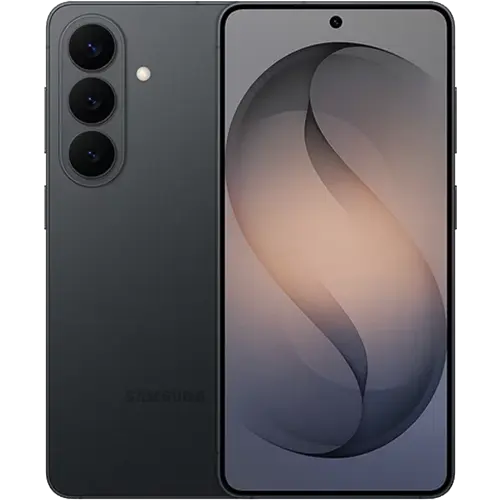
Samsung
Galaxy S26
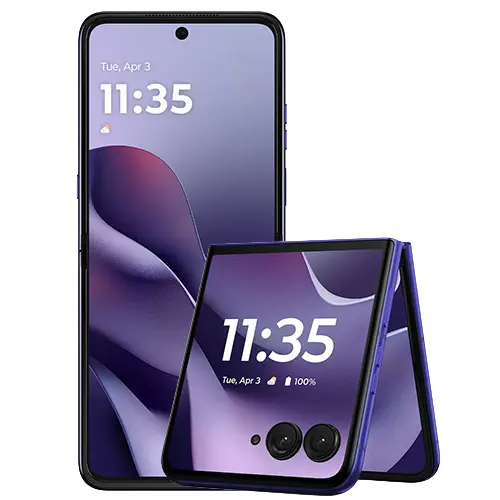
Motorola
Razr Ultra (2026)
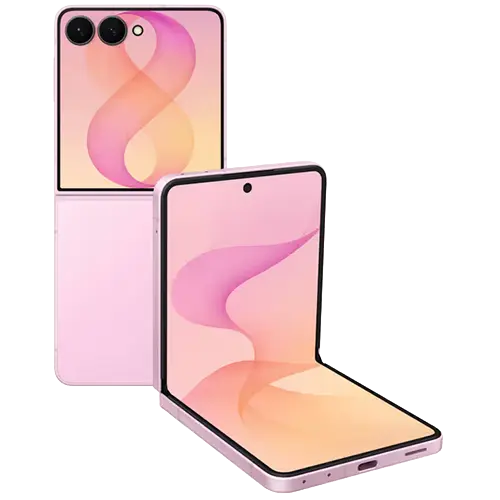
Samsung
Galaxy Z Flip 8
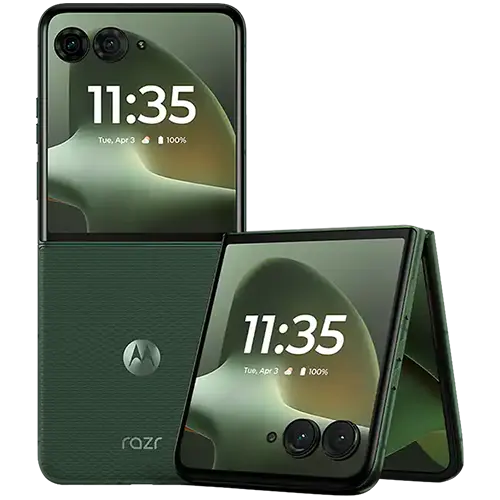
Motorola
Razr+ (2026)
Motorola
Razr (2026)

Motorola
Moto G Power (2026)

Google Pixel 11 Pro Fold vs Samsung Galaxy Z Fold 8 Ultra