Samsung Galaxy Z Fold 8 Ultra
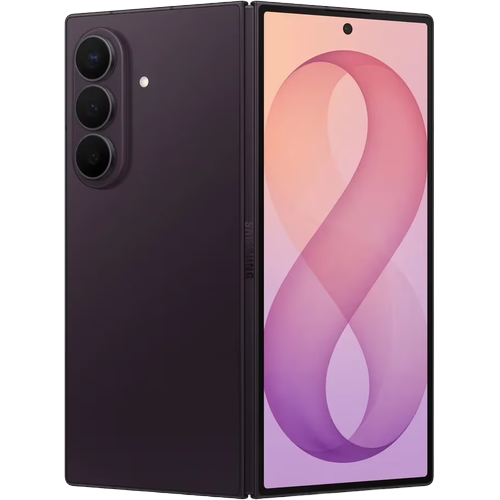
Samsung
Galaxy Z Fold 8 Ultra
Ranked #16 of 53 devices tested
Score Overview
Samsung's Galaxy Z Fold 8 Ultra is the top of the company's book-style foldable line — a phone that opens into an 8-inch tablet and asks $2,099.99 for the privilege. It's built for people who want one device to cover reading, multitasking, and media on a large canvas, without carrying a slab phone that compromises on speed or cameras to get there.
Most of it works. Performance is genuinely fast, the rear cameras handle detail and high-contrast scenes well, and battery life on the big inner screen is longer than the 5,000 mAh capacity suggests. The weak spots include that the front cameras are mediocre, image quality falls apart at long zoom, wireless charging is slow, and sustained gaming performance drops off as the thin chassis heats up. It also has to compete with Samsung’s own cheaper Z Fold 8, which has a wider, passport-style form-factor.
Design
Specifications
Folded, the Z Fold 8 Ultra measures 158.4 x 72.8 x 8.9 mm and weighs 215 grams. Unfolded it's 4.1 mm thick. That weight sits in the same range as large slab flagships, which is unusual for a device carrying two displays and a hinge. The frame is aluminum, the outer screen is covered in Gorilla Glass Victus Ceramic 3, and the back panel uses Gorilla Glass Victus 2. The port is USB-C 3.2.
The IP48 rating means the phone survives submersion to the rated depth, but the "4" is the catch: it's only protected against solid objects larger than 1 mm, not fine dust. Sand and grit remain a real hazard for the hinge, as with most foldables.
The inner display covers 90.5% of the unfolded body at a 10:9 aspect ratio, so bezels are thin for a foldable. The outer display runs a narrow 21:9 at 85.6% screen-to-body, keeping the folded phone usable one-handed. Bandicoot Lab doesn't formally test design or durability, so we can't speak to hinge longevity or how the phone holds up to drops.
Display
Inner
The inner display is an 8-inch LTPO AMOLED at 2256 x 2504 resolution, 422 pixels per inch, refreshing between 1 and 120Hz. Manual brightness tops out at 683 nits, which is adequate outdoors but not exceptional. HDR content pushes small highlights to 2,832 nits, though brightness stability across window sizes is 46.6%, meaning full-screen bright scenes render far dimmer than that peak. Once it's bright, it stays bright over time — sustained output over 30 minutes held at 98.6%, so long HDR sessions don't fade.
Tone mapping pushes highlights a bit brighter than content is mastered for, and the panel clips at roughly three quarters of the HDR input range. In practice, very bright highlight detail in HDR video merges together earlier than on a display that tracks the reference curve faithfully.
Color accuracy in the best mode is good, with errors small enough that most people won't spot them without a reference beside it. Gamut coverage is the odd result — sRGB is nearly complete at 99.6%, but P3 coverage reaches only 76.1%, so wide-gamut content loses some of its most saturated colors. Touch latency averaged 19.5 ms, which is unremarkable in either direction.
Outer
The outer display is a 6.5-inch LTPO AMOLED at 1080 x 2520, matching the inner panel's 422 PPI and 1 to 120Hz refresh range. In our testing it gets meaningfully brighter than the inner panel, which suits its role as the screen you use outdoors with the phone folded. Color accuracy is slightly worse than the inner display, though the difference is at the threshold of what's visible. Touch response is marginally quicker on the outer panel.
Performance
The Z Fold 8 Ultra runs a Qualcomm Snapdragon 8 Elite Gen 5 with 12GB or 16GB of RAM. CPU results are excellent, hitting 3,666 single-core and 10,878 multi-core in GeekBench 6, which puts it among the fastest phones we've tested for everyday responsiveness. App launches, multitasking across the big screen, and heavy workloads all benefit. Browser performance backs this up, with a Speedometer score of 45.1.
The GPU is a different story. Peak results are strong, but stability under the Wild Life Extreme stress test was 56.3%, and 52.6% in Solar Bay. The thin unfolded chassis has little thermal headroom, so extended gaming sessions will see frame rates drop well below where they start. Short sessions and casual games won't be affected, but a 40-minute stretch of a demanding title will be.
Camera
The rear camera system is reasonably strong. The device has a 200-megapixel main sensor, a 50-megapixel ultrawide, and a 10-megapixel 3x telephoto. Detail from the main and ultrawide lenses is high, and dynamic range across all three rear lenses is a genuine strength, with high-contrast scenes keeping shadow detail that many phones crush.
Sharpness falls off hard at the long end of the zoom range. Past 10x, detail degrades quickly, and the 30x maximum is usable for identifying a subject, not photographing one. Camera-focused slab flagships with dedicated long telephoto lenses hold up far better in this range. The front cameras are the other weak point, with modest detail and limited dynamic range on both.
Main
The main camera pairs a 200-megapixel, 1/1.3-inch sensor with a 24mm f/1.7 lens. Sharpness is high in bright and moderate light and drops noticeably in dim conditions, though results stay usable. Cropping in digitally toward 3x, where the telephoto takes over, detail softens gradually but cleanly. There's no point in the main lens's range where the image falls apart.
Color has a slight vivid push in daylight that reads as pleasant rather than exaggerated, and skin tones stay close to accurate in bright and moderate light. In dim, warm lighting, skin tones drift substantially and saturation drains out of the image. Dynamic range is strong — backlit and high-contrast scenes hold shadow detail well, though the brightest highlights still clip.
Ultrawide
The ultrawide is a 50-megapixel, 1/2.5-inch sensor at 14mm f/1.9, giving a 0.6x field of view. It's softer than the main lens but consistent, holding nearly the same detail in dim light as in bright, which is unusual for an ultrawide. Dynamic range matches the main camera, so wide landscape shots with bright skies retain depth.
Color leans cooler than the main lens across all lighting, and skin tones drift further from reference, so it's the weaker choice for group shots with people in frame.
Telephoto
The telephoto is a 10-megapixel, 1/3.94-inch sensor at 67mm f/2.4, with a native zoom of 3x. At its native length in good light it delivers respectable detail, and dynamic range holds up well. In dim light it softens considerably, as expected from a sensor this small.
This lens carries the entire zoom range from 3x to 30x. Detail holds acceptably through the mid-single digits, then declines steadily. By 10x results are soft, and beyond that they're documentation-grade. The cool shift under warm lighting is most pronounced on this lens.
Front Inner
The inner front camera is 10 megapixels at 18mm f/2.2. Detail is modest and consistent across lighting. Skin tones are reasonable, with color accuracy declining in warm, dim light. Dynamic range is limited, so a bright window behind you will blow out.
Front Outer
The outer front camera is also 10 megapixels, at a tighter 24mm f/2.2. Detail is similar to the inner camera, and dynamic range is even more constrained, so it clips highlights aggressively in mixed lighting. Skin tones drift more than the inner camera's in bright and moderate light, with warm low light pulling colors noticeably off.
Battery
The 5,000 mAh battery is small relative to the hardware it powers, and the results are better than the capacity implies. Video playback ran 28 hours on the inner display and 31.1 hours on the outer. Either figure covers two days of typical mixed use, and the inner-screen result is strong given it's driving an 8-inch panel.
Web browsing is the weak spot. Our 5-hour browsing test drained 23%, which is heavier than average and suggests all-day browsing sessions on the big screen will eat the battery faster than video does. Gaming efficiency is good, with the one-hour stress test consuming 19%. Overnight standby drained 2%, so the phone loses little sitting idle.
Charging
Wired charging runs at 45W. Ten minutes on the cable delivered 31%, and 30 minutes reached 74%. That's a useful quick top-up, though slab flagships with 80W-plus charging finish well ahead of it.
Wireless charging at 20W is slow: 8% in 10 minutes and 20% in 30 minutes. Treat the wireless pad as an overnight or desk-side option, not a way to rescue a low battery before heading out.
Speaker
The speakers reach 77.4 dBA at maximum volume, which is loud, and they stay clean doing it, with little audible distortion or rattle even near the top of the range. High-frequency response is decent, so voices and dialogue come through clearly. Bass is thin. Music sounds bright and articulate but lacks low-end weight, which is typical for a chassis this slim.
Microphone
Microphone quality is above average. Frequency response is even across the voice range, so recordings and calls sound natural without the boxy or muffled character cheaper phones produce.
Other
Measurements
Specifications
The capacitive fingerprint sensor unlocked in an average of 154 ms, which is fast enough to feel instant. There's no hardware-based face unlock.
The USB-C 3.2 port delivered 326 MB/s reads and 287 MB/s writes in our transfer tests, quick enough to offload a large video library without a long wait. Storage comes in 256GB, 512GB, and 1TB configurations.
Conclusion
The Z Fold 8 Ultra makes a reasonable case that a foldable no longer has to trade away the fundamentals. The chipset is as fast as anything in a slab phone, the rear cameras produce genuinely good photos in most conditions, and battery life on an 8-inch screen runs two days. For a device this thin, that's a solid set of results.
What it doesn't do is match dedicated camera flagships at long zoom or in front-camera quality, and the charging system, particularly wireless, lags well behind phones costing half as much. At $2,099.99, you're paying for the form factor first. If the folding screen is the point, the rest of the phone holds up its end. If it isn't, a conventional flagship does several of these jobs better for considerably less.
FAQ
How long does the Galaxy Z Fold 8 Ultra's battery actually last?
In video playback testing it ran 28 hours on the inner 8-inch screen and 31.1 hours on the outer display, either of which covers about two days of typical mixed use. Web browsing drains the battery faster than video, with a 5-hour browsing session using 23% of the charge. Gaming is efficient by comparison, and standby drain overnight is minimal.
Is the zoom camera on the Z Fold 8 Ultra any good?
The single 10-megapixel 3x telephoto handles its native focal length and moderate zoom well, with detail holding up acceptably through the mid-single digits. Past 10x, sharpness declines steadily, and by the 30x maximum the results are only good enough for identifying a subject, not for usable photos. Slab flagships with dedicated long telephoto lenses do noticeably better in this range.
Can the Galaxy Z Fold 8 Ultra handle long gaming sessions without slowing down?
Short or casual gaming sessions run fine, since peak GPU performance is strong. Under sustained load, stability drops to 56.3% in the Wild Life Extreme stress test and 52.6% in Solar Bay, meaning frame rates fall well below their starting point during a long session. The thin unfolded chassis has limited room to dissipate heat, which is the likely cause.
Why is wireless charging so slow on the Z Fold 8 Ultra?
Wireless charging tops out at 20W, well below the phone's 45W wired speed. In testing it reached only 8% after 10 minutes and 20% after 30 minutes on a wireless pad. It's best used overnight or at a desk rather than as a quick top-up before leaving the house.
Are the front cameras good for selfies and video calls?
Both front cameras deliver modest detail and limited dynamic range, so bright backgrounds tend to blow out. The inner camera's video stabilization is essentially absent, making handheld selfie video visibly shaky. The outer front camera has noticeably better stabilization, so it's the better choice for handheld video despite its narrower field of view.
Does the Z Fold 8 Ultra's IP48 rating mean it's dust-proof?
No. The IP48 rating covers protection against submersion to its rated depth, but the "4" only means it resists solid objects larger than 1mm, not fine dust or sand. Grit remains a real risk for the hinge mechanism, as it does with most foldable phones.
Is the Galaxy Z Fold 8 Ultra fast for everyday use?
Yes. The Snapdragon 8 Elite Gen 5 posted 3,666 single-core and 10,878 multi-core scores in GeekBench 6, and a Speedometer score of 45.1 backs up smooth browser performance. App launches, multitasking across the large inner screen, and general responsiveness are all fast; it's only sustained GPU-heavy tasks like extended gaming where performance tapers off.
Related
Samsung
Galaxy Z Fold 8

Samsung
Galaxy S26 Ultra
Samsung
Galaxy S26
Samsung
Galaxy S26+
Honor
Magic V6
Honor