Samsung Galaxy Z Fold 8 Ultra vs Samsung Galaxy Z Fold 8
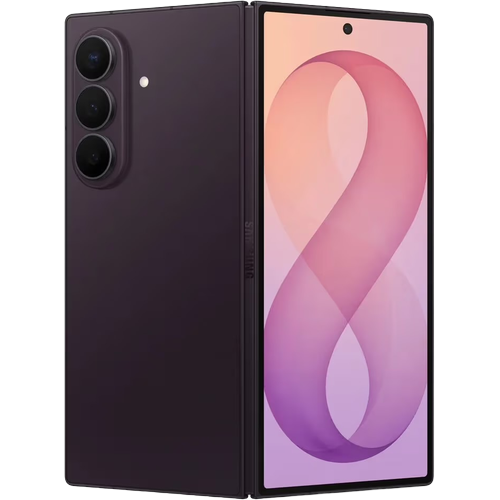
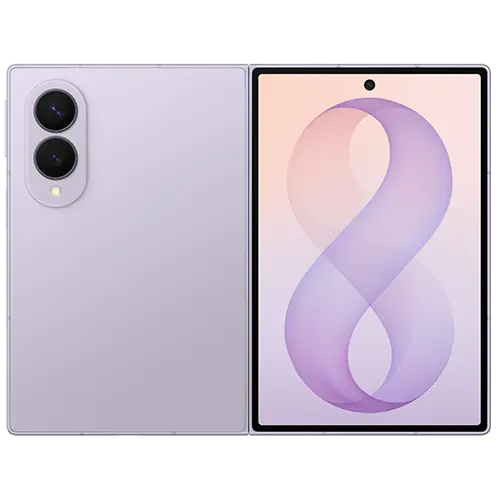
Samsung
Samsung
Galaxy Z Fold 8 Ultra
Galaxy Z Fold 8
Ranked #18 of 61
Ranked #19 of 61
Overall
Overall
Samsung sells two book-style foldables at the top of its range, and the $200 between them buys a different shape as much as a different tier. The Galaxy Z Fold 8 Ultra is the full-size version: a tall phone that opens into an 8-inch near-square tablet, with a camera system built to match a flagship slab. The Galaxy Z Fold 8 takes a shorter, wider form that folds down to something closer to a passport, and it trims the camera hardware to get there. Same chip inside both, same storage tiers, same software. Anyone cross-shopping these is really deciding how much the camera and the extra screen area are worth.
The Ultra's clearest advantage is the camera system. It has a telephoto lens the Fold 8 lacks, a sharper main sensor, and better dynamic range across the rear lenses. The Fold 8 answers with brighter displays inside and out, a slight edge in sustained performance, and marginally better battery results despite the smaller cell. Charging, speakers, biometrics, and connectivity are close enough that they shouldn't sway anyone.
Design
| Samsung Galaxy Z Fold 8 Ultra | Samsung Galaxy Z Fold 8 | |
|---|---|---|
| Specifications | ||
| Dimensions (folded) | 158.4 x 72.8 x 8.9 mm | 81.9 x 123.9 x 9.7 mm |
| Dimensions (unfolded) | 158.4 x 143.2 x 4.1 mm | 161.4 x 123.9 x 4.5 mm |
| Weight | 215g | 201g |
| IP Rating | IP48 | IP48 |
| Frame | Aluminum | Aluminum |
| Front | Gorilla Glass Victus Ceramic 3 | Gorilla Glass Victus Ceramic 3 |
| Back | Gorilla Glass Victus 2 | Gorilla Glass Victus 2 |
| Screen-to-body ratio (inner) | 90.5% | 89.0% |
| Screen-to-body ratio (outer) | 85.6% | 86.9% |
The two phones fold in genuinely different ways. The Ultra is the classic book foldable: 158.4 x 72.8 x 8.9mm closed, like a tall candy-bar phone, opening to a 158.4 x 143.2mm near-square at 4.1mm per half. The Fold 8 folds across the shorter axis instead, closing down to 81.9 x 123.9mm at 9.7mm thick. It's a squat, wide slab closed, and it opens to 161.4 x 123.9mm at 4.5mm. The Ultra gives you more total screen area; the Fold 8 gives you a smaller footprint in a pocket. The Fold 8 is also lighter at 201g versus 215g, a gap you'd notice more in a shirt pocket than in hand.
Materials are identical: aluminum frames, Gorilla Glass Victus Ceramic 3 on the cover display, Gorilla Glass Victus 2 on the back. Both carry an IP48 rating, which means submersion to rated depth is fine but dust protection only covers particles 1mm and larger. Fine grit remains the enemy of hinges on both. Screen-to-body ratios are close: 90.5% versus 89% on the inner displays, so bezels are thin either way.
Bandicoot Lab doesn't formally test design or durability.
Display
Inner
| Samsung Galaxy Z Fold 8 Ultra (Inner) | Samsung Galaxy Z Fold 8 (Inner) | |
|---|---|---|
552/ 881 | 559/ 881 | |
The Ultra's inner panel is an 8-inch LTPO AMOLED at 2256 x 2504 (422 pixels per inch) in a 10:9 aspect. The Fold 8's is 7.6 inches at 2448 x 1848 (404 PPI) in 4:3. Both run 1–120Hz adaptive refresh.
Brightness favors the Fold 8. It reaches 740 nits in manual mode against the Ultra's 683, and peaks at 3,469 nits with HDR content versus 2,832. Both panels hold their HDR output over time almost perfectly, at around 99% through a 30-minute sustained test, though both lose a good chunk of peak brightness as the lit area of the screen grows. Tone mapping differs slightly: both displays push highlights a touch brighter than the HDR master intends, with the Ultra lifting more aggressively and starting to clip highlight detail earlier than the Fold 8. Neither is a faithful reference rendering, but neither crushes anything either.
Color accuracy is effectively tied. Both panels land close to reference in their most accurate mode, with errors small enough that you'd need a side-by-side to spot them. Touch latency is 16.3ms on the Fold 8 and 19.5ms on the Ultra, a gap too small to feel.
Outer
| Samsung Galaxy Z Fold 8 Ultra (Outer) | Samsung Galaxy Z Fold 8 (Outer) | |
|---|---|---|
576/ 881 | 560/ 881 | |
The cover displays diverge more than the inner ones. The Ultra's is a conventional 6.5-inch panel at 1080 x 2520 (422 PPI), 21:9, so it works like a normal phone when closed. The Fold 8's is 5.5 inches at 1248 x 1972 (428 PPI) in a 10:16 aspect, wider than it is tall. Both run 1–120Hz.
In our testing the Ultra's cover display gets meaningfully brighter than the Fold 8's, which is the reverse of the inner panels. The Fold 8's outer screen is the more color-accurate of the two covers; the Ultra's drifts a bit further from reference. Neither difference is dramatic, but if you plan to live on the cover screen outdoors, the Ultra's is the easier one to read in sunlight.
Performance
| Samsung Galaxy Z Fold 8 Ultra | Samsung Galaxy Z Fold 8 | |
|---|---|---|
853/ 1012 | 887/ 1012 | |
Both phones run the Snapdragon 8 Elite Gen 5 with 12GB of RAM standard and a 16GB option. On CPU work they're the same phone: 3,666 versus 3,646 in GeekBench single-core, 10,878 versus 11,070 multi-core. Those gaps are noise.
GPU results split in an odd way. The Fold 8 posts a higher Wild Life Extreme peak at 7,126 against the Ultra's 5,993, but holds only 47.1% of that under sustained load while the Ultra holds 56.3%. In practice they converge: the Fold 8 starts faster and throttles harder. Solar Bay results are nearly identical, with both at 52.6% stability. The Fold 8 also wins the browser test, scoring 53.3 in Speedometer to the Ultra's 45.1.
None of this will be felt day to day. Both phones are near the top of what Android hardware does right now, and the differences only show up in benchmarks and extended gaming sessions, where the Fold 8's harder throttling might cost it a few frames late in a session.
Camera
| Samsung Galaxy Z Fold 8 Ultra | Samsung Galaxy Z Fold 8 | |
|---|---|---|
518/ 587 | 430/ 587 | |
This is where the $200 shows up. The Ultra carries a 200-megapixel f/1.7 main camera on a 1/1.3-inch sensor, a 50-megapixel ultrawide, and a 10-megapixel 3x telephoto, with digital zoom to 30x. The Fold 8 has a 50-megapixel f/1.8 main on a smaller 1/1.56-inch sensor, the same 50-megapixel ultrawide, no telephoto, and zoom capped at 10x. Both share identical 10-megapixel front cameras inside and out.
The sharpness story is one-sided. The Ultra's main camera resolves substantially more detail than the Fold 8's in every lighting condition, and it holds that advantage through the zoom range. Neither phone matches camera-focused slabs like the Galaxy S or Pixel flagships, but the Ultra gets close; the Fold 8 doesn't. At the deep-zoom end both fall apart, as nearly every phone does. The Ultra stays usable further out thanks to the telephoto feeding its digital range, while the Fold 8's 10x is a heavy crop from the main sensor and looks like one.
Main
| Samsung Galaxy Z Fold 8 Ultra (Main) | Samsung Galaxy Z Fold 8 (Main) | |
|---|---|---|
679/ 722 | 517/ 722 | |
The Ultra's main camera is sharp in bright and moderate light and only softens meaningfully in the dark. The Fold 8's main is noticeably softer everywhere, with a steeper drop as light falls. That matters more than it would on a slab phone because the Fold 8's main camera has to cover everything from 1x to 10x. Crops past 2x get mushy quickly. The Ultra's main only needs to stretch to 3x before the telephoto takes over, and its 200-megapixel sensor crops cleanly through that range.
Color tuning differs mildly. The Ultra leans slightly vivid in bright light; the Fold 8 stays closer to neutral. Hue accuracy is comparable on both, moderate in bright light and degrading somewhat under warmer illumination, with the Ultra's processing pulling slightly cool in mid light. Skin tones are the weak point on both: fine in good light, drifting badly in dim warm light, with the Ultra drifting further than the Fold 8 there.
Dynamic range clearly favors the Ultra. High-contrast scenes keep more shadow detail and clip highlights later. The Fold 8 flattens out sooner, and you'll see it in backlit shots where sky detail goes white earlier.
Ultrawide
| Samsung Galaxy Z Fold 8 Ultra (Ultrawide) | Samsung Galaxy Z Fold 8 (Ultrawide) | |
|---|---|---|
600/ 722 | 528/ 722 | |
The ultrawides are the same hardware, 50 megapixels at f/1.9 on a 1/2.5-inch sensor, and they test almost identically for sharpness. Both are unusually consistent across lighting, barely softening in the dark, which is rare for an ultrawide. On the Fold 8 the ultrawide actually out-resolves the main camera; on the Ultra it's a step behind the main.
Both tune the ultrawide more vivid than their mains and both lean slightly cool. The accuracy problem is skin tones in bright light, where the Fold 8's ultrawide drifts badly, roughly half again worse than the Ultra's. The Ultra also keeps better dynamic range through this lens. For video, the Fold 8's ultrawide stabilization is poor; handheld footage stays visibly shakier than the Ultra's.
Telephoto
| Samsung Galaxy Z Fold 8 Ultra (Telephoto) | Samsung Galaxy Z Fold 8 (Telephoto) | |
|---|---|---|
561/ 722 | — | |
The Ultra has one; the Fold 8 doesn't. The Ultra's 3x telephoto is a 10-megapixel f/2.4 unit on a small sensor, and it covers everything from 3x to the 30x cap. It's reasonably sharp at its native length in good light, softens in moderate light, and drops off clearly in the dark. Detail degrades gradually as you push past 3x and is rough by 10x, but it stays ahead of the Fold 8's main-sensor crop at every matching zoom level.
Color through the telephoto is solid in bright light. In mid light the white balance pulls noticeably blue under warm illumination, which is a processing issue rather than a sensor one. Skin tones hold up well until the light gets dim, then drift hard, same pattern as the main. Dynamic range is strong for a small telephoto sensor, close to the Ultra's main.
Front Inner
| Samsung Galaxy Z Fold 8 Ultra (Front Inner) | Samsung Galaxy Z Fold 8 (Front Inner) | |
|---|---|---|
349/ 722 | 332/ 722 | |
Both phones use the same 10-megapixel f/2.2 18mm camera above the inner display, and they perform nearly identically. Sharpness is moderate and surprisingly stable across lighting. Color is accurate in bright light with skin tones in acceptable range, drifting warmer and redder as light dims.
Dynamic range is the real weakness on both: faces against a bright window will lose the background to white.
Front Outer
| Samsung Galaxy Z Fold 8 Ultra (Front Outer) | Samsung Galaxy Z Fold 8 (Front Outer) | |
|---|---|---|
386/ 722 | 336/ 722 | |
The cover cameras are also identical hardware, 10 megapixels at f/2.2 with a wider 24mm view. Sharpness is similar between the two in good light; the Fold 8's falls off more in the dark. The Fold 8's outer camera holds slightly better dynamic range, while the Ultra's inner camera returns the favor. Both show the same dim-light color drift as the inner cameras, pulling warm and red.
The meaningful gap is video stabilization. The Ultra's outer front camera smooths handheld motion reasonably well; the Fold 8's barely does, and walking vlog-style footage shows it.
Battery
| Samsung Galaxy Z Fold 8 Ultra | Samsung Galaxy Z Fold 8 | |
|---|---|---|
616/ 836 | 622/ 836 | |
The Ultra carries a 5,000mAh cell, the Fold 8 4,800mAh. The results don't follow the capacities.
On the inner displays they're tied: 27.99 hours of video playback for the Ultra, 27.76 for the Fold 8. That's enough to fly around the world with the screen on. On the cover displays the Fold 8 pulls ahead, 37.67 hours against 31.14, likely a function of its smaller outer panel. Web browsing drain over our 5-hour test slightly favors the Ultra at 23% versus 25%. Gaming drain is identical at 19% through the 20-loop stress test, and both lose just 2% overnight on standby.
In practice both are comfortable day-and-a-half phones with mixed use, stretching to two days if you lean on the cover screen. Heavy inner-display sessions will bring either one back to a nightly charge. There's no meaningful endurance reason to pick one over the other.
Charging
| Samsung Galaxy Z Fold 8 Ultra | Samsung Galaxy Z Fold 8 | |
|---|---|---|
333/ 837 | 313/ 837 | |
Identical hardware: 45W wired, 20W wireless on both. Identical results, mostly. Both hit 31% in 10 minutes of wired charging; at 30 minutes the Ultra reaches 74% to the Fold 8's 71%. Wireless is slow on both, 8% in 10 minutes and 20% in 30, which makes a wireless pad an overnight proposition rather than a top-up tool. Neither phone charges quickly by flagship standards, and the difference between them is a rounding error.
Speaker
| Samsung Galaxy Z Fold 8 Ultra | Samsung Galaxy Z Fold 8 | |
|---|---|---|
698/ 897 | 691/ 897 | |
The Fold 8 plays marginally louder at 78.5 dBA maximum versus 77.4, with slightly higher distortion at 5.47% average against the Ultra's 4.68%. Character is where they split: the Fold 8 produces fuller bass, while the Ultra's output is cleaner and clearer through the high end. The Ultra's response also extends lower, though at phone-speaker volumes that's a subtle advantage. Both are loud, competent foldable speakers rather than standouts. Pick based on whether you'd rather have a bit more body or a bit more clarity, and know you'd need them side by side to care.
Microphone
| Samsung Galaxy Z Fold 8 Ultra | Samsung Galaxy Z Fold 8 | |
|---|---|---|
671/ 1220 | 719/ 1220 |
Both phones record above-average audio with a reasonably flat, natural response. The Fold 8 measures slightly flatter and lands a bit higher in our scoring, so voice memos and video audio sound marginally more true to life. The gap is small; neither will frustrate anyone recording meetings or clips.
Other
| Samsung Galaxy Z Fold 8 Ultra | Samsung Galaxy Z Fold 8 | |
|---|---|---|
| Biometrics | 681/ 1181 | 707/ 1181 |
| Data Transfer | 737/ 943 | 730/ 943 |
| Specifications | ||
| Biometric type | Fingerprint | Fingerprint |
| Ports | USB-C 3.2 | USB-C 3.2 |
| Storage | 256GB, 512GB, 1TB | 256GB, 512GB, 1TB |
Biometrics are a wash. Both use capacitive fingerprint sensors, with the Fold 8 unlocking in 149ms on average and the Ultra in 154ms. Both are quick, and neither offers hardware-based face unlock, only the standard camera-based kind that's less secure.
Storage and transfer are likewise identical: 256GB, 512GB, and 1TB options on both, USB-C 3.2 ports on both, and measured transfer speeds within a few MB/s of each other at roughly 327 MB/s read and 285 MB/s write. Moving a video library on or off either phone takes the same amount of time.
Conclusion
Strip away the shared parts, and this comparison reduces to two questions: how much do you care about the camera, and which shape fits your life. The Ultra wins the camera matchup decisively, with a sharper main sensor, a telephoto lens the Fold 8 simply doesn't have, better dynamic range across the rear system, and steadier video. If photography is part of why you're spending $2,000 on a foldable, the extra $200 is easy to justify, because the Fold 8's camera system trails well behind its own price class.
The Fold 8's case rests on everything else being at least as good for less money. Its displays get brighter where it counts, it edges the Ultra in browser performance and microphone quality, and it matches or beats the Ultra's battery life from a smaller cell. Its shorter, wider folded shape is also genuinely more pocketable, and the squarer inner screen suits reading and split-screen work. For someone who wants the foldable experience and treats the camera as a tool rather than a priority, the Fold 8 delivers nearly the whole package and leaves $200 in your pocket.
The two score closely overall, which is to say: there's no wrong answer here, only a camera question. Answer that and the choice makes itself.
FAQ
Does the Galaxy Z Fold 8 Ultra or the Z Fold 8 have the better camera?
The Z Fold 8 Ultra has the better camera system. Its 200-megapixel main sensor resolves more detail in every lighting condition, it adds a 3x telephoto the Fold 8 lacks, and it holds more highlight and shadow detail in high-contrast scenes. Both share the same ultrawide hardware and the same front cameras, but the Ultra's video is steadier.
Is the Galaxy Z Fold 8 Ultra worth $200 more than the Z Fold 8?
It's worth it if photography matters to you. The camera is the main gap: the Ultra has a sharper main sensor, a telephoto, and better dynamic range. Chip, storage options, charging, and biometrics are nearly identical, so someone who treats the camera as a secondary tool can take the Fold 8 and keep the $200.
Which has better battery life, the Galaxy Z Fold 8 or the Z Fold 8 Ultra?
They're close. Inner-display video playback is effectively tied at 27.99 hours on the Ultra and 27.76 on the Fold 8, despite the Ultra's larger 5,000mAh cell versus 4,800mAh. The Fold 8 pulls ahead on the cover display at 37.67 hours versus 31.14. Both are day-and-a-half phones with mixed use.
Is the Z Fold 8 or the Z Fold 8 Ultra better for gaming?
Neither has a meaningful edge in real play. They use the same chip and score almost identically on CPU tests. The Fold 8 posts a higher peak GPU result but holds 47.1% of it under sustained load, against 56.3% for the Ultra. That means the Fold 8 may drop a few frames late in a long session.
Which foldable has the brighter screen, the Galaxy Z Fold 8 or the Z Fold 8 Ultra?
It depends on which screen. The Fold 8's inner display is brighter, reaching 740 nits in manual mode and 3,469 nits peak with HDR, versus 683 and 2,832 on the Ultra. The Ultra's cover display is meaningfully brighter than the Fold 8's, so it's easier to read outdoors when the phone is closed.
Is the Galaxy Z Fold 8 easier to carry than the Z Fold 8 Ultra?
The Fold 8 is easier to pocket. It weighs 201g versus 215g and folds to a squat 81.9 x 123.9mm shape. The Ultra closes into a tall 158.4 x 72.8mm phone that handles like a normal slab, with a conventional 6.5-inch cover screen. The Ultra opens to the larger 8-inch inner display.
Related
Samsung
Galaxy Z Fold 8
Samsung
Galaxy Z Fold 8 Ultra

Samsung
Galaxy S26 Ultra
Samsung
Galaxy S26+
Samsung
Galaxy S26
Samsung
Galaxy Z Flip 8

Google Pixel 11 Pro Fold vs Samsung Galaxy Z Fold 8 Ultra
Google Pixel 11 Pro Fold vs Samsung Galaxy Z Fold 8

Samsung Galaxy Z Fold 8 Ultra vs Samsung Galaxy Z Fold 7

Samsung Galaxy Z Fold 8 Ultra vs Motorola Razr Fold
Samsung Galaxy Z Fold 8 Ultra vs Honor Magic V6

Samsung Galaxy Z Fold 8 vs Motorola Razr Fold