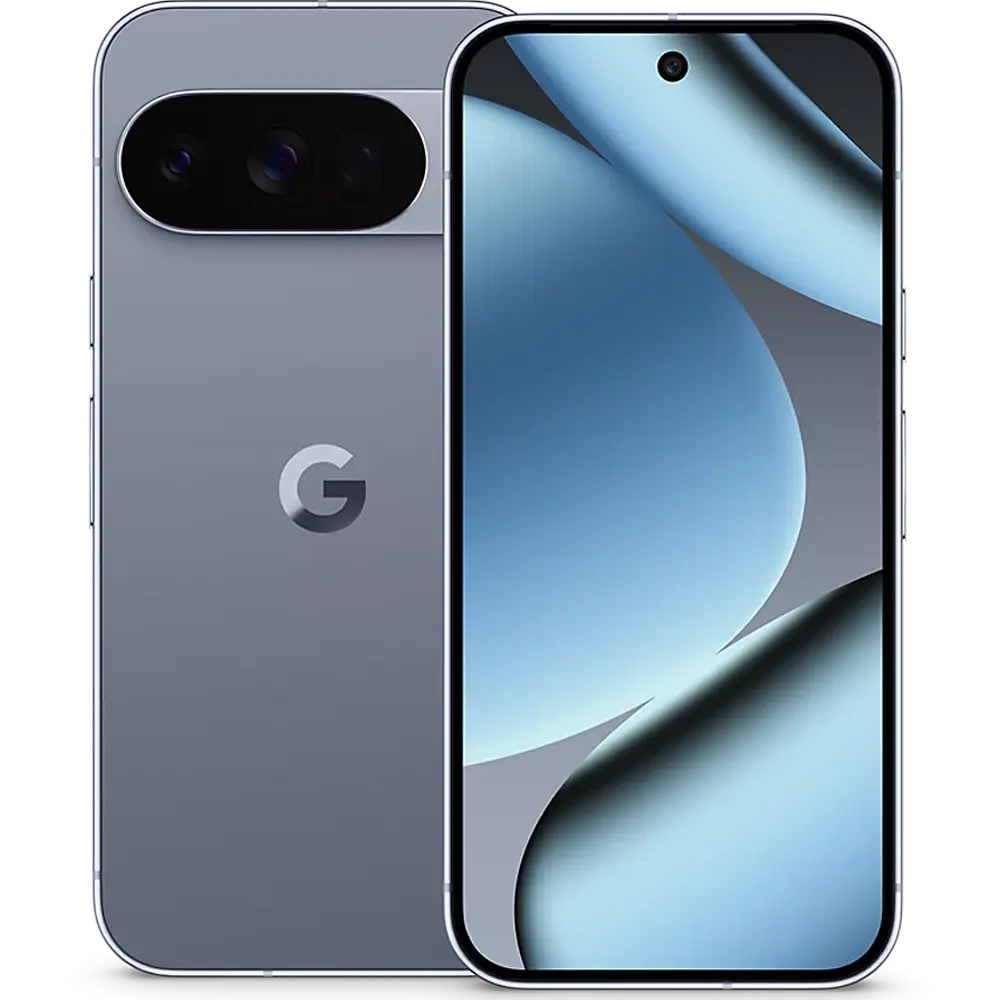
RedMagic 12 Pro

Score Overview
The RedMagic 12 Pro is a gaming phone priced at $949 that doesn't pretend to be anything else. It funnels its resources toward raw speed, battery endurance, and a high-refresh display, targeting users who'd rather have extra frames per second in a game than better portrait shots.
Where it delivers, it delivers convincingly: performance is at the top of the flagship range, battery life is strong enough to handle extended sessions without anxiety, and both wired and wireless charging are fast. The camera system, though, is genuinely weak. Color accuracy degrades sharply outside of bright daylight, stabilization is poor, and there's no telephoto lens. The speaker also underperforms for the price, and manual display brightness is moderate.
Design
Specifications
The RedMagic 12 Pro measures 163.03 x 75.96 x 8.55mm and weighs 223g. The frame is aluminum, with Gorilla Glass 7i covering front and back. It carries an IP68/IP69 rating, meaning it's rated for submersion in fresh water and resists high-pressure, high-temperature water jets. The port is USB-C 3.2 Gen 2.
A 96.3% screen-to-body ratio means the bezels are very thin, and the 19.9:9 aspect ratio produces a tall, narrow profile relative to the 6.85-inch screen diagonal. At 223g, the weight is reasonable for a phone packing an 8400mAh battery. The proportions are large but not unwieldy.
Bandicoot Lab does not formally test design or durability.
Display
The phone comes with a 6.85-inch AMOLED screen, with a 1216 x 2688 resolution at 431 PPI, up to 185Hz refresh rate.
Manual brightness maxes out at 718 nits. In direct sunlight, you'll lean on auto brightness, where HDR content peaks at 1769 nits. Brightness holds at 100% across HDR window sizes and 98.5% over a sustained 30-minute test. The minimum brightness is a comfortable 1.66 nits for nighttime use.
Color accuracy is solid. In the best display mode, colors sit close to reference values with no individual swatch drifting far enough to notice in normal use. P3 gamut coverage reaches 96.4% and sRGB hits 99.7%, so wide-color content renders accurately.
HDR tone mapping slightly lifts highlights above the mastered level, and the display clips brightness at around 90% of the input range. Bright areas look a touch more vivid than intended, but the top of the tonal range gets compressed. Fine gradations in the brightest highlights are lost.
Touch latency averages 12.2ms. For a gaming phone paired with a 185Hz refresh rate, it means the display tracks input quickly.
Performance
Under the hood, the device is powered by a Qualcomm Snapdragon 8 Elite Extreme Gen 6 with 12GB or 16GB of RAM.
CPU performance is excellent. GeekBench 6 single-core scores 4090 and multi-core hits 11916. GPU peak numbers are equally strong, with a Wild Life Extreme best of 8599 and Solar Bay best of 16595. Browser performance, measured by Speedometer at 28.6, is fast. Daily tasks like app launches, multitasking, and navigation feel instantaneous.
Sustained GPU performance tells a different story. Wild Life Extreme stability drops to 65.6%, and Solar Bay stability to 60%. During a long gaming session, the phone throttles to roughly 60-65% of its peak GPU output. Short bursts of performance are exceptional; sustained loads reveal thermal limits.
Camera
The camera system is the RedMagic 12 Pro's most conspicuous weakness. A 50-megapixel main camera (1/1.56-inch sensor, f/1.9, 22mm), a 50-megapixel ultrawide (1/2.87-inch, f/2.2, 13mm), and a 16-megapixel front camera (1/3.06-inch, f/2.0, 26mm). No telephoto, so everything beyond the native focal lengths is a digital crop, with 10x as the maximum zoom.
Main camera sharpness is reasonable in good light and holds up adequately as conditions dim. The ultrawide delivers moderate detail, consistent with its smaller sensor. The front camera captures enough for video calls but not much more. Detail softens past about 3x digital crop, and by 10x, sharpness is essentially gone. If you need usable zoom past 2-3x, this isn't the phone.
Main
The main camera offers a 50-megapixel, 1/1.56-inch sensor. Sharpness is solid in bright conditions and doesn't fall off dramatically as lighting drops. Through the digital crop range, things stay reasonable up to about 2-3x, then progressively degrade. By 5x, fine detail is noticeably smeared.
Color is vivid, running well above reference saturation in bright light. In daylight, hues are accurate and photos look energetic, but the oversaturation pushes skin tones into inaccuracy even under ideal conditions. Faces look unnatural. As lighting shifts to warmer, dimmer environments, the white balance system overcompensates, pushing a noticeable cool cast through the image. Hue accuracy in mid and low light degrades substantially, and skin tones stay poor throughout.
Dynamic range is moderate. Highlights are preserved without clipping, and shadows retain some detail, but high-contrast scenes lack the depth and tonal separation that camera-focused flagships deliver.
Ultrawide
Sharpness on the 50-megapixel ultrawide camera is moderate and reasonably consistent across lighting conditions. The smaller sensor limits resolving power, but results are acceptable for landscape and architecture use.
Color mirrors the main camera's tendencies: oversaturated in bright light, then shifting cool and blue as ambient light warms. The white balance issue is the dominant cause of color degradation in mid and low light. Skin tones are inaccurate across the board.
Dynamic range is meaningfully weaker than the main camera. Highlights clip in bright conditions, and the overall tonal range is limited. High-contrast scenes can look flat.
Front
On the front, there’s a 16-megapixel front camera. Sharpness is adequate in good light but visibly drops as conditions dim. For social media and video calls, it gets the job done. Color is slightly vivid in bright and mid-light conditions. Hue errors are present even in bright light, pointing to a sensor-level limitation. In low light, colors become noticeably muted and a cool cast emerges. Skin tones are inaccurate in bright conditions and moderate in mid-light, then drift again as things get dark.
Dynamic range is decent for a front camera, with no highlight clipping and reasonable shadow retention. Stabilization is the weakest of all three lenses, so selfie video will show noticeable movement.
Battery
Video playback runs for 30.49 hours, which is strong, from the 8,400mAh battery. Web browsing over a five-hour test drains 14%, translating to roughly a full day and a half of continuous browsing. Standby drain is just 2% over an eight-hour overnight idle, which is excellent.
Gaming drain is 35% during the GPU stress test. On an 8400mAh battery, extended gaming sessions are viable without constantly monitoring the battery indicator.
Charging
The device offers 80W wired and 80W wireless charging, with the right charging accessories.
Wired charging reaches 24% in 10 minutes and 61% in 30 minutes. Wireless charging at 80W gets to 19% in 10 minutes and 48% in 30 minutes. Near-parity between wired and wireless speeds means you don't sacrifice much by dropping the phone on a pad instead of plugging in.
Speaker
Max volume reaches 74.2 dBA. The frequency character leans toward fuller bass with weaker high-end response. Low-frequency extension is decent, so music and games have some body. Treble detail is less pronounced, giving the output a slightly warm, muddy quality. Distortion is a significant issue, dragging overall speaker performance well below average for a phone at this price. For a device marketed toward gaming, where audio cues matter, the speaker is a noticeable weak link.
Microphone
Microphone quality is slightly above average. Frequency response is reasonably even, and the phone will handle voice calls and quick recordings without issues.
Other
Measurements
Specifications
Biometrics rely solely on the optical fingerprint sensor, which unlocks in 118ms. There's no hardware-based face unlock. Storage configurations span 256GB, 512GB, and 1TB.
Data transfer via USB-C 3.2 Gen 2 delivers strong speeds, with read and write rates both reaching above 420 MB/s.
Conclusion
The RedMagic 12 Pro is a phone with a clear identity and clear trade-offs. It's one of the fastest-processing phones you'll find, and the 8400mAh battery provides the endurance to actually use that performance for extended periods. Charging is fast on both wired and wireless, biometrics are quick, and the display is responsive with a 185Hz refresh rate. If you're buying a phone primarily to play games on and want it to last through a long session, it makes a strong case.
The camera system is weak by any flagship standard, struggling with color accuracy and stabilization across the board and offering no optical zoom. The speaker underperforms, and manual display brightness is middling. At $949, the RedMagic 12 Pro asks you to accept a narrow excellence over a balanced package. For the right buyer, that's a straightforward choice. For anyone who wants a capable all-rounder, the compromises are hard to ignore.
FAQ
How long does the RedMagic 12 Pro battery last?
The RedMagic 12 Pro's 8400mAh battery ran for 30.49 hours in our video playback test. A five-hour web browsing test drained 14%, and eight hours of overnight standby cost just 2%. Most users should get well into a second day of mixed use.
Does the RedMagic 12 Pro throttle during long gaming sessions?
Yes. Peak GPU performance is very high, but sustained stability measured 65.6% in Wild Life Extreme and 60% in Solar Bay. In a long session the phone settles to roughly 60-65% of its peak GPU output, which is pretty standard. A 35% battery drain in our GPU stress test means extended play is practical without constant charger-hunting.
Is the RedMagic 12 Pro a good camera phone?
No. Colors run oversaturated in daylight, skin tones look unnatural in every lighting condition, and white balance shifts cool and blue as light dims. Handheld video is shaky because stabilization is poor on all three cameras. There's no telephoto lens, and zoomed shots lose detail quickly past 2-3x.
How fast does the RedMagic 12 Pro charge?
Wired 80W charging reaches 24% in 10 minutes and 61% in 30 minutes. Wireless charging, also 80W, reaches 19% in 10 minutes and 48% in 30 minutes. The small gap means a charging pad is a reasonable substitute for the cable. The phone has no magnetic charging.
Is the RedMagic 12 Pro screen bright enough to use outdoors?
Manual brightness tops out at 718 nits, which is modest. In direct sun, auto brightness raises HDR content to a peak of 1769 nits, so you'll want to leave it on outdoors. Brightness stays stable at 98.5% over a sustained 30-minute test, and the minimum of 1.66 nits is comfortable in a dark room.
Are the RedMagic 12 Pro speakers good for gaming?
They're a weak point. Bass has reasonable body, but treble is muted and the sound runs slightly muddy. Distortion is significant, and maximum volume reaches 74.2 dBA. Headphones are the better choice for games where audio cues matter.
Related
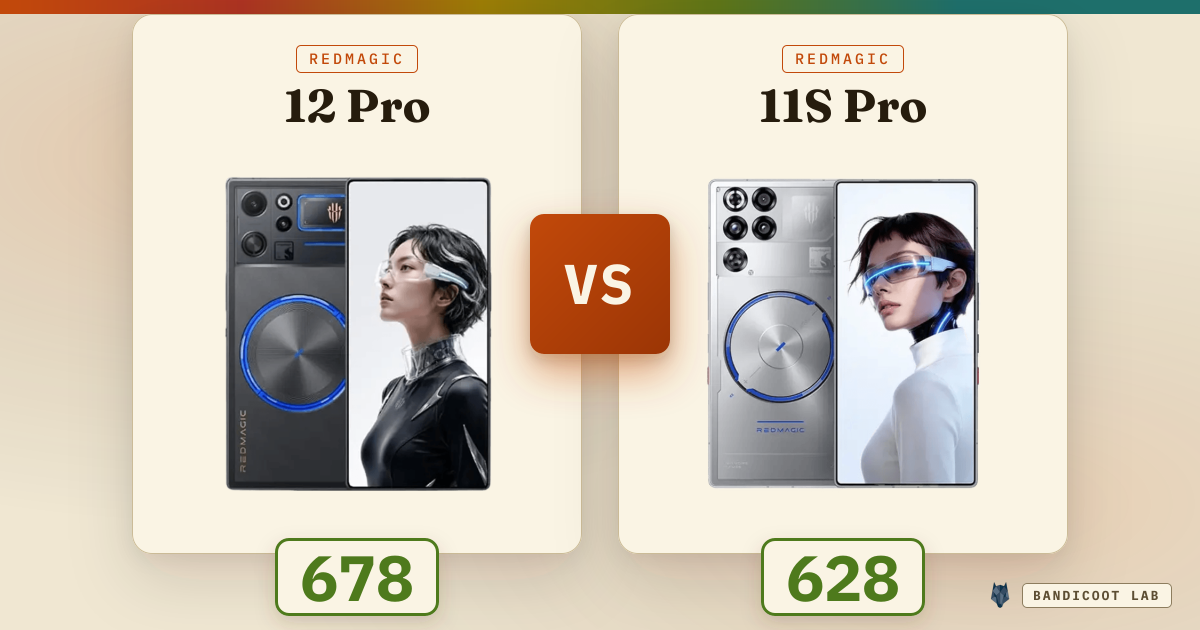
RedMagic 12 Pro vs RedMagic 11S Pro

RedMagic
11S Pro
RedMagic
11 Air

OnePlus
15
Xiaomi
17T Pro

OnePlus
13
Xiaomi
17
Samsung
Galaxy S25+
Samsung
Galaxy S26
Pixel 11
Apple
iPhone Air