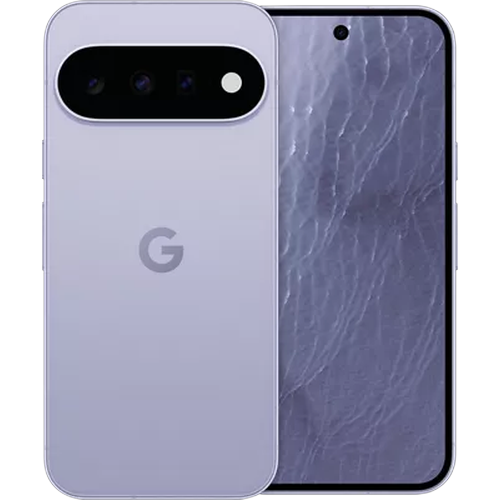
Google Pixel 11
Score Overview
Google's non-Pro Pixel has always been the pragmatic pick in the lineup, and the Pixel 11 continues that role. At $899 it's aimed at people who want the core Pixel experience, the camera processing, the software, the seven years of updates, in a phone sized for one-handed use, without paying Pro money for a bigger screen and a bigger sensor stack.
Our testing found a phone with a few genuinely excellent components and a few clear compromises. The display renders color with almost no visible error, the microphones are among the best we've tested, and the speakers are loud and clear. The Tensor G6 trails similarly priced rivals in raw performance, especially graphics, the camera system struggles with dynamic range and video stabilization, and charging is unhurried by flagship standards.
Design
Specifications
The Pixel 11 measures 152.8 x 72 x 8.6mm and weighs 197g, with an aluminum frame and Gorilla Glass Victus 2 on both front and back. That's a compact footprint by flagship standards, though at 197g it's not especially light for its size. Some of that comes down to glass on both faces rather than lighter composite materials.
The screen-to-body ratio is 86.5%, which means visible but not distracting bezels. The 20:9 aspect ratio keeps the phone narrow enough for most hands to reach across. An IP68 rating means it's sealed against dust and can survive submersion to the rated depth, so rain and sink drops aren't a concern. The single port is USB-C.
Bandicoot Lab doesn't formally test design or build durability, so we'll leave subjective impressions of fit and finish to you.
Display
The Pixel 11 has a 6.3-inch OLED panel at 1080 x 2424 resolution, and 422 pixels per inch, running between 60 Hz and 120 Hz. The resolution is lower than what some rivals offer at this price, but at 422 PPI individual pixels aren't visible at normal viewing distances. The 60 Hz floor means the panel can't drop to the very low refresh rates that help always-on displays sip power.
Brightness is a strength with one caveat. Manual brightness reaches 1,379 nits, plenty for direct sunlight, and HDR content peaks at 2,943 nits. The caveat is window size. Small bright highlights hit that peak, but as more of the screen lights up, output drops noticeably, so full-screen bright HDR scenes look dimmer than the peak number suggests. Over our 30-minute sustained test, output stayed at 98.2% of its starting level, so long HDR sessions won't visibly dim as the phone heats up.
Color accuracy is the standout result. In its most accurate mode, colors are essentially indistinguishable from reference values. Even the worst individual color error we measured is below the threshold most people can perceive. If you edit photos on your phone, this panel won't lie to you. Gamut coverage is more limited: 99.4% of sRGB but only 74.8% of the wider P3 range, so the most saturated colors in HDR content get compressed.
Tone mapping leans bright. The display pushes HDR highlights noticeably above their mastered levels rather than tracking the reference curve faithfully, and it only clips detail at the very top of the signal range. The practical effect is punchy HDR that isn't strictly accurate, with highlight detail mostly preserved. Touch latency averaged 20.2 ms, which is unremarkable in either direction.
Performance
The Pixel 11 runs Google's Tensor G6 with 12GB of RAM in every configuration. The results follow the familiar Tensor pattern — fine single-core speed, weaker everything else.
Single-core GeekBench came in at 2,658, which keeps day-to-day interactions responsive. Multi-core landed at 5,650, well behind flagship Snapdragon chips, though multi-core gaps this size mostly show up in sustained heavy work like video export rather than in app launches or scrolling. Browser performance follows a similar story. A Speedometer score of 25.3 is low for a $899 phone, and you may occasionally feel it on heavy web apps.
Graphics is the weakest link. The GPU's peak Wild Life Extreme score of 3,333 is roughly half what top-tier chips manage, and it held only 73.6% of that under sustained load. Demanding games will run, but at reduced settings, and frame rates will sag during longer sessions. Casual games won't be affected.
If your usage is messaging, browsing, photos, and streaming, none of this matters much. If you game seriously, it does.
Camera
The Pixel 11 carries a 48-megapixel main camera, a 13-megapixel ultrawide, a 10.8-megapixel 5x telephoto, and a 10.5-megapixel front camera, with digital zoom to 30x on the back. The overall camera result is below average for the price, which is not where a Pixel is supposed to land. The shortfalls are concentrated in dynamic range and video stabilization rather than sharpness or color.
The sharpness story is unusual. The ultrawide and front cameras resolve high detail in good light. The main camera is solid but not exceptional, and the telephoto is serviceable at its native length. Where things fall apart is deep zoom. Past 10x, detail degrades quickly, and by 30x you're looking at soft, processed-looking output that's fine for identifying a sign and not much else. Camera-focused rivals with larger telephoto sensors hold up considerably better at the long end.
Color tuning across the system leans mildly vivid and slightly warm, a pleasant look that stays consistent between lenses. Accuracy problems show up mainly in skin tones under bright light, covered per lens below.
Main
The main camera pairs a 48-megapixel sensor at 1/1.56 inches with a bright f/1.7 aperture at a 24mm equivalent focal length. Detail is good in bright light and degrades gracefully as light falls, remaining usable in dim conditions. Across the digital range between 1x and 5x, where the telephoto takes over, detail softens progressively but stays acceptable through moderate crops. It's the far end of that range where images start looking obviously processed.
Color renders mildly vivid with a slight warm push, and general hue accuracy is moderate across all lighting. Skin tones drift noticeably from reference in bright light, then become progressively more accurate as light dims. Faces in a sunlit shot will look off in a way faces in a dim restaurant won't. That's backwards from most phones.
Dynamic range is the main camera's clearest weakness. High-contrast scenes clip highlights, and shadow regions lose separation, so backlit subjects and bright skies retain less detail than you'd get from most phones at this price. For a camera line built on computational HDR, it's a disappointing result.
Video stabilization is weak. Handheld footage shows visible residual shake, especially while walking.
Ultrawide
The ultrawide is a 13-megapixel sensor at 1/3.1 inches, f/2.2, with a 14mm equivalent field of view. In bright and moderate light it's the sharpest lens on the phone, an inversion of the usual hierarchy where the ultrawide is the soft one. Detail drops substantially in dim light, as expected from a small sensor.
Color follows the main camera's mildly vivid, warm-leaning character in good light. Under dim warm light, accuracy falls apart — hues shift noticeably and images pick up a visible red cast, which points to the small sensor running out of headroom rather than a white balance tuning issue. Dynamic range is on par with the main camera, meaning limited, with clipped highlights in contrasty scenes. Video stabilization is similarly weak.
Telephoto
The 5x telephoto uses a 10.8-megapixel sensor at 1/3.2 inches with an f/3.1 aperture, 112mm equivalent. It's the quiet overachiever of the system. Color accuracy is the best of any lens on the phone, with skin tones staying close to reference in moderate and dim light, and its saturation runs the most vivid of the four. Dynamic range is also the strongest among the rear lenses, holding more highlight and shadow detail in contrasty scenes than the main camera does.
Sharpness at native 5x is decent in good light and softens as light dims. Pushing past 5x, detail holds reasonably to around 10x, then declines steeply. Shots at 20x and 30x are recognizable but rough. Video stabilization on this lens is markedly better than on the main camera, which matters, since handshake is magnified at 112mm.
Front
The front camera is 10.5 megapixels at f/2.2 with a 20mm equivalent focal length. It resolves high detail across all lighting, one of the better selfie sharpness results we've recorded, and its dynamic range is the best on the phone, so backlit selfies retain sky and face detail better than the rear cameras manage.
Skin tone accuracy is the one thing a selfie camera exists for. In bright light, skin tones drift well off reference with a slightly cool cast, and they only settle into accuracy in dim conditions. Video stabilization is weak, so handheld vlogging footage shows visible shake.
Battery
The Pixel 11 has a 4,985 mAh battery, and endurance is close to average. Our video playback test ran 25.6 hours before the phone died, which translates to a comfortable full day of heavy use with margin left over, or a lighter day and a half. It won't be a two-day phone for most people.
Web browsing consumed 21% of the battery over five hours, which is fine but not incredible. Sustained gaming is harder on it — our 3DMark stress test drained 20% in under an hour, so an extended gaming session will eat a meaningful chunk of charge. Overnight standby drain of 3% over eight hours is slightly higher than ideal but nothing you'll notice week to week.
Charging
Wired charging tops out at 30W, and the results are middling. Ten minutes on the charger gets you 19%, and 30 minutes gets you 56%. The 10-minute figure is the one to note. If you're in the habit of quick top-ups before heading out, this phone gives you less runway than rivals with 45W or faster charging, some of which reach well past 30% in the same window.
Wireless charging at 25W is the more competitive spec, reaching 14% in 10 minutes and 40% in 30 minutes, unusually close to the wired numbers. The phone also supports magnetic Qi2 charging, so it snaps onto MagSafe-style pucks and mounts without a case. Given how small the wired advantage is, wireless can realistically be your primary charging method here.
Speaker
The speakers reach 76.6 dBA at maximum volume, genuinely loud for a phone this size, and they stay composed near the top of the range with only modest distortion. High-frequency response is a strength: voices and dialogue come through clearly, which is what matters most for podcasts and video calls.
Bass is thin though Low frequencies roll off early, so music lacks weight and action scenes lose their rumble. Loud and clear, but not full. Use headphones for music.
Microphone
Microphone quality is well above average, one of the strongest results in our testing. Frequency response is nearly flat, which means recorded voices sound natural rather than boxy or tinny. Voice memos, video audio, and calls all benefit. If you record a lot of video, this is a genuine point in the phone's favor.
Other
Measurements
Specifications
The ultrasonic fingerprint reader unlocked in an average of 218 ms, quick enough that you won't think about it, though not among the fastest we've timed. There's no hardware-based face unlock.
File transfers via the USB-C port measured 135 MB/s read and 137 MB/s write. Storage comes in 256GB and 512GB configurations.
Conclusion
The Pixel 11 is a phone whose best parts aren't the ones Google advertises. The display's color accuracy, the microphones, and the speaker clarity are all excellent, and the compact size with magnetic wireless charging makes for an easy phone to live with. The camera, the traditional reason to buy a Pixel, tested below average for its price, held back by limited dynamic range and shaky video, and the Tensor G6 leaves a clear performance gap against similarly priced rivals that gamers in particular will feel.
If you want the Pixel software experience in a compact body and your usage is everyday rather than demanding, the Pixel 11 delivers it with a few pleasant surprises. If you're buying at $899 primarily for camera or performance, rivals at the same price do both better, and this one is hard to recommend on those grounds.
FAQ
How long does the Google Pixel 11's battery actually last?
In video playback testing, the Pixel 11 ran for 25.6 hours before dying, which works out to a full day of heavy use with room to spare, or closer to a day and a half with lighter use. Web browsing barely touches the battery, using about 21% over five hours, but sustained gaming drains it faster, with 20% lost in under an hour of stress testing.
Can the Pixel 11 handle gaming well?
Graphics performance is the phone's weakest area. Its GPU benchmark score is roughly half what top-tier chips manage, and it held onto only 73.6% of that under sustained load, so demanding 3D games need reduced settings and will show frame rate dips in longer sessions. Casual games and everyday apps run fine, since the performance gap mainly shows up in heavy graphical workloads.
How fast does the Pixel 11 charge?
Wired charging at 30W is middling, reaching 19% in 10 minutes and 56% in 30 minutes, behind rivals with 45W or faster charging. Wireless charging at 25W performs almost as well, hitting 14% in 10 minutes and 40% in 30 minutes, and the phone supports magnetic Qi2 charging for snap-on pucks and mounts without a case.
Is the Pixel 11's screen good for watching HDR video or editing photos?
Color accuracy is excellent, with colors essentially indistinguishable from reference values in the most accurate mode, making it reliable for photo editing. Manual brightness reaches 1,379 nits and HDR peaks at 2,943 nits, though that peak only applies to small highlights, so full-screen bright HDR scenes look dimmer than the number suggests. The panel also pushes HDR highlights above their mastered levels, giving punchy but not strictly accurate HDR.
Is the Pixel 11 comfortable to use one-handed given its size?
At 152.8 x 72 x 8.6mm, it's compact by flagship standards and narrow enough for most hands to reach across thanks to its 20:9 aspect ratio. At 197 grams it's not particularly light for its size, mostly due to glass covering both the front and back rather than lighter materials.
How good are the Pixel 11's speakers and microphones for calls and video?
The speakers reach 76.6 dBA at max volume with clear high-frequency response, so voices in podcasts and calls sound clear, though bass is thin and music lacks weight. The microphones test well above average with a nearly flat frequency response, making recorded voice sound natural, which is useful if you record video often.
Related
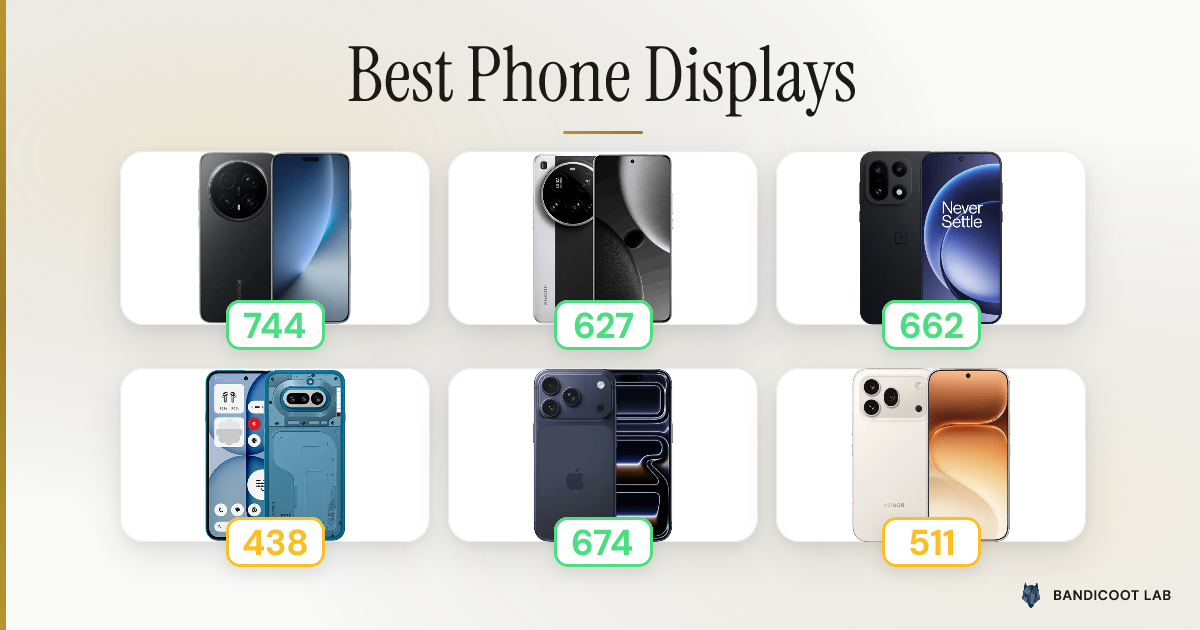
Best Phone Displays
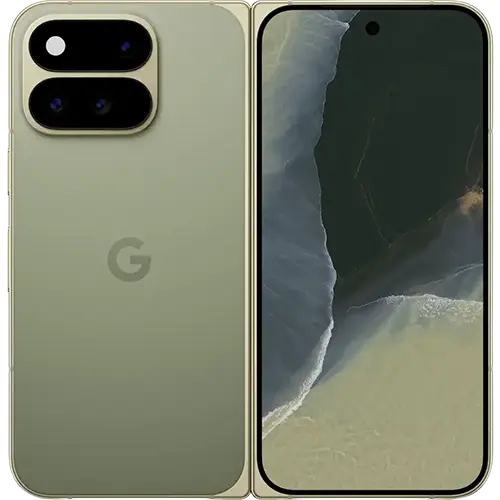
Pixel 11 Pro Fold
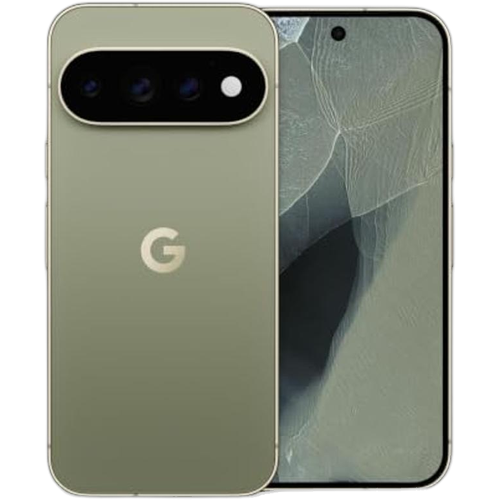
Pixel 11 Pro
Pixel 11 Pro XL
Pixel 10a
Poco
F9 Ultra
OnePlus
15
Xiaomi
17T Pro

RedMagic
11S Pro
OnePlus
13
Xiaomi
17
Samsung