Xiaomi 17 Ultra vs Honor Magic8 Pro
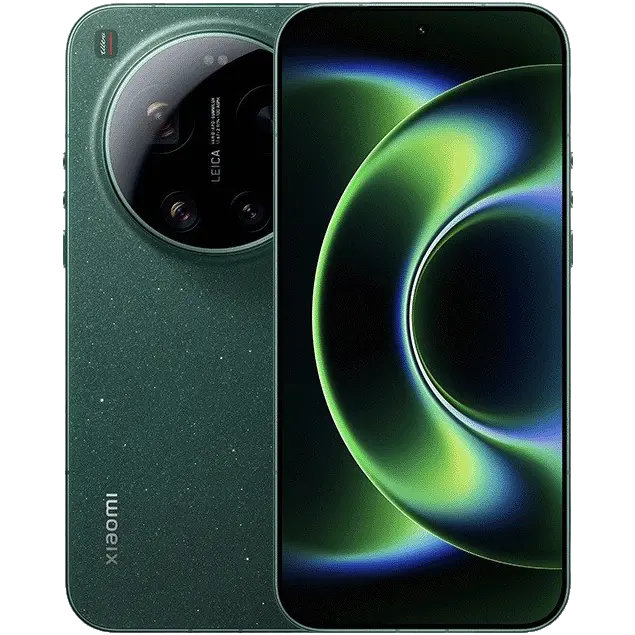
Xiaomi
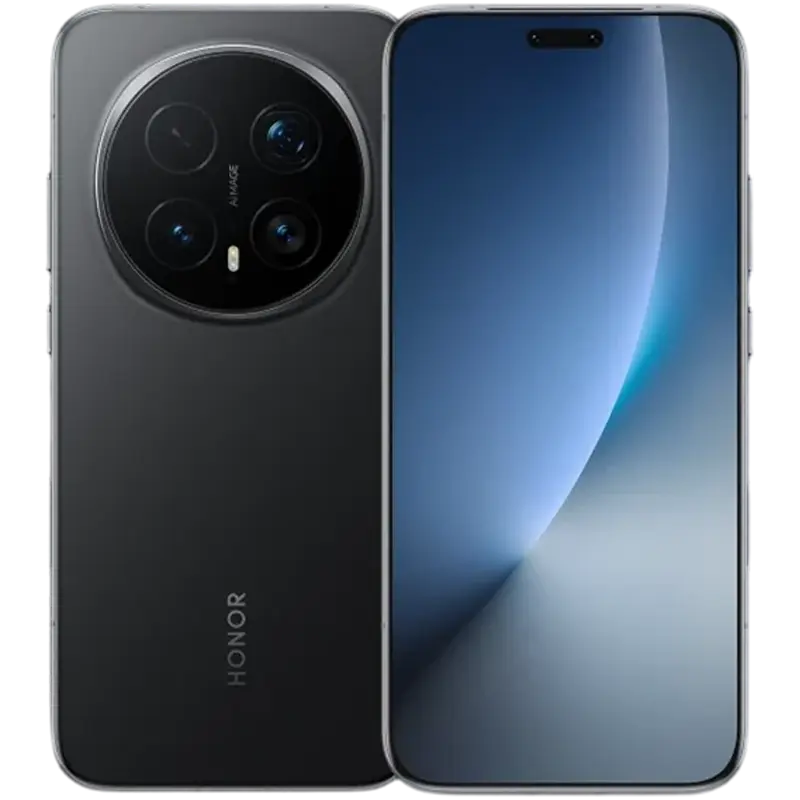
Honor
17 Ultra
Magic8 Pro
Ranked #10 of 60
Ranked #2 of 60
Overall
Overall



The Xiaomi 17 Ultra is Xiaomi's flagship camera phone, built around a large telephoto sensor and a versatile four-camera system. It's price puts it squarely against the most expensive Android phones, at €1,499. The Honor Magic8 Pro sits lower at €1,299 and takes a different approach. It prioritizes battery life, display quality, and raw performance over camera hardware. Both phones share the same processor, but they make very different trade-offs with the rest of the package.
The Xiaomi leads clearly in camera quality, particularly in color accuracy, telephoto sharpness, and low-light performance across all lenses. The Honor fights back with a significantly better display, longer battery life, faster charging, stronger CPU and a lower price.
Here’s how the Honor Magic8 Pro and the Xiaomi 17 Ultra compare against each other.
Design
| Xiaomi 17 Ultra | Honor Magic8 Pro | |
|---|---|---|
| Specifications | ||
| Dimensions | 162.9 x 77.6 x 8.3 mm | 161.2 x 75 x 8.3 mm |
| Weight | 218.4g | 219g |
| IP Rating | IP68/IP69 | IP68/IP69K |
| Frame | Aluminum | Aluminum |
| Front | Xiaomi Shield Glass 3.0 | NanoCrystal Shield |
| Back | Fiber-reinforced plastic / Vegan leather | Fiber-reinforced plastic |
| Screen-to-body ratio | 92.1% | 89.6% |
The two phones are nearly identical in thickness at 8.3mm, and their weights are within a gram of each other: 218.4g for the Xiaomi 17 Ultra and 219g for the Honor Magic8 Pro. The Xiaomi is slightly larger overall at 162.9 x 77.6mm versus 161.2 x 75mm, which translates to a slightly wider body. Both use aluminum frames and fiber-reinforced plastic backs, though the Xiaomi also offers a vegan leather option. The Xiaomi's front glass is Xiaomi Shield Glass 3.0, while the Honor uses NanoCrystal Shield. Both carry IP68 ratings, meaning they're rated for submersion in fresh water. The Xiaomi adds IP69 certification for high-pressure water resistance; the Honor carries IP69K, which covers high-pressure, high-temperature water jets.
The Xiaomi's 6.9-inch display at a 19.6:9 aspect ratio achieves a 92.1% screen-to-body ratio, meaning thin bezels relative to the phone's face. The Honor's 6.71-inch panel uses a taller 20.1:9 aspect ratio but manages only 89.6% screen-to-body ratio, so its bezels are more visible — though barely so.
Bandicoot Lab doesn't formally test design or durability. Everything here is drawn from published specifications.
Display
| Xiaomi 17 Ultra | Honor Magic8 Pro | |
|---|---|---|
580/ 881 | 790/ 881 | |
The Honor Magic8 Pro has the better display by a clear margin. Its peak HDR brightness reaches 4,969 nits versus 3,409 nits on the Xiaomi 17 Ultra. That's a meaningful gap in direct sunlight when viewing HDR content. Manual brightness is similar: 759 nits on the Honor against 621 nits on the Xiaomi, so the Honor is easier to read outdoors with auto-brightness disabled. Minimum brightness is close: 0.98 nits on the Honor, 1.23 nits on the Xiaomi. Both go dim enough for comfortable nighttime reading.
The Honor's HDR brightness drops significantly across larger window sizes. Its brightness stability across HDR window sizes is 33.4%, meaning a full-screen bright scene will be much dimmer than a small highlight. The Xiaomi handles this better at 58.6%. Where the Honor recovers is sustained brightness over time: it holds 99.5% of its peak over a 30-minute HDR stress test. The Xiaomi is close at 98.2%. Neither phone has a thermal problem sustaining brightness.
Color accuracy is where the Honor really separates itself. In its Normal mode, it produces colors that are essentially reference-grade, so neutral tones look neutral, and no individual color drifts far from target. The Xiaomi's best mode (Original Color Pro) is decent but not exceptional. Colors are generally accurate, though some individual patches drift enough to be noticeable in side-by-side comparisons. Both panels cover sRGB fully and reach roughly 75% of Display P3.
For tone mapping, the Honor's display follows the HDR reference curve more precisely than the Xiaomi's, and it clips at 85% input level, the same as the Xiaomi. The Xiaomi pushes highlights brighter than mastered (a 1.8x average boost), while the Honor stays closer to reference at 1.2x. In practice, HDR highlights on the Xiaomi will look punchier; the Honor will render them more faithfully but dimmer relative to its peak capability.
Resolution and refresh rate are comparable. The Honor runs at 1256 x 2808 (458 pixels per inch), while the Xiaomi sits at 1200 x 2608 (416 PPI). Both support 1–120Hz adaptive refresh. You won't notice the pixel density difference in daily use. Touch latency is 17.2ms on the Honor and 18.2ms on the Xiaomi. A 1ms gap is imperceptible.
Performance
| Xiaomi 17 Ultra | Honor Magic8 Pro | |
|---|---|---|
884/ 1012 | 938/ 1012 | |
Both phones run the Qualcomm Snapdragon 8 Elite Gen 5. The Xiaomi 17 Ultra ships with 16GB of RAM in its tested configuration (12GB and 16GB options available). The Honor Magic8 Pro was tested with 12GB (also available in 16GB).
CPU results are nearly identical. The Honor scores 3,721 single-core and 11,188 multi-core in GeekBench 6, while the Xiaomi manages 3,689 and 11,173. You won't feel this difference. Browser performance is another story. The Magic8 Pro’s Speedometer score of 44.7 nearly doubles the Xiaomi's 24.2. Web pages will scroll and render more responsively on the Honor, and complex web apps will feel snappier.
GPU performance is close in peak output. The Xiaomi's best Wild Life Extreme loop score of 7,217 edges the Honor's 6,963, and GPU stability is similar at 65% versus 64.1%. In Solar Bay, the Honor peaks higher at 13,471 versus the Xiaomi's 12,680, but its stability is lower at 59.8% versus 70.9%. Neither phone sustains peak GPU output well during extended gaming. In practice, games will run at similarly high frame rates on both, with similar thermal throttling over long sessions.
Camera
| Xiaomi 17 Ultra (Overall) | Honor Magic8 Pro (Overall) | |
|---|---|---|
| Specifications | ||
| Main | 50MP, f/1.7, 23mm, 1" | 50MP, f/1.6, 23mm, 1/1.3" |
| Ultrawide | 50MP, f/2.2, 14mm, 1/2.76" | 50MP, f/2, 12mm, 1/2.88" |
| Telephoto | 200MP, f/2.4, 100mm, 1/1.4" | 200MP, f/2.6, 85mm, 1/1.4" |
| Front | 50MP, f/2.2, 21mm, 1/2.7" | 50MP, f/2, 21mm, 1/2.93" |
The Xiaomi 17 Ultra has the stronger camera system overall. Its camera score of 605.5 is well above the Honor Magic8 Pro's 467.7, and the gap shows up across nearly every lens. The Xiaomi produces sharper images from its main, ultrawide, and telephoto cameras, with substantially better color accuracy and more natural skin tones. The Honor's front camera is the exception — it's sharper than the Xiaomi's across all lighting conditions.
At deep zoom levels, the Xiaomi maintains more detail out to its 120x maximum, though both phones produce soft images past about 50x. The Xiaomi's average deep zoom sharpness is higher than the Honor's at 100x, which is where the Honor maxes out. Below 30x, the Xiaomi holds a meaningful sharpness advantage.
Main
| Xiaomi 17 Ultra (Main) | Honor Magic8 Pro (Main) | |
|---|---|---|
612/ 722 | 526/ 722 | |
The Xiaomi 17 Ultra's 50-megapixel f/1.7 main camera is sharper than the Honor Magic8 Pro's 50-megapixel f/1.6 across all lighting conditions. The gap is largest in mid-light, where the Xiaomi resolves considerably more detail, and still significant in bright light. Both cameras maintain good sharpness in low light, though the Xiaomi pulls further ahead there too.
Color tuning differs between the two. The Xiaomi pushes saturation moderately in bright light, producing vivid but not garish results. Hue accuracy is reasonable, though skin tones in bright light run noticeably warm and oversaturated. In mid and low light, the Xiaomi's color rendering settles down: skin tones become more accurate, and a slight warm yellow cast appears as lighting gets dimmer. This warm shift tracks with decreasing color temperature in the test lighting, suggesting it's mostly a white balance correction issue rather than a sensor-level problem.
The Honor's main camera has a strong warm-yellow cast in every lighting condition. Skin tones are pushed significantly warmer than reality across the board, and the problem gets worse as light drops. In low light, the Honor adds a pronounced pink-red shift on top of the yellow warmth, causing faces to look flushed and unnatural. Hue errors climb sharply from bright through dark, and the increasing red and yellow bias across lighting conditions points to both a white balance issue and a sensor-level limitation compounding each other.
Dynamic range is one area where the Honor has an edge. Its main camera retains more detail in shadows and bright highlights simultaneously, producing more depth in high-contrast scenes. The Xiaomi clips highlights earlier and captures a narrower range between shadows and highlights. Both phones apply aggressive HDR processing, which flattens the image somewhat, but the Honor starts with more raw range to work with.
Ultrawide
| Xiaomi 17 Ultra (Ultrawide) | Honor Magic8 Pro (Ultrawide) | |
|---|---|---|
666/ 722 | 431/ 722 | |
The Xiaomi 17 Ultra's 50-megapixel f/2.2 ultrawide (0.6x, 14mm) is sharper than the Honor Magic8 Pro's 50-megapixel f/2.0 ultrawide (0.5x, 12mm) in all conditions. The gap is widest in bright light and remains clear in mid and low light. The Xiaomi's ultrawide actually resolves close to its own main camera, which is unusual. The Honor's ultrawide sharpness is decent but trails its own main lens more noticeably.
The Xiaomi's ultrawide color character is slightly cool in bright light, close to neutral in mid light, and shifts warm-yellow in low light. Hue accuracy is strong in bright and mid conditions. Skin tones drift in bright light but improve substantially under warmer lighting. The warm shift in low light follows the same white-balance pattern as the main camera.
The Honor's ultrawide has serious color problems. Skin tones are heavily warm-shifted in bright and mid light. Hue accuracy degrades sharply from bright to mid to dark, and in low light the warm-yellow bias becomes extreme. The pattern of rising bias across lighting conditions suggests a white balance system that consistently fails to correct for warmer illumination, with the ultrawide lens being worse than the Honor's own main camera.
The Xiaomi captures more dynamic range from its ultrawide, with better shadow detail and less aggressive highlight clipping. The Honor's ultrawide dynamic range is average.
Telephoto
| Xiaomi 17 Ultra (Telephoto) | Honor Magic8 Pro (Telephoto) | |
|---|---|---|
722/ 722 | 449/ 722 | |
The Xiaomi 17 Ultra uses a 200-megapixel f/2.4 telephoto with a variable zoom. The Honor Magic8 Pro pairs a 200-megapixel f/2.6 telephoto at 3.7x (85mm). The Xiaomi's telephoto is highly consistent: sharpness is high in bright, mid, and dark conditions, barely dropping off. The Honor's telephoto sharpness score is substantially lower.
Moving into zoom, the Xiaomi maintains high detail at 10x and stays usable out to 20–30x before degrading. The Honor is competitive up to about 20x in bright conditions but falls behind at longer focal lengths.
The Xiaomi's telephoto pushes saturation hard in bright light, giving images a punchy, vivid look. Skin tones lean slightly warm and are moderately oversaturated. As light dims, the rendering calms down and hue accuracy worsens only gradually, which indicates the telephoto sensor handles warmer lighting better than the main camera. The warm yellow shift in low light is mild compared to the main lens.
The Honor's telephoto color has the same warm-bias issues as its other lenses, but in low light the processing introduces a strong pink-magenta shift to skin tones. Hue errors climb steeply from bright to dark. The pattern suggests a sensor limitation in the telephoto module, compounded by aggressive white balance overcorrection in dim conditions.
Video stabilization is smoother on the Xiaomi's telephoto. The Honor's telephoto shows more residual shake in handheld video, which you'll notice at its native zoom level and beyond.
Front
| Xiaomi 17 Ultra (Front) | Honor Magic8 Pro (Front) | |
|---|---|---|
470/ 722 | 400/ 722 | |
The Honor Magic8 Pro's 50-megapixel f/2.0 front camera is sharper than the Xiaomi 17 Ultra's 50-megapixel f/2.2 front camera across all lighting conditions, and the gap is substantial. The Honor captures noticeably more detail in selfies and video calls, especially in mid and low light where the Xiaomi's front camera softens.
Front camera color is mixed on both. The Xiaomi renders slightly desaturated selfies in bright and mid light, with a subtle pink-warm shift to skin under indoor lighting. Results are consistent but faces can look a little flat. The Honor is more saturated and neutral in mid light, producing its best front camera results there. In bright light, skin tones shift warm and yellow. In low light, the Honor's front camera falls apart: colors take on a heavy warm pink-yellow cast, and hue accuracy degrades dramatically. This is a combination of sensor limitations and white balance failure under 3000K illumination.
Dynamic range from the front cameras is broadly similar. Both retain good shadow detail in selfies. Video stabilization is close, with both phones keeping handheld footage reasonably smooth.
Battery
| Xiaomi 17 Ultra | Honor Magic8 Pro | |
|---|---|---|
520/ 836 | 799/ 836 | |
The Honor Magic8 Pro's 7,100mAh battery gives it a significant endurance advantage over the Xiaomi 17 Ultra's 6,000mAh cell. In video playback, the Honor lasts 35.5 hours versus the Xiaomi's 31 hours. That's roughly three full days of moderate use on the Honor versus two and a half on the Xiaomi. Both are strong results — the Honor is just better.
The gap widens further in web browsing. The Honor drained only 11% over the five-hour web browsing test, compared to 26% on the Xiaomi. Gaming drain tells a similar story: 25% on the Honor versus 31% on the Xiaomi over the same hour-long stress test. Standby drain is 7% overnight on the Honor and 9% on the Xiaomi over eight hours, both acceptable.
The Honor's battery advantage is consistent across every test. If you're a heavy user who regularly runs through a full charge by evening, the Honor's extra capacity and efficiency translate to meaningfully less anxiety about finding a charger.
Charging
| Xiaomi 17 Ultra | Honor Magic8 Pro | |
|---|---|---|
568/ 837 | 837/ 837 | |
The Honor Magic8 Pro supports 120W wired and 80W wireless charging; the Xiaomi 17 Ultra offers 90W wired and 50W wireless. Wired, the two are close at 10 minutes: 30% on the Honor and 32% on the Xiaomi. By 30 minutes, the Honor pulls ahead with 81% versus the Xiaomi's 77%. Given the Honor's larger 7,100mAh battery, reaching 81% in half an hour from a bigger cell is genuinely efficient.
Wireless charging is faster on the Xiaomi device. The Xiaomi reaches 19% at 10 minutes and 45% at 30 minutes, but after 30 minutes, the Magic8 Pro reaches 67%.
Speaker
| Xiaomi 17 Ultra | Honor Magic8 Pro | |
|---|---|---|
701/ 897 | 680/ 897 | |
The Honor Magic8 Pro gets louder, reaching 76.9 dBA versus the Xiaomi 17 Ultra's 71 dBA. That's a noticeable difference. You'll appreciate the Honor's extra volume in a noisy kitchen or when sharing audio with someone across the room.
The Xiaomi has cleaner output. Its total harmonic distortion of 5.28% is well below the Honor's 8.63%, meaning the Xiaomi sounds less strained at high volumes. The Xiaomi also produces fuller bass and a broader frequency range, extending lower into the bass register. The Honor counters with better clarity in the upper frequencies, giving vocals and detail more presence. Its midrange is more even, though it doesn't extend as far at either end of the spectrum.
Neither phone is a great speaker. If bass and clean output matter more to you, the Xiaomi is the better pick. If you want sheer volume and clearer vocal reproduction, the Honor wins that trade.
Microphone
| Xiaomi 17 Ultra | Honor Magic8 Pro | |
|---|---|---|
605/ 1220 | 601/ 1220 |
Both phones produce similar microphone quality. Their frequency response measurements are nearly identical, and both sit around average. Neither stands out for voice calls or video recording, and neither has obvious deficiencies. You'll get adequate call quality and video audio from either phone.
Other
| Xiaomi 17 Ultra | Honor Magic8 Pro | |
|---|---|---|
| Biometrics | 552/ 1181 | 614/ 1181 |
| Data Transfer | 877/ 943 | 680/ 943 |
| Specifications | ||
| Biometric type | Fingerprint | Fingerprint |
| Ports | USB-C 3.2 Gen 2 | USB-C 3.2 |
| Storage | 512GB, 1TB | 256GB, 512GB, 1TB |
Fingerprint unlock is slightly faster on the Honor Magic8 Pro at 171ms versus 190ms on the Xiaomi 17 Ultra. Both use ultrasonic sensors. The 19ms difference is barely perceptible. The Honor also has hardware-based face unlock at 281ms. The Xiaomi has no hardware-based face unlock.
Data transfer speeds favor the Xiaomi, which uses USB-C 3.2 Gen 2. It reaches 440 MB/s read and 342 MB/s write, compared to the Honor's 332 MB/s read and 230 MB/s write over USB-C 3.2. If you regularly transfer large files to and from a computer, the Xiaomi is meaningfully faster. The Xiaomi comes in 512GB and 1TB storage options. The Honor offers 256GB, 512GB, and 1TB.
Conclusion
The Honor Magic8 Pro scores higher overall and leads in display quality, battery life, wired charging speed, CPU efficiency, and browser responsiveness. Its display is brighter, more color-accurate, and sharper. Its battery lasts substantially longer in every test we run. It does all of this for $200 less than the Xiaomi 17 Ultra.
The Xiaomi 17 Ultra is the better camera phone, and the gap isn't small. Its main, ultrawide, and telephoto cameras all produce sharper images with more accurate color and more natural skin tones. The telephoto in particular is excellent, maintaining detail across zoom levels and lighting conditions where the Honor struggles. If you shoot frequently in challenging light, take a lot of zoomed-in photos, or simply care about getting the best possible images from a phone, the Xiaomi justifies its price premium on camera quality alone. It also has faster wireless charging, cleaner speaker output with more bass, and quicker data transfers.
If photography is your top priority, the Xiaomi 17 Ultra is the phone to buy. For everyone else, the Honor Magic8 Pro delivers a better overall experience at a lower price. Its display, battery, and performance advantages affect daily use in ways that most people will notice more often than camera differences.
Related
Honor
Magic8 Pro
Xiaomi
17 Ultra
Honor
Magic V6
Xiaomi
17T Pro
Xiaomi
17
Xiaomi
15T Pro
Honor
600
Best Android Phones
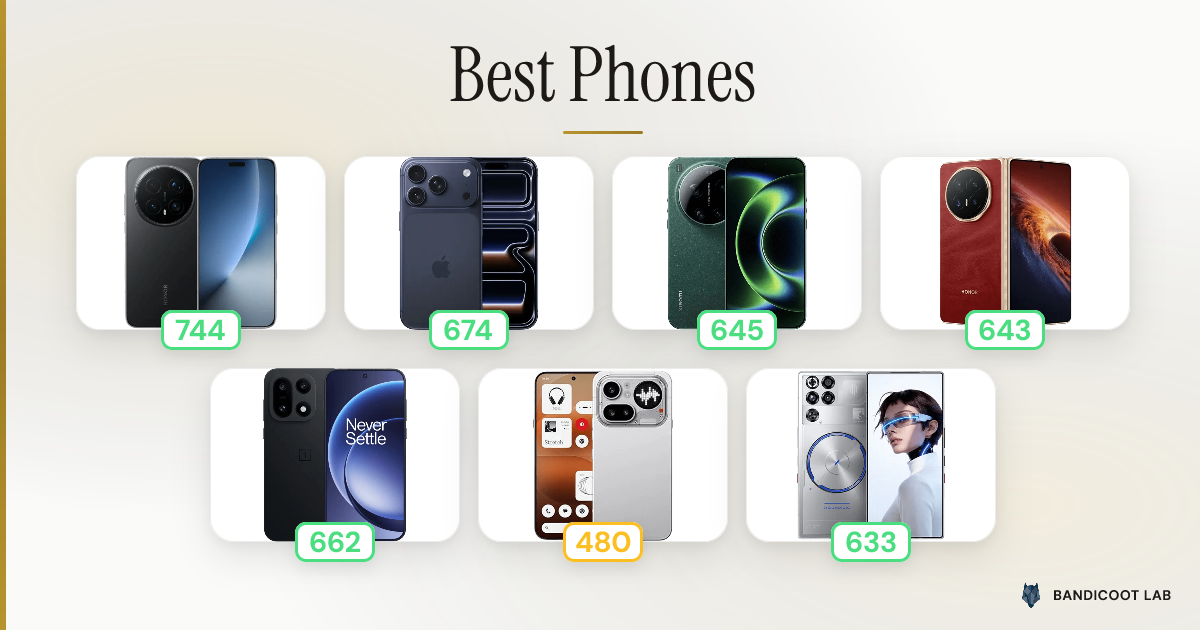
Best Phones
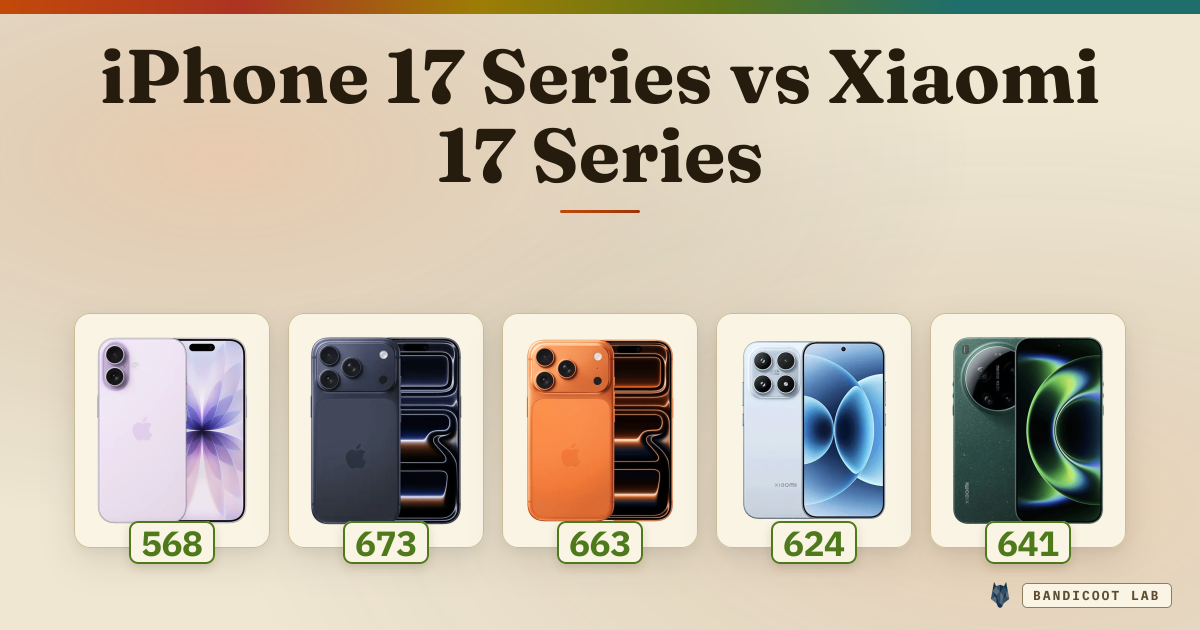
iPhone 17 Series vs Xiaomi 17 Series

Samsung Galaxy S26 Series vs Xiaomi 17 Series

Xiaomi 17 Ultra vs Xiaomi 15 Ultra