Motorola Razr (2026) vs Motorola Razr (2025)
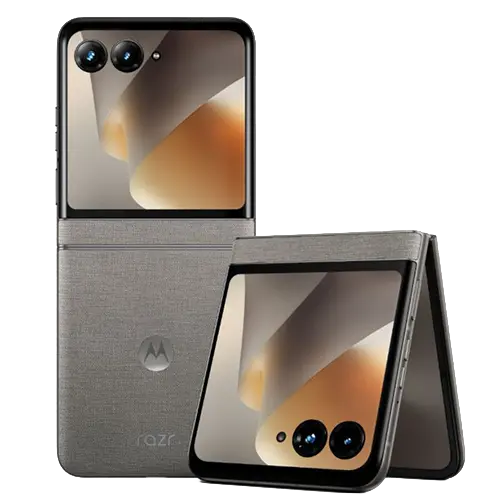
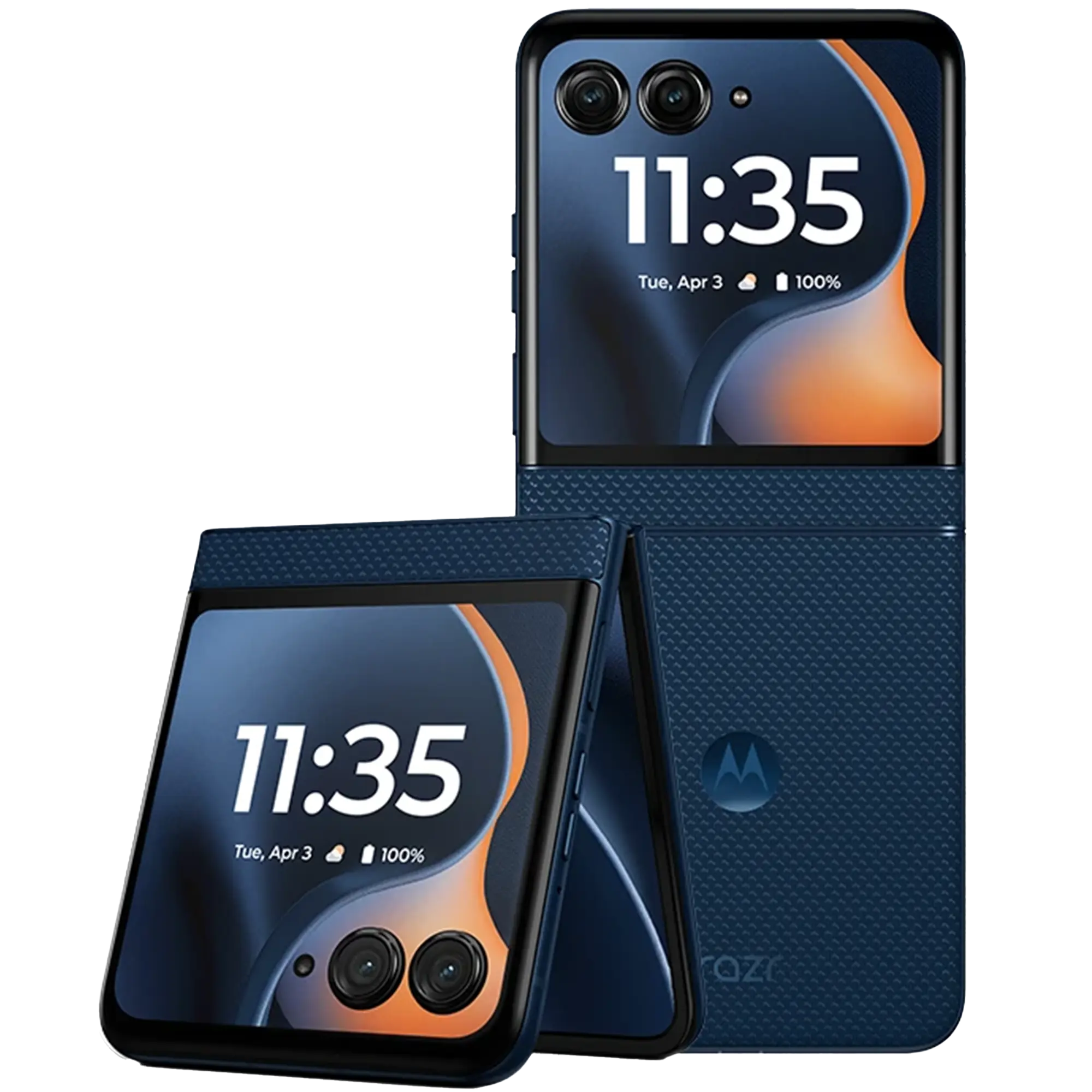
Motorola
Motorola
Razr (2026)
Razr (2025)
Ranked #47 of 51
Ranked #49 of 51
Overall
Overall
The Motorola Razr (2026) and Razr (2025) are clamshell foldables built to be compact, pocketable, and affordable by foldable standards. The 2025 model sits at $599.99, one of the cheapest ways into a flip phone. The 2026 model carries a $200 premium at $799.99 and sells itself as the more capable version of the same idea. Both are aimed at the same buyer — someone who wants a phone that folds down to half its size and doesn't cost as much as a flagship slab. Neither is chasing the high end. They're entry-level flips, and the question is whether the newer one earns its higher price.
The two phones are physically identical and share most of their hardware. The 2026 model pulls ahead in a handful of measurable ways: a brighter HDR display, a faster chip, a more capable ultrawide camera, longer video battery life, and a quicker fingerprint reader. The 2025 model holds its own in places too, though. Whether the upgrades justify $200 depends on which of those things you care about.
Here's how the Motorola Razr (2025) and Razr (2026) compared in our lab testing.
Design
| Motorola Razr (2026) | Motorola Razr (2025) | |
|---|---|---|
| Specifications | ||
| Dimensions (folded) | 88.1 x 74 x 15.9 mm | 88.1 x 74 x 15.9 mm |
| Dimensions (unfolded) | 171.3 x 74.0 x 7.3 mm | 171.3 x 74.0 x 7.3 mm |
| Weight | 188g | 188g |
| IP Rating | IP48 | IP48 |
| Frame | Aluminum | Aluminum |
| Front | Gorilla Glass Victus | Gorilla Glass Victus |
| Back | Vegan leather | Vegan leather |
| Screen-to-body ratio (inner) | 84.9% | 84.9% |
| Screen-to-body ratio (outer) | 64.1% | 64.1% |
There's nothing to separate here. Both phones measure 88.1 by 74 by 15.9mm folded and 171.3 by 74 by 7.3mm unfolded, and both weigh 188g. Both use an aluminum frame, Gorilla Glass Victus on the front, and a vegan leather back. Aluminum at this size keeps weight reasonable without the cost of titanium, and the leather back is the same material on both.
Both carry an IP48 rating. The 4 means limited protection against small solid objects; the 8 means protection against sustained water immersion. This isn't the IP68 dust-and-water sealing you get on a slab flagship — fine dust can still get in, which matters more on a folding hinge than on a sealed body. Keep both away from sand.
Screen-to-body ratio is identical at 84.9% on the inner display and 64.1% on the cover. The inner panel fills most of the front when unfolded; the cover panel is smaller relative to its surrounding bezel, as is typical for a flip's outer screen.
Bandicoot Lab doesn't formally test design or durability.
Display
Inner
| Motorola Razr (2026) (Inner) | Motorola Razr (2025) (Inner) | |
|---|---|---|
568/ 845 | 569/ 845 | |
The inner displays are both 6.9-inch panels at 1080 by 2640 (413 pixels per inch) with a 22:9 aspect ratio. They both have LTPO panels that ramp from 1Hz to 120Hz. Manual brightness favors the 2025 slightly: it reaches 525 nits versus 476 on the 2026. HDR peak goes the other way, and by more. The 2026 hits 3,884 nits on HDR highlights against 3,221 on the 2025, so HDR video has more punch on the newer phone. Both hold brightness well over the 30-minute sustained test, staying above 99% of their starting output. Stability across different window sizes is middling on both, meaning a small bright element and a full white screen won't be lit equally.
Color accuracy is the older model's clear advantage. The 2025 covers essentially all of sRGB and nearly all of P3, the wider gamut used for HDR and modern video. The 2026 covers full sRGB but only about three-quarters of P3, so saturated wide-gamut content will look less rich on the newer phone. In its most accurate mode, the 2026 tracks reference color slightly tighter.
Tone mapping differs. The 2025 follows the HDR reference curve more faithfully and starts clipping highlights at 80% input. The 2026 pushes highlights brighter than mastered and holds detail a little further, clipping at 85%. The 2026 looks brighter and more aggressive; the 2025 looks more accurate. Touch latency is low on both, 19.1ms on the 2025 and 26.4ms on the 2026. You won't feel that gap.
Outer
| Motorola Razr (2026) (Outer) | Motorola Razr (2025) (Outer) | |
|---|---|---|
427/ 845 | 391/ 845 | |
The cover screens are both 3.6-inch AMOLED panels at 413 PPI. The 2026 runs 1056 by 1066 at a near-square 9.1:9 aspect; the 2025 is 1056 by 1056 at a true 1:1. Both top out at 90Hz.
The 2026's cover screen is brighter and scores higher on outer brightness and responsiveness. Both cover displays handle color the same way, and it's not great. Neutral tones drift and colors don't hold tightly to reference — fine for notifications and a quick camera preview, less so for anything where color matters. Neither cover screen is built for accurate work, which is reasonable given what people actually use them for.
Performance
| Motorola Razr (2026) | Motorola Razr (2025) | |
|---|---|---|
203/ 1012 | 196/ 1012 | |
The 2026 runs a MediaTek Dimensity 7450X; the 2025 runs the Dimensity 7400X. Both pair with 8GB of RAM. These are mid-range chips, and neither phone is built for heavy load.
CPU results are close. The 2026 scores 1,113 single-core and 3,377 multi-core in GeekBench 6, against 1,081 and 3,077 on the 2025. The multi-core gap is real but small enough that you won't notice it in daily use. Browser performance is essentially tied — Speedometer comes out at 9.1 for the 2026 and 9.4 for the 2025, which is within noise.
GPU is similar. The 2026 peaks slightly higher in the Wild Life Extreme stress test, and both hold their performance almost perfectly across 20 loops, above 99% stability. Neither phone throttles, but neither has much headroom to begin with. Light games run fine. Demanding 3D titles will need their settings turned down on both. Gaming drain favors the 2025, which uses less battery under that same load.
Camera
| Motorola Razr (2026) | Motorola Razr (2025) | |
|---|---|---|
391/ 587 | 358/ 587 | |
Both phones use a 50-megapixel main camera and a 32-megapixel front camera, with no telephoto. The ultrawide is where they diverge: the 2026 steps up to a 50-megapixel sensor against the 13-megapixel ultrawide on the 2025. Neither camera system competes with a dedicated camera phone, but both are workable for everyday shooting.
Main camera sharpness is close and good across all lighting on both. The 2026 holds detail slightly better when cropping toward its longer 10x digital range; the 2025 tops out at 8x and softens sooner past the middle of that range. At the extreme zoom end, both fall apart — deep-zoom sharpness is poor on both, and the 2026 produces mushy results once you push past its optical reach. Treat the long end as emergency-only on either phone.
Main
| Motorola Razr (2026) (Main) | Motorola Razr (2025) (Main) | |
|---|---|---|
405/ 722 | 339/ 722 | |
Sharpness is strong and consistent on both across bright, mid, and dark conditions. There's no meaningful sharpness difference between them at 1x. The separation is in the crop range — the 2026 cleans up better toward its first digital steps and holds usable detail a bit further out.
Dynamic range is similar, with the 2025 capturing marginally more usable range but showing more tonal irregularities in high-contrast scenes. Both clip bright highlights. In practice, a backlit sky will blow out on either phone, and neither retains a lot of shadow depth in harsh light. The deciding factor is color: the 2026's main camera is more reliable across lighting.
Ultrawide
| Motorola Razr (2026) (Ultrawide) | Motorola Razr (2025) (Ultrawide) | |
|---|---|---|
466/ 722 | 444/ 722 | |
The hardware gap shows in the ultrawide cameras. The 2026's 50-megapixel ultrawide resolves more detail in bright and mid light than the 13-megapixel unit on the 2025, and it holds up better as light drops. Both ultrawides soften in the dark, which is normal for a small sensor.
Color is the bigger separator. The 2026's ultrawide stays fairly accurate across lighting. The 2025's ultrawide drifts hard in warm, dim light — hues shift well off reference and the image pulls yellow, again a white balance issue more than a sensor one. Both ultrawides fall short of their own main cameras on detail and color, as expected, but the 2026's is the more usable of the pair.
Front
| Motorola Razr (2026) (Front) | Motorola Razr (2025) (Front) | |
|---|---|---|
455/ 722 | 485/ 722 | |
Both front cameras are 32 megapixels. The 2026 is sharper in dim light, where the 2025 falls off hard. In bright light they're close. Color accuracy favors the 2026: it keeps skin tones more controlled, while the 2025 pushes faces noticeably off reference and warm in bright and mid light.
Stabilization is the 2025's one front-camera win, and it's a clear one. The older model holds video far steadier handheld; the 2026's front video shows more motion. For handheld selfie video, the 2025 is the steadier camera. For stills, the 2026 is the better front shooter.
Battery
| Motorola Razr (2026) | Motorola Razr (2025) | |
|---|---|---|
481/ 799 | 497/ 799 | |
The 2026 carries a 4,800mAh battery; the 2025 has 4500mAh. Both report battery life on the inner and outer screens separately, since a flip's usage splits between the two.
Video playback is the 2026's advantage. It runs about 27 hours on the inner screen and just over 33 on the cover, against roughly 24 and 26 on the 2025.
Web browsing drain is close: 23% over the five-hour test on the 2026, 22% on the 2025. Standby is identical at 3% over an eight-hour idle, so neither bleeds much overnight. Gaming is where the 2025 pulls ahead, drawing 11% during the one-hour test against 17% on the 2026.
Charging
| Motorola Razr (2026) | Motorola Razr (2025) | |
|---|---|---|
288/ 837 | 306/ 837 | |
Both phones charge at 30W wired and 15W wireless. The numbers diverge on the wired side, and the older phone is faster early. The 2025 reaches 27% in 10 minutes and 71% in 30; the 2026 manages 14% at 10 minutes and 63% at 30. The 2025 gets you more useful charge in a short top-up.
Wireless margins are smaller. The 2026 hits 13% at 10 minutes, the 2025 12%, and by 30 minutes the 2025 edges ahead at 29% to 26%. Neither wireless figure is fast. For a quick plug-in before heading out, the 2025 is the one to reach for.
Speaker
| Motorola Razr (2026) | Motorola Razr (2025) | |
|---|---|---|
657/ 857 | 595/ 857 | |
The 2026 is louder, reaching 77.9 dBA against 75.1 on the 2025. It also runs cleaner, with lower distortion at volume. The 2025 produces noticeably more distortion when pushed.
In character, the 2025 has fuller low-end, so music sounds a little warmer at moderate volume. The 2026 leans toward clarity in the highs and stays cleaner as it gets loud. The 2026 is the better all-around speaker; the 2025 is the slightly bassier one if you keep the volume down.
Microphone
| Motorola Razr (2026) | Motorola Razr (2025) | |
|---|---|---|
322/ 949 | 472/ 949 |
The 2025's microphone is the better of the two and sits around average. The 2026's is below average, with a less even frequency response that makes recorded voice sound thinner. For voice memos and calls either is fine. For anything where capture quality matters, the 2025 records the cleaner audio.
Other
| Motorola Razr (2026) | Motorola Razr (2025) | |
|---|---|---|
| Biometrics | 447/ 1036 | 357/ 1036 |
| Data Transfer | 89/ 877 | 103/ 877 |
| Specifications | ||
| Biometric type | Fingerprint | Fingerprint |
| Ports | USB-C 2.0 | USB-C 2.0 |
| Storage | 128GB, 256GB | 256GB |
The 2026 unlocks faster by fingerprint, averaging 235ms against 294ms on the 2025. Both use a capacitive side-mounted sensor, and the gap is small enough that both feel quick. Neither phone has hardware-based face unlock; any face unlock is camera-based and less secure.
Storage differs in options. The 2026 comes in 128GB or 256GB; the 2025 ships in 256GB only. Data transfer speeds are modest on both, with the 2025 marginally faster at up to 41 MB/s read and 37 MB/s write versus 36 and 34 on the 2026. Both use USB-C 2.0, so wired file transfers will be slow regardless.
Conclusion
The 2026 wins where it counts for most buyers. It has the better camera system overall, driven by a stronger ultrawide and more accurate color across all three lenses. It has the brighter HDR display, longer video and general battery life, a faster chip, a cleaner and louder speaker, and a quicker fingerprint reader. None of these gaps are individually large, but they stack up into a meaningfully more capable phone.
The 2025 has specific wins. Its inner display runs at a higher refresh rate and covers far more color, so it's the better screen for accurate viewing and smooth scrolling. It charges faster in a short top-up, lasts longer under gaming load, records better audio, and has noticeably steadier front-camera video. At $599.99 it's also $200 cheaper, which is the real argument in its favor.
Most people should buy the 2026. It's the better phone in the areas that get used daily, and the camera and battery gains justify a good chunk of the premium. The 2025 makes sense if your budget is firm at $600, or if your priorities line up with its strengths — fast top-up charging, longer gaming runtime, steadier selfie video, and a more color-accurate inner screen. For that buyer the older model is a different set of trade-offs at a lower price.
FAQ
Is the Razr (2026) worth the $200 premium over the Razr (2025)?
The 2026 earns the gap mainly through its camera and battery. Its ultrawide is a much larger sensor and produces clearly better results in all lighting, its main camera handles color more reliably, and it runs roughly three to nine hours longer on video playback depending on which screen you use. If those things matter to you, the $200 is defensible. If your priority is a color-accurate inner display, fast top-up charging, steadier selfie video, or longer gaming runtime, those belong to the 2025 at $200 less.
Which phone takes better photos — the Razr (2026) or the Razr (2025)?
For everyday shooting, the 2026 is the more reliable camera. Its main camera holds color more accurately across lighting conditions, particularly in warm or dim light where the 2025's white balance pulls noticeably yellow. The ultrawide gap is larger still — the 2026's 50-megapixel ultrawide resolves significantly more detail and holds color far better than the 13-megapixel unit on the 2025. Main camera sharpness at 1x is close between them; it's color and the ultrawide that separate them.
Does the Razr (2025) or the 2026 have a better display for watching video?
It depends what you mean by better. The 2026 hits noticeably higher HDR peak brightness, so HDR highlights have more punch. The 2025 covers a much wider color gamut, so saturated wide-gamut content looks richer. The 2025 also follows the HDR tone curve more faithfully. For accurate, smooth viewing the 2025 screen is preferable; for raw HDR brightness the 2026 pulls ahead.
Which Razr charges faster for a quick top-up before heading out?
The Razr (2025) is faster in the first 30 minutes. Over a 10-minute plug-in it reaches 27% versus 14% on the 2026, and at 30 minutes it hits 71% against 63%. Both support the same 30W wired charging speed, but the 2025 charges more aggressively early in the session. For a quick fill before leaving the house, the older model is the one to reach for.
Related
Motorola
Razr (2026)
Motorola
Razr (2025)
Motorola
Razr Ultra (2026)

Motorola
Razr Fold
Motorola
Razr+ (2026)

Motorola
Moto G Power (2026)
Best Foldable Phones

Motorola Razr (2026) vs Motorola Razr+ (2026)

Motorola Razr (2026) vs Motorola Razr Ultra (2026)

Motorola Razr (2026) vs Motorola Razr Fold

Samsung Galaxy Z Flip 7 vs Motorola Razr (2025)

Motorola Razr (2025) vs Motorola Razr Ultra (2025)