Motorola Razr (2026) vs Motorola Razr+ (2026)
Motorola
Motorola
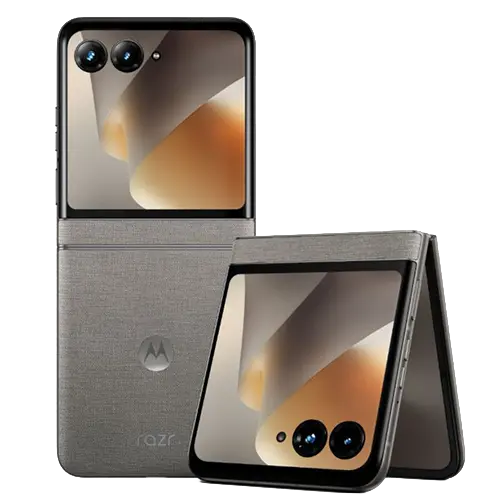
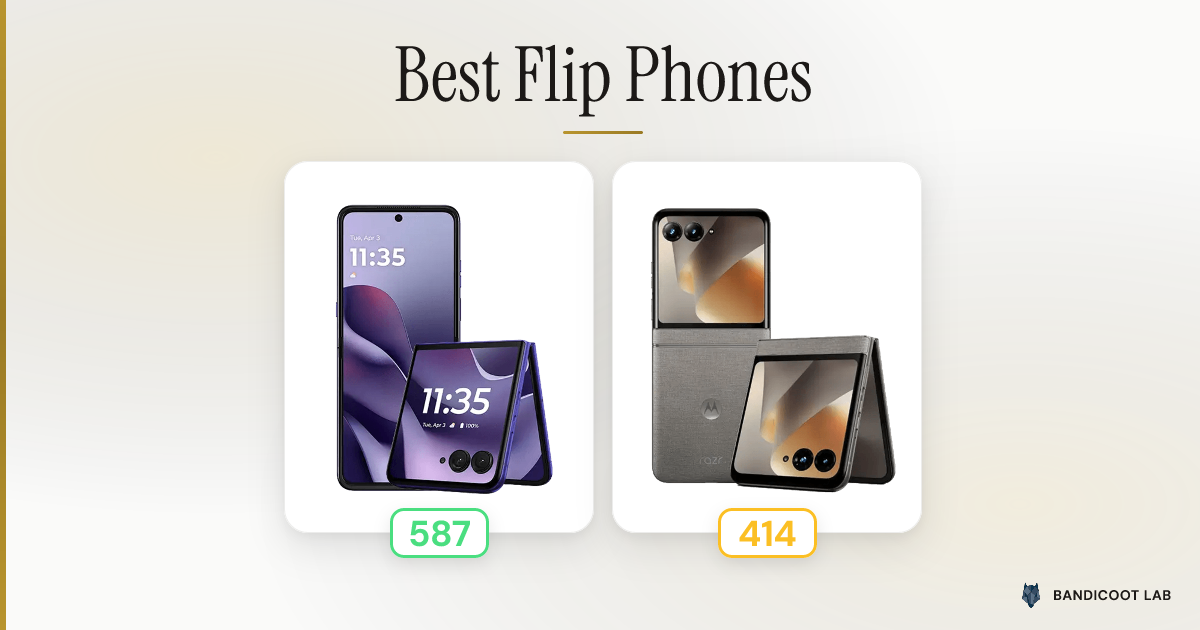
Razr (2026)
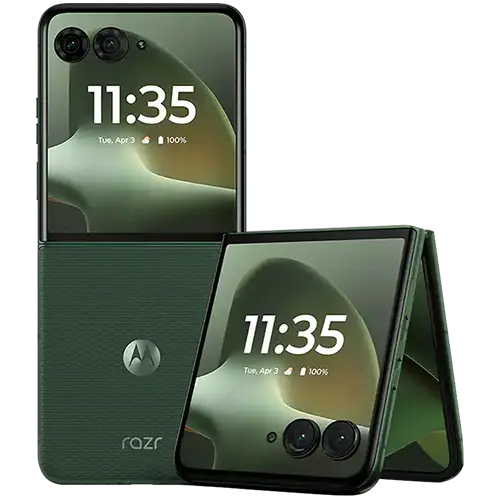
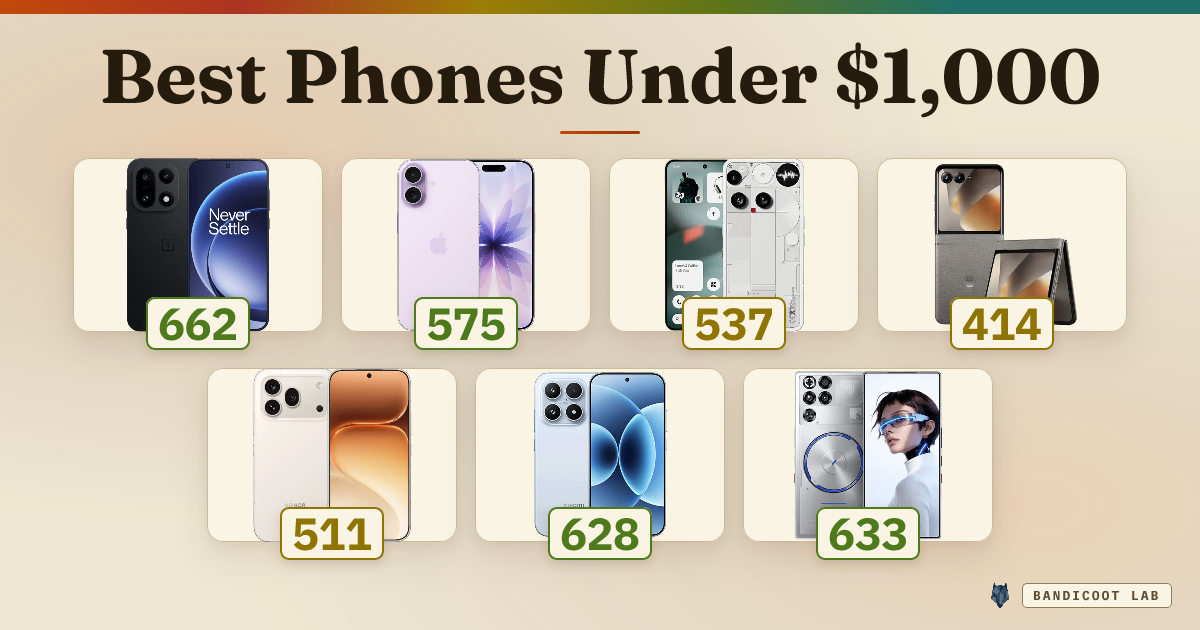
Razr+ (2026)
Ranked #48 of 52
Ranked #41 of 52
Overall
Overall
Motorola’s Razr flip-phone lineup for 2026 includes three devices. The Razr Ultra is, of course, the best and most expensive — but how do the other two in the line compare? Both the Motorola Razr (2026) and Razr+ (2026) have a lot to offer. The Razr (2026) is the entry point at $799.99: the flip phone for people who want the form factor without paying flagship money. The Razr+ (2026) at $1,099.99 gets the better silicon, a larger and faster cover screen, and more.
The Razr+ has the stronger chip by a wide margin, a faster and more accurate outer screen, and slightly better cameras. The base Razr lasts longer on a charge, and its speaker is louder and fuller. Neither phone is built for heavy gaming or serious photography, so the question is which compromises you'd rather live with.
Here’s how the Motorola Razr (2026) and Razr+ (2026) performed in our lab testing.
Design
| Motorola Razr (2026) | Motorola Razr+ (2026) | |
|---|---|---|
| Specifications | ||
| Dimensions (folded) | 88.1 x 74 x 15.9 mm | 88.1 x 74 x 15.3 mm |
| Dimensions (unfolded) | 171.3 x 74.0 x 7.3 mm | 171.4 x 74.0 x 7.1 mm |
| Weight | 188g | 189g |
| IP Rating | IP48 | IP48 |
| Frame | Aluminum | Aluminum |
| Front | Gorilla Glass Victus | Gorilla Glass Victus |
| Back | Vegan leather | Vegan leather |
| Screen-to-body ratio (inner) | 84.9% | 85.1% |
| Screen-to-body ratio (outer) | 64.1% | 78.1% |
Folded, the two phones have the same footprint: 88.1 by 74mm. The Razr+ is marginally thinner at 15.3mm folded versus 15.9mm, and 7.1mm versus 7.3mm unfolded. Unfolded length is identical at roughly 171.3mm.
Both use Gorilla Glass Victus on the front and a vegan leather back, and both carry an IP48 rating. That rating means dust protection against larger particles and protection against water immersion, but not the full submersible IP68 you'd get on a slab flagship. Treat both as splash-resistant rather than swim-proof.
Screen-to-body ratios are close on the inner display (84.9% for the Razr, 85.1% for the Razr+). The bigger gap is the cover screen, which the next section covers.
Bandicoot Lab doesn't formally test design or durability, so this section covers what's on paper.
Display
Inner
| Motorola Razr (2026) (Inner) | Motorola Razr+ (2026) (Inner) | |
|---|---|---|
568/ 845 | 652/ 845 | |
Both inner panels are 6.9-inch LTPO AMOLED at 1080 by 2640, around 413 pixels per inch, in a tall 22:9 aspect. They share the same color calibration: lowest average ΔE of 1.76 on both, with sRGB coverage near 99%. Colors are accurate on either phone, and you'd need a side-by-side to tell them apart for color.
Refresh rate is where they diverge. The base Razr tops out at 120Hz; the Razr+ runs to 165Hz. Both drop to 1Hz at idle to save power. The higher ceiling on the Razr+ is unlikely to be very noticeable to most users, but it also has a much lower touch latency — 6.8ms against the base Razr's 26.4ms.
Manual brightness is effectively tied at 476 and 483 nits, both modest for outdoor use. HDR peak goes the other way: the base Razr hits 3,884 nits versus 3,236 on the Razr+. The Razr+ holds that brightness far more consistently across different window sizes (82% stability versus 52%), so HDR highlights look steadier rather than fluctuating with how much of the screen is lit. Both maintain brightness well over the 30-minute sustained test.
Tone mapping favors the Razr+. It tracks the HDR reference curve closely with only mild highlight lift, clipping at around 80% input. The base Razr pushes highlights brighter than mastered and clips later, at 85%, which lifts and slightly distorts bright areas. The Razr+ renders HDR more faithfully.
Outer
| Motorola Razr (2026) (Outer) | Motorola Razr+ (2026) (Outer) | |
|---|---|---|
427/ 845 | 592/ 845 | |
The cover screens are where the tier gap is most visible. The base Razr's outer display is 3.6 inches at up to 90Hz; the Razr+ uses a 4-inch panel running up to 165Hz. The Razr+'s cover screen fills much more of the front: a 78.1% screen-to-body ratio against 64.1% on the base Razr, which means slimmer borders and more usable area for widgets and full apps.
Color accuracy on the outer panels splits as well. The Razr+ cover screen is well-calibrated, close to its inner display. The base Razr's outer screen drifts more, with neutral tones reading slightly off compared to the inner panel. Brightness also favors the Razr+ cover screen.
The Razr+'s cover display is more pleasant to actually use as a screen, not just a notification surface. The base Razr's cover screen works for glances and quick replies but feels more constrained.
Performance
| Motorola Razr (2026) | Motorola Razr+ (2026) | |
|---|---|---|
203/ 1012 | 377/ 1012 | |
The base Razr runs a MediaTek Dimensity 7450X with 8GB of RAM. The Razr+ uses a Qualcomm Snapdragon 8s Gen 3 with 12GB. This is the largest gap between the two phones.
On CPU, the Razr+ posts 1,940 single-core and 4,905 multi-core in GeekBench 6, against 1,113 and 3,377 for the base Razr. In browsing, the Razr+ scores 12.3 in Speedometer versus 9.1. Those gaps are large enough to feel: apps open faster, heavy web pages render quicker, and the Razr+ holds up better with several things going at once.
The GPU story is more complicated. The Razr+ peaks far higher in Wild Life Extreme (3,149 versus 1,063), so it's much faster in short bursts. It only sustains 53% of that peak under sustained load, throttling hard as it heats up. The base Razr sustains 99.5% of its much lower peak. In practice the Razr+ is still the faster gaming phone, but it runs hot and loses headroom in longer sessions. Neither is a gaming machine, and the clamshell form factor isn't built for it.
Camera
| Motorola Razr (2026) | Motorola Razr+ (2026) | |
|---|---|---|
391/ 587 | 468/ 587 | |
Both phones use the same hardware on paper: a 50-megapixel main, a 50-megapixel ultrawide, and a 32-megapixel front camera. Neither has a telephoto, so anything past 1x is a digital crop, with a 10x ceiling on both. Processing tuning separates them more than the sensors do.
The base Razr's main camera is sharper, but the Razr+'s tuning produces cleaner output across lighting conditions. The base Razr holds detail well into its mid-light range. Both soften as you push the digital zoom, and past about 4x to 5x output gets mushy on both. If you crop often, neither phone is a good fit.
Main
| Motorola Razr (2026) (Main) | Motorola Razr+ (2026) (Main) | |
|---|---|---|
405/ 722 | 501/ 722 | |
The base Razr's main camera is sharper in all three lighting conditions, holding detail best in mid and dark light. The Razr+ is a step softer but produces cleaner, more even results. Through the 1x to 10x range, both crop reasonably to about 2x before softening sets in. Past that, detail falls off on both.
The base Razr leans vivid and slightly cool; the Razr+ sits closer to neutral with a mild warm push. Skin tones are the Razr+'s clear advantage in bright and mid light. The base Razr renders faces orange-shifted in brighter conditions but tightens up in dark light.
Ultrawide
| Motorola Razr (2026) (Ultrawide) | Motorola Razr+ (2026) (Ultrawide) | |
|---|---|---|
466/ 722 | 426/ 722 | |
Both ultrawides are 50-megapixel f/2 units. The base Razr's ultrawide is sharper in bright and mid light; the Razr+ holds up better in dark light, where the base Razr's ultrawide drops off more. Both ultrawides are softer than their respective main cameras, as expected.
Skin tones drift heavily in bright light on either phone, with the base Razr's ultrawide reading cool and the Razr+'s pulling its own cast. The base Razr's ultrawide is the more accurate of the two for hue. Dynamic range is modest on both, with the base Razr holding slightly more highlight detail. Neither ultrawide is one you'd reach for in low light.
Front
| Motorola Razr (2026) (Front) | Motorola Razr+ (2026) (Front) | |
|---|---|---|
455/ 722 | 583/ 722 | |
The 32-megapixel front cameras share hardware but tune differently. The base Razr's selfie camera is sharper in bright and dark light; the Razr+ is steadier and more consistent. The Razr+'s front camera handles skin tones much better, staying close to accurate in bright light where the base Razr shifts faces noticeably orange.
Dynamic range strongly favors the Razr+ front camera, which holds far more highlight and shadow detail in backlit selfies. Video stabilization is also better on the Razr+ front camera, which stays steadier handheld. For selfies and video calls, the Razr+ is the more reliable choice.
Battery
| Motorola Razr (2026) | Motorola Razr+ (2026) | |
|---|---|---|
481/ 799 | 445/ 799 | |
The base Razr carries a 4,800mAh battery; the Razr+ has 4,500mAh. The larger cell, paired with the more efficient MediaTek chip, gives the base Razr the edge in endurance.
Video playback on the inner screen runs about 27 hours on the base Razr versus 25 hours on the Razr+. Played back on the cover screen, the base Razr stretches to over 33 hours while the Razr+ stays around 25. The base Razr's roughly 27 hours of inner-screen video means you can go a full day of heavy use and into the next without anxiety; the Razr+ is closer to a solid single day.
Web browsing tells the same story: the base Razr drains 23% over the five-hour test versus 25% on the Razr+, a small but consistent edge. Gaming is where they split hardest. The base Razr drops 17% during the gaming stress test; the Razr+ drops 26%, because its faster chip works harder and runs hotter. Standby drain is identical at 3% overnight.
Charging
| Motorola Razr (2026) | Motorola Razr+ (2026) | |
|---|---|---|
288/ 837 | 300/ 837 | |
The base Razr charges at 30W wired and 15W wireless. The Razr+ steps up to 45W wired with the same 15W wireless.
The faster wired charging shows early. At 10 minutes the Razr+ reaches 27% against the base Razr's 14%. By 30 minutes the gap narrows: 70% on the Razr+ versus 63% on the base Razr. The Razr+ front-loads more of the charge, so a quick top-up gets you further. Wireless charging is a wash, landing in the low-to-mid 20s percent after 30 minutes on both. Neither phone charges fast by current standards, but the Razr+ is the quicker of the two off a wired charger.
Speaker
| Motorola Razr (2026) | Motorola Razr+ (2026) | |
|---|---|---|
657/ 857 | 488/ 857 | |
The base Razr has the better speaker. Both reach the same max volume, just under 78 dBA, and both show similar distortion. The base Razr produces fuller bass and clearer highs, giving it a more rounded, complete sound. The Razr+ sounds thinner by comparison, weaker in both bass and treble despite matching the volume. For music, podcasts, and video without headphones, the base Razr is the more pleasant listen.
Microphone
| Motorola Razr (2026) | Motorola Razr+ (2026) | |
|---|---|---|
322/ 949 | 699/ 949 |
The Razr+ has the better microphone, recording cleaner and more even audio that lands above average for capture quality. The base Razr's mic is below average, with a less consistent response that can sound muddier on voice recordings and calls. For voice memos or video, the Razr+ is the clear pick.
Other
| Motorola Razr (2026) | Motorola Razr+ (2026) | |
|---|---|---|
| Biometrics | 447/ 1036 | 556/ 1036 |
| Data Transfer | 89/ 877 | 114/ 877 |
| Specifications | ||
| Biometric type | Fingerprint | Fingerprint |
| Ports | USB-C 2.0 | USB-C 2.0 |
| Storage | 128GB, 256GB | 256GB |
Both phones use a capacitive fingerprint sensor and neither has hardware-based face unlock. The Razr+ unlocks faster, averaging 189ms against the base Razr's 235ms. Both are quick enough that you won't be waiting; the Razr+ just feels a hair snappier.
Storage and data transfer favor the Razr+ slightly. The base Razr comes in 128GB or 256GB with 8GB of RAM; the Razr+ is 256GB only with 12GB. Both use USB-C 2.0, which caps wired transfers at slow speeds. Read and write rates are modest on both, with the Razr+ marginally faster. Moving large files off either phone over cable is a slow affair.
Conclusion
The Razr+ wins on the things that touch every interaction: it's much faster, its inner screen is far more responsive, and its cover display is bigger, brighter, and more accurate. Its cameras are a bit better across the board, especially for selfies and skin tones, and its microphone is well above average. For most people who can stomach the $300 premium, it's the better phone to live with day to day.
The base Razr lasts meaningfully longer on a charge, holding up better in video, browsing, and especially gaming, where the Razr+ runs hot and drains fast. Its speaker is fuller and clearer, and it runs cooler under sustained load. If your priorities are endurance and you mostly use the phone for messaging, calls, music, and the occasional photo, the base Razr covers those well.
FAQ
Does the Razr+ (2026) feel noticeably faster than the base Razr (2026) in everyday use?
The Razr+ is faster in ways you'll feel daily. It opens apps quicker, handles busy web pages more smoothly, and its inner display averages 6.8ms touch latency against the base Razr's 26.4ms — a gap that makes taps and swipes feel meaningfully more responsive. The base Razr isn't sluggish, but it's a clear step behind.
Which phone lasts longer on a single charge — the Razr (2026) or the Razr+ (2026)?
The base Razr lasts longer. It runs about 27 hours of inner-screen video playback versus 25 on the Razr+, and the gap widens to roughly 33 versus 25 hours when playing video on the cover screen. The difference is sharpest during gaming, where the Razr+ drains 26% over the stress test against the base Razr's 17%, because the Snapdragon chip runs hotter and works harder under load.
Is the Razr+ worth $300 more than the base Razr?
The premium pays off if daily speed, the cover screen, or cameras are priorities. The Razr+ has a much larger and more accurate outer display, far lower touch latency on the inner screen, stronger performance, better skin tone rendering, and a clearly better microphone. The base Razr makes more sense if you want longer battery life, a fuller-sounding speaker, and cooler sustained performance — and can live with a slower chip and a smaller, less refined cover display.
Which phone takes better selfies — the Razr (2026) or the Razr+?
The Razr+ is the better selfie phone. Its front camera handles skin tones much more accurately in bright light, where the base Razr shifts faces noticeably toward orange. The Razr+ also retains far more highlight and shadow detail in backlit shots and produces steadier handheld video from the front camera.
How does the cover screen compare between the two phones?
The Razr+'s cover screen is substantially more usable. At 4 inches with a 78.1% screen-to-body ratio and up to 165Hz, it has slimmer borders, more room for widgets and apps, better brightness, and accurate color calibration close to its inner panel. The base Razr's 3.6-inch cover screen runs at 60–90Hz, fills only 64.1% of the front, and its neutral tones drift noticeably from the inner display. The Razr+ cover screen functions as a real secondary display; the base Razr's is better suited to glances and quick replies.
Related
Motorola
Razr+ (2026)
Motorola
Razr (2026)
Motorola
Razr Ultra (2026)

Motorola
Razr Fold

Motorola
Moto G Power (2026)
Best Foldable Phones

Motorola Razr+ (2026) vs Samsung Galaxy Z Flip 7

Motorola Razr (2026) vs Motorola Razr Ultra (2026)

Motorola Razr (2026) vs Motorola Razr Fold

Motorola Razr (2026) vs Motorola Razr (2025)
Best Flip Phones
Best Phones Under $1,000