Motorola Razr (2026) vs Motorola Razr Ultra (2026)
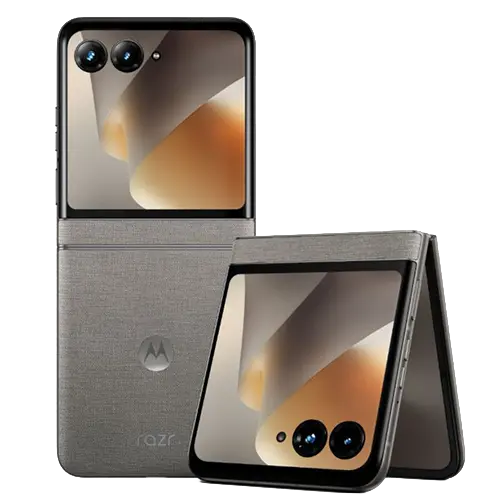
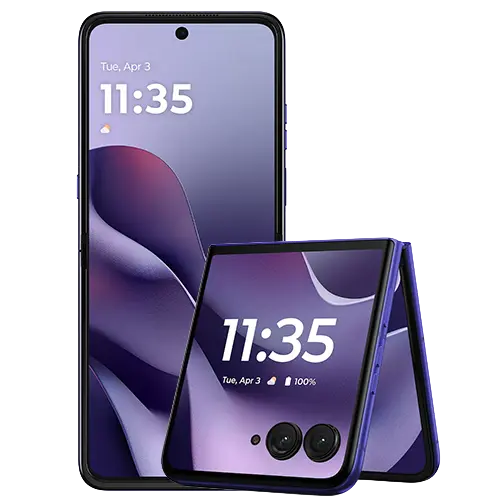
Motorola
Motorola
Razr (2026)
Razr Ultra (2026)
Ranked #48 of 52
Ranked #20 of 52
Overall
Overall
The Razr (2026) and Razr Ultra (2026) are both clamshell foldables that fit in a pocket and open into a tall slab. They share a body silhouette and a family resemblance, but they sit $700 apart. The Razr at $799.99 is the entry into the line: a foldable for people who want the form factor without paying flagship money. The Razr Ultra at $1499.99 is the loaded version, priced against the most expensive clamshells around, and it's built to compete with them on hardware rather than on price.
The gap between them is wider than the matching exteriors suggest. The Ultra pulls ahead on performance by a large margin, holds a real edge on battery life and charging speed, and produces cleaner, more accurate camera results across the board. It also unlocks faster. The base Razr's main advantage is its speaker, which is louder and fuller, and its lower price. For most categories that affect daily use, the Ultra is the stronger phone; the question is whether those gains justify nearly doubling the spend.
Design
| Motorola Razr (2026) | Motorola Razr Ultra (2026) | |
|---|---|---|
| Specifications | ||
| Dimensions (folded) | 88.1 x 74 x 15.9 mm | 88.1 x 74 x 15.7 mm |
| Dimensions (unfolded) | 171.3 x 74.0 x 7.3 mm | 171.5 x 74.0 x 7.2 mm |
| Weight | 188g | 199g |
| IP Rating | IP48 | IP48 |
| Frame | Aluminum | Aluminum |
| Front | Gorilla Glass Victus | Gorilla Glass Ceramic |
| Back | Vegan leather | Vegan leather / Alcantara / Wood |
| Screen-to-body ratio (inner) | 84.9% | 87.3% |
| Screen-to-body ratio (outer) | 64.1% | 78.1% |
Folded, the two are nearly identical: both measure 88.1 x 74mm, with the base Razr at 15.9mm thick and the Ultra a hair slimmer at 15.7mm. Unfolded, the Razr is 171.3 x 74.0 x 7.3mm and the Ultra 171.5 x 74.0 x 7.2mm. The Razr weighs 188g, the Ultra 199g.
Both use aluminum frames and vegan leather backs, with the Ultra adding Alcantara and wood as back-material options. The fronts differ: the Razr uses Gorilla Glass Victus, the Ultra steps up to Gorilla Glass Ceramic, which is more scratch- and crack-resistant on paper. Both carry an IP48 rating. The 4 means protection against solid objects larger than 1mm rather than fine dust, and the 8 means submersion past 1 meter.
Screen-to-body ratios favor the Ultra. Its inner panel covers 87.3% of the front versus 84.9% on the Razr, and the cover screen difference is larger: 78.1% against 64.1%. The Ultra's outer display reaches closer to the edges, so more of the closed phone is usable screen.
Bandicoot Lab doesn't formally test design or durability.
Display
Inner
| Motorola Razr (2026) (Inner) | Motorola Razr Ultra (2026) (Inner) | |
|---|---|---|
568/ 845 | 632/ 845 | |
The Razr's inner panel is a 6.9-inch LTPO AMOLED at 1080 x 2640 (413 pixels per inch), 22:9, running 1–120Hz. The Ultra's is a 7-inch LTPO AMOLED at 1224 x 2992 (462 PPI), same 22:9 aspect, running 1–165Hz. The Ultra is sharper and refreshes faster, and the higher ceiling shows up as smoother scrolling and animation.
Manual brightness is effectively tied: 476 nits on the Razr, 474 on the Ultra. Neither is bright enough to be comfortable in direct sun. HDR peak diverges. The Razr hits 3,884 nits peak in HDR against the Ultra's 2,919, so the cheaper phone goes brighter on highlights. How that brightness is applied matters. The Razr's tone mapping pushes highlights well above the mastered level and follows the HDR reference curve loosely, so bright content looks lifted rather than accurate, and it clips at 85% of the input range. The Ultra tracks the reference curve closely with only a slight highlight boost, clipping at 80%. The Ultra's HDR looks the way the content was graded; the Razr's looks punchier but less faithful.
Color accuracy in standard modes is close, both landing in a respectable range with neutral tones rendered cleanly. Touch latency is 26.4ms on the Razr and 19ms on the Ultra. That gap is small enough that most people won't notice it in normal use.
Outer
| Motorola Razr (2026) (Outer) | Motorola Razr Ultra (2026) (Outer) | |
|---|---|---|
427/ 845 | 567/ 845 | |
The Razr's cover screen is a 3.6-inch AMOLED at 1056 x 1066 (413 PPI), capped at 60–90Hz. The Ultra's is larger at 4 inches, 1080 x 1272 (417 PPI), and runs the full 1–165Hz range. The Ultra's cover display is bigger, sharper at the edges, and noticeably smoother. The Razr's 90Hz ceiling is fine for glances and notifications but feels less fluid than the inner panel.
Outer-display brightness favors the Ultra. Color on the Razr's cover screen drifts more than its inner panel; neutral tones look slightly off and colors aren't as tightly controlled. The Ultra's cover screen holds color better and is the more accurate of the two outer panels.
Performance
| Motorola Razr (2026) | Motorola Razr Ultra (2026) | |
|---|---|---|
203/ 1012 | 761/ 1012 | |
The Razr runs a MediaTek Dimensity 7450X with 8GB of RAM. The Ultra runs a Qualcomm Snapdragon 8 Elite with 16GB. This is the widest gap between the two phones.
CPU results aren't close. The Razr scores 1,113 single-core and 3,377 multi-core in GeekBench 6; the Ultra hits 3,062 and 9,161. That's roughly three times the single-core throughput and well over double multi-core. Browser performance follows: 9.1 on Speedometer for the Razr against 20.8 for the Ultra. Day to day, the Razr handles messaging, browsing, and light multitasking without trouble, but you'll feel it lag behind the Ultra when opening heavy apps or juggling several at once.
GPU is further apart still. The Razr's Wild Life Extreme peak is 1,063, sustained at 99.5% stability across the run; the Ultra peaks at 6,420 but holds only 68.6%. The Razr is consistent because its GPU never generates enough heat to throttle. It's also far slower in absolute terms. The Ultra throttles under sustained load but delivers several times the raw graphics performance, so demanding games run well on it and poorly on the Razr. For casual gaming, both work; for anything graphically heavy, only the Ultra keeps up.
Camera
| Motorola Razr (2026) | Motorola Razr Ultra (2026) | |
|---|---|---|
391/ 587 | 482/ 587 | |
Both phones use a 50-megapixel main and a 50-megapixel ultrawide with no telephoto. The Razr's front camera is 32 megapixels, the Ultra's 50. Across the board, the Ultra produces cleaner, more accurate results. Its color tuning is more faithful, and its larger main sensor (1/1.56 vs 1/1.95) gathers more light.
Main-camera sharpness is solid on both in good light. The Razr resolves slightly more fine detail at base in bright conditions but falls off faster as you crop in. Without a telephoto, both phones rely on digital zoom past 1x, and this is where they separate. The Razr tops out at 10x and holds detail poorly past a modest crop. The Ultra reaches 30x and stays usable further out, though deep zoom on both is soft and best avoided for anything you want to keep. Past 10x, neither produces detail worth printing; the Ultra is simply less bad.
Main
| Motorola Razr (2026) (Main) | Motorola Razr Ultra (2026) (Main) | |
|---|---|---|
405/ 722 | 491/ 722 | |
In bright light, both mains resolve plenty of detail, with the Razr slightly ahead at 1x. As light drops to mid and dark levels, the Ultra holds detail better; the Razr's smaller sensor shows up in dimmer scenes despite its strong base figures. Cropping in, the Ultra degrades more gracefully, so a 2x or 3x shot looks cleaner from it than from the Razr.
Color is the clearer split. The Ultra's main camera has controlled hues and only minor skin-tone drift. The Razr's main pushes skin tones warm and orange under bright light, the most visible color issue on either phone. Dynamic range goes to the Ultra, with more usable shadow detail and better-preserved depth in contrasty scenes.
Ultrawide
| Motorola Razr (2026) (Ultrawide) | Motorola Razr Ultra (2026) (Ultrawide) | |
|---|---|---|
466/ 722 | 551/ 722 | |
Both ultrawides are 50 megapixels at f/2. The Ultra's resolves more detail in bright and mid light and holds up better as light fades. Both ultrawides are softer than their respective main cameras, which is normal.
Color on the Razr's ultrawide shifts cool in bright light, with skin tones drifting substantially off reference at 1000 lux before improving in dimmer conditions. The Ultra's ultrawide is more consistent across lighting, though it picks up some hue error in dark scenes. Dynamic range on the Ultra's ultrawide is strong, holding shadow and highlight detail well across both lenses on either phone.
Front
| Motorola Razr (2026) (Front) | Motorola Razr Ultra (2026) (Front) | |
|---|---|---|
455/ 722 | 557/ 722 | |
The Razr's front camera is 32 megapixels, the Ultra's 50. In bright light both are sharp. The Razr's selfie detail dips in mid light and recovers oddly in the dark; the Ultra holds detail better in bright and mid conditions and softens in the dark.
Color accuracy on the front favors the Ultra, which keeps skin tones close to reference across lighting. The Razr's selfie skin tones run warm in bright light before settling. Front stabilization is the bigger gap: the Ultra steadies handheld video well, while the Razr's front video is shakier. For selfie video, the Ultra is the steadier of the two.
Battery
| Motorola Razr (2026) | Motorola Razr Ultra (2026) | |
|---|---|---|
481/ 799 | 584/ 799 | |
The Razr carries a 4800mAh cell, the Ultra 5000mAh. The Ultra's larger battery and more efficient platform translate into longer real-world life.
Video playback on the inner screen runs 26.99 hours on the Razr and 31.23 hours on the Ultra. That's roughly a full extra workday of looping video from the Ultra, or two solid days of mixed use against a day and a half from the Razr. Web browsing drains 23% over five hours on the Razr versus 19% on the Ultra, so the Ultra comfortably clears a heavy day of browsing where the Razr is closer to the line.
Gaming inverts the pattern. The Razr drained 17% during the one-hour run; the Ultra drained 39%. The Ultra's powerful GPU pulls far more current under load, so sustained gaming eats its battery quickly despite the larger cell. The Razr sips by comparison because its GPU does less work — and arguably not enough work to game on comfortably in the first place. Standby is identical at 3% over eight hours overnight, so both lose little sitting idle.
Charging
| Motorola Razr (2026) | Motorola Razr Ultra (2026) | |
|---|---|---|
288/ 837 | 329/ 837 | |
The Razr charges at 30W wired and 15W wireless. The Ultra steps up to 68W wired and 30W wireless.
The wired difference shows early. In ten minutes the Razr reaches 14% and the Ultra 27%, nearly double. By 30 minutes the Razr is at 63% and the Ultra at 70%. The Razr closes much of the gap by the half-hour mark, but the Ultra's early-charge speed is more useful for a quick pre-departure boost. Wireless is closer and slower on both: 13% in ten minutes for the Razr, 10% for the Ultra, with the Razr slightly ahead at 30 minutes. Neither charges quickly off a pad.
Speaker
| Motorola Razr (2026) | Motorola Razr Ultra (2026) | |
|---|---|---|
657/ 857 | 544/ 857 | |
Both speakers max out around the same loudness, 77.9 dBA on the Razr and 77.6 on the Ultra, and neither is especially loud. Distortion is similar, just under 9% on both at maximum volume.
The character differs. The Razr has the fuller, warmer sound, with more low-end presence and better high-end clarity. The Ultra's speaker is thinner, with weaker bass and less detail up top. For music and video without headphones, the Razr is the better listen despite the matched volume figures.
Microphone
| Motorola Razr (2026) | Motorola Razr Ultra (2026) | |
|---|---|---|
322/ 949 | 610/ 949 |
The Ultra's microphone records with a flatter, more even frequency response that puts it above average. The Razr's microphone sits below average, with a less consistent response that makes voice recordings sound less natural. For calls and voice notes, the Ultra captures cleaner audio.
Other
| Motorola Razr (2026) | Motorola Razr Ultra (2026) | |
|---|---|---|
| Biometrics | 447/ 1036 | 713/ 1036 |
| Data Transfer | 89/ 877 | 116/ 877 |
| Specifications | ||
| Biometric type | Fingerprint | Fingerprint |
| Ports | USB-C 2.0 | USB-C 2.0 |
| Storage | 128GB, 256GB | 512GB |
Both use capacitive fingerprint sensors mounted in the side button, and neither has hardware-based face unlock. The Ultra unlocks faster: 147ms against the Razr's 235ms. Both are reliable, but the Ultra feels more immediate.
Storage and transfer speeds favor the Ultra. The Razr comes in 128GB or 256GB; the Ultra ships with 512GB. Both use USB-C 2.0 ports, so wired transfers are slow on either. Internal read and write speeds are close, both in the same modest range, with the Ultra marginally faster.
Conclusion
The Ultra wins most of what matters for daily use, though that’s, of course, not surprising. It's far faster, lasts longer on video and browsing, charges quicker in the first ten minutes, takes cleaner and more accurate photos, unlocks faster, and has the better microphone and a sharper, smoother pair of displays. The base Razr's wins are narrower: a louder, fuller speaker, a slight edge in main-camera detail at 1x in good light, and much better battery economy specifically while gaming.
The decision comes down to what the $700 difference buys. If you want the clamshell shape and intend to use the phone for messaging, social media, browsing, and casual photos, the Razr does all of that competently and costs nearly half as much. Its performance is the weak point; you'll feel it in heavy apps and modern games, but not in everyday tasks.
The Ultra is the better phone in nearly every category that affects how a phone feels to use, and at $1499.99 it should be. Buy it if you want flagship performance and camera results in a foldable and are prepared to pay flagship money for them. If the form factor is the draw and the budget is the constraint, the Razr gets you most of the experience for far less.
FAQ
Is the Razr Ultra (2026) worth the extra $700 over the base Razr?
The Ultra is faster, lasts longer on video and browsing, charges more quickly in the first ten minutes, takes more accurate photos, and unlocks faster. The Razr stays competitive for messaging, social media, and casual photos, and its speaker actually sounds fuller. The gap is wide enough to matter if performance, camera quality, or display smoothness are priorities, but narrow enough for everyday tasks that budget-conscious buyers can reasonably choose the Razr.
Which phone is better for gaming — the Razr (2026) or the Razr Ultra?
For demanding 3D games, the Ultra is the only real option; the Razr's GPU is too slow to run graphically heavy titles smoothly. For casual games, both work fine. Battery behavior splits them further: the Ultra burns through its charge quickly under sustained gaming load, while the Razr's lower-power GPU sips battery during the same workload. Heavy gamers should pick the Ultra for performance and plan on shorter sessions or a charger nearby.
Does the Razr (2026) or the Razr Ultra take better selfies?
The Ultra produces better selfies overall. It holds sharpness better in mid light, keeps skin tones closer to accurate across lighting conditions, and stabilizes handheld front-camera video more effectively. The Razr's selfie camera pushes skin tones warm in bright light and produces shakier video. For selfie video in particular, the Ultra is the steadier choice.
Which Razr has better battery life for everyday use?
The Ultra lasts longer for video playback and web browsing — roughly a full extra workday of looped video and a meaningfully lower drain rate during heavy browsing. Gaming flips this: the Ultra's powerful GPU pulls far more current under load, so the Razr actually lasts longer during sustained gaming sessions. For everyday mixed use that isn't heavy gaming, the Ultra is the safer bet.
Do the Razr (2026) and Razr Ultra sound the same through their speakers?
They reach nearly the same maximum volume, but the Razr sounds fuller, with more bass and better high-end clarity. The Ultra's speaker is thinner and weaker in the low end. For music or video without headphones, the Razr is the better listen — one of the few categories where the cheaper phone has a clear advantage.
Related
Motorola
Razr Ultra (2026)
Motorola
Razr (2026)
Motorola
Razr Fold
Motorola
Razr+ (2026)

Motorola
Moto G Power (2026)
Best Foldable Phones

Motorola Razr (2026) vs Motorola Razr+ (2026)

Motorola Razr (2026) vs Motorola Razr Fold

Motorola Razr (2026) vs Motorola Razr (2025)
Best Phones for Gaming
Best Flip Phones
Best Phones Under $1,000