Poco F9 Ultra vs Apple iPhone 17 Pro Max
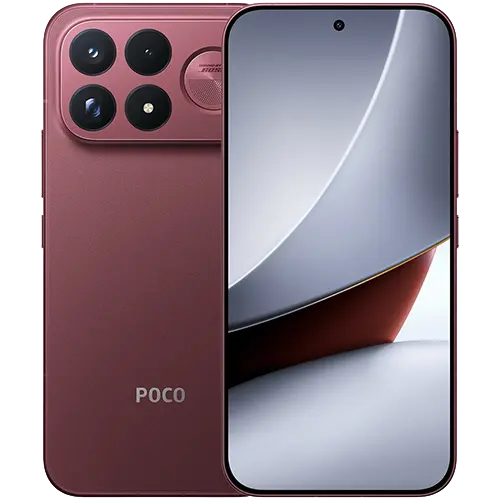
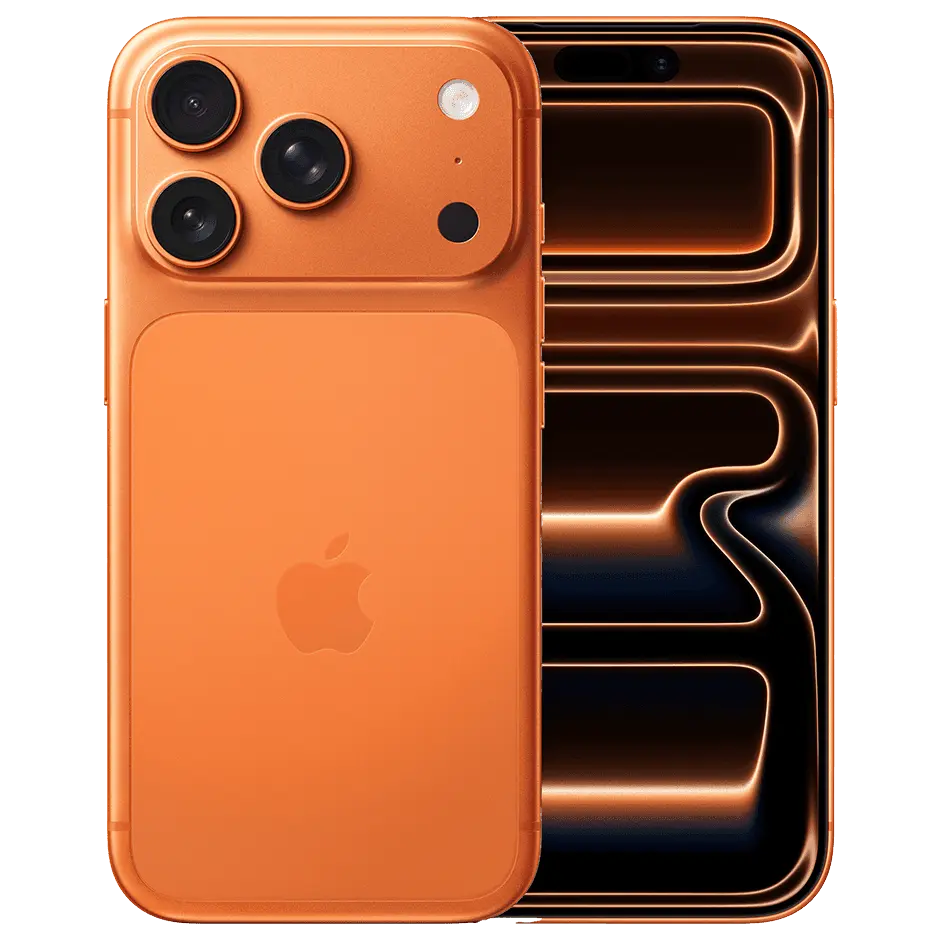
Poco
Apple
F9 Ultra
iPhone 17 Pro Max
Ranked #1 of 61
Ranked #6 of 61
Overall
Overall


The Poco F9 Ultra at $799 carries the kind of spec sheet that usually comes with a four-figure price: Qualcomm's top-end silicon, a 200-megapixel main camera, an 8,050mAh battery, and 100W wired charging. The iPhone 17 Pro Max at $1,199 is Apple's largest and most capable phone, built on the premise that tight hardware-software integration and long-term platform support justify the premium. Both are 6.9-inch devices aimed at buyers who want a big screen and few compromises. The $400 between them is the central question.
The Poco leads in battery life, display, speaker quality, and charging speed. The iPhone has the better camera system, faster single-core processor performance, and a substantially better microphone. The Poco's microphone is poor; the iPhone's biometric unlock is unusually slow. At $400 less, the Poco wins more of the categories we test. The iPhone's strengths are genuine but fewer in number.
Design
| Poco F9 Ultra | Apple iPhone 17 Pro Max | |
|---|---|---|
| Specifications | ||
| Dimensions | 163.5 x 77.9 x 8.7 mm | 163.4 x 78 x 8.8 mm |
| Weight | 235g | 233g |
| IP Rating | IP68 | IP68 |
| Frame | Aluminum | Aluminum |
| Front | Gorilla Glass 7i | Ceramic Shield 2 |
| Back | Plastic | Ceramic Shield |
| Screen-to-body ratio | 91.5% | 91.7% |
Both phones are nearly identical in size. The Poco F9 Ultra measures 163.5 x 77.9 x 8.7mm at 235g; the iPhone 17 Pro Max is 163.4 x 78 x 8.8mm at 233g. Both use aluminum frames and carry an IP68 water resistance rating, meaning submersion in fresh water to a manufacturer-rated depth. Both share a 19.5:9 aspect ratio. Screen-to-body ratios are essentially tied: 91.5% for the Poco, 91.7% for the iPhone, both translating to thin bezels all around.
The difference is in the protective materials. The iPhone uses Ceramic Shield 2 on the front and Ceramic Shield on the back, both ceramic-infused glass designed for drop and scratch resistance. The Poco uses Gorilla Glass 7i on the front and a plastic back. The plastic back is less scratch-resistant and won't age the same way glass or ceramic will. Whether that matters depends on whether you use a case.
Bandicoot Lab doesn't formally test design or durability, so these are spec-sheet observations only.
Display
| Poco F9 Ultra | Apple iPhone 17 Pro Max | |
|---|---|---|
879/ 881 | 627/ 881 | |
The Poco F9 Ultra has a 6.9-inch AMOLED at 1200 x 2608 (416 pixels per inch) with a 30–185Hz variable refresh rate. The iPhone 17 Pro Max matches the screen size with a 1320 x 2868 LTPO OLED (460 PPI) at 1–120Hz. The iPhone's higher pixel density produces slightly finer text and UI elements, though the difference between 416 and 460 PPI is subtle at normal viewing distance. The Poco's 185Hz ceiling benefits scrolling smoothness and high-frame-rate gaming. Touch latency is 13.7ms on the Poco versus 52.4ms on the iPhone, a gap large enough to feel during fast interactions and responsive gaming.
Manual brightness is nearly identical: 863 nits on the Poco, 857 on the iPhone. HDR peak brightness diverges dramatically. The Poco reaches 11,983 nits; the iPhone hits 2,976. The Poco's peak applies mainly to small bright elements against a dark background. Its brightness across HDR window sizes holds only 19.2%, dropping steeply as the bright area on screen grows. The iPhone holds 42.8% across window sizes, making its lower peak more consistent across different content. Over a sustained 30-minute HDR session, the picture flips: the Poco maintains 98.9% of its brightness while the iPhone drops to 37.7%.
Color accuracy favors the iPhone. It covers 100% of sRGB and 75.6% of DCI-P3 in its best mode, with colors that track closely to reference. Whites look neutral, grays stay clean, and drift across the spectrum is minimal. The Poco covers 97% sRGB and 71.9% P3, with enough color error to notice in skin tones and subtle gradients. For HDR tone mapping, the Poco follows the reference curve more faithfully, with moderate highlight boosting and clipping starting at 85% input level. The iPhone lifts highlights well above mastered levels and starts clipping at 80%, making bright HDR scenes look punchier than intended with earlier loss of highlight detail.
Performance
| Poco F9 Ultra | Apple iPhone 17 Pro Max | |
|---|---|---|
864/ 1012 | 906/ 1012 | |
The Poco F9 Ultra runs Qualcomm's Snapdragon 8 Elite Gen 5 with 16GB of RAM. The iPhone 17 Pro Max uses Apple's A19 Pro with 12GB. CPU results split by workload: the iPhone scores 3,852 single-core on GeekBench 6 versus the Poco's 3,546, while the Poco leads multi-core at 10,605 to 9,872. The single-core gap is about 8%, measurable but unlikely to feel different in daily use. Multi-core favors heavy multitasking and parallel workloads.
GPU performance tilts toward the Poco. It scores 7,439 in Wild Life Extreme versus the iPhone's 5,828, and 13,336 in Solar Bay versus 11,777. That's roughly 28% more raw graphics throughput. Sustained performance under extended load is close: 70.9% stability for the Poco versus 73.1% for the iPhone in Wild Life Extreme, and 67.1% versus 69.1% in Solar Bay. The Poco delivers higher peak frame rates in demanding games; both throttle at similar rates during long sessions.
Browser performance heavily favors the iPhone: 41.8 on Speedometer versus 16.9. This reflects Safari's JavaScript engine advantage as much as raw silicon, but web-heavy tasks and complex web apps will feel snappier on iOS.
Camera
| Poco F9 Ultra | Apple iPhone 17 Pro Max | |
|---|---|---|
548/ 587 | 567/ 587 | |
The iPhone 17 Pro Max scores higher on camera overall, but the per-lens breakdown is less one-sided. The Poco is sharper on every rear camera: main, ultrawide, and telephoto. The iPhone leads decisively on the front camera, resolving roughly twice the detail. Both hold rear-camera sharpness well in bright conditions. The iPhone's main camera is distinctive in how little it softens as light drops, maintaining sharpness almost perfectly into dark conditions. At extreme zoom past 10x, the Poco pulls further ahead. It reaches 100x digital zoom with output that's soft but functional for reading signs or identifying distant details. The iPhone caps at 40x, and its deep-zoom output is softer across the range.
Color diverges sharply. The iPhone produces vivid, warm-leaning output with saturation pushed well above neutral in bright and mid-light, giving images an immediately punchy look. Under darker, warmer light, the vividness becomes inconsistent. Saturation can drop significantly, and the warm cast intensifies. The Poco targets a more neutral rendering, with mild saturation boost and a slight warm shift in low light that stays controlled. On accuracy, the Poco is clearly ahead: hue errors stay small across all lighting and all lenses. The iPhone's hue accuracy holds in bright light but degrades substantially under mid and dark conditions. The pattern is consistent across all four cameras. As ambient light gets warmer, the iPhone's white balance correction overcompensates, introducing broad color shifts across the frame. Skin tones drift from natural on the iPhone in all conditions. The Poco handles skin tones well in mid and dark light, though both phones show some error in bright conditions.
Dynamic range is the iPhone's clearest camera advantage. It retains more highlight and shadow detail in high-contrast scenes across every lens, producing images with more depth and gradation. The Poco clips highlights more readily and recovers less shadow information.
Main
| Poco F9 Ultra (Main) | Apple iPhone 17 Pro Max (Main) | |
|---|---|---|
582/ 722 | 579/ 722 | |
The Poco F9 Ultra uses a 200-megapixel f/1.68 main sensor at 24mm on a 1/1.4-inch chip. The iPhone 17 Pro Max has a 48-megapixel f/1.78 at 24mm on a 1/1.28-inch chip. Both produce sharp results in good light, with the Poco slightly ahead in resolved detail. As light drops, the iPhone holds sharpness better. Its output looks nearly as crisp in dark conditions as in bright, while the Poco softens more. The Poco's 200-megapixel sensor gives it more pixels to crop from through its 1x–5x zoom range, and digital crops at 2x and 3x retain good detail. The iPhone covers 1x–4x and shows more softness from cropping sooner.
The iPhone pushes saturation hard in bright and mid-light, producing vivid, warm-leaning images. In dark conditions, saturation swings the other way and output turns muted. The Poco produces a more neutral look, with mild saturation boost in bright light and consistent rendering across conditions. The Poco also maintains better hue accuracy: its color errors stay low across lighting, while the iPhone's degrade substantially under warm, dim light. This is primarily a white balance overcorrection. Skin tones on the iPhone drift from natural across all conditions. The Poco handles skin tones well in mid and dark light, with more error in bright.
Dynamic range favors the iPhone. High-contrast scenes retain more shadow detail and highlight information. The Poco clips highlights and produces less depth in demanding lighting.
Ultrawide
| Poco F9 Ultra (Ultrawide) | Apple iPhone 17 Pro Max (Ultrawide) | |
|---|---|---|
551/ 722 | 505/ 722 | |
The Poco F9 Ultra has a 50-megapixel f/2.4 ultrawide at 18mm (0.7x). The iPhone 17 Pro Max uses a 48-megapixel f/2.8 at 13mm (0.5x), giving it a noticeably wider field of view. Sharpness favors the Poco by more than you'd expect: its ultrawide actually resolves more detail than its own main camera in bright and mid-light, which is unusual. The iPhone's ultrawide is softer than its own main lens, following the more typical pattern. Both drop in low light.
Color follows the same tendencies as the main cameras. The Poco renders colors close to neutral with modest saturation, while the iPhone pushes vivid output across lighting conditions. The iPhone's hue accuracy deteriorates under warmer, dimmer light here too, with the same white balance overcorrection pattern. The Poco holds its colors better across conditions, with more visible warm drift only in the darkest shooting.
Dynamic range again favors the iPhone, which retains more highlight and shadow detail in mixed-lighting scenes.
Telephoto
| Poco F9 Ultra (Telephoto) | Apple iPhone 17 Pro Max (Telephoto) | |
|---|---|---|
605/ 722 | 628/ 722 | |
The Poco F9 Ultra has a 50-megapixel f/3 telephoto at 120mm (5x). The iPhone 17 Pro Max uses a 48-megapixel f/2.8 at 100mm (4x). The Poco starts at a longer focal length and extends its digital zoom to 100x; the iPhone caps at 40x. At their native lengths, the Poco resolves more detail across all lighting conditions. As zoom extends digitally, both soften, but the Poco maintains usable output at distances where the iPhone has hit its ceiling.
Color accuracy on the iPhone's telephoto is poor across all lighting conditions. A strong warm, yellow cast appears even in neutral daylight, pointing to a lens or processing characteristic rather than white balance correction. Under warmer ambient light, overcorrected white balance compounds it with a magenta shift, pushing hue errors further. Skin tones drift substantially. The Poco's telephoto is much cleaner: colors are accurate in bright light, with a mild warm shift in dimmer conditions that stays manageable. Saturation on the iPhone swings between punchy in good light and muted in dark; the Poco holds steadier.
Dynamic range favors the iPhone by a wider margin here than on the other lenses, retaining more shadow and highlight detail that partly compensates for the color issues by preserving scene depth in contrasty shots. Stabilization also favors the iPhone. Handheld video and longer exposures show less movement at these focal lengths.
Front
| Poco F9 Ultra (Front) | Apple iPhone 17 Pro Max (Front) | |
|---|---|---|
521/ 722 | 703/ 722 | |
The Poco F9 Ultra has a 32-megapixel f/2.2 front camera at 21mm. The iPhone 17 Pro Max uses an 18-megapixel f/1.9 at 20mm. Despite the lower megapixel count, the iPhone's front camera is dramatically sharper, resolving roughly double the detail across all lighting conditions. The gap is large enough to see in every selfie.
The Poco's front camera produces slightly cool, muted images with a consistent lean toward cooler tones across all lighting and slightly undersaturated output. Hue accuracy is its strength here, staying consistent from bright to dark. The iPhone's front camera produces vivid, warm-leaning output that looks punchier but carries significant hue errors in mid and dark conditions. The same white balance overcorrection from the rear cameras appears here. Skin tones drift under indoor and warm lighting.
Dynamic range and stabilization both favor the iPhone. Selfie video stays more controlled, and high-contrast backlit scenes hold more detail in highlights and shadows. The Poco's front camera is the weaker of the two overall, with consistent color accuracy its main advantage.
Battery
| Poco F9 Ultra | Apple iPhone 17 Pro Max | |
|---|---|---|
836/ 836 | 617/ 836 | |
The Poco F9 Ultra has an 8,050mAh battery; the iPhone 17 Pro Max has 5,088mAh. That nearly 60% capacity advantage translates directly into endurance. The Poco lasts 42.89 hours in our video playback test, which runs at standardized brightness until the phone dies. The iPhone lasts 23.96 hours. In practical terms, the Poco easily covers two full days of typical mixed use between charges. The iPhone is a reliable full-day phone, but you'll be charging it every night.
In our five-hour web browsing test, the Poco drains 15% versus the iPhone's 21%. During gaming, measured over 20 loops of the 3DMark Wild Life Extreme stress test, the Poco uses 22% to the iPhone's 25%. Standby drain over eight hours of overnight idle is close: 3% for the Poco, 2% for the iPhone. The Poco uses less battery in every active-use scenario by a meaningful margin.
Charging
| Poco F9 Ultra | Apple iPhone 17 Pro Max | |
|---|---|---|
629/ 837 | 420/ 837 | |
The Poco F9 Ultra supports 100W wired and 50W wireless charging. The iPhone 17 Pro Max charges at up to 40W wired and 25W wireless with MagSafe-compatible magnetic alignment for Qi2 chargers.
The iPhone reaches higher charging percentages at each checkpoint: 29% in 10 minutes wired versus the Poco's 24%, and 67% at 30 minutes versus 61%. Wireless follows the same pattern, with 20% at 10 minutes for the iPhone versus 17%, and 47% at 30 minutes versus 42%. Those percentages need context. The Poco is filling an 8,050mAh battery while the iPhone fills 5,088mAh. The Poco's 24% at 10 minutes represents roughly 1,932mAh of stored energy; the iPhone's 29% works out to about 1,475mAh. A 10-minute charge on the Poco delivers more actual runtime despite the lower percentage.
Speaker
| Poco F9 Ultra | Apple iPhone 17 Pro Max | |
|---|---|---|
863/ 897 | 816/ 897 | |
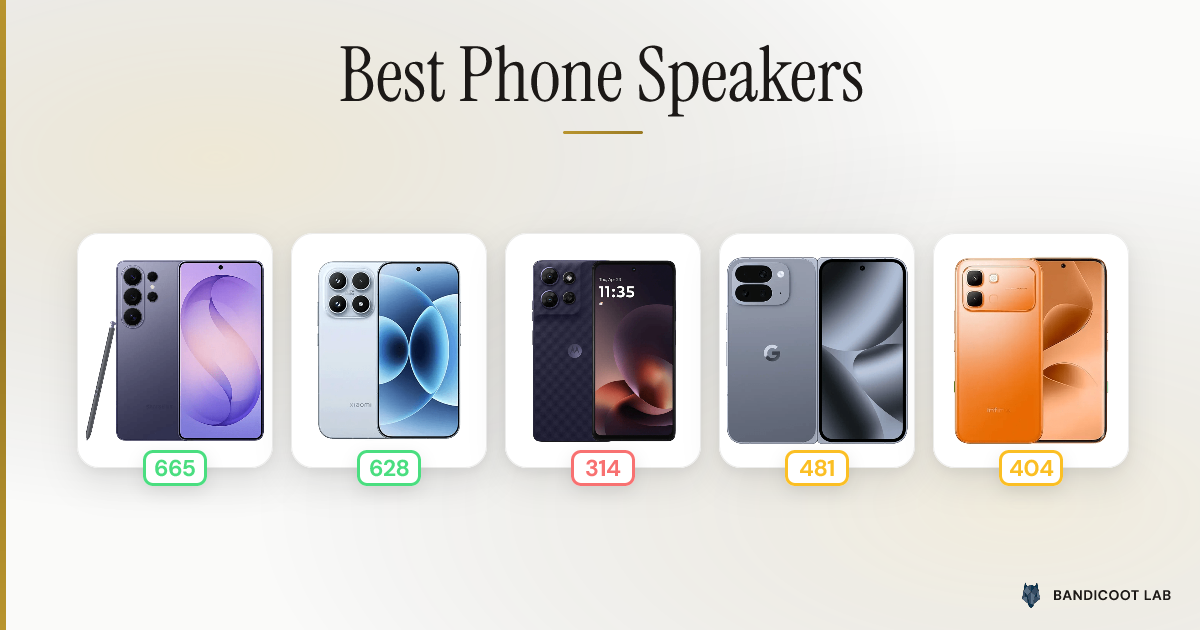
Both phones reach similar maximum volume: 75 dBA for the Poco, 74.6 for the iPhone. The character differs more than the loudness. The Poco produces fuller, warmer output with bass extending down to 180 Hz, giving music and video a sense of body. The iPhone's bass rolls off at 560 Hz, leaving the low end thin. The Poco also runs significantly cleaner at volume, with 2.36% total harmonic distortion (a measure of audio signal purity) versus the iPhone's 8.9%. At higher volumes, the iPhone is more likely to sound strained.
The iPhone's advantage is upper-frequency clarity. Vocals and high-frequency detail sound crisper and more defined. For speech-heavy content like podcasts and calls, the iPhone articulates well. For music, video, and anything where bass matters, the Poco is the better speaker.
Microphone
| Poco F9 Ultra | Apple iPhone 17 Pro Max | |
|---|---|---|
355/ 1220 | 885/ 1220 |
The iPhone 17 Pro Max has a strong microphone with even, consistent frequency response. Calls and voice recordings sound clear and natural. The Poco F9 Ultra's microphone shows uneven frequency response, making voice recordings sound less natural and calls less clear. If you record audio, take voice notes, or rely on speakerphone, the difference is substantial.
Other
| Poco F9 Ultra | Apple iPhone 17 Pro Max | |
|---|---|---|
| Biometrics | 822/ 1181 | 215/ 1181 |
| Data Transfer | 943/ 943 | 582/ 943 |
| Specifications | ||
| Biometric type | Fingerprint | Face Recognition |
| Ports | USB-C 3.2 Gen 1 | USB-C 3.2 Gen 2 |
| Storage | 256GB, 512GB, 1TB | 256GB, 512GB, 1TB, 2TB |
The Poco F9 Ultra uses an ultrasonic fingerprint sensor that unlocks in 128ms. It has no hardware-based face unlock. The iPhone 17 Pro Max relies on Face ID at 488ms with no fingerprint sensor. The Poco unlocks nearly four times faster. Both methods have their convenience tradeoffs: fingerprint works without looking at the screen, Face ID works with wet hands. The raw speed clearly favors the Poco.
Data transfer speeds favor the Poco despite its lower-rated USB port. The Poco's USB-C 3.2 Gen 1 delivers 419 MB/s read and 423 MB/s write in our tests. The iPhone's USB-C 3.2 Gen 2 reaches 304 MB/s read and 239 MB/s write. Storage options run up to 1TB on the Poco (256GB, 512GB, 1TB), while the iPhone offers up to 2TB (256GB, 512GB, 1TB, 2TB).
Conclusion
The Poco F9 Ultra at $799 outperforms the iPhone 17 Pro Max in more categories and by wider margins than the price gap alone would predict. Battery life is the starkest gap: nearly 43 hours of video playback versus 24, the difference between charging every two to three days and charging every night. The display is brighter, more responsive, and renders HDR closer to reference. The speaker has real bass and stays clean at volume. Rear cameras are sharper with more accurate colors. The fingerprint sensor unlocks the phone in a fraction of the time.
The iPhone's advantages are concentrated but real. Its camera system produces better dynamic range across every lens, and the front camera is in a different class for sharpness. Single-core CPU speed and browser performance are faster. The microphone is dramatically better. The iOS ecosystem doesn't appear in test results but shapes the daily experience for millions of buyers.
If front camera quality, camera dynamic range, and the Apple platform are central to how you use your phone, the iPhone makes a reasonable case at $1,199. For most other priorities, the Poco F9 Ultra is the stronger buy at $400 less.
FAQ
Which has better battery life, the Poco F9 Ultra or the iPhone 17 Pro Max?
The Poco F9 Ultra lasts 42.89 hours in video playback versus 23.96 hours for the iPhone 17 Pro Max. It also uses less battery in web browsing (15% versus 21% over five hours) and gaming (22% versus 25%). The Poco comfortably covers two days of mixed use, while the iPhone is a full-day phone that needs charging most nights.
Is the iPhone 17 Pro Max camera better than the Poco F9 Ultra camera?
It depends on what you shoot. The iPhone keeps more highlight and shadow detail in high-contrast scenes on every lens, and its front camera resolves roughly twice the detail. The Poco has sharper rear cameras, far more accurate color and skin tones, and digital zoom up to 100x versus 40x. The iPhone's warm color cast and white balance overcorrection under dim, warm light are its main weaknesses.
Is the iPhone 17 Pro Max worth $400 more than the Poco F9 Ultra?
For most buyers, no. The Poco F9 Ultra at $799 wins on battery life, display, speaker, charging and unlock speed, and its rear cameras are sharper and more color-accurate. The iPhone is worth the premium if front camera quality, dynamic range, a strong microphone or the Apple ecosystem matter most to you.
Which is better for gaming, the Poco F9 Ultra or the iPhone 17 Pro Max?
The Poco F9 Ultra is the better gaming phone. Its graphics throughput is roughly 28% higher, with 7,439 in Wild Life Extreme versus 5,828 for the iPhone. It also has a 185Hz refresh ceiling and 13.7ms average touch latency versus 52.4ms. Both throttle at similar rates in long sessions, and the Poco drains slightly less battery while gaming.
Does the Poco F9 Ultra or iPhone 17 Pro Max charge faster?
The Poco F9 Ultra supports 100W wired and 50W wireless charging, versus 40W wired and 25W wireless for the iPhone. The iPhone shows higher percentages at 10 and 30 minutes (29% and 67% wired, versus 24% and 61%). The Poco's battery is much larger, though, so its smaller percentage still adds more actual runtime in 10 minutes.
Which phone is better for calls and voice recording?
The iPhone 17 Pro Max has a strong microphone with even frequency response, so calls and recordings sound clear and natural. The Poco F9 Ultra's microphone is uneven, which makes voices sound less natural and calls less clear. If you record voice notes or use speakerphone often, the difference is substantial.
Related
Apple
iPhone 17 Pro Max
Poco
F9 Ultra
Poco
F9 Pro
Apple
iPhone 17e
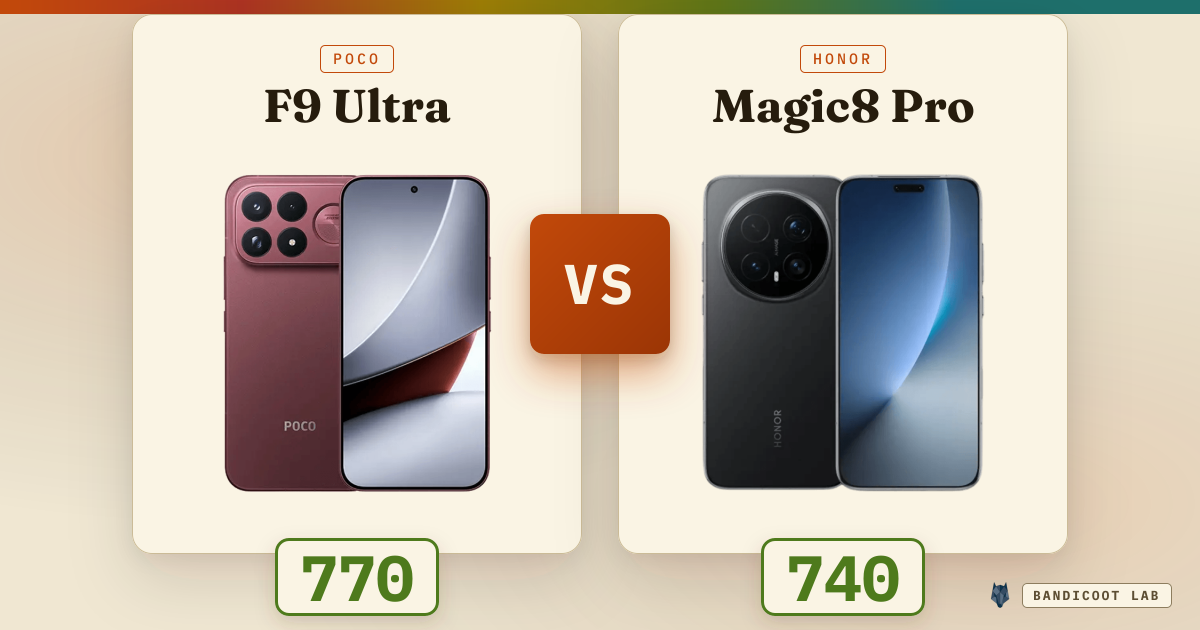
Poco F9 Ultra vs Honor Magic8 Pro
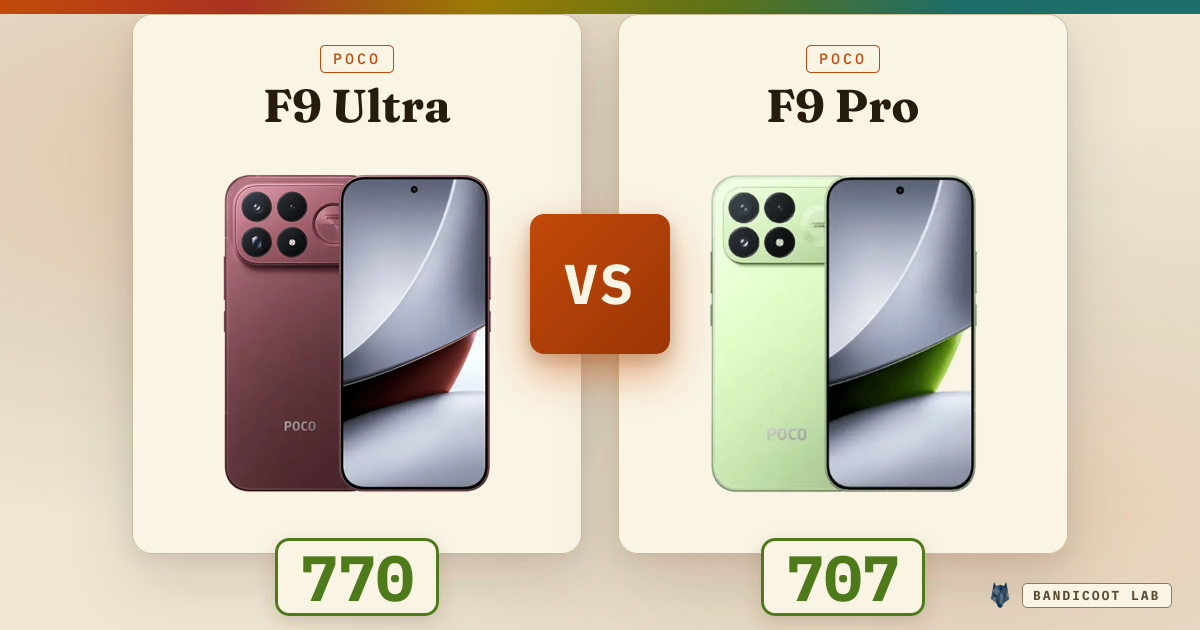
Poco F9 Ultra vs Poco F9 Pro
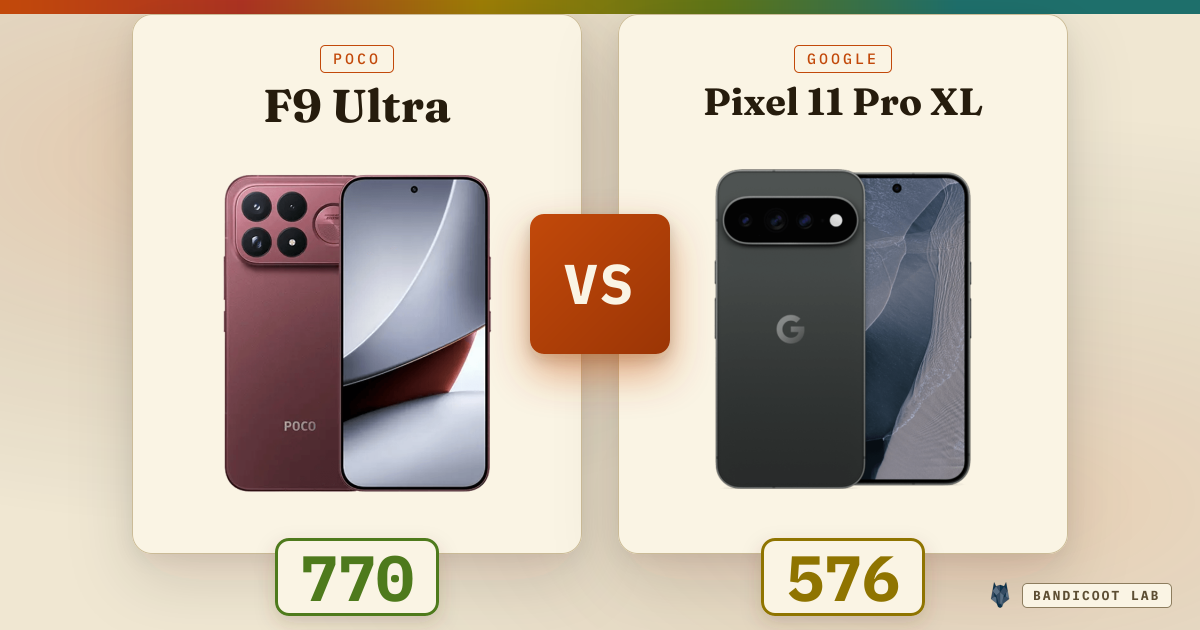
Poco F9 Ultra vs Google Pixel 11 Pro XL

Poco F9 Ultra vs Samsung Galaxy S26 Ultra
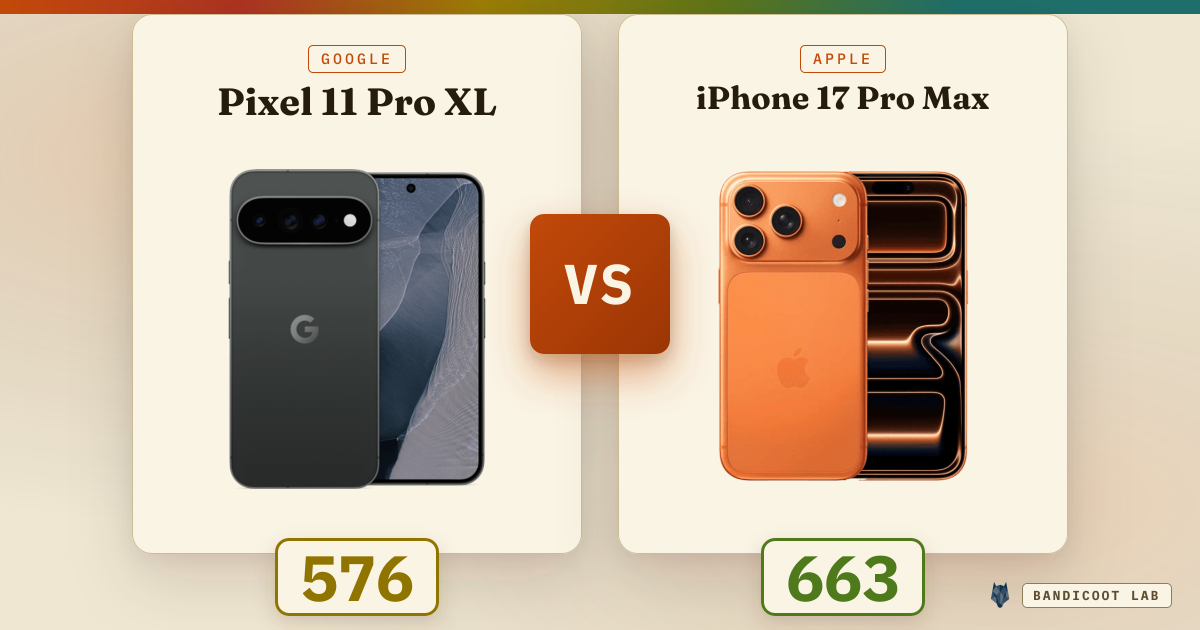
Google Pixel 11 Pro XL vs Apple iPhone 17 Pro Max
Best Phone Speakers
Best Phones Under $1,000
Best Phones Under $800