Poco F9 Ultra vs Samsung Galaxy S26 Ultra
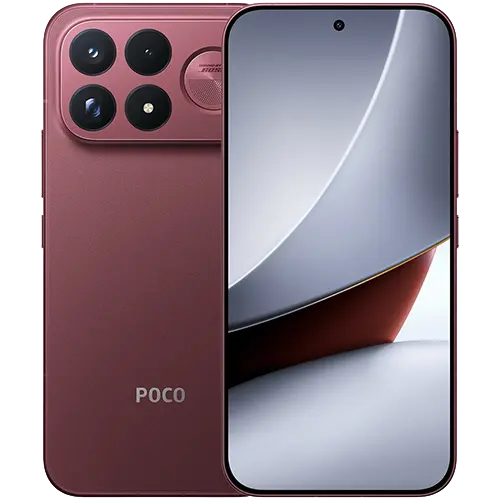

Poco
Samsung
F9 Ultra
Galaxy S26 Ultra
Ranked #1 of 61
Ranked #7 of 61
Overall
Overall


The Poco F9 Ultra sells for $799. The Samsung Galaxy S26 Ultra sells for $1,299.99. Five hundred dollars separates two phones running the same processor, sharing the same screen size, and carrying the same IP68 rating. The Poco is a flagship built around excess — an enormous battery, extreme peak brightness, fast charging — priced to undercut Samsung by nearly forty percent. The Samsung is the polished Ultra-tier phone people expect: dual telephoto lenses, glass on both sides, and the kind of camera system that has defined high-end Android for years.
The Poco leads in battery life, display output, and sustained GPU performance, all by wide margins. The Samsung has the better camera system, anchored by a main camera that's clearly ahead, and it's faster in CPU and browser tasks. Speakers are essentially tied. For buyers who prioritize cameras and build quality, the Samsung makes a case for its price. In most other areas, the Poco matches or exceeds it for considerably less.
Design
| Poco F9 Ultra | Samsung Galaxy S26 Ultra | |
|---|---|---|
| Specifications | ||
| Dimensions | 163.5 x 77.9 x 8.7 mm | 163.6 x 78.1 x 7.9 mm |
| Weight | 235g | 214g |
| IP Rating | IP68 | IP68 |
| Frame | Aluminum | Aluminum |
| Front | Gorilla Glass 7i | Gorilla Armor 2 |
| Back | Plastic | Gorilla Glass Victus 2 |
| Screen-to-body ratio | 91.5% | 91.5% |
Both phones are nearly the same size. The Poco F9 Ultra measures 163.5 × 77.9 × 8.7mm; the Samsung Galaxy S26 Ultra is 163.6 × 78.1 × 7.9mm. Samsung is 0.8mm thinner. The Poco weighs 235g to Samsung's 214g, a 21-gram difference driven partly by the much larger 8050mAh battery versus Samsung's 5000mAh.
Both use aluminum frames and carry IP68 water resistance, meaning they're rated for submersion in fresh water to the specified depth. Screen protection differs: Samsung uses Gorilla Armor 2, Poco uses Gorilla Glass 7i. The most visible material difference is the back panel. Samsung uses Gorilla Glass Victus 2; the Poco uses plastic. Glass is more scratch-resistant and holds up differently over time — a real step down in materials for the Poco. Both phones share an identical 91.5% screen-to-body ratio and 19.5:9 aspect ratio, so bezels and proportions look similar.
Bandicoot Lab doesn't formally test design or durability. Everything here is based on published specs and materials.
Display
| Poco F9 Ultra | Samsung Galaxy S26 Ultra | |
|---|---|---|
879/ 881 | 634/ 881 | |
Samsung's display runs at 1440 × 3120 and 500 pixels per inch. The Poco's is 1200 × 2608 at 416 PPI. Samsung's panel is sharper — fine text and interface edges are crisper, especially when reading. The Poco counters with a higher refresh rate ceiling: 30 to 185Hz versus Samsung's 1 to 120Hz. The Poco's higher peak makes fast scrolling and animations smoother. Samsung's ability to drop to 1Hz when the screen is static helps with standby power efficiency.
Manual brightness — the level you get dragging the slider to maximum without auto-brightness — is 976 nits on Samsung and 863 nits on Poco. For outdoor readability with standard content, Samsung is the more legible screen. In auto-brightness with HDR content, the Poco peaks at 11,983 nits, roughly four times Samsung's 3,023 nits. That peak applies to small bright highlights only. As the bright area of the image grows, the Poco's output drops sharply: it holds just 19.2% of its peak across varying HDR window sizes, compared to 48.8% for Samsung. Both sustain brightness well over a 30-minute test — 98.9% for the Poco, 98.6% for Samsung — so neither fades during extended viewing.
Color accuracy is close. Both cover similar gamut ranges (roughly 72% of P3, 97–98% of sRGB), and overall color tracking is similar. Neither phone shows dramatic drift from reference in normal use; the differences between them are the kind you'd only catch in side-by-side measurement. Touch latency measures 13.7ms on the Poco and 21ms on Samsung. This gap is unlikely to register in general use but may matter in competitive gaming at high frame rates.
For HDR tone mapping, the Poco follows the reference curve more closely and preserves highlight detail up to about 85% of the input signal before clipping. Samsung pushes highlights brighter than they were mastered and clips earlier, around 75%. The Poco's rendering is more faithful to the source; Samsung's approach makes bright elements pop but loses some precision at the top end.
Performance
| Poco F9 Ultra | Samsung Galaxy S26 Ultra | |
|---|---|---|
864/ 1012 | 908/ 1012 | |
Both phones run the Qualcomm Snapdragon 8 Elite Gen 5. The Poco ships with 16GB of RAM in the configuration tested; the Samsung ships with 12GB. Both are available in 12GB and 16GB options.
Samsung is faster on CPU tasks. GeekBench 6 single-core: 3,685 vs. 3,546. Multi-core: 11,198 vs. 10,605. Those are 4–6% gaps, small enough that you won't notice in app launches or multitasking. Browser performance is a different story: Samsung scores 46 on Speedometer to the Poco's 16.9. That gap almost certainly comes down to software optimization rather than hardware, and you'll feel it when loading complex web pages.
GPU peak performance is close. Samsung edges ahead in 3DMark Wild Life Extreme (7,802 vs. 7,439) and Solar Bay (13,861 vs. 13,336). Under sustained load, the Poco pulls away. Wild Life Extreme stability: 70.9% for the Poco, 49.8% for Samsung. Solar Bay stability: 67.1% vs. 56.2%. Samsung throttles harder over time, so frame rates in long gaming sessions drop more. If you play demanding games for more than a few minutes, the Poco delivers more consistent performance.
Camera
| Poco F9 Ultra | Samsung Galaxy S26 Ultra | |
|---|---|---|
548/ 587 | 558/ 587 | |
The Samsung Galaxy S26 Ultra has four rear cameras: 200-megapixel f/1.4 main (1/1.3" sensor, 23mm), 50-megapixel f/1.9 ultrawide (14mm), 10-megapixel f/2.4 short telephoto (67mm, 3x), and 50-megapixel f/2.9 long telephoto (111mm, 5x). The Poco F9 Ultra has three: 200-megapixel f/1.68 main (1/1.4" sensor, 24mm), 50-megapixel f/2.4 ultrawide (18mm), and 50-megapixel f/3 telephoto (120mm, 5x). Both top out at 100x digital zoom.
Samsung's main camera is the clear leader — sharper in all conditions, with much stronger dynamic range. The Poco's ultrawide is a genuine strength, resolving more detail than Samsung's in bright and moderate light. The Poco's front camera also comes out ahead, largely on the back of much better dynamic range. Overall, the two are close on camera.
At 10x and beyond, both phones are working with heavy digital crops. Sharpness falls off for both, but the Poco holds slightly more usable detail at extreme distances. Neither produces clean images past about 30x. At 100x you're looking at heavily processed output from both, though the Poco resolves a bit more.
Both phones oversaturate in bright light, a deliberate tuning choice. Samsung pushes harder — its main camera produces vivid, punchy colors. Poco is more restrained, closer to natural rendering. In mid and low light, both dial saturation back. Samsung maintains a consistent warm-pink cast across its cameras that doesn't shift much between lighting conditions, suggesting a tuning characteristic or sensor-level trait. The Poco is more neutral in good light but shifts warm and yellow under dimmer, warmer lighting — the pattern of a white balance correction struggling with lower color temperatures rather than a sensor limitation. Hue accuracy is better on the Poco in bright light, with both converging in darker conditions. Skin tone accuracy is a weak spot for both phones in bright daylight across most lenses.
Main
| Poco F9 Ultra (Main) | Samsung Galaxy S26 Ultra (Main) | |
|---|---|---|
582/ 722 | 711/ 722 | |
Samsung's main uses a 200-megapixel f/1.4 sensor at 1/1.3", the larger and faster of the two. The Poco's is 200-megapixel f/1.68 at 1/1.4". Samsung is sharper across all lighting conditions. The gap is moderate in bright light and grows as conditions dim. Both capture plenty of detail in daylight; the difference surfaces indoors and in evening light.
The Poco's main covers 1x through 5x before its telephoto takes over. Samsung hands off at 3x. The Poco digitally crops from its main sensor across a wider range, and detail at 3x and 4x falls off more than it does on the Samsung, which uses a dedicated 3x telephoto for those distances. If you shoot frequently in the 2–4x range, Samsung delivers cleaner results.
Dynamic range is where Samsung's main camera pulls furthest ahead. High-contrast scenes retain more depth. Backlit subjects hold both highlight texture and shadow detail that the Poco tends to clip, and tonal transitions are smoother.
Samsung's main leans vivid and punchy in bright light, with saturation pushed well above neutral. Poco is closer to a natural look. Both settle into more moderate saturation as light drops. Skin tones are inaccurate on both in bright daylight — faces take on an unnatural warmth or tint with either phone. In mid and low light, skin tones improve, with the Poco staying slightly more consistent.
Ultrawide
| Poco F9 Ultra (Ultrawide) | Samsung Galaxy S26 Ultra (Ultrawide) | |
|---|---|---|
551/ 722 | 542/ 722 | |
The Poco's ultrawide is 50 megapixels at f/2.4 and 18mm (0.7x). Samsung's is 50 megapixels at f/1.9 and 14mm (0.6x), capturing a wider field of view with a faster aperture.
The Poco's ultrawide is the sharper lens in bright and mid-light, and the margin is clear. It resolves detail comparable to some main cameras. Samsung's is competent but doesn't match it. In dark conditions, the gap narrows as Samsung's wider aperture helps gather more light. Relative to each phone's own main camera, the Poco's ultrawide holds up better — the step down in detail from main to ultrawide is smaller than on the Samsung.
Dynamic range is limited on both ultrawides, with both clipping highlights. Samsung preserves slightly more contrast in high-dynamic-range scenes.
The Poco's ultrawide renders colors naturally in good light. Under warm, dim lighting, a yellow cast creeps in — a white balance issue that grows as the color temperature of the light source drops. Samsung's ultrawide is more saturated across the board, and in mid-light it picks up a warm-pink tone. Both produce poor skin tones in bright light.
Telephoto
| Poco F9 Ultra (Telephoto) | Samsung Galaxy S26 Ultra (Telephoto Short) | Samsung Galaxy S26 Ultra (Telephoto Long) | |
|---|---|---|---|
605/ 722 | 589/ 722 | 676/ 722 | |
The Poco F9 Ultra carries one telephoto: 50 megapixels at f/3 and 120mm (5x). The Samsung Galaxy S26 Ultra has two: a 10-megapixel f/2.4 at 67mm (3x) and a 50-megapixel f/2.9 at 111mm (5x).
Samsung's 3x lens covers a focal length range that the Poco's main camera can only reach by cropping. Having dedicated hardware at 3x gives Samsung cleaner results in the portrait-to-medium-zoom range. Sharpness is solid in good light, dropping predictably in dim conditions. The 10-megapixel resolution is low, and crops past 3x lose detail quickly before the 5x lens takes over. Dynamic range from this lens is strong, preserving highlight and shadow detail well.
At the native 5x focal length, both phones produce very similar sharpness — close to identical in bright and mid-light, with the Poco holding a slight edge as light drops. Both deliver detailed, usable images here. Past 5x, both are cropping digitally, and the Poco maintains detail slightly better through the mid-zoom range. Samsung's 5x telephoto has a clear advantage in dynamic range, holding more tonal depth in contrasty scenes. Stabilization on the Poco's 5x telephoto is solid; Samsung's 5x is weaker, with more noticeable shake in video.
The Poco's telephoto leans slightly vivid, with saturation running moderately above neutral, and stays consistent across lighting. A gradual warm shift appears under warmer light — the same white balance pattern as its other lenses. Samsung's 5x telephoto renders skin tones accurately in bright and mid light — the most accurate skin tone performance across either phone's lenses. In dark conditions, Samsung's 5x weakens: saturation drops substantially and skin tones drift far from accurate. Samsung's 3x telephoto carries a consistent warm-pink tone with moderate skin accuracy.
Front
| Poco F9 Ultra (Front) | Samsung Galaxy S26 Ultra (Front) | |
|---|---|---|
521/ 722 | 415/ 722 | |
The Poco F9 Ultra has a 32-megapixel f/2.2 front camera at 21mm. The Samsung Galaxy S26 Ultra has a 12-megapixel f/2.2 at 23mm.
Samsung's front camera is sharper across all lighting levels despite the lower megapixel count. Sensor size and processing matter more than raw resolution here, and the Poco's 32 megapixels don't translate to finer detail.
Dynamic range is where the Poco's front camera pulls clearly ahead. It retains highlight and shadow information that Samsung clips, giving backlit selfies more depth and avoiding the flat, washed-out look Samsung can produce in high-contrast lighting. The gap is large.
The Poco's front camera has a consistent cool, faintly green tone across all lighting — subtle but always present, with slightly muted saturation. Samsung's front shifts more depending on the light: relatively neutral in bright conditions, picking up warmth in mid-light, and developing a blue tint in dark settings. Skin tones are moderate on both, with each phone showing different errors at different light levels. Stabilization is a weakness for both front cameras. The Poco produces steadier video, while Samsung's front-facing footage is noticeably shakier.
Battery
| Poco F9 Ultra | Samsung Galaxy S26 Ultra | |
|---|---|---|
836/ 836 | 539/ 836 | |
The Poco F9 Ultra has an 8050mAh battery. The Samsung Galaxy S26 Ultra has a 5000mAh cell. That 61% capacity gap shows up across every test.
Video playback runs for 42.89 hours on the Poco and 31.57 hours on Samsung. For context, 43 hours of continuous video playback is nearly two full days. In typical mixed use with screen time, calls, and standby, the Poco can comfortably stretch beyond two days between charges. Samsung's 31.5 hours is still solid — enough for a full day of heavy use or about a day and a half of moderate use, which is roughly what you'd expect from a flagship.
Web browsing over a five-hour test drains 15% of the Poco's battery and 24% of Samsung's. After five hours of browsing, the Poco still has 85% remaining. Gaming drain during the 3DMark Wild Life Extreme stress test takes 22% from the Poco and 24% from Samsung — close in percentage terms, but the Poco's remaining 78% represents a much larger absolute reserve. Standby drain overnight (eight hours idle) is 3% for the Poco and 10% for Samsung. Over a weekend of moderate use, that difference compounds.
Charging
| Poco F9 Ultra | Samsung Galaxy S26 Ultra | |
|---|---|---|
629/ 837 | 486/ 837 | |
The Poco F9 Ultra supports 100W wired and 50W wireless charging. The Samsung Galaxy S26 Ultra supports 60W wired and 25W wireless.
After 10 minutes on the wire, Samsung reaches 34% while the Poco hits 24%. At 30 minutes: Samsung is at 79%, Poco at 61%. Samsung fills up faster in percentage terms, but it's filling a much smaller battery. At 30 minutes, 61% of the Poco's 8050mAh represents roughly 4,900mAh of usable energy. Samsung's 79% of 5000mAh is about 3,950mAh. If you care about how much actual screen time a quick charge gives you, the Poco comes out ahead despite the lower percentage.
Wireless charging follows a similar pattern: 17% at 10 minutes and 42% at 30 minutes for the Poco; 18% and 44% for Samsung. Nearly identical percentages, but the Poco's larger battery means each session adds more real-world runtime.
Speaker
| Poco F9 Ultra | Samsung Galaxy S26 Ultra | |
|---|---|---|
863/ 897 | 857/ 897 | |
Both phones hit nearly the same volume: 75 dBA for the Poco, 75.3 dBA for Samsung. Equally loud.
The Poco's speaker has a warmer, bassier character with lower extension into the low end. Distortion is low at 2.36% THD, making for very clean output. Samsung's speaker sounds brighter and more articulate in the mids and highs, with better vocal clarity and definition. Distortion is higher at 3.26% THD but still within a range most people won't notice. Samsung's frequency response is more even overall.
These are close to a tie. If you prefer fuller bass and cleaner output, the Poco has the edge. If you prefer clarity and vocal presence, Samsung does.
Microphone
| Poco F9 Ultra | Samsung Galaxy S26 Ultra | |
|---|---|---|
355/ 1220 | 566/ 1220 |
The Poco F9 Ultra's microphone is well below average, with uneven frequency response that can make voice recordings sound hollow or thin, placing it near the bottom of tested phones. The Samsung Galaxy S26 Ultra's microphone is better, with more balanced frequency response, though it's still a middling performer overall. If you record voice memos, make calls in noisy environments, or shoot video where audio quality matters, Samsung is the more capable recorder.
Other
| Poco F9 Ultra | Samsung Galaxy S26 Ultra | |
|---|---|---|
| Biometrics | 822/ 1181 | 764/ 1181 |
| Data Transfer | 943/ 943 | 737/ 943 |
| Specifications | ||
| Biometric type | Fingerprint | Fingerprint |
| Ports | USB-C 3.2 Gen 1 | USB-C 3.2 |
| Storage | 256GB, 512GB, 1TB | 256GB, 512GB, 1TB |
Both phones use ultrasonic fingerprint sensors. The Poco unlocks in an average of 128ms; Samsung takes 138ms. A 10ms difference — you won't feel it. Neither phone has hardware-based face unlock.
Data transfer speeds favor the Poco. It reads at 419 MB/s and writes at 423 MB/s, compared to Samsung's 332 MB/s read and 274 MB/s write. For moving large files to and from a computer, the Poco is meaningfully faster. The Poco uses USB-C 3.2 Gen 1; Samsung uses USB-C 3.2. Both are available in 256GB, 512GB, and 1TB storage configurations.
Conclusion
The Poco F9 Ultra wins on battery life, display brightness, sustained GPU performance, charging efficiency, and data transfer speed. The Samsung Galaxy S26 Ultra wins on camera quality, CPU and browser performance, build materials, and display resolution. Speakers and biometrics are a wash.
The Samsung's camera advantage is genuine and concentrated where it matters most — the main camera, which is the one people use for the majority of their photos, is meaningfully sharper with substantially more dynamic range. The dual-telephoto system fills a gap the Poco can't match, giving Samsung cleaner results in the most commonly used zoom range. If photography is central to how you use your phone, the Samsung is the better tool, and the gap is wide enough to justify spending more.
The Poco's advantages are broader. Battery life that stretches past two days, a display that peaks brighter and refreshes faster, GPU performance that doesn't fall off a cliff during extended gaming, and charging that delivers more usable energy per session — all at $500 less. For buyers whose priorities spread across the full experience rather than centering on the camera, the Poco F9 Ultra covers more ground for the money.
FAQ
Does the Poco F9 Ultra or Galaxy S26 Ultra have better battery life?
The Poco F9 Ultra lasts considerably longer. Its 8050mAh battery runs 42.89 hours of video playback versus 31.57 hours on the Galaxy S26 Ultra's 5000mAh cell. A five-hour web test drains 15% of the Poco and 24% of the Samsung, and overnight standby costs 3% versus 10%.
Which takes better photos, the S26 Ultra or the Poco F9 Ultra?
The Galaxy S26 Ultra is the stronger all-round camera, mainly because its main camera is sharper in every lighting condition and holds much more dynamic range. Its dedicated 3x telephoto also gives cleaner results in the 2–4x range, where the Poco crops from its main sensor. The Poco F9 Ultra has the sharper ultrawide in bright and moderate light, a front camera with far better dynamic range, and slightly more usable detail at extreme zoom.
Is the Poco F9 Ultra better than the Galaxy S26 Ultra for gaming?
For long sessions, yes. Both phones peak at similar GPU levels, but under repeated load the Poco keeps 70.9% of its Wild Life Extreme performance versus 49.8% for the Samsung. Solar Bay stability shows the same pattern, 67.1% versus 56.2%. The Poco also has lower average touch latency (13.7ms versus 21ms) and a 185Hz refresh ceiling versus 120Hz.
Which has the better screen, the Poco F9 Ultra or the S26 Ultra?
It depends on what you value. The Galaxy S26 Ultra has the sharper 1440 × 3120 panel and a higher maximum manual brightness (976 nits versus 863), so it is slightly more legible in standard outdoor use. The Poco F9 Ultra peaks far higher on small HDR highlights (11,983 nits versus 3,023), follows the HDR reference curve more closely, and refreshes up to 185Hz. Color accuracy is close between the two.
Does the Poco F9 Ultra charge faster than the Galaxy S26 Ultra?
The Samsung gains more percentage faster, reaching 79% in 30 minutes versus 61% for the Poco. The Poco's battery is much larger, though, so its 61% works out to more stored energy than the Samsung's 79%. The Poco also supports 100W wired and 50W wireless charging, compared with 60W and 25W on the Samsung.
Is the Galaxy S26 Ultra worth the extra money over the Poco F9 Ultra?
It is worth it mainly if photography or build quality is a priority. The Samsung adds a clearly better main camera, a second telephoto lens, a glass back instead of plastic, and much faster browser performance (Speedometer 46 versus 16.9). The Poco costs considerably less and wins on battery life, sustained gaming performance, peak display brightness, and file transfer speed.
Related
Poco
F9 Ultra
Samsung
Galaxy S26 Ultra
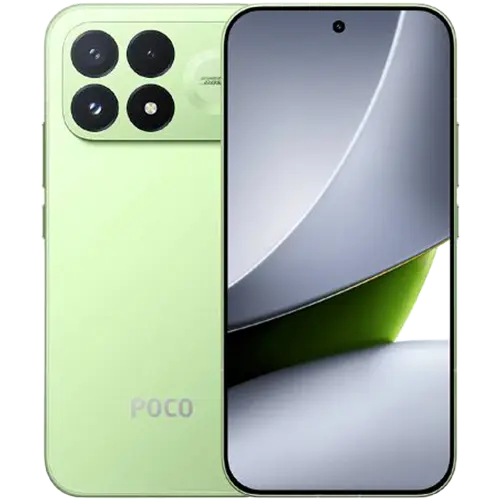
Poco
F9 Pro
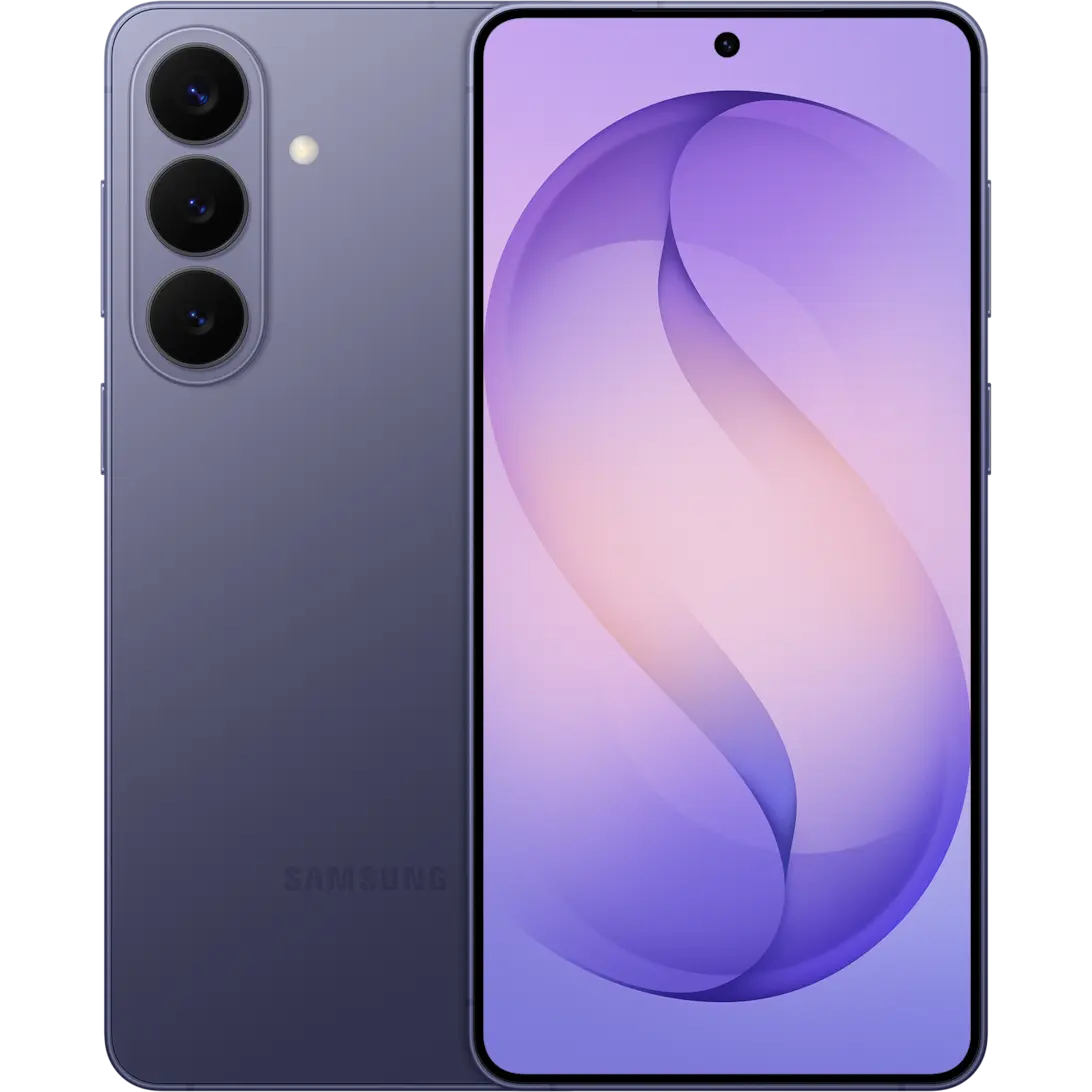
Samsung
Galaxy S26+
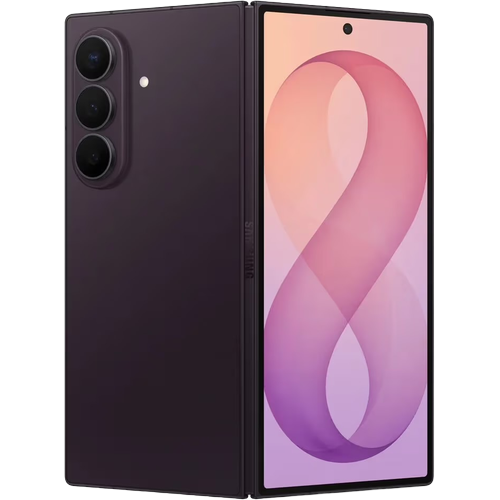
Samsung
Galaxy Z Fold 8 Ultra
Samsung
Galaxy Z Fold 8
Samsung
Galaxy S26

Samsung
Galaxy Z Flip 8
Poco F9 Ultra vs Honor Magic8 Pro
Poco F9 Ultra vs Poco F9 Pro
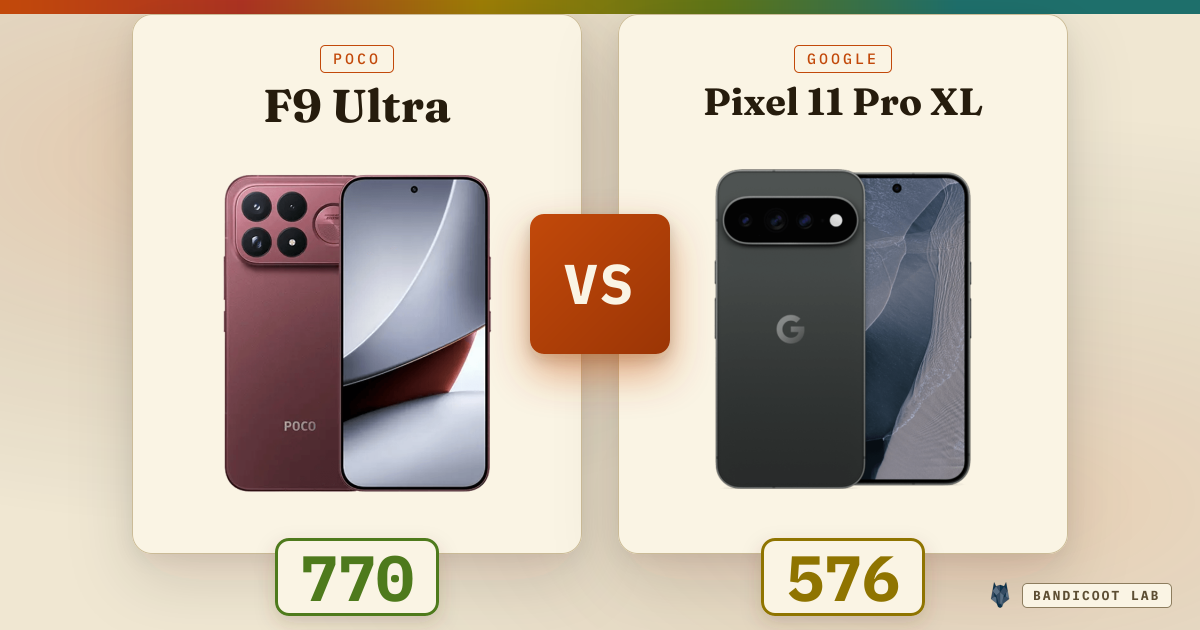
Poco F9 Ultra vs Google Pixel 11 Pro XL
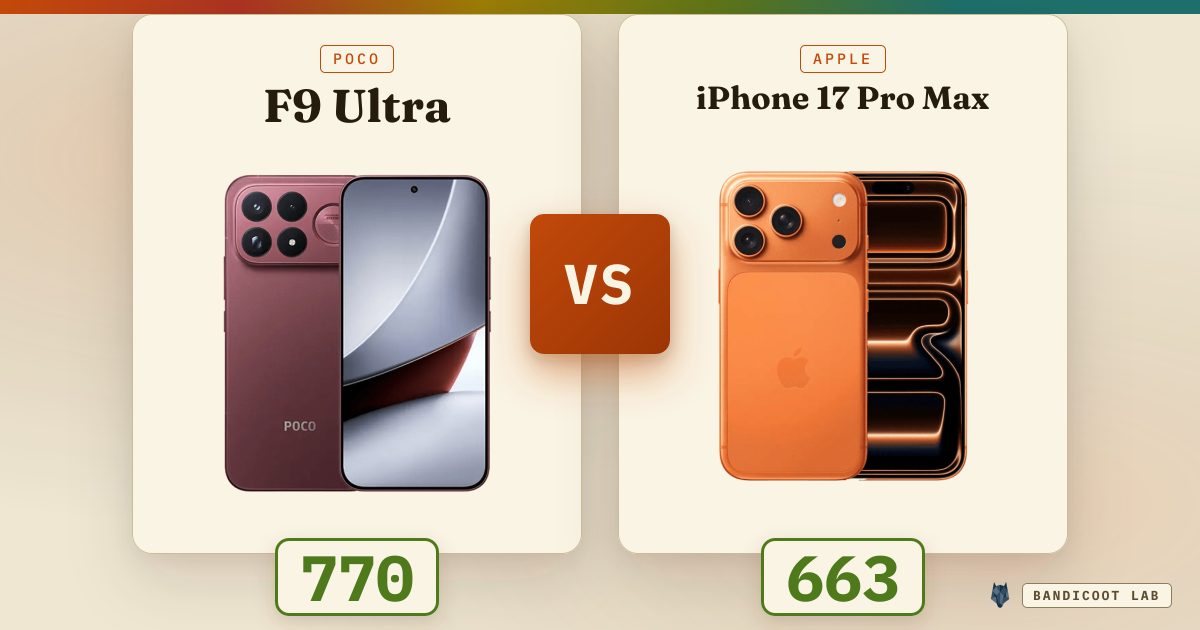
Poco F9 Ultra vs Apple iPhone 17 Pro Max