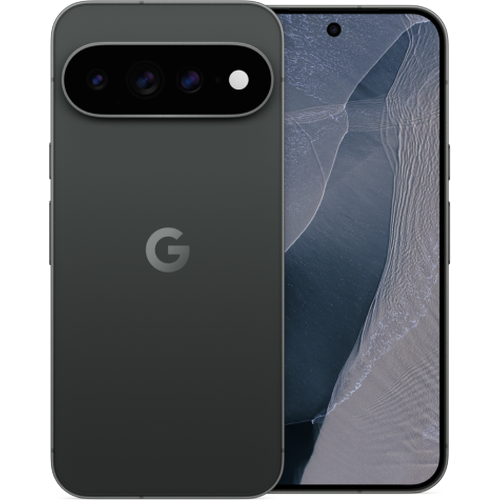
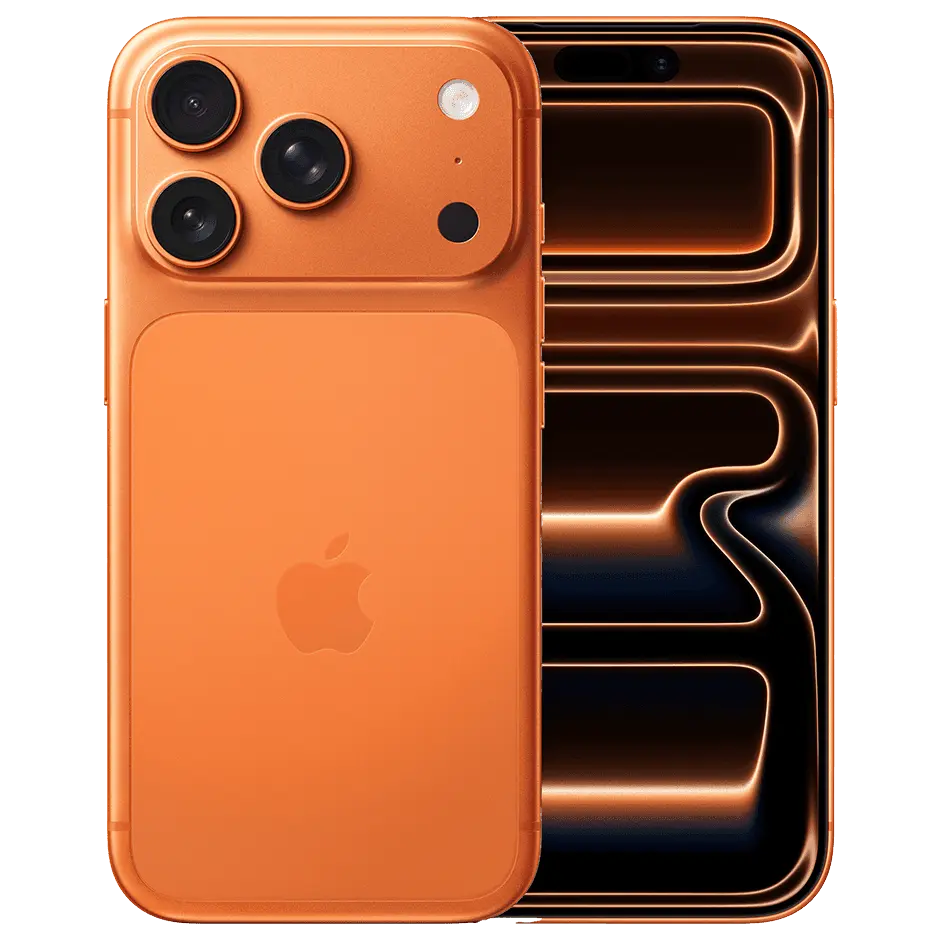
Google Pixel 11 Pro XL vs Apple iPhone 17 Pro Max
Apple
Pixel 11 Pro XL
iPhone 17 Pro Max
Ranked #24 of 61
Ranked #6 of 61
Overall
Overall

Google's Pixel 11 Pro XL costs $1299. Apple's iPhone 17 Pro Max costs $1199. Both are large-screen flagships with triple cameras and batteries over 5000mAh, positioned as the most capable phones each company makes. The price gap is small and favors the iPhone by $100.
The iPhone pulls ahead in raw performance and overall camera quality. The Pixel has the brighter, more responsive display and the stronger speaker system. Battery life depends on the task: the Pixel lasts significantly longer on video playback, while the iPhone is more efficient when the GPU is under sustained load. Charging speed is close. Both are solidly built phones; the question is which strengths you'll actually use.
Design
| Google Pixel 11 Pro XL | Apple iPhone 17 Pro Max | |
|---|---|---|
| Specifications | ||
| Dimensions | 162.7 x 76.5 x 8.5 mm | 163.4 x 78 x 8.8 mm |
| Weight | 226g | 233g |
| IP Rating | IP68 | IP68 |
| Frame | Aluminum | Aluminum |
| Front | Gorilla Glass Victus 2 | Ceramic Shield 2 |
| Back | Gorilla Glass Victus 2 | Ceramic Shield |
| Screen-to-body ratio | 89.6% | 91.7% |
Both phones use aluminum frames and carry an IP68 water resistance rating, meaning they're rated for submersion. The iPhone uses Ceramic Shield 2 on the front and Ceramic Shield on the back. The Pixel uses Gorilla Glass Victus 2 on both sides. Both glass types are designed for scratch and drop resistance.
The iPhone 17 Pro Max is slightly larger in every dimension: 163.4 x 78 x 8.8mm versus 162.7 x 76.5 x 8.5mm for the Pixel. It's also heavier at 233g compared to 226g. The iPhone's 6.9-inch display fills 91.7% of the front face; the Pixel's 6.8-inch panel covers 89.6%. That gap translates to visibly thinner bezels on the iPhone. Aspect ratios differ slightly: 19.5:9 for the iPhone, 20:9 for the Pixel. The Pixel is a touch taller and narrower in proportion.
Bandicoot Lab doesn't formally test design or durability. These are on-paper comparisons.
Display
| Google Pixel 11 Pro XL | Apple iPhone 17 Pro Max | |
|---|---|---|
718/ 881 | 627/ 881 | |
The Pixel has a 6.8-inch LTPO OLED at 1344 x 2992, which works out to 486 pixels per inch. The iPhone's 6.9-inch LTPO OLED runs at 1320 x 2868, or 460 PPI. Both refresh adaptively from 1 to 120Hz. The Pixel is technically sharper, though at these densities you won't see the difference at normal viewing distance.
Brightness separates them. In manual mode, the Pixel reaches 1403 nits; the iPhone tops out at 857 nits. For HDR content with auto-brightness enabled, the Pixel peaks at 3577 nits versus 2976 for the iPhone. The Pixel holds brightness across different HDR window sizes at 68.3%, compared to the iPhone's 42.8%. Under sustained HDR playback over 30 minutes, the Pixel holds 98.1% of its peak while the iPhone drops to 37.7%. You'll notice this during long HDR sessions: the Pixel stays bright, the iPhone dims considerably. For minimum brightness, the iPhone goes lower at 1.02 nits versus the Pixel's 1.9 nits, which is useful for reading in the dark.
Color accuracy is close. Both displays reproduce colors with minimal visible error in their best modes, and neither will look off in everyday use. The iPhone covers slightly more of the DCI-P3 gamut at 75.6% versus 74.4%, and reaches 100% sRGB coverage versus 98.9%.
The Pixel averages 9.9ms touch latency. The iPhone averages 52.4ms. That's a gap you can feel in scrolling, gesture navigation, and gaming. The iPhone isn't sluggish in isolation, but side by side, the Pixel feels more immediate under your finger.
For HDR tone mapping, the Pixel tracks the reference curve faithfully, with minimal highlight boosting and clipping starting only at the 95% input level. The iPhone lifts highlights well above their mastered brightness and clips at 80%, losing detail in the brightest parts of HDR content.
Performance
| Google Pixel 11 Pro XL | Apple iPhone 17 Pro Max | |
|---|---|---|
494/ 1012 | 906/ 1012 | |
The Pixel 11 Pro XL runs Google's Tensor G6 with 12GB of RAM; a 16GB option exists. The iPhone 17 Pro Max runs Apple's A19 Pro, also with 12GB. In GeekBench 6, the iPhone scores 3852 single-core and 9872 multi-core. The Tensor G6 manages 2645 single and 7269 multi. That's a 46% gap in single-core and 36% in multi-core, large enough to show up in app load times, export tasks, and anything that leans hard on the processor.
The iPhone's peak Wild Life Extreme score of 5828 is roughly 70% ahead of the Pixel's 3425. Stability under sustained load is similar: 73.1% for the iPhone, 76.8% for the Pixel. The Pixel throttles less, but the iPhone's starting point is so much higher that it still delivers substantially more graphics throughput after throttling.
In browser performance, the iPhone scores 41.8 on Speedometer versus the Pixel's 26.2, roughly 60% faster. Complex web pages and JavaScript-heavy apps load and respond more quickly.
Apps launch faster on the iPhone, multitasking is smoother, and demanding tasks complete sooner. The GPU difference matters most for gaming, where the iPhone sustains higher frame rates and handles more complex scenes.
Camera
| Google Pixel 11 Pro XL | Apple iPhone 17 Pro Max | |
|---|---|---|
468/ 587 | 567/ 587 | |
The iPhone 17 Pro Max is the stronger camera system overall. It leads in sharpness on the main, ultrawide, and front cameras, along with stronger stabilization and dynamic range across every lens. The Pixel's advantages are color accuracy, consistently better on all four cameras, and telephoto performance once the light drops.
The iPhone resolves more fine detail from its main and ultrawide sensors, and the gap is especially large on the front camera. The Pixel's telephoto is the exception: its larger 1/1.95-inch sensor keeps detail high in mid and low light, where the iPhone's smaller 1/2.55-inch telephoto sensor softens. In bright conditions, the two telephoto lenses are close.
At extreme zoom, both phones are digitally cropping from their telephoto sensors. The Pixel extends to 120x, the iPhone to 40x. Across that range, the Pixel resolves meaningfully more detail. If you regularly crop or zoom past 10x, the Pixel gives you more to work with.
The Pixel pushes saturation above neutral, especially in bright light, with a slight cool cast. It holds this character fairly consistently as light dims. The iPhone is similarly vivid in daylight but shifts warmer. Under dimmer, warmer lighting, the iPhone develops a pronounced yellow cast and desaturates significantly. Each phone has a distinct look, and the Pixel's is more stable across conditions.
On accuracy, the Pixel is the better performer. Skin tones stay closer to life across all lenses and conditions. The iPhone's skin tones drift warm, giving faces a golden quality under indoor lighting. Hue accuracy on the iPhone starts well in daylight but degrades substantially in mid and low light. That degradation is driven primarily by white balance correction that doesn't fully compensate when ambient light gets warmer, letting yellows and magentas build in the image. The Pixel's hue accuracy is moderate overall but holds steady regardless of lighting temperature.
Stabilization favors the iPhone across all four cameras, and by a wide margin. Handheld video is steadier on the iPhone. Dynamic range scores also favor the iPhone on most lenses; high-contrast scenes render with smoother tonal transitions, even where the Pixel captures a wider brightness range.
Main
| Google Pixel 11 Pro XL (Main) | Apple iPhone 17 Pro Max (Main) | |
|---|---|---|
467/ 722 | 579/ 722 | |
The Pixel's main camera is a 50-megapixel sensor at f/1.68 and 25mm, covering 1x through 5x before the telephoto takes over. The iPhone uses a 48-megapixel sensor at f/1.78 and 24mm, covering 1x through 4x.
At 1x, the iPhone resolves more fine detail across all lighting conditions. As you crop in digitally toward each phone's telephoto handoff point, the gap narrows. The Pixel's slightly higher megapixel count gives it more room for digital crops, and across their full respective zoom ranges, overall sharpness performance is comparable.
The Pixel runs vivid but keeps hues and skin tones consistent across lighting. A slight cool cast in good light shifts warmer in the dark. The iPhone matches that vibrancy in daylight, then develops a strong yellow cast under indoor lighting. Skin tones take on an increasingly warm quality across all conditions. The cause is white balance correction that struggles as ambient light gets warmer, with yellow and magenta biases building in mid and low light.
The iPhone handles high-contrast scenes more naturally from this lens. Tonal transitions from shadows through highlights are smooth. The Pixel captures a wider brightness range but introduces more tonal irregularities where different scene brightness levels can render at nearly the same image tone. Both clip highlights.
Ultrawide
| Google Pixel 11 Pro XL (Ultrawide) | Apple iPhone 17 Pro Max (Ultrawide) | |
|---|---|---|
397/ 722 | 505/ 722 | |
Both ultrawides sit at 13mm equivalent with 48-megapixel sensors. The Pixel's opens wider at f/1.7; the iPhone is narrower at f/2.8. Despite that aperture advantage, the iPhone produces sharper images across lighting conditions, suggesting stronger optical quality or computational processing.
Color on both ultrawides follows the same pattern as the main cameras. The Pixel stays moderately vivid with controlled hue shifts. The iPhone looks clean in daylight but develops a heavy warm cast under dimmer conditions. Skin tone accuracy is rough on both ultrawides, with the Pixel drifting in bright light and the iPhone drifting everywhere, but the Pixel is more accurate overall.
The iPhone renders high-contrast scenes with better tonal consistency from this lens. Both ultrawides show reduced dynamic range compared to their respective main cameras, which is typical. The drop is more pronounced on the Pixel.
Telephoto
| Google Pixel 11 Pro XL (Telephoto) | Apple iPhone 17 Pro Max (Telephoto) | |
|---|---|---|
629/ 722 | 628/ 722 | |
The Pixel mounts a 5x telephoto at 106mm on a 1/1.95-inch sensor. The iPhone uses a 4x at 100mm on a smaller 1/2.55-inch sensor. Both are 48 megapixels at f/2.8.
In bright light, both telephoto lenses resolve a similar level of detail. As light drops, the Pixel pulls ahead. Its larger sensor retains sharpness in mid and low light where the iPhone's telephoto softens. Beyond the native focal length, both rely on digital crop. The Pixel's sensor advantage extends through the zoom range, holding detail more effectively as you push past 5x, continuing all the way to 120x versus 40x for the iPhone.
Color is the Pixel's strongest showing. Its telephoto produces consistent hues and accurate skin tones across lighting, with a slight cool cast in daylight that shifts warmer in dim light. The iPhone telephoto has a persistent warm cast even in bright daylight. That warmth appears to stem from the lens or sensor itself rather than processing, since it's present under neutral illumination where white balance shouldn't be a factor. In mid light, an additional magenta shift appears. Skin tones are heavily pushed across all conditions. This is the iPhone's weakest lens for color.
The iPhone has stronger dynamic range from the telephoto. High-contrast scenes retain smooth tonal gradation. The Pixel's telephoto is the only camera in this comparison that doesn't clip highlights, which is a genuine advantage for preserving bright detail. Stabilization clearly favors the iPhone; handheld telephoto video is much steadier.
Front
| Google Pixel 11 Pro XL (Front) | Apple iPhone 17 Pro Max (Front) | |
|---|---|---|
463/ 722 | 703/ 722 | |
The Pixel has a 42-megapixel front camera at f/2.2 and 17mm. The iPhone's is 18 megapixels at f/1.9 and 20mm. Despite more than double the megapixel count, the Pixel's front camera resolves less detail. The iPhone is significantly sharper across all lighting conditions. Apple's computational pipeline is doing heavy lifting here.
The Pixel's front camera leans close to neutral. Saturation is restrained, and hue accuracy is reasonable in good light, drifting moderately as conditions dim. Skin tones are uneven: pushed in bright light but surprisingly accurate in low light. The iPhone renders selfies warmer and more vivid. A warm cast is present even in daylight and strengthens indoors, where a magenta shift also creeps in. Skin tones drift warm across all conditions, with the largest error in bright light.
Dynamic range strongly favors the iPhone's front camera, which retains more detail in both highlights and shadows of high-contrast selfie scenes. Stabilization is also considerably better on the iPhone. Front-facing video stays controlled handheld.
Battery
| Google Pixel 11 Pro XL | Apple iPhone 17 Pro Max | |
|---|---|---|
536/ 836 | 617/ 836 | |
The Pixel 11 Pro XL has a 5115mAh battery; the iPhone 17 Pro Max comes in at 5088mAh. Nearly identical capacities, but efficiency varies by workload.
In video playback, tested continuously until each phone dies, the Pixel lasts 28.75 hours versus the iPhone's 23.96 hours. That's roughly two days of moderate mixed use for the Pixel, compared to about a day and a half for the iPhone. If media consumption is a big part of your phone use, the gap is meaningful.
Web browsing drain is nearly identical over the five-hour test: the Pixel loses 20%, the iPhone 21%. Standby tells the opposite story. Over an eight-hour overnight idle, the iPhone loses just 2% compared to the Pixel's 4%. Neither is bad, but the iPhone sips less power while sleeping.
Gaming drain is measured during the 3DMark Wild Life Extreme stress test, 20 loops of sustained GPU load. The Pixel drains 22%, the iPhone 25%. Raw percentages suggest the Pixel is more efficient, but the iPhone is pushing roughly 70% more graphics throughput during that test. Watt for watt, the iPhone gets more work done per unit of battery. If you game regularly, the iPhone delivers more performance per charge.
Charging
| Google Pixel 11 Pro XL | Apple iPhone 17 Pro Max | |
|---|---|---|
456/ 837 | 420/ 837 | |
The Pixel supports 45W wired and 25W wireless charging. The iPhone maxes at 40W wired and 25W wireless. Both support magnetic wireless alignment: MagSafe on the iPhone, Qi2 on the Pixel.
Wired charging starts at the same pace. Both reach 29% in 10 minutes. By 30 minutes, the Pixel pulls ahead at 77% versus the iPhone's 67%. That 10-point gap means the Pixel gets to a usable charge faster when you're short on time.
The iPhone reaches 20% in 10 minutes wirelessly; the Pixel only 13%. At 30 minutes, the iPhone leads 47% to 44%. For quick wireless top-ups, the iPhone gets more into the battery sooner. If you charge wirelessly overnight, the difference is irrelevant.
Speaker
| Google Pixel 11 Pro XL | Apple iPhone 17 Pro Max | |
|---|---|---|
897/ 897 | 816/ 897 | |
The Pixel's speaker system scores well ahead of the iPhone's. Both are good. The Pixel is exceptional.
The Pixel reaches 76.6 dBA maximum volume, slightly louder than the iPhone's 74.6 dBA. Distortion is where the gap widens: the Pixel measures 3.79% total harmonic distortion versus the iPhone's 8.9%. At high volume, the Pixel stays clean and composed. The iPhone is more likely to introduce harshness when pushed.
The Pixel extends deeper into bass frequencies and reaches further into the high end, producing a wider, more detailed sound. The iPhone has a somewhat fuller mid-bass presence but doesn't go nearly as low. The Pixel's clarity is a step above: dialogue, vocals, and high-frequency detail come through more distinctly. If you watch video or listen to music through the speakers with any regularity, the Pixel is a better experience.
Microphone
| Google Pixel 11 Pro XL | Apple iPhone 17 Pro Max | |
|---|---|---|
820/ 1220 | 885/ 1220 |
Both phones have above-average microphones. The iPhone scores slightly higher, with a more even frequency response. In practice, both capture voice clearly for calls and recordings. The iPhone has a small edge in consistency across frequencies, which can make recorded audio sound slightly more natural.
Other
| Google Pixel 11 Pro XL | Apple iPhone 17 Pro Max | |
|---|---|---|
| Biometrics | 687/ 1181 | 215/ 1181 |
| Data Transfer | 323/ 943 | 582/ 943 |
| Specifications | ||
| Biometric type | Fingerprint | Face Recognition |
| Ports | USB-C 3.2 | USB-C 3.2 Gen 2 |
| Storage | 256GB, 512GB, 1TB | 256GB, 512GB, 1TB, 2TB |
The Pixel uses an ultrasonic fingerprint sensor that unlocks in an average of 153ms. The iPhone relies on hardware face unlock, which averages 488ms. The Pixel has no hardware-based face unlock; the iPhone has no fingerprint sensor. In raw speed, the Pixel's fingerprint is more than three times faster. Whether that matters depends on your preference: fingerprint requires a deliberate touch, face unlock works as you pick up the phone.
For data transfer, the iPhone's USB-C 3.2 Gen 2 port delivers 304 MB/s read and 239 MB/s write. The Pixel's USB-C 3.2 port manages 128 MB/s read and 151 MB/s write. If you regularly move large files to a computer, the iPhone is roughly twice as fast. Storage options are 256GB, 512GB, and 1TB for the Pixel. The iPhone adds a 2TB tier.
Conclusion
The iPhone 17 Pro Max leads in raw performance, overall camera quality, and battery efficiency. The A19 Pro is substantially faster than the Tensor G6, and you'll feel that gap in app responsiveness and gaming. The camera system is sharper from most lenses, with stronger dynamic range and much better stabilization for video. Battery life is similar in total, but the iPhone manages power more efficiently under GPU load and loses less charge overnight.
The Pixel 11 Pro XL has the better display: meaningfully brighter, far more responsive to touch, and stable during extended HDR sessions where the iPhone dims. Its speaker system is clearly superior. Color accuracy is better from every camera lens, skin tones stay closer to life, and the telephoto holds up in lighting conditions where the iPhone's softens. If you zoom past 10x with any regularity, the Pixel gives you more usable detail.
The iPhone costs $100 less and offers the stronger combination of performance, camera range, and battery efficiency. The Pixel earns its higher price if you prioritize display quality, speaker performance, and color-accurate photography. Which phone is the right one depends on which of those things you'll value every day.
FAQ
Does the Pixel 11 Pro XL or iPhone 17 Pro Max have the better camera?
It depends on what you shoot. The iPhone 17 Pro Max is sharper on the main, ultrawide, and front cameras, with stronger dynamic range and much steadier handheld video. The Pixel 11 Pro XL has more accurate color and skin tones on all four cameras, and its telephoto holds detail better as light drops. The iPhone's colors turn noticeably yellow under warm indoor light, while the Pixel stays consistent.
Which lasts longer on a charge, the Pixel 11 Pro XL or the iPhone 17 Pro Max?
For video, the Pixel 11 Pro XL lasts 28.75 hours against the iPhone's 23.96 hours. Web browsing drain is nearly identical, at 20% for the Pixel and 21% for the iPhone over the five-hour test. The iPhone loses less overnight, 2% versus the Pixel's 4% over eight hours of standby. Heavy video watchers will get more from the Pixel, and the two are close for browsing.
Is the iPhone 17 Pro Max or Pixel 11 Pro XL better for gaming?
The iPhone 17 Pro Max has the stronger hardware for gaming. Its peak graphics score in Wild Life Extreme is roughly 70% higher than the Pixel's. The Pixel throttles slightly less, holding 76.8% of peak performance against the iPhone's 73.1%, but the iPhone still delivers more graphics throughput after throttling. The Pixel's 9.9ms average touch latency, against 52.4ms for the iPhone, makes it feel more immediate under your thumbs.
Which charges faster, the Pixel 11 Pro XL or the iPhone 17 Pro Max?
On a cable, both phones reach 29% in 10 minutes. By 30 minutes the Pixel 11 Pro XL is ahead at 77% versus 67%. Wirelessly, the iPhone 17 Pro Max leads, with 20% at 10 minutes against the Pixel's 13%, and 47% versus 44% at 30 minutes. The Pixel is the better pick for quick wired top-ups, and the iPhone for wireless ones.
Does the Pixel 11 Pro XL have a better screen than the iPhone 17 Pro Max?
Yes for brightness and touch response. In manual mode the Pixel reaches 1403 nits against the iPhone's 857, and over 30 minutes of HDR playback it holds 98.1% of its peak while the iPhone falls to 37.7%. The iPhone dims lower, at 1.02 nits versus 1.9, which helps for reading in the dark. Color accuracy is close on both, and the iPhone's HDR highlights clip earlier.
Is the Pixel 11 Pro XL worth $100 more than the iPhone 17 Pro Max?
The Pixel 11 Pro XL costs $1299 and the iPhone 17 Pro Max costs $1199. The extra $100 buys a brighter, more responsive display, a clearly better speaker system, more accurate camera color, and longer video battery life. The iPhone offers much faster processing, sharper cameras on most lenses, and steadier video. Pick the Pixel if you'll use the display, speakers, and color accuracy daily, and the iPhone if performance and camera detail matter more.
Related
Apple
iPhone 17 Pro Max
Pixel 11 Pro XL
Pixel 11 Pro
Apple
iPhone 17e
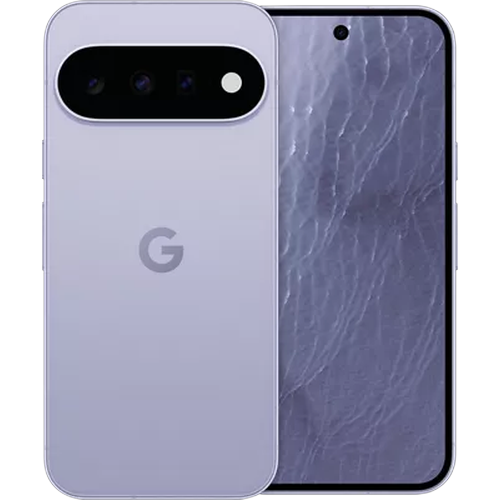
Pixel 11
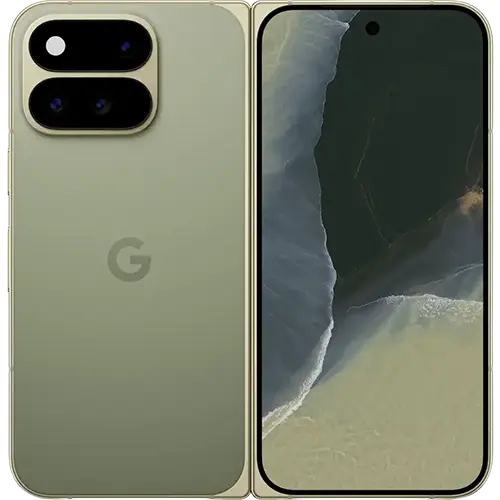
Pixel 11 Pro Fold
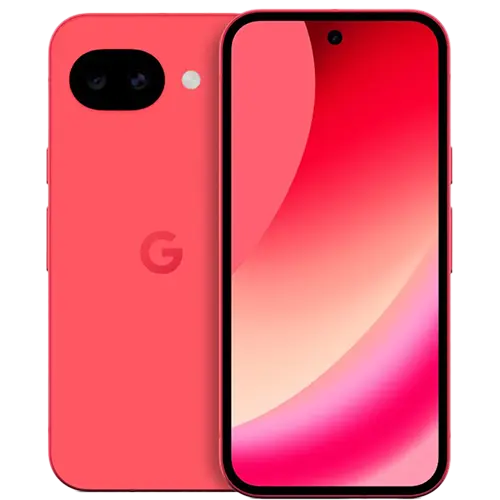
Pixel 10a
Poco F9 Ultra vs Google Pixel 11 Pro XL
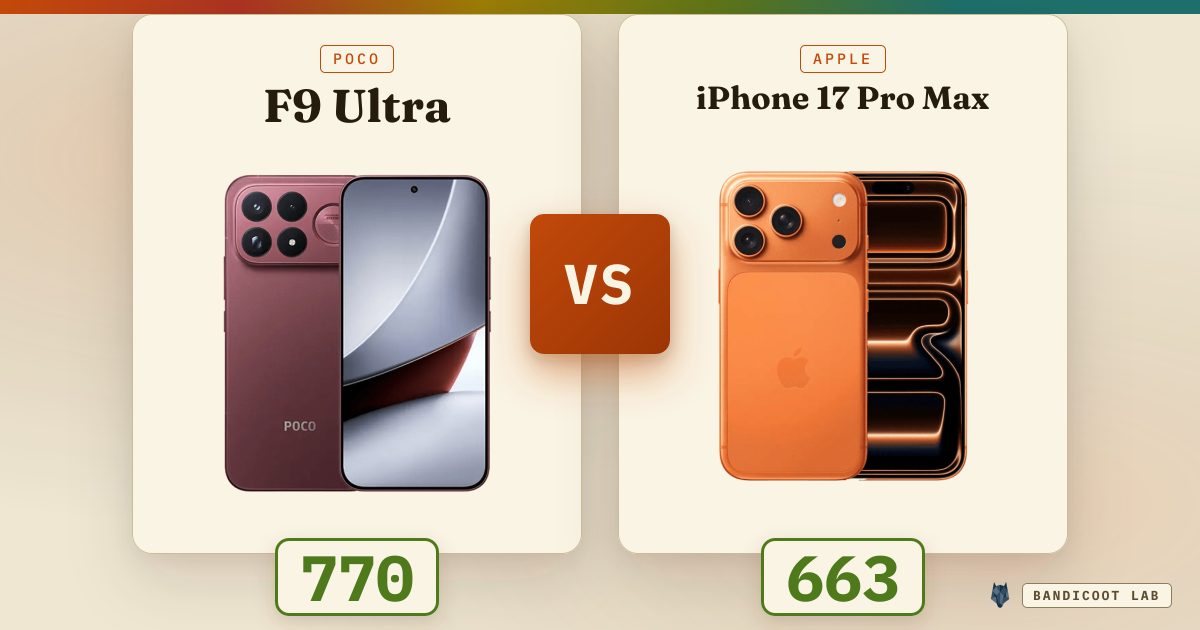
Poco F9 Ultra vs Apple iPhone 17 Pro Max
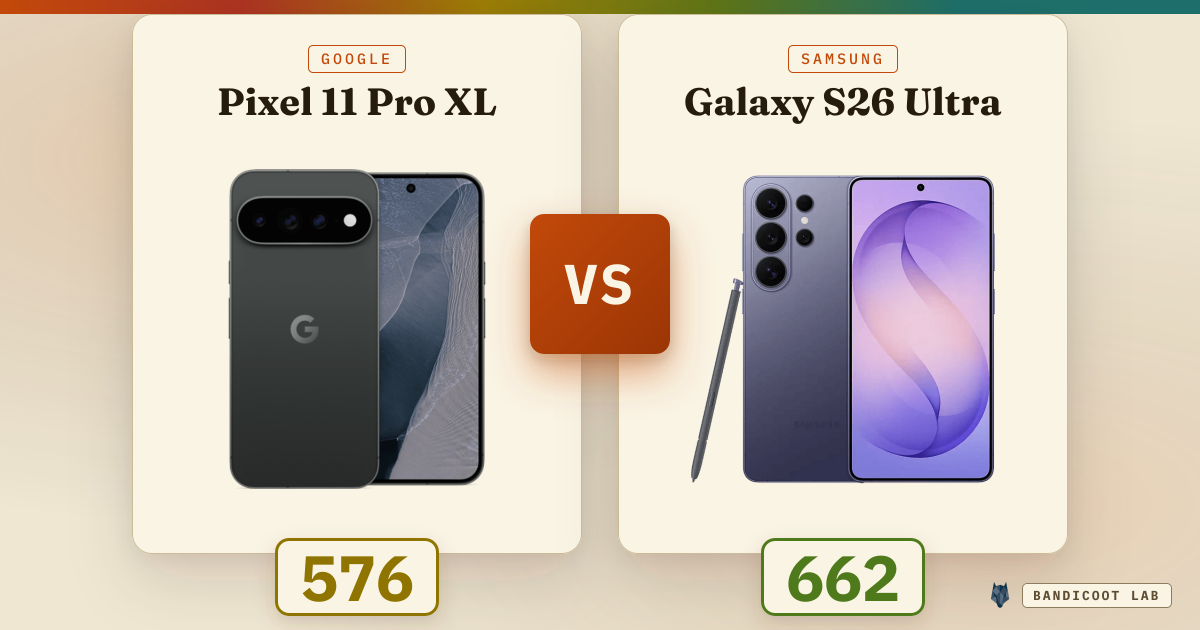
Google Pixel 11 Pro XL vs Samsung Galaxy S26 Ultra
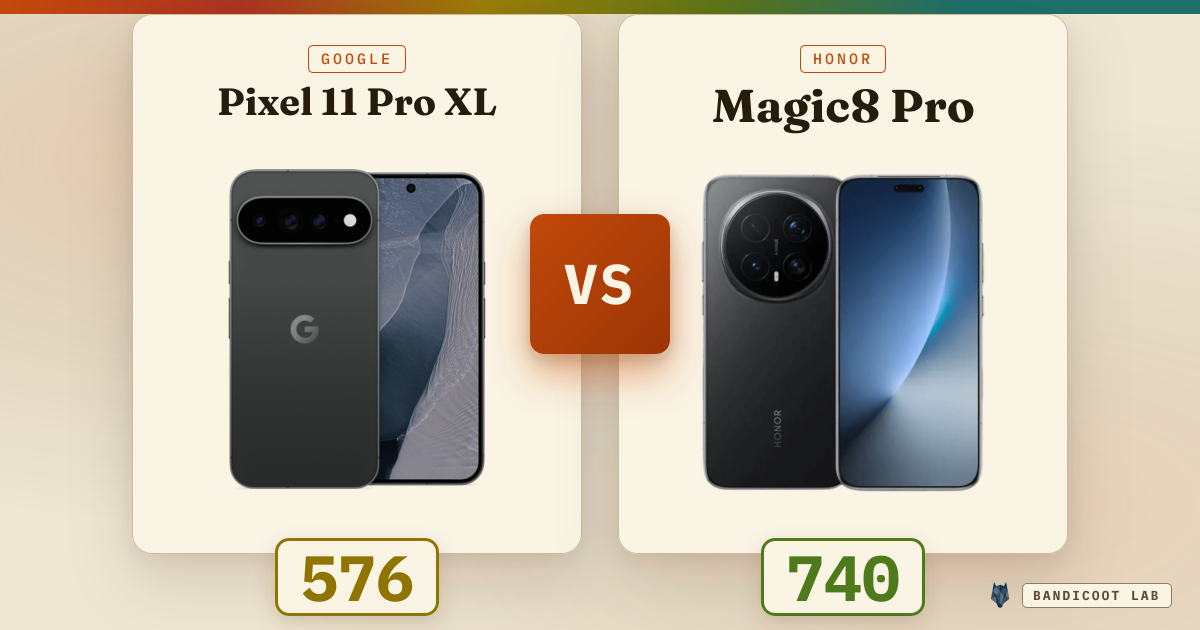
Google Pixel 11 Pro XL vs Honor Magic8 Pro
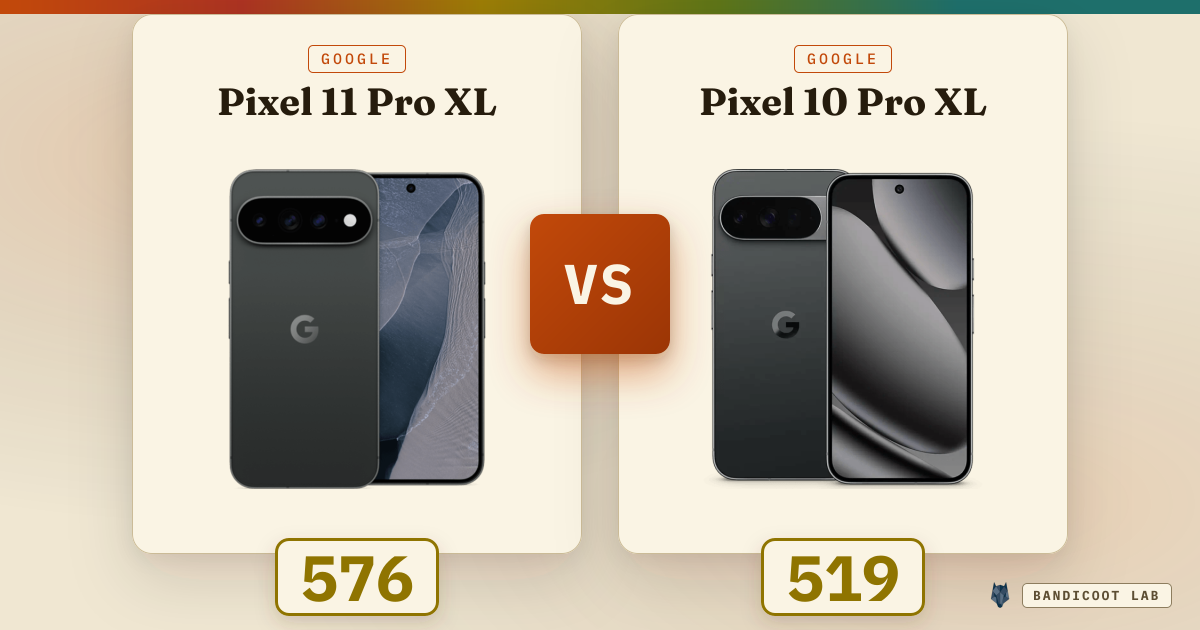
Google Pixel 11 Pro XL vs Google Pixel 10 Pro XL