Poco F9 Pro

Score Overview
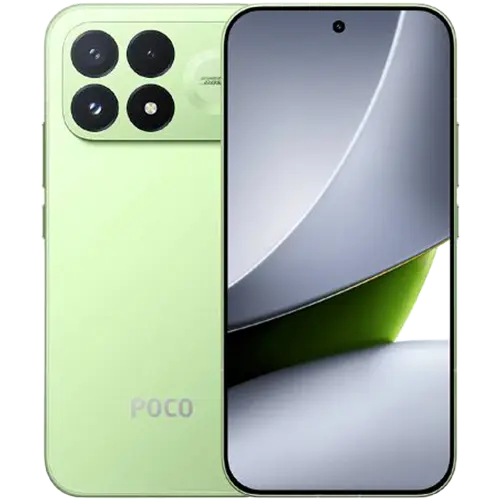
The Poco F9 Pro is a familiar pitch, offering flagship internals in a package priced at $699. It's aimed at people who care about speed, battery life, and charging more than materials or camera versatility, and it mostly delivers on that ordering of priorities. This is a phone built around the spec sheet, and the spec sheet is genuinely strong.
In testing, the strengths were clear. Performance sits at the flagship tier, the display gets extremely bright with HDR content, battery life stretches comfortably past a full day, and both wired and wireless charging are fast. The fingerprint reader is also one of the quickest we've tested. The compromises show up at the edges. The camera system has a sharp main lens but inconsistent support from the ultrawide and telephoto, long-range zoom degrades quickly, microphone quality is below average, and wired data transfer is far slower than the port spec suggests.
Design
Specifications
The F9 Pro measures 157.5 x 75.3 x 8.8 mm and weighs 206 grams, with an aluminum frame, a plastic back, and Gorilla Glass 7i on the front. It carries an IP68 rating, so it's sealed against dust and survives submersion at the rated depth. The screen-to-body ratio is 89.8 percent, and the 19.5:9 aspect ratio is standard for a slab phone this size. The port is USB-C.
The plastic back is the most visible cost-saving decision, and it's a reasonable one at this price. Plastic doesn't shatter, though it scratches more readily than glass and won't feel like the glass-backed phones it competes with. At 206 grams the F9 Pro sits in the typical range for a 6.6-inch device, neither light nor heavy for its class.
Bandicoot Lab doesn't formally test design or build durability, so take the above as a reading of the spec sheet rather than a verdict on how the phone holds up over time.
Display
The F9 Pro has a 6.59-inch AMOLED panel at a 2510 x 1156 resolution, which works out to 419 pixels per inch. The refresh rate runs up to 185 Hz, which is higher than most phones that sit at up to 120Hz. Resolution is the panel's weakest spec, but 419 PPI is still easily sharp enough for normal viewing.
Brightness is a story of two modes. In manual mode the panel reaches 882 nits, which is adequate outdoors but not exceptional. With HDR content in auto brightness, it peaks at a whopping 10,061 nits. The peak only applies to small highlights, though. As the bright area grows to fill more of the screen, output falls off steeply, so a full-screen bright scene looks far dimmer than that peak number implies. Sustained HDR output stayed at 99.5 percent of its starting level across a 30-minute test, so there's no visible dimming during long viewing sessions.
Tone mapping leans aggressive. The panel pushes highlights brighter than the content was mastered for and gives up on the very brightest signal levels early, so the finest detail in the brightest parts of an HDR scene can merge together. The result is punchy rather than faithful.
Color accuracy is middling. In its most accurate mode, colors drift slightly from reference values, enough to measure but not enough to bother most people. The panel covers 98.6 percent of the standard sRGB range but only 73.3 percent of the wider P3 space, so vivid HDR content looks less saturated than intended.
Touch latency averaged 8.4 ms, which is low. Combined with the 185 Hz refresh rate, the screen feels immediate under the finger, and it's one of the more responsive panels we've tested.
Performance
The F9 Pro runs the Qualcomm Snapdragon 8 Elite Gen 5 with 12GB of RAM in every configuration. CPU results are flagship grade, hitting 3,411 single-core and 10,347 multi-core in GeekBench 6. Nothing you throw at this phone in daily use will slow it down. Browser performance backs this up, with a Speedometer score of 47.5 putting web responsiveness among the fastest we've recorded. AI workloads also run well, in line with what the chip delivers elsewhere.
The GPU peaks high but doesn't hold there. In the Wild Life Extreme stress test it posted a best loop of 5,638 but retained only 75.6 percent of that under sustained load, and ray-tracing stability in Solar Bay was similar at 71.4 percent. Short gaming sessions get full flagship performance. Longer ones will see frame rates settle noticeably below the peak as the chassis heats up. Phones with better cooling hold their output better.
For most buyers this is the only performance caveat worth weighing. Everything else here is as fast as phones costing twice as much.
Camera
The F9 Pro carries a 200-megapixel main camera with a large 1/1.4-inch sensor, an 8-megapixel ultrawide, a 50-megapixel 2.5x telephoto, and a 32-megapixel front camera. Zoom extends digitally to 60x.
The system's clear strength is sharpness on the rear lenses. The main camera resolves high detail in all lighting, the ultrawide holds up well despite its 8-megapixel resolution, and the telephoto is solid at its native length. Dynamic range is weak on the ultrawide and telephoto, skin tones are inconsistent, and the long end of the zoom range falls apart. Past roughly 10x, detail collapses quickly. Camera-focused flagships like Google's and Samsung's top models hold detail considerably deeper into their zoom ranges.
Main
The main camera shoots at 24mm with an f/1.68 aperture on that 1/1.4-inch sensor. Detail is high in bright light and holds up well as light drops, with only modest softening in dim conditions. Detail also survives digital cropping well. Zooming toward 2.5x, where the telephoto takes over, images stay clean rather than turning mushy.
Color is slightly vivid and reasonably accurate in terms of hue, with errors growing in dim light as white balance drifts warm. Skin tones in bright light shift noticeably away from reference. Skin rendering improves as light dims. Dynamic range is average. High-contrast scenes retain usable shadow detail, but bright highlights clip, so skies and windows can wash out.
Ultrawide
The ultrawide is an 8-megapixel lens at 16mm with an f/2.25 aperture. Despite the low resolution, sharpness is decent, below the main camera but above what the megapixel count would suggest, and it holds in dim light better than most ultrawides at this price.
Dynamic range is the problem. Highlights clip readily and tonal transitions in high-contrast scenes aren't smooth, so backlit shots lose depth. Color character is close to neutral in bright light and pushes more vivid as light dims, with the same warm drift in low light as the main camera. Skin tones are noticeably off in bright and moderate lighting.
Telephoto
The telephoto is a 50-megapixel lens at 2.5x (60mm equivalent) with an f/2.0 aperture on a 1/2.75-inch sensor. At its native length, detail is good. Pushing past 2.5x, sharpness declines steadily; results stay usable through moderate zoom levels, then fall apart toward the long end of the 60x range.
Dynamic range is the weakest of the rear lenses, with early highlight clipping that flattens contrasty scenes. Skin tones in bright light are significantly off, improving in dimmer conditions. Stabilization is also the weakest on the phone. Handheld telephoto video shows visible shake that steadier rivals smooth out.
Front
The front camera is 32 megapixels at 21mm with an f/2.2 aperture. Sharpness is low across all lighting, so selfies look soft when viewed at full size. Color and dynamic range are both strong. Skin tones are more accurate here than on any rear lens, saturation sits close to natural, and backlit selfies retain detail in both face and background. Stabilization in selfie video is mediocre.
Battery
The F9 Pro carries a 6,330 mAh battery, which is quite large for a phone of this size. It lasted 30.49 hours in our video playback test, which runs the screen continuously until the phone dies. That translates to two full days of typical mixed use, or comfortably through a long travel day with heavy screen time. At maximum brightness, playback still ran 25.85 hours.
Five hours of continuous web browsing drained 20%, an average result, and a one-hour gaming stress test drained 35 percent, which means sustained 3D gaming pulls hard on this battery despite its size. Overnight standby drain was 2 percent over eight hours, which is normal.
Light and video-heavy use stretches this battery a long way, while gaming eats into it faster than the capacity suggests.
Charging
Wired charging runs at 100W — hitting 30% in 10 minutes and 75% in 30. A quick top-up before leaving the house gets you most of a day's charge, and it outpaces what Samsung and Apple flagships offer by a wide margin.
Wireless charging at 50W reached 19% in 10 minutes and 44% in 30. That's faster than the 15W wireless standard on most flagships and fast enough that wireless can be your primary charging method rather than an overnight-only convenience.
Speaker
The speakers reach a maximum of 77.1 dBA, loud for a phone, and distortion stays low at 2.65 percent average THD, so they stay clean when pushed to full volume. That combination is the system's strength. You can max the volume without the harshness most phone speakers develop.
Frequency balance is the usual phone compromise. High-end clarity is fine, with vocals and dialogue rendered cleanly, but bass is thin, with little output in the low end. Music sounds crisp but lightweight. For podcasts and video, these speakers are better than most at the price.
Microphone
Microphone quality is below average. Recordings are usable for calls and casual video, but voices come through with less body and accuracy than most phones in this price range deliver. If you record a lot of video or voice memos, this is a weak point.
Other
Measurements
Specifications
The ultrasonic fingerprint reader unlocked in an average of 89 ms, which is exceptional. Unlock feels instant, with no perceptible wait between touch and home screen. There's no hardware-based face unlock; camera-based face unlock is available but lacks the dedicated depth hardware that makes systems like Apple's Face ID secure enough for payments.
Wired data transfer is a letdown. The port is USB-C 3.2 Gen 1, which should support fast transfers, but we measured only 42 MB/s read and 36 MB/s write. Moving a large video library to a computer will take far longer than the port spec implies. Storage comes in 256GB and 512GB configurations, both with 12GB of RAM.
Conclusion
The F9 Pro is a convincing version of the value-flagship formula. The chip, display responsiveness, battery, charging, and biometrics all perform at or near the level of phones costing considerably more, and nothing in daily use will remind you that this is a $699 device. Those fundamentals are where most of a phone's experience lives, and they're handled well here.
The gaps are concentrated in the places value flagships usually cut. The camera system has a genuinely good main lens surrounded by compromised support, with weak dynamic range on the secondary lenses and a zoom range that promises far more than it delivers. The microphone and wired transfer speeds are below par, and the plastic back marks the price point. If your priorities run toward speed and stamina rather than photography, the F9 Pro makes a strong case. If the camera matters most, spend elsewhere.
FAQ
How long does the Poco F9 Pro battery last?
The F9 Pro's 6,330 mAh battery ran 30.49 hours in our looping video test, and 25.85 hours with the screen at maximum brightness. That works out to roughly two days of typical mixed use.
How fast does the Poco F9 Pro charge?
Wired charging at 100W reaches 30% in 10 minutes and 75% in 30 minutes. Wireless charging at 50W reaches 19% in 10 minutes and 44% in 30 minutes. Wireless is fast enough to use as a main charging method rather than only overnight.
Is the Poco F9 Pro good for gaming?
Short sessions get full flagship-level performance. Under sustained load the GPU held 75.6 percent of its peak in Wild Life Extreme and 71.4 percent in Solar Bay, so frame rates settle noticeably lower in long sessions as the phone heats up. Battery drain during gaming is also higher than average.
Is the Poco F9 Pro's camera good?
The 200-megapixel main camera is the strong point, with high detail in all lighting and clean results when cropping in toward 2.5x. The ultrawide and telephoto have weak dynamic range and clip highlights, and skin tones are inconsistent on the rear lenses. Zoom detail falls apart past roughly 10x, so this is a weaker pick if photography is your priority.
Is the Poco F9 Pro's screen bright enough to use outdoors?
In manual mode the panel reaches 882 nits, which is adequate outdoors but not exceptional. HDR content in auto brightness peaks at 10,061 nits, but only for small highlights, and output drops as bright areas grow larger. Sustained HDR brightness held at 99.5 percent over a 30-minute test, and the 185 Hz refresh rate makes the screen feel very responsive.
Is the Poco F9 Pro water resistant, and does the plastic back feel cheap?
The F9 Pro is rated IP68 for dust and water protection. It has an aluminum frame, Gorilla Glass 7i on the front, and a plastic back that scratches more easily than glass and feels less premium. At 206 grams and 8.8 mm thick, it is an average weight for a phone with a 6.59-inch screen.
What are the Poco F9 Pro's weak points besides the camera?
Microphone quality is below average, so voices in recordings sound thinner than on most phones at this price. Wired data transfer is also slow for a USB-C 3.2 Gen 1 port, at 42 MB/s read and 36 MB/s write, so moving large video libraries takes a while. The screen's 419 PPI is below some rivals, and its P3 color coverage is limited at 73.3 percent.
Related

Best Phones Under $800
Best Phone Displays

Best Phones For Any Budget
Best-Performing Phones
Poco
F9 Ultra
Apple
iPhone 17

OnePlus
15R
Xiaomi
15T Pro
Apple
iPhone 17e
Nothing
Phone (3)
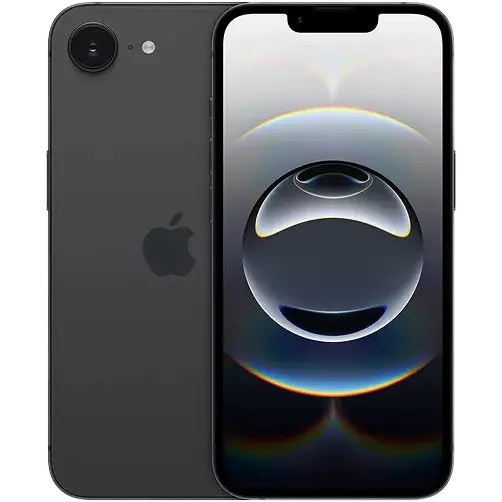
Apple
iPhone 16e

Honor