Poco F9 Ultra vs Poco F9 Pro
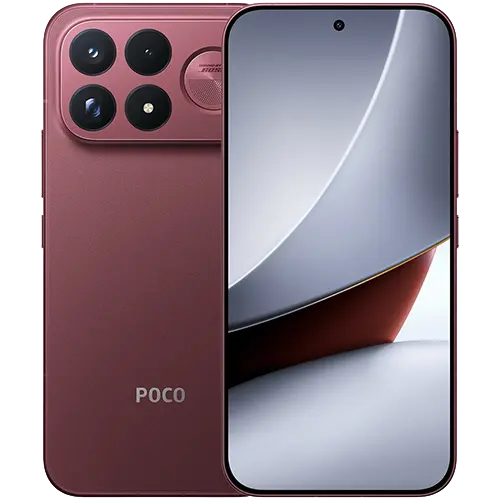
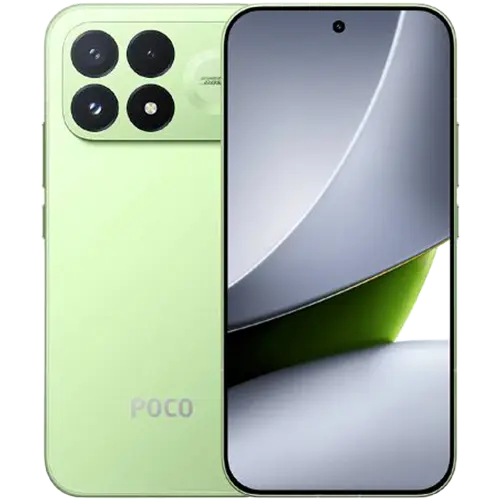
Poco
Poco
F9 Ultra
F9 Pro
Ranked #1 of 61
Ranked #3 of 61
Overall
Overall



The Poco F9 Ultra and F9 Pro sit at $799 and $699 in the same product lineup, separated by a screen-size class and a hundred dollars. Both run the Snapdragon 8 Elite Gen 5, and both use the same 200-megapixel main camera sensor. The Ultra is Poco's big-battery, long-zoom option. The Pro fits the same core silicon into a smaller, lighter body with a shorter but still capable telephoto.
The Ultra's advantages follow from its size. Its much larger battery delivers a substantial lead in endurance, and its 5x telephoto reaches well beyond the Pro's 2.5x lens. The ultrawide is sharper, and data transfer speeds are in a different league entirely. The Pro counters with a sharper main camera, faster fingerprint unlock, a more responsive touchscreen, and better browser performance. It's also 29 grams lighter and a hundred dollars cheaper.
Design
| Poco F9 Ultra | Poco F9 Pro | |
|---|---|---|
| Specifications | ||
| Dimensions | 163.5 x 77.9 x 8.7 mm | 157.5 x 75.3 x 8.8 mm |
| Weight | 235g | 206g |
| IP Rating | IP68 | IP68 |
| Frame | Aluminum | Aluminum |
| Front | Gorilla Glass 7i | Gorilla Glass 7i |
| Back | Plastic | Plastic |
| Screen-to-body ratio | 91.5% | 89.8% |
The Ultra measures 163.5 x 77.9 x 8.7mm and weighs 235g. The Pro comes in at 157.5 x 75.3 x 8.8mm and 206g. Both share the same materials: aluminum frames, Gorilla Glass 7i on the front, and plastic backs. Both carry IP68 ratings, meaning they're rated for submersion in fresh water to a specified depth. The Ultra's 91.5% screen-to-body ratio means thinner bezels relative to its panel size than the Pro's 89.8%. Both use a 19.5:9 aspect ratio.
The shared material stack means neither phone has a build-quality advantage on paper. The meaningful difference is footprint and weight: the Ultra is about the size you'd expect from a 6.9-inch phone with an 8050mAh cell, while the Pro's 6.59-inch frame and 206g weight land closer to mainstream flagship dimensions.
Bandicoot Lab doesn't formally test design or durability, so this section describes what's on the spec sheet.
Display
| Poco F9 Ultra | Poco F9 Pro | |
|---|---|---|
879/ 881 | 845/ 881 | |
Both phones use AMOLED panels running up to 185Hz. The Ultra's 6.9-inch display runs at 1200 x 2608 (416 pixels per inch); the Pro's 6.59-inch panel comes in at 2510 x 1156 (419 PPI). Pixel density is effectively identical.
Manual brightness is close: the Pro reaches 882 nits, the Ultra 863 nits. The Ultra pulls ahead in HDR, peaking at 11,983 nits versus the Pro's 10,061 nits. Both displays drop significantly as the HDR content window gets larger. The Pro holds brightness more evenly across window sizes at 22.2% stability compared to the Ultra's 19.2%. Over a sustained 30-minute HDR test, both hold their output well: 98.9% for the Ultra, 99.5% for the Pro.
Color accuracy is nearly identical. Both displays show minor visible drift from reference, with neutral tones staying close to target and small shifts in saturated regions. The Pro covers a slightly wider slice of the DCI-P3 gamut at 73.3% versus 71.9%, and reaches 98.6% of sRGB compared to the Ultra's 97%. In practice, you'd struggle to tell them apart.
Both displays handle HDR tone mapping in almost the same way. Each pushes highlights slightly brighter than mastered, and both clip at the same input level. Neither faithfully tracks the reference curve, but the lift is gentle and consistent. You'd need a reference monitor side by side to spot it.
Touch latency is where the two panels diverge. The Pro averages 8.4ms; the Ultra averages 13.7ms. A 5ms gap is enough to feel under fast, repeated input, especially in competitive gaming. For general scrolling and typing, both are responsive.
Performance
| Poco F9 Ultra | Poco F9 Pro | |
|---|---|---|
864/ 1012 | 892/ 1012 | |
Both phones run the Qualcomm Snapdragon 8 Elite Gen 5. The Ultra pairs it with 16GB of RAM; the Pro has 12GB.
CPU benchmarks are close. The Ultra scores 3,546 single-core and 10,605 multi-core in GeekBench 6. The Pro comes in at 3,411 and 10,347. These gaps are too small to feel in app launches or multitasking. Browser performance tells a different story: the Pro scores 47.5 in Speedometer versus the Ultra's 16.9. That's a large gap, likely driven by software optimization differences rather than raw silicon, and it translates to snappier web rendering on the Pro.
GPU performance favors the Ultra in peak output. It hits 7,439 in Wild Life Extreme and 13,336 in Solar Bay, versus 5,638 and 10,124 for the Pro. The Pro recovers some ground with better thermal stability: 75.6% in Wild Life Extreme and 71.4% in Solar Bay, against the Ultra's 70.9% and 67.1%. In sustained gaming sessions, the Ultra starts with more headroom but throttles harder. The Pro holds closer to its peak over time.
Camera
| Poco F9 Ultra | Poco F9 Pro | |
|---|---|---|
548/ 587 | 517/ 587 | |
The two phones share a 200-megapixel main sensor and a 32-megapixel front camera, but their supporting lenses diverge. The Ultra carries a 50-megapixel ultrawide and a 50-megapixel 5x telephoto, reaching up to 100x digital zoom. The Pro uses an 8-megapixel ultrawide and a 50-megapixel 2.5x telephoto, topping out at 60x. The Ultra's camera system has more reach. The Pro's main camera is the sharper performer.
Main camera sharpness favors the Pro across all lighting conditions. Both deliver strong detail in bright light, but the Pro retains more texture in mid and low light. As you crop into the main sensor's zoom range, the Pro only needs to stretch to 2.5x before its telephoto takes over, while the Ultra's main handles everything from 1x to 5x. That wider crop range means the Ultra is leaning more heavily on digital processing at the upper end of its main lens coverage.
At extreme zoom levels past 10x, the Ultra has the clear advantage. Its 5x optical starting point and 100x maximum reach give it far more usable detail at distance. The Pro's digital zoom past 2.5x falls off faster, and at the long end of its 60x range it resolves much less.
Both phones push saturation slightly above neutral across all their lenses, giving images a gently vivid character. In bright light, both render hues with reasonable accuracy across the system. As lighting gets warmer and dimmer, both develop an increasing warm shift, with yellows and oranges drifting further from reference. This pattern points to white balance correction struggling under warm artificial light rather than a fundamental sensor limitation. Skin tones on both phones carry significant error in bright daylight from the main and ultrawide lenses, which is surprising given their otherwise competent color. Under warmer conditions, skin rendering improves for both.
Main
| Poco F9 Ultra (Main) | Poco F9 Pro (Main) | |
|---|---|---|
582/ 722 | 614/ 722 | |
Both phones use the same 200-megapixel f/1.68 sensor at 24mm. The Pro resolves more detail across bright, mid, and low light, and that lead is consistent enough to be visible in side-by-side crops. In low light, both soften, but the Pro retains finer texture.
The Pro only needs its main sensor to cover 1x through 2.5x before handing off to the telephoto. The Ultra's main stretches to 5x. At 2x, both hold detail well. The Ultra maintains usable sharpness through about 3x to 4x, but by 5x it's relying heavily on digital processing. The Pro avoids that territory entirely by switching lenses earlier.
Dynamic range is almost identical. Both capture good shadow detail in high-contrast scenes, and both clip highlights. Neither stands out here.
Color rendering is similar: slightly vivid, with accurate hues in bright light that drift warm as conditions get dimmer. Skin tones are well off target in bright light for both phones, improving under mid and low light. The increasing warm bias under warmer light sources is a white balance correction issue rather than a sensor problem. Stabilization is significantly better on the Ultra. Handheld video stays controlled; the Pro's main camera shows more movement.
Ultrawide
| Poco F9 Ultra (Ultrawide) | Poco F9 Pro (Ultrawide) | |
|---|---|---|
551/ 722 | 474/ 722 | |
The hardware gap is wide. The Ultra's 50-megapixel f/2.4 ultrawide at 18mm is a proper high-resolution lens. The Pro's 8-megapixel f/2.25 ultrawide at 16mm is a basic wide-angle option.
Sharpness reflects that sensor difference. The Ultra is visibly sharper in bright and mid light. In low light, both soften and the gap narrows. Relative to its own main lens, the Ultra's ultrawide holds up well in good conditions and drops in darkness. The Pro's ultrawide is softer than its main camera across all lighting.
Dynamic range is one area where the Pro's ultrawide does well. It retains more usable tonal range than the Ultra's, preserving shadow detail and handling highlights with less clipping. The Ultra's ultrawide loses shadow depth and clips earlier.
Color on the Ultra's ultrawide stays reasonably accurate in bright and mid light but drifts under dark, warm conditions, developing a strong warm cast with a slight green lean. The Pro's ultrawide shows more consistent color across lighting, though its hue accuracy is lower overall in bright conditions. Both desaturate slightly in bright light and push a bit vivid in mid light.
Telephoto
| Poco F9 Ultra (Telephoto) | Poco F9 Pro (Telephoto) | |
|---|---|---|
605/ 722 | 487/ 722 | |
These are fundamentally different lenses. The Ultra's 50-megapixel f/3 telephoto sits at 120mm (5x), built for distant subjects. The Pro's 50-megapixel f/2 telephoto sits at 60mm (2.5x), closer to a portrait focal length.
The Ultra's telephoto delivers strong sharpness in bright and mid light, softening in low light as expected for a periscope design at f/3. Detail holds as you zoom past 5x into digital territory, with usable results well beyond 10x. The Pro's telephoto, starting at a shorter native length, runs into digital zoom earlier when reaching for distant subjects. At matched zoom levels above 2.5x, the Ultra resolves more.
Color accuracy favors the Ultra's telephoto in bright light, with tighter hue accuracy and significantly more accurate skin tones. Under warmer lighting, both shift warm. The Pro's telephoto shows large skin tone error in bright conditions that improves in dimmer light. Both push saturation slightly above neutral. The Pro's telephoto retains more dynamic range, handling high-contrast scenes with more shadow detail and less clipping. Video stabilization is much better on the Ultra. The Pro's telephoto shows considerable shake; the Ultra keeps handheld footage steady.
Front
| Poco F9 Ultra (Front) | Poco F9 Pro (Front) | |
|---|---|---|
521/ 722 | 557/ 722 | |
Both phones share the same 32-megapixel f/2.2 front camera at 21mm with a 1/3.44-inch sensor. Sharpness is effectively identical across all lighting conditions.
Color is where they split. The Pro's front camera delivers more accurate skin tones, particularly in bright light where the difference is significant. Both front cameras render with a cool, slightly desaturated character. Hue accuracy is good on both and holds well across lighting conditions, better than either phone manages from the rear cameras. This suggests the front camera's processing pipeline handles white balance correction more consistently.
The Pro's front camera also captures more dynamic range, keeping shadows open with clean tonal transitions. The Ultra's front camera is close but gives up a bit of headroom in high-contrast selfie scenarios. Stabilization isn't a strong point for either phone's front camera.
Battery
| Poco F9 Ultra | Poco F9 Pro | |
|---|---|---|
836/ 836 | 608/ 836 | |
The Ultra's 8050mAh battery is 27% larger than the Pro's 6330mAh cell, and the runtime gap is proportional.
The Ultra plays back video for 42.9 hours before dying. That's close to two full days of continuous playback, and in mixed daily use it should comfortably stretch past two days between charges. The Pro manages 30.5 hours of video. Still solid: about a day and a half of continuous playback, or a full day of heavy use with margin to spare.
Web browsing drains 15% of the Ultra over five hours, versus 20% on the Pro. Gaming is where the gap widens most: the Ultra loses 22% during the stress test while the Pro drops 35%. If you game regularly, the Ultra's endurance advantage is substantial. Standby drain slightly favors the Pro at 2% over eight hours compared to the Ultra's 3%, but this is a minor difference that the Ultra's larger capacity easily absorbs.
Charging
| Poco F9 Ultra | Poco F9 Pro | |
|---|---|---|
629/ 837 | 569/ 837 | |
Both phones support 100W wired and 50W wireless charging. The Pro fills faster in percentage terms because it has less capacity to fill.
After 10 minutes on the wire, the Pro sits at 30% while the Ultra reaches 24%. At 30 minutes, the Pro hits 75% and the Ultra 61%. In absolute energy delivered, they're close. Both phones charge at similar actual wattage; the Pro just finishes sooner because there's less battery to charge.
Wireless charging tells a similar story. The Pro reaches 19% after 10 minutes and 44% at 30 minutes. The Ultra gets to 17% and 42% at the same intervals. The gap is small, and both are reasonable for desk or overnight charging.
Speaker
| Poco F9 Ultra | Poco F9 Pro | |
|---|---|---|
863/ 897 | 818/ 897 | |
The Pro is louder at 77.1 dBA versus the Ultra's 75 dBA. The Ultra has less distortion at 2.36% THD compared to the Pro's 2.65%.
The two speakers have different character. The Ultra produces fuller bass, giving music and video a warmer foundation. The Pro emphasizes clarity in the upper registers, making vocals and dialogue more distinct. The Ultra's output is cleaner overall, with less coloration across the frequency range. The Pro trades some of that cleanliness for more presence and volume. Both score well. The choice between them is more about preference: warmth and cleanliness on the Ultra, or volume and vocal clarity on the Pro.
Microphone
| Poco F9 Ultra | Poco F9 Pro | |
|---|---|---|
355/ 1220 | 482/ 1220 |
Neither phone stands out here. The Pro performs somewhat better, with more even frequency response, but it still sits below average in our testing. The Ultra's microphone is weaker, ranking near the bottom. For voice calls both are adequate. For recording audio, neither is a strong pick.
Other
| Poco F9 Ultra | Poco F9 Pro | |
|---|---|---|
| Biometrics | 822/ 1181 | 1181/ 1181 |
| Data Transfer | 943/ 943 | 118/ 943 |
| Specifications | ||
| Biometric type | Fingerprint | Fingerprint |
| Ports | USB-C 3.2 Gen 1 | USB-C 3.2 Gen 1 |
| Storage | 256GB, 512GB, 1TB | 256GB, 512GB |
Fingerprint unlock speed goes to the Pro at 89ms versus the Ultra's 128ms. Both use ultrasonic sensors. The Pro's is fast enough that unlock feels nearly instant; the Ultra's isn't slow, but the difference is noticeable in back-to-back use. Neither phone has hardware-based face unlock.
Data transfer speeds are dramatically different. The Ultra reads at 419 MB/s and writes at 423 MB/s. The Pro manages just 42 MB/s read and 36 MB/s write. Both use USB-C 3.2 Gen 1 ports, so the bottleneck is internal storage speed. If you regularly transfer large files, the Ultra is roughly ten times faster. The Ultra comes in 256GB, 512GB, and 1TB storage options. The Pro is available in 256GB and 512GB.
Conclusion
The Ultra's case rests on battery life and camera reach. Nearly 43 hours of video playback is exceptional by any standard, and the combination of a 5x telephoto, a high-resolution ultrawide, and 100x digital zoom gives it a camera system the Pro can't match at distance. Storage transfer speeds are also a clear Ultra advantage. If your priorities are endurance, zoom range, and moving files quickly, the $100 premium is well spent.
The Pro makes a compelling argument at $699. Its main camera is sharper, its front camera renders skin tones more accurately, and its touchscreen is more responsive. Browser performance is meaningfully better, the fingerprint sensor is quicker, and it's a lighter, more pocketable phone. For someone who mostly shoots with the main and front cameras and doesn't need long zoom, the Pro's daily imaging experience is more refined.
The $100 gap comes down to what you need from the phone. The Ultra is a better choice for heavy users who want the longest possible battery life and the most versatile camera system. The Pro is the smarter buy if you value a sharp main camera, fast biometrics, and a compact body, and you're fine with a battery that lasts one full day instead of two.
FAQ
Does the Poco F9 Ultra or F9 Pro have better battery life?
The F9 Ultra lasts noticeably longer. Its 8050mAh battery plays video for 42.9 hours versus 30.5 hours on the Pro's 6330mAh cell. In the gaming stress test the Ultra loses 22% of its charge and the Pro loses 35%. The Pro's standby drain is slightly lower, at 2% over eight hours against the Ultra's 3%.
Is the Poco F9 Ultra's camera better than the F9 Pro's?
It depends on the lens. The Ultra has a 5x telephoto, a 50-megapixel ultrawide, and up to 100x digital zoom. The Pro has a 2.5x telephoto and an 8-megapixel ultrawide. The Pro's main camera keeps more detail, especially in mid and low light, and its front camera renders skin tones more accurately. If you shoot mostly with the main and selfie cameras, the Pro is the more refined option. If you want distance and a sharper ultrawide, the Ultra is the pick.
Which is better for gaming, the Poco F9 Ultra or F9 Pro?
The Ultra reaches higher peak graphics performance and drains less battery during play. The Pro holds closer to its peak over a long session, with 75.6% stability in Wild Life Extreme against the Ultra's 70.9%. The Pro's touchscreen is also more responsive, averaging 8.4ms of touch latency versus 13.7ms. That gap can be felt in fast competitive games. Long sessions favor the Ultra, and quick response favors the Pro.
Does the Poco F9 Pro charge faster than the F9 Ultra?
In percentage terms, yes. Both support 100W wired and 50W wireless charging, but the Pro reaches 30% in 10 minutes and 75% in 30 minutes. The Ultra reaches 24% and 61% over the same intervals. The difference comes from the Pro's smaller battery. The two deliver similar energy, so the Ultra simply has more to fill.
Is the Poco F9 Ultra worth $100 more than the F9 Pro?
It is worth it if you want two-day battery life, 5x optical zoom, or fast file transfers. The Pro costs less, weighs 29 grams less at 206g, and has a sharper main camera, a faster fingerprint sensor (89ms versus 128ms), and quicker browser performance. Both use the same chip and the same 200-megapixel main sensor, so everyday speed is similar.
Is there a real difference in file transfer speed between the Poco F9 Ultra and F9 Pro?
Yes. The Ultra reads at 419 MB/s and writes at 423 MB/s, while the Pro reads at 42 MB/s and writes at 36 MB/s. Both have USB-C 3.2 Gen 1 ports, so the gap comes from internal storage speed. Moving large video files or backups takes roughly ten times longer on the Pro.
Related
Poco
F9 Ultra
Poco
F9 Pro
Poco F9 Ultra vs Honor Magic8 Pro
Poco F9 Ultra vs Google Pixel 11 Pro XL

Poco F9 Ultra vs Samsung Galaxy S26 Ultra
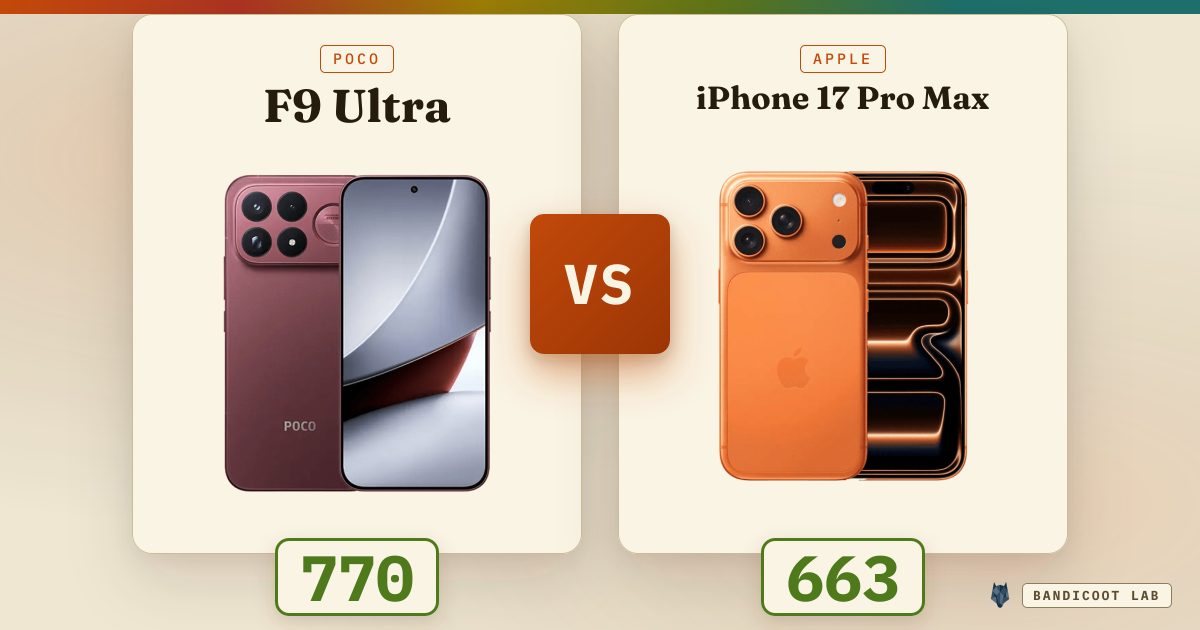
Poco F9 Ultra vs Apple iPhone 17 Pro Max
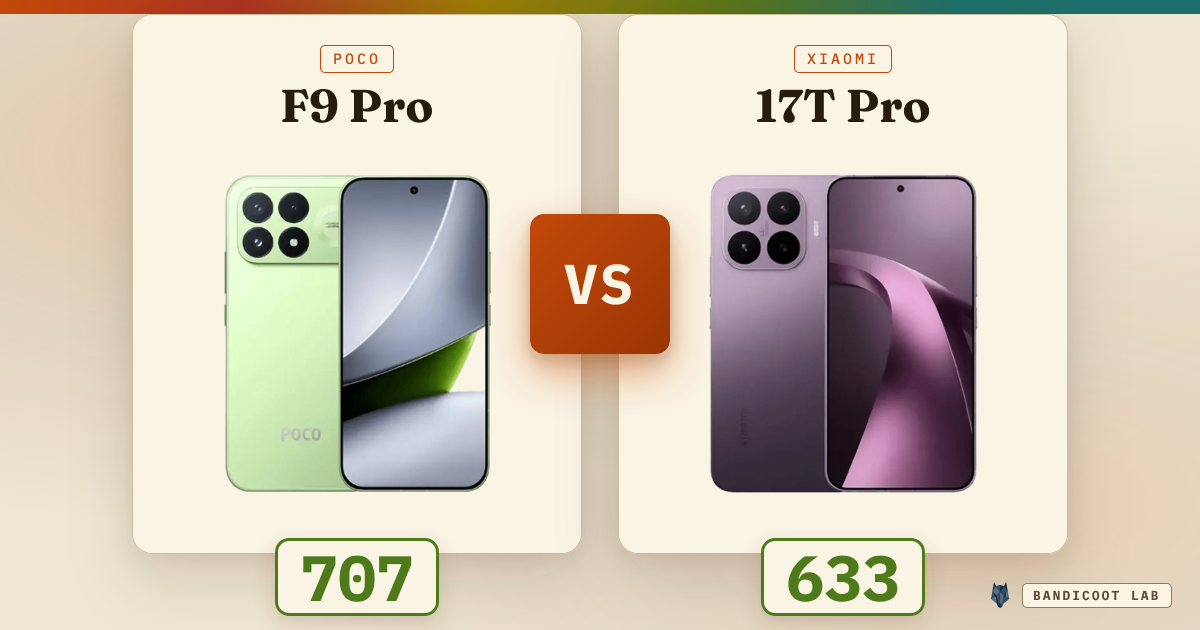
Poco F9 Pro vs Xiaomi 17T Pro
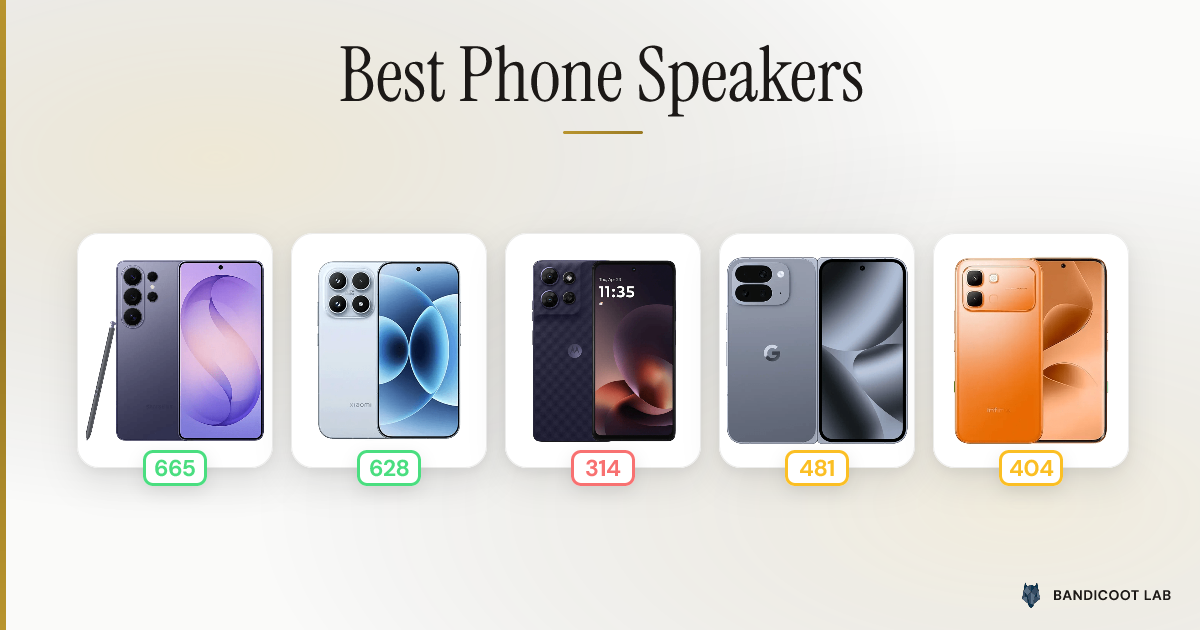
Best Phone Speakers
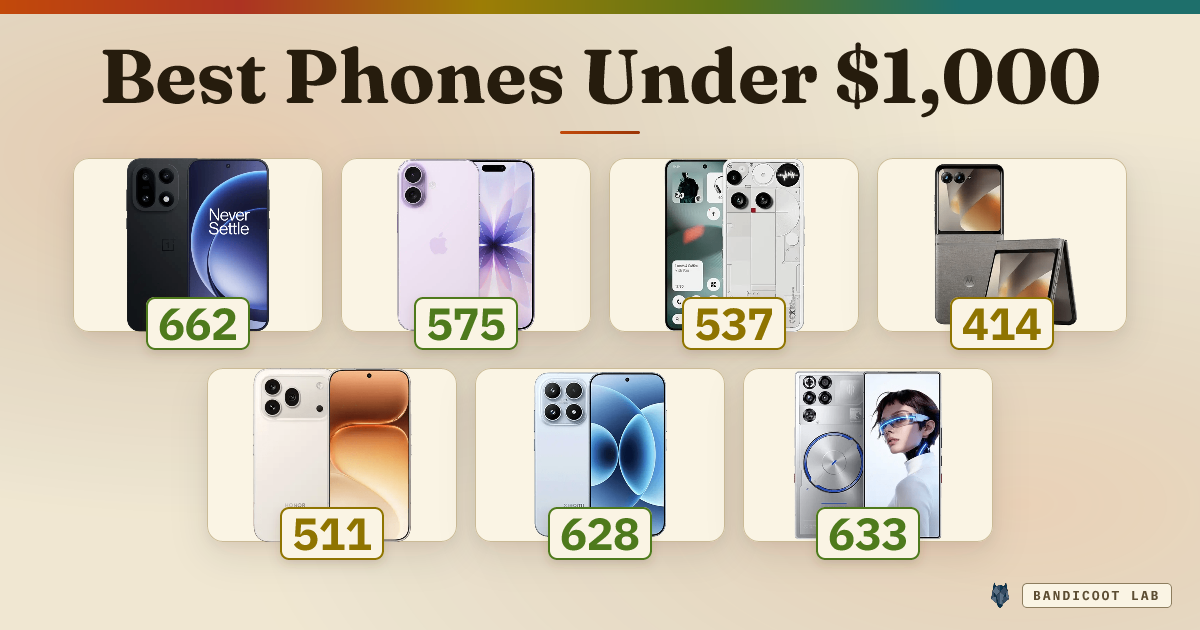
Best Phones Under $1,000
Best Phones Under $800
Best Phones for Gaming
Best Phone Displays