Poco F9 Pro vs Xiaomi 17T Pro
Poco
Xiaomi
F9 Pro
17T Pro
Ranked #3 of 61
Ranked #12 of 61
Overall
Overall

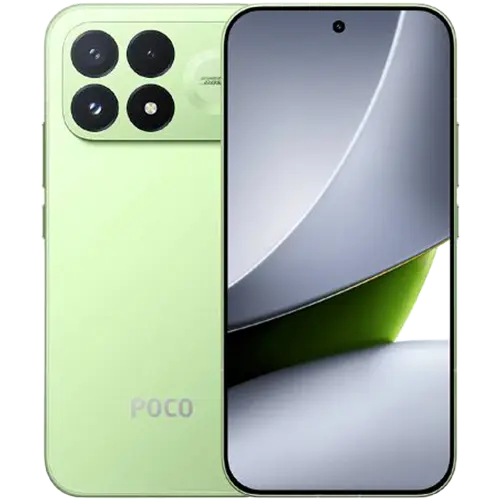
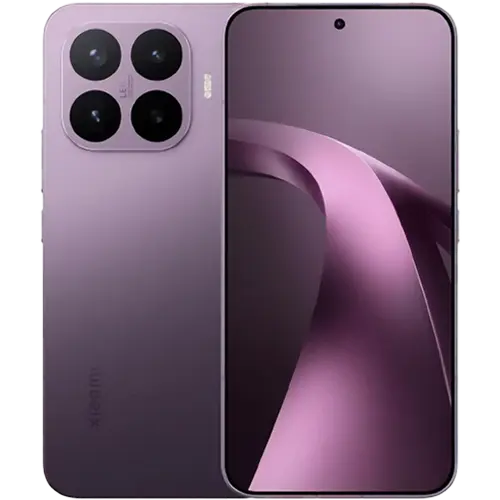
The Poco F9 Pro costs $699. The Xiaomi 17T Pro costs $899. Both come from the Xiaomi family, with Poco serving as the value-oriented sub-brand. They target the same buyer: someone after high-end hardware without the true flagship price tag. The 17T Pro is the bigger phone with a larger battery and more telephoto reach. The F9 Pro packs a faster processor and a brighter display into a smaller, lighter body.
The F9 Pro leads in display, performance, and speakers. The 17T Pro pulls ahead in battery life and charging speed. Camera quality is nearly identical in aggregate, though each phone's strengths are distributed differently across lenses. At $200 less, the F9 Pro outperforms the 17T Pro in more categories, which puts the burden on the Xiaomi to justify its price with the things it does better.
Design
| Poco F9 Pro | Xiaomi 17T Pro | |
|---|---|---|
| Specifications | ||
| Dimensions | 157.5 x 75.3 x 8.8 mm | 162.2 x 77.5 x 8.25 mm |
| Weight | 206g | 219g |
| IP Rating | IP68 | IP68 |
| Frame | Aluminum | Aluminum |
| Front | Gorilla Glass 7i | Gorilla Glass 7i |
| Back | Plastic | Fiberglass |
| Screen-to-body ratio | 89.8% | 91.1% |
The Poco F9 Pro measures 157.5 x 75.3 x 8.8mm and weighs 206g. The Xiaomi 17T Pro is larger at 162.2 x 77.5 x 8.25mm and heavier at 219g. Both use aluminum frames and Gorilla Glass 7i on the front. The back materials differ: the Poco uses plastic, the Xiaomi uses fiberglass. Both carry an IP68 rating, meaning they can handle submersion in fresh water to a manufacturer-specified depth.
The Poco's 6.59-inch display has an 89.8% screen-to-body ratio with a 19.5:9 aspect ratio. The Xiaomi's 6.83-inch panel achieves 91.1% screen-to-body with the same 19.5:9 aspect, meaning thinner bezels relative to its screen size. At 219g, the Xiaomi is on the heavier side for a non-folding phone. The 13g difference is noticeable if you're holding the phone for extended stretches. The Xiaomi is thinner at 8.25mm versus 8.8mm.
Bandicoot Lab doesn't formally test design or durability, so these are paper specs. The fiberglass back on the 17T Pro is more rigid than the Poco's plastic but lighter than glass. Both phones' IP68 ratings and Gorilla Glass 7i fronts put them on similar footing for everyday protection.
Display
| Poco F9 Pro | Xiaomi 17T Pro | |
|---|---|---|
845/ 881 | 609/ 881 | |
The Poco F9 Pro has a 6.59-inch AMOLED at 2510 x 1156 (419 pixels per inch) with a variable refresh rate up to 185Hz. The Xiaomi 17T Pro uses a 6.83-inch AMOLED at 2772 x 1280 (447 PPI) with a refresh rate up to 144Hz. The Xiaomi's panel is sharper and larger; the Poco's refreshes faster.
Brightness is where these two diverge most. The Poco reaches 882 nits in manual brightness mode; the Xiaomi tops out at 625 nits. For outdoor readability without auto-brightness, that's a meaningful gap. In HDR content (high dynamic range video) with auto-brightness engaged, the Poco peaks at 10,061 nits and the Xiaomi reaches 3,653 nits. The Poco's HDR peak is extreme, but its brightness stability across window sizes is only 22.2%, meaning it can only sustain those highs for small bright areas on screen. As the bright region grows, output drops sharply. The Xiaomi's 56.3% stability across window sizes means it holds brightness more evenly regardless of how much of the screen is lit up. Over a sustained 30-minute test, both hold steady: 99.5% for the Poco and 98.7% for the Xiaomi.
The Poco's tone mapping follows the HDR reference curve more closely and intentionally pushes highlights brighter than mastered, clipping at 85% input. The Xiaomi deviates more from the reference overall but doesn't boost highlights as aggressively and holds detail to a 90% clip point. If you want punchy HDR with pop, the Poco delivers that. If you'd prefer highlights that retain detail a bit longer, the Xiaomi is more conservative.
Color accuracy slightly favors the Xiaomi. Its colors track closer to reference, with neutral tones appearing more true-to-life. The Poco is still accurate enough that most people won't notice in isolation, but in a side-by-side the Xiaomi is the more faithful panel. Gamut coverage is nearly identical: both cover around 99% of sRGB (the standard color space) and 73–74% of DCI-P3 (the wider color space used in most HDR content).
Touch latency is 8.4ms on the Poco and 16.3ms on the Xiaomi. Combined with the Poco's 185Hz refresh rate, the lower latency makes it noticeably more responsive for fast-paced gaming and quick scrolling.
Performance
| Poco F9 Pro | Xiaomi 17T Pro | |
|---|---|---|
892/ 1012 | 753/ 1012 | |
The Poco F9 Pro runs a Qualcomm Snapdragon 8 Elite Gen 5 with 12GB of RAM. The Xiaomi 17T Pro uses a MediaTek Dimensity 9500, also with 12GB.
CPU performance is close. The Poco scores 3,411 single-core and 10,347 multi-core in GeekBench 6; the Xiaomi hits 3,331 and 10,150. You won't feel that difference in daily use. App launches, multitasking, and general responsiveness will be similar.
GPU performance splits depending on what you measure. The Xiaomi posts higher peak graphics numbers: 7,062 in Wild Life Extreme versus 5,638 for the Poco, and 13,185 in Solar Bay versus 10,124. Both are GPU stress tests that push sustained rendering. The Poco holds its performance more steadily under load. In Wild Life Extreme, it maintains 75.6% of its peak versus 62% for the Xiaomi. Solar Bay shows a similar pattern: 71.4% versus 61%. The Xiaomi starts stronger but throttles more over time; the Poco delivers less peak power but keeps more of it.
Browser performance is dramatically different. The Poco scores 47.5 in Speedometer, a browser rendering benchmark; the Xiaomi scores 9.1. You'll feel that gap every time you open a complex web page.
Camera
| Poco F9 Pro | Xiaomi 17T Pro | |
|---|---|---|
517/ 587 | 515/ 587 | |
The two phones scored closely in our overall camera testing. Neither competes with the best camera-focused phones, but both are capable across their respective lens systems. The strengths are distributed differently: the Xiaomi's 5x telephoto gives it more reach and better results at extreme distances, while the Poco's front camera handles dynamic range and color more consistently. Across the main and ultrawide lenses, quality is close.
Both main cameras are sharp in bright light and hold detail well as conditions dim, with the Xiaomi maintaining a slight edge in low light. The Xiaomi's front camera is substantially sharper than the Poco's at every lighting level. At the deep zoom end, past 10x, the Xiaomi has a structural advantage. Its 5x telephoto starts with more optical reach, so it doesn't need to crop as aggressively to hit the same magnification. The Poco's 2.5x telephoto runs out of native detail faster, and images at extreme zoom levels soften more. The Xiaomi pushes to 120x maximum zoom versus the Poco's 60x, retaining more usable detail throughout.
Both phones lean slightly vivid in color tuning, pushing saturation a few percent above neutral on most lenses. The Poco is close to neutral in good light but warms up in dimmer conditions. Its processing overcorrects white balance as ambient light gets warmer, adding a noticeable yellow cast in low-light shots. This warm drift increases steadily from mid to dark conditions, pointing to a white balance algorithm issue rather than a sensor limitation. The Xiaomi stays more controlled across lighting, with a slight cool lean in bright light that relaxes toward neutral in mid light. Hue accuracy is similar between the two in bright conditions; the Poco's degrades more as light drops.
Main
| Poco F9 Pro (Main) | Xiaomi 17T Pro (Main) | |
|---|---|---|
614/ 722 | 551/ 722 | |
The Poco's main camera uses a 200-megapixel f/1.68 sensor at 24mm with a 1/1.4-inch sensor size. The Xiaomi uses 50 megapixels at f/1.6 and 23mm with a 1/1.31-inch sensor. Both are large by phone standards.
Sharpness is close in bright and mid light. The Xiaomi holds slightly more detail in the dark. The Poco's 200-megapixel count gives it cropping headroom within its 1x–2.5x range, and detail stays strong through 2x. The Xiaomi covers a wider 1x–5x range from its main sensor. While 50 megapixels offers less room for aggressive cropping, detail remains usable well past 2x, with some softening by 4x–5x.
Both push saturation slightly above neutral. The Poco shifts warm as lighting dims, introducing a clear yellow cast in low light. The warm bias grows steadily through mid and dark conditions, consistent with white balance overcorrection rather than a sensor-level hue problem. The Xiaomi leans slightly cool in bright light and moves toward neutral in mid light without the same dramatic warm drift. Skin tones on the Poco are noticeably off in bright conditions but improve in dimmer light. The Xiaomi's skin tones are more accurate in bright light but drift as conditions darken.
Both clip highlights in high-contrast scenes, with the Xiaomi preserving slightly more usable range. Video stabilization on the main camera is better on the Poco, with less visible shake in handheld footage.
Ultrawide
| Poco F9 Pro (Ultrawide) | Xiaomi 17T Pro (Ultrawide) | |
|---|---|---|
474/ 722 | 533/ 722 | |
The Poco's ultrawide is 8 megapixels at f/2.25 and 16mm. The Xiaomi's is 12 megapixels at f/2.2 and 15mm.
Sharpness is close between the two. Both hold well in bright and mid light, with the expected softening in the dark. The Xiaomi's higher resolution doesn't translate to a significant sharpness lead.
The Poco's ultrawide color tuning is inconsistent across lighting. It undersaturates in bright light, pushes saturation up in mid light, and returns near neutral in dark conditions. The Xiaomi is more even throughout. Both have elevated skin tone errors in bright light. The Poco's skin tone issues persist into mid light, while the Xiaomi's improve. Dynamic range slightly favors the Xiaomi, though both clip highlights. Video stabilization on the ultrawide is significantly better on the Xiaomi, which keeps handheld footage much steadier.
Telephoto
| Poco F9 Pro (Telephoto) | Xiaomi 17T Pro (Telephoto) | |
|---|---|---|
487/ 722 | 522/ 722 | |
The Poco has a 50-megapixel f/2 telephoto at 60mm (2.5x optical), covering 2.5x through its 60x digital maximum. The Xiaomi has a 50-megapixel f/3 telephoto at 115mm (5x optical), covering 5x through 120x. These serve different roles: the Poco's is a portrait-length lens suited for closer subjects, the Xiaomi's is built for distance.
At their native focal lengths, sharpness is close with a slight edge to the Xiaomi. As zoom extends beyond native, the Xiaomi's longer starting point maintains an advantage. It doesn't need to crop as far to reach 10x or 15x, so detail holds longer. The Poco has to stretch more from 2.5x, and the digital crop degrades quality faster.
The Poco's telephoto pushes saturation more aggressively in bright light and has significant skin tone errors in those conditions. Faces look off in good lighting. The Xiaomi is more restrained, keeping saturation close to neutral with much better skin accuracy in bright light. Both shift warm in lower light as their white balance processing compensates for warmer ambient temperatures. Dynamic range slightly favors the Poco. Stabilization favors the Xiaomi.
Front
| Poco F9 Pro (Front) | Xiaomi 17T Pro (Front) | |
|---|---|---|
557/ 722 | 542/ 722 | |
Both phones use the same front camera hardware: 32 megapixels, f/2.2, 21mm, on a 1/3.44-inch sensor.
Identical specs, different results. The Xiaomi is substantially sharper across all lighting conditions. The Poco produces softer selfies, and the gap widens in low light.
The Poco's front camera keeps a consistent, slightly cool and muted look with moderate skin tone accuracy throughout. The Xiaomi delivers excellent skin accuracy in bright light but degrades significantly in the dark. Saturation on the Xiaomi drops as conditions dim, with images looking washed out in low light. Dynamic range heavily favors the Poco, which preserves highlights and shadows far better in high-contrast selfies.
Battery
| Poco F9 Pro | Xiaomi 17T Pro | |
|---|---|---|
608/ 836 | 695/ 836 | |
The Poco F9 Pro has a 6,330mAh battery; the Xiaomi 17T Pro packs 7,000mAh.
Video playback is essentially identical: 30.49 hours for the Poco and 30.63 hours for the Xiaomi. Both will last through two full days of moderate mixed use. Web browsing drain over a five-hour test is 20% on the Poco and 18% on the Xiaomi. A small gap, and both are comfortable for all-day browsing.
Gaming is where the difference shows. The Poco drains 35% during the GPU stress test (3DMark Wild Life Extreme, 20 loops); the Xiaomi drains 23%. That's substantial. If you game for a couple of hours a day, the Xiaomi will have meaningfully more charge left at the end. The larger battery and the Dimensity 9500's efficiency under GPU load both contribute. Standby drain is identical at 2% over eight hours overnight.
Charging
| Poco F9 Pro | Xiaomi 17T Pro | |
|---|---|---|
569/ 837 | 718/ 837 | |
Both phones support 100W wired and 50W wireless charging. Charging speed still favors the Xiaomi.
Wired, the Xiaomi reaches 33% in 10 minutes and 79% in 30 minutes. The Poco hits 30% at 10 minutes and 75% at 30 minutes. Wireless follows a similar pattern: 48% versus 44% at the 30-minute mark, with both reaching 19% at 10 minutes. The margins are consistent but modest. A 10-minute emergency top-up on either phone gets you through several more hours.
Speaker
| Poco F9 Pro | Xiaomi 17T Pro | |
|---|---|---|
818/ 897 | 636/ 897 | |
The Poco F9 Pro reaches 77.1 dBA at maximum volume; the Xiaomi 17T Pro hits 76.3 dBA. Similar loudness.
The Poco has fuller bass, extending lower and filling out the bottom end. Its highs are crisper and more distinct. Distortion is substantially lower: 2.65% total harmonic distortion versus 8.16% on the Xiaomi. At higher volumes, the Poco stays clean while the Xiaomi introduces audible harshness. The Poco sounds more balanced and composed overall.
Microphone
| Poco F9 Pro | Xiaomi 17T Pro | |
|---|---|---|
482/ 1220 | 390/ 1220 |
Neither phone excels here. The Poco performs below average, with moderate frequency response variation. The Xiaomi is further below average, with less consistent capture across the frequency range. Both are fine for calls and voice memos. Neither is a strong choice for recording music or detailed audio.
Other
| Poco F9 Pro | Xiaomi 17T Pro | |
|---|---|---|
| Biometrics | 1181/ 1181 | 461/ 1181 |
| Data Transfer | 118/ 943 | 108/ 943 |
| Specifications | ||
| Biometric type | Fingerprint | Fingerprint |
| Ports | USB-C 3.2 Gen 1 | USB-C 2.0 |
| Storage | 256GB, 512GB | 256GB, 512GB, 1TB |
Fingerprint speed is a clear differentiator. The Poco uses an ultrasonic sensor averaging 89ms; the Xiaomi's optical sensor averages 228ms. The Poco unlocks in roughly a third of the time. Neither phone has hardware-based face unlock.
Data transfer speeds are similar despite different port standards. The Poco's USB-C 3.2 Gen 1 port achieves 42 MB/s read and 36 MB/s write; the Xiaomi's USB-C 2.0 port reaches 38 MB/s read and 36 MB/s write. The faster port spec on the Poco isn't translating to a meaningful real-world speed advantage. Both phones come in 256GB and 512GB storage configurations. The Xiaomi adds a 1TB option.
Conclusion
The Poco F9 Pro is cheaper and better in more areas. It has a brighter, faster display with lower touch latency. Performance is stronger in CPU tasks, browser speed, and sustained GPU workloads. Its speakers are cleaner and fuller. Its fingerprint sensor unlocks nearly three times faster. All of this at $699 versus the Xiaomi's $899.
The Xiaomi 17T Pro earns its keep in battery life and charging. Gaming endurance is where the gap is widest: the Xiaomi drains about a third less battery under heavy GPU load, which adds up if you game regularly. It charges a bit faster across the board too. The larger 6.83-inch screen, thinner bezels, and 1TB storage option are practical advantages for people who want more physical and digital space. Camera systems are close enough that neither phone should be chosen on that basis alone.
If you prioritize display quality, speed, and value, the Poco F9 Pro is the stronger pick. If long gaming sessions and charging convenience matter more to you, the Xiaomi 17T Pro makes its case. The $200 price difference looms over the decision, and the Poco doesn't make it easy for the Xiaomi to justify the premium.
FAQ
Is the Poco F9 Pro or Xiaomi 17T Pro better for gaming?
It depends on the kind of gaming. The Xiaomi 17T Pro posts higher peak graphics results (7,062 versus 5,638 in Wild Life Extreme) and drains 23% in the gaming battery test against 35% for the Poco F9 Pro. The Poco holds more of its peak under sustained load (75.6% versus 62%) and has 8.4ms touch latency against 16.3ms, so it feels more responsive. Choose the Xiaomi for long sessions and battery, and the Poco for responsiveness and steadier frame output.
Does the Poco F9 Pro or Xiaomi 17T Pro take better photos?
Overall camera quality is nearly identical, and the strengths sit on different lenses. The Xiaomi's 5x telephoto reaches further and keeps more detail at high zoom, and its front camera is much sharper. The Poco's front camera handles high-contrast selfies better, and its main-camera video is steadier. The Poco also drifts yellow in low light, while the Xiaomi's color stays more controlled.
Is the Xiaomi 17T Pro worth $200 more than the Poco F9 Pro?
For most buyers, probably not. The $699 Poco F9 Pro has the brighter, faster display, stronger browser and sustained GPU performance, cleaner speakers, and a much quicker fingerprint sensor. The $899 Xiaomi 17T Pro is worth the premium if you game for long stretches, want faster charging, or prefer a larger 6.83-inch screen and a 1TB storage option.
How do the battery life and charging speed compare between the Poco F9 Pro and Xiaomi 17T Pro?
Video playback is essentially tied at 30.49 hours for the Poco and 30.63 hours for the Xiaomi, and web browsing drain is close at 20% versus 18%. The Xiaomi pulls ahead under heavy gaming load. Both support 100W wired and 50W wireless charging, but the Xiaomi is slightly faster, reaching 79% in 30 minutes wired against 75% for the Poco.
Which has the better screen for outdoor use, the Poco F9 Pro or the Xiaomi 17T Pro?
The Poco F9 Pro is easier to read in sunlight, reaching 882 nits in manual brightness against 625 nits for the Xiaomi 17T Pro. Its HDR peak is also far higher at 10,061 nits versus 3,653 nits, though it holds that brightness only in small bright areas. The Xiaomi has a larger, sharper panel with slightly more accurate color, but it is dimmer.
Does the Poco F9 Pro or Xiaomi 17T Pro have better speakers and a faster fingerprint sensor?
The Poco F9 Pro wins both. Its speakers have fuller bass, crisper highs, and 2.65% distortion against 8.16% on the Xiaomi 17T Pro, so they stay cleaner at high volume. Its ultrasonic fingerprint sensor unlocks in about 89ms versus 228ms for the Xiaomi's optical sensor.
Related
Xiaomi
17T Pro
Poco
F9 Pro
Poco
F9 Ultra
Xiaomi
17 Ultra
Xiaomi
17
Xiaomi
15T Pro
Poco F9 Ultra vs Poco F9 Pro
RedMagic 11S Pro vs Xiaomi 17T Pro
Xiaomi 17T Pro vs Xiaomi 17
Xiaomi 17T Pro vs Xiaomi 15T Pro
Xiaomi 17T Pro vs Samsung Galaxy S26
Xiaomi 17T Pro vs OnePlus 15