RedMagic 11S Pro vs OnePlus 15

RedMagic
OnePlus
11S Pro
15
Ranked #13 of 60
Ranked #8 of 60
Overall
Overall

The RedMagic 11S Pro is a gaming phone that's trying to be a mainstream flagship. It prices undercuts most premium competitors while packing hardware aimed at sustained performance and fast response times. The OnePlus 15 comes from the opposite direction: a mainstream flagship with a well-rounded spec sheet, a three-camera system, and battery life as a headline feature.
The RedMagic 11S Pro leads in raw performance, charging flexibility, data transfer speeds, and fingerprint unlock speed. The OnePlus 15 pulls ahead in battery life, speaker quality, microphone quality, camera versatility from its telephoto lens, and overall camera sharpness. Their displays score within a few points of each other, though they get there differently. Neither phone competes with the best dedicated camera flagships, but the OnePlus 15 offers a more complete camera system.
Design
| RedMagic 11S Pro | OnePlus 15 | |
|---|---|---|
| Specifications | ||
| Dimensions | 163.8 x 76.5 x 8.9 mm | 161.4 x 76.7 x 8.1 mm |
| Weight | 230g | 211g |
| IP Rating | IPX8 | IP68/IP69K |
| Frame | Aluminum | Aluminum |
| Front | Gorilla Glass 7i | Gorilla Glass Victus 2 |
| Back | Gorilla Glass 5 | Gorilla Glass 7i / Crystal Shield Glass / Glass fiber |
| Screen-to-body ratio | 90.7% | 90.8% |
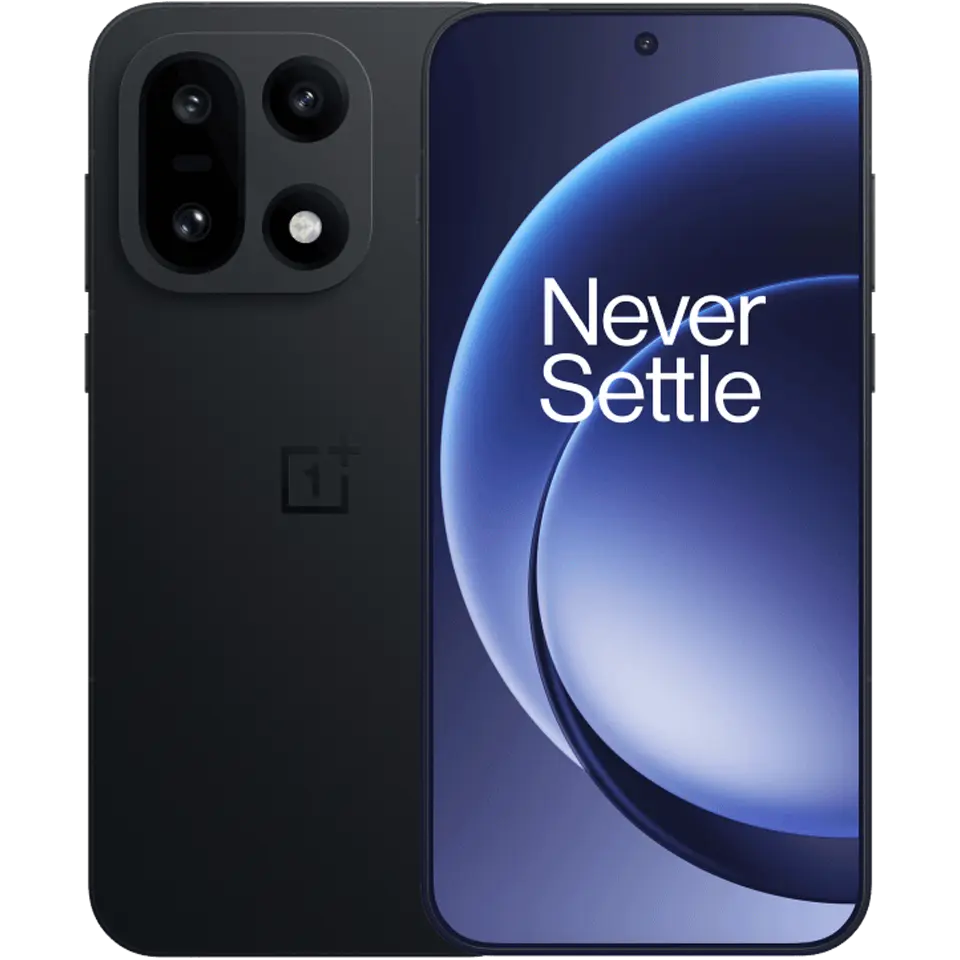
The two phones are close in footprint. The RedMagic 11S Pro measures 163.8 x 76.5 x 8.9mm and weighs 230g. The OnePlus 15 is slightly shorter and thinner at 161.4 x 76.7 x 8.1mm, and noticeably lighter at 211g. That 19g difference is enough to feel in a pocket. Both use aluminum frames. The RedMagic pairs Gorilla Glass 7i on the front with Gorilla Glass 5 on the back; the OnePlus 15 uses Gorilla Glass Victus 2 up front with a choice of Gorilla Glass 7i, Crystal Shield Glass, or glass fiber on the back depending on the color variant.
Water protection differs meaningfully. The RedMagic 11S Pro carries an IPX8 rating, which covers submersion but doesn't include a dust ingress rating. The OnePlus 15 is rated IP68/IP69K, adding formal dust resistance and protection against high-pressure, high-temperature water jets. For anyone who regularly exposes their phone to dust, rain, or messy environments, the OnePlus 15's rating provides broader coverage.
Screen-to-body ratios are nearly identical: 90.7% for the RedMagic and 90.8% for the OnePlus. Aspect ratios are close too, at 19.9:9 and 19.6:9 respectively. In practice, the visible bezels and display proportions will look very similar between the two.
Bandicoot Lab doesn't formally test design or durability, so this section describes what's on paper. We can't speak to in-hand feel or perceived build quality from specs alone.
Display
| RedMagic 11S Pro | OnePlus 15 | |
|---|---|---|
572/ 881 | 574/ 881 | |
Both phones use AMOLED panels at similar sizes. The RedMagic 11S Pro has a 6.85-inch display at 1216 x 2688 (431 PPI); the OnePlus 15 uses a 6.78-inch panel at 1272 x 2772 (450 PPI). The OnePlus 15's higher pixel density gives it a slight edge in fine text rendering, though the difference is marginal at normal viewing distances. The RedMagic tops out at 144Hz with a 60Hz floor, while the OnePlus 15 reaches 165Hz and drops as low as 1Hz thanks to LTPO technology. That 1Hz floor matters for always-on display efficiency and standby power savings.
For brightness, the RedMagic 11S Pro reaches 677 nits in manual mode and 2,265 nits at its HDR peak. The OnePlus 15 is brighter in manual mode at 798 nits but lower at HDR peak with 1,958 nits. The RedMagic's HDR brightness is less consistent across window sizes, holding 73.5% stability versus the OnePlus 15's 91%. That means the OnePlus 15 maintains more uniform brightness whether the HDR highlight is a small specular point or a large bright area. Over a sustained 30-minute HDR test, both hold up well: 98.4% for the RedMagic and 99.5% for the OnePlus. Minimum brightness favors the OnePlus at 0.93 nits versus 3.34 nits, which matters in a dark bedroom.
Color accuracy goes to the RedMagic 11S Pro. Colors stay close to reference across most of the spectrum, with only minor drift in specific tones. The OnePlus 15 shows more visible deviation from accurate color. Neutral grays and subtle tones will look slightly off on the OnePlus compared to the RedMagic. The RedMagic also covers 98.4% of the P3 gamut compared to the OnePlus 15's 75.2%, meaning the RedMagic can display a wider range of colors in wide-color content. Both cover sRGB effectively.
For HDR tone mapping, the OnePlus 15 tracks the reference HDR curve more faithfully, with a subtle brightness lift on highlights. It starts clipping at 85% of the input signal. The RedMagic 11S Pro deviates more from the reference curve with a similar level of highlight boosting, but doesn't clip until 90%. The OnePlus gives more faithful rendering through most of the range; the RedMagic holds on to extreme highlights a bit longer before giving up.
Touch latency is 11.9ms on the RedMagic and 15.5ms on the OnePlus 15. The RedMagic's lower latency is a genuine advantage for competitive gaming, where every millisecond of input delay matters. For general use and even casual gaming, the difference is unlikely to be perceptible.
Performance
| RedMagic 11S Pro | OnePlus 15 | |
|---|---|---|
1012/ 1012 | 833/ 1012 | |
Both phones run the Qualcomm Snapdragon 8 Elite Gen 5 with 16GB of RAM in their tested configurations. Same chip, same memory, but tuning and thermal management lead to meaningful differences.
The RedMagic 11S Pro edges ahead in CPU benchmarks with a GeekBench 6 single-core score of 3,815 and multi-core of 12,148, compared to 3,606 and 11,442 for the OnePlus 15. These gaps are moderate. The single-core difference won't show up in daily tasks, but the multi-core lead could in heavy multitasking or export-heavy workloads.
The GPU results show the RedMagic's gaming heritage clearly. Its Wild Life Extreme peak score of 8,116 with 81% stability significantly outpaces the OnePlus 15's 7,160 peak at 63.7% stability. Solar Bay tells the same story: 14,697 with 82.4% stability versus 13,230 at 60.6%. The RedMagic doesn't just start faster; it stays closer to peak performance over extended sessions. For someone playing graphically demanding games for 30 minutes or more, the RedMagic will deliver more consistent frame rates where the OnePlus starts throttling.
Browser performance favors the OnePlus 15. It scores 18.1 on Speedometer compared to the RedMagic's 13, a substantial gap that translates to snappier web page rendering and JavaScript-heavy app performance.
Camera
| RedMagic 11S Pro | OnePlus 15 | |
|---|---|---|
433/ 587 | 426/ 587 | |
Neither phone is built to compete with dedicated camera flagships, and the scores reflect that. The OnePlus 15 has a clear structural advantage with three rear cameras including a 3.5x telephoto, while the RedMagic 11S Pro makes do with a main and ultrawide only, topping out at 10x digital zoom. Across both phones, the OnePlus 15 resolves more detail from its main and ultrawide lenses, particularly in bright light. The RedMagic's main camera holds up reasonably well at 1x but softens more quickly as you crop in. At the deep zoom end, the gap is dramatic. The OnePlus 15 has usable detail well past its 3.5x telephoto's native length, while the RedMagic's 10x digital crop from a main sensor produces very soft results.
These phones take different color processing approaches. The RedMagic tends toward vivid, saturated output across all lenses. The OnePlus 15 leans closer to neutral in good light but desaturates as conditions get darker. Both have hue accuracy issues, but they manifest differently and are covered per-lens below.
Main
| RedMagic 11S Pro (Main) | OnePlus 15 (Main) | |
|---|---|---|
519/ 722 | 441/ 722 | |
The OnePlus 15's 50-megapixel main camera (f/1.8, 24mm, 1/1.56" sensor) resolves high detail in bright light and maintains solid sharpness in mid and low-light conditions. The RedMagic 11S Pro's 50-megapixel main (f/1.9, 23mm, 1/1.55" sensor) is slightly softer across all lighting. The gap is largest in bright conditions, where the OnePlus produces a visibly crisper image.
The OnePlus 15's main camera covers 1x through 3.5x before handing off to its telephoto. Through that range, detail holds up well at 2x with only gradual softening as you approach the telephoto handoff. The RedMagic covers 1x through 10x entirely through digital crop from the main sensor, and detail drops off noticeably past 2x. By 5x and beyond, the RedMagic produces substantially softer images than the OnePlus at comparable zoom levels.
The RedMagic pushes saturation well above reference in bright and mid light, giving images a punchy, vivid look, with greens and blues receiving the biggest boost. Hue accuracy on the RedMagic's main camera is reasonably good across lighting conditions, and skin tones, while affected by the saturation bump, improve as light dims. The OnePlus 15 is close to neutral saturation in bright light and becomes slightly muted in darker conditions. Its hue accuracy is weaker, with noticeable color shifts that grow in mid and especially low light. In dim conditions, the OnePlus pulls heavily toward warm tones, suggesting a white balance issue rather than a sensor limitation. Skin tones on the OnePlus drift more than the RedMagic across all lighting.
Dynamic range favors the OnePlus 15. High-contrast scenes retain more shadow detail and more depth between highlights and darks. The RedMagic clips highlights and compresses the tonal range more aggressively. Neither is exceptional here, but the OnePlus keeps more of the scene.
Ultrawide
| RedMagic 11S Pro (Ultrawide) | OnePlus 15 (Ultrawide) | |
|---|---|---|
398/ 722 | 441/ 722 | |
The OnePlus 15's ultrawide (50 megapixels, f/2, 16mm) is sharper than the RedMagic's (50 megapixels, f/2, 13mm) across all lighting conditions. The RedMagic's ultrawide softens more in low light, while the OnePlus stays close to its bright-light performance even as conditions deteriorate. Both maintain reasonable quality relative to their own main cameras, with the usual ultrawide drop in fine detail.
The RedMagic's ultrawide leans mildly saturated with relatively neutral color balance in bright and mid light. In low light, it shifts heavily toward warm, yellow tones, a white balance issue. Combined with elevated hue errors in dim conditions, colors can look quite inaccurate under warm indoor lighting. The OnePlus 15's ultrawide is close to neutral saturation in good light and increasingly muted in darker settings. Like its main camera, the OnePlus shows growing warm and magenta-pink shifts as light gets dimmer, consistent with a white balance overcorrection. Both phones struggle with color in low light from this lens.
Dynamic range goes to the OnePlus 15 again, with better shadow recovery and more tonal depth in high-contrast scenes.
Telephoto
| RedMagic 11S Pro (Telephoto) | OnePlus 15 (Telephoto) | |
|---|---|---|
| — | 446/ 722 | |
The OnePlus 15 has a 50-megapixel telephoto at f/2.8 with a native 3.5x (80mm equivalent) focal length. The RedMagic 11S Pro has no telephoto lens.
At 3.5x, the OnePlus delivers an optically resolved image rather than a crop from the main sensor. Detail holds reasonably well as you push past the native focal length toward 10x, still providing usable results at higher crops. Hue accuracy on the telephoto is moderate in bright and mid light, with warmer shifts appearing in low light. Skin tones are the weakest point across lighting conditions, drifting further from reference than the other lenses. Saturation is pushed slightly above neutral in bright light and settles close to reference as light dims.
Dynamic range from the telephoto is decent, retaining enough shadow and highlight separation for most scenes. Stabilization is adequate for the focal length, though video at longer zoom levels can show more movement than ideal.
For anyone who regularly shoots subjects at a distance, portraits at moderate telephoto lengths, or needs optical zoom for travel or events, the OnePlus 15 is the only option between these two.
Front
| RedMagic 11S Pro (Front) | OnePlus 15 (Front) | |
|---|---|---|
443/ 722 | 421/ 722 | |
The OnePlus 15's 32-megapixel front camera (f/2.4, 21mm) outresolves the RedMagic 11S Pro's 16-megapixel unit (f/2, 26mm) in bright light by a large margin and maintains a clear sharpness lead in mid light. In low light, the gap narrows but the OnePlus still leads. The RedMagic's front camera produces consistent but modest detail regardless of lighting.
The RedMagic's front camera is heavily saturated in bright light, shifts cool in good lighting, then swings dramatically warm in low light, with high hue errors across all conditions. The OnePlus 15's front camera renders skin tones well in mid light, with more drift in bright and low-light conditions. Colors lean slightly warm across the board with growing warmth and pink tones as light dims. Neither front camera handles color well, but the OnePlus is more accurate overall, particularly for skin tones in moderate indoor lighting.
Dynamic range favors the RedMagic's front camera, which preserves more scene depth and handles highlights better. The OnePlus 15's front camera clips highlights and shows more tonal inconsistency in high-contrast selfie scenarios.
Battery
| RedMagic 11S Pro | OnePlus 15 | |
|---|---|---|
528/ 836 | 780/ 836 | |
The RedMagic 11S Pro has a 7,500mAh battery; the OnePlus 15 has 7,300mAh. Despite the smaller cell, the OnePlus 15 lasts longer across every test.
In video playback, the OnePlus 15 lasted 46.11 hours compared to the RedMagic's 28.61 hours. The OnePlus 15 could play video continuously for nearly two full days. The RedMagic's result is still solid, roughly equivalent to a day and a half of continuous playback, but the OnePlus outlasts it by over 17 hours.
Web browsing drain over five hours was 16% on the OnePlus versus 20% on the RedMagic. Extrapolate that out and the OnePlus gives you roughly six extra hours of browsing on a full charge. Gaming drain during the stress test showed an even sharper split: the OnePlus used 23% compared to the RedMagic's 53%. The RedMagic's GPU runs harder and faster, and the power draw reflects that directly. Standby was 4% overnight on the OnePlus versus 7% on the RedMagic, with the OnePlus 15's LTPO panel likely contributing to its lower idle draw.
For most usage patterns, the OnePlus 15 is a comfortable two-day phone. The RedMagic 11S Pro is a reliable one-day phone that'll need a charge by bedtime if you game on it.
Charging
| RedMagic 11S Pro | OnePlus 15 | |
|---|---|---|
710/ 837 | 700/ 837 | |
The RedMagic 11S Pro supports 80W wired and 80W wireless charging. The OnePlus 15 supports 120W wired and 50W wireless.
Wired charging heavily favors the OnePlus 15. After 10 minutes, it reaches 37% compared to the RedMagic's 28%. At 30 minutes, the OnePlus hits 88% while the RedMagic sits at 64%. If you're grabbing a quick charge before leaving the house, 30 minutes on the OnePlus gets you through most of the day. The RedMagic needs closer to a full charge cycle for similar peace of mind.
Wireless charging flips the advantage. The RedMagic's 80W wireless gets it to 21% in 10 minutes and 53% at 30 minutes. The OnePlus 15's 50W wireless manages only 10% at 10 minutes and 28% at 30 minutes. If you primarily use a wireless charger, the RedMagic delivers nearly twice the wireless charging speed.
Speaker
| RedMagic 11S Pro | OnePlus 15 | |
|---|---|---|
507/ 897 | 669/ 897 | |
Neither phone has a particularly strong speaker system. The RedMagic 11S Pro maxes out at 75.8 dBA; the OnePlus 15 hits 75 dBA. Loudness is essentially a tie.
The gap shows in everything else. The OnePlus 15's speaker produces noticeably less distortion at 7.87% THD versus the RedMagic's 10.36%. The frequency response on the OnePlus is also more even, producing a more balanced sound across the range. The OnePlus provides fuller bass and better high-end clarity compared to the RedMagic, which sounds thin in the low end and has a more uneven tonal character. The RedMagic 11S Pro ranks last in our speaker scores. It works for notifications and speakerphone calls, but for media playback, you'll want headphones.
Microphone
| RedMagic 11S Pro | OnePlus 15 | |
|---|---|---|
506/ 1220 | 696/ 1220 |
The OnePlus 15 has a more balanced microphone response, sitting above average for voice capture. The RedMagic 11S Pro falls below average, with a less even frequency response that may affect call clarity and voice recordings. Neither is exceptional, but if you frequently use your phone for calls in variable environments or record voice notes, the OnePlus 15 will give you cleaner results.
Other
| RedMagic 11S Pro | OnePlus 15 | |
|---|---|---|
| Biometrics | 1036/ 1181 | 514/ 1181 |
| Data Transfer | 857/ 943 | 622/ 943 |
| Specifications | ||
| Biometric type | Fingerprint | Fingerprint |
| Ports | USB-C 3.2 Gen 2 | USB-C 3.2 |
| Storage | 256GB, 512GB | 256GB, 512GB, 1TB |
Fingerprint unlock is dramatically faster on the RedMagic 11S Pro at 101ms versus the OnePlus 15's 204ms. Both use ultrasonic sensors, but the RedMagic unlocks in essentially half the time. You'll feel this every time you pick up the phone. Neither device has hardware-based face unlock.
Data transfer speeds favor the RedMagic 11S Pro. It reached 353 MB/s read and 401 MB/s write over its USB-C 3.2 Gen 2 port, compared to 298 MB/s read and 230 MB/s write from the OnePlus 15's USB-C 3.2 port. If you regularly transfer large files to and from a computer, the RedMagic is measurably quicker. Both phones offer 256GB and 512GB storage options; the OnePlus 15 also has a 1TB configuration.
Conclusion
The OnePlus 15 is the more complete everyday phone. Its battery life is substantially longer, its camera system is more versatile with the addition of a telephoto lens, its speaker sounds better, and its wired charging is faster. It also has a broader IP rating and a 1TB storage option. These are the things that matter most in daily, year-over-year use.
The RedMagic 11S Pro has clear strengths in sustained GPU performance, touch latency, wireless charging speed, fingerprint unlock speed, display color accuracy, and data transfer rates. If you play competitive mobile games regularly, those first two advantages are meaningful. The wireless charging speed is a genuine convenience if you've built your charging setup around a pad. The display renders colors more faithfully, which matters for photo editing or any color-sensitive work.
FAQ
Is the RedMagic 11S Pro or OnePlus 15 better for competitive mobile gaming?
The RedMagic 11S Pro is the stronger gaming phone. Its GPU sustains closer to peak performance over long sessions, while the OnePlus 15 throttles more aggressively under extended load. The RedMagic also has lower touch latency at 11.9ms versus 15.5ms, a real edge in fast-reaction games. Battery drain during gaming is the trade-off: the RedMagic burns through roughly twice the battery of the OnePlus 15 during a gaming session.
Does the OnePlus 15 or RedMagic 11S Pro last longer on a charge?
The OnePlus 15 lasts substantially longer despite having the smaller battery. It ran for 46.11 hours of continuous video playback against the RedMagic's 28.61 hours, and showed meaningfully lower drain during web browsing and standby. For most usage patterns, the OnePlus 15 is a comfortable two-day phone; the RedMagic 11S Pro will need a charge by bedtime on heavier days.
Which phone charges faster — the RedMagic 11S Pro or OnePlus 15?
It depends on how you charge. The OnePlus 15 is faster over a cable, reaching 88% in 30 minutes versus the RedMagic's 64%. The RedMagic flips the advantage wirelessly, hitting 53% at 30 minutes compared to only 28% for the OnePlus 15. If your charging setup is built around a wireless pad, the RedMagic wins; if you plug in, the OnePlus wins by a wide margin.
How much better is the OnePlus 15's camera compared to the RedMagic 11S Pro?
The OnePlus 15 resolves more detail from its main and ultrawide lenses and has a 3.5x telephoto the RedMagic entirely lacks. At zoom levels beyond 2x, the RedMagic relies on digital cropping and produces noticeably soft results, while the OnePlus delivers optically resolved images through its telephoto and usable quality well past that native length. For portraits, travel, or any distant subject, the RedMagic has no real answer. In bright light at 1x, the two are closer, though the OnePlus still leads on sharpness.
Is it worth upgrading from the RedMagic 11S Pro to the OnePlus 15?
The biggest gains from switching to the OnePlus 15 are battery life, camera versatility, and speaker quality — differences you'd encounter every day. If you game heavily, prefer wireless charging, or do color-sensitive work on your display, the RedMagic's strengths in GPU endurance, wireless charging speed, and color accuracy are worth keeping. The $50 price difference is minor; the decision comes down to whether gaming performance or everyday longevity matters more to you.
Related
RedMagic
11S Pro
OnePlus
15

RedMagic
11 Air
OnePlus
15R
RedMagic 11S Pro vs Xiaomi 17T Pro
Xiaomi 17T Pro vs OnePlus 15
Best Phones Under $1,000
Best Phones for Gaming
Best Android Phones
Best Phones
Best-Performing Phones
How we test charging