RedMagic 11S Pro vs Xiaomi 17T Pro

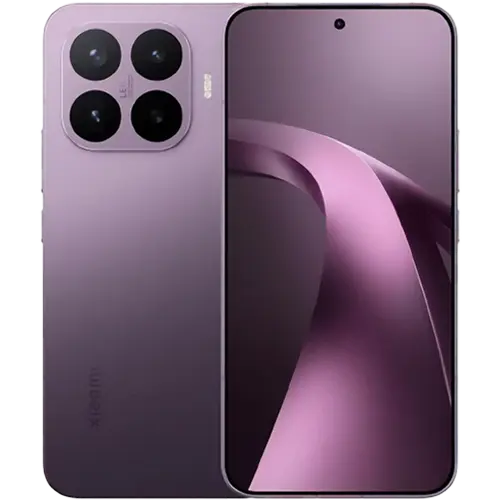
RedMagic
Xiaomi
11S Pro
17T Pro
Ranked #13 of 60
Ranked #12 of 60
Overall
Overall

The RedMagic 11S Pro is a gaming phone that's grown up enough to compete as a daily driver. It's built around raw speed, with a 144Hz display and the largest battery in its class. The Xiaomi 17T Pro takes a more conventional approach — it has a three-camera system with a dedicated telephoto, a brighter display, and longer battery life under load.
The RedMagic pulls ahead on processing power by a wide margin and charges fast both wired and wirelessly. The Xiaomi has the stronger camera system, better battery life across the board, a brighter display, and a fuller-sounding speaker. If you care about sustained performance under gaming loads, the RedMagic handles heat better. If you want a more complete all-rounder with a proper zoom lens and better endurance, the Xiaomi is the stronger pick.
Design
| RedMagic 11S Pro | Xiaomi 17T Pro | |
|---|---|---|
| Specifications | ||
| Dimensions | 163.8 x 76.5 x 8.9 mm | 162.2 x 77.5 x 8.25 mm |
| Weight | 230g | 219g |
| IP Rating | IPX8 | IP68 |
| Frame | Aluminum | Aluminum |
| Front | Gorilla Glass 7i | Gorilla Glass 7i |
| Back | Gorilla Glass 5 | Fiberglass |
| Screen-to-body ratio | 90.7% | 91.1% |
Both phones are large, heavy slabs with aluminum frames and Gorilla Glass 7i up front. The RedMagic 11S Pro measures 163.8 x 76.5 x 8.9mm and weighs 230g, with Gorilla Glass 5 on the back. The Xiaomi 17T Pro is slightly shorter and thinner at 162.2 x 77.5 x 8.25mm, 219g, with a fiberglass back. That 11g difference is minor, though the Xiaomi's slimmer profile probably makes it a touch easier to pocket.
The Xiaomi carries a full IP68 rating, meaning dust-tight and submersible to rated depth. The RedMagic is rated IPX8, which covers submersion but doesn't guarantee dust protection. The Xiaomi's screen-to-body ratio is slightly higher at 91.1% versus 90.7%, meaning marginally thinner bezels, though the difference is small enough that you'd need the two side by side to notice.
Bandicoot Lab doesn't formally test design or durability, so these comparisons are based entirely on published specs.
Display
| RedMagic 11S Pro | Xiaomi 17T Pro | |
|---|---|---|
572/ 881 | 609/ 881 | |
Both phones use large AMOLED panels of nearly the same size. The RedMagic 11S Pro has a 6.85-inch display at 1216 x 2688 (431 PPI) with a 144Hz refresh rate. The Xiaomi 17T Pro has a 6.83-inch display at 2772 x 1280 (447 PPI) with a 120Hz cap. The resolution difference is marginal in daily use. The RedMagic's higher refresh rate matters most in fast-scrolling content and gaming, where 144Hz feels slightly smoother than 120Hz.
In manual brightness, the two are close: 677 nits for the RedMagic, 625 nits for the Xiaomi. The gap widens in HDR. The Xiaomi peaks at 3,653 nits, well above the RedMagic's 2,265 nits. The Xiaomi's brightness drops more across different HDR window sizes, with 56.3% stability versus the RedMagic's 73.5%. Both sustain their brightness well over time, holding above 98% across a 30-minute stress test. The Xiaomi will look noticeably brighter in sunlit HDR scenes, but smaller highlights may not reach that same peak.
Color accuracy is reasonable on both. The RedMagic's best display mode produces colors that sit closer to reference, with neutral tones that read accurately and only minor drift on individual patches. The Xiaomi is a step behind, with slightly more visible color shifts, particularly in subtle gradients. Both cover sRGB almost fully, but the Xiaomi's DCI-P3 coverage is only 74.3% versus the RedMagic's 98.4%. Wide-gamut content will look less saturated on the Xiaomi.
For HDR tone mapping, the Xiaomi tracks the reference curve more closely and applies a moderate brightness boost to highlights. The RedMagic pushes highlights harder and deviates further from the intended HDR mastering, which can make bright content look punchy but less faithful. Both clip at the same input level, meaning they give up on the very brightest HDR signals at the same point.
Touch latency averages 11.9ms on the RedMagic and 16.3ms on the Xiaomi.
Performance
| RedMagic 11S Pro | Xiaomi 17T Pro | |
|---|---|---|
1012/ 1012 | 753/ 1012 | |
The RedMagic 11S Pro runs Qualcomm's Snapdragon 8 Elite Gen 5 with 16GB of RAM. The Xiaomi 17T Pro uses MediaTek's Dimensity 9500 with 12GB of RAM.
The CPU gap is substantial. The RedMagic scores 3,815 in GeekBench 6 single-core and 12,148 in multi-core. The Xiaomi manages 3,331 and 10,150 respectively. That's roughly 15% higher single-core and 20% higher multi-core for the RedMagic. You'll feel this in app launches, multitasking, and anything that leans on burst processing.
GPU performance splits between peak output and sustained behavior. The RedMagic hits 8,116 in Wild Life Extreme with 81% stability, while the Xiaomi reaches 7,062 with only 62% stability. The Solar Bay stress test tells a similar story: 14,697 versus 13,185 at peak, with the RedMagic holding 82.4% stability and the Xiaomi dropping to 61%. The RedMagic delivers more consistent frame rates in extended gaming sessions. The Xiaomi's peak numbers are respectable, but it throttles harder as heat builds.
Browser performance favors the RedMagic as well, with a Speedometer score of 13 versus 9.1 for the Xiaomi.
Camera
| RedMagic 11S Pro | Xiaomi 17T Pro | |
|---|---|---|
433/ 587 | 515/ 587 | |
The Xiaomi 17T Pro has the more complete camera system. Its larger 1/1.31-inch main sensor, dedicated 5x telephoto, and 32-megapixel front camera outperform the RedMagic across most conditions. The RedMagic 11S Pro has a capable 50-megapixel main and ultrawide but lacks a telephoto entirely, relying on digital crop past 1x.
Sharpness is the clearest dividing line. The Xiaomi's main camera resolves significantly more detail across all lighting conditions, and that advantage carries through to its ultrawide, telephoto, and front camera. The RedMagic's main sensor is decent in good light but doesn't hold up as well in mid and low light. At extended zoom, the gap widens further. The RedMagic tops out at 10x digital crop, and detail at that level is very low. The Xiaomi can push to 120x, and while extreme zoom is soft everywhere, its dedicated 5x telephoto means it starts digital cropping from a much better baseline. At 10x, the Xiaomi resolves far more usable detail than the RedMagic.
Both phones lean toward slightly boosted saturation in bright light. The Xiaomi is closer to neutral, gently lifting colors across conditions. The RedMagic pushes saturation harder, especially in bright and mid light, giving photos a more vivid, punchy look. The Xiaomi leans slightly cool in bright light and shifts warm in low light. The RedMagic also shifts warm in darker conditions. Both phones produce moderate hue errors in good light. The Xiaomi's hue errors grow more steadily as light dims, largely driven by white balance correction struggling with warmer color temperatures. The RedMagic's hue accuracy stays more consistent across lighting, though skin tones drift further from reference in bright light. In dim conditions, skin tones are closer to accurate on the RedMagic's main camera, while the Xiaomi handles mid-light skin tones better.
Main
| RedMagic 11S Pro (Main) | Xiaomi 17T Pro (Main) | |
|---|---|---|
519/ 722 | 551/ 722 | |
The Xiaomi 17T Pro's main camera uses a 50-megapixel 1/1.31-inch sensor with an f/1.6 aperture. The RedMagic 11S Pro has a 50-megapixel 1/1.55-inch sensor at f/1.9. The Xiaomi's larger sensor and wider aperture give it a meaningful advantage in light gathering.
Detail is consistently high on the Xiaomi across bright, mid, and dark conditions, with barely any drop-off between 1000 lux and 100 lux. The RedMagic resolves less detail in every lighting condition and shows more softening in mid-light. As you crop in from 1x, the RedMagic degrades faster since it's purely digital. The Xiaomi holds more detail at 2x and 3x crops from its larger sensor before handing off to the telephoto at 5x.
The Xiaomi retains more shadow detail and handles high-contrast scenes with greater depth, though both phones clip highlights in the brightest areas. The RedMagic's dynamic range is narrower; bright skies tend to blow out sooner, and shadows lose detail faster. The RedMagic does produce slightly punchier contrast in standard scenes, which some users may prefer.
Video stabilization on the main camera is better controlled on the RedMagic. The Xiaomi introduces more correction artifacts when shooting handheld.
Ultrawide
| RedMagic 11S Pro (Ultrawide) | Xiaomi 17T Pro (Ultrawide) | |
|---|---|---|
398/ 722 | 533/ 722 | |
The RedMagic 11S Pro has a 50-megapixel f/2 ultrawide. The Xiaomi 17T Pro uses a 12-megapixel f/2.2 ultrawide. Despite the lower megapixel count, the Xiaomi resolves more detail across all lighting conditions, with a clear edge in mid-light. Both lose sharpness in the dark, though the Xiaomi holds up better.
Color handling is similar between the two ultrawides. Both push saturation slightly above neutral, and both show noticeable skin tone drift in bright light. The RedMagic's ultrawide has a larger skin tone error in bright conditions. In low light, the RedMagic's ultrawide shifts noticeably warm, driven by a strong yellow cast in its white balance correction. The Xiaomi stays more neutral across lighting.
The Xiaomi pulls slightly more usable information from shadows, while both clip highlights. Stabilization is a notable split: the Xiaomi's ultrawide is very well stabilized for handheld shooting, while the RedMagic's ultrawide shows significant instability in video.
Telephoto
| RedMagic 11S Pro (Telephoto) | Xiaomi 17T Pro (Telephoto) | |
|---|---|---|
| — | 522/ 722 | |
The Xiaomi 17T Pro has a 50-megapixel 5x telephoto at f/3 with a 1/2.76-inch sensor. The RedMagic 11S Pro has no telephoto lens at all. Any comparison past the main camera's native field of view is between the Xiaomi's dedicated optics and the RedMagic's digital crop.
The Xiaomi's telephoto is sharp in bright light and holds detail well at its native 5x. As it crops digitally past 5x toward 10x and beyond, sharpness drops steadily, but it starts from a much higher baseline than the RedMagic's digital crop from its main sensor. In mid-light the telephoto stays usable, and even in dark conditions it resolves moderate detail. Color accuracy on the telephoto is strong, with skin tones closer to reference than either phone's main camera. Saturation is nearly neutral, and hue errors stay controlled in bright and mid-light, rising in the dark as the processing struggles with warm light and white balance correction shifts.
Shadow detail on the telephoto is more compressed than the main camera, which is typical at longer focal lengths, and highlights clip. Stabilization is adequate for handheld shooting.
If you shoot zoomed subjects with any regularity, the Xiaomi has a real structural advantage. The RedMagic simply can't match a dedicated telephoto lens at any zoom level past 2x or so.
Front
| RedMagic 11S Pro (Front) | Xiaomi 17T Pro (Front) | |
|---|---|---|
443/ 722 | 542/ 722 | |
The Xiaomi 17T Pro has a 32-megapixel front camera at f/2.2 with a wider 21mm lens. The RedMagic 11S Pro uses a 16-megapixel front camera at f/2 with a 26mm lens.
Sharpness is meaningfully higher on the Xiaomi across all lighting conditions. The RedMagic's front camera resolves consistent but low detail regardless of light level, while the Xiaomi shows more definition and only softens somewhat in the dark.
The Xiaomi's front camera produces skin tones that are very close to reference in bright light. In mid and dark lighting, skin tones drift more, largely from white balance issues as warmer light temperatures challenge the processing. The RedMagic's front camera oversaturates in bright light and pushes a cool cast, with skin tones consistently further from reference across all conditions. In low light, the RedMagic's front camera shifts heavily warm with a strong yellow bias.
The RedMagic's front camera retains more information in challenging lighting. The Xiaomi's front camera has narrow dynamic range, with both highlights and shadows compressing in high-contrast selfie scenarios.
Battery
| RedMagic 11S Pro | Xiaomi 17T Pro | |
|---|---|---|
528/ 836 | 695/ 836 | |
The RedMagic 11S Pro has a 7,500mAh battery. The Xiaomi 17T Pro has a 7,000mAh cell. Despite the smaller capacity, the Xiaomi lasts longer in nearly every test.
In video playback, the RedMagic runs for 28.6 hours and the Xiaomi reaches 30.6 hours. Both are excellent, delivering roughly two days of moderate mixed use before needing a charge. The gap grows in more demanding tasks. In web browsing over a 5-hour test, the RedMagic drained 20% while the Xiaomi used 18%. Gaming is where the Xiaomi's efficiency advantage becomes most pronounced: the RedMagic drained 53% during the hour-long stress test, while the Xiaomi used only 23%. That's the difference between needing to charge mid-session and finishing a long gaming session with plenty of reserve. Standby drain tells a similar story: the RedMagic lost 7% overnight across 8 hours, while the Xiaomi lost just 2%.
The Xiaomi's Dimensity 9500 is clearly more power-efficient under sustained load. If gaming and general endurance are priorities, the Xiaomi's battery advantage is substantial, even with 500mAh less capacity. The RedMagic's high standby and gaming drain suggest its Snapdragon 8 Elite Gen 5 runs hotter and harder, which matches the performance numbers but costs you in runtime.
Charging
| RedMagic 11S Pro | Xiaomi 17T Pro | |
|---|---|---|
710/ 837 | 718/ 837 | |
The RedMagic 11S Pro supports 80W wired and 80W wireless charging. The Xiaomi 17T Pro goes higher on the wired side at 100W, but lower wirelessly at 50W.
Wired charging favors the Xiaomi. In 10 minutes it reaches 33% versus the RedMagic's 28%. At 30 minutes, the gap widens: 79% for the Xiaomi, 64% for the RedMagic. That 15-point difference at the half-hour mark is meaningful if you're topping up before heading out.
Wireless charging favors the RedMagic. Its 80W wireless hits 21% in 10 minutes and 53% in 30 minutes. The Xiaomi's 50W wireless manages 19% and 48% at the same marks. If you rely on wireless charging overnight this won't matter much, but for quick wireless top-ups the RedMagic has a small edge.
Speaker
| RedMagic 11S Pro | Xiaomi 17T Pro | |
|---|---|---|
507/ 897 | 636/ 897 | |
Both phones hit similar maximum volumes: 75.8 dBA for the RedMagic and 76.3 dBA for the Xiaomi. The Xiaomi sounds better.
The Xiaomi's speakers produce fuller bass and a wider frequency range, extending lower and higher than the RedMagic. It also runs cleaner, with lower distortion at 8.16% total harmonic distortion versus the RedMagic's 10.36%. The RedMagic's speaker response tilts toward the upper mids and highs, with thin bass that makes music and video sound tinny at higher volumes. The Xiaomi isn't going to replace a Bluetooth speaker, but it's noticeably more balanced.
Microphone
| RedMagic 11S Pro | Xiaomi 17T Pro | |
|---|---|---|
506/ 1220 | 390/ 1220 |
Neither phone excels here. The RedMagic 11S Pro's microphone produces more even frequency response than the Xiaomi 17T Pro's, which shows more variation across the spectrum. Both fall below average, and neither is a good choice if voice recording quality matters to you. The RedMagic is the slightly better of the two for calls and voice memos.
Other
| RedMagic 11S Pro | Xiaomi 17T Pro | |
|---|---|---|
| Biometrics | 1036/ 1181 | 461/ 1181 |
| Data Transfer | 857/ 943 | 108/ 943 |
| Specifications | ||
| Biometric type | Fingerprint | Fingerprint |
| Ports | USB-C 3.2 Gen 2 | USB-C 2.0 |
| Storage | 256GB, 512GB | 256GB, 512GB, 1TB |
Fingerprint unlocking is dramatically faster on the RedMagic 11S Pro. Its ultrasonic sensor averages 101ms, while the Xiaomi 17T Pro's optical sensor averages 228ms. You'll feel that difference every time you pick up the phone. Neither phone has hardware-based face unlock.
Data transfer speeds are a stark contrast. The RedMagic's USB-C 3.2 Gen 2 port delivers read speeds of 353 MB/s and write speeds of 401 MB/s. The Xiaomi's USB-C 2.0 port manages just 38 MB/s read and 36 MB/s write. If you transfer large files, game installs, or media to and from a computer, the RedMagic is roughly ten times faster. Both phones offer 256GB and 512GB storage configurations. The Xiaomi also has a 1TB option.
Conclusion
These two phones split their strengths almost cleanly. The RedMagic 11S Pro is the faster device by a significant margin: stronger CPU, stronger GPU, far better sustained GPU performance, faster fingerprint unlock, faster data transfer, better wireless charging, and dramatically better AI processing. It also has a more color-accurate display with wider gamut coverage and lower touch latency. If you play demanding games, do heavy multitasking, or care about on-device AI workloads, the RedMagic delivers more raw capability per dollar.
The Xiaomi 17T Pro is the better all-around phone. Its camera system is meaningfully superior, with a sharper main sensor, a dedicated 5x telephoto the RedMagic can't match, and a better front camera. Battery life is stronger across every usage pattern, especially under gaming load, where the Xiaomi's efficiency advantage is large. The display gets brighter in HDR, the speaker sounds fuller and cleaner, and the phone is lighter with full IP68 protection. It also charges faster over a wire.
FAQ
Is the RedMagic 11S Pro or Xiaomi 17T Pro better for gaming?
The RedMagic 11S Pro has a clear advantage in sustained gaming performance. Its GPU maintains 81–82% stability under extended stress, while the Xiaomi 17T Pro drops to 61–62%, meaning it throttles harder as heat builds and delivers less consistent frame rates over a long session. The RedMagic also has lower touch latency at 11.9ms versus 16.3ms. The Xiaomi does last far longer on a charge during gaming — draining 23% in the same stress test that cost the RedMagic 53% — so it depends whether you prioritize raw performance or endurance.
Which phone has better battery life, the RedMagic 11S Pro or Xiaomi 17T Pro?
The Xiaomi 17T Pro lasts longer across every usage pattern despite having a smaller 7,000mAh battery versus the RedMagic's 7,500mAh. Video playback runs 30.6 hours on the Xiaomi against 28.6 hours on the RedMagic, and standby drain is 2% versus 7% over 8 hours. The gap is largest under gaming load, where the Xiaomi uses less than half the battery the RedMagic does in the same session. The Dimensity 9500 is simply more power-efficient under sustained load than the Snapdragon 8 Elite Gen 5.
Does the Xiaomi 17T Pro or RedMagic 11S Pro take better photos?
The Xiaomi 17T Pro has the stronger camera system across the board. Its main sensor gathers more light and resolves more detail in every lighting condition, its ultrawide stays sharper into low light, and it adds a dedicated 5x telephoto the RedMagic entirely lacks. At 10x zoom the difference is stark — the Xiaomi starts its digital crop from a real telephoto baseline while the RedMagic crops from its main sensor with far less usable detail. The RedMagic's selfie camera oversaturates and shifts cool in bright light, while the Xiaomi's front camera produces skin tones much closer to reference under good light.
Does the RedMagic 11S Pro or 17T Pro have a better display?
They excel in different ways. The RedMagic 11S Pro has more accurate colors, covers 98.4% of DCI-P3 versus the Xiaomi's 74.3%, and maintains more consistent brightness across HDR window sizes. The Xiaomi 17T Pro peaks at 3,653 nits in HDR, well above the RedMagic's 2,265 nits, so it's far easier to read outdoors in bright sunlight. The RedMagic's 144Hz refresh rate and lower 11.9ms touch latency also make scrolling and gaming feel more responsive than the Xiaomi's 120Hz panel.
Related
Xiaomi
17T Pro
RedMagic
11S Pro
Xiaomi
17 Ultra
Xiaomi
17
RedMagic
11 Air
Xiaomi
15T Pro
RedMagic 11S Pro vs OnePlus 15
Xiaomi 17T Pro vs Xiaomi 17
Xiaomi 17T Pro vs Xiaomi 15T Pro
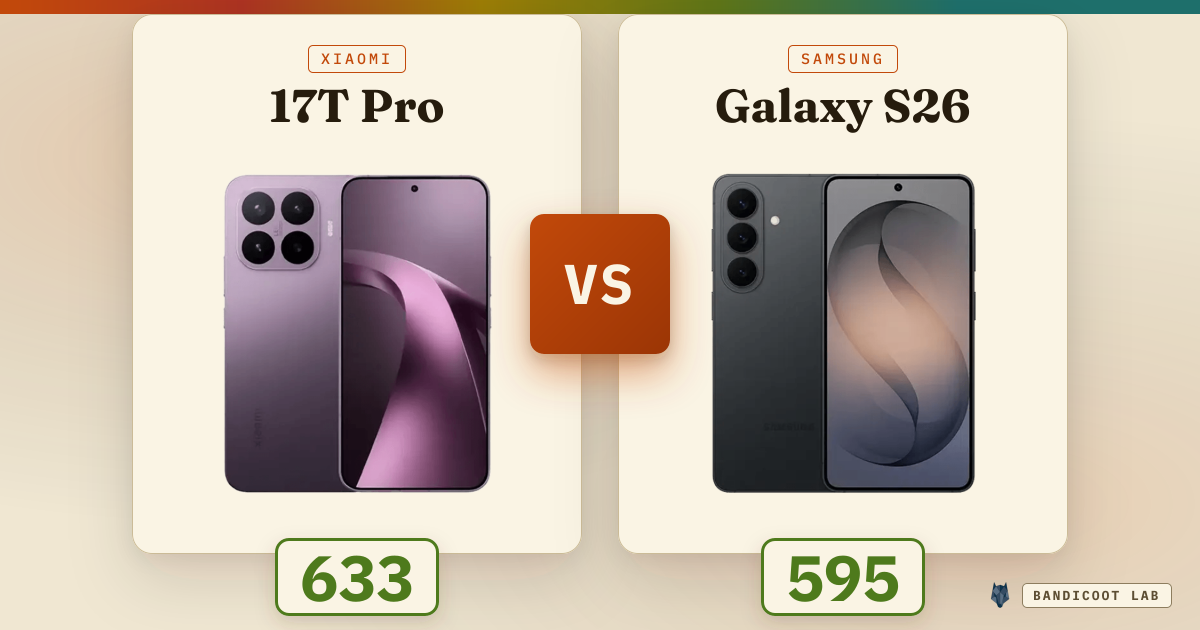
Xiaomi 17T Pro vs Samsung Galaxy S26
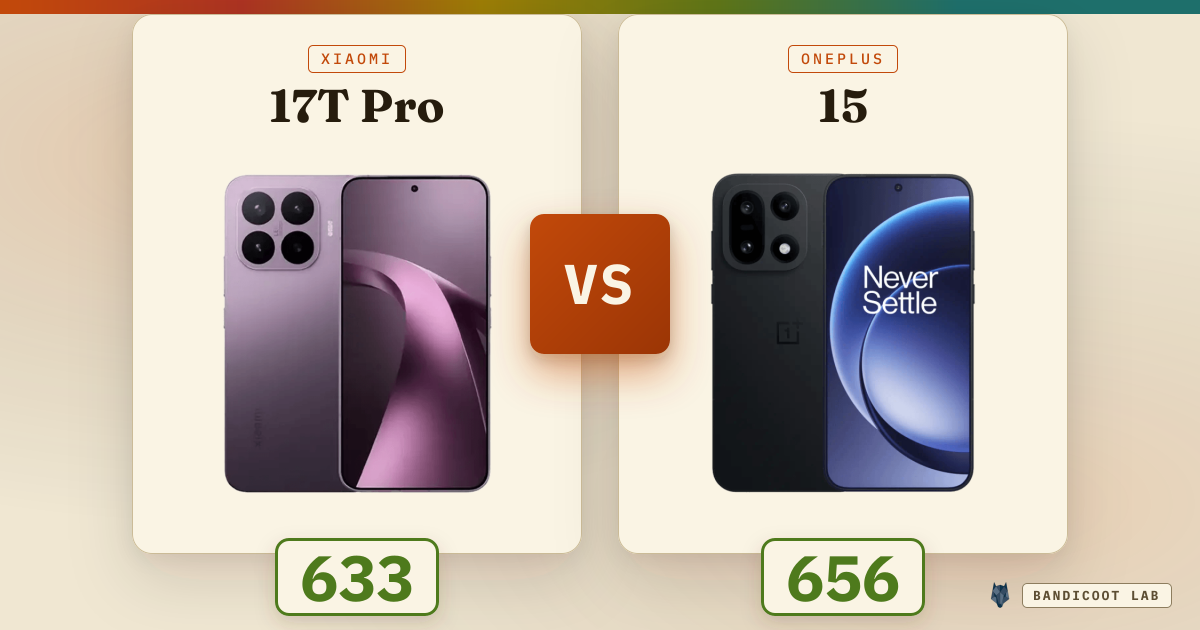
Xiaomi 17T Pro vs OnePlus 15
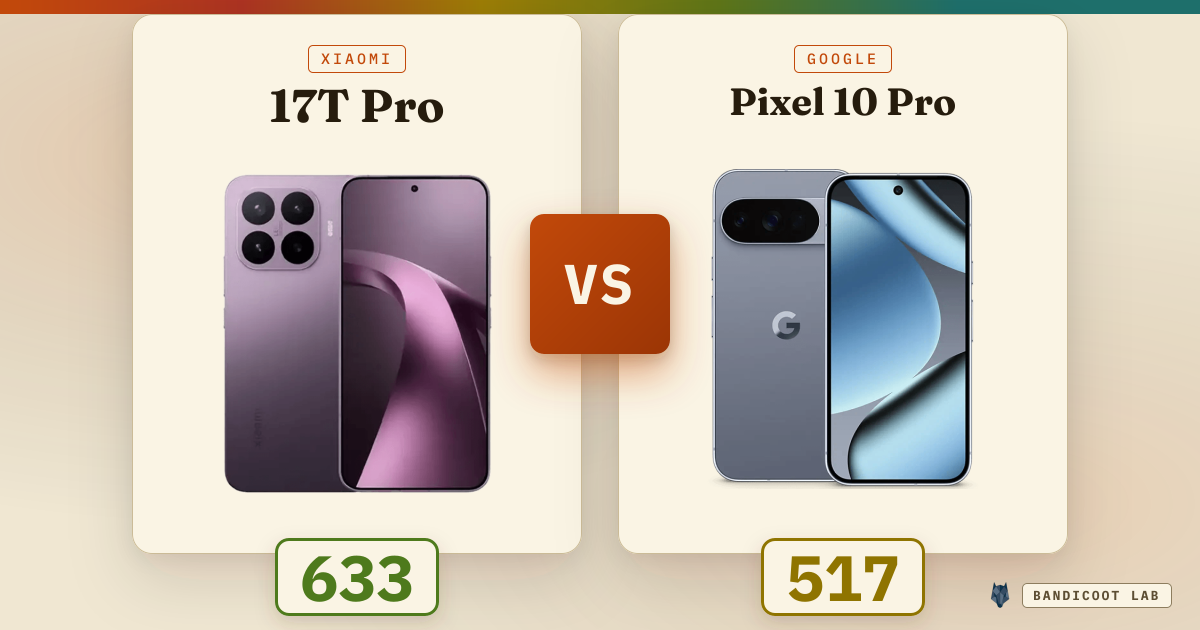
Xiaomi 17T Pro vs Google Pixel 10 Pro