Google Pixel 11 Pro Fold vs Samsung Galaxy Z Fold 8
Samsung
Pixel 11 Pro Fold
Galaxy Z Fold 8
Ranked #45 of 61
Ranked #19 of 61
Overall
Overall

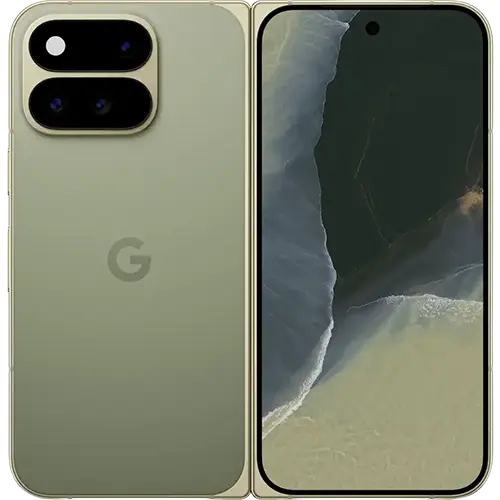
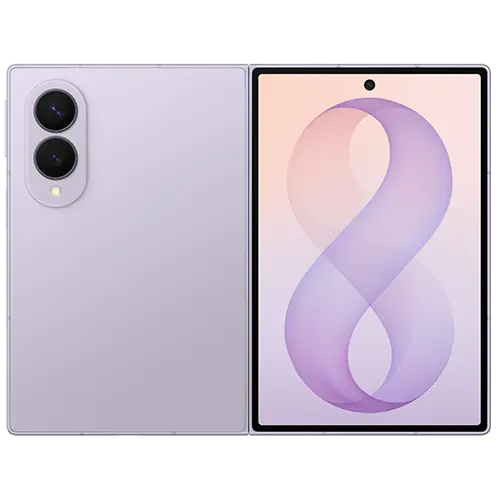
The Pixel 11 Pro Fold and Galaxy Z Fold 8 cost the same money: $1,899 and $1,899.99. Both are large-screen foldables targeting the same buyer, someone who wants a tablet-sized display for productivity and media plus a phone-sized cover screen for everything else. Google's version opens into a nearly square inner display; Samsung's unfolds into a wider 4:3 rectangle in a lighter, more compact body.
The Galaxy Z Fold 8 leads in most of the fundamentals. Its processor is substantially faster, battery life is longer across every test, wired charging is quicker, and it unlocks nearly instantly. The Pixel 11 Pro Fold has the better display on both screens, brighter and more color-accurate, and the only dedicated telephoto lens between the two, giving it a meaningful zoom advantage. Its microphone is exceptional. Their camera systems end up close overall, with Samsung's rear lenses producing more natural color and better dynamic range while the Pixel's front cameras are sharper and its telephoto fills a gap Samsung doesn't address.
Design
| Google Pixel 11 Pro Fold | Samsung Galaxy Z Fold 8 | |
|---|---|---|
| Specifications | ||
| Dimensions (folded) | 155.2 x 76 x 10.1 mm | 81.9 x 123.9 x 9.7 mm |
| Dimensions (unfolded) | 155.2 x 150.4 x 5 mm | 161.4 x 123.9 x 4.5 mm |
| Weight | 239g | 201g |
| IP Rating | IP68 | IP48 |
| Frame | Aluminum | Aluminum |
| Front | Ultra Thin Glass (inner) / Glass ceramic (outer) | Gorilla Glass Victus Ceramic 3 |
| Back | Composite matte | Gorilla Glass Victus 2 |
| Screen-to-body ratio (inner) | 88.4% | 89.0% |
| Screen-to-body ratio (outer) | 87.9% | 86.9% |
Folded, these phones have very different proportions. The Pixel measures 155.2 x 76 x 10.1mm, tall and narrow, shaped like a conventional phone. The Samsung folds to 81.9 x 123.9 x 9.7mm, shorter and wider. Unfolded, the Pixel opens to 155.2 x 150.4 x 5mm, nearly square. The Samsung extends to 161.4 x 123.9 x 4.5mm in a 4:3 rectangle, half a millimeter thinner.
Weight is a meaningful gap: 201g for Samsung versus 239g for the Pixel. Thirty-eight grams is about the weight of four AA batteries.
Both use aluminum frames. The Pixel pairs ultra thin glass on the inner display with glass ceramic on the outer and a composite matte back. Samsung uses Gorilla Glass Victus Ceramic 3 on the front and Gorilla Glass Victus 2 on the back, glass on both sides with established scratch resistance. The Pixel's composite back trades scratch resistance for shatter resistance. The Pixel carries an IP68 rating: fully dust-tight and submersible to the rated depth, typically 1.5 meters for 30 minutes. Samsung's IP48 matches the submersion rating but offers less dust protection. Level 4 guards against objects over 1mm; level 6 is completely sealed against dust. For a device with a hinge, the dust-sealing difference could matter over time.
Bandicoot Lab doesn't formally test design or durability. Everything here describes published specifications.
Display
Inner
| Google Pixel 11 Pro Fold (Inner) | Samsung Galaxy Z Fold 8 (Inner) | |
|---|---|---|
584/ 881 | 559/ 881 | |
The Pixel's inner display is an 8-inch LTPO OLED at 2076 x 2152 resolution (372 pixels per inch) with a near-square 9.33:9 aspect ratio and 88.4% screen-to-body ratio. Samsung's is a 7.6-inch Dynamic LTPO AMOLED 2X at 2448 x 1848 (404 PPI) in 4:3, with 89% screen-to-body ratio. Both run 1–120Hz adaptive refresh. Samsung has the higher pixel density by 32 PPI.
Brightness favors the Pixel. It peaks at 1,427 nits in manual mode and 3,592 nits for HDR content in auto brightness. Samsung reaches 740 nits manual and 3,469 nits HDR. The manual brightness gap is close to double. That difference shows up outdoors when auto brightness hasn't kicked in or isn't responding quickly. HDR peaks are closer, but the Pixel still edges ahead. Across different HDR window sizes, the Pixel holds 57.6% of its peak brightness as the bright area grows, while Samsung holds 45%. Both sustain brightness well during a 30-minute HDR session: 97.7% for the Pixel, 98.7% for Samsung. Samsung goes dimmer at minimum brightness, 0.93 nits versus the Pixel's 1.77 nits, a small advantage for nighttime reading.
Color accuracy is stronger on the Pixel's inner display. In its best-calibrated mode, colors track reference closely enough that most people won't see a deviation. Samsung's inner panel drifts slightly more; neutral tones may lean a touch warm or cool, and certain saturated hues pull off-target. Both cover sRGB almost completely (99.9% Pixel, 99.6% Samsung) and reach into the wider P3 gamut (79.1% Pixel, 76.9% Samsung).
Tone mapping differs. Samsung boosts HDR highlights aggressively, pushing them noticeably brighter than how content was mastered, but starts clipping at 80% of the input luminance range. The top 20% of the intended HDR signal gets compressed. The Pixel applies a lighter boost and doesn't clip until 95%, preserving much more highlight detail. If faithful HDR rendering matters to you, the Pixel is closer to what the creator intended.
Touch latency is 15.4ms for the Pixel and 16.3ms for Samsung. Under a millisecond apart, and imperceptible in practice.
Outer
| Google Pixel 11 Pro Fold (Outer) | Samsung Galaxy Z Fold 8 (Outer) | |
|---|---|---|
693/ 881 | 560/ 881 | |
The Pixel's cover display is 6.5 inches at 1080 x 2342 (399 PPI) in a 19.5:9 aspect ratio, a conventional phone shape. Samsung's is 5.5 inches at 1248 x 1972 (428 PPI) in 10:16, wider and shorter in proportion. Both run 1–120Hz. Screen-to-body ratio is 87.9% for the Pixel and 86.9% for Samsung. Samsung has the higher pixel density (428 versus 399 PPI). The Pixel's cover screen is an inch larger diagonally, making it more usable as a standalone display for messaging, maps, or quick tasks without unfolding.
The Pixel's outer display scores slightly higher on brightness than its own inner panel. Samsung's outer display drops substantially from its inner screen, a notable weakness for outdoor use on the cover display. The Pixel's outer screen is the most color-accurate display between both phones, tracking reference very closely. Samsung's cover display is more accurate than its own inner panel but still trails the Pixel by a visible margin.
Touch responsiveness is consistent across both displays on the Pixel. Samsung's outer screen is measurably less responsive than its inner display.
Performance
| Google Pixel 11 Pro Fold | Samsung Galaxy Z Fold 8 | |
|---|---|---|
478/ 1012 | 887/ 1012 | |
The Pixel 11 Pro Fold runs Google's Tensor G6 with 16GB of RAM. The Galaxy Z Fold 8 uses Qualcomm's Snapdragon 8 Elite Gen 5, available with 12GB or 16GB of RAM.
The gap is large. In GeekBench 6 single-core, Samsung scores 3,646 versus the Pixel's 2,706, a 35% lead. Multi-core widens it: 11,070 versus 6,648, a 66% advantage. Browser performance (Speedometer) more than doubles: 53.3 to 24.8. You'll feel this in demanding apps, split-screen multitasking, and anything that pushes multiple cores. For everyday tasks like messaging, scrolling, and simple apps, both are responsive enough.
GPU performance favors Samsung even more. Samsung's peak Wild Life Extreme score of 7,126 more than doubles the Pixel's 3,478. Gaming at high graphical settings runs meaningfully smoother on the Samsung. The Pixel holds GPU output more consistently under sustained load: 72.3% stability versus Samsung's 47.1%. Samsung throttles to roughly half its peak during extended stress testing, while the Pixel holds near three-quarters. For a 20-minute gaming session, Samsung starts much higher but ends closer to where the Pixel began. Samsung also posts a Solar Bay ray-tracing score of 12,769 at 52.6% stability; the Pixel doesn't return a Solar Bay result.
Camera
| Google Pixel 11 Pro Fold | Samsung Galaxy Z Fold 8 | |
|---|---|---|
426/ 587 | 430/ 587 | |
These two phones reach nearly identical overall camera scores through very different setups. Samsung fields two rear lenses: a 50-megapixel f/1.8 main and a 50-megapixel f/1.9 ultrawide, both on relatively large sensors. The Pixel carries three: a 48-megapixel f/1.7 main, a 10.5-megapixel f/2.2 ultrawide on a small sensor, and a 10.8-megapixel f/3.1 telephoto at 5x. Both phones have 10-megapixel front cameras on each display. Samsung's max zoom is 10x, all digital crop from the main sensor. The Pixel reaches 30x, extending optically through its telephoto before cropping digitally. Neither phone's camera system is near the top of the field. Foldables face physical constraints on sensor and lens packaging that slab flagships don't.
Sharpness splits along lens lines. The Pixel's main camera resolves slightly more detail and holds up better in low light. Samsung's ultrawide is sharper, especially in dim conditions, thanks to its much larger sensor. At the long end of the zoom range, the Pixel's telephoto makes a serious difference. Past 5x, Samsung is cropping from its main sensor and softness accumulates quickly. At 10x, the Pixel is past the telephoto's native range and into digital crop territory. It still retains more usable detail than Samsung's 10x output. Past 10x, only the Pixel can go further. The Pixel's front cameras are sharper on both displays by a clear margin.
Color rendering differs more in character than in total quality. The Pixel pushes saturation harder across all its lenses, producing vivid, punchy images that become increasingly oversaturated in lower light. Samsung is more restrained: nearly neutral in bright and moderate light, sometimes undersaturating in dim conditions. Skin tones are more accurate on Samsung's main camera in moderate indoor light, while the Pixel's telephoto produces the most accurate skin tones of any lens on either phone. Hue accuracy degrades on both phones as light gets warmer and dimmer. On the Pixel's main camera, this correlates with increasing cool-shift correction errors under warm light sources. Samsung's hue errors build more gradually and evenly, pointing to sensor-level limitations rather than white balance correction artifacts.
Main
| Google Pixel 11 Pro Fold (Main) | Samsung Galaxy Z Fold 8 (Main) | |
|---|---|---|
452/ 722 | 517/ 722 | |
The Pixel's 48-megapixel main camera (f/1.7, 24mm, 1/1.56-inch sensor) handles 1x through 5x before handing off to the telephoto. Samsung's 50-megapixel main (f/1.8, 23mm, same sensor size) covers 1x all the way to 10x, since there's no telephoto to take over.
The Pixel resolves more detail in bright light and holds the advantage as conditions dim. In low light, the gap grows as Samsung's output softens while the Pixel maintains better-defined edges and textures. Both crop cleanly through the lower zoom range. The Pixel only needs to stretch to 5x before the telephoto takes over, keeping main-sensor quality high. Samsung pushes its main sensor all the way to 10x. Detail falls off progressively past about 5x, where the diminishing pixel count starts to show.
Color character separates these two lenses clearly. The Pixel renders vivid, saturated images across all lighting, and the saturation boost intensifies in dim conditions. Samsung's output is closer to what the eye sees: nearly neutral in good light, leaning slightly muted in dim conditions. Skin tones are more accurate on Samsung in moderate indoor light. The Pixel's skin tones drift consistently across all conditions. Hue accuracy degrades on both as light gets warmer. On the Pixel, the shifts correlate with white balance overcorrecting toward cool tones under warm light. Samsung's hue errors build more evenly, suggesting the sensor itself rather than the processing.
Samsung handles dynamic range more cleanly. Both cameras clip highlights, but Samsung preserves smoother transitions from shadow to highlight with fewer tonal artifacts. High-contrast scenes retain more depth and separation on the Samsung. The Pixel captures a similar breadth from light to dark, but transitions are less controlled. Video stabilization favors the Pixel, which holds handheld footage steadier on the main camera.
Ultrawide
| Google Pixel 11 Pro Fold (Ultrawide) | Samsung Galaxy Z Fold 8 (Ultrawide) | |
|---|---|---|
407/ 722 | 528/ 722 | |
Samsung's ultrawide is a 50-megapixel f/1.9 lens with a 1/2.5-inch sensor, substantially larger than the Pixel's 10.5-megapixel f/2.2 on a 1/3.4-inch sensor. Samsung's focal length is 14mm; the Pixel's is 13mm, slightly wider.
Sharpness is close in bright light. In low light, Samsung's ultrawide barely drops. The larger sensor and higher megapixel count keep it resolving fine detail where the Pixel begins to soften. That kind of low-light consistency is uncommon for an ultrawide lens.
Samsung's ultrawide renders colors with a slight oversaturation in bright and moderate light, trending toward neutral as light drops. The Pixel's ultrawide shows a noticeable cool cast in bright outdoor light that disappears under warmer indoor lighting, a white balance correction artifact rather than a sensor characteristic. Hue accuracy is modestly better on Samsung across all conditions. Both ultrawides produce noticeably off skin tones in bright light, improving as conditions dim.
Dynamic range is Samsung's clearest advantage at this focal length. Highlight-to-shadow transitions are cleaner, with fewer tonal irregularities. The Pixel's ultrawide shows more tonal artifacts in high-contrast scenes. The Pixel stabilizes ultrawide video more effectively, with less visible jitter in handheld footage.
Telephoto
| Google Pixel 11 Pro Fold (Telephoto) | Samsung Galaxy Z Fold 8 (Telephoto) | |
|---|---|---|
524/ 722 | — | |
Only the Pixel 11 Pro Fold has a telephoto: 10.8 megapixels, f/3.1, at 112mm for a 5x optical zoom. It covers 5x through the maximum 30x digital zoom. The Galaxy Z Fold 8 has no telephoto lens. All zoom past 1x is digital crop from its main sensor, maxing out at 10x.
At 5x, the Pixel's telephoto resolves good detail in bright light, with expected falloff in mid and low light from the small 1/3.2-inch sensor. Color accuracy is the best of any lens on either phone: hues stay consistent across lighting, and skin tones are closer to accurate than on any other camera in the lineup. The telephoto carries a slightly cool, consistent tone. Dynamic range is strong, with smooth shadow-to-highlight transitions that handle high-contrast subjects well.
Past 5x, detail degrades as digital crop takes over from the 10.8-megapixel sensor. At 10x, output is still usable. At 20x and beyond, softness becomes obvious. At exactly 10x, the comparison between the Pixel's telephoto crop and Samsung's main-camera crop is closer than you'd expect, since Samsung is working from 50 megapixels at a nearer focal length. Past 10x, Samsung can't go at all. Stabilization on the telephoto is limited; handheld shake at 5x and beyond isn't fully compensated.
Front Inner
| Google Pixel 11 Pro Fold (Front Inner) | Samsung Galaxy Z Fold 8 (Front Inner) | |
|---|---|---|
404/ 722 | 332/ 722 | |
Both phones place a 10-megapixel f/2.2 camera inside the fold. The Pixel's sits at 23mm; Samsung's is wider at 18mm.
The Pixel is significantly sharper. In bright light, the difference is clear; in moderate light, Samsung's output softens considerably while the Pixel holds steady. Both drop in low light, but the Pixel retains more usable detail throughout.
Samsung's inner front camera renders colors more neutrally, with saturation staying close to natural across conditions. The Pixel pushes saturation modestly higher. Skin tones are more accurate on Samsung in bright and moderate light. Both cameras struggle with hue accuracy as light dims. The Pixel shifts toward warm reds in low light, an overcorrection artifact under warm, dim conditions. Samsung's hue accuracy degrades even further in the dimmest conditions, driven more by sensor-level limitations.
Dynamic range is broader on the Pixel's inner front camera. It captures more separation between shadows and highlights. Samsung's inner front camera has limited range; backlighting and high-contrast selfie situations will blow highlights or crush shadows more easily. Neither inner front camera provides effective video stabilization.
Front Outer
| Google Pixel 11 Pro Fold (Front Outer) | Samsung Galaxy Z Fold 8 (Front Outer) | |
|---|---|---|
444/ 722 | 336/ 722 | |
The outer front cameras are both 10 megapixels at f/2.2. The Pixel's is at 23mm, Samsung's at 24mm.
Sharpness favors the Pixel, with good detail maintained from bright through low light. Samsung's outer front camera is softer across the board and drops more steeply in low light. Compared to their own inner front cameras, both phones show some sharpness reduction on the outer variant, but the gap is smaller on the Pixel.
Samsung maintains more consistent skin tones across lighting conditions. The Pixel's outer front camera shows considerable skin tone error in bright light, diminishing in dimmer settings. Hue accuracy degrades on both phones in low light. Samsung's outer front camera develops a combined warm-red push and cool blue-yellow shift under warm dim lighting, a white balance overcorrection pattern. Dynamic range is again broader on the Pixel.
The Pixel's outer front camera provides noticeably better video stabilization than Samsung's. For vlogging or video calls from the cover screen, the Pixel holds the frame considerably steadier.
Battery
| Google Pixel 11 Pro Fold | Samsung Galaxy Z Fold 8 | |
|---|---|---|
434/ 836 | 622/ 836 | |
Both phones carry nearly identical capacities, 4,806mAh in the Pixel and 4,800mAh in Samsung, but the Galaxy Z Fold 8 extracts significantly more life from that energy.
In video playback on the inner display, Samsung lasts 27.76 hours versus the Pixel's 21.86 hours, about six more hours. On the outer display, the gap widens: 37.67 hours for Samsung versus 27.17 for the Pixel. Samsung's outer display can run continuous video for over a day and a half. The Pixel still gets more than a full day on its outer screen, which is respectable, but the Samsung's advantage is clear.
Web browsing drain over five hours is close on both: 25% for Samsung, 27% for the Pixel. Gaming tells a different story. During the GPU stress test, Samsung drains 19% compared to the Pixel's 25%, a meaningful efficiency advantage for extended sessions. Overnight standby confirms the pattern: Samsung loses 2% over eight hours, the Pixel loses 4%.
Samsung is more efficient across every battery metric. Given the nearly identical capacities, the difference comes down to the Snapdragon 8 Elite Gen 5's power management and Samsung's display efficiency. If battery life is a priority, Samsung has a consistent and comfortable lead.
Charging
| Google Pixel 11 Pro Fold | Samsung Galaxy Z Fold 8 | |
|---|---|---|
336/ 837 | 313/ 837 | |
Samsung supports 45W wired charging; the Pixel is rated at 30W. For wireless, the Pixel offers 25W charging with magnetic alignment, compatible with Qi2 and MagSafe-style pads that snap the phone into position. Samsung provides 20W standard wireless charging without magnetic alignment.
Wired, Samsung is faster at every checkpoint. It reaches 31% in 10 minutes versus the Pixel's 19%, and 71% at 30 minutes versus 56%. A quick morning top-up gives you meaningfully more on the Samsung.
Wireless charging favors the Pixel. Its magnetic alignment and higher wattage deliver 16% in 10 minutes and 41% in 30 minutes. Samsung manages 8% and 20% in the same periods. If wireless charging is part of your daily routine, the Pixel replenishes roughly twice as fast. The magnetic snap also means you don't have to check alignment.
Speaker
| Google Pixel 11 Pro Fold | Samsung Galaxy Z Fold 8 | |
|---|---|---|
678/ 897 | 691/ 897 | |
Samsung is louder at 78.5 dBA versus the Pixel's 74.8 dBA, an audible difference. Distortion is close: both stay under 6% THD.
The sound profiles differ. Samsung produces a fuller output with noticeably deeper bass extension. Music and video audio have more warmth and body. The Pixel tilts the opposite direction: brighter and more articulate in the upper frequencies, but thin in the low end. Vocals cut through cleanly on the Pixel, but bass-heavy content lacks presence. If you listen to music or watch movies on the phone's speakers, Samsung's fuller sound is the better experience. For podcasts and voice calls on speaker, the Pixel's clarity is a closer match.
Microphone
| Google Pixel 11 Pro Fold | Samsung Galaxy Z Fold 8 | |
|---|---|---|
1220/ 1220 | 719/ 1220 |
The Pixel 11 Pro Fold has an exceptionally even microphone response. It captures voice and ambient sound with minimal frequency coloring, making it well-suited for voice recording, video calls, and any situation where microphone fidelity matters. Samsung's microphone is above average and perfectly usable, but the Pixel's output is noticeably more natural and balanced.
Other
| Google Pixel 11 Pro Fold | Samsung Galaxy Z Fold 8 | |
|---|---|---|
| Biometrics | 270/ 1181 | 707/ 1181 |
| Data Transfer | 308/ 943 | 730/ 943 |
| Specifications | ||
| Biometric type | Fingerprint | Fingerprint |
| Ports | USB-C 3.2 | USB-C 3.2 |
| Storage | 256GB, 512GB, 1TB | 256GB, 512GB, 1TB |
The Galaxy Z Fold 8 unlocks much faster via fingerprint: 149ms average versus the Pixel's 389ms. Both use capacitive sensors. The Pixel's read speed is sluggish enough to notice. Samsung reads near-instantly. Neither phone has hardware-based face unlock.
Data transfer speeds favor Samsung substantially. Over USB-C 3.2, Samsung achieves 328 MB/s read and 284 MB/s write, compared to the Pixel's 126 MB/s read and 140 MB/s write. Large file transfers take roughly half the time on Samsung. Both phones offer 256GB, 512GB, and 1TB storage options.
Conclusion
The Galaxy Z Fold 8 is stronger across most of the areas that shape everyday experience. It's faster, lasts longer on a charge, charges more quickly over a cable, unlocks instantly, and moves files at more than double the speed. It's also 38 grams lighter. Its rear cameras produce more natural color and cleaner dynamic range. If you need a foldable that's fast, efficient, and dependable across the basics, Samsung covers more ground.
The Pixel 11 Pro Fold earns its price in areas that aren't easy to find elsewhere. Its display is brighter and more color-accurate on both panels, with more faithful HDR rendering. The 5x telephoto gives it zoom capability Samsung can't replicate. The front cameras are sharper. The microphone is in a class of its own. And magnetic wireless charging at 25W runs circles around Samsung's 20W standard wireless.
Where you land depends on what you'd miss. If battery anxiety, raw speed, or biometric responsiveness would bother you daily, the Samsung is the more complete package. If display quality, zoom versatility, and front-camera sharpness matter more, and you'd take advantage of that microphone, the Pixel's strengths are harder to replicate at any price.
FAQ
Does the Pixel 11 Pro Fold or Galaxy Z Fold 8 have better battery life?
The Galaxy Z Fold 8 lasts longer in every battery test despite a nearly identical capacity (4,800mAh versus 4,806mAh). Inner-display video playback runs 27.76 hours on the Samsung versus 21.86 hours on the Pixel, and outer-display playback runs 37.67 hours versus 27.17 hours. Overnight standby drain is 2% on the Samsung and 4% on the Pixel.
Which foldable has the better zoom camera, the Pixel 11 Pro Fold or Galaxy Z Fold 8?
The Pixel 11 Pro Fold, because it has a dedicated 5x telephoto and reaches 30x. The Galaxy Z Fold 8 has no telephoto, so all of its zoom is a digital crop from the main sensor that stops at 10x. At 10x the Pixel still keeps more usable detail. For the main and ultrawide lenses, the Samsung has more natural color and cleaner dynamic range.
Is the Galaxy Z Fold 8 better than the Pixel 11 Pro Fold for gaming?
The Galaxy Z Fold 8 has the faster GPU. Its peak Wild Life Extreme score of 7,126 is more than double the Pixel's 3,478, and it drains 19% of the battery in the GPU stress test versus 25% for the Pixel. The Pixel holds its output more steadily under sustained load, at 72.3% stability versus 47.1% for the Samsung. The Samsung throttles to roughly half its peak but still starts far ahead.
Which has the better screen, the Pixel 11 Pro Fold or the Galaxy Z Fold 8?
The Pixel 11 Pro Fold has the better display on both screens. Its inner panel reaches 1,427 nits in manual brightness versus 740 nits for the Samsung, and its colors track reference more closely. The Pixel also keeps more HDR highlight detail, clipping at 95% of the input range versus 80% on the Samsung. The Samsung has higher pixel density (404 PPI inner versus 372 PPI) and goes dimmer for night reading.
Does the Pixel 11 Pro Fold or Galaxy Z Fold 8 charge faster?
It depends on whether you charge with a cable or wirelessly. With a cable, the Galaxy Z Fold 8 (45W) reaches 31% in 10 minutes and 71% in 30 minutes, versus 19% and 56% for the Pixel (30W). Wirelessly, the Pixel's 25W magnetic charging reaches 16% in 10 minutes and 41% in 30 minutes, versus 8% and 20% for the Samsung's 20W non-magnetic charging.
Which is more durable and easier to carry, the Pixel 11 Pro Fold or Galaxy Z Fold 8?
The Pixel 11 Pro Fold has an IP68 rating for full dust protection, while the Galaxy Z Fold 8 is IP48 and has less dust sealing around the hinge. The Samsung has glass on both outer sides and weighs 201g, versus 239g for the Pixel with its composite back. The Samsung is the lighter, more compact option, and the Pixel is better sealed.
Related
Samsung
Galaxy Z Fold 8
Pixel 11 Pro Fold

Samsung
Galaxy S26 Ultra
Samsung
Galaxy S26+
Samsung
Galaxy Z Fold 8 Ultra
Samsung
Galaxy S26
Pixel 11 Pro XL
Samsung
Galaxy Z Flip 8
Pixel 11 Pro
Pixel 11
Pixel 10a

Google Pixel 11 Pro Fold vs Samsung Galaxy Z Fold 8 Ultra