Google Pixel 11 Pro XL vs Samsung Galaxy S26 Ultra

Samsung
Pixel 11 Pro XL
Galaxy S26 Ultra
Ranked #24 of 61
Ranked #7 of 61
Overall
Overall

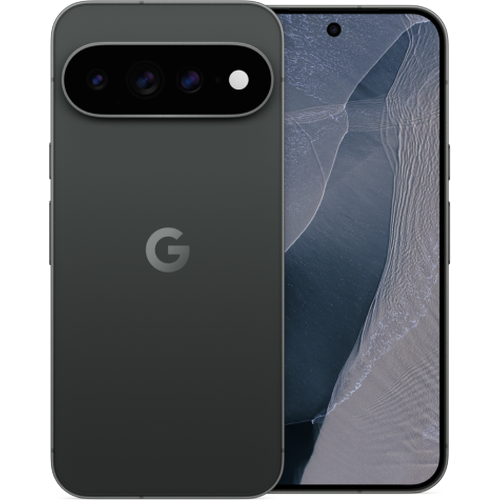
The Google Pixel 11 Pro XL costs $1,299. The Samsung Galaxy S26 Ultra costs $1,299.99. They're the largest phones from the two largest Android manufacturers, aimed at the same buyer: someone who wants the best their platform has to offer. Google's pitch is software: computational photography, AI features, a clean Android experience. Samsung's is hardware: more camera lenses, faster processing, a broader feature set.
The S26 Ultra is the stronger phone in more categories. It has a better camera system, a faster processor by a wide margin, and significantly faster data transfer speeds. The Pixel 11 Pro XL takes the display with higher brightness and better color accuracy, and it has a better speaker and a considerably better microphone. Battery life is nearly identical in total, though the two phones are efficient in different scenarios. If camera and performance are your priorities, Samsung is the clearer pick. If display quality and audio matter more, the Pixel has real advantages at the same price.
Design
| Google Pixel 11 Pro XL | Samsung Galaxy S26 Ultra | |
|---|---|---|
| Specifications | ||
| Dimensions | 162.7 x 76.5 x 8.5 mm | 163.6 x 78.1 x 7.9 mm |
| Weight | 226g | 214g |
| IP Rating | IP68 | IP68 |
| Frame | Aluminum | Aluminum |
| Front | Gorilla Glass Victus 2 | Gorilla Armor 2 |
| Back | Gorilla Glass Victus 2 | Gorilla Glass Victus 2 |
| Screen-to-body ratio | 89.6% | 91.5% |
Both phones are large. The Pixel 11 Pro XL measures 162.7 x 76.5 x 8.5mm and weighs 226g. The S26 Ultra is marginally taller and wider at 163.6 x 78.1mm but thinner at 7.9mm, and it weighs 12g less at 214g. Both use aluminum frames and Gorilla Glass Victus 2 on the back. The front glass differs: the Pixel uses Gorilla Glass Victus 2, while the Samsung uses Gorilla Armor 2, which adds anti-reflective properties.
The S26 Ultra has a 91.5% screen-to-body ratio versus 89.6% for the Pixel, which translates to thinner bezels relative to the screen. Samsung's 6.9-inch display uses a 19.5:9 aspect ratio; the Pixel's 6.8-inch panel is slightly narrower at 20:9. Both carry an IP68 rating, meaning they're dust-tight and rated for submersion in fresh water to at least 1.5 meters for 30 minutes.
Bandicoot Lab doesn't formally test design or durability. This section describes what's on paper: materials, dimensions, and ratings, not hands-on impressions.
Display
| Google Pixel 11 Pro XL | Samsung Galaxy S26 Ultra | |
|---|---|---|
718/ 881 | 634/ 881 | |
The Pixel has a 6.8-inch LTPO OLED at 1344 x 2992 (486 pixels per inch). The S26 Ultra has a 6.9-inch Dynamic LTPO AMOLED 2X at 1440 x 3120 (500 PPI). Both refresh from 1 to 120Hz. Samsung's slightly higher resolution and 500 PPI give it a marginal pixel density edge, though at these sizes and typical viewing distances the difference isn't something most people will notice.
Brightness is where the Pixel separates itself. In manual mode, the Pixel reaches 1,403 nits versus 976 nits for the Samsung. For HDR content with auto brightness, the Pixel peaks at 3,577 nits to the Samsung's 3,023 nits. The Pixel also holds its brightness more consistently as HDR window sizes change: 68.3% stability versus 48.8%, meaning the Samsung's brightness drops more when bright areas of the frame expand. Over sustained 30-minute HDR playback, both panels hold steady at 98.1% and 98.6% respectively. At minimum brightness, the Samsung goes slightly dimmer at 1.21 nits versus 1.9 nits, a small advantage for dark-room use.
Color accuracy favors the Pixel. In its best display mode, colors stay close to reference with neutral whites and minimal visible drift across the spectrum. The Samsung is less precise: colors shift more from their targets, though the difference shows mostly in side-by-side comparison. Both cover sRGB nearly fully (Pixel 98.9%, Samsung 97.9%) and reach similar DCI-P3 coverage (Pixel 74.4%, Samsung 72.4%). The two phones handle HDR tone mapping differently. The Samsung aggressively boosts highlights above their mastered brightness, which makes HDR content look punchier, but it begins clipping highlight detail at a relatively low input level. The Pixel applies a lighter boost and preserves highlight detail much further before clipping. Samsung's approach makes HDR pop; the Pixel stays closer to the creator's intent.
Touch latency is 9.9ms for the Pixel and 21ms for the Samsung. The Pixel's response is about twice as fast, and you can feel it in fast scrolling and gaming. The Samsung's 21ms isn't slow by most standards, but the Pixel's sub-10ms response is genuinely quick.
Performance
| Google Pixel 11 Pro XL | Samsung Galaxy S26 Ultra | |
|---|---|---|
494/ 1012 | 908/ 1012 | |
The Pixel 11 Pro XL runs Google's Tensor G6 with 12GB of RAM. The S26 Ultra uses Qualcomm's Snapdragon 8 Elite Gen 5 with 12GB. Both are available with 12GB or 16GB of RAM and 256GB, 512GB, or 1TB storage.
The performance gap is wide. In GeekBench 6, the S26 Ultra scores 3,685 single-core and 11,198 multi-core versus the Pixel's 2,645 and 7,269. That's roughly 40% higher in single-core and 54% in multi-core. GPU performance is even more lopsided: the S26 Ultra reaches 7,802 in Wild Life Extreme to the Pixel's 3,425. Browser performance follows the same pattern at 46 versus 26.2 in Speedometer. The Pixel's Tensor G6 holds 76.8% of its peak GPU performance under sustained load, compared to 49.8% for the Snapdragon. The Samsung's throttled output is still above the Pixel's peak, so better stability doesn't close the practical gap.
For everyday tasks, both phones feel responsive. The Samsung's advantage surfaces in demanding workloads: heavy gaming, video export, and large multitasking stacks.
Camera
| Google Pixel 11 Pro XL | Samsung Galaxy S26 Ultra | |
|---|---|---|
468/ 587 | 558/ 587 | |
The S26 Ultra has five cameras: a 200-megapixel f/1.4 main (23mm), a 50-megapixel f/1.9 ultrawide (14mm), a 10-megapixel f/2.4 3x telephoto (67mm), a 50-megapixel f/2.9 5x telephoto (111mm), and a 12-megapixel f/2.2 front camera. The Pixel has four: a 50-megapixel f/1.68 main (25mm), a 48-megapixel f/1.7 ultrawide (13mm), a 48-megapixel f/2.8 5x telephoto (106mm), and a 42-megapixel f/2.2 front camera.
Samsung's main camera resolves more detail across all lighting conditions. The Pixel's strongest lens is its 5x telephoto, which holds high detail even in low light. Both ultrawides are close in sharpness. The Pixel's 42-megapixel front camera is sharper than Samsung's 12-megapixel selfie camera. At extreme digital zoom levels beyond 10x, the Pixel pushes to 120x and holds more usable detail at its maximum than the Samsung does at its 100x ceiling. Deep zoom at these magnifications is more about identifying a subject than producing a good photo, but the Pixel extracts more from its crop.
For color, the Pixel tends vivid. Saturation is pushed noticeably beyond neutral, especially in bright light. Samsung is more restrained, pulling close to neutral in mid and low light with moderate saturation in daylight. Samsung carries a consistent warm, faintly rosy tone across its cameras; the Pixel runs slightly cool in daylight and shifts warm in low light. Both phones produce noticeable skin tone errors in bright light across most lenses. The Pixel's skin rendering improves in mid and low light; Samsung's stays more consistent but isn't more accurate overall. Dynamic range is one of Samsung's clearest strengths. Its main and telephoto cameras handle high-contrast scenes with smooth tonal gradations, preserving detail in both highlights and shadows without flattening the image. The Pixel's main camera clips highlights more readily and has rougher tonal transitions.
Main
| Google Pixel 11 Pro XL (Main) | Samsung Galaxy S26 Ultra (Main) | |
|---|---|---|
467/ 722 | 711/ 722 | |
Samsung's 200-megapixel main camera resolves significantly more detail than the Pixel's 50-megapixel sensor across all lighting conditions. The gap narrows as light drops but Samsung stays ahead. Samsung's main covers 1x to 3x before handing off to a telephoto. The Pixel's main handles 1x through 5x, a much wider digital crop range. At 2x, both hold up well. Past 3x, the Pixel is cropping its smaller sensor hard, and softening becomes visible. Samsung avoids this because it's already on a dedicated telephoto lens by 3x.
Samsung's main also delivers stronger dynamic range, preserving highlight and shadow detail in high-contrast scenes with cleaner gradations. The Pixel clips highlights more aggressively, and tonal transitions show more unevenness. Both phones push saturation in bright light; the Pixel more so. Samsung's main has a persistent warm lean, a slight rosy cast visible in white surfaces and neutral tones, and this doesn't shift much across lighting conditions. The Pixel runs slightly cool in daylight and shifts warm in low light. That warm shift follows a white balance overcorrection pattern: the processing overcompensates for warm ambient light and pushes output too far in the other direction. Both phones produce noticeable skin tone errors in bright light. In mid light, the Pixel's skin tones improve to a good level while Samsung's improve less.
Samsung's main camera has noticeably better video stabilization. The Pixel's main shows more shake in handheld footage, a genuine weakness for its most-used lens.
Ultrawide
| Google Pixel 11 Pro XL (Ultrawide) | Samsung Galaxy S26 Ultra (Ultrawide) | |
|---|---|---|
397/ 722 | 542/ 722 | |
The Pixel mounts a 48-megapixel f/1.7 ultrawide at 13mm. The Samsung uses a 50-megapixel f/1.9 at 14mm. Sharpness is close. Samsung has a slight edge, and both hold detail well into mid-light conditions. Samsung retains a bit more in low light.
Dynamic range on the ultrawides follows the same pattern as the main cameras: Samsung keeps more shadow detail and handles highlights more gracefully. Neither ultrawide matches its respective main camera's dynamic range, which is typical for wider lenses.
Color accuracy drops on both ultrawides relative to their main lenses. The Pixel's ultrawide pushes skin tones off-target in bright and mid light, with a pink and yellow shift that grows worse under warmer lighting. This is a white balance correction issue. Samsung's ultrawide has even larger skin tone errors in bright light, and hue accuracy dips sharply in mid light before partially recovering in the dark. Samsung's video stabilization is better from the ultrawide as well.
Telephoto
| Google Pixel 11 Pro XL (Telephoto) | Samsung Galaxy S26 Ultra (Telephoto Short) | Samsung Galaxy S26 Ultra (Telephoto Long) | |
|---|---|---|---|
629/ 722 | 589/ 722 | 676/ 722 | |
Samsung has two telephoto lenses. The short telephoto is a 10-megapixel f/2.4 at 67mm (3x) on a small 1/3.94-inch sensor. The long telephoto is a 50-megapixel f/2.9 at 111mm (5x) on a 1/2.52-inch sensor. The Pixel has one telephoto: 48 megapixels, f/2.8, 106mm (5x), on a 1/1.95-inch sensor, the largest telephoto sensor of the two phones.
Samsung's 3x lens resolves solid detail at its native length in bright light, but sharpness falls off more than any other lens here as light drops. The small sensor simply runs out of light. Hue accuracy also degrades in dimmer conditions, and the pattern points to a sensor limitation rather than white balance problems: color errors increase without a corresponding shift in warm-cool bias. Samsung's 5x telephoto is much stronger, resolving very high detail in bright and mid light. Skin tones from this lens are accurate in good lighting, the best among Samsung's rear cameras in those conditions. In the dark, skin tones deteriorate sharply and colors become noticeably muted.
The Pixel's 5x telephoto is the most color-accurate lens across both phones. It delivers high detail across all three lighting conditions, and its larger sensor holds up better in low light than Samsung's 5x. Skin tones stay accurate in mid and low light. There's a warm yellow shift in low light from white balance overcorrection, a pattern shared with the Pixel's other lenses, but the overall color performance is strong.
Dynamic range is close between the Pixel's 5x and Samsung's 5x. As zoom extends past the native 5x, the Pixel's larger sensor gives it more to crop from, and detail holds up better at 7x and 10x. Both telephoto systems have good stabilization. Samsung's 3x lens is particularly well-stabilized. The Pixel's telephoto is also steady, a welcome contrast with its weaker main camera stabilization.
Front
| Google Pixel 11 Pro XL (Front) | Samsung Galaxy S26 Ultra (Front) | |
|---|---|---|
463/ 722 | 415/ 722 | |
The Pixel's 42-megapixel front camera is sharper than Samsung's 12-megapixel front camera across all lighting conditions. It also has stronger dynamic range, preserving more highlight and shadow detail in high-contrast selfie scenarios like backlit shots.
Color is a split. Samsung's front camera has better hue accuracy in bright light and renders skin tones more accurately in good conditions. The Pixel's front camera has the weakest bright-light skin tone accuracy of any Pixel lens. In mid and low light, Samsung's front camera accuracy degrades more. Samsung's front camera takes on a cool, blue lean in low light. Both front cameras have close-to-neutral saturation, unlike their rear cameras. Samsung's front camera has better video stabilization.
Battery
| Google Pixel 11 Pro XL | Samsung Galaxy S26 Ultra | |
|---|---|---|
536/ 836 | 539/ 836 | |
The Pixel 11 Pro XL has a 5,115mAh battery; the S26 Ultra has 5,000mAh. Total capacity is close, and so are the overall battery results, but the two phones are efficient in different areas.
The Samsung lasts longer in video playback: 31.57 hours versus 28.75 for the Pixel. Both are strong numbers. Samsung's runtime could cover a transatlantic round trip of video with charge to spare. The Pixel's 28.75 hours still means roughly two full days of typical mixed use.
The Pixel is more efficient in web browsing, draining 20% over a five-hour test versus 24% for the Samsung. Gaming drain is closer: 22% for the Pixel, 24% for the Samsung, measured during a GPU stress test that pushes the Samsung's faster processor much harder. The biggest gap is standby. The Pixel drains just 4% over an eight-hour overnight idle; the Samsung loses 10%. If you leave your phone unplugged overnight, you'll notice the difference in the morning.
Charging
| Google Pixel 11 Pro XL | Samsung Galaxy S26 Ultra | |
|---|---|---|
456/ 837 | 486/ 837 | |
The S26 Ultra supports 60W wired charging; the Pixel tops out at 45W. Both offer 25W wireless charging, but the Pixel adds magnetic alignment compatible with Qi2 and MagSafe-style chargers, making it easier to position correctly on a wireless pad. The Samsung doesn't have magnetic alignment.
Samsung's higher wired wattage gives it a faster start: 34% in 10 minutes versus 29% for the Pixel. By 30 minutes, the gap nearly closes: 79% for Samsung, 77% for the Pixel. Wireless charging shows a similar convergence. Samsung reaches 18% in 10 minutes to the Pixel's 13%, but both land at 44% at the 30-minute mark.
Speaker
| Google Pixel 11 Pro XL | Samsung Galaxy S26 Ultra | |
|---|---|---|
897/ 897 | 857/ 897 | |
The Pixel 11 Pro XL is louder at 76.6 dBA versus 75.3 for the Samsung. It extends further in both bass and treble, with a brighter, more detailed high end. You'll hear more clarity in dialogue and more presence in music.
The Samsung's speaker is more evenly balanced. Its frequency response is smoother across the range, with fewer peaks and dips, and slightly lower distortion at 3.26% THD versus 3.79%. Samsung doesn't reach as low in bass, but its midrange is more consistent. Both are excellent phone speakers. The Pixel favors clarity and output; the Samsung favors evenness.
Microphone
| Google Pixel 11 Pro XL | Samsung Galaxy S26 Ultra | |
|---|---|---|
820/ 1220 | 566/ 1220 |
The Pixel 11 Pro XL has a considerably better microphone, with a more even frequency response that produces clearer voice capture during calls and video recording. The Pixel's microphone performs well above average; the Samsung's falls below average. If you frequently record audio or take calls on speaker, the Pixel's advantage here is meaningful.
Other
| Google Pixel 11 Pro XL | Samsung Galaxy S26 Ultra | |
|---|---|---|
| Biometrics | 687/ 1181 | 764/ 1181 |
| Data Transfer | 323/ 943 | 737/ 943 |
| Specifications | ||
| Biometric type | Fingerprint | Fingerprint |
| Ports | USB-C 3.2 | USB-C 3.2 |
| Storage | 256GB, 512GB, 1TB | 256GB, 512GB, 1TB |
Both phones use ultrasonic fingerprint sensors. The S26 Ultra unlocks at an average of 138ms; the Pixel at 153ms. A 15ms gap isn't perceptible in daily use. Neither phone has hardware-based face unlock.
Data transfer speeds are significantly different. The S26 Ultra reads at 332 MB/s and writes at 274 MB/s. The Pixel manages 128 MB/s read and 151 MB/s write. Both use USB-C 3.2, so the bottleneck on the Pixel appears to be storage implementation rather than the port. If you regularly transfer large files to a laptop, the Samsung is roughly twice as fast. Both phones are available in 256GB, 512GB, and 1TB storage with either 12GB or 16GB of RAM.
Conclusion
The Galaxy S26 Ultra wins in the categories that typically drive buying decisions: camera quality, processing power, and data speeds. Its main camera is sharper, its dual telephoto system covers more focal lengths, and its processor handles demanding tasks that the Tensor G6 simply can't keep up with. Samsung also charges slightly faster on a wire and offers more than double the file transfer throughput.
The Pixel 11 Pro XL earns its price elsewhere. Its display is brighter, more color-accurate, and about twice as responsive to touch input. Its speaker has more range and clarity. Its microphone is meaningfully better. Its 5x telephoto is the most color-accurate lens across either phone, and its standby battery efficiency is substantially better. The Pixel also supports magnetic wireless charging, which the Samsung lacks.
If your phone is primarily a camera, a gaming device, or a multitasking workhorse, the S26 Ultra is the stronger choice. If you care most about display quality, audio, and efficient idle battery use, the Pixel has genuine advantages at the same price.
FAQ
Does the Pixel 11 Pro XL or Galaxy S26 Ultra take better photos?
The S26 Ultra's main camera resolves more detail in all lighting, handles high-contrast scenes with smoother highlight and shadow detail, and has noticeably steadier handheld video. The Pixel 11 Pro XL's 5x telephoto is the most color-accurate lens on either phone and holds up better in low light than Samsung's 5x. The Pixel's front camera is also sharper. For general shooting the S26 Ultra is the stronger pick.
Is the Galaxy S26 Ultra really that much faster than the Pixel 11 Pro XL for gaming?
Yes. The S26 Ultra scores 7,802 in Wild Life Extreme against 3,425 for the Pixel, and its GeekBench 6 results are roughly 40% higher single-core and 54% higher multi-core. The Pixel holds 76.8% of its peak GPU output under sustained load versus 49.8% for the Samsung, but the Samsung's throttled output is still above the Pixel's peak. Both feel responsive in everyday use, so the gap shows up in heavy gaming and video export.
Which has better battery life, the Pixel 11 Pro XL or the S26 Ultra?
Overall they are nearly identical, but each wins in different scenarios. The S26 Ultra lasts longer in video playback at 31.57 hours versus 28.75 hours. The Pixel drains less in web browsing (20% versus 24% over five hours) and far less in overnight standby (4% versus 10% over eight hours).
Does the S26 Ultra charge faster than the Pixel 11 Pro XL?
Only at the start. The S26 Ultra's 60W wired charging reaches 34% in 10 minutes versus 29% for the Pixel's 45W, but by 30 minutes it's 79% versus 77%. Both support 25W wireless charging and reach 44% at 30 minutes, though the Pixel adds magnetic alignment that the Samsung lacks.
Which phone has the better screen, the Pixel 11 Pro XL or Galaxy S26 Ultra?
The Pixel 11 Pro XL has the better display overall. It reaches 1,403 nits in manual mode versus 976 for the Samsung, peaks at 3,577 nits in HDR versus 3,023, and shows more accurate color. Its touch latency is 9.9ms against 21ms. The S26 Ultra goes dimmer at minimum brightness (1.21 nits versus 1.9) and gives HDR content a punchier look, though it clips highlight detail sooner.
Is the Pixel 11 Pro XL better than the S26 Ultra for calls and speaker audio?
Yes, on balance. The Pixel's microphone is considerably better, with clearer voice capture on calls and video recordings, while the Samsung's falls below average. The Pixel's speaker is louder (76.6 dBA versus 75.3) and extends further in bass and treble. The S26 Ultra's speaker is more evenly balanced, with slightly lower distortion at 3.26% THD versus 3.79%.
Related
Pixel 11 Pro XL
Samsung
Galaxy S26 Ultra
Samsung
Galaxy S26+
Samsung
Galaxy Z Fold 8 Ultra
Samsung
Galaxy Z Fold 8
Samsung
Galaxy S26
Samsung
Galaxy Z Flip 8
Pixel 11 Pro
Pixel 11
Pixel 11 Pro Fold
Pixel 10a
Poco F9 Ultra vs Google Pixel 11 Pro XL