Google Pixel 11 Pro XL
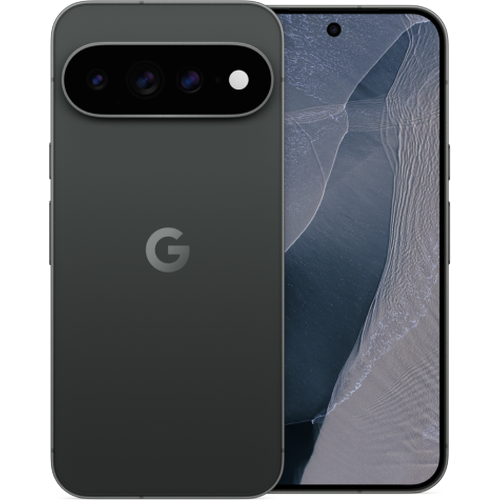
Pixel 11 Pro XL
Ranked #24 of 60 devices tested

Score Overview
Google's Pixel line has always leaned on computational photography and software polish over raw hardware muscle, and the Pixel 11 Pro XL is the biggest, most expensive expression of that idea. At $1,299 it sits at the top of the range, aimed at people who want a large display, a long zoom range, and Google's take on Android with nothing between them and the software.
In our testing, the phone's clearest strengths sit outside the spec-sheet headliners. The speaker system is excellent, the microphone is well above average, and the display is bright, accurate, and responsive. The camera system is more uneven: the 5x telephoto is genuinely strong, while the main and ultrawide lenses clip highlights and lack video stability expected at this price. Raw performance is the weak spot. The Tensor G6 handles daily tasks fine but falls behind similarly priced phones under sustained graphics load, and its on-device AI throughput is poor.
Design
Specifications
The Pixel 11 Pro XL measures 162.7 x 76.5 x 8.5mm and weighs 226g, with an aluminum frame and Gorilla Glass Victus 2 on both the front and back. It carries an IP68 rating and charges through a USB-C 3.2 port.
At 226g it's a heavy phone, though that's typical for a 6.8-inch glass-and-metal flagship. The 89.6% screen-to-body ratio means bezels are thin, and the 20:9 aspect ratio keeps the width manageable for a display this size.
Bandicoot Lab doesn't formally test design or durability, so treat this section as a spec summary rather than a verdict on how the phone holds up over time.
Display
The 6.8-inch LTPO OLED runs at 1344 x 2992 for a pixel density of 486 pixels per inch, with a refresh rate that scales from 1 Hz to 120 Hz. Everything looks sharp at normal viewing distances, and the adaptive refresh rate keeps scrolling smooth while saving power on static content.
Brightness is a strength. Manual brightness tops out at 1,403 nits, which is enough for direct sunlight, and HDR highlights peak at 3,577 nits. That peak applies to small highlights; when most of the screen is bright, output drops off more than average, so full-screen HDR scenes won't hit those numbers. The panel does hold its brightness over time. In our 30-minute sustained test it kept 98.1% of its initial output, so long HDR viewing sessions won't dim on you. At the other end, the screen dims to 1.9 nits for dark-room use.
HDR tone mapping leans expressive rather than faithful. The panel pushes highlights noticeably brighter than the content was mastered for, giving HDR video extra punch at the cost of accuracy, though it only clips detail at the very top of the signal. Standard color accuracy is a different story: in its most accurate mode, colors sit close enough to reference that you'd need instruments to spot the errors. Coverage of the wider P3 gamut is incomplete at 74.4%, so the most saturated colors in HDR content won't render at full intensity. sRGB coverage is essentially complete at 98.9%.
Touch latency averaged 9.9 ms, which is quick. The screen feels immediate under the finger, and that responsiveness holds up in fast games.
Performance
The Pixel 11 Pro XL runs Google's Tensor G6 with 12GB or 16GB of RAM. CPU results are fine: 2,645 single-core and 7,269 multi-core in GeekBench 6 is enough that app launches, multitasking, and general navigation feel fast, and you won't notice a difference from faster chips in daily use.
The GPU is where the gap opens. A Wild Life Extreme peak of 3,425 is well below what flagship-class chips from Qualcomm and Apple produce, and stability under sustained load was 76.8%, meaning performance drops off as the chip heats up. For casual games none of this matters. For demanding 3D titles, you'll see lower frame rates than similarly priced phones deliver, and they'll sag further during long sessions.
Browser performance is also modest, with a Speedometer score of 26.2. Heavy web apps will feel slower than on faster flagships.
Camera
The rear system pairs a 50-megapixel main camera (1/1.3-inch sensor, f/1.68), a 48-megapixel ultrawide (f/1.7), and a 48-megapixel 5x telephoto (f/2.8), with zoom extending to 120x. The telephoto is the best lens here, the main camera is sharp but limited in dynamic range, and the ultrawide is the weakest of the three.
Sharpness is consistently good across all three rear lenses at their native lengths, and it holds up well as light drops, which is where many phones fall apart. The telephoto in particular resolves fine detail cleanly even in dim conditions. Past the telephoto's native range the story changes quickly. Deep zoom past 10x softens substantially, and by the time you approach the long end of the 120x range the output is more suggestion than photograph. Treat everything beyond roughly 20x as occasional-use.
Main
The 50-megapixel main camera shoots sharp images in bright light and loses little detail in dim conditions, which is the pattern you want. Digital zoom between 1x and the telephoto handoff at 5x holds up reasonably; detail softens gradually as the crop tightens but stays usable throughout the range.
Color is the vivid end of the system's tuning. Saturation is pushed above reference in good light, which produces punchy, shareable images but isn't accurate. Hue errors are moderate, and skin tones in bright light drift enough to notice, though they improve as light dims. White balance runs slightly cool in daylight and pulls warm under dim warm lighting.
Dynamic range is the main camera's real weakness. High-contrast scenes clip highlights, and tonal transitions in shadows aren't always smooth, so backlit shots and bright skies lose detail that better-tuned flagships retain. Video stabilization on this lens is also poor. Handheld footage shows more residual shake than expected at this price.
Ultrawide
The 48-megapixel ultrawide (13 mm equivalent, f/1.7) is actually slightly sharper than the main camera in bright light and holds detail well in the dark. On pure resolution it's a strong wide lens.
Everything else trails the main camera. Dynamic range is the worst of the three rear lenses, with clipped highlights and flat rendering in high-contrast scenes, so landscape shots against bright skies suffer most. That's a shame, since landscapes are exactly what an ultrawide is for. Color is less saturated than the main lens but drifts warm as lighting warms, again pointing to white balance that under-corrects, and skin tones in bright and mid lighting are noticeably off.
Telephoto
The 5x telephoto (106 mm equivalent, f/2.8, 48 megapixels) is the best camera on this phone. It's the sharpest of the four lenses across all lighting conditions, its color is the most accurate with near-neutral saturation and the best skin tones in the system, and it's the only rear lens that doesn't clip highlights in high-contrast scenes. Video stabilization is also strong, which matters most at long focal lengths where shake is magnified.
Beyond 5x, quality degrades the way deep digital zoom always does. Shots stay usable through the low teens, get soft and processed-looking past 20x, and the 120x maximum is a framing aid rather than a photographic tool. If you shoot people or distant subjects regularly, this lens is the reason to consider the phone.
Front
The 42-megapixel front camera (17 mm equivalent, f/2.2) delivers high sharpness across lighting conditions and better dynamic range than either the main or ultrawide rear lenses, so backlit selfies retain more scene detail than you might expect.
Skin tone accuracy in bright light is the weak point. Faces drift well away from reference outdoors, though accuracy improves substantially as light dims. Overall saturation is close to neutral. Video stabilization from the front camera is weak, so handheld vlogging footage shows visible shake.
Battery
The 5,115mAh battery produced 28.75 hours of video playback in our rundown test, which translates to a comfortable day and a half to two days of typical mixed use. At maximum brightness that figure drops to 19.65 hours, still enough for a full day of heavy outdoor use.
Web browsing drained 20% over five hours, projecting to roughly 25 hours of continuous browsing. Gaming is harder on it — our hour-long graphics stress test consumed 22%, so a long session of a demanding 3D title will pull the battery down quickly. Standby drain of 4% overnight is on the high side of normal.
Overall this is average endurance for a large flagship.
Charging
Wired charging runs at 45W and reached 29% in 10 minutes and 77% in 30 minutes. That's useful in practice. A half hour on the cable before heading out covers most of a day.
Wireless charging at 25W hit 13% in 10 minutes and 44% in 30 minutes, which is quick for wireless, and the phone supports magnetic Qi2 accessories, so it snaps onto MagSafe-style chargers and mounts. Faster wired systems exist, particularly from Chinese brands pushing 80W and beyond, but the combination here is above average and the magnetic support adds day-to-day convenience.
Speaker
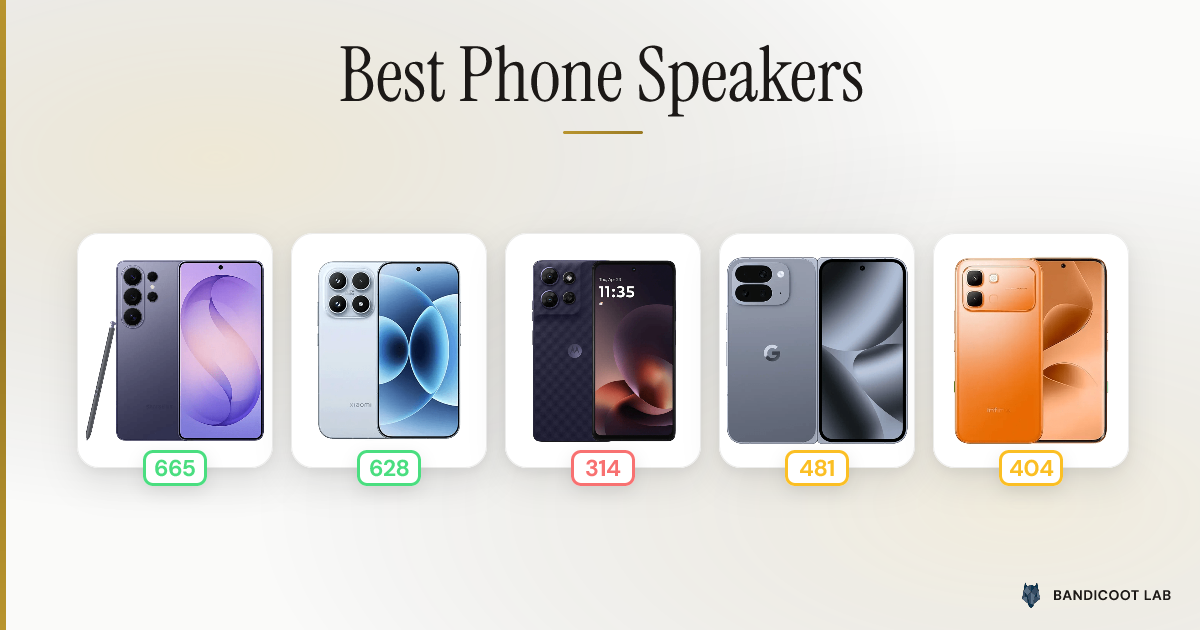
The speakers are the standout result of the whole review. Maximum volume of 76.6 dBA is loud for a phone, and distortion stays low even at that level, so pushing the volume doesn't turn music into mush. High-frequency response is excellent, which keeps vocals and dialogue crisp, and bass is fuller than typical phone speakers manage. Within the physical limits of a phone chassis, this is about as good as phone audio gets.
Microphone
Microphone quality is well above average. Frequency response is unusually even, meaning voices are captured naturally without the boxy or thin character common in phone recordings. Calls, voice memos, and video audio all benefit.
Other
Measurements
Specifications
The ultrasonic fingerprint reader unlocked in an average of 153 ms, which is fast enough to feel instant.
Wired data transfer is a disappointment given the USB-C 3.2 port. We measured 128 MB/s read and 151 MB/s write, far below what the port specification allows. Moving a large video library to a computer will take longer than it should.
Storage comes in 256GB, 512GB, and 1TB configurations, paired with 12GB or 16GB of RAM.
Conclusion
The Pixel 11 Pro XL is a phone whose best qualities aren't the ones flagships usually compete on. Its speakers and microphone are among the best we've tested, the display is bright, accurate, and responsive, and the fingerprint reader and charging are both quick. The telephoto camera is excellent and gives the phone a genuine photographic identity at 5x and beyond.
What keeps it from an unqualified recommendation at $1,299 is the middle of the spec sheet. The Tensor G6 trails similarly priced phones badly in sustained graphics performance, the main and ultrawide cameras clip highlights and struggle with video stabilization, and battery life is merely average. If your priorities are media, calls, and telephoto photography, the phone delivers more than its overall score suggests. If you game heavily or want the most consistent all-around camera system at this price, there are better fits.
FAQ
How long does the Pixel 11 Pro XL's battery actually last?
In video playback testing the 5,115mAh battery ran for 28.75 hours, which works out to about a day and a half to two days of typical mixed use. At maximum brightness that drops to 19.65 hours, still covering a full day of heavy outdoor use. Gaming drains it faster, with an hour-long graphics stress test using up 22% of the charge.
Is the Pixel 11 Pro XL good for gaming?
Not particularly. The Tensor G6's GPU falls behind similarly priced flagships, with sustained performance dropping to 76.8% of peak under load as the chip heats up. Casual games run fine, but demanding 3D titles will show lower frame rates than competing phones, and that gap widens in longer sessions.
What's the best camera on the Pixel 11 Pro XL?
The 5x telephoto is clearly the strongest lens, delivering the sharpest detail in any lighting, the most accurate color and skin tones, and the only rear camera that avoids clipping highlights in high-contrast scenes. Video stabilization on the telephoto is also strong. The main and ultrawide cameras are sharp but clip highlights and show weaker video stabilization.
How fast does the Pixel 11 Pro XL charge?
Wired charging at 45W reaches 29% in 10 minutes and 77% in 30 minutes, enough that a half hour on the cable covers most of a day. Wireless charging at 25W hits 44% in 30 minutes and supports magnetic Qi2 attachment for MagSafe-style chargers and mounts.
Are the speakers on the Pixel 11 Pro XL actually good?
Yes, they're a standout feature of the phone. Maximum volume reaches 76.6 dBA with low distortion even at that level, high-frequency response is excellent for crisp vocals, and bass output is fuller than most phone speakers manage.
Does the Pixel 11 Pro XL have face unlock?
There's no hardware-based face unlock, only a software camera-based option that lacks the security and low-light reliability of dedicated hardware. The ultrasonic fingerprint reader is the more dependable option, unlocking in an average of 153 ms.
Is the Pixel 11 Pro XL's camera good in low light?
Sharpness holds up well across all three rear lenses as light drops, which is uncommon at this price. Color shifts warmer under dim, warm-toned lighting due to incomplete white balance correction, and skin tones on the main and front cameras actually improve in dim light after drifting more visibly outdoors.
Related
Best Phone Speakers
Best Android Phones
Pixel 11 Pro Fold
Pixel 11 Pro
Pixel 10 Pro Fold
Pixel 11
Pixel 10a
Honor
Magic8 Pro
Honor
Magic7 Pro
Apple
iPhone 17 Pro Max

Samsung
Galaxy S26 Ultra

Samsung