Motorola Razr Fold vs Honor Magic V5

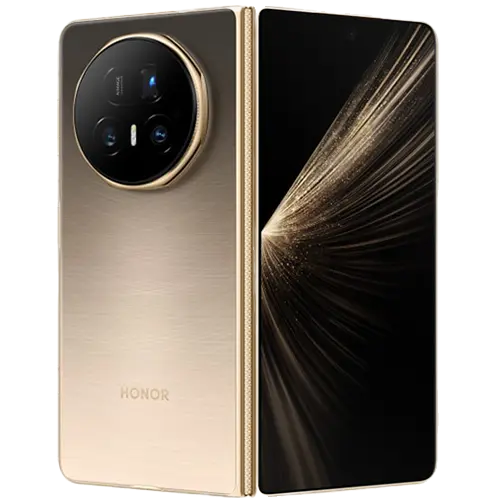
Motorola
Honor
Razr Fold
Magic V5
Ranked #21 of 51
Ranked #18 of 51
Overall
Overall
The Motorola Razr Fold and Honor Magic V5 are both book-style foldables, competing for the same buyer: someone who wants a large inner screen and a fully usable outer display without carrying a tablet. The Razr Fold is Motorola's first entry in this form factor with a flagship-tier camera array, while the Honor Magic V5 emphasizes thinness and weight, trying to make the foldable compromise feel less like a compromise.
The Razr Fold has the stronger display, particularly its inner panel, with substantially higher HDR brightness and better color accuracy. Its camera system produces more accurate colors across most lenses, though the Honor holds its own on sharpness and dynamic range. The Magic V5 pulls ahead on battery life during sustained workloads like gaming, charges faster both wired and wirelessly, and its biometrics are noticeably quicker. Performance benchmarks are close enough that most people won't feel a difference day to day.
Here’s how the Motorola Razr Fold and Honor Magic V5 compared in our lab testing.
Design
| Motorola Razr Fold | Honor Magic V5 | |
|---|---|---|
| Specifications | ||
| Dimensions (folded) | 160.05 × 73.6 × 9.89 mm | 156.8 x 74.3 x 8.8 mm |
| Dimensions (unfolded) | 160.05 × 144.46 x 4.55 mm | 156.8 x 145.9 x 4.1 mm |
| Weight | 243g | 217g |
| IP Rating | IP48/IP49 | IP58/IP59 |
| Frame | Aluminum | Aluminum |
| Front | Gorilla Glass Ceramic 3 | NanoCrystal Shield (outer) / Honor Super Armored (inner) |
| Back | — | Aramid fiber / Glass fiber / PBO composite |
| Screen-to-body ratio (inner) | — | 88.8% |
| Screen-to-body ratio (outer) | — | 85.1% |
The Razr Fold is the larger and heavier phone. Folded, it measures 160.05 × 73.6 × 9.89mm and weighs 243g. Unfolded, it's 4.55mm thin across its 144.46mm-wide inner panel. The Magic V5 is more compact at 156.8 × 74.3 × 8.8mm folded and 217g, and it unfolds to just 4.1mm thick across a 145.9mm span. That 26g difference is noticeable in a pocket or in one hand over extended use.
Both phones use aluminum frames. The Razr Fold uses Gorilla Glass Ceramic 3 on its front, while the Magic V5 uses Honor's Anti-scratch NanoCrystal Shield on the outer display and Super Armored glass on the inner. The Magic V5's back is an aramid fiber, glass fiber, and PBO composite. The Razr Fold carries an IP48/IP49 rating, meaning it's protected against objects over 1mm and high-pressure water jets. The Magic V5 goes slightly further with IP58/IP59, adding dust protection for particles under 1mm. Neither is rated for full submersion like a standard IP68 phone.
The Magic V5's outer display has an 85.1% screen-to-body ratio with a 20.2:9 aspect, and its inner panel hits 88.8% in a near-square 9.75:9 format. Motorola doesn't publish a screen-to-body figure for the Razr Fold, but its inner 8:7.2 aspect ratio and 8.1-inch diagonal are close to the Magic V5's 7.95-inch inner screen. The outer displays differ in aspect: the Razr Fold's 6.6-inch 21:9 panel is taller and narrower than the Magic V5's 6.43-inch 20.2:9 cover screen.
Bandicoot Lab doesn't formally test design or durability.
Display
Inner
| Motorola Razr Fold (Inner) | Honor Magic V5 (Inner) | |
|---|---|---|
658/ 845 | 533/ 845 | |
The Razr Fold's inner display is the brighter panel by a wide margin. It reaches 4,142 nits of peak HDR brightness compared to the Magic V5's 2,017 nits. In manual mode, the Razr Fold tops out at 543 nits while the Magic V5 reaches a higher 647 nits, so the Honor is easier to read in sunlight without auto-brightness engaged. Minimum manual brightness favors the Magic V5 at 1.4 nits versus 2.56 nits on the Razr Fold, a minor advantage for dark-room reading.
HDR brightness stability across window sizes tells different stories. The Magic V5 holds 69.6% of its peak brightness as content window size increases, while the Razr Fold drops to 41.6%. The Razr Fold's raw peak is so much higher that even at reduced stability, it still delivers substantial brightness on larger HDR elements. Over sustained 30-minute playback, both panels are stable: 97.9% for the Razr Fold and 98.9% for the Magic V5.
Color accuracy goes to the Razr Fold. Its inner display achieves a lowest average Delta E of 1.37, which means colors are nearly indistinguishable from reference targets under calibrated conditions. The Magic V5 lands at 1.92, still good but with slightly more visible drift, particularly in neutral tones. P3 gamut coverage shows a larger gap: the Razr Fold covers 97.7% of the P3 color space, while the Magic V5 manages only 73.2%. That gap means the Magic V5 can't reproduce the full range of colors in HDR content and wide-gamut photos. sRGB coverage is close, at 99.8% and 98.1% respectively.
Both inner panels run at 120Hz. The Razr Fold's resolution is 2484 × 2232 at 412 pixels per inch; the Magic V5 is 2172 × 2352 at 403 PPI. These are close enough that you won't see a pixel density difference in normal use. Touch latency is 15.1ms on the Razr Fold and 20.5ms on the Magic V5. That 5ms gap is small enough that most users won't perceive it, though competitive gamers might.
For tone mapping, both displays clip at 80% input level. The Magic V5 follows the HDR reference curve more faithfully, with a slight brightness boost that lifts highlights modestly above the mastered level. The Razr Fold also boosts slightly but with more deviation from the reference. Both clip at the same point, so highlight detail drops off at the same input threshold.
Outer
| Motorola Razr Fold (Outer) | Honor Magic V5 (Outer) | |
|---|---|---|
691/ 845 | 599/ 845 | |
The outer displays shift the brightness balance somewhat. The Razr Fold's cover screen peaks at the same levels as the inner panel, and the Magic V5's outer display is its stronger panel in relative terms, scoring higher in brightness than its own inner screen. Both outer panels are usable in direct sunlight.
Color accuracy on the outer displays is closer than the inner panels. The Razr Fold's cover screen tracks colors well, with neutrals looking clean and only minor drift in saturated tones. The Magic V5's outer panel is slightly more accurate than its inner display but still shows a touch more color drift than the Razr Fold's cover screen overall. Colors on the Magic V5 tend to lean slightly cool in neutral patches.
The Razr Fold's outer display runs at up to 165Hz, which is noticeably smoother than the Magic V5's 120Hz cover screen for scrolling and animations. Resolution is 2520 × 1080 at 415 PPI on the Razr Fold and 1060 × 2376 at 404 PPI on the Magic V5. Both are sharp enough that text rendering looks clean at normal viewing distances.
Performance
| Motorola Razr Fold | Honor Magic V5 | |
|---|---|---|
668/ 1012 | 670/ 1012 | |
The Razr Fold runs the Qualcomm Snapdragon 8 Gen 5 with 16GB of RAM. The Magic V5 uses the Qualcomm Snapdragon 8 Elite, also with 16GB (12GB and 16GB configurations are available). These are different generations of Qualcomm's flagship silicon, and the benchmarks reflect that, though not always in the direction you'd expect.
In CPU tests, the Magic V5's Snapdragon 8 Elite posts a higher single-core GeekBench 6 score at 2,991 versus the Razr Fold's 2,628. Multi-core flips: the Razr Fold scores 9,178 to the Magic V5's 8,877. The single-core gap could show up in app launch times and quick tasks; the multi-core difference is marginal. Browser performance is essentially tied, with Speedometer scores of 16.9 and 17.0.
GPU performance is where the Razr Fold's newer chip should shine, but the picture is mixed. The Magic V5 posts a higher peak in Wild Life Extreme at 6,367 versus 5,401, though the Razr Fold sustains better at 68.6% stability compared to 58.6%. In Solar Bay, the same pattern repeats more dramatically: the Magic V5 peaks higher at 11,572 versus 9,631, but the Razr Fold holds 68.9% stability against 50.2%. For gaming, the Razr Fold will throttle less over long sessions even though its peak frame rates are lower. The Magic V5 starts strong but drops off meaningfully after several minutes of sustained load.
Camera
| Motorola Razr Fold | Honor Magic V5 | |
|---|---|---|
481/ 587 | 510/ 587 | |
Both phones carry triple rear camera systems with 50-megapixel main sensors, 50-megapixel ultrawides, and telephoto lenses (50 megapixels on the Razr Fold, 64 megapixels on the Magic V5), both at roughly 3x optical zoom with 100x maximum digital zoom. Neither phone is built primarily as a camera phone, but they're both capable systems.
Sharpness is the Magic V5's strongest camera trait. Across its main, ultrawide, and telephoto lenses, the Honor consistently resolves more detail, and the gap is especially clear on the telephoto and ultrawide. The Razr Fold holds up well on its main lens but falls behind on the telephoto. At extreme zoom levels beyond 10x, the Razr Fold retains usable detail through its digital zoom range, while the Magic V5 falls apart almost completely. If you ever crop or zoom deep, the Razr Fold is the only viable option of the two.
Main
| Motorola Razr Fold (Main) | Honor Magic V5 (Main) | |
|---|---|---|
537/ 722 | 573/ 722 | |
The Razr Fold's 50-megapixel f/1.6 main camera (24mm, 1/1.28-inch sensor) goes head to head with the Magic V5's 50-megapixel f/1.6 (23mm, 1/1.56-inch sensor). The Razr Fold's physically larger sensor helps in light gathering, though the Magic V5 resolves slightly more detail in bright and mid-light conditions. In low light, the Magic V5 pulls further ahead on sharpness. Both maintain usable detail when cropping to 2x, but the Magic V5 holds its resolve better through the 2–3x digital crop range.
Color tells the opposite story. The Razr Fold's main camera keeps saturation nearly at life levels and produces clean hue rendering across lighting conditions. The Magic V5 oversaturates by about 15% in all conditions, giving images a consistently vivid look. Skin tones on the Razr Fold are more trustworthy, particularly in moderate and low light where the error is roughly half that of the Magic V5.
Dynamic range is a clear win for the Magic V5. High-contrast scenes retain shadow detail and resist highlight blowout far better than on the Razr Fold, which clips highlights and compresses tonal range more aggressively. If you shoot into bright windows or mixed indoor-outdoor scenes, the Magic V5 holds more information.
Ultrawide
| Motorola Razr Fold (Ultrawide) | Honor Magic V5 (Ultrawide) | |
|---|---|---|
422/ 722 | 589/ 722 | |
The Razr Fold's 50-megapixel f/2 ultrawide (12mm) and the Magic V5's 50-megapixel f/2 ultrawide (13mm) differ significantly in output. The Magic V5 resolves considerably more detail across all lighting conditions. The gap is large enough that architecture, landscapes, and group shots will look meaningfully sharper on the Honor.
Color accuracy is poor on both ultrawides, but in different ways. The Razr Fold's ultrawide has moderate hue error that increases in lower light, and skin tones drift substantially in bright conditions before improving as light drops. It's a white balance issue in bright light, with a cool bias that fades under warmer lighting. The Magic V5's ultrawide has worse hue accuracy overall and pushes saturation extremely high, around 20–30% above life. Skin tones are inaccurate at every lighting level. In warmer lighting, the Magic V5's ultrawide develops a strong warm-yellow push that compounds the existing hue errors.
The Honor Magic V5 offers significantly better dynamic range, though it’s a little less consistent in brighter highlights than the Razr Fold.
Telephoto
| Motorola Razr Fold (Telephoto) | Honor Magic V5 (Telephoto) | |
|---|---|---|
476/ 722 | 559/ 722 | |
The Razr Fold uses a 50-megapixel f/2.4 telephoto at 71mm (roughly 3x), with a 1/1.95-inch sensor. The Magic V5 has a 64-megapixel f/2.5 telephoto at 70mm (also 3x) on a 1/2.0-inch sensor. Both cover 3x optical through the digital zoom range.
The Magic V5's telephoto is sharper at 3x across all lighting, and the gap is substantial. Detail holds well as you crop beyond 3x on the Honor, though both phones soften noticeably past about 10x. As noted above, the Razr Fold retains more usable detail at extreme zoom levels beyond 10x.
Color on the telephoto is where the Razr Fold's accuracy advantage is most apparent. In bright light, the Razr Fold's telephoto produces accurate hues and controlled skin tones with a slight warm push. The Magic V5's telephoto is similarly accurate in bright conditions but saturates heavily, over 30% above life. As lighting dims, both telephoto lenses develop warm-yellow bias, but the Magic V5's hue accuracy degrades more steeply. Skin tone error is moderate on the Razr Fold and higher on the Magic V5, especially in low light where faces take on a noticeably warm tone.
Dynamic range favors the Magic V5 at 3x, though the Razr Fold's telephoto handles tonal transitions more smoothly with fewer inversions in the darkest tones.
Front Inner
| Motorola Razr Fold (Front Inner) | Honor Magic V5 (Front Inner) | |
|---|---|---|
566/ 722 | 442/ 722 | |
The Razr Fold's inner front camera is a 32-megapixel f/2.4 sensor at 22mm. The Magic V5 uses a 20-megapixel f/2.2 at 22mm. The higher megapixel count helps the Razr Fold, which is noticeably sharper in bright and mid-light selfies. In low light, the Razr Fold's advantage grows further.
Color on the Razr Fold's inner front camera is fairly neutral in saturation, leaning slightly desaturated in mid and low light. Skin tones drift in bright light with a cool push but are well-controlled otherwise. The Magic V5's inner front camera saturates more aggressively, around 10–20% above life, and skin tones drift significantly in bright light with a cool-green push. In moderate and low light, the Honor's front camera produces more reasonable skin tones.
Dynamic range from the inner front camera is stronger on the Razr Fold, which holds more highlight and shadow detail. The Magic V5's inner selfie camera clips earlier, so backlit selfies lose more sky detail.
Front Outer
| Motorola Razr Fold (Front Outer) | Honor Magic V5 (Front Outer) | |
|---|---|---|
449/ 722 | 471/ 722 | |
The Razr Fold's outer front camera is 20 megapixels at f/2.4 and 22mm; the Magic V5 matches at 20 megapixels, f/2.2, 22mm.
Sharpness is closer here than on the inner cameras. The Razr Fold is sharper in bright and mid light, while the Magic V5 edges ahead in low light, an unusual reversal. Both outer front cameras are softer than their respective inner front cameras.
Color on the Razr Fold's outer selfie camera shows moderate hue error that increases under warm lighting, with a shift toward warm tones in mid and low light. Skin tones are moderately off across conditions. The Magic V5's outer front camera has similar hue issues in bright and mid light but breaks down more severely in low light, with notable hue confusion. Skin tones drift in bright conditions on both phones. The Magic V5 saturates more heavily.
Dynamic range is comparable between the two outer front cameras, with the Razr Fold holding a slight edge. Both clip highlights.
Battery
| Motorola Razr Fold | Honor Magic V5 | |
|---|---|---|
481/ 799 | 559/ 799 | |
The Razr Fold packs a 6,000mAh battery; the Magic V5 has a 5,820mAh cell. The capacity gap is small, and real-world results depend heavily on the test.
Video playback is where foldables get interesting, since you can watch on either screen. The Razr Fold lasts 26.22 hours on its inner display and 39.69 hours on its outer display. The Magic V5 manages 30.94 hours on the inner screen and 31.77 hours on the outer. The Razr Fold's outer-screen video life is exceptional — almost 40 hours means you could get through a long weekend of intermittent watching without charging. The Magic V5 is more consistent between its two screens but doesn't match the Razr Fold's outer display endurance.
Web browsing drain over five hours tells a different story: the Razr Fold loses 32% and the Magic V5 loses 35%. Both are in a similar range, enough to get through a full workday of browsing with battery to spare.
Gaming drain is where the Magic V5 pulls clearly ahead. During the one-hour stress test, the Razr Fold drains 29% compared to the Magic V5's 23%. Over a long gaming session, that translates to meaningfully more play time on the Honor. Standby drain also favors the Magic V5, losing just 2% overnight versus 4% on the Razr Fold. If you leave your phone unplugged at night, the Honor will have noticeably more charge in the morning.
Charging
| Motorola Razr Fold | Honor Magic V5 | |
|---|---|---|
394/ 837 | 580/ 837 | |
The Razr Fold supports 80W wired and 15W wireless charging. The Magic V5 is rated at 66W wired and 50W wireless.
Despite the Razr Fold's higher wired wattage rating, the Magic V5 charges faster. At 10 minutes, the Magic V5 reaches 31% compared to 25% on the Razr Fold. At 30 minutes, it's 79% versus 65%. The Magic V5's charging curve is more aggressive early on, which matters most for quick top-ups before heading out.
Wireless charging is where the gap widens further. The Magic V5's 50W wireless gets to 18% in 10 minutes and 48% in 30 minutes. The Razr Fold's 15W wireless manages just 11% and 26% in the same intervals. If you rely on wireless charging at a desk or nightstand, the Magic V5 is roughly twice as fast.
Speaker
| Motorola Razr Fold | Honor Magic V5 | |
|---|---|---|
749/ 857 | 757/ 857 | |
The Razr Fold gets louder, reaching 74.5 dBA compared to the Magic V5's 70.1 dBA. That's a meaningful difference. The Razr Fold will fill a room more easily, and you'll find yourself reaching for the volume slider less often.
Distortion levels are similar: 3.19% THD on the Razr Fold and 3.79% on the Magic V5. Both stay clean enough at moderate volumes. The Razr Fold has better bass presence, with fuller low-end response that gives music and video a more rounded sound. The Magic V5 leans more toward clarity and high-end detail, producing crisper vocals and sharper instrument separation but thinner overall body. The Magic V5's frequency response is more even across the midrange, while the Razr Fold has more variation but extends further at both ends of the spectrum.
Both speakers are clean. The Razr Fold is slightly cleaner at max volume, which pairs well with its loudness advantage. Neither phone will replace a Bluetooth speaker, but the Razr Fold is the better option for watching video or listening to music without headphones.
Microphone
| Motorola Razr Fold | Honor Magic V5 | |
|---|---|---|
364/ 949 | 539/ 949 |
The Magic V5's microphone produces more consistent audio quality, with better frequency balance across the range. It's a solidly average performer. The Razr Fold's microphone is below average, with more variation in how it captures different frequencies. Voice calls and video recordings will sound more natural on the Magic V5.
Other
| Motorola Razr Fold | Honor Magic V5 | |
|---|---|---|
| Biometrics | 641/ 1036 | 900/ 1036 |
| Data Transfer | 612/ 877 | 604/ 877 |
| Specifications | ||
| Biometric type | Fingerprint | Fingerprint |
| Ports | USB-C 3.2 | USB-C 3.1 |
| Storage | 512GB | 256GB, 512GB, 1TB |
Both phones use capacitive fingerprint sensors. The Magic V5 unlocks in 117ms compared to the Razr Fold's 164ms. Both are fast enough that you won't feel like you're waiting, but the Magic V5's response is snappier and more satisfying. Neither phone has hardware-based face unlock.
Data transfer speeds are close. The Razr Fold reads at 273 MB/s and writes at 249 MB/s over its USB-C 3.2 port. The Magic V5 reads at 259 MB/s and writes at 256 MB/s over USB-C 3.1. You won't notice a difference transferring files. The Razr Fold comes in one configuration: 16GB RAM with 512GB storage. The Magic V5 offers more flexibility with 12GB or 16GB of RAM and 256GB, 512GB, or 1TB storage options.
Conclusion
These are two capable foldables at nearly the same price. The Razr Fold has the better display system, with significantly higher HDR brightness, wider color gamut, and tighter color accuracy on both its inner and outer panels. Its camera system produces more accurate, natural-looking colors, particularly on the main and telephoto lenses, and it's the only option here for usable extreme zoom. It's also the louder phone with fuller speaker sound. If display quality and color-accurate photography matter most to you, the Razr Fold is the stronger pick.
The Magic V5 is lighter, thinner, charges faster on both wired and wireless, and handles gaming battery drain more efficiently. Its cameras resolve more detail on every lens except at extreme zoom distances, and its main camera captures more dynamic range in challenging scenes. Fingerprint unlock is quicker, the microphone is better, and the storage options are more flexible. If you want the foldable that feels least like a compromise physically, and you prefer punchy, vivid photos over strictly accurate ones, the Magic V5 is a better fit.
Overall, the Honor Magic V5 is a slightly better foldable, but not by a significant margin — you should buy the device based on which features it’s better at.
FAQ
Is the Honor Magic V5 worth the extra money over the Razr Fold?
The premium buys you a lighter, thinner phone with faster wired and wireless charging, better gaming battery efficiency, quicker biometrics, sharper cameras across most focal lengths, and more storage configurations. The Razr Fold counters with a significantly brighter HDR inner display, wider P3 gamut coverage, more color-accurate photos, and a louder speaker. Neither phone is the obvious value winner — the gap is small enough that your priorities should drive the decision, not the price difference.
Which phone is better for watching HDR video on the inner screen?
The Razr Fold's inner display reaches 4,142 nits of peak HDR brightness versus 2,017 nits on the Magic V5, and it covers 97.7% of the P3 color space compared to the Magic V5's 73.2%. That gamut gap means the Magic V5 simply cannot reproduce the full color range in HDR content and wide-gamut video. For HDR viewing, the Razr Fold is the clearer choice; the Magic V5 is fine for standard video but won't show HDR at its best.
Does the Razr Fold or Magic V5 last longer during gaming?
The Magic V5 handles sustained gaming loads more efficiently, draining 23% over a standardized stress test versus 29% on the Razr Fold. The Razr Fold also throttles GPU performance more aggressively over long sessions, so the Magic V5 sustains higher frame rates at a lower battery cost. For extended gaming, the Magic V5 is the stronger pick.
Which foldable has better cameras for everyday photos?
The answer depends on what you want from a photo. The Magic V5 resolves more detail on every lens in normal shooting distances and captures more dynamic range on the main camera in high-contrast scenes, making it sharper and more capable in tricky light. The Razr Fold produces more accurate colors and more natural skin tones across all its lenses, and it's the only viable option for extreme zoom beyond 10x, where the Magic V5 falls apart. For social-media-ready, punchy results the Magic V5 is satisfying; for color-faithful, printable photos the Razr Fold is more reliable.
If I charge wirelessly at my desk, does it matter which one I pick?
The Magic V5 supports 50W wireless charging; the Razr Fold supports only 15W. At 30 minutes on a wireless pad, the Magic V5 reaches 48% versus 26% on the Razr Fold — roughly twice as fast. If wireless charging is part of your daily routine, the Magic V5 recovers usable charge in the time the Razr Fold barely makes a dent.
Related
Honor
Magic V5
Motorola
Razr Fold
Honor
Magic8 Pro
Honor
Magic V6
Motorola
Razr Ultra (2026)
Honor
600

Motorola
Razr+ (2026)
Motorola
Razr (2026)

Motorola
Moto G Power (2026)
Motorola Razr Fold vs OnePlus Open
Honor Magic V6 vs Honor Magic V5

Motorola Razr (2026) vs Motorola Razr Fold