Motorola Razr Fold vs Samsung Galaxy Z Fold 7

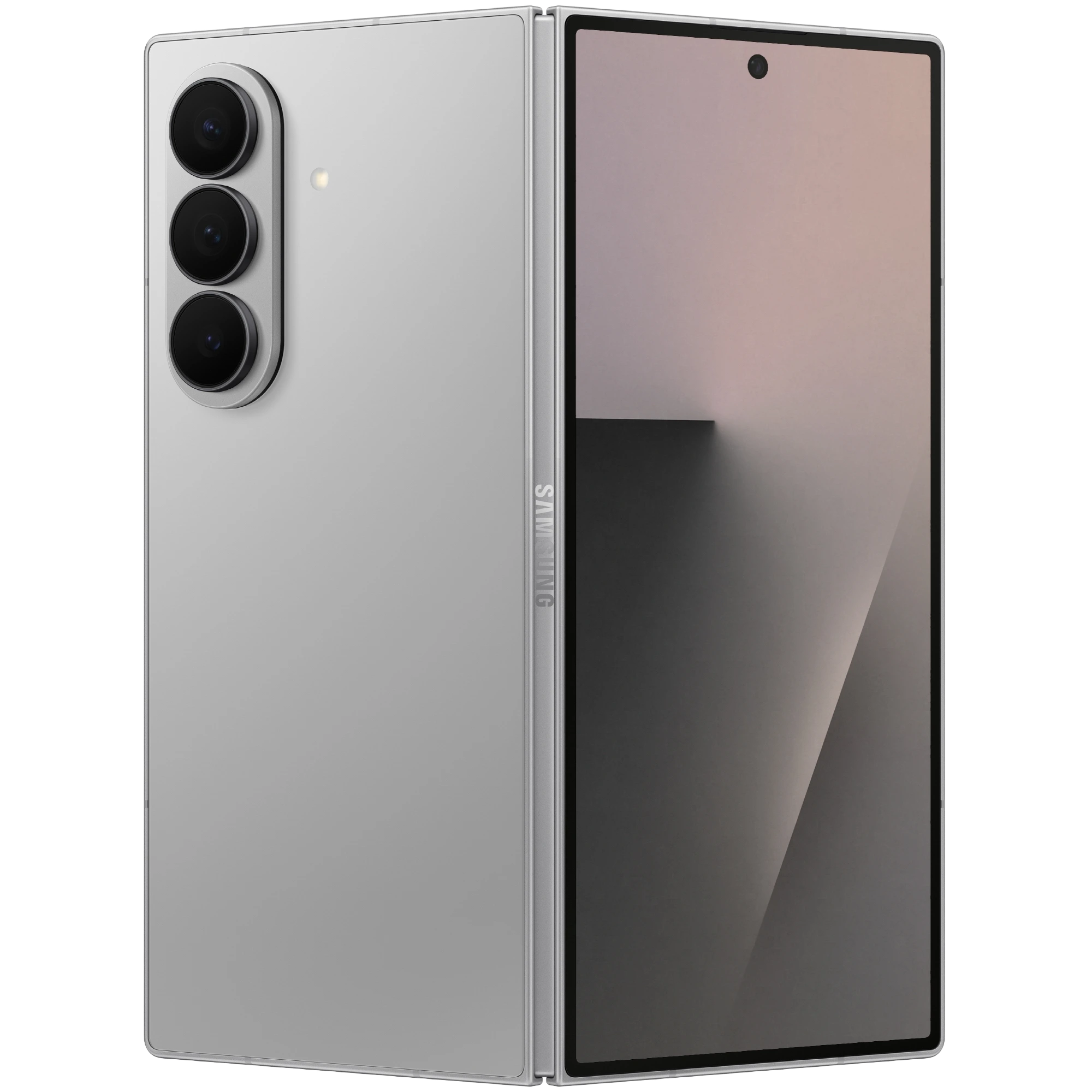
Motorola
Samsung
Razr Fold
Galaxy Z Fold 7
Ranked #21 of 51
Ranked #28 of 51
Overall
Overall
Motorola's first book-style foldable arrives at $1,899.99, undercutting Samsung's $1,999.99 Galaxy Z Fold 7 by $100. The Razr Fold is Motorola's bid to compete directly in a category Samsung has had largely to itself for years, and it does so by throwing hardware at the problem — a bigger inner display, a larger battery, faster wired charging, and a triple rear camera system with a dedicated telephoto sensor. The Galaxy Z Fold 7 is the more refined product on paper.
The Razr Fold pulls ahead in battery capacity, charging speed, and display brightness, and its camera system is stronger overall thanks to better color accuracy and a more capable telephoto. The Z Fold 7 counters with faster raw performance, quicker biometrics, a better microphone, and superior video stabilization across its cameras.
Here’s how the Motorola Razr Fold and Samsung Galaxy Z Fold 7 performed in our lab testing.
Design
| Motorola Razr Fold | Samsung Galaxy Z Fold 7 | |
|---|---|---|
| Specifications | ||
| Dimensions (folded) | 160.05 × 73.6 × 9.89 mm | 158.4 x 72.8 x 8.9 mm |
| Dimensions (unfolded) | 160.05 × 144.46 x 4.55 mm | 158.4 x 143.2 x 4.2 mm |
| Weight | 243g | 215g |
| IP Rating | IP48/IP49 | IP48 |
| Frame | Aluminum | Aluminum |
| Front | Gorilla Glass Ceramic 3 | Plastic (inner) / Gorilla Glass Victus Ceramic 2 (outer) |
| Back | — | Gorilla Glass Victus 2 |
| Screen-to-body ratio (inner) | — | 83.9% |
| Screen-to-body ratio (outer) | — | 85.6% |
Both phones use aluminum frames and share the same basic book-fold form factor. The Razr Fold is slightly larger and heavier: 160.05 × 73.6 × 9.89mm folded and 243g, compared to the Z Fold 7's 158.4 × 72.8 × 8.9mm and 215g. That 28g difference is noticeable in a pocket. Unfolded, the Razr Fold opens to 160.05 × 144.46 × 4.55mm versus 158.4 × 143.2 × 4.2mm for Samsung's phone — similar tablet-sized footprints, with the Razr Fold marginally wider and thicker.
The Razr Fold uses Gorilla Glass Ceramic 3 for its front cover. Samsung uses Gorilla Glass Victus Ceramic 2 on the outer display and Gorilla Glass Victus 2 on the back, with a plastic inner screen — standard for book-fold designs. Motorola's back material isn't specified. The Razr Fold carries an IP48/IP49 rating, meaning it's protected against objects over 1mm and rated for both low-pressure and high-pressure water jets. The Z Fold 7 is rated IP48, which covers the same particle protection but only standard immersion resistance. Samsung publishes an 85.6% screen-to-body ratio for the outer display and 83.9% for the inner; Motorola doesn't list screen-to-body ratios.
Bandicoot Lab doesn't formally test design or durability.
Display
Inner
| Motorola Razr Fold (Inner) | Samsung Galaxy Z Fold 7 (Inner) | |
|---|---|---|
658/ 845 | 516/ 845 | |
The Razr Fold's inner display is an 8.1-inch AMOLED at 2484 × 2232 (412 pixels per inch) with a variable 1–120Hz refresh rate. The Z Fold 7 uses a 7.7-inch AMOLED at 1968 × 2184 (368 PPI), also 1–120Hz. The Razr Fold's panel is physically larger, higher resolution, and denser.
Brightness is where the gap widens. The Razr Fold's inner display reaches 543 nits in manual mode and peaks at 4,142 nits with HDR content in auto brightness. The Z Fold 7 manages 734 nits manual but only 2,757 nits HDR peak. Samsung's manual brightness advantage matters outdoors when you want direct control, but the Razr Fold's HDR peak is roughly 50% higher. Brightness stability across HDR window sizes — how consistently a panel holds its brightness as bright areas of the image grow larger — favors the Z Fold 7 at 56.2% versus 41.6%. Both phones sustain brightness well over the 30-minute stress test: 97.9% for the Razr Fold, 98.8% for Samsung.
Color accuracy on the inner display clearly favors the Razr Fold, with colors tracking close to reference. The Z Fold 7's inner panel drifts more from target values — you'd notice it most in neutral tones and subtle gradients, where colors shift slightly from where they should be. The Razr Fold covers 97.7% of the DCI-P3 gamut versus the Z Fold 7's 75.9%, a substantial gap that means the Razr Fold can render a much wider range of colors.
For HDR tone mapping, the Razr Fold tracks the reference curve more closely and applies only a mild brightness boost to highlights, with clipping beginning at 80% of the input signal. The Z Fold 7 pushes highlights significantly brighter than mastered — a more aggressive lift — and clips earlier at 75%. The Razr Fold is the more faithful HDR panel; the Z Fold 7's approach makes HDR content look punchier but less accurate.
Touch latency averages 15.1ms on the Razr Fold versus 8.8ms on the Z Fold 7.
Outer
| Motorola Razr Fold (Outer) | Samsung Galaxy Z Fold 7 (Outer) | |
|---|---|---|
691/ 845 | 567/ 845 | |
The Razr Fold's outer display is a 6.6-inch P-OLED at 2520 × 1080 (415 PPI) with a 30–165Hz refresh rate. The Z Fold 7's cover screen is a 6.5-inch AMOLED at 1080 × 2520 (422 PPI), 1–120Hz. Resolution and density are nearly identical. The Razr Fold's higher 165Hz peak refresh rate is a slight smoothness advantage in scrolling, though both panels are fluid in normal use.
The Razr Fold's outer display scores higher in our brightness testing. Color accuracy on both outer panels is closer than the inner displays, though the Razr Fold still holds an edge — colors are more faithful to reference, with less visible drift in neutrals.
Touch latency on the outer displays is nearly identical, so responsiveness is a non-factor when using the cover screens.
Performance
| Motorola Razr Fold | Samsung Galaxy Z Fold 7 | |
|---|---|---|
668/ 1012 | 718/ 1012 | |
The Razr Fold runs the Qualcomm Snapdragon 8 Gen 5 with 16GB of RAM. The Z Fold 7 uses the Qualcomm Snapdragon 8 Elite, also with 16GB in the configuration we tested (12GB is available).
CPU performance is better on the Z Fold 7. It scores 3,006 single-core and 9,818 multi-core in GeekBench 6, compared to 2,628 and 9,178 for the Razr Fold. The single-core gap of roughly 14% is the more relevant number for everyday snappiness — app launches, UI transitions, quick tasks. Multi-core is closer at about 7%.
GPU results are more nuanced. The Razr Fold posts a lower peak in Wild Life Extreme at 5,401 versus 6,615 for the Z Fold 7, so Samsung takes raw GPU throughput. The Razr Fold sustains 68.6% of its peak performance under thermal stress, while the Z Fold 7 drops to 48.1%. The same pattern appears in Solar Bay: the Razr Fold peaks at 9,631 with 68.9% stability; the Z Fold 7 peaks higher at 11,532 but sustains only 49.3%. The Z Fold 7 will feel faster in short bursts of gaming, but the Razr Fold throttles less during extended sessions. If you play graphically demanding games for more than a few minutes, the Razr Fold's sustained performance is the more relevant number.
Browser performance is dramatically better on the Z Fold 7: a Speedometer score of 32.3 versus 16.9. You'll feel this in complex web apps and heavy pages.
Camera
| Motorola Razr Fold | Samsung Galaxy Z Fold 7 | |
|---|---|---|
481/ 587 | 455/ 587 | |
The Razr Fold carries a more ambitious camera system on paper: a 50-megapixel f/1.6 main sensor (1/1.28-inch), a 50-megapixel f/2 ultrawide, and a 50-megapixel f/2.4 3x telephoto (1/1.95-inch). The Z Fold 7 counters with a 200-megapixel f/1.7 main sensor (1/1.3-inch), a 12-megapixel f/2.2 ultrawide, and a 10-megapixel f/2.4 3.5x telephoto (1/3.94-inch). Samsung's main sensor is larger and higher resolution, but its telephoto and ultrawide sensors are considerably smaller.
Sharpness at extreme zoom levels is pretty different. The Razr Fold zooms to 100x and maintains moderate detail at deep zoom — its deep zoom sharpness is more than double the Z Fold 7's, which maxes out at 30x. Neither phone produces clean results at maximum digital zoom, but the Razr Fold's larger telephoto sensor gives it far more to work with as you push past the optical range.
Main
| Motorola Razr Fold (Main) | Samsung Galaxy Z Fold 7 (Main) | |
|---|---|---|
537/ 722 | 591/ 722 | |
The Z Fold 7's 200-megapixel main sensor resolves more fine detail in bright and mid light — its sharpness advantage is clear, particularly in good lighting where the large sensor and high pixel count pay off. The Razr Fold's main camera is sharp, but not at the same level. In low light, the gap narrows as both cameras are processing harder.
As you crop into the main camera's zoom range, the Z Fold 7's higher native resolution gives it more room to crop cleanly up to 3.5x before handing off to the telephoto. The Razr Fold's 50-megapixel sensor holds well through 2x but starts softening more noticeably toward its 3x telephoto handoff.
Both main cameras clip highlights in high-contrast scenes. The Z Fold 7's main sensor holds slightly more usable range, preserving a touch more shadow detail, but the difference isn't dramatic. The Razr Fold's main camera color accuracy is substantially better: skin tones are close to reference in mid and low light, and overall hue accuracy stays consistent. The Z Fold 7's main camera, despite its sharpness advantage, delivers skin tones with visible error even in good light, worsening to heavy pink-red shifts in dimmer conditions.
Video stabilization favors the Z Fold 7's main camera, which keeps footage noticeably steadier handheld.
Ultrawide
| Motorola Razr Fold (Ultrawide) | Samsung Galaxy Z Fold 7 (Ultrawide) | |
|---|---|---|
422/ 722 | 565/ 722 | |
The Z Fold 7's 12-megapixel ultrawide is sharper despite its lower resolution, which suggests Samsung's processing is doing effective work with fewer pixels. The Razr Fold's 50-megapixel ultrawide is also sharp — this is a close comparison — but the Samsung lens edges ahead.
The Razr Fold's ultrawide produces slightly muted, neutral tones with relatively controlled hue accuracy. Skin tones drift in bright light but settle down in mid conditions. The Z Fold 7's ultrawide oversaturates in mid light, and hue accuracy falls apart in low light with a pronounced magenta push. Skin tones are noticeably off across all conditions on Samsung's ultrawide.
Dynamic range favors the Galaxy Z Fold 7’s ultrawide — it retains more usable shadow and highlight detail from the wider lens. Both ultrawides clip highlights.
Telephoto
| Motorola Razr Fold (Telephoto) | Samsung Galaxy Z Fold 7 (Telephoto) | |
|---|---|---|
476/ 722 | 485/ 722 | |
The Razr Fold's 50-megapixel 3x telephoto (1/1.95-inch sensor) and Samsung's 10-megapixel 3.5x telephoto (1/3.94-inch sensor) represent very different approaches. The Razr Fold's sensor is roughly five times larger by area. Sharpness is nearly identical between the two at their native focal lengths, which is a credit to Samsung's processing but also means the Razr Fold's larger sensor isn't translating into the sharpness advantage you'd expect.
Where the sensor size difference does show is in zoom range and digital crop headroom. The Razr Fold can push to 100x digital zoom with usable (if soft) results well past 10x. The Z Fold 7 tops out at 30x and has far less sensor resolution to crop from. If you regularly shoot at 5x and beyond, the Razr Fold is the better tool.
Color accuracy on the telephoto follows the system-wide pattern. The Razr Fold's telephoto is accurate in bright light with a slight warm lean that intensifies in mid and low light. The Z Fold 7's telephoto oversaturates in bright light and develops severe hue errors in dimmer conditions — skin tones drift badly. Stabilization is where the Z Fold 7's telephoto stands out, delivering noticeably steadier handheld video than the Razr Fold.
Front Inner
| Motorola Razr Fold (Front Inner) | Samsung Galaxy Z Fold 7 (Front Inner) | |
|---|---|---|
566/ 722 | 276/ 722 | |
The Razr Fold's 32-megapixel f/2.4 inner front camera is sharper than the Z Fold 7's 10-megapixel f/2.2 in bright and mid light, and clearly sharper in low light. That resolution advantage translates to visible detail improvements in selfies and video calls.
Color accuracy is dramatically better on the Razr Fold's inner front camera. Skin tones are close to accurate in mid light and reasonable across conditions. The Z Fold 7's inner front camera produces large skin tone errors in every lighting condition — faces look noticeably off, with heavy color shifts that worsen in dimmer settings. Hue accuracy overall degrades severely on the Z Fold 7 in low light, again pointing to white balance issues under warm artificial light.
The Razr Fold's inner front camera preserves substantially more highlight and shadow detail. The Z Fold 7's inner front camera clips more aggressively and retains less scene depth.
Front Outer
| Motorola Razr Fold (Front Outer) | Samsung Galaxy Z Fold 7 (Front Outer) | |
|---|---|---|
449/ 722 | 330/ 722 | |
The Z Fold 7's 10-megapixel outer front camera is slightly sharper in bright light than the Razr Fold's 20-megapixel outer selfie camera, an unexpected result likely due to processing differences. In mid light they're close, and in low light the Razr Fold is slightly ahead.
The Razr Fold is significantly more accurate on the outer front camera. The Z Fold 7's outer front camera has the worst skin tone accuracy of any lens in this comparison, with extreme color error in bright and mid light. Under dim, warm lighting, a very strong magenta push dominates skin rendering on Samsung's side.
Both outer front cameras clip highlights, but the Razr Fold retains more usable range. Stabilization on the outer front camera is better on the Z Fold 7.
Battery
| Motorola Razr Fold | Samsung Galaxy Z Fold 7 | |
|---|---|---|
481/ 799 | 494/ 799 | |
The Razr Fold packs a 6,000mAh battery; the Z Fold 7 has 4,400mAh. That's a 36% capacity difference, and it shows in the numbers — though not as cleanly as you might expect.
Video playback on the inner display runs 26.2 hours on the Razr Fold versus 22.6 hours on the Z Fold 7. Using the outer display extends both: 39.7 hours for the Razr Fold, 28.1 hours for Samsung. The Razr Fold's outer-display video endurance is exceptional — you could watch video for close to two full days before needing a charge. Even on the inner display, 26 hours means most people could go two days between charges with moderate video and media consumption.
Web browsing drain over five hours takes 32% off the Razr Fold versus 34% off the Z Fold 7 — close enough to call even. Gaming drain measured during the 3DMark stress test tells a different story: the Razr Fold loses 29% versus Samsung's 23%. The Z Fold 7's lower GPU sustained performance actually helps here — it throttles harder, which means it draws less power. Standby drain overnight (eight hours idle) is 4% on the Razr Fold and 2% on the Z Fold 7. Samsung's standby efficiency is better, losing half as much battery overnight.
Overall battery scores are close despite the large capacity difference: the Razr Fold scores 481.3 to Samsung's 493.5. The Razr Fold's bigger battery translates mainly into longer video endurance; for mixed daily use involving web and gaming, the two phones land in similar territory.
Charging
| Motorola Razr Fold | Samsung Galaxy Z Fold 7 | |
|---|---|---|
394/ 837 | 233/ 837 | |
The Razr Fold supports 80W wired and 15W wireless charging. The Z Fold 7 is limited to 25W wired and 15W wireless.
The wired charging gap is large. After 10 minutes on the cable, the Razr Fold reaches 25% versus 19% for the Z Fold 7. At 30 minutes, it's 65% versus 53%. The Razr Fold's faster wired charging is genuinely useful — a half-hour top-up before heading out gives you roughly two-thirds of a 6,000mAh battery, which is enough for a full day for most people.
Wireless charging is closer but still favors the Razr Fold: 11% at 10 minutes and 26% at 30 minutes, versus 7% and 20% for Samsung. Neither phone charges quickly wirelessly; it's a convenience feature on both.
Speaker
| Motorola Razr Fold | Samsung Galaxy Z Fold 7 | |
|---|---|---|
749/ 857 | 745/ 857 | |
The Z Fold 7 is louder, reaching 76.6 dBA versus the Razr Fold's 74.5 dBA. That's a small but audible difference. The Razr Fold runs cleaner, with 3.19% total harmonic distortion compared to Samsung's 5.82% — you'll hear this as less harshness and crackle at higher volumes.
The Z Fold 7 has a more even frequency response overall, with fuller bass relative to its size and noticeably better high-end clarity. The Razr Fold's bass is similar but its highs are more recessed — it sounds a bit more muffled in comparison. The Razr Fold's lower distortion means music and podcasts sound cleaner even if the tonal balance is less full.
Neither phone is going to replace a dedicated speaker, but both are adequate for casual listening. The Z Fold 7 is the better choice if you watch a lot of video or listen to podcasts without headphones.
Microphone
| Motorola Razr Fold | Samsung Galaxy Z Fold 7 | |
|---|---|---|
364/ 949 | 622/ 949 |
The Z Fold 7's microphone produces a more even, balanced frequency response — voice recordings and calls will sound clearer and more natural. The Razr Fold's microphone is below average, with more uneven frequency reproduction that can make voices sound thinner or less consistent. If you take a lot of calls or record voice notes, the Z Fold 7 is the better performer here.
Other
| Motorola Razr Fold | Samsung Galaxy Z Fold 7 | |
|---|---|---|
| Biometrics | 641/ 1036 | 945/ 1036 |
| Data Transfer | 612/ 877 | 705/ 877 |
| Specifications | ||
| Biometric type | Fingerprint | Fingerprint |
| Ports | USB-C 3.2 | USB-C 3.2 |
| Storage | 512GB | 256GB, 512GB, 1TB |
Fingerprint unlock is faster on the Z Fold 7 at 111ms versus 164ms on the Razr Fold. Both use capacitive sensors. The Z Fold 7's unlock is quick enough to feel nearly instantaneous; the Razr Fold is fine but perceptibly slower. Neither phone has hardware-based face unlock.
Data transfer speeds are nearly identical: the Razr Fold reads at 273 MB/s and writes at 249 MB/s; the Z Fold 7 reads at 276 MB/s and writes at 260 MB/s. Both use USB-C 3.2. The Razr Fold is available in one configuration — 16GB RAM with 512GB storage. The Z Fold 7 offers more flexibility: 12GB or 16GB of RAM with 256GB, 512GB, or 1TB storage options.
Conclusion
The Razr Fold is the better phone for photography. Its color accuracy is a clear tier above the Z Fold 7 across every lens, with skin tones that actually look like skin tones in any lighting. The dedicated 3x telephoto with its large sensor gives it zoom capabilities the Z Fold 7 can't match. Its inner display is brighter, more color-accurate, and covers far more of the P3 gamut. Charging is meaningfully faster, and the larger battery delivers substantially longer video playback, especially on the outer screen. All of this at a hundred dollars less.
The Z Fold 7 is the better phone for performance-intensive use. Its CPU and browser scores are notably higher, its GPU peaks higher for short bursts, and its AI processing is faster. The main camera resolves more detail in good light, even if the color processing undermines it. Video stabilization is better across the board, the microphone is stronger, fingerprint unlock is snappier, and the phone is 28g lighter — which matters when you're holding a foldable open for extended reading or tablet-style use. The storage options are also more flexible if you need more than 512GB.
If camera accuracy, display quality, and charging speed are your priorities, the Razr Fold offers more for less money. If you value raw performance, lighter weight, video stabilization, and storage flexibility, the Z Fold 7 justifies the premium. Both phones have below-average battery life for their price, and both lack hardware-based face unlock — compromises that come with the foldable form factor.
FAQ
Does the Razr Fold or Galaxy Z Fold 7 take better photos?
The Razr Fold has the stronger overall camera system. Its color accuracy is clearly better across every lens — skin tones look natural in most lighting conditions, while the Z Fold 7 oversaturates in bright light and develops heavy pink-red color shifts as light gets dimmer. The Razr Fold's large-sensor telephoto also gives it far more reach at 5x and beyond. The Z Fold 7 resolves more fine detail with its 200-megapixel main sensor in good light, and its video stabilization is better across all lenses, so it's the better pick specifically for handheld video.
Which foldable is better for gaming — the Motorola Razr Fold or the Z Fold 7?
It depends on how long your sessions run. The Z Fold 7 hits higher GPU performance in short bursts, so fast-loading games and brief play sessions will feel snappier. During extended play, the Razr Fold throttles less aggressively — it sustains roughly 69% of peak GPU performance versus the Z Fold 7's 49% — so graphically demanding games stay more consistent over time. The Z Fold 7 also drains the battery more slowly during GPU-intensive use because it throttles harder, which is a tradeoff worth knowing.
Is the Razr Fold's battery life actually better than the Galaxy Z Fold 7?
For video playback, yes — the Razr Fold runs nearly 4 hours longer on the inner display (26.2 vs. 22.6 hours) and over 11 hours longer on the outer screen (39.7 vs. 28.1 hours). For mixed daily use involving web browsing and gaming, the two phones land in similar territory despite the Razr Fold's much larger 6,000mAh battery versus the Z Fold 7's 4,400mAh. The Z Fold 7 also loses half as much battery overnight in standby. The Razr Fold's bigger capacity pays off most clearly if you lean heavily on media consumption.
How much faster does the Razr Fold charge compared to the Z Fold 7?
The Razr Fold charges substantially faster wired, supporting 80W versus the Z Fold 7's 25W. After 30 minutes on the cable, the Razr Fold reaches 65% charge compared to 53% for the Z Fold 7 — a meaningful gap when you're topping up before heading out. Wireless charging speed is close between the two phones and slow on both.
Is it worth paying the extra $100 for the Galaxy Z Fold 7 over the Razr Fold?
The Z Fold 7's advantages are real but specific: it's 28g lighter, CPU and browser performance are noticeably faster, video stabilization is better across all cameras, the microphone is clearer, and fingerprint unlock is quicker. It also offers storage options up to 1TB, while the Razr Fold comes only in 512GB. If those priorities — lighter weight, raw speed, better video — matter to you, the extra cost is justified. If camera color accuracy, display brightness, and faster charging are more important, the Razr Fold delivers more for less.
Related
Motorola
Razr Fold
Samsung
Galaxy Z Fold 7

Samsung
Galaxy S26 Ultra
Samsung
Galaxy S26+
Samsung
Galaxy S26
Motorola
Razr Ultra (2026)
Motorola
Razr+ (2026)
Motorola
Razr (2026)

Motorola
Moto G Power (2026)
Is a weak telephoto worse than having no telephoto at all?
Motorola Razr Fold vs OnePlus Open

Samsung Galaxy Z Fold 7 vs Galaxy Z Flip 7