Motorola Razr Ultra (2026) vs Motorola Razr Ultra (2025)
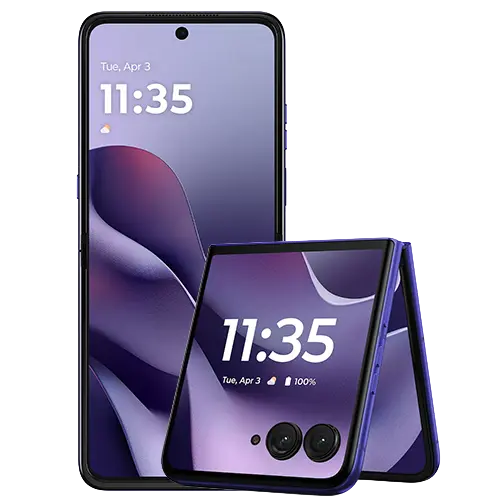

Motorola
Motorola
Razr Ultra (2026)
Razr Ultra (2025)
Ranked #23 of 60
Ranked #32 of 60
Overall
Overall
The Razr Ultra is Motorola's flagship flip phone. The 2026 model replaces the 2025 model directly, in the same body, at $1,499.99 against the older phone's $1,299.99. That $200 gap is important, because Motorola changed very little you can see. Anyone cross-shopping these two is really asking whether one generation of internal upgrades justifies the premium, especially while the 2025 model is still widely available.
The 2026 model has the better camera system by a clear margin, mostly because Motorola fixed the color processing that let the older phone down, and it extends usable zoom much further. It also lasts longer on a charge and has a sharper, more capable inner display. The 2025 model charges slightly faster, covers a wider color gamut on its inner screen, and costs less. Performance, design, and build are effectively identical between them.
Design
| Motorola Razr Ultra (2026) | Motorola Razr Ultra (2025) | |
|---|---|---|
| Specifications | ||
| Dimensions (folded) | 88.1 x 74 x 15.7 mm | 88.1 x 74 x 15.7 mm |
| Dimensions (unfolded) | 171.5 x 74.0 x 7.2 mm | 171.5 x 74.0 x 7.2 mm |
| Weight | 199g | 199g |
| IP Rating | IP48 | IP48 |
| Frame | Aluminum | Aluminum |
| Front | Gorilla Glass Ceramic | Gorilla Glass Ceramic |
| Back | Vegan leather / Alcantara / Wood | Vegan leather / Alcantara / Wood |
| Screen-to-body ratio (inner) | 87.3% | 87.3% |
| Screen-to-body ratio (outer) | 78.1% | 78.1% |
In this case, what's on paper is the same phone twice. Both measure 88.1 x 74 x 15.7mm folded and 171.5 x 74 x 7.2mm unfolded, both weigh 199g, and both use an aluminum frame with Gorilla Glass Ceramic on the front and a choice of vegan leather, Alcantara, or wood on the back. Screen-to-body ratio is 87.3% on the inner display and 78.1% on the cover screen for both, with the same 22:9 unfolded aspect ratio.
The IP48 rating carries over too. The 8 means both phones survive submersion past 1.5 meters; the 4 means dust protection only covers objects larger than 1mm, which is typical for foldables since the hinge can't be fully sealed. The 2026 model does not close that gap with rivals' full dust resistance.
Bandicoot Lab doesn't formally test design or durability.
Display
Inner
| Motorola Razr Ultra (2026) (Inner) | Motorola Razr Ultra (2025) (Inner) | |
|---|---|---|
632/ 881 | 605/ 881 | |
The one hardware change Motorola made is here. The 2026 model's 7-inch panel moves to LTPO AMOLED at 1224 x 2992 (462 pixels per inch), while the 2025 model uses a standard AMOLED at 1080 x 2640 (464 PPI). Pixel density is a wash, but the LTPO panel can scale its refresh rate down to 1Hz more efficiently. Both run up to 165Hz.
Brightness is close in most respects. The 2026 panel peaks at 2,919 nits with HDR content against 2,850 on the 2025, and both hold that output almost perfectly over a 30-minute stress test, at 98.9% and 99.1% stability. Manual brightness is modest on both: 474 nits for the 2026, 501 for the 2025. Neither is a phone you'd pick for direct-sunlight readability. The 2025 model dims further at night, down to 0.58 nits versus 2.44.
Color is where the two panels split in opposite directions. The 2026 display is more accurate in its best mode, with a lowest average ΔE of 1.74 against 2.25, meaning colors sit closer to reference. It only covers 76.6% of the P3 gamut, where the 2025 panel covers 96.8%. The new screen renders what it shows more faithfully but can't reach the most saturated colors in wide-gamut content; the old screen reaches them with slightly less precision. Tone mapping favors the 2026 model: it tracks the HDR reference curve more closely, while the 2025 drifts further from it, though both render highlights a touch dimmer than mastered and start clipping at similar points. Touch latency is 19ms versus 19.9ms, which you'll never notice.
Outer
| Motorola Razr Ultra (2026) (Outer) | Motorola Razr Ultra (2025) (Outer) | |
|---|---|---|
567/ 881 | 560/ 881 | |
Both cover screens are identical on paper: 4-inch LTPO AMOLED, 1080 x 1272 at 417 PPI, 1Hz to 165Hz. In testing, the 2026 model's outer panel is meaningfully brighter, which matters because the cover screen is the one you'll use outdoors for quick checks. Color accuracy flips the other way; the 2025 cover screen is the more accurate of the two, with the 2026 showing mild drift. The brightness gap is the one you'll actually see.
Performance
| Motorola Razr Ultra (2026) | Motorola Razr Ultra (2025) | |
|---|---|---|
761/ 1012 | 740/ 1012 | |
Both phones run the Qualcomm Snapdragon 8 Elite with 16GB of RAM. The 2026 model posts 3,062 single-core and 9,161 multi-core in GeekBench against 2,917 and 8,917 for the 2025. That's a 3–5% gap, likely down to binning or thermal tuning, and it's invisible in use.
GPU results are even closer. Wild Life Extreme peaks at 6,420 versus 6,375, with stability under sustained load at 68.6% and 68.1%. Both throttle to about two-thirds of peak performance during long gaming sessions, which is typical for a flip phone with limited thermal headroom. Browser performance gives the 2026 a small edge in Speedometer, 20.8 to 19.4. Performance is effectively the same between them.
Camera
| Motorola Razr Ultra (2026) | Motorola Razr Ultra (2025) | |
|---|---|---|
482/ 587 | 416/ 587 | |
Same lenses, different results. Both phones carry a 50-megapixel f/1.8 main camera on a 1/1.56-inch sensor, a 50-megapixel f/2 ultrawide, a 50-megapixel front camera, and no telephoto. What changed is the processing, and it changed a lot. The 2025 Razr Ultra's recurring problem was color: skin tones drifted well off reference on every lens, and its white balance fell apart in warm, dim light. The 2026 model cleans most of that up and ends up with one of the stronger color performances we've measured from a foldable, though neither phone matches camera-focused flagships like the Galaxy or Pixel lines, which pair similar main sensors with dedicated telephotos and more consistent processing.
The zoom story is the other big change. The 2025 model caps digital zoom at 8x; the 2026 extends it to 30x. More usefully, the new phone holds substantially more detail at deep zoom. Past 10x, the 2026 produces soft but recognizable results where the 2025's output falls apart into smearing. Neither replaces optical zoom, but the 2026 gives you something usable when you need the reach.
Main
| Motorola Razr Ultra (2026) (Main) | Motorola Razr Ultra (2025) (Main) | |
|---|---|---|
491/ 722 | 451/ 722 | |
At 1x in good light, the 2025 model is actually the sharper camera. The gap reverses in the dark, where the 2026 resolves noticeably more detail and the 2025 falls off hard. The 2026's sharpness barely moves between bright and dim conditions, which is the more useful behavior; most phone photos that disappoint are the low-light ones.
Color is where the 2026 earns its keep. Its main camera renders hues accurately across all three lighting conditions with a mildly vivid, slightly warm look. Skin tones sit a bit saturated in bright light but tighten up as light dims. The 2025 model leans warmer and yellower overall, and in dim tungsten-style light its white balance fails outright: the whole frame shifts strongly red, and hue accuracy collapses. That's a correction failure rather than a sensor limit, since the color cast grows with the warmth of the light. It's the kind of error you see immediately in restaurant and evening photos.
The 2026 retains more shadow detail and renders tonal transitions more cleanly in high-contrast scenes, though both clip bright highlights. Across the zoom range below deep zoom, the 2026 also degrades more gracefully; a 2x crop stays usable where the 2025 starts softening earlier on its way to its 8x ceiling.
Ultrawide
| Motorola Razr Ultra (2026) (Ultrawide) | Motorola Razr Ultra (2025) (Ultrawide) | |
|---|---|---|
551/ 722 | 447/ 722 | |
The 2026 ultrawide is sharper in bright light and keeps that advantage in the dark, though both lenses trail their main cameras once light drops. The 2026 ultrawide handles high-contrast scenes with visibly more shadow depth, and it's actually this phone's best lens for contrasty landscapes. The 2025 ultrawide flattens the same scenes.
Both phones push saturation on the ultrawide in bright light, the 2025 a little less aggressively than the 2026, which also pulls blues slightly cool outdoors. Skin tones are the weak point on both ultrawides, drifting further from reference than either main camera, with the 2025 the worse offender.
Front
| Motorola Razr Ultra (2026) (Front) | Motorola Razr Ultra (2025) (Front) | |
|---|---|---|
557/ 722 | 495/ 722 | |
Both front cameras are sharp, among the best results either phone posts, and both soften in dim light as you'd expect from a fixed-aperture selfie camera. Both also share a deliberately muted tuning, with saturation pulled well below neutral for a flatter, more subdued look.
Accuracy splits them. The 2026 front camera keeps skin tones reasonably close to reference across lighting. The 2025 pushes faces strongly warm and yellow, far enough off that selfies look visibly tinted rather than just stylized. Video stabilization also favors the new phone: 2026 front-camera footage stays controlled handheld, while the 2025's selfie video shows more residual shake. Dynamic range is a slight win for the 2025, which holds highlight detail a bit better in backlit selfies.
Battery
| Motorola Razr Ultra (2026) | Motorola Razr Ultra (2025) | |
|---|---|---|
584/ 836 | 532/ 836 | |
The 2026 model bumps capacity from 4,700mAh to 5,000mAh, and the efficiency gains compound on top of it. In our video playback test on the inner display, the 2026 ran 31.23 hours against 29.66 for the 2025. Both exceed 32 hours on the smaller cover screen, which is one of the quiet advantages of a flip phone: do your light tasks folded and the battery barely moves.
The active-use tests widen the gap. Five hours of web browsing drained 19% of the 2026 versus 22% of the 2025, and twenty loops of a GPU stress test took 39% versus 43%. Overnight standby cost 3% on both. Both phones are comfortable full-day devices, but the 2026 gives you a real buffer into a second day with moderate use, where the 2025 is more likely to want a charger by the next morning.
Charging
| Motorola Razr Ultra (2026) | Motorola Razr Ultra (2025) | |
|---|---|---|
329/ 837 | 355/ 837 | |
Both phones charge at 68W wired and 30W wireless, but the 2025 model makes slightly better use of it. It reaches 30% in 10 minutes and 75% in 30, against 27% and 70% for the 2026. Part of that is the new phone's larger battery; the energy delivered is similar, the percentages just move slower.
Wireless charging shows a wider gap: 29% in 30 minutes for the 2025 versus 22% for the 2026, which is sluggish for a phone rated at 30W. If you top up wirelessly on a desk all day, the 2025 gets more done per session.
Speaker
| Motorola Razr Ultra (2026) | Motorola Razr Ultra (2025) | |
|---|---|---|
544/ 897 | 540/ 897 | |
Neither Razr Ultra is a good speaker phone. Both sit near the bottom of our rankings, with the thin, bass-light output that comes with a compact foldable chassis. The 2026 model is the louder of the two at a maximum of 77.6 dBA against 72.8, and it sounds slightly cleaner at the top end. The 2025 counters with a flatter, more even frequency response and relatively fuller bass, though "fuller" is doing light work when both roll off well above where bass actually lives.
Distortion is high on both, 8.74% average on the 2026 and 9.95% on the 2025, so pushing either to max volume gets rough. Use headphones for music; these are fine for podcasts and calls.
Microphone
| Motorola Razr Ultra (2026) | Motorola Razr Ultra (2025) | |
|---|---|---|
610/ 1220 | 683/ 1220 |
Both phones record above-average audio, with the 2025 model slightly ahead. Its frequency response is a touch more even, so voices come through with marginally more natural balance. The 2026 sits closer to the middle of the pack. The difference is small enough that neither phone should sway a decision, and both are perfectly serviceable for calls and voice notes.
Other
| Motorola Razr Ultra (2026) | Motorola Razr Ultra (2025) | |
|---|---|---|
| Biometrics | 713/ 1181 | 635/ 1181 |
| Data Transfer | 116/ 943 | 101/ 943 |
| Specifications | ||
| Biometric type | Fingerprint | Fingerprint |
| Ports | USB-C 2.0 | USB-C 2.0 |
| Storage | 512GB | 512GB, 1TB |
Both phones use a capacitive fingerprint sensor, and both are quick: 147ms average unlock on the 2026, 165ms on the 2025. You won't feel 18ms, but both are faster than most under-display optical sensors. Neither phone has hardware-based face unlock; camera-based face unlock exists on both, but it's the less secure software variety.
Data transfer is a weak spot shared across generations. Both ship with USB-C 2.0 ports, and we measured 39 MB/s reads on both, with writes at 38 and 36 MB/s. Moving a large video library over cable will take a while on either. At these prices, USB 2.0 is hard to justify. Storage is the one spec where the older phone offers more: the 2025 comes in 512GB and 1TB configurations, while the 2026 is 512GB only. Both pair with 16GB of RAM.
Conclusion
The 2026 Razr Ultra's case rests on three things: the camera, the battery, and the inner display. The camera improvement is the biggest of them. The 2025 model's color processing was its most visible flaw, with warm-tinted skin tones everywhere and a white balance that fell apart in dim light, and the 2026 fixes it while adding usable deep zoom and better low-light detail. Add roughly 10% better battery endurance and an LTPO inner panel with more faithful color and HDR handling, and the new phone is the better device in the ways you'd notice daily.
The 2025 model's case is simpler: it's $200 cheaper and gives up very little outside the camera. Same chip at effectively the same speed, same body, same materials, slightly faster charging, a wider-gamut inner display, and a 1TB option the new phone doesn't offer. If you shoot mostly in good light and your photos skew casual, the older phone's camera shortcomings matter less than they look on paper.
The decision comes down to how much the camera and battery are worth to you. If you take a lot of photos of people, or regularly end days with your battery in the red, the 2026 is worth the premium. If you want the Razr Ultra experience at the lowest price, or you need 1TB of storage, the 2025 remains a sensible buy, and street pricing will likely stretch that $200 gap further.
FAQ
Is it worth upgrading from the Razr Ultra 2025 to the Razr Ultra 2026?
The biggest gains are in the camera, battery life, and inner display. The 2026 fixes the 2025's warm-tinted skin tones and dim-light white balance, and it lasts longer per charge. Design, build, and performance are effectively identical, so the upgrade makes sense mainly if you photograph people often or regularly run your battery low.
Does the Razr Ultra 2026 or 2025 have the better camera?
The 2026 has the better camera overall. Its colors and skin tones are much closer to reference, it holds more detail in low light, and its digital zoom reaches 30x versus 8x on the 2025, with usable results past 10x. The 2025's main camera is a bit sharper in good light, but its dim-light photos can shift strongly red.
Does the Razr Ultra 2026 get better battery life than the 2025?
Yes, by a modest margin. The 2026 has a 5,000mAh battery against 4,700mAh and ran 31.23 hours of video playback on the inner display versus 29.66 hours. Five hours of web browsing drained 19% on the 2026 and 22% on the 2025, and standby drain was 3% on both.
Which charges faster, the Razr Ultra 2025 or 2026?
The 2025 charges a little faster, even though both are rated at 68W wired and 30W wireless. It reaches 30% in 10 minutes and 75% in 30 minutes, against 27% and 70% for the 2026. The wireless gap is wider: 29% in 30 minutes for the 2025 versus 22% for the 2026.
Is the Razr Ultra 2026 faster than the 2025 for gaming and everyday use?
No. Both use the same chip and 16GB of RAM, and the 2026's benchmark lead is only about 3–5%, which you won't notice in use. Under sustained gaming load both throttle to roughly two-thirds of peak performance, with stability of 68.6% on the 2026 and 68.1% on the 2025.
Is there any reason to buy the Razr Ultra 2025 instead of the 2026?
Yes. The 2025 costs less, comes in a 1TB option the 2026 doesn't offer, and charges slightly faster. Its inner display also covers a wider share of the P3 gamut, 96.8% versus 76.6%. If you mostly shoot casual photos in good light, it gives up little else.
Related
Motorola
Razr Ultra (2026)
Motorola
Razr Ultra (2025)

Motorola
Razr Fold
Motorola
Razr+ (2026)
Motorola
Razr (2026)

Motorola
Moto G Power (2026)

Motorola Razr Ultra (2026) vs Motorola Razr Fold

Motorola Razr+ (2026) vs Motorola Razr Ultra (2026)
Best Phones for Gaming
Best Foldable Phones

Motorola Razr (2026) vs Motorola Razr Ultra (2026)

Motorola Razr (2025) vs Motorola Razr Ultra (2025)