RedMagic 12 Pro vs OnePlus 15

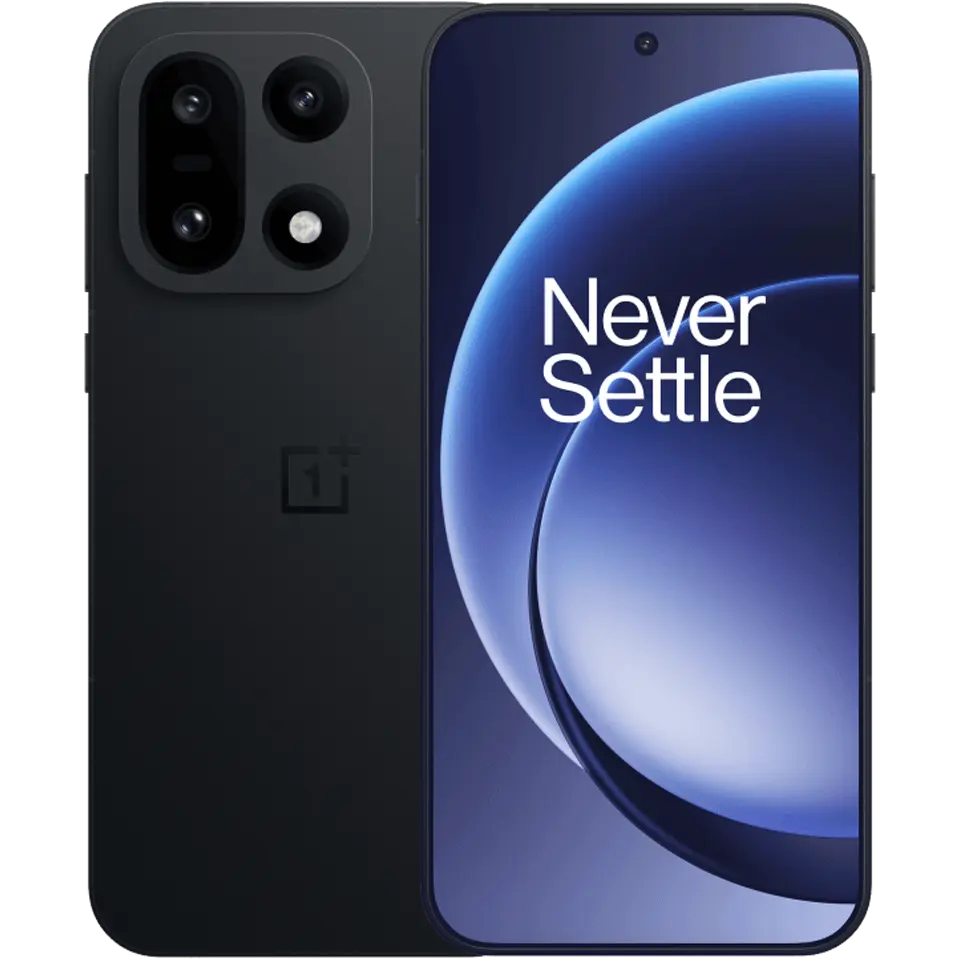
RedMagic
OnePlus
12 Pro
15
Ranked #5 of 62
Ranked #9 of 62
Overall
Overall
The RedMagic 12 Pro is a gaming phone priced at $949, aimed squarely at people who want raw processing power above all else. The OnePlus 15 costs $900 and targets the mainstream flagship buyer who wants a phone that does everything reasonably well. They're close enough in price that someone shopping at this tier could end up considering both, even though they're built with different priorities in mind.
The RedMagic leads in raw performance, display color accuracy, wireless charging speed, and data transfer. The OnePlus 15 has the stronger camera system, better battery life, faster wired charging, and more balanced speakers. Neither phone is a camera leader compared to the best in the field, but the OnePlus gets meaningfully closer, and its three-lens setup gives it reach the RedMagic can't match.
Design
| RedMagic 12 Pro | OnePlus 15 | |
|---|---|---|
| Specifications | ||
| Dimensions | 163.03 x 75.96 x 8.55 mm | 161.4 x 76.7 x 8.1 mm |
| Weight | 223g | 211g |
| IP Rating | IP68/IP69 | IP68/IP69K |
| Frame | Aluminum | Aluminum |
| Front | Gorilla Glass 7i | Gorilla Glass Victus 2 |
| Back | Gorilla Glass 7i | Gorilla Glass 7i / Crystal Shield Glass / Glass fiber |
| Screen-to-body ratio | 96.3% | 90.8% |
Both phones use aluminum frames and weigh in on the heavier side of modern flagships. The RedMagic 12 Pro is 163 x 76 x 8.55mm and 223g. The OnePlus 15 is 161.4 x 76.7 x 8.1mm and 211g. The OnePlus is slightly wider but thinner and 12 grams lighter, a difference you'd probably notice holding them back to back.
The RedMagic uses Gorilla Glass 7i on both front and back. The OnePlus has Gorilla Glass Victus 2 up front, with the back available in Gorilla Glass 7i, Crystal Shield Glass, or glass fiber depending on the color. Both carry IP68 ratings, meaning they can handle submersion to the rated depth. The RedMagic adds an IP69 rating and the OnePlus an IP69K, both indicating resistance to high-pressure, high-temperature water jets.
The most visible difference in hand is bezel size. The RedMagic's 96.3% screen-to-body ratio means almost no frame around the display. Bezels are extremely thin on all sides. The OnePlus sits at 90.8%, which is still good but leaves noticeably more border. The RedMagic's 19.9:9 aspect ratio makes it slightly taller and narrower than the OnePlus at 19.6:9.
Bandicoot Lab doesn't formally test design or durability, so these comparisons reflect specs and materials only.
Display
| RedMagic 12 Pro | OnePlus 15 | |
|---|---|---|
599/ 881 | 574/ 881 | |
The OnePlus 15 has a 6.78-inch LTPO AMOLED at 1272 x 2772 resolution, which works out to 450 pixels per inch. Its refresh rate ranges from 1Hz to 165Hz. The LTPO technology lets it drop to 1Hz on static content to save power. The RedMagic 12 Pro has a slightly larger 6.85-inch AMOLED at 1216 x 2688 (431 PPI) with a peak refresh rate of 185Hz. The RedMagic's minimum refresh rate isn't specified. The OnePlus has the sharper panel; the RedMagic has the faster one.
The OnePlus is brighter in both manual and HDR modes. With the brightness slider maxed, the OnePlus reaches 798 nits versus 718 on the RedMagic. For HDR content in auto-brightness mode, the OnePlus peaks at 1,958 nits versus 1,769. The RedMagic holds that HDR brightness more consistently across different content window sizes, at 100% stability compared to 91% on the OnePlus. This means small bright elements on a dark background stay just as bright as larger ones. Over a sustained 30-minute HDR test, both hold up well: 99.5% on the OnePlus and 98.5% on the RedMagic.
Color accuracy is a clear RedMagic advantage. In its best display mode, colors stay close to reference with minimal visible drift. Neutral tones look genuinely neutral, and saturated colors land where they should. The OnePlus shows more deviation, and its DCI-P3 gamut coverage (the wide color range used in HDR and modern photography) is 75.2% versus the RedMagic's 96.4%. Roughly a quarter of wide-gamut colors won't render fully on the OnePlus. Both cover the sRGB gamut nearly completely. For HDR tone mapping, which describes how the display translates HDR brightness levels to the screen, the RedMagic follows the reference curve more faithfully, with highlights rendered close to how they were mastered and detail preserved up to a 90% input level before clipping. The OnePlus pushes highlights noticeably brighter than the reference and starts clipping earlier, at 85%.
Touch latency, the delay between a tap and the screen registering it, measures 12.2ms on the RedMagic and 15.5ms on the OnePlus. That 3.3ms gap is small enough that most people won't feel it, though competitive gamers may care.
Performance
| RedMagic 12 Pro | OnePlus 15 | |
|---|---|---|
1000/ 1012 | 833/ 1012 | |
The RedMagic 12 Pro runs the Qualcomm Snapdragon 8 Elite Extreme Gen 6 with 16GB of RAM. The OnePlus 15 uses the previous-generation Qualcomm Snapdragon 8 Elite Gen 5, also with 16GB. Both are available in 12GB and 16GB RAM configurations with up to 1TB of storage.
The generational gap shows on the CPU side. The RedMagic scores 4,090 single-core and 11,916 multi-core in GeekBench 6, compared to 3,606 and 11,442 on the OnePlus. That 13% single-core lead translates to snappier app launches and smoother multitasking. The multi-core gap is narrower at about 4%.
GPU performance is where the RedMagic's gaming hardware pulls furthest ahead. In Wild Life Extreme, it peaks at 8,599 versus 7,160 on the OnePlus, a 20% advantage. Solar Bay tells a similar story: 16,595 versus 13,230, roughly a 25% gap. Stability under sustained load is comparable, with both phones dropping to around 60–66% of peak during stress tests. The RedMagic starts higher and stays higher, which matters during long gaming sessions when thermal throttling kicks in.
Browser performance, measured by Speedometer, is dramatically different: 28.6 on the RedMagic versus 18.1 on the OnePlus. You'll feel that in complex web apps and heavy pages.
Camera
| RedMagic 12 Pro | OnePlus 15 | |
|---|---|---|
382/ 587 | 426/ 587 | |
The OnePlus 15 has three rear cameras: a 50-megapixel main (f/1.8, 24mm, 1/1.56" sensor), a 50-megapixel ultrawide (f/2, 16mm, 1/2.88"), and a 50-megapixel telephoto at 3.5x (f/2.8, 80mm, 1/2.76"). Its front camera is 32 megapixels (f/2.4, 21mm). The RedMagic 12 Pro has a 50-megapixel main and 50-megapixel ultrawide, with a 16-megapixel front camera and no telephoto. Max digital zoom is 100x on the OnePlus and 10x on the RedMagic.
The OnePlus is sharper on every lens and in every lighting condition. At extreme zoom levels, the gap becomes enormous. The RedMagic is cropping from its main sensor at 10x, producing very soft results. The OnePlus starts from its 3.5x telephoto and maintains noticeably more resolved detail well into the digital crop range. Even past 30x, it resolves more than the RedMagic manages at 10x.
The two phones have distinctly different color tuning. The RedMagic leans vivid in bright light, with punchy saturation and a slightly cool tone. Under warm mid-level and dim lighting, it shifts to a pronounced blue cast as the white balance overcorrects for warm ambient light. This is the dominant cause of the color breakdown in those conditions. The camera pushes too far blue trying to neutralize warm tones, and hue accuracy degrades sharply. Skin tones suffer across all lighting on the RedMagic. The OnePlus takes a more restrained approach: saturation is neutral to slightly muted, with a consistent warm lean in all conditions. Hue accuracy is moderate throughout, not outstanding, but it degrades less as light dims. In dark conditions, there's a slight magenta push in skin tones. This appears to be a sensor-level limitation rather than a white balance issue, since the overall warm-cool balance stays stable.
Main
| RedMagic 12 Pro (Main) | OnePlus 15 (Main) | |
|---|---|---|
440/ 722 | 441/ 722 | |
The OnePlus 15's main camera is substantially sharper in bright light. Both phones converge somewhat in mid and dim conditions, but the OnePlus holds an edge throughout.
The zoom range tells different stories. The OnePlus main covers 1x to 3.5x before the telephoto takes over, and it holds detail cleanly across that range. A 2x crop still looks crisp. The RedMagic's main has to cover 1x all the way to 10x without any telephoto to hand off to. Detail softens noticeably by 3–4x, and anything past 5x looks mushy.
The RedMagic main preserves highlights without clipping, but shadow detail is limited and high-contrast scenes have less depth. The OnePlus captures a broader range from shadows to highlights, giving scenes more dimension, though it clips the very brightest highlights.
In bright light, the RedMagic's vivid tuning is the most obvious color difference. Greens and reds are pushed harder, and images look saturated compared to the OnePlus's neutral rendering. Once light drops to mid-level or dim conditions, the RedMagic's white balance pushes a strong blue cast that drags color accuracy down hard. The OnePlus keeps its warm-neutral character more consistently. Its hue accuracy is moderate but stable, degrading only gradually in dim light as a slight magenta shift appears in skin tones.
Ultrawide
| RedMagic 12 Pro (Ultrawide) | OnePlus 15 (Ultrawide) | |
|---|---|---|
371/ 722 | 441/ 722 | |
The OnePlus 15's ultrawide is sharper than the RedMagic's across all lighting conditions and maintains consistent sharpness from bright to dim. The RedMagic's ultrawide is softer overall, though it holds up reasonably in dim light.
The biggest gap between the two ultrawides is dynamic range. The OnePlus captures a broad range of shadow and highlight detail, keeping high-contrast scenes looking natural. The RedMagic's ultrawide has quite limited dynamic range, with highlight clipping and significantly less shadow recovery. High-contrast scenes can look washed out or blown.
Color behavior follows the same pattern as the main cameras. The RedMagic ultrawide leans vivid and cool in bright light, then develops a pronounced blue cast under warm lighting, the same white balance overcorrection issue as the main lens. The OnePlus ultrawide stays warm-neutral and muted. Both ultrawides show more color error than their respective main lenses, which is typical, but the OnePlus holds up better across lighting conditions.
Telephoto
| RedMagic 12 Pro (Telephoto) | OnePlus 15 (Telephoto) | |
|---|---|---|
| — | 446/ 722 | |
The RedMagic 12 Pro doesn't have a telephoto lens. All zoom beyond 1x is a digital crop from the main sensor, and detail falls off quickly past 3–4x. The OnePlus 15's 50-megapixel telephoto at 3.5x (80mm, f/2.8) is a dedicated lens with real optical resolving power.
At its native 3.5x focal length, the OnePlus telephoto produces good detail in bright and mid lighting. Hue accuracy is solid in those conditions, better than its main camera, in fact. Saturation runs a touch high in bright light but settles to neutral otherwise, with the same warm lean as the rest of the system. Skin tone accuracy is inconsistent, with noticeable errors in bright and mid lighting that actually improve in dim conditions. Dynamic range is moderate, with some highlight clipping in high-contrast scenes.
As you push past the native 3.5x into digital crop territory, detail falls off gradually. The telephoto still resolves considerably more at 10x than the RedMagic's main sensor can manage at the same zoom level. Video stabilization from the telephoto is adequate at the native focal length but amplifies shake at longer crop levels.
Front
| RedMagic 12 Pro (Front) | OnePlus 15 (Front) | |
|---|---|---|
415/ 722 | 421/ 722 | |
The OnePlus 15's 32-megapixel front camera is sharper than the RedMagic's 16-megapixel one in bright light, a significant gap. Both lose sharpness as lighting dims, closing the distance somewhat, but the OnePlus stays ahead.
Color is where the OnePlus front camera stands out most. Hue accuracy in bright and especially mid lighting is genuinely good, much better than any of the RedMagic's cameras or even the OnePlus's own rear lenses. Skin tones in mid lighting are close to accurate, which is unusual at this price. In dim light, a warm-magenta shift appears. The RedMagic's front camera oversaturates slightly in bright and mid conditions and picks up a blue lean in dim light. Skin tones are inaccurate throughout.
Dynamic range is close between the two. The RedMagic preserves highlights without clipping and has smoother tonal transitions. The OnePlus clips the brightest highlights and shows more tonal inconsistencies in gradients. For video, the OnePlus front camera is noticeably more stable.
Battery
| RedMagic 12 Pro | OnePlus 15 | |
|---|---|---|
732/ 836 | 780/ 836 | |
The RedMagic 12 Pro packs 8,400mAh, a large cell. The OnePlus 15 has 7,300mAh, which is still sizable but over a thousand milliamp-hours less. The bigger battery doesn't translate to better endurance across the board.
In video playback, which runs until the phone dies, the OnePlus lasts 46.1 hours compared to the RedMagic's 30.5 hours. That's a 50% advantage. For the OnePlus, 46 hours of video means comfortable two-day use for most people, even with heavy screen time. The RedMagic's 30.5 hours is still solid, comfortably a full day and then some, but the gap is wide.
During web browsing over a five-hour test, the RedMagic drains 14% versus 16% on the OnePlus. A small edge for the RedMagic, and both are efficient. Gaming draws a sharper contrast: the RedMagic drains 35% during the 3DMark Wild Life Extreme stress test (20 loops) compared to 23% on the OnePlus. The RedMagic's more powerful GPU pulls more power under sustained load, which means the OnePlus holds more charge after a long gaming session despite the smaller battery. Overnight standby over eight hours favors the RedMagic: 2% drain versus 4%. Both are good enough that you won't notice in practice.
The OnePlus delivers meaningfully longer battery life for video and gaming, the two most battery-intensive activities, while the RedMagic sips less during standby and web browsing. For most usage patterns, the OnePlus's advantages matter more.
Charging
| RedMagic 12 Pro | OnePlus 15 | |
|---|---|---|
678/ 837 | 700/ 837 | |
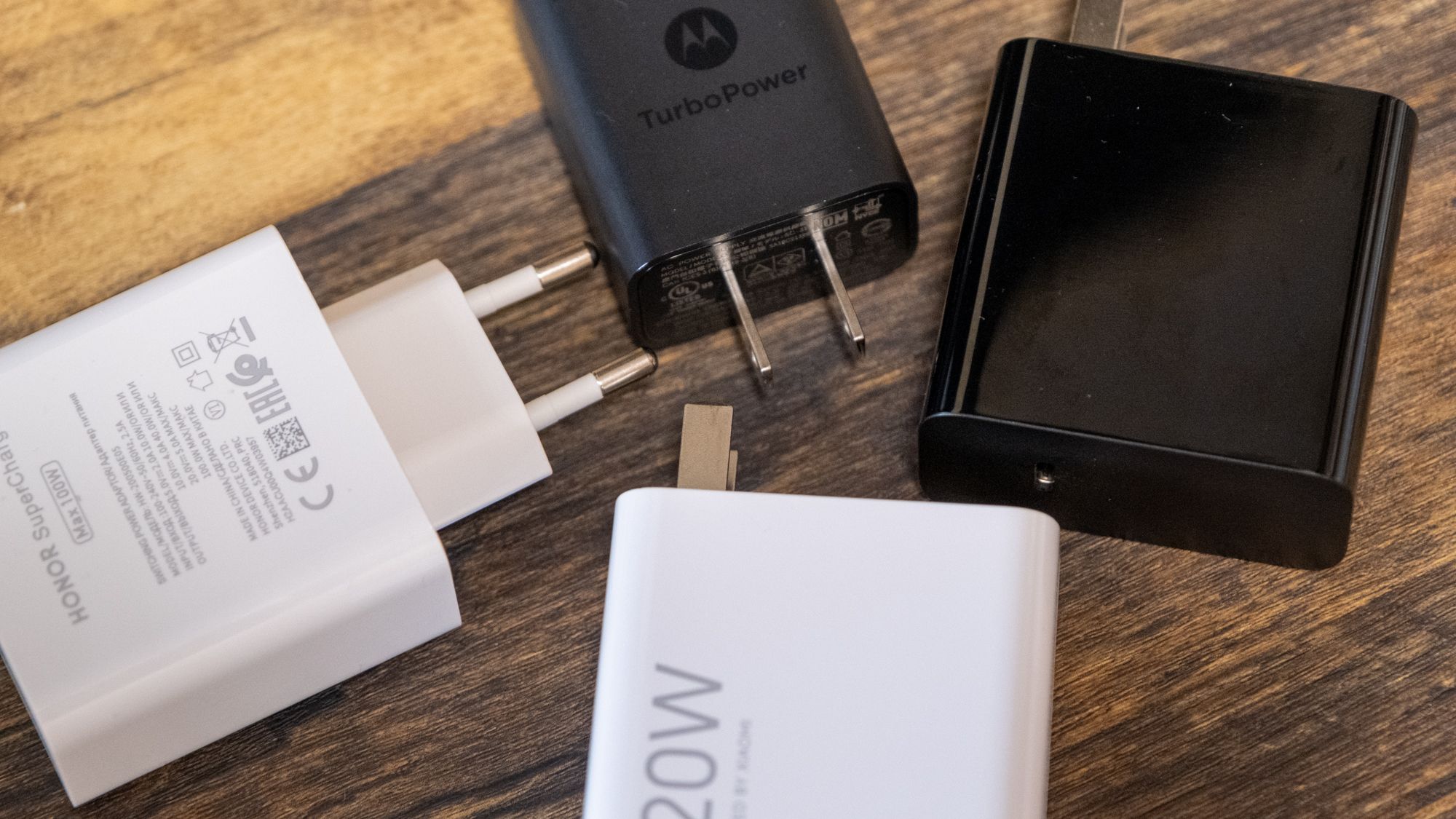
The OnePlus 15 supports 120W wired and 50W wireless charging. The RedMagic 12 Pro supports 80W wired and 80W wireless.
Wired charging is significantly faster on the OnePlus. It reaches 37% in 10 minutes versus 24% on the RedMagic, and 88% in 30 minutes versus 61%. A quick morning top-up gives you substantially more charge on the OnePlus, and it's filling a smaller battery to begin with, so that 88% in 30 minutes represents a near-full phone.
Wireless charging flips the advantage. The RedMagic's 80W wireless hits 19% in 10 minutes and 48% in 30 minutes. The OnePlus manages 10% and 28% in the same intervals. If you primarily charge on a wireless pad, the RedMagic fills up nearly twice as fast in the first half hour.
Speaker
| RedMagic 12 Pro | OnePlus 15 | |
|---|---|---|
598/ 897 | 669/ 897 | |
Both phones reach similar maximum volumes, 75 dBA on the OnePlus and 74.2 dBA on the RedMagic. The character of the output is different.
The RedMagic produces fuller bass, extending well below where the OnePlus can reach. Games and action movies benefit from that low-end presence. The cost is a less even frequency response through the midrange and treble, and less high-frequency clarity. Vocals and detailed audio can sound muddier.
The OnePlus delivers cleaner, more balanced sound with better clarity in the upper frequencies. Music and spoken content sound more detailed and natural. Bass extension doesn't reach as low, so media can sound thinner in comparison. The OnePlus also measures better for distortion. The OnePlus is the more listenable speaker for varied content; the RedMagic has the bass advantage.
Microphone
| RedMagic 12 Pro | OnePlus 15 | |
|---|---|---|
625/ 1220 | 696/ 1220 |
The OnePlus 15 measures more evenly across the frequency range, which means voices and ambient sound are captured with less coloration, above average for the phones we've tested. The RedMagic 12 Pro is slightly less flat but still produces reasonable quality. Neither will embarrass you on a call; the OnePlus sounds a touch more natural.
Other
| RedMagic 12 Pro | OnePlus 15 | |
|---|---|---|
| Biometrics | 889/ 1181 | 514/ 1181 |
| Data Transfer | 945/ 945 | 622/ 945 |
| Specifications | ||
| Biometric type | Fingerprint | Fingerprint |
| Ports | USB-C 3.2 Gen 2 | USB-C 3.2 |
| Storage | 256GB, 512GB, 1TB | 256GB, 512GB, 1TB |
Both phones have fingerprint sensors, and neither has hardware-based face unlock. The RedMagic uses an optical fingerprint sensor that registers at 118ms, quick and consistent. The OnePlus uses an ultrasonic sensor at 204ms, which is perceptibly slower. You'll feel that difference with every unlock.
Data transfer speeds favor the RedMagic. Its USB-C 3.2 Gen 2 port delivers max read speeds of 422 MB/s and write speeds of 420 MB/s. The OnePlus's USB-C 3.2 port reaches 298 MB/s read and 230 MB/s write. For large file transfers, the RedMagic is almost twice as fast on writes. Both phones offer 256GB, 512GB, and 1TB storage options.
Conclusion
The RedMagic 12 Pro wins on processing power, display accuracy, wireless charging, fingerprint speed, and data transfer. Its Snapdragon 8 Elite Extreme Gen 6 delivers a clear generational advantage in CPU and GPU benchmarks, and the display tracks color and HDR references more faithfully. The OnePlus 15 wins on camera quality, battery life, wired charging speed, and speaker balance, and costs $50 less.
The camera gap is probably the most consequential single difference. The RedMagic's two-lens system with no telephoto and inconsistent color processing sits near the bottom of the phones we've tested. The OnePlus isn't a camera leader either, but its three-lens setup, better sharpness, and more consistent color make it a far more capable everyday camera. If you photograph anything beyond the occasional snapshot, the RedMagic is a tough sell.
If you're buying primarily for gaming and raw performance, competitive titles, emulation, heavy multitasking, the RedMagic 12 Pro makes sense. The faster GPU, lower touch latency, higher refresh rate, and 185Hz display are built for exactly that use. For nearly everyone else, the OnePlus 15 is the more practical phone: better camera, longer battery life, faster wired charging, and a more balanced speaker, all at a lower price.
FAQ
Is the RedMagic 12 Pro or OnePlus 15 better for gaming?
The RedMagic 12 Pro has the faster hardware for gaming. Its GPU peaks about 20% higher in Wild Life Extreme and roughly 25% higher in Solar Bay. It also has lower touch latency (12.2ms vs 15.5ms) and a 185Hz peak refresh rate against the OnePlus 15's 165Hz. The OnePlus uses less battery under sustained load, draining 23% in the Wild Life Extreme stress test versus 35% for the RedMagic.
Which has the better camera, the OnePlus 15 or the RedMagic 12 Pro?
The OnePlus 15 has the better camera system. It is sharper on every lens and in every lighting condition, and it has a 3.5x telephoto that the RedMagic lacks. The RedMagic's colors turn strongly blue in warm mid-level and dim light, and its skin tones are off across all lighting. The OnePlus keeps a consistent warm-neutral look.
Does the OnePlus 15 or RedMagic 12 Pro have better battery life?
The OnePlus 15 lasts much longer on video playback, at 46.1 hours versus 30.5 hours for the RedMagic 12 Pro. It also holds up better in gaming, even though its 7,300mAh cell is smaller than the RedMagic's 8,400mAh. The RedMagic drains slightly less during web browsing (14% vs 16%) and overnight standby (2% vs 4%), but the OnePlus has the edge for most usage.
Which charges faster, the OnePlus 15 or the RedMagic 12 Pro?
It depends on how you charge. With a cable, the OnePlus 15 reaches 37% in 10 minutes and 88% in 30 minutes, versus 24% and 61% for the RedMagic 12 Pro. On a wireless pad the RedMagic's 80W charging is faster, reaching 48% in 30 minutes against 28% for the OnePlus.
Is the RedMagic 12 Pro's display better than the OnePlus 15's?
The RedMagic 12 Pro has the more accurate display, with DCI-P3 coverage of 96.4% versus 75.2% on the OnePlus 15. It also follows the HDR reference curve more faithfully. The OnePlus is brighter (798 nits vs 718 with the slider maxed) and has a sharper panel at 450 PPI versus 431. The OnePlus is the better pick if peak brightness matters more to you than color accuracy.
Should I buy the RedMagic 12 Pro or the OnePlus 15 if I'm not a mobile gamer?
The OnePlus 15 is the better fit for most people who aren't buying mainly for gaming. It has the stronger camera, longer battery life, faster wired charging and more balanced speakers, and it costs $50 less at $900. The RedMagic 12 Pro makes sense if raw performance, wireless charging speed and fast file transfers are your priorities.
Related
RedMagic
12 Pro
OnePlus
15

RedMagic
11S Pro

RedMagic
11 Air
OnePlus
15R
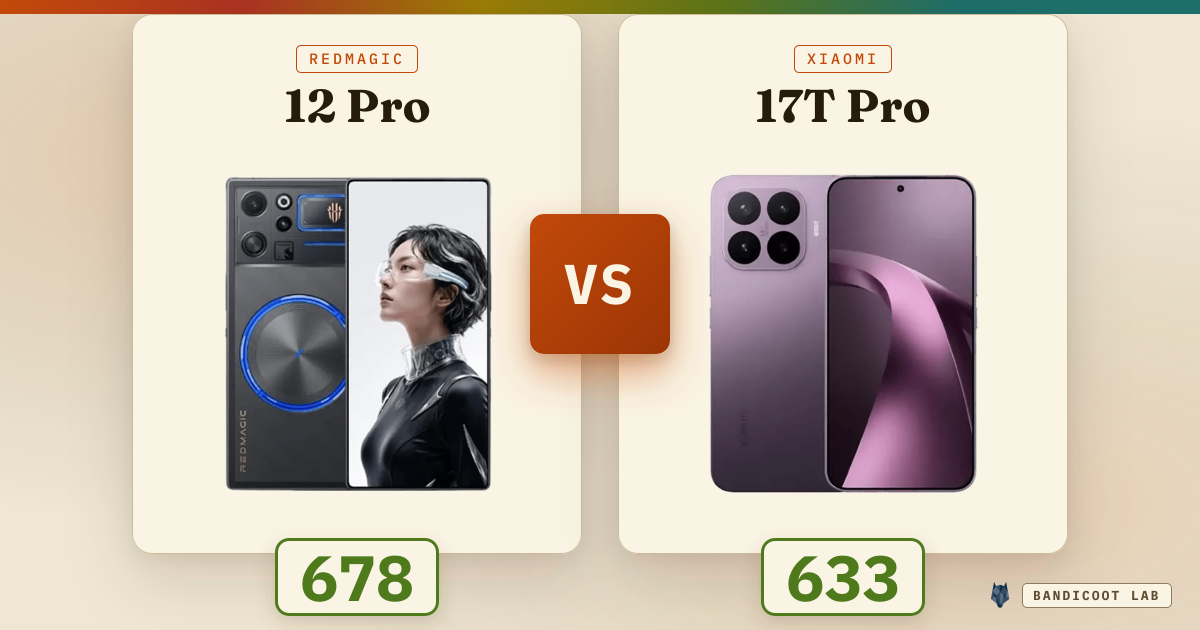
RedMagic 12 Pro vs Xiaomi 17T Pro
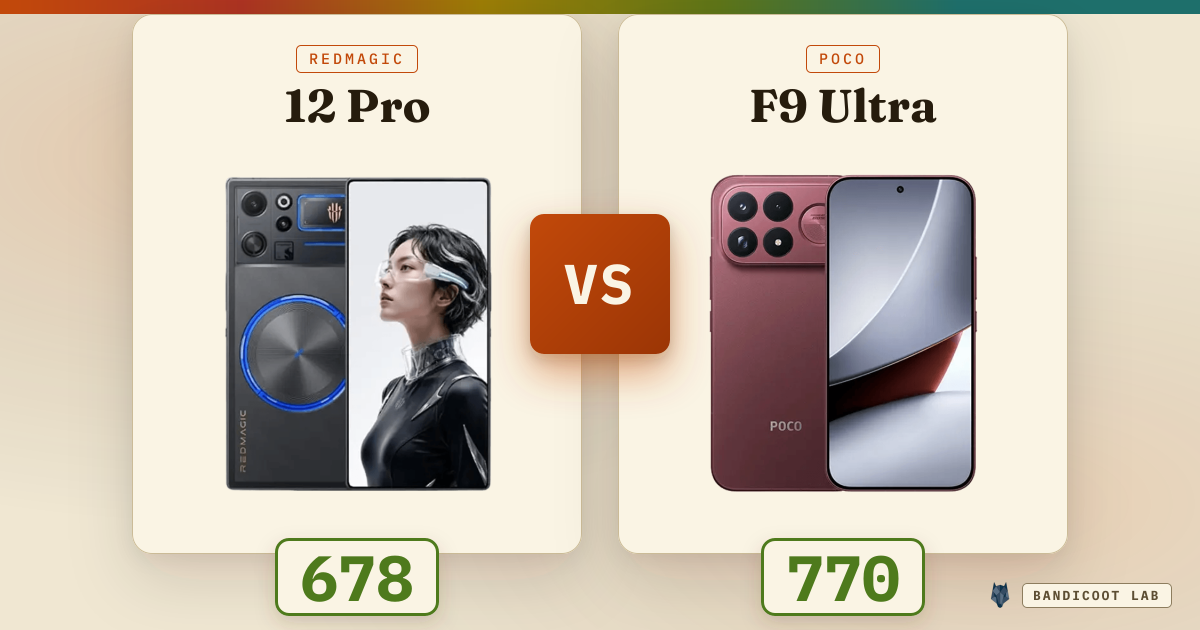
RedMagic 12 Pro vs Poco F9 Ultra
RedMagic 12 Pro vs RedMagic 11S Pro
Google Pixel 11 Pro vs OnePlus 15
RedMagic 11S Pro vs OnePlus 15
Xiaomi 17T Pro vs OnePlus 15
How we test charging