Google Pixel 11 Pro vs OnePlus 15
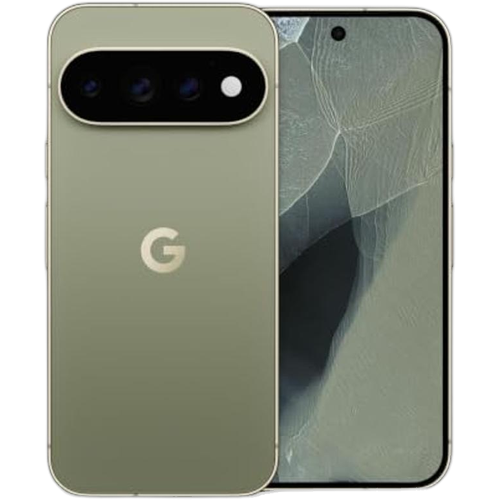
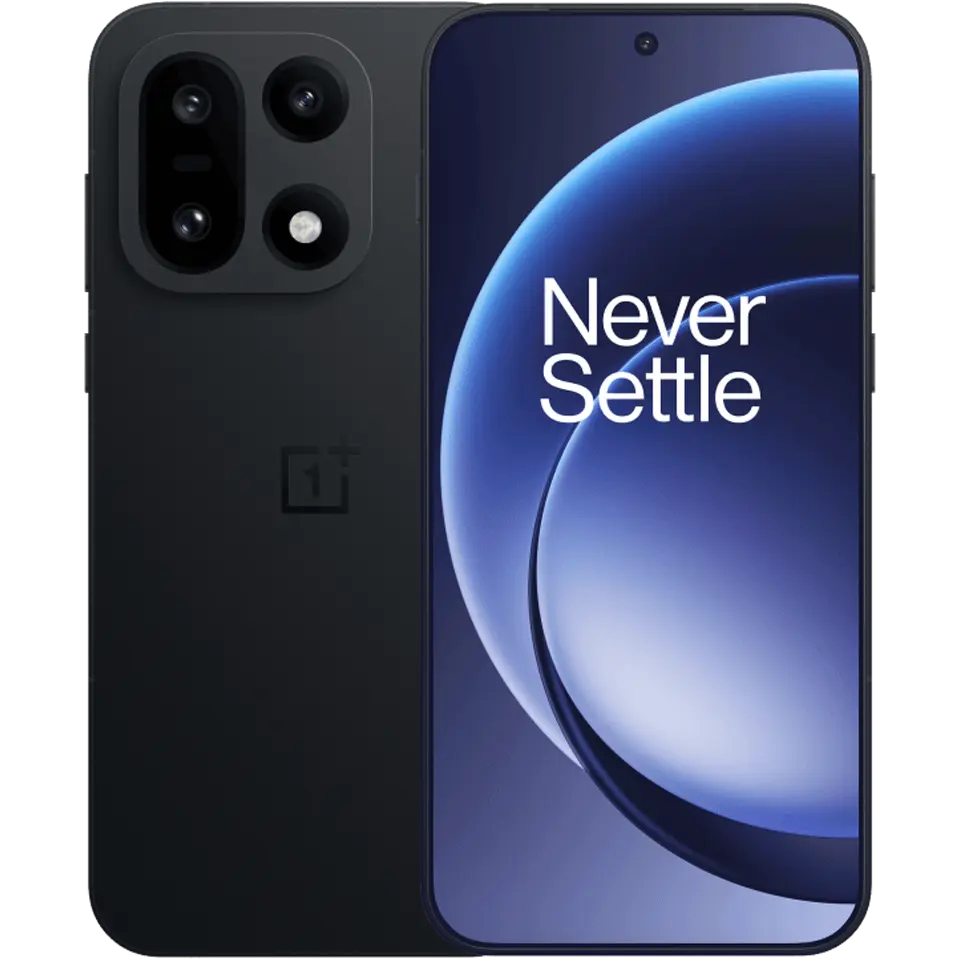
OnePlus
Pixel 11 Pro
15
Ranked #31 of 61
Ranked #8 of 61
Overall
Overall

The Google Pixel 11 Pro, at $1,099, is built around its display and camera system. Google has prioritized those two areas across every Pixel generation, and the 11 Pro stays true to form. The OnePlus 15, at $899.99, puts its resources into processing power, battery endurance, and charging speed. It's $200 less and delivers more raw hardware in most categories.
The Pixel has the stronger display by a wide margin and a more accurate camera system, particularly for telephoto shooting and skin tones. The OnePlus is faster, lasts much longer on a charge, and charges much more quickly.
Design
| Google Pixel 11 Pro | OnePlus 15 | |
|---|---|---|
| Specifications | ||
| Dimensions | 152.7 x 71.9 x 8.4 mm | 161.4 x 76.7 x 8.1 mm |
| Weight | 204g | 211g |
| IP Rating | IP68 | IP68/IP69K |
| Frame | Aluminum | Aluminum |
| Front | Gorilla Glass Victus 2 | Gorilla Glass Victus 2 |
| Back | Gorilla Glass Victus 2 | Gorilla Glass 7i / Crystal Shield Glass / Glass fiber |
| Screen-to-body ratio | 87.0% | 90.8% |
The Pixel 11 Pro is the smaller phone: 152.7 x 71.9 x 8.4mm and 204g, with a 6.3-inch display. The OnePlus 15 measures 161.4 x 76.7 x 8.1mm and 211g, with a 6.78-inch screen. The OnePlus is thinner by 0.3mm but wider and taller in every other dimension. The Pixel's 71.9mm width makes one-handed use more practical for most hands.
Both use aluminum frames and Gorilla Glass Victus 2 on the front. The Pixel uses the same glass on the back; the OnePlus varies by model, offering Gorilla Glass 7i, Crystal Shield Glass, or glass fiber. Both carry IP68 ratings, meaning submersion in up to 1.5 meters of fresh water for 30 minutes. The OnePlus adds IP69K certification, which covers high-pressure, high-temperature water jets. It's an unusual rating for a phone and mainly relevant in industrial contexts.
The OnePlus has a 90.8% screen-to-body ratio versus 87% on the Pixel, which translates to thinner bezels relative to the display. The Pixel's aspect ratio is 20:9; the OnePlus is slightly wider at 19.6:9. Both use USB-C 3.2 ports.
Bandicoot Lab doesn't formally test design or durability. This section covers what's on the spec sheet; we can't verify in-hand feel or long-term robustness from paper alone.
Display
| Google Pixel 11 Pro | OnePlus 15 | |
|---|---|---|
881/ 881 | 574/ 881 | |
The Pixel 11 Pro is the stronger display, and the gap shows up across nearly every measurement. At maximum manual brightness, the Pixel reaches 1,398 nits. The OnePlus hits 798 nits. For HDR content with auto-brightness active, the Pixel peaks at 3,594 nits versus 1,958 for the OnePlus. In direct sunlight, the Pixel is visibly easier to read.
Brightness consistency tells two different stories. Across HDR window sizes, which measure how well the panel holds brightness as bright areas get larger on screen, the OnePlus holds 91% of its peak while the Pixel holds 67.7%. Large bright areas dim more noticeably on the Pixel. Over a sustained 30-minute HDR session, both panels are steady: 98.2% for the Pixel, 99.5% for the OnePlus. Neither dims during a movie.
Color accuracy favors the Pixel significantly. In its best mode, colors are nearly reference-perfect with neutral whites and no visible tint. The OnePlus drifts further from reference, most visibly in neutral tones and skin rendering. On its own it looks fine. The gap becomes obvious in a side-by-side. Both displays push HDR highlights slightly brighter than mastered, making HDR content a touch punchier. The OnePlus follows the HDR reference curve more closely overall but starts clipping at the 85% input level, losing distinction in the brightest highlights. The Pixel deviates more from the reference curve but holds highlight detail up to 95%.
Resolution is close: 1280 x 2856 on the Pixel (495 pixels per inch) versus 1272 x 2772 on the OnePlus (450 PPI). Both are sharp enough that pixels aren't visible at normal viewing distances. The OnePlus refreshes up to 165Hz versus 120Hz on the Pixel; both drop to 1Hz for static content via LTPO. Touch latency is 13ms on the Pixel, 15.5ms on the OnePlus. Close enough that you won't notice the difference.
Performance
| Google Pixel 11 Pro | OnePlus 15 | |
|---|---|---|
429/ 1012 | 833/ 1012 | |
The OnePlus 15 runs the Qualcomm Snapdragon 8 Elite Gen 5 with 16GB of RAM (12GB also available). The Pixel 11 Pro uses Google's Tensor G6 with 12GB (16GB available). This is a lopsided matchup. The OnePlus scores 3,606 single-core and 11,442 multi-core in GeekBench 6; the Pixel scores 2,551 and 4,846. That's a 41% single-core gap and more than double in multi-core. You'll feel this in demanding multitasking, large exports, and compute-heavy apps.
GPU performance tilts the same direction. The OnePlus peaks at 7,160 in Wild Life Extreme; the Pixel hits 3,278. Under sustained load, the OnePlus retains 63.7% of peak and the Pixel 68.3%. The Pixel throttles to a slightly higher fraction of its own lower ceiling, but the OnePlus's sustained absolute output is still roughly double.
Browser performance is where the Pixel wins. It scores 25 in Speedometer versus the OnePlus's 18.1. Tensor has historically optimized for web rendering, and day-to-day browsing feels slightly snappier on the Pixel.
Camera
| Google Pixel 11 Pro | OnePlus 15 | |
|---|---|---|
468/ 587 | 426/ 587 | |
The Pixel 11 Pro is the stronger camera overall in our testing. The Pixel's lead comes from its telephoto and color accuracy. The OnePlus has a stronger ultrawide and better video stabilization on most lenses. Both use 50-megapixel main sensors; the Pixel's is physically larger at 1/1.3 inches versus 1/1.56 inches.
Sharpness depends on lens and lighting. The OnePlus main camera resolves very high detail in bright conditions, exceeding the Pixel clearly at 1x. It softens significantly as light drops. The Pixel maintains more consistent sharpness from bright to dark, particularly on its main and telephoto lenses. The Pixel's telephoto is its sharpest lens and scores high across both phones. The OnePlus ultrawide is the standout in its own system, staying sharp across all conditions. At extreme zoom past 10x, both phones lean on heavy digital crops and neither produces great results. The Pixel holds a slight edge because its 5x telephoto requires less cropping to reach any given magnification. Neither phone produces anything useful at its maximum zoom.
The two cameras have distinctly different color characters. The Pixel pushes saturation well above neutral, producing vivid, punchy photos. It leans slightly cool in daylight and shifts warm indoors, the white balance (how the camera adjusts for different light temperatures) overcorrecting in both directions as the light temperature changes. The OnePlus keeps saturation close to neutral and trends slightly muted in dimmer conditions. A consistent warm, yellowish tone runs through all lighting. This doesn't shift with the light temperature, so it reads as a deliberate processing choice rather than a correction failure. The Pixel produces bolder, more saturated output; the OnePlus is more restrained.
Accuracy separates them further. The Pixel's hue accuracy (whether colors are rendered as the correct color) stays moderate and fairly stable across lighting. Skin tones are worst in bright light, where the high saturation pushes faces off-target, but improve in dimmer conditions as saturation backs off. The OnePlus shows moderate hue confusion even in good light, a sensor-level limitation. Under warmer indoor and low light, the white balance introduces a growing magenta shift that compounds the existing color issues. The white balance problem dominates in low light. Skin tones are consistently inaccurate across all OnePlus lenses and conditions, running warm and drifting further off-target as light drops. This is the clearest gap between the two cameras. Both phones clip highlights in most situations, with the Pixel preserving slightly more shadow detail and tonal range overall.
Main
| Google Pixel 11 Pro (Main) | OnePlus 15 (Main) | |
|---|---|---|
467/ 722 | 441/ 722 | |
The Pixel 11 Pro's main camera is a 50-megapixel sensor at f/1.68, 25mm equivalent, on a 1/1.3-inch sensor. The OnePlus 15's is also 50 megapixels, at f/1.8, 24mm, on a 1/1.56-inch sensor.
In bright light at 1x, the OnePlus resolves considerably more fine detail. As light drops to indoor and low-light levels, its sharpness falls roughly in half. The Pixel holds its detail well from bright to dark. If you shoot mostly outdoors in good light, the OnePlus delivers more at 1x. If you shoot across varied conditions, the Pixel is the safer bet. The Pixel's main lens covers 1x through 5x before handing off to the telephoto; the OnePlus covers 1x through 3.5x. Through the shared crop range, the Pixel's larger sensor helps it hold detail as you zoom in.
Dynamic range favors the Pixel. High-contrast scenes retain more shadow depth and tonal separation, though some shadow gradients can look slightly uneven. The OnePlus captures a narrower brightness range but with smoother tonal transitions within it. Both cameras clip bright highlights. Video stabilization on the main camera is much better on the OnePlus. Handheld footage stays controlled and smooth. The Pixel's main camera stabilization is a weak point.
Ultrawide
| Google Pixel 11 Pro (Ultrawide) | OnePlus 15 (Ultrawide) | |
|---|---|---|
397/ 722 | 441/ 722 | |
The Pixel 11 Pro uses a 48-megapixel ultrawide at f/1.7, 13mm equivalent. The OnePlus 15 has a 50-megapixel ultrawide at f/2, 16mm. The Pixel captures a wider field of view; the OnePlus frames narrower, closer to what most phones offer at the ultrawide setting.
Sharpness goes to the OnePlus across all lighting levels. It holds its detail from bright to dark more consistently than its own main camera, making it the strongest lens in the OnePlus system. The Pixel ultrawide is respectable but a step behind. Color on both ultrawides follows their respective main camera patterns: the Pixel oversaturates moderately, the OnePlus is muted with a warm cast. The OnePlus ultrawide's color degrades more aggressively in dim conditions than its main camera. Hue accuracy drops dramatically from bright to dark, and the warm cast intensifies as the white balance struggles with warmer light. Both ultrawides produce noticeable skin tone errors in bright and mid-light.
Dynamic range goes to the OnePlus ultrawide, which captures noticeably more scene depth with better shadow detail and smoother tonal transitions. The Pixel ultrawide has narrower range and more tonal irregularities. Stabilization is also better on the OnePlus.
Telephoto
| Google Pixel 11 Pro (Telephoto) | OnePlus 15 (Telephoto) | |
|---|---|---|
629/ 722 | 446/ 722 | |
The Pixel 11 Pro has a 48-megapixel telephoto at f/2.8, 106mm equivalent (5x optical), on a 1/1.95-inch sensor. The OnePlus 15 uses a 50-megapixel telephoto at f/2.8, 80mm equivalent (3.5x optical), on a smaller 1/2.76-inch sensor. The Pixel's longer native focal length and larger sensor give it a structural advantage.
The Pixel telephoto is its sharpest lens, delivering high, consistent detail from bright through dark conditions. The OnePlus telephoto is the weakest lens in its own system for sharpness, scoring well behind both its main and ultrawide cameras and well below the Pixel's telephoto. As you zoom past each phone's native focal length, the Pixel benefits from starting at 5x rather than 3.5x, needing less digital cropping to reach the same magnification.
Color is the Pixel telephoto's strongest result. Hue accuracy is stable across lighting, and skin tones are the most accurate of any lens on either phone. Saturation is slightly elevated but controlled. The OnePlus telephoto oversaturates a touch in bright light and desaturates in dim conditions. Hue accuracy is reasonable in good light but drops sharply in the dark. Skin tones are poor across all conditions. Dynamic range is close, though the Pixel telephoto avoids clipping highlights entirely, a rare result across these cameras. The OnePlus telephoto clips. Stabilization favors the Pixel, which matters at these longer focal lengths where shake is magnified.
Front
| Google Pixel 11 Pro (Front) | OnePlus 15 (Front) | |
|---|---|---|
463/ 722 | 421/ 722 | |
The Pixel 11 Pro's front camera is 42 megapixels at f/2.2, 17mm equivalent. The OnePlus 15 uses 32 megapixels at f/2.4, 21mm. The Pixel's wider angle captures more background; the OnePlus frames tighter on the face.
In bright light, the OnePlus front camera resolves more detail. That advantage reverses as light drops. The Pixel holds its sharpness well into mid and dark conditions; the OnePlus loses more than half its bright-light detail in dim indoor light. For selfies in controlled lighting, the OnePlus is sharper. In restaurants and evening settings, the Pixel is.
The OnePlus front camera is its most accurate lens for color. Hue accuracy is solid in bright and mid-light, and skin tones are close to reference in indoor conditions. The Pixel front camera is moderately accurate across conditions with a slight warm shift that grows in dimmer light. In dark conditions, both degrade, with the OnePlus picking up its characteristic warm yellow-magenta cast. Dynamic range goes to the Pixel, which captures wider tonal range with fewer artifacts. Stabilization is better on the OnePlus front camera.
Battery
| Google Pixel 11 Pro | OnePlus 15 | |
|---|---|---|
515/ 836 | 780/ 836 | |
The OnePlus 15 has a 7,300mAh battery; the Pixel 11 Pro has a 4,850mAh cell. That's 50% more capacity, and it shows in every endurance test.
In video playback, which runs continuously until the phone dies, the OnePlus lasted 46.11 hours. The Pixel managed 26.32 hours. The Pixel's result is solid on its own. The OnePlus is in a different class entirely. In practice, the OnePlus will comfortably last two days of mixed use and potentially three with lighter use. The Pixel gets through a full day without worry but needs a nightly charge.
Web browsing drained 16% of the OnePlus over five hours versus 20% on the Pixel. Over a full workday of browsing, that gap adds meaningful headroom. The gaming stress test drained 23% from the OnePlus and 20% from the Pixel. The OnePlus's faster GPU draws more power, but its much larger battery more than compensates. In a real gaming session, the OnePlus will outlast the Pixel by a wide margin. Standby drain was identical at 4% over eight hours overnight.
Charging
| Google Pixel 11 Pro | OnePlus 15 | |
|---|---|---|
330/ 837 | 700/ 837 | |
The OnePlus 15 supports 120W wired and 50W wireless charging. The Pixel 11 Pro supports 30W wired and 25W wireless with Qi2-compatible magnetic alignment, so it snaps onto MagSafe and Qi2 pucks without fidgeting.
Wired charging isn't close. The OnePlus reaches 37% in 10 minutes and 88% in 30 minutes. The Pixel reaches 21% and 58% over the same intervals. The OnePlus is also filling a much larger battery, so each percentage point represents more actual charge. Ten minutes on a charger gives the OnePlus enough power to get through most of a day.
Wireless charging is more even by percentage. The Pixel reaches 11% at 10 minutes and 34% at 30 minutes; the OnePlus reaches 10% and 28%. The Pixel fills slightly faster in percentage terms despite its lower wattage. In absolute energy delivered, the OnePlus puts more charge into its larger battery at each interval. The Pixel's magnetic alignment is a practical convenience the OnePlus doesn't offer.
Speaker
| Google Pixel 11 Pro | OnePlus 15 | |
|---|---|---|
699/ 897 | 669/ 897 | |
Both speakers land mid-pack, with the Pixel 11 Pro slightly ahead of the OnePlus 15.
The Pixel is louder at 77.2 dBA versus 75 dBA and runs lower distortion at 6.77% THD versus 7.87%. At high volumes, it stays a bit cleaner. The two speakers have different characters. The Pixel emphasizes clarity and upper frequencies, with well-defined vocals and treble. The OnePlus has a more balanced midrange response and relatively more bass presence. Neither is great for music, but the Pixel is better if you want volume and vocal clarity; the OnePlus if you prefer a warmer, more even sound.
Microphone
| Google Pixel 11 Pro | OnePlus 15 | |
|---|---|---|
659/ 1220 | 696/ 1220 |
Both phones have above-average microphones. Both deliver clear, evenly reproduced audio for calls and video recording. The OnePlus is marginally more consistent across the frequency range. In daily use, you're unlikely to notice the difference.
Other
| Google Pixel 11 Pro | OnePlus 15 | |
|---|---|---|
| Biometrics | 501/ 1181 | 514/ 1181 |
| Data Transfer | 305/ 943 | 622/ 943 |
| Specifications | ||
| Biometric type | Fingerprint | Fingerprint |
| Ports | USB-C 3.2 | USB-C 3.2 |
| Storage | 256GB, 512GB, 1TB | 256GB, 512GB, 1TB |
Both phones use ultrasonic fingerprint sensors, and unlock speeds are practically identical: 204ms for the OnePlus, 210ms for the Pixel. Neither phone has hardware-based face unlock.
Data transfer speeds differ more than you'd expect from the same USB-C 3.2 port. The OnePlus reaches 298 MB/s read and 230 MB/s write. The Pixel manages 125 MB/s and 138 MB/s. If you regularly move large files to or from your phone, the OnePlus finishes in roughly half the time. Both phones are available in 256GB, 512GB, and 1TB storage configurations.
Conclusion
The OnePlus 15 is stronger in processing power, battery life, charging speed, and data transfer, and it costs $200 less. The performance gap is large enough to notice in demanding tasks. The battery difference changes how you use the phone: two-day endurance versus nightly charging. For buyers who prioritize speed, stamina, and value, the OnePlus is the clear pick.
The Pixel 11 Pro's strengths are narrower but genuine. Its display is far brighter, far more accurate, and handles HDR content with more finesse. If you edit photos on your phone, watch a lot of HDR video, or just want a screen that's effortlessly readable in any light, the Pixel's panel is hard to match. Its camera system delivers more accurate color and skin tones across the board, and the 5x telephoto outclasses the OnePlus's 3.5x lens in sharpness, color, and reach.
If display quality and camera accuracy are your top priorities, the Pixel 11 Pro earns its higher price. For most other uses, the OnePlus 15 gives you more of what matters at a lower cost.
FAQ
Does the Pixel 11 Pro or OnePlus 15 have the better camera?
The Pixel 11 Pro has the more accurate camera overall, with a sharper 5x telephoto and much more accurate skin tones. The OnePlus 15 has a sharper ultrawide, better video stabilization on most lenses, and resolves more detail from its main camera in bright light. Its skin tones run warm and drift further off in low light. The Pixel is the better pick for portraits and zoom, and the OnePlus for ultrawide shots and steadier video.
How much longer does the OnePlus 15 battery last than the Pixel 11 Pro?
The OnePlus 15 (7,300mAh) lasted 46.11 hours in continuous video playback, against 26.32 hours for the Pixel 11 Pro (4,850mAh). In practice the OnePlus covers about two days of mixed use, while the Pixel needs a nightly charge. In web browsing the OnePlus drained 16% over five hours versus 20% for the Pixel, and standby drain was identical at 4% overnight.
Which charges faster, the Pixel 11 Pro or the OnePlus 15?
The OnePlus 15 charges much faster by wire. At 120W it reaches 37% in 10 minutes and 88% in 30, while the Pixel 11 Pro at 30W reaches 21% and 58%. Wireless is closer: the Pixel hits 11% and 34% at the same intervals versus 10% and 28% for the OnePlus. The Pixel also has Qi2-compatible magnetic alignment, which the OnePlus lacks.
Is the Pixel 11 Pro display really better than the OnePlus 15's?
For most uses, yes. The Pixel reaches 1,398 nits at maximum manual brightness versus 798 nits for the OnePlus, and its colors are much closer to reference, so it is easier to read in sunlight. The OnePlus holds its brightness better when large areas of the screen are bright (91% versus 67.7% on the Pixel) and refreshes up to 165Hz versus 120Hz. Both stay steady through long HDR video.
Is the OnePlus 15 or Pixel 11 Pro better for gaming?
The OnePlus 15 is the better gaming phone. Its GPU peaks at 7,160 in Wild Life Extreme versus 3,278 for the Pixel 11 Pro, and its sustained output stays roughly double the Pixel's even with throttling. The gaming stress test drained 23% of the OnePlus's battery versus 20% of the Pixel's. The OnePlus's much larger battery means it still lasts longer in a real session.
Is the Pixel 11 Pro worth $200 more than the OnePlus 15?
It is worth it if display quality and camera accuracy matter most to you. The Pixel's screen is far brighter and more color-accurate, and its telephoto and skin tones are clearly better. The OnePlus 15 costs $899.99 versus $1,099 and is faster, lasts much longer on a charge, and charges far more quickly. For most other priorities it is the better value.
Related
Pixel 11 Pro
OnePlus
15
Pixel 11 Pro XL
OnePlus
15R
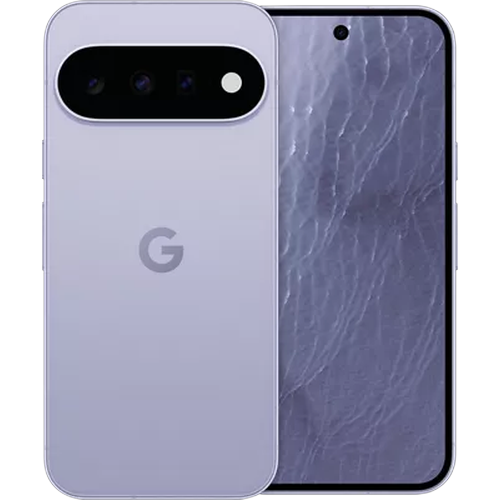
Pixel 11
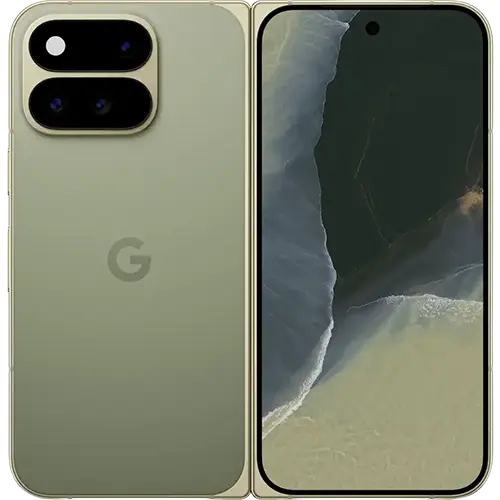
Pixel 11 Pro Fold
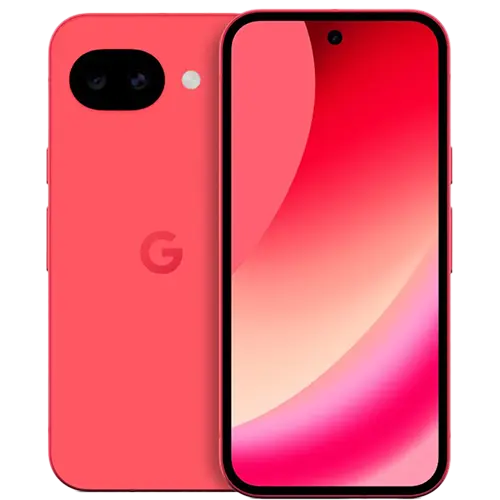
Pixel 10a
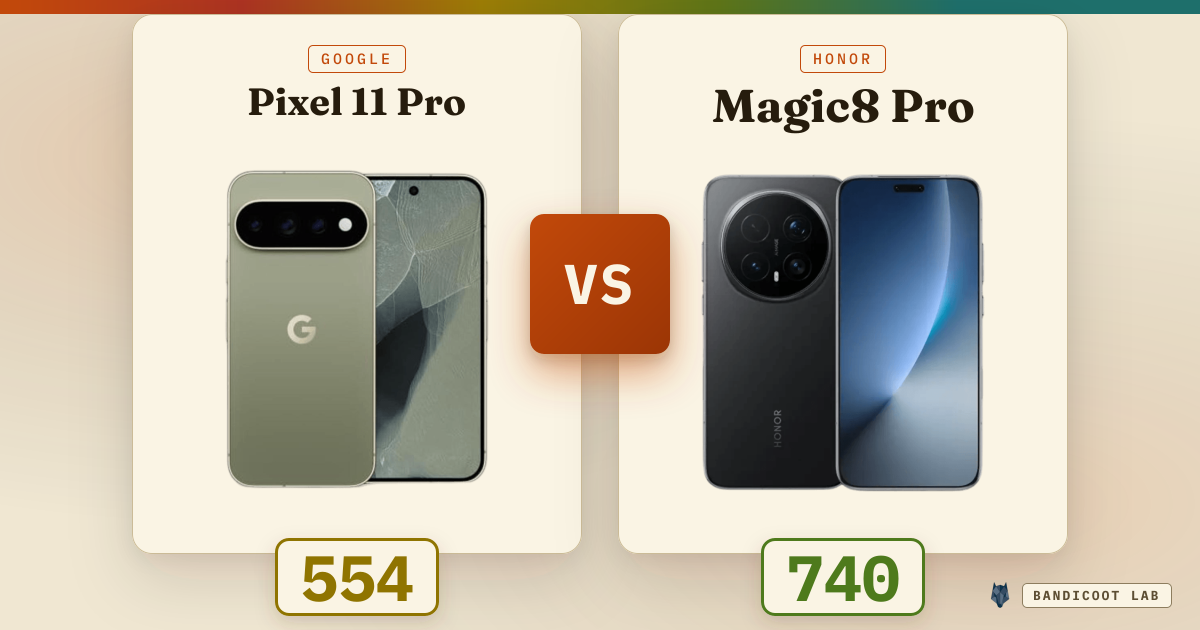
Google Pixel 11 Pro vs Honor Magic8 Pro
Google Pixel 11 Pro vs Google Pixel 10 Pro
Google Pixel 11 Pro vs Apple iPhone 17 Pro
Google Pixel 11 vs Google Pixel 11 Pro
RedMagic 11S Pro vs OnePlus 15