RedMagic 12 Pro vs Xiaomi 17T Pro

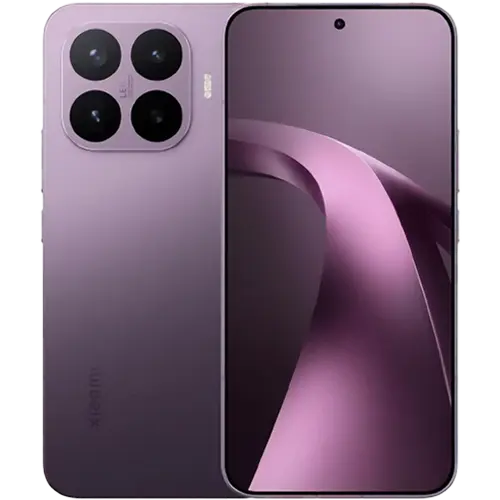
RedMagic
Xiaomi
12 Pro
17T Pro
Ranked #5 of 62
Ranked #13 of 62
Overall
Overall
The RedMagic 12 Pro is a gaming phone priced at $949. It puts its budget into processing power and endurance, not cameras. The Xiaomi 17T Pro is a general-purpose flagship with a more complete feature set, including a telephoto camera the RedMagic lacks.
The RedMagic leads in raw performance by a wide margin and has the stronger battery for everyday tasks like browsing and media. Its display is more consistent. The Xiaomi 17T Pro has a significantly better camera system, faster wired charging, better gaming efficiency, and a louder speaker. Video playback endurance and wireless charging speed are comparable. How much cameras matter to you will likely decide this one.
Design
| RedMagic 12 Pro | Xiaomi 17T Pro | |
|---|---|---|
| Specifications | ||
| Dimensions | 163.03 x 75.96 x 8.55 mm | 162.2 x 77.5 x 8.25 mm |
| Weight | 223g | 219g |
| IP Rating | IP68/IP69 | IP68 |
| Frame | Aluminum | Aluminum |
| Front | Gorilla Glass 7i | Gorilla Glass 7i |
| Back | Gorilla Glass 7i | Fiberglass |
| Screen-to-body ratio | 96.3% | 91.1% |
The two phones are close in size. The RedMagic 12 Pro measures 163.03 x 75.96 x 8.55mm and weighs 223g. The Xiaomi 17T Pro is 162.2 x 77.5 x 8.25mm at 219g. It's wider but slightly thinner. They share aluminum frames and Gorilla Glass 7i on the front. The backs differ: the RedMagic uses Gorilla Glass 7i, while the Xiaomi uses fiberglass. Fiberglass is more resistant to shattering from drops; glass resists scratches better over time.
The RedMagic carries an IP68/IP69 rating. IP68 covers submersion to a rated depth, and IP69 adds protection against high-pressure, high-temperature water jets. The Xiaomi is IP68 only. Screen-to-body ratio is where the RedMagic separates itself: 96.3% versus the Xiaomi's 91.1%. That's a meaningful gap, and it means visibly thinner bezels on the RedMagic despite the phones being nearly the same overall size. The RedMagic's 19.9:9 aspect ratio makes it taller and narrower than the Xiaomi's 19.5:9. Bandicoot Lab doesn't formally test design or durability; this section describes published specs only.
Display
| RedMagic 12 Pro | Xiaomi 17T Pro | |
|---|---|---|
599/ 881 | 609/ 881 | |
The RedMagic 12 Pro has a 6.85-inch AMOLED at 1216 x 2688 (431 pixels per inch) with a 185Hz refresh rate. The Xiaomi 17T Pro is a 6.83-inch AMOLED at 2772 x 1280 (447 PPI) at 144Hz. The Xiaomi has slightly higher pixel density; the RedMagic has a higher refresh rate. Neither difference is dramatic on its own, but 185Hz is a noticeable step up from 144Hz during fast scrolling and gaming.
In manual brightness mode, the RedMagic reaches 718 nits versus the Xiaomi's 625 nits. You'd notice that difference outdoors. HDR content tells a different story. The Xiaomi peaks at 3,653 nits, more than double the RedMagic's 1,769 nits. The Xiaomi's brightness drops sharply across larger HDR window sizes, holding only 56.3% stability. The RedMagic holds 100%. Its brightness doesn't dip regardless of how much of the screen is lit. Over a 30-minute sustained test, both panels hold steady at roughly 98.5%. The Xiaomi can hit brighter highlights in small, punchy HDR elements, but the RedMagic is more consistent when a larger portion of the screen is bright.
Both panels render colors near reference in their best display modes. The real separation is gamut coverage: the RedMagic covers 96.4% of the P3 gamut, the Xiaomi reaches 74.3%. That's a large gap for wide-color content like photos and HDR video. Touch latency measures 12.2ms on the RedMagic and 16.3ms on the Xiaomi. A 4ms gap is unlikely to matter outside competitive gaming. Tone mapping behavior is similar on both panels: each boosts HDR highlights slightly above the reference curve and clips at the same input level, so neither offers a more faithful HDR rendering than the other.
Performance
| RedMagic 12 Pro | Xiaomi 17T Pro | |
|---|---|---|
1000/ 1012 | 753/ 1012 | |
The RedMagic 12 Pro runs the Qualcomm Snapdragon 8 Elite Extreme Gen 6 with 16GB of RAM. The Xiaomi 17T Pro uses the MediaTek Dimensity 9500 with 12GB. The gap between these chipsets is substantial.
In CPU benchmarks, the RedMagic scores 4,090 single-core and 11,916 multi-core in GeekBench 6. The Xiaomi scores 3,331 and 10,150. That's roughly a 20% advantage for the RedMagic in both tests. You'll feel that in demanding workloads; everyday tasks like messaging and social media won't expose it. Browser performance is where the difference widens dramatically: the RedMagic scores 28.6 in Speedometer versus the Xiaomi's 9.1. Complex web apps and heavy pages will load and respond noticeably faster on the RedMagic.
GPU performance follows the same pattern. The RedMagic reaches 8,599 in Wild Life Extreme and 16,595 in Solar Bay; the Xiaomi hits 7,062 and 13,185. That's a 20–25% lead in peak graphics output. Stability under sustained load is similar. Both phones throttle to around 60–65% of peak after extended stress testing. The RedMagic starts from a higher ceiling.
Camera
| RedMagic 12 Pro | Xiaomi 17T Pro | |
|---|---|---|
382/ 587 | 515/ 587 | |
The camera gap here is wide. The Xiaomi 17T Pro has four cameras: a 50-megapixel main with an f/1.6 aperture and a 1/1.31-inch sensor, a 12-megapixel ultrawide, a 50-megapixel 5x telephoto at 115mm, and a 32-megapixel front camera. The RedMagic 12 Pro has three: a 50-megapixel main, a 50-megapixel ultrawide, and a 16-megapixel front. No telephoto. The Xiaomi's camera output is competitive with well-regarded camera phones. The RedMagic's isn't.
Sharpness favors the Xiaomi at every focal length. Its main camera resolves more detail in every lighting condition, and that advantage carries through the ultrawide and front camera. At extended zoom ranges, the gap becomes dramatic. The RedMagic maxes out at 10x digital crop from its main sensor, and the results are very soft. The Xiaomi's 5x telephoto provides genuine optical detail at that range, and digital cropping beyond it still holds up respectably. The Xiaomi extends to 120x zoom. Quality degrades at the extremes, but it captures far more usable detail at any given zoom level than the RedMagic manages at 10x.
Color character separates these cameras further. The Xiaomi renders a slightly vivid, near-neutral palette that stays consistent from daylight through dim indoor lighting. The RedMagic pushes saturation harder in bright light, giving images a punchy, eye-catching look. As conditions shift toward warmer indoor lighting, the RedMagic's white balance overcorrects, flooding images with a blue-cool cast. Hue accuracy degrades sharply in mid and low light. Skin tones drift well off natural in every condition. The Xiaomi's white balance stays composed through the same lighting transitions, and skin tones hold much closer to reference. If you photograph people indoors, the difference is stark.
Main
| RedMagic 12 Pro (Main) | Xiaomi 17T Pro (Main) | |
|---|---|---|
440/ 722 | 551/ 722 | |
The Xiaomi's main camera uses a 1/1.31-inch sensor at 50 megapixels with an f/1.6 aperture at 23mm. The RedMagic also shoots at 50 megapixels but doesn't publish its sensor size or aperture. The Xiaomi resolves noticeably more detail in bright, mid, and dim lighting. The gap is consistent rather than situational.
The RedMagic covers its full 1x to 10x range with digital cropping from the main sensor; the Xiaomi covers 1x to 5x before its telephoto takes over. At moderate digital crops like 2x, the Xiaomi's larger sensor gives it more detail to work with. The RedMagic softens more quickly as you zoom in.
Color follows the overall pattern. The RedMagic's bright-light output is vivid and moderately accurate in hue. Under warmer mid-level lighting, the white balance overcorrects and the image takes on a strong blue-cool cast. Hue accuracy collapses. Skin tones are noticeably off in every condition. The Xiaomi holds a mild, consistent saturation boost with accurate hues even as lighting warms up. Skin tones are more reliable across the board.
Dynamic range shows different strengths. The RedMagic holds highlights without clipping, preserving detail in bright skies and reflections, but its shadow recovery is more limited. The Xiaomi pulls a wider overall tonal range, retaining more shadow depth in high-contrast scenes, but clips the brightest highlights.
Ultrawide
| RedMagic 12 Pro (Ultrawide) | Xiaomi 17T Pro (Ultrawide) | |
|---|---|---|
371/ 722 | 533/ 722 | |
The RedMagic's ultrawide shoots at 50 megapixels; the Xiaomi's is 12 megapixels with an f/2.2 aperture at 15mm equivalent and a 1/3.06-inch sensor. Despite the lower megapixel count, the Xiaomi produces sharper images in every lighting condition. A high pixel count doesn't guarantee sharper results when sensor quality and processing also determine the outcome.
Color on the RedMagic's ultrawide mirrors its main camera: acceptable in bright light, then a steep decline as conditions get warmer. The blue-cool cast under indoor lighting is even more pronounced here, and hue accuracy drops sharply. The Xiaomi's ultrawide holds color more consistently, with a mild saturation boost and steady hue accuracy across lighting. Skin tones are poor on both phones' ultrawides in bright light, but the Xiaomi improves significantly in dimmer conditions where the RedMagic gets worse.
The RedMagic's ultrawide has limited dynamic range and clips highlights, losing detail at both ends of the tonal scale. It's a noticeable step down from the RedMagic's own main camera. The Xiaomi's ultrawide retains a much wider range and closely matches its main camera in dynamic range handling, though it also clips highlights.
Telephoto
| RedMagic 12 Pro (Telephoto) | Xiaomi 17T Pro (Telephoto) | |
|---|---|---|
| — | 522/ 722 | |
The RedMagic 12 Pro has no telephoto lens. Its longest reach is a 10x digital crop from the main camera, which produces very soft output. The Xiaomi 17T Pro has a dedicated 50-megapixel 5x telephoto at 115mm with an f/3 aperture and a 1/2.76-inch sensor.
The Xiaomi's telephoto is sharp in bright conditions and holds detail well through mid-level lighting. In dim light, sharpness drops noticeably. That's expected for a smaller sensor at f/3. Beyond the native 5x, digital cropping still holds reasonable detail; the optical foundation gives the Xiaomi usable results at ranges the RedMagic can't approach. Stabilization is adequate for handheld shooting at the telephoto's longer reach.
Color from the telephoto is the most accurate of any lens on either phone. Saturation sits close to neutral, and hue accuracy is good in bright and mid conditions with only moderate drift in dim light. Skin tones are rendered well, particularly in brighter settings. Dynamic range is moderate with some highlight clipping, but tonal transitions are smooth.
Front
| RedMagic 12 Pro (Front) | Xiaomi 17T Pro (Front) | |
|---|---|---|
415/ 722 | 542/ 722 | |
The Xiaomi's 32-megapixel front camera at f/2.2 and 21mm is sharper than the RedMagic's 16-megapixel sensor in every lighting condition. The resolution and sensor quality advantage shows in fine facial detail and hair.
Color from the Xiaomi's front camera leans slightly cool and undersaturated but holds hue accuracy well in bright and mid lighting. Skin tones are close to natural in good light and drift moderately as conditions get dimmer. The RedMagic's front camera produces more saturated colors in bright and mid lighting, but hue accuracy is weaker across the board. Skin tones in bright light are significantly off. In dim conditions, the RedMagic's front camera severely desaturates, pulling color out of images.
Dynamic range is the RedMagic's one advantage with this lens. It captures a meaningfully wider tonal range without clipping highlights, which helps in backlit selfies and mixed-lighting situations. The Xiaomi's front camera has narrow dynamic range and clips highlights, which can cause blown-out backgrounds in challenging light. Video stabilization from the front camera is steadier on the Xiaomi.
Battery
| RedMagic 12 Pro | Xiaomi 17T Pro | |
|---|---|---|
732/ 836 | 695/ 836 | |
The RedMagic 12 Pro has an 8,400mAh battery; the Xiaomi 17T Pro has 7,000mAh. Despite the 1,400mAh difference, video playback is nearly identical: 30.49 hours for the RedMagic and 30.63 hours for the Xiaomi. Both comfortably last more than a day of mixed use on a single charge.
The difference shows up in specific workloads. Web browsing favors the RedMagic: it drains 14% over five hours of continuous browsing, compared to 18% for the Xiaomi. That larger battery pays off during sustained lighter tasks. Gaming tells the opposite story. During the 3DMark Wild Life Extreme stress test, the RedMagic burns through 35% of its battery versus the Xiaomi's 23%. The Snapdragon 8 Elite Extreme Gen 6 draws considerably more power under peak GPU load, and the bigger battery doesn't fully compensate. If extended gaming sessions matter to you, the Xiaomi will last longer per session. Standby drain is identical at 2% over eight hours.
Charging
| RedMagic 12 Pro | Xiaomi 17T Pro | |
|---|---|---|
678/ 837 | 718/ 837 | |
The Xiaomi 17T Pro charges faster over a wire. Its 100W wired charging reaches 33% in 10 minutes and 79% in 30 minutes. The RedMagic 12 Pro's 80W wired charging reaches 24% at 10 minutes and 61% at 30 minutes. A 30-minute plug-in gets the Xiaomi close to a full day of use.
Wireless charging is identical in practice. Both reach 19% at 10 minutes and 48% at 30 minutes, despite the RedMagic rating 80W wireless versus the Xiaomi's 50W. The rated wattage difference doesn't translate to a real charging speed advantage.
Speaker
| RedMagic 12 Pro | Xiaomi 17T Pro | |
|---|---|---|
598/ 897 | 636/ 897 | |
The Xiaomi 17T Pro is louder at 76.3 dBA versus the RedMagic's 74.2 dBA. The difference is modest but audible. The RedMagic has noticeably fuller bass, extending low enough to give music and video audio a warmer, more grounded character. The Xiaomi has a slight edge in high-frequency clarity, which helps voices sound crisper in calls and media playback.
The RedMagic's frequency response is more balanced across the midrange, with less variation between lows and highs. The Xiaomi shows more uneven output and produces 8.16% total harmonic distortion at peak volume, meaning some audible breakup when pushed to maximum. The RedMagic delivers more warmth and bass; the Xiaomi is louder with cleaner highs.
Microphone
| RedMagic 12 Pro | Xiaomi 17T Pro | |
|---|---|---|
625/ 1220 | 390/ 1220 |
The RedMagic 12 Pro has a more balanced microphone with smoother frequency response, sitting above average in recording quality. The Xiaomi 17T Pro's microphone is less consistent and falls below average. For voice calls and video recording, the RedMagic will capture clearer, more natural-sounding audio.
Other
| RedMagic 12 Pro | Xiaomi 17T Pro | |
|---|---|---|
| Biometrics | 889/ 1181 | 461/ 1181 |
| Data Transfer | 945/ 945 | 108/ 945 |
| Specifications | ||
| Biometric type | Fingerprint | Fingerprint |
| Ports | USB-C 3.2 Gen 2 | USB-C 2.0 |
| Storage | 256GB, 512GB, 1TB | 256GB, 512GB, 1TB |
The RedMagic 12 Pro's optical fingerprint sensor unlocks in 118ms; the Xiaomi 17T Pro's takes 228ms. Both are responsive enough for daily use, but the RedMagic is nearly twice as fast. Neither phone has hardware-based face unlock.
Data transfer speeds are dramatically different. The RedMagic uses USB-C 3.2 Gen 2, reaching 422 MB/s read and 420 MB/s write. The Xiaomi has USB-C 2.0, capping at 38 MB/s read and 36 MB/s write. If you regularly move large files between your phone and a computer, the RedMagic is over 10 times faster. Both phones are available in 256GB, 512GB, and 1TB storage configurations. The RedMagic offers 12GB or 16GB of RAM; the Xiaomi comes in 12GB only.
Conclusion
The RedMagic 12 Pro is the faster, more efficient phone for everyday tasks. Its Snapdragon 8 Elite Extreme Gen 6 outpaces the Dimensity 9500 by roughly 20% in CPU and GPU benchmarks, and its browser performance is three times faster. Battery life during web browsing is better, the fingerprint sensor is nearly twice as fast, and USB data transfer is over 10 times faster. Its display holds brightness more consistently and covers a much wider color gamut. At $949, this is a phone built around sustained performance, and it delivers.
The Xiaomi 17T Pro at $899 has a significantly better camera system across every lens and lighting condition, plus telephoto reach the RedMagic lacks. It handles warm and dim lighting without the white balance problems the RedMagic suffers from. The Xiaomi also charges faster over a wire, drains less battery during gaming, and gets louder from its speakers.
For heavy gaming, demanding apps, or frequent large file transfers, the RedMagic 12 Pro earns the extra $50. For photography, general use, or a more balanced everyday experience, the Xiaomi 17T Pro gives you more for less.
FAQ
Does the RedMagic 12 Pro or Xiaomi 17T Pro have the better camera?
The Xiaomi 17T Pro has the better camera system, with sharper results on the main, ultrawide, and front cameras in every lighting condition. It also has a 5x telephoto that the RedMagic 12 Pro lacks. The RedMagic's white balance shifts to a blue-cool cast under warm indoor light, and its skin tones are off in every condition. The RedMagic's advantage is wider dynamic range on the front camera, which helps with backlit selfies.
Is the RedMagic 12 Pro or Xiaomi 17T Pro better for gaming?
The RedMagic 12 Pro has a 20–25% lead in peak graphics output, a 185Hz display against the Xiaomi's 144Hz, and lower touch latency at 12.2ms versus 16.3ms. Both phones throttle to around 60–65% of peak under sustained load, so the RedMagic keeps the higher ceiling. The Xiaomi 17T Pro is more efficient: the Wild Life Extreme stress test drains 23% of its battery against 35% for the RedMagic.
Which has better battery life, the RedMagic 12 Pro or the Xiaomi 17T Pro?
Video playback is nearly identical, at 30.49 hours for the RedMagic and 30.63 hours for the Xiaomi, and standby drain is the same at 2% over eight hours. The RedMagic's 8,400mAh battery helps with browsing, using 14% over five hours against the Xiaomi's 18%. The Xiaomi lasts longer during heavy gaming.
Does the Xiaomi 17T Pro charge faster than the RedMagic 12 Pro?
Over a wire, yes. The Xiaomi's 100W charging reaches 33% in 10 minutes and 79% in 30 minutes, while the RedMagic's 80W charging reaches 24% and 61%. Wireless charging is the same in practice: both reach 19% at 10 minutes and 48% at 30 minutes, even though the RedMagic is rated for 80W wireless and the Xiaomi for 50W.
Which display is better, the RedMagic 12 Pro or the Xiaomi 17T Pro?
The RedMagic 12 Pro has the more consistent display. It reaches higher manual brightness at 718 nits versus 625 nits, covers 96.4% of the P3 gamut against the Xiaomi's 74.3%, and holds HDR brightness steady regardless of how much of the screen is lit. The Xiaomi 17T Pro peaks higher in small HDR highlights at 3,653 nits versus 1,769 nits, but its brightness drops sharply across larger HDR areas.
Is the RedMagic 12 Pro worth $50 more than the Xiaomi 17T Pro?
It is if you game heavily, run demanding apps, or move large files often. The RedMagic is about 20% faster in CPU and GPU benchmarks, and its USB 3.2 port transfers files at over 400 MB/s against the Xiaomi's USB 2.0 speeds of under 40 MB/s. For photography, faster wired charging, or a more balanced everyday phone, the $899 Xiaomi 17T Pro is the better value.
Related
Xiaomi
17T Pro
RedMagic
12 Pro
Xiaomi
17 Ultra

RedMagic
11S Pro
Xiaomi
17
RedMagic
11 Air
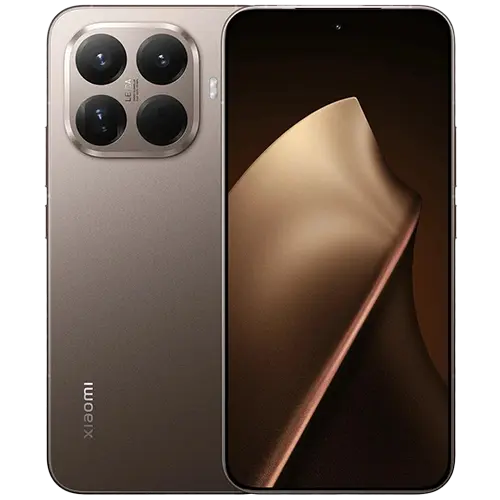
Xiaomi
15T Pro
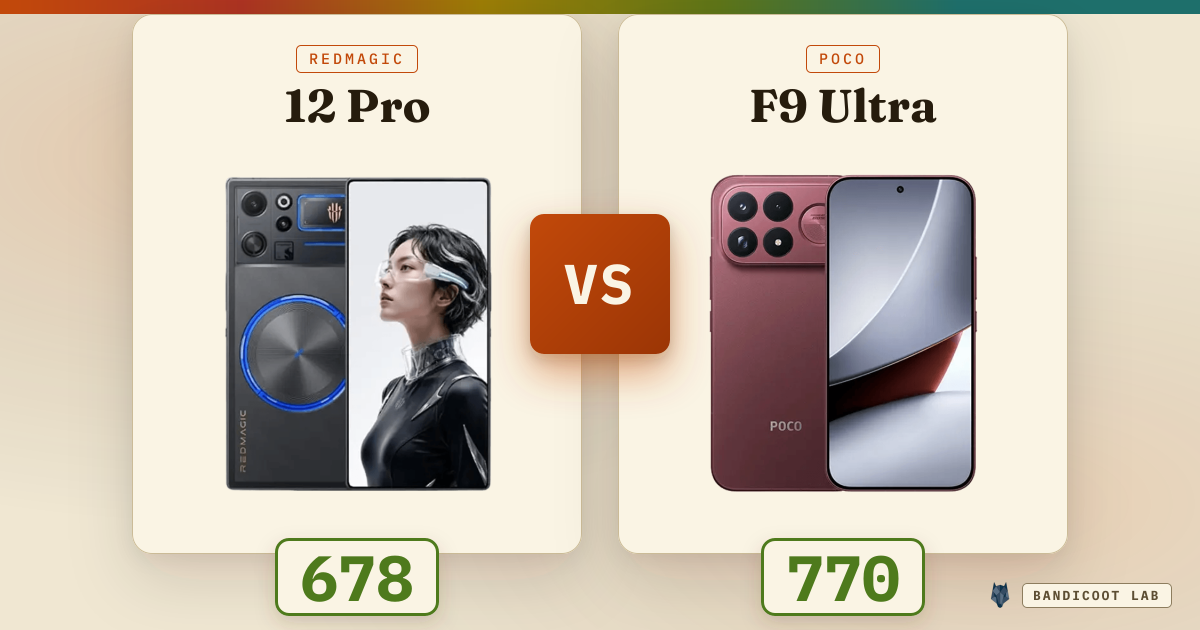
RedMagic 12 Pro vs Poco F9 Ultra
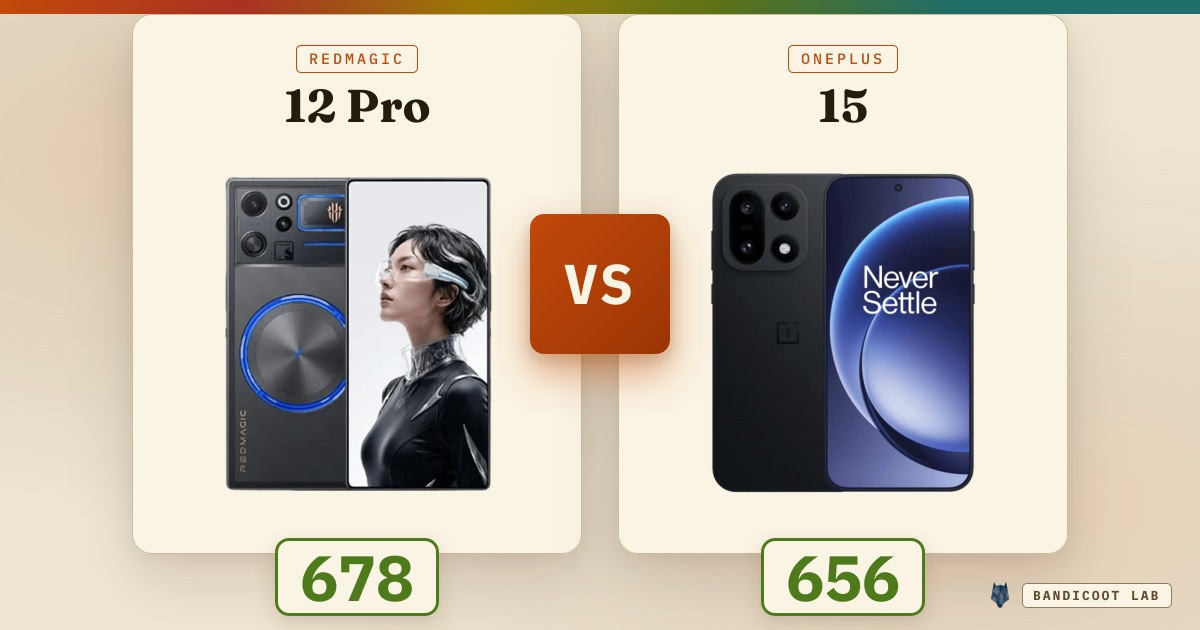
RedMagic 12 Pro vs OnePlus 15
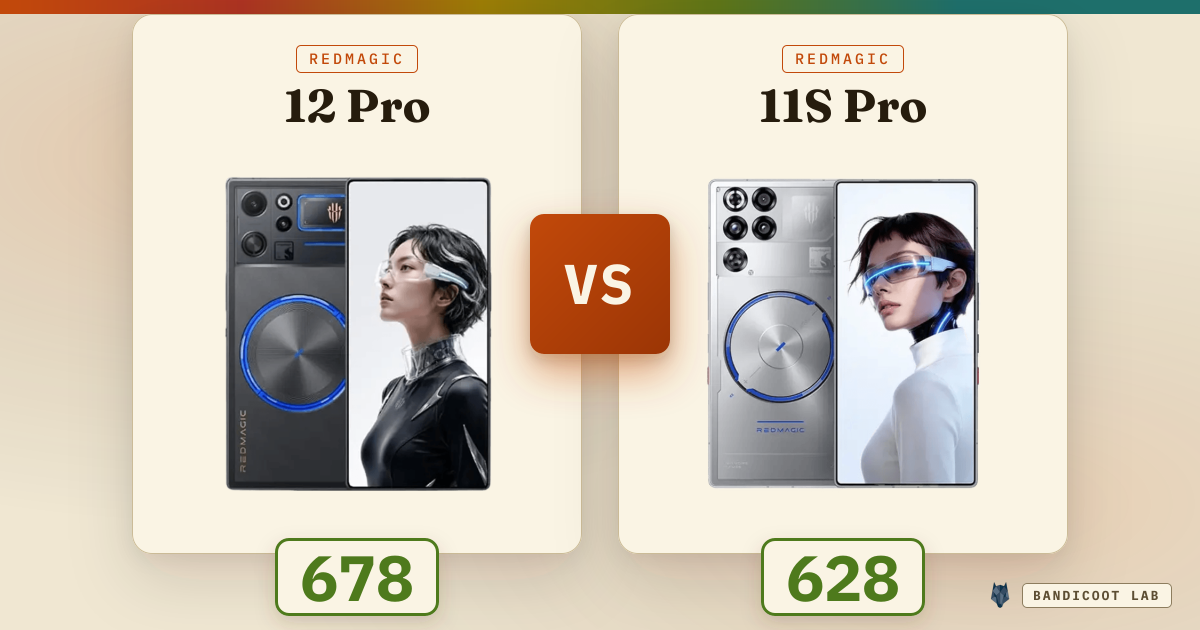
RedMagic 12 Pro vs RedMagic 11S Pro
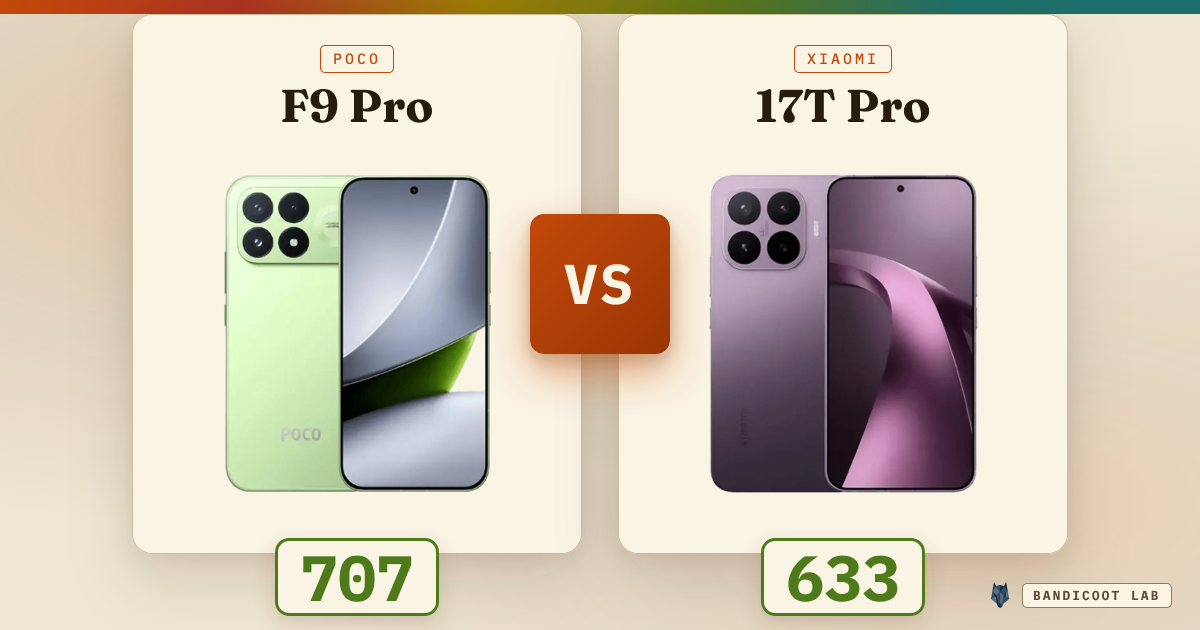
Poco F9 Pro vs Xiaomi 17T Pro
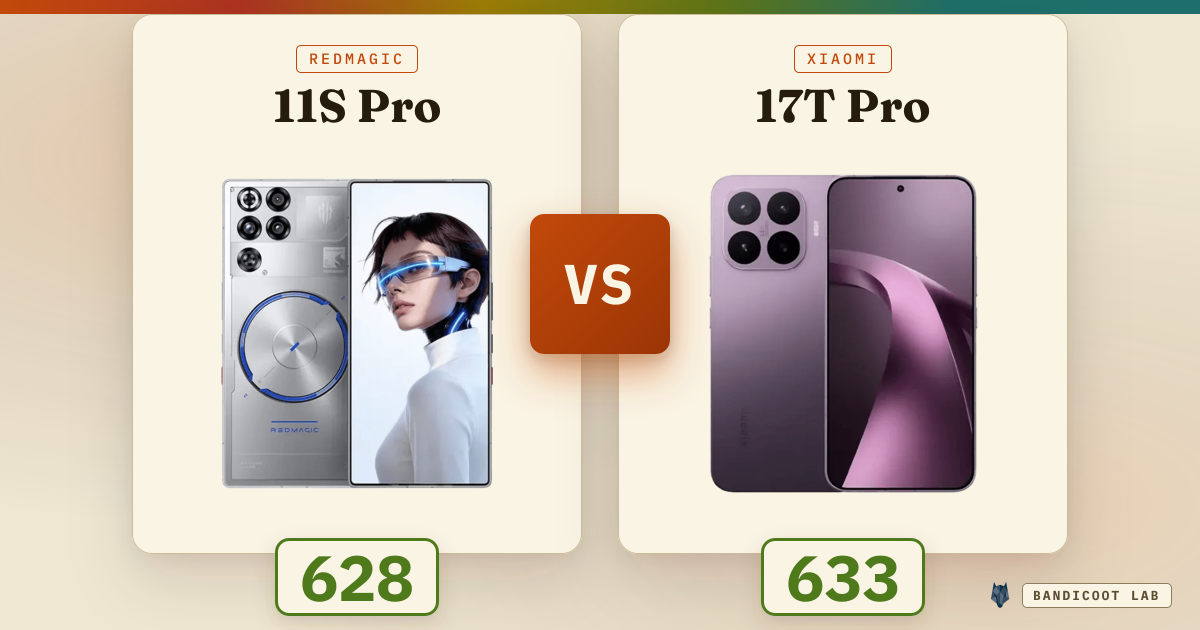
RedMagic 11S Pro vs Xiaomi 17T Pro