Samsung Galaxy Z Flip 8 vs Apple iPhone 17 Pro Max
Samsung
Apple
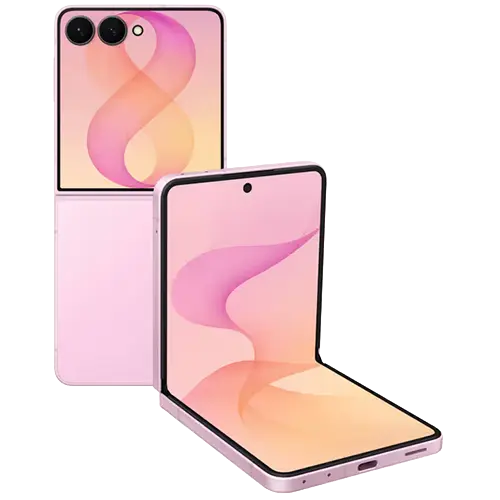
Galaxy Z Flip 8
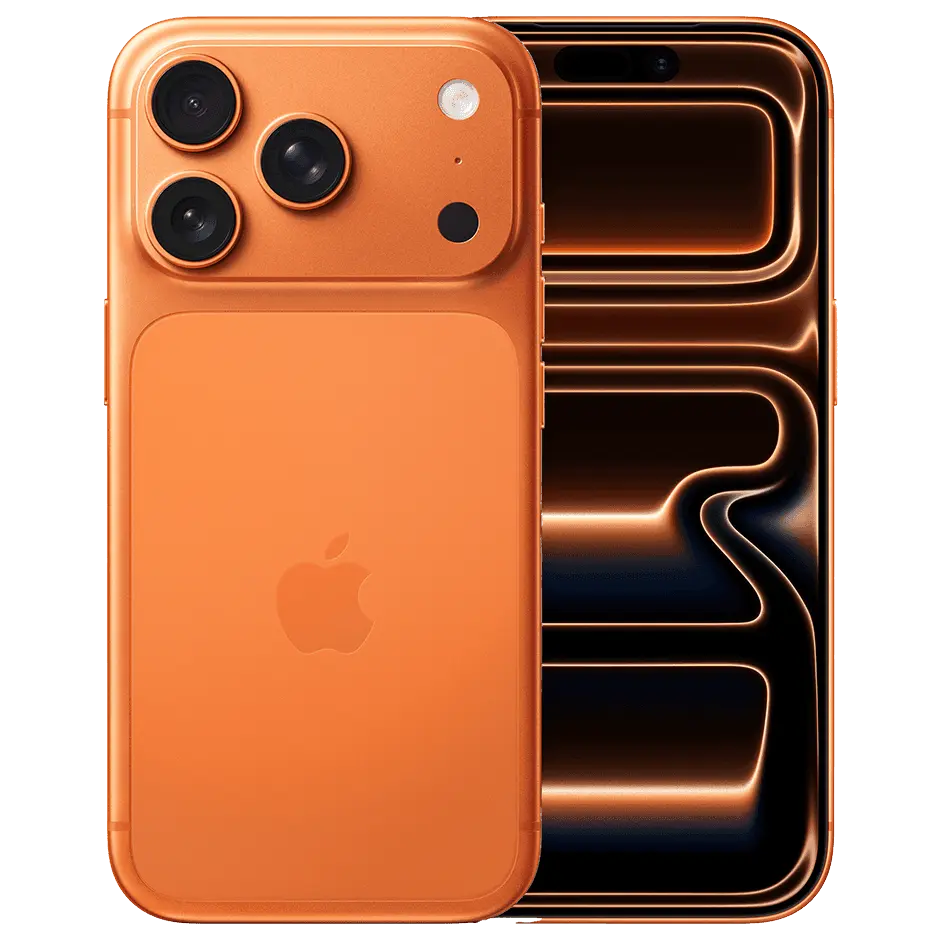
iPhone 17 Pro Max
Ranked #26 of 61
Ranked #6 of 61
Overall
Overall
The Galaxy Z Flip 8 is Samsung's clamshell foldable. It halves its footprint in your pocket and opens to a full 6.9-inch display. The iPhone 17 Pro Max is Apple's largest slab, built around a big screen, a big battery, and a four-camera system. They sit at the same price, which makes this a genuine fork-in-the-road decision rather than a budget trade-off. You're choosing between a compact form factor with compromises and a conventional flagship that tries to compromise on nothing.
The iPhone 17 Pro Max has the stronger camera system, with a dedicated telephoto and higher sharpness across every lens. It charges faster, sounds better through its speakers, and records cleaner audio through its microphone. The Z Flip 8 fights back with better sustained display brightness, much faster touch response, longer video playback from a smaller battery, and a foldable design that nothing in Apple's lineup can match. Performance is close, with each phone trading leads depending on the workload.
Design
| Samsung Galaxy Z Flip 8 | Apple iPhone 17 Pro Max | |
|---|---|---|
| Specifications | ||
| Dimensions (folded) | 85.7 x 75.4 x 13.1 mm | — |
| Dimensions (unfolded) | 166.9 x 75.4 x 6.1 mm | — |
| Weight | 180g | 233g |
| IP Rating | IP48 | IP68 |
| Frame | Aluminum | Aluminum |
| Front | Plastic (inner) / Gorilla Glass Victus 2 (outer) | Ceramic Shield 2 |
| Back | Gorilla Glass Victus 2 | Ceramic Shield |
| Screen-to-body ratio (inner) | 87.1% | — |
| Screen-to-body ratio (outer) | 83.9% | — |
| Dimensions | — | 163.4 x 78 x 8.8 mm |
| Screen-to-body ratio | — | 91.7% |
The Z Flip 8 folds to 85.7 x 75.4 x 13.1mm and opens to 166.9 x 75.4 x 6.1mm. The iPhone 17 Pro Max is a single slab at 163.4 x 78 x 8.8mm. Unfolded, the two are close in height and width, but the Z Flip 8 is noticeably thinner at 6.1mm. Folded, it's about half the height but considerably thicker. At 180g versus 233g, the Samsung is about 53g lighter.
Both phones use aluminum frames. The iPhone 17 Pro Max pairs its frame with Ceramic Shield 2 on the front and Ceramic Shield on the back. The Z Flip 8 uses Gorilla Glass Victus 2 on its outer cover and back, but the inner folding display is plastic, a structural necessity for any foldable. The iPhone carries an IP68 rating, meaning full dust sealing and submersion to a rated depth. The Z Flip 8 is rated IP48: waterproof to the same standard, but only protected against solid objects larger than 1mm. Dust ingress through the hinge mechanism remains a practical concern for foldables.
The iPhone 17 Pro Max has a 91.7% screen-to-body ratio at 19.5:9, which means thin bezels and a conventional widescreen layout. The Z Flip 8's inner display sits at 87.1% screen-to-body in a taller 21:9 aspect, while its 4.1-inch outer cover display has an 83.9% ratio with a near-square 8.1:9 shape.
Bandicoot Lab doesn't formally test design or durability.
Display
| Samsung Galaxy Z Flip 8 (Inner) | Samsung Galaxy Z Flip 8 (Outer) | Apple iPhone 17 Pro Max | |
|---|---|---|---|
524/ 881 | 427/ 881 | — | |
The Z Flip 8 has two displays to consider. Its inner panel is a 6.9-inch Dynamic LTPO AMOLED 2X at 1080 x 2520 (397 pixels per inch), with a 1–120Hz adaptive refresh rate. The outer cover display is a 4.1-inch Super AMOLED at 948 x 1048 (342 PPI), running 60–120Hz. The iPhone 17 Pro Max has a single 6.9-inch LTPO OLED at 1320 x 2868 (460 PPI), also 1–120Hz. The iPhone's higher resolution is visible in fine text and UI detail, though both inner displays are sharp enough that the difference isn't dramatic at normal viewing distance.
In manual brightness, the iPhone reaches 857 nits versus 739 nits for the Z Flip 8's inner display. For HDR content in auto brightness, the iPhone peaks at 2,976 nits and the Z Flip 8 at 2,828 nits. Both are bright. The more meaningful split is how they sustain that brightness. The Z Flip 8 holds 98.7% of its HDR brightness over a 30-minute sustained test. The iPhone drops to 37.7%. The Z Flip 8 stays near its peak during a long HDR movie; the iPhone dims substantially. Across different HDR window sizes, the Z Flip 8 also holds more evenly at 54.1% stability versus the iPhone's 42.8%.
Color accuracy favors the iPhone. Its display stays closer to reference across the board, with neutral tones that are genuinely neutral and colors that drift very little from their targets. The Z Flip 8's inner display shows more visible deviation. Colors wander moderately from reference, enough that you'd notice in a side-by-side comparison, though it's perfectly acceptable on its own. Both displays cover sRGB almost completely (99.8% for Samsung, 100% for Apple) and reach similar P3 coverage (76.3% and 75.6%).
The two phones handle HDR tone mapping very differently. The Z Flip 8 follows the PQ reference curve fairly closely, applying only a slight brightness lift to highlights. It clips earlier, at 75% of the input signal, so the brightest highlights in mastered content lose some distinction. The iPhone 17 Pro Max pushes highlights well above their mastered levels, a deliberately punchy rendering that makes HDR content look brighter and more aggressive but less faithful to the creator's intent. It clips later at 80%.
Touch latency is 28ms on the Z Flip 8's inner display versus 52.4ms on the iPhone. That's nearly double, and it's the kind of gap you can feel during fast scrolling and responsive interactions.
Performance
| Samsung Galaxy Z Flip 8 | Apple iPhone 17 Pro Max | |
|---|---|---|
844/ 1012 | 906/ 1012 | |
The Z Flip 8 runs Qualcomm's Snapdragon 8 Elite Gen 5 with 12GB of RAM. The iPhone 17 Pro Max uses Apple's A19 Pro, also with 12GB.
In CPU benchmarks, the A19 Pro posts a higher single-core score at 3,852 versus 3,644 on GeekBench 6. The Snapdragon takes multi-core with 10,900 to 9,872. In practice, both chips are fast enough that you're unlikely to feel these differences in everyday tasks. The Z Flip 8 edges ahead in browser performance too, scoring 54.5 in Speedometer versus 41.8 for the iPhone.
GPU performance is where the picture splits. The Snapdragon posts higher peak scores in both Wild Life Extreme (7,314 vs 5,828) and Solar Bay (13,872 vs 11,777). Under sustained load, the A19 Pro holds 73.1% of its Wild Life Extreme peak and 69.1% in Solar Bay. The Snapdragon drops to 37.8% and 42.2% respectively. The Z Flip 8 starts faster and throttles harder; the iPhone starts lower but stays closer to its peak. For a quick gaming session, the Z Flip 8's peak performance matters more. For extended play, the iPhone's consistency takes over.
Camera
| Samsung Galaxy Z Flip 8 | Apple iPhone 17 Pro Max | |
|---|---|---|
470/ 587 | 567/ 587 | |
The iPhone 17 Pro Max fields four cameras: a 48-megapixel main (f/1.78, 1/1.28-inch sensor), a 48-megapixel ultrawide (f/2.8), a 48-megapixel 4x telephoto (f/2.8), and an 18-megapixel front camera. The Z Flip 8 has a 50-megapixel main (f/1.8, 1/1.56-inch sensor), a 12-megapixel ultrawide (f/2.2), and a 10-megapixel front camera. No telephoto.
The iPhone is the sharper camera system overall. Its main lens resolves more detail across all lighting conditions, and the gap widens further with the front camera, where the iPhone captures considerably more fine detail. The Z Flip 8's ultrawide holds its own; sharpness is close between the two, with Samsung's even edging ahead in mid and low light. At extreme zoom levels beyond 10x, the iPhone's telephoto gives it a structural advantage the Z Flip 8 can't match. Even at 10x, the Z Flip 8 is cropping digitally from its main sensor, and detail falls off substantially. The iPhone retains usable detail much further into its 40x digital range thanks to the native 4x lens.
Color tuning differs between the two. The Z Flip 8 produces a slightly cool, mildly vivid image in good light that desaturates as conditions get darker. The iPhone 17 Pro Max pushes saturation harder, noticeably vivid in bright and mid light, with a warm lean that intensifies under warmer artificial lighting. In bright daylight, both phones render hues with reasonable accuracy. As lighting drops to indoor conditions, the iPhone's hues drift much more. A strong warm-yellow cast creeps in, especially under warmer light sources, pointing to a white balance correction issue rather than a sensor limitation. The Z Flip 8's hue accuracy degrades more gradually and mostly reflects the sensor reaching its limits in dim conditions. Skin tones follow the same pattern: Samsung stays closer to natural across most conditions, while the iPhone pushes faces warmer and further from reference, especially outside of bright daylight.
Main
| Samsung Galaxy Z Flip 8 (Main) | Apple iPhone 17 Pro Max (Main) | |
|---|---|---|
568/ 722 | 579/ 722 | |
The iPhone 17 Pro Max's main camera is sharper than the Z Flip 8's across bright, mid, and low light. In bright conditions, the gap is large. In low light, both soften, but the iPhone retains detail that the Samsung loses. The iPhone's larger 1/1.28-inch sensor gives it a physical light-gathering advantage over the Z Flip 8's 1/1.56-inch chip.
The iPhone's main camera covers 1x through 4x before the telephoto takes over. The Z Flip 8's covers 1x through 10x since it has no telephoto. Samsung needs to crop digitally across that entire range, and detail at 5x and beyond drops off visibly. The iPhone holds detail better through its 2x and 3x digital crops because it starts from a sharper baseline and a larger sensor.
Dynamic range on the Z Flip 8's main camera is strong. Highlights still clip, but the tonal range is broad, with good shadow detail and a natural gradation through the mid-tones. The iPhone clips highlights more aggressively. High-contrast scenes show more abrupt tonal transitions. The Samsung holds more natural depth in challenging lighting.
Color behavior splits along the same lines described in the overview. The Z Flip 8's main camera is slightly cool with moderate saturation, and its hue accuracy holds up well into mid-light conditions. The iPhone pushes warmer and more vivid, with skin tones drifting visibly from natural under anything but bright daylight. The iPhone's warm-yellow bias grows under indoor lighting, a white balance overcorrection rather than a sensor issue.
Ultrawide
| Samsung Galaxy Z Flip 8 (Ultrawide) | Apple iPhone 17 Pro Max (Ultrawide) | |
|---|---|---|
522/ 722 | 505/ 722 | |
Both phones have 13mm ultrawide lenses. Apple's uses a 48-megapixel sensor at f/2.8; Samsung's uses a 12-megapixel sensor at f/2.2. Sharpness in bright light is close, with the iPhone slightly ahead. In mid-light, the two are nearly tied. In low light, the Z Flip 8 holds up better, keeping more detail where the iPhone softens. The Z Flip 8's ultrawide is also sharper relative to its own main lens, narrowing the system gap that exists at 1x.
The iPhone's ultrawide shows the same white balance behavior as its main camera: good hue accuracy in bright light, then a strong shift toward warm-yellow tones under mid and indoor lighting. Skin tones drift significantly in those conditions. The Z Flip 8's ultrawide leans cool and vivid across all conditions, with hue accuracy that degrades more evenly. Skin tones are inaccurate on both phones' ultrawides, though they fail in different directions.
Dynamic range favors the iPhone's ultrawide, but processing artifacts reduce the smoothness of its tonal curve. The Z Flip 8's ultrawide has a narrower overall range but renders it cleanly. Neither ultrawide matches its respective main camera for dynamic range.
Telephoto
| Samsung Galaxy Z Flip 8 (Telephoto) | Apple iPhone 17 Pro Max (Telephoto) | |
|---|---|---|
| — | 628/ 722 | |
The iPhone 17 Pro Max has a dedicated 4x telephoto with a 48-megapixel sensor at f/2.8. The Z Flip 8 has no telephoto lens. This is the single biggest hardware gap between the two camera systems.
At its native 4x focal length, the iPhone's telephoto is sharp in bright light and holds reasonable detail into mid-light. In low light, it softens noticeably, as expected for a smaller sensor and narrower aperture. Beyond 4x, digital cropping takes over, and detail degrades progressively through the 40x maximum. Results are usable at 10x for social sharing, less so beyond that. Stabilization is excellent, keeping the frame controlled even at longer zoom lengths.
Color accuracy is weaker on the telephoto than on the iPhone's other lenses. Hue errors are visible even in bright light, and skin tones are pushed further from reference than on the main camera. The warm-yellow bias persists. Dynamic range is a strength here, with good shadow retention and a smooth tonal range in high-contrast scenes.
For anyone who regularly photographs sports, events, wildlife, or architecture, the telephoto makes a real difference. The Z Flip 8 simply can't compete past 3x or 4x.
Front
| Samsung Galaxy Z Flip 8 (Front) | Apple iPhone 17 Pro Max (Front) | |
|---|---|---|
399/ 722 | 703/ 722 | |
The iPhone 17 Pro Max's 18-megapixel front camera is considerably sharper than the Z Flip 8's 10-megapixel front camera. The gap is large in bright and mid light and remains significant in low light, where the Z Flip 8's front camera drops off more steeply. For video calls, social content, and selfies, the iPhone captures more fine detail by a wide margin.
The iPhone's front camera shows a vivid, warm rendering that matches the rear system. Skin tones are significantly inaccurate in bright light, pushed warm and oversaturated. The warm-yellow bias intensifies in mid-light, following the same white balance pattern as the rear cameras. The Z Flip 8's front camera renders skin tones closer to natural in bright light and stays more accurate as conditions worsen.
Dynamic range heavily favors the iPhone's front camera, which holds highlight and shadow detail across a much wider range. The Z Flip 8's front camera clips more aggressively, compressing high-contrast selfie scenes. Stabilization is also better on the iPhone, keeping video smoother in handheld shooting.
Battery
| Samsung Galaxy Z Flip 8 | Apple iPhone 17 Pro Max | |
|---|---|---|
573/ 836 | 617/ 836 | |
The iPhone 17 Pro Max packs a 5,088mAh battery; the Z Flip 8 has 4,300mAh. Despite the smaller capacity, the Z Flip 8 posts longer video playback: 27.56 hours on its inner display and 24.87 hours on its outer cover screen, versus 23.96 hours for the iPhone. That's roughly an extra 3.5 hours of continuous video on the inner display, enough for a full movie's difference.
Web browsing drain over five hours is identical: both phones lose 21% of their battery. Gaming efficiency favors the Z Flip 8, which drains 18% during the 3DMark Wild Life Extreme stress test compared to 25% for the iPhone. That lines up with the Z Flip 8's harder throttling under sustained GPU load: it pulls less power because it's doing less work. Overnight standby slightly favors the iPhone at 2% drain versus 3%.
Both phones are full-day devices for most people. The Z Flip 8 has a real efficiency advantage in media consumption and gaming, which partly compensates for its smaller battery. The iPhone's larger cell gives it more cushion for heavier mixed-use days, and its standby efficiency is slightly better for overnight idle without a charger.
Charging
| Samsung Galaxy Z Flip 8 | Apple iPhone 17 Pro Max | |
|---|---|---|
217/ 837 | 420/ 837 | |
The iPhone 17 Pro Max charges at up to 40W wired and 25W wireless via MagSafe (Qi2-compatible magnetic alignment). The Z Flip 8 charges at 25W wired and 15W wireless.
The difference is clear at every checkpoint. After 10 minutes on a wire, the iPhone reaches 29% versus 20% for the Z Flip 8. At 30 minutes, it's 67% to 57%. Wireless charging widens the gap further: the iPhone hits 20% in 10 minutes and 47% in 30 minutes, while the Z Flip 8 manages 8% and 20% in the same intervals. If you're grabbing a quick top-up before heading out, the iPhone gets you meaningfully further in the same amount of time. The wireless gap is especially stark. The iPhone wirelessly in 30 minutes roughly matches the Z Flip 8 on a cable.
Speaker
| Samsung Galaxy Z Flip 8 | Apple iPhone 17 Pro Max | |
|---|---|---|
706/ 897 | 816/ 897 | |
The Z Flip 8 is slightly louder at 75.4 dBA max volume versus 74.6 dBA for the iPhone. That's a negligible difference in practice. Distortion tells a different story: the Z Flip 8 measures 4.15% total harmonic distortion versus 8.9% for the iPhone. The Samsung stays cleaner at high volume.
The iPhone produces a fuller, richer sound. It has noticeably more bass presence and crisper high-end clarity. The Z Flip 8 sounds thinner in comparison, with less low-end weight. If you're listening to music or watching video without headphones, the iPhone delivers a more balanced speaker experience despite the higher distortion figure. The Z Flip 8's advantage is staying composed at volume without breaking up.
Microphone
| Samsung Galaxy Z Flip 8 | Apple iPhone 17 Pro Max | |
|---|---|---|
694/ 1220 | 885/ 1220 |
The iPhone 17 Pro Max captures cleaner, more even audio. Its microphone response is more consistent across frequencies, placing it well above average. The Z Flip 8's microphone is decent and still above average, but audibly less balanced. For voice recording, video calls, or any content capture where audio quality matters, the iPhone has a meaningful edge.
Other
| Samsung Galaxy Z Flip 8 | Apple iPhone 17 Pro Max | |
|---|---|---|
| Biometrics | 437/ 1181 | 215/ 1181 |
| Data Transfer | 806/ 943 | 582/ 943 |
| Specifications | ||
| Biometric type | Fingerprint | Face Recognition |
| Ports | USB-C 3.2 | USB-C 3.2 Gen 2 |
| Storage | 256GB, 512GB | 256GB, 512GB, 1TB, 2TB |
The Z Flip 8 uses a capacitive fingerprint sensor with an average unlock speed of 240ms. The iPhone 17 Pro Max relies solely on hardware-based face unlock at 488ms. The Z Flip 8 doesn't have hardware-based face unlock; the iPhone doesn't have a fingerprint sensor. In raw speed, the Z Flip 8's fingerprint is about twice as fast. Face unlock on the iPhone works hands-free, which has ergonomic advantages that speed alone doesn't capture.
Both phones use USB-C. The iPhone specifies USB 3.2 Gen 2; the Z Flip 8 lists USB-C 3.2. In actual file transfer testing, the Z Flip 8 measured faster speeds at 351 MB/s read and 329 MB/s write, versus 304 MB/s read and 239 MB/s write for the iPhone. The Z Flip 8 comes in 256GB and 512GB configurations. The iPhone starts at 256GB and goes up to 2TB.
Conclusion
The iPhone 17 Pro Max is the more capable phone across most measurable categories. Its camera system is sharper on every lens and has a telephoto the Z Flip 8 simply doesn't offer. It charges faster by a wide margin, especially wirelessly. The speakers are fuller, the microphone is cleaner, and the display is more color-accurate at a higher resolution. Storage options extend to 2TB, and IP68 provides complete dust and water sealing.
The Z Flip 8 holds advantages that matter day to day: faster touch response, sustained HDR brightness that doesn't fade during a long movie, better color accuracy from its main camera, stronger dynamic range from its main sensor, and longer video playback despite a smaller battery. Its peak GPU performance is higher, and its efficiency under gaming loads is better.
The form factor is still the decision. If you want the strongest all-around phone at this price, the iPhone 17 Pro Max earns it. If you value a phone that folds in half and drops into a front pocket, and you can live with a two-lens camera system and slower charging, the Z Flip 8 does something no slab can. At the same price, it comes down to what kind of phone you want to carry.
FAQ
Does the Galaxy Z Flip 8 or iPhone 17 Pro Max have the better camera?
The iPhone 17 Pro Max has the stronger camera system. It is sharper on the main, ultrawide-in-bright-light and front cameras, and its 4x telephoto gives it zoom reach the Z Flip 8 lacks. The Z Flip 8 renders more natural skin tones and hues in indoor light, where the iPhone picks up a warm-yellow cast. Pick the iPhone for zoom and detail, and the Samsung if natural color matters more.
Which lasts longer on a charge, the Z Flip 8 or the iPhone 17 Pro Max?
The Z Flip 8 lasts longer for video despite its smaller 4,300mAh battery. It plays 27.56 hours on the inner display and 24.87 hours on the cover screen, versus 23.96 hours for the iPhone's 5,088mAh cell. Both lose 21% over five hours of web browsing. The iPhone drains slightly less overnight, at 2% versus 3%.
Does the iPhone 17 Pro Max charge faster than the Galaxy Z Flip 8?
Yes. The iPhone charges at up to 40W wired versus 25W for the Z Flip 8, and reaches 29% in 10 minutes against 20%. At 30 minutes it's 67% versus 57%. The gap is larger wirelessly: the iPhone reaches 47% in 30 minutes, while the Z Flip 8 reaches 20%.
Is the Z Flip 8 or iPhone 17 Pro Max better for gaming?
The Z Flip 8's Snapdragon posts higher peak GPU scores, 7,314 versus 5,828 in Wild Life Extreme, so it's quicker in short sessions. It throttles harder under sustained load, holding 37.8% of its peak versus 73.1% for the iPhone. The iPhone is the steadier choice for long play, while the Z Flip 8 uses less battery doing the same stress test (18% versus 25%).
Which has the better screen, the Galaxy Z Flip 8 or the iPhone 17 Pro Max?
It depends on what you value. The Z Flip 8's inner display holds 98.7% of its HDR brightness through a 30-minute test, where the iPhone falls to 37.7%. Its touch latency is 28ms versus 52.4ms. The iPhone has the higher resolution (460 PPI versus 397) and more accurate color.
Should I buy the Galaxy Z Flip 8 or the iPhone 17 Pro Max at the same price?
The iPhone 17 Pro Max is the stronger all-around phone. It has a better camera system with a telephoto, faster charging, fuller speakers, a cleaner microphone, IP68 dust and water sealing, and up to 2TB of storage. The Z Flip 8 makes sense if you want a phone that folds to about half its height and can accept a two-camera system, slower charging, and an IP48 rating that gives limited dust protection.
Related
Apple
iPhone 17 Pro Max
Samsung
Galaxy Z Flip 8

Samsung
Galaxy S26 Ultra
Samsung
Galaxy S26+
Samsung
Galaxy Z Fold 8 Ultra
Samsung
Galaxy Z Fold 8
Samsung
Galaxy S26
Apple
iPhone 17e

Samsung Galaxy Z Flip 8 vs Motorola Razr Ultra (2026)
Samsung Galaxy Z Flip 8 vs Google Pixel 11 Pro XL
Poco F9 Ultra vs Apple iPhone 17 Pro Max
Google Pixel 11 Pro XL vs Apple iPhone 17 Pro Max