Samsung Galaxy Z Flip 8 vs Google Pixel 11 Pro XL
Samsung
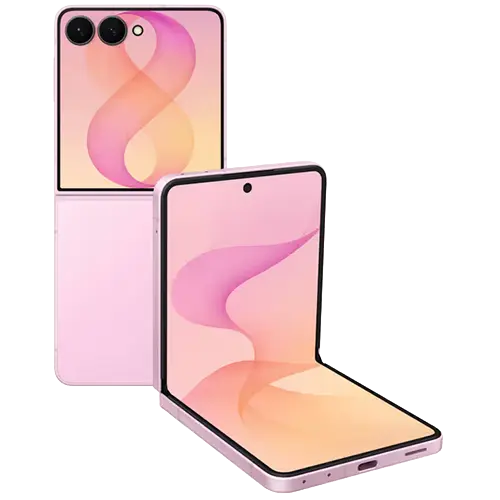
Galaxy Z Flip 8
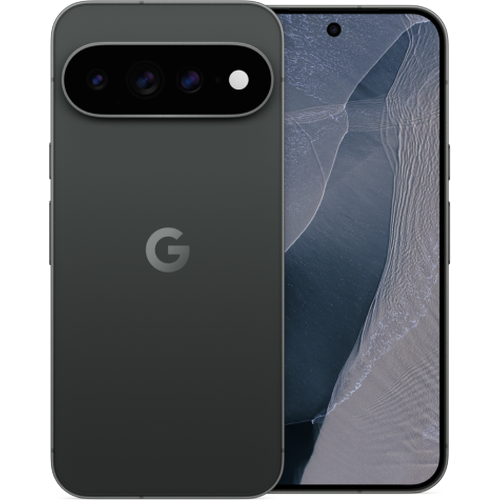
Pixel 11 Pro XL
Ranked #26 of 61
Ranked #24 of 61
Overall
Overall

A foldable flip phone and a large-screen slab don't usually end up on the same shortlist, but the Samsung Galaxy Z Flip 8 at $1,200 and the Google Pixel 11 Pro XL at $1,300 are close enough on price that the decision is real. The Z Flip 8 folds in half and fits in a front pocket. The Pixel 11 Pro XL is a full-size flagship anchored by its camera system, display, and speakers.
Their overall scores are nearly identical. The Z Flip 8 has a large performance advantage, more efficient battery drain under load, and faster file transfers. The Pixel 11 Pro XL has the stronger display, faster charging, better speakers, and a telephoto lens the Z Flip doesn't have. Camera quality is close overall: the Z Flip 8 produces better results from its main and ultrawide lenses, while the Pixel has the superior front camera and the entire telephoto range to itself.
Design
| Samsung Galaxy Z Flip 8 | Google Pixel 11 Pro XL | |
|---|---|---|
| Specifications | ||
| Dimensions (folded) | 85.7 x 75.4 x 13.1 mm | — |
| Dimensions (unfolded) | 166.9 x 75.4 x 6.1 mm | — |
| Weight | 180g | 226g |
| IP Rating | IP48 | IP68 |
| Frame | Aluminum | Aluminum |
| Front | Plastic (inner) / Gorilla Glass Victus 2 (outer) | Gorilla Glass Victus 2 |
| Back | Gorilla Glass Victus 2 | Gorilla Glass Victus 2 |
| Screen-to-body ratio (inner) | 87.1% | — |
| Screen-to-body ratio (outer) | 83.9% | — |
| Dimensions | — | 162.7 x 76.5 x 8.5 mm |
| Screen-to-body ratio | — | 89.6% |
The Z Flip 8 is a clamshell foldable. Folded, it measures 85.7 x 75.4 x 13.1mm and weighs 180 grams. Unfolded, it stretches to 166.9 x 75.4 x 6.1mm. The folded footprint is small enough for a front pocket, though 13.1mm thick. The Pixel 11 Pro XL is a conventional slab at 162.7 x 76.5 x 8.5mm and 226 grams, 46 grams heavier.
Both use aluminum frames and Gorilla Glass Victus 2 on their backs. The Pixel also uses Victus 2 on its front. The Z Flip 8 has Victus 2 on its outer cover display, but the inner folding screen is plastic, which is standard for foldables. Water resistance differs: the Pixel's IP68 rating means full dust sealing and water submersion. The Z Flip 8's IP48 rating handles submersion equally well but isn't sealed against fine particles like dust or sand. That's typical for foldable designs and something to consider if you spend time at beaches or on trails.
The Pixel 11 Pro XL has an 89.6% screen-to-body ratio with thin bezels. The Z Flip 8's inner display sits at 87.1%, with the outer cover screen at 83.9%. The Pixel's 20:9 aspect ratio is standard for large phones. The Z Flip 8's inner panel is taller at 21:9, which suits scrolling but crops video more aggressively in landscape.
Bandicoot Lab doesn't formally test design or durability. This section describes what's on the spec sheet.
Display
| Samsung Galaxy Z Flip 8 (Inner) | Samsung Galaxy Z Flip 8 (Outer) | Google Pixel 11 Pro XL | |
|---|---|---|---|
524/ 881 | 427/ 881 | — | |
The Pixel 11 Pro XL's display is brighter, sharper, and more color-accurate than the Z Flip 8's inner screen. In manual brightness mode, the Pixel reaches 1,403 nits compared to the Z Flip's 739 nits. For HDR content in auto brightness, the Pixel peaks at 3,577 nits versus 2,828. Brightness consistency across HDR window sizes, which measures how evenly the display handles bright areas of different proportions, favors the Pixel at 68.3% versus the Z Flip's 54.1%. Both panels maintain brightness well during extended viewing, with sustained stability above 98%.
The Pixel's 1344 x 2992 resolution at 486 pixels per inch is sharper than the Z Flip's 1080 x 2520 at 397 PPI. Both refresh at 1–120Hz. The Z Flip 8's outer cover display is a 4.1-inch panel at 948 x 1048 and 342 PPI, refreshing between 60 and 120Hz. It works for notifications and quick interactions but isn't a primary screen. Color accuracy favors the Pixel. In its best mode, colors stay close to reference targets with only minor drift. The Z Flip 8 shows more visible deviation, particularly in mid-tones. Both cover nearly all of sRGB (99.8% and 98.9%) with similar DCI-P3 coverage (76.3% and 74.4%), the wider gamut used in HDR content and modern photo editing.
Tone mapping controls how the display translates HDR brightness levels from content to screen. The Z Flip 8 follows the HDR reference curve more closely but clips at 75% input level, losing gradation in the brightest quarter of content. The Pixel holds on until 95% before clipping, preserving far more highlight detail, though its overall rendering deviates further from the intended mastering. Touch latency is another meaningful gap: the Pixel averages 9.9ms, the Z Flip 8's inner display averages 28ms. You'll feel that difference during fast scrolling and games.
Performance
| Samsung Galaxy Z Flip 8 | Google Pixel 11 Pro XL | |
|---|---|---|
844/ 1012 | 494/ 1012 | |
The Z Flip 8 runs Qualcomm's Snapdragon 8 Elite Gen 5 with 12GB of RAM. The Pixel 11 Pro XL uses Google's Tensor G6, also with 12GB (a 16GB option exists). The performance gap is substantial.
CPU benchmarks tell the clearest story. The Z Flip 8 scores 3,644 single-core and 10,900 multi-core on GeekBench 6, a standard CPU test. That's roughly 38% and 50% higher than the Pixel's 2,645 and 7,269. Browser performance, measured by Speedometer, reinforces the gap: the Z Flip's 54.5 more than doubles the Pixel's 26.2. Heavy web apps, multitasking, and frequent app-switching feel noticeably faster on the Z Flip 8.
GPU performance is more nuanced. In the Wild Life Extreme stress test, which loops a demanding 3D workload 20 times to measure sustained graphics output, the Z Flip 8 peaks at 7,314 versus the Pixel's 3,425. The Z Flip's stability is only 37.8%, meaning performance drops sharply under sustained load. The Pixel holds 76.8% of its peak. For short bursts of graphical work, the Z Flip is clearly faster. For longer gaming sessions, the Pixel's steadier output may feel smoother despite the lower ceiling.
Camera
| Samsung Galaxy Z Flip 8 | Google Pixel 11 Pro XL | |
|---|---|---|
470/ 587 | 468/ 587 | |
The Z Flip 8 carries two rear cameras: a 50-megapixel main and a 12-megapixel ultrawide, with a maximum 10x digital zoom. The Pixel 11 Pro XL has three: a 50-megapixel main, a 48-megapixel ultrawide, and a 48-megapixel 5x telephoto, extending to 120x digital zoom. Overall camera scores are nearly tied, with the Z Flip 8's main and ultrawide each outscoring their Pixel counterparts, mainly because of cleaner dynamic range processing. The Pixel's telephoto is strong, and its front camera also outperforms the Z Flip's.
Sharpness across the system favors the Pixel. Its main camera resolves more detail in all lighting conditions, and its 42-megapixel front camera is visibly sharper than the Z Flip's 10-megapixel selfie shooter. The exception is the ultrawide: the Z Flip 8's 12-megapixel ultrawide is sharper than the Pixel's 48-megapixel unit in every lighting condition tested, likely down to lens optics and processing rather than sensor resolution. At extreme zoom, the Pixel has a commanding lead. Its 5x telephoto provides real optical glass where the Z Flip is cropping digitally from its main sensor. Deep zoom sharpness beyond 10x is far better on the Pixel. The Z Flip's 10x digital maximum produces soft output.
The Pixel renders vivid, saturated images across all its lenses. Greens, blues, and reds are pushed well beyond neutral, giving photos a punchy look. The Z Flip 8 is more restrained: saturation sits slightly above neutral in good light and drops below neutral in dim conditions, producing a more muted low-light palette. It's a tuning choice, and the Pixel's is considerably more aggressive.
Hue accuracy slightly favors the Z Flip 8's main camera in good light. The Pixel's processing shows a white balance problem in warm, dim lighting: the overall color cast swings from cool to noticeably warm as ambient color temperature drops, meaning the software struggles to correct for warmer light sources. The Z Flip maintains a consistent cool cast across conditions. Its hue errors increase gradually in dimmer light, pointing to a sensor-level limitation rather than a processing failure.
Main
| Samsung Galaxy Z Flip 8 (Main) | Google Pixel 11 Pro XL (Main) | |
|---|---|---|
568/ 722 | 467/ 722 | |
Both phones use 50-megapixel main sensors, but the Pixel's is larger (1/1.3-inch versus 1/1.56-inch) with a wider aperture (f/1.68 versus f/1.8). That hardware advantage shows in sharpness: the Pixel resolves more detail in bright, medium, and low light. The gap is consistent but moderate.
The Z Flip 8's main camera covers 1x to 10x entirely through digital cropping. Detail holds at 2x but softens progressively, and output is visibly degraded by 10x. The Pixel's main camera covers 1x to 5x before handing off to the telephoto. Its larger sensor helps it hold detail through that crop range.
Color character matches the system-level pattern. The Pixel's main sensor pushes saturation hard, particularly in bright light, where greens and blues pop well beyond what the eye sees. The Z Flip 8 is closer to neutral with a consistent cool bias. In low light, the Pixel's color cast shifts warm, part of the white balance issue visible across its system. The Z Flip stays cool. Skin tones drift on both phones: the Z Flip shows noticeable skin tone errors in bright light, while the Pixel handles skin tones better overall, particularly in low light.
Dynamic range is the Z Flip 8 main camera's biggest advantage. High-contrast scenes retain smooth, natural tonal gradations with clean transitions between shadows and highlights. The Pixel captures more total range with more shadow detail, but the processing introduces tonal compression. In high-contrast images, parts of the scene can look flat where tonal relationships break down. Both cameras clip highlights. For backlit scenes and harsh sunlight, the Z Flip produces a more natural-looking result.
Ultrawide
| Samsung Galaxy Z Flip 8 (Ultrawide) | Google Pixel 11 Pro XL (Ultrawide) | |
|---|---|---|
522/ 722 | 397/ 722 | |
The Z Flip 8 uses a 12-megapixel f/2.2 ultrawide; the Pixel uses a 48-megapixel f/1.7 with a larger sensor. Despite the Pixel's hardware advantage on paper, the Z Flip 8's ultrawide is sharper in every lighting condition. It holds detail at a level closer to its own main camera than most ultrawides manage.
The Pixel's ultrawide is more saturated and vivid, matching its main camera's aggressive tuning. The Z Flip's leans neutral. Both show skin tone errors in bright light, with the Z Flip's being more pronounced. As light dims, both degrade in hue accuracy. The Pixel's ultrawide shifts warm in medium light, consistent with its white balance behavior on other lenses.
Dynamic range follows the same pattern as the main cameras. The Z Flip captures less total range but with clean tonal transitions. The Pixel captures more but with compression artifacts. Both clip highlights.
Telephoto
| Samsung Galaxy Z Flip 8 (Telephoto) | Google Pixel 11 Pro XL (Telephoto) | |
|---|---|---|
| — | 629/ 722 | |
The Samsung Galaxy Z Flip 8 lacks a telephoto lens. Any zoom beyond the main camera's native focal length is a digital crop, topping out at 10x.
The Pixel 11 Pro XL carries a 48-megapixel 5x telephoto at f/2.8 with a 1/1.95-inch sensor. It's the sharpest lens on either phone. Detail stays high across all lighting and holds well as zoom increases past the native 5x, with gradual softening rather than a sudden quality cliff. Color accuracy is the best across the Pixel's camera system. Skin tones are handled well, especially in medium and low light. The warm-light white balance shift appears here too but is less pronounced than on the main and ultrawide. Dynamic range is also the Pixel's cleanest: tonal gradations are smooth, compression is minimal, and highlights don't clip. Stabilization keeps handheld shots steady at 5x.
For anyone who regularly shoots subjects at a distance, this lens is a significant advantage the Z Flip 8 can't match.
Front
| Samsung Galaxy Z Flip 8 (Front) | Google Pixel 11 Pro XL (Front) | |
|---|---|---|
399/ 722 | 463/ 722 | |
The Pixel 11 Pro XL has a 42-megapixel front camera; the Z Flip 8 has a 10-megapixel unit. The resolution gap shows: the Pixel is visibly sharper across all lighting, with the difference widening in low light as the Z Flip's front camera softens considerably.
Both front cameras produce nearly neutral color in bright light, with saturation close to reference levels. As light drops, both shift slightly pink. The Z Flip's front camera handles skin tones more consistently, with moderate errors across conditions. The Pixel's front camera produces large skin tone errors in bright light, where faces can look noticeably off. In low light, skin accuracy improves and is better than the Z Flip's.
Dynamic range is a clear Pixel win. Its front camera captures substantially more usable range, keeping both shadows and highlights detailed in backlit selfie scenarios. The Z Flip 8's front camera clips highlights quickly, and backlit selfies lose detail fast. The Z Flip does have better front-camera video stabilization, with less visible motion than the Pixel.
Battery
| Samsung Galaxy Z Flip 8 | Google Pixel 11 Pro XL | |
|---|---|---|
573/ 836 | 536/ 836 | |
The Pixel 11 Pro XL packs a 5,115mAh battery; the Z Flip 8 has 4,300mAh. Nearly 20% more raw capacity in the Pixel, but the gap narrows in practice.
Video playback is close. The Pixel lasts 28.75 hours; the Z Flip 8 manages 27.56 hours on its inner display and 24.87 hours on the outer screen. Both will comfortably last a full day of heavy use. Web browsing drain over a five-hour test is nearly identical: the Pixel loses 20%, the Z Flip loses 21%.
Gaming efficiency favors the Z Flip 8. During the GPU stress test, the Z Flip drains 18% versus the Pixel's 22%, despite the Z Flip's GPU hitting much higher peak performance. Standby drain is also slightly better on the Z Flip: 3% over eight hours of overnight idle versus the Pixel's 4%. For users who game regularly and leave their phone idle overnight, the Z Flip's smaller battery effectively matches the Pixel's larger cell.
Charging
| Samsung Galaxy Z Flip 8 | Google Pixel 11 Pro XL | |
|---|---|---|
217/ 837 | 456/ 837 | |
The Pixel 11 Pro XL charges at 45W wired and 25W wireless with Qi2-compatible magnetic alignment, meaning it snaps to compatible wireless chargers without manual positioning. The Z Flip 8 charges at 25W wired and 15W wireless, without magnetic alignment.
The gap is significant. Ten minutes on a wired charger gets you 29% on the Pixel versus 20% on the Z Flip. At thirty minutes, the Pixel reaches 77% while the Z Flip sits at 57%. That 20-point difference at the half-hour mark matters if you're topping up before heading out. Wireless charging tells the same story: the Pixel reaches 44% in thirty minutes, the Z Flip manages 20%.
Speaker
| Samsung Galaxy Z Flip 8 | Google Pixel 11 Pro XL | |
|---|---|---|
706/ 897 | 897/ 897 | |
The Pixel 11 Pro XL has the stronger speaker system by a wide margin. Both phones produce similar maximum volume, 76.6 dBA for the Pixel and 75.4 dBA for the Z Flip 8, but the quality of the sound differs.
The Pixel's bass extends much lower, producing fuller low-end audio. The Z Flip 8's bass rolls off earlier, giving it a thinner sound. High-end clarity also favors the Pixel, with vocals and instruments sounding more distinct and detailed. Distortion is low on both: 3.79% total harmonic distortion on the Pixel, 4.15% on the Z Flip. Neither sounds harsh at reasonable volumes. The Pixel's speakers are excellent. The Z Flip 8's are adequate for a foldable but a clear step behind.
Microphone
| Samsung Galaxy Z Flip 8 | Google Pixel 11 Pro XL | |
|---|---|---|
694/ 1220 | 820/ 1220 |
Both phones have above-average microphones. The Pixel 11 Pro XL captures more even, balanced audio across frequencies, producing cleaner voice recordings and calls. The Z Flip 8's microphone is good enough that you won't have complaints, but the Pixel handles a wider range of tones more consistently.
Other
| Samsung Galaxy Z Flip 8 | Google Pixel 11 Pro XL | |
|---|---|---|
| Biometrics | 437/ 1181 | 687/ 1181 |
| Data Transfer | 806/ 943 | 323/ 943 |
| Specifications | ||
| Biometric type | Fingerprint | Fingerprint |
| Ports | USB-C 3.2 | USB-C 3.2 |
| Storage | 256GB, 512GB | 256GB, 512GB, 1TB |
Fingerprint unlock is faster on the Pixel 11 Pro XL at 153ms versus the Z Flip 8's 240ms. The Pixel uses an ultrasonic sensor; the Z Flip uses a capacitive reader. Neither phone has hardware-based face unlock.
Data transfer speeds strongly favor the Z Flip 8. It reads at 351 MB/s and writes at 329 MB/s, roughly 2.5 times the Pixel's 128 MB/s read and 151 MB/s write. Both use USB-C 3.2 ports, so the difference comes down to the storage controller. If you move large files regularly, the Z Flip handles it in less than half the time.
The Z Flip 8 comes in 256GB and 512GB configurations. The Pixel 11 Pro XL adds a 1TB option alongside 256GB and 512GB, and also offers a 16GB RAM variant.
Conclusion
These two phones score almost identically overall, which makes the choice about priorities. The Pixel 11 Pro XL is the more complete traditional flagship: a brighter, sharper display; a three-lens camera system with a strong telephoto; fast charging; and excellent speakers. The Z Flip 8 has raw performance the Pixel can't match, better gaming battery efficiency, and faster file transfers.
The Pixel fits someone who wants a large screen, camera versatility, and polished media playback. The Z Flip 8 is for someone who puts compactness first and still wants strong performance. Its main and ultrawide cameras are genuinely good, and battery life stretches further than the capacity suggests. You're giving up charging speed, display brightness, zoom range, and speaker quality relative to the Pixel.
A hundred dollars separates the prices. The real question is whether you want a phone that folds.
FAQ
Does the Galaxy Z Flip 8 or the Pixel 11 Pro XL take better photos?
Overall camera quality is close. The Z Flip 8's main and ultrawide cameras produce more natural high-contrast scenes, and its ultrawide is sharper than the Pixel's 48-megapixel unit in every lighting condition. The Pixel 11 Pro XL has the sharper main camera and front camera, much stronger zoom, and more vivid color, but its white balance drifts warm in dim light.
Is the Pixel 11 Pro XL better than the Z Flip 8 for zoom photos?
Yes, by a wide margin. The Pixel 11 Pro XL has a 48-megapixel 5x telephoto and holds detail well past that range, with gradual softening instead of a sudden drop. The Z Flip 8 has no telephoto lens, so everything beyond 1x is a digital crop, and its 10x maximum looks soft.
Which has better battery life, the Z Flip 8 or the Pixel 11 Pro XL?
They are close despite the capacity gap (5,115mAh on the Pixel versus 4,300mAh on the Z Flip 8). Video playback runs 28.75 hours on the Pixel and 27.56 hours on the Z Flip's inner display, and web browsing drains 20% versus 21%. The Z Flip 8 is more efficient in gaming (18% drain versus 22%) and overnight standby (3% versus 4%).
Does the Pixel 11 Pro XL charge faster than the Galaxy Z Flip 8?
Yes. The Pixel charges at 45W wired and 25W wireless, while the Z Flip 8 charges at 25W wired and 15W wireless. After 30 minutes on a wired charger the Pixel is at 77% and the Z Flip 8 at 57%. Over wireless, the Pixel reaches 44% in the same time and the Z Flip 8 reaches 20%. Only the Pixel has Qi2-style magnetic alignment.
Is the Z Flip 8 better than the Pixel 11 Pro XL for gaming?
It depends on session length. The Z Flip 8 has a much higher peak graphics output and drains less battery during gaming, but it keeps only 37.8% of that peak under sustained load, while the Pixel keeps 76.8%. The Pixel's touch latency is also much lower, averaging 9.9ms versus 28ms on the Z Flip 8's inner display, which helps in fast-paced games.
Is the Z Flip 8 safe to take to the beach compared with the Pixel 11 Pro XL?
The Pixel 11 Pro XL is the safer choice. Its IP68 rating covers full dust sealing and water submersion. The Z Flip 8's IP48 rating handles submersion equally well but is not sealed against fine particles like sand or dust, which is typical for foldables.
Related
Samsung
Galaxy Z Flip 8
Pixel 11 Pro XL

Samsung
Galaxy S26 Ultra
Samsung
Galaxy S26+
Samsung
Galaxy Z Fold 8 Ultra
Samsung
Galaxy Z Fold 8
Samsung
Galaxy S26
Pixel 11 Pro
Pixel 11
Pixel 11 Pro Fold
Pixel 10a

Samsung Galaxy Z Flip 8 vs Motorola Razr Ultra (2026)