Samsung Galaxy Z Flip 8 vs Motorola Razr Ultra (2026)
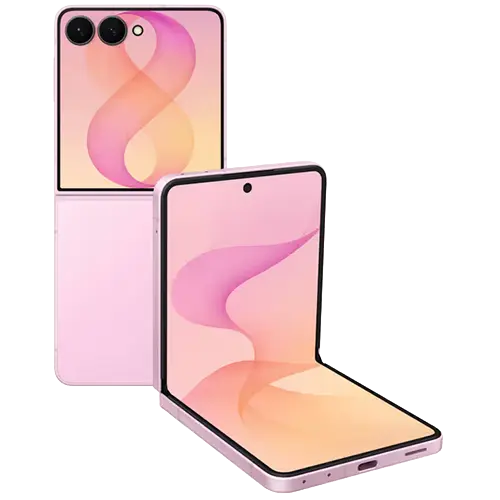
Samsung
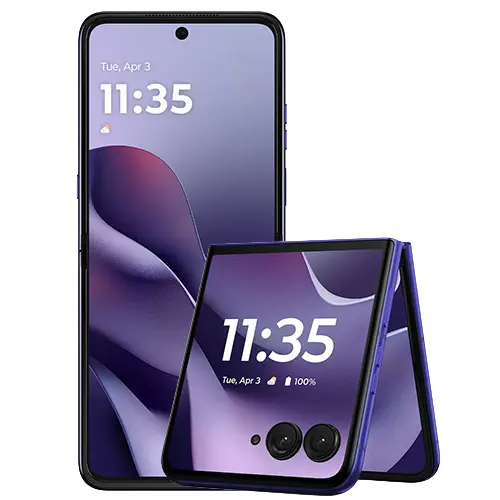
Motorola
Galaxy Z Flip 8
Razr Ultra (2026)
Ranked #26 of 61
Ranked #23 of 61
Overall
Overall
The Galaxy Z Flip 8 and the Razr Ultra (2026) are the two flip-style foldables worth considering. Samsung has been iterating on the Z Flip for years; Motorola's Razr line has narrowed the gap since its relaunch. The Z Flip 8 starts at $1,199.99, the Razr Ultra at $1,499.99. That's a $300 difference that puts pressure on the Razr to justify its premium beyond specs alone.
The Razr Ultra earns some of that premium: it has the better display, the stronger camera system, faster charging, and longer battery life. The Z Flip 8 has the faster processor, the better speaker, and much faster wired data transfers, all for less money. Neither phone pulls ahead across the board, and the overall test scores land within a few points of each other.
Design
| Samsung Galaxy Z Flip 8 | Motorola Razr Ultra (2026) | |
|---|---|---|
| Specifications | ||
| Dimensions (folded) | 85.7 x 75.4 x 13.1 mm | 88.1 x 74 x 15.7 mm |
| Dimensions (unfolded) | 166.9 x 75.4 x 6.1 mm | 171.5 x 74.0 x 7.2 mm |
| Weight | 180g | 199g |
| IP Rating | IP48 | IP48 |
| Frame | Aluminum | Aluminum |
| Front | Plastic (inner) / Gorilla Glass Victus 2 (outer) | Gorilla Glass Ceramic |
| Back | Gorilla Glass Victus 2 | Vegan leather / Alcantara / Wood |
| Screen-to-body ratio (inner) | 87.1% | 87.3% |
| Screen-to-body ratio (outer) | 83.9% | 78.1% |
Both phones use aluminum frames and carry IP48 ratings. IP48 means protection against solid particles larger than 1mm and freshwater submersion to the rated depth. Neither achieves the IP68 rating common on slab-style flagships, a typical concession for hinge-based foldables.
The Z Flip 8 is the smaller, lighter phone. Folded, it measures 85.7 x 75.4 x 13.1mm and weighs 180g. Unfolded: 166.9 x 75.4 x 6.1mm. The Razr Ultra comes in at 88.1 x 74.0 x 15.7mm folded and 171.5 x 74.0 x 7.2mm unfolded, at 199g. That's 2.6mm thicker when folded, 1.1mm thicker when unfolded, and 19g heavier.
Materials differ on the surfaces that matter most. The Z Flip 8's inner display sits under a plastic covering, while the Razr Ultra uses Gorilla Glass Ceramic, a harder material that should resist scratches better on the surface you fold and unfold hundreds of times. The Z Flip 8's outer screen and back use Gorilla Glass Victus 2. The Razr's back comes in vegan leather, Alcantara, or wood.
Screen-to-body ratios are close on the inner displays: 87.1% for the Z Flip 8 versus 87.3% for the Razr Ultra, meaning similarly thin bezels. The outer displays differ more. The Z Flip 8 achieves 83.9% versus the Razr's 78.1%, meaning Samsung fits more usable screen into its cover panel relative to the total footprint.
Bandicoot Lab doesn't formally test design or durability, so these are spec-sheet observations rather than verified claims.
Display
Inner
| Samsung Galaxy Z Flip 8 (Inner) | Motorola Razr Ultra (2026) (Inner) | |
|---|---|---|
524/ 881 | 632/ 881 | |
The Razr Ultra's 7-inch LTPO AMOLED runs at 1224 x 2992 in a 22:9 aspect ratio, producing 462 pixels per inch. The Z Flip 8's 6.9-inch Dynamic LTPO AMOLED 2X uses 1080 x 2520 in 21:9, which works out to 397 PPI. That 65 PPI gap gives the Razr visibly tighter text and finer detail in images. Both cover essentially the same color gamut: about 76% of DCI-P3 and full sRGB.
The Razr refreshes up to 165Hz versus 120Hz for the Z Flip 8. Both can drop to 1Hz for static content. The difference between 120Hz and 165Hz is subtle in everyday scrolling and more noticeable in fast-paced gaming.
Brightness depends on the mode. In manual brightness, what you'd use indoors or when overriding auto, the Z Flip 8 reaches 739 nits versus the Razr's 474 nits. That's a meaningful lead for outdoor use without auto-brightness engaged. At the low end, the Z Flip 8 dims to 0.82 nits versus 2.44 nits for the Razr, making it more comfortable for scrolling in a dark room. For HDR content with auto-brightness active, the gap nearly closes: 2,919 nits peak for the Razr, 2,828 nits for the Z Flip 8. Both maintain brightness well across HDR window sizes (56.3% stability for the Razr, 54.1% for the Z Flip 8) and hold nearly all of it over 30 minutes of sustained HDR playback, both near 99%.
Color accuracy leans toward the Razr. In its most accurate mode, colors sit closer to reference, with less drift in neutral tones and gradients. The Z Flip 8 is reasonable but shows more visible deviation. The Razr's HDR tone mapping is more faithful: it applies only a mild brightness lift to highlights and begins clipping at a higher input level, staying closer to the creator's intent. The Z Flip 8 pushes highlights noticeably brighter than mastered and clips earlier. Punchier-looking HDR, but less accurate.
Touch latency favors the Razr at 19ms versus the Z Flip 8's 28ms. A 9ms gap is large enough to feel during fast interactions like gaming input or rapid scrolling.
Outer
| Samsung Galaxy Z Flip 8 (Outer) | Motorola Razr Ultra (2026) (Outer) | |
|---|---|---|
427/ 881 | 567/ 881 | |
The cover screens share similar sizes but diverge in specs. The Z Flip 8's 4.1-inch Super AMOLED runs at 948 x 1048 (342 PPI) in an 8.1:9 aspect. The Razr Ultra's 4-inch LTPO AMOLED pushes to 1080 x 1272 (417 PPI) in 10.6:9. The Razr's 75 PPI advantage makes text and interface elements noticeably sharper.
Refresh rate is a clear Razr advantage: 1–165Hz versus 60–120Hz for the Z Flip 8. The Z Flip 8's cover display can't drop below 60Hz, which limits efficiency during static content like always-on display and notifications. The Razr matches its inner display's full refresh range on the cover screen.
The Z Flip 8 is slightly brighter on its outer panel based on testing. Color accuracy on the cover screen goes to the Razr, which produces cleaner neutral tones with less drift. The Razr's outer display scores higher across resolution, color accuracy, and refresh rate, making it the more capable cover screen for anything beyond quick glances.
Performance
| Samsung Galaxy Z Flip 8 | Motorola Razr Ultra (2026) | |
|---|---|---|
844/ 1012 | 761/ 1012 | |
The Z Flip 8 runs the Qualcomm Snapdragon 8 Elite Gen 5 with 12GB of RAM. The Razr Ultra uses the previous-generation Qualcomm Snapdragon 8 Elite with 16GB. That generational gap shows.
In GeekBench 6, the Z Flip 8 scores 3,644 single-core and 10,900 multi-core, versus 3,062 and 9,161 for the Razr. That's roughly 19% more single-core throughput, the kind of work that drives everyday responsiveness like app launches, scrolling, and task switching. Browser performance shows an even wider gap: 54.5 in Speedometer versus 20.8 for the Razr. Web-heavy users will feel this.
GPU performance is more nuanced. The Z Flip 8 posts higher peak scores in both Wild Life Extreme (7,314 versus 6,420) and Solar Bay (13,872 versus 11,538). The Z Flip 8 throttles hard: GPU stability drops to 37.8% in Wild Life Extreme and 42.2% in Solar Bay, meaning output roughly halves after extended load. The Razr holds 68.6% and 65.7% stability, maintaining more consistent performance over time. In a long gaming session, the Razr delivers steadier frame rates despite starting lower.
For daily use, the Z Flip 8's CPU advantage is the more relevant one. Sustained GPU loads are primarily a gaming concern, and even there, the Z Flip 8 feels faster in short sessions. The Razr's 16GB of RAM may help with heavy multitasking, but the CPU gap is what you'll notice most.
Camera
| Samsung Galaxy Z Flip 8 | Motorola Razr Ultra (2026) | |
|---|---|---|
470/ 587 | 482/ 587 | |
Both phones share a 50-megapixel, 1/1.56-inch main sensor, but the supporting hardware differs. The Razr Ultra pairs its main camera with a 50-megapixel ultrawide and a 50-megapixel front camera. The Z Flip 8 uses a 12-megapixel ultrawide and a 10-megapixel front camera. Neither has a telephoto lens; all zoom is digital crop.
The Razr produces sharper images on its main and front cameras across lighting conditions. The Z Flip 8's ultrawide resolves more detail than the Razr's ultrawide despite having far fewer megapixels. The front camera is where the two phones diverge most: the Razr's 50-megapixel sensor resolves substantially more detail than the Z Flip 8's 10-megapixel unit, especially in low light.
At extreme digital zoom, neither phone delivers strong results. The Razr extends to 30x but produces soft images by 20x. The Z Flip 8 caps at 10x, and detail at that maximum is poor. Dedicated telephoto lenses solve this problem; these phones don't have them.
The Z Flip 8 runs cool across most of its cameras, with a mild blue lean visible in side-by-side comparisons. It pushes saturation in bright light and pulls it back significantly in low light, which can make evening shots look washed out. The Razr Ultra is closer to neutral in good light and drifts warm under dimmer, warmer artificial lighting, a white balance correction pattern rather than a sensor-level problem, since its hue accuracy holds steady across conditions. Skin tones are a weak point for the Z Flip 8's main camera in bright light, where faces drift noticeably from reality. The Razr handles skin tones more consistently, though neither phone is without error.
Main
| Samsung Galaxy Z Flip 8 (Main) | Motorola Razr Ultra (2026) (Main) | |
|---|---|---|
568/ 722 | 491/ 722 | |
The Razr Ultra's main camera resolves more detail than the Z Flip 8's across bright, mid, and low light. Both use the same sensor size, so processing and optics account for the difference. The gap is consistent but not dramatic at 1x.
Both cameras handle a 2x digital crop cleanly. By 5x, softening becomes visible on both, with the Razr maintaining a slight edge. The Z Flip 8 covers 1x to 10x digital; the Razr extends to 30x but doesn't produce usable detail much past 10x either.
Dynamic range is the Z Flip 8 main camera's strongest attribute. It retains more shadow detail and holds more highlight information before clipping, giving high-contrast scenes a genuine sense of depth. The Razr's main camera compresses tonal range more in challenging lighting, losing some separation between bright and dark areas. Both clip highlights, but the Z Flip 8 holds on longer.
Hue accuracy favors the Razr across all three tested lighting conditions. Its errors stay small from bright (1,000 lux, 5500K) through dim (10 lux, 3000K). The Z Flip 8's hue accuracy degrades as light dims, a pattern pointing to sensor-level limitations layered onto its processing-driven cool bias. The Z Flip 8 also oversaturates in bright light and desaturates considerably in low light. The Razr stays more consistent, with a slight saturation bump in bright light and near-neutral rendering in dim conditions, though it drifts warm under low, warm-temperature lighting due to white balance correction that doesn't fully compensate.
Video stabilization favors the Razr. Handheld footage stays more controlled, with less residual shake.
Ultrawide
| Samsung Galaxy Z Flip 8 (Ultrawide) | Motorola Razr Ultra (2026) (Ultrawide) | |
|---|---|---|
522/ 722 | 551/ 722 | |
The Z Flip 8's 12-megapixel ultrawide resolves more detail than the Razr Ultra's 50-megapixel unit across all lighting conditions. Megapixel counts don't always predict resolved detail, and this pairing is a clear demonstration. The Z Flip 8 maintains its sharpness edge even as light drops.
Color accuracy tells the opposite story. The Razr's ultrawide delivers better hue rendering, particularly in mid and low light. The Z Flip 8's ultrawide shows growing color drift as lighting dims, with both white balance overcorrection and sensor limitations contributing. In bright light, the Z Flip 8's ultrawide pushes a strong cool cast while boosting saturation. The Razr's ultrawide carries a noticeable cool cast in bright light too, but it mostly disappears in dimmer conditions. The Razr is slightly more saturated than the Z Flip 8 in bright light, then settles to more natural rendering in dim conditions where the Z Flip 8 keeps pushing vivid color.
Skin tones are a problem on both ultrawides, with visible errors across lighting conditions. The Razr's errors are smaller.
Dynamic range is where the Razr's ultrawide pulls well ahead. It captures much more usable range between shadows and highlights, retaining scene depth that the Z Flip 8's ultrawide loses. The Z Flip 8's ultrawide clips highlights and compresses shadows aggressively, producing flatter images in challenging conditions. The Razr's ultrawide delivers wider dynamic range than its own main camera, which is more than you'd expect from a secondary lens.
Front
| Samsung Galaxy Z Flip 8 (Front) | Motorola Razr Ultra (2026) (Front) | |
|---|---|---|
399/ 722 | 557/ 722 | |
The front camera is where these two phones diverge most. The Razr Ultra's 50-megapixel sensor resolves substantially more detail than the Z Flip 8's 10-megapixel unit, and the gap widens in low light.
The Razr's front camera maintains consistent color across lighting conditions, with stable hue accuracy and a slight cool lean that reads as a deliberate tuning choice rather than an error. The Z Flip 8's front camera starts neutral in bright light but shifts toward a warm-magenta tint with a blue undertone as lighting dims, a white balance issue compounded by growing hue errors that suggest sensor limitations in lower light. Saturation on the Z Flip 8's front camera stays close to natural. The Razr's front camera undersaturates slightly, producing colors that are a touch muted compared to reality.
Dynamic range strongly favors the Razr's front camera, which preserves highlight and shadow detail in high-contrast selfie scenarios that the Z Flip 8 clips. Video stabilization is also much better on the Razr, producing noticeably smoother handheld footage.
Battery
| Samsung Galaxy Z Flip 8 | Motorola Razr Ultra (2026) | |
|---|---|---|
573/ 836 | 584/ 836 | |
The Razr Ultra packs 5,000mAh versus the Z Flip 8's 4,300mAh. In video playback, the Razr lasts 31.23 hours on its inner display and 32.89 hours on its outer display, roughly two days of typical mixed use between charges. The Z Flip 8 manages 27.56 hours on the inner display and 24.87 hours on the outer. That's solidly more than a full day, but you'll likely need the charger before bedtime on the second day.
Web browsing over a 5-hour test drains 19% on the Razr versus 21% on the Z Flip 8. A small gap in practice, translating to perhaps an hour of extra browsing over a full charge.
Gaming inverts the battery picture. During the 3DMark Wild Life Extreme stress test, the Z Flip 8 drains 18% while the Razr loses 39%. The Razr sustains higher GPU performance (68.6% stability versus 37.8%), which means it's pushing its silicon harder and consuming more power. The Z Flip 8 throttles more aggressively, sacrificing sustained frame rates but preserving battery. For regular gamers, that difference compounds over every session.
Standby drain is identical: 3% over 8 hours of overnight idle.
Charging
| Samsung Galaxy Z Flip 8 | Motorola Razr Ultra (2026) | |
|---|---|---|
217/ 837 | 329/ 837 | |
The Razr Ultra charges at 68W wired and 30W wireless. The Z Flip 8 tops out at 25W wired and 15W wireless.
After 10 minutes on the wire, the Razr reaches 27% versus 20% for the Z Flip 8. At 30 minutes: 70% for the Razr, 57% for the Z Flip 8. A quick top-up gets the Razr to nearly three-quarters full. Wireless charging is closer: 10% versus 8% at 10 minutes, 22% versus 20% at 30 minutes.
The Z Flip 8's 25W wired speed is below what most phones at this price deliver. If fast top-ups matter to your routine, the Razr has a clear edge.
Speaker
| Samsung Galaxy Z Flip 8 | Motorola Razr Ultra (2026) | |
|---|---|---|
706/ 897 | 544/ 897 | |
The Z Flip 8 reaches 75.4 dBA at maximum volume; the Razr Ultra is slightly louder at 77.6 dBA. The Z Flip 8 is the cleaner-sounding phone: total harmonic distortion sits at 4.15% versus 8.74% for the Razr, meaning less audible breakup at every volume level.
The Z Flip 8 also produces fuller bass and more defined high-end detail. The Razr sounds thinner, with less low-end presence and a less articulate treble. For speaker calls, podcasts, and casual media, the Z Flip 8 delivers more balanced, cleaner audio.
Microphone
| Samsung Galaxy Z Flip 8 | Motorola Razr Ultra (2026) | |
|---|---|---|
694/ 1220 | 610/ 1220 |
The Z Flip 8's microphone produces a more even frequency response and scores above average in testing. The Razr Ultra sits closer to average. Both handle phone calls fine. The Z Flip 8 captures slightly more natural-sounding audio for voice notes and speakerphone use.
Other
| Samsung Galaxy Z Flip 8 | Motorola Razr Ultra (2026) | |
|---|---|---|
| Biometrics | 437/ 1181 | 713/ 1181 |
| Data Transfer | 806/ 943 | 116/ 943 |
| Specifications | ||
| Biometric type | Fingerprint | Fingerprint |
| Ports | USB-C 3.2 | USB-C 2.0 |
| Storage | 256GB, 512GB | 512GB |
Fingerprint unlock speed favors the Razr Ultra at 147ms versus the Z Flip 8's 240ms. Both use capacitive sensors. The Razr's response feels immediate; the Z Flip 8 introduces a brief but noticeable pause. Neither phone has hardware-based face unlock.
Data transfer speeds are a major gap. The Z Flip 8's USB-C 3.2 port reaches 351 MB/s read and 329 MB/s write. The Razr Ultra's USB-C 2.0 port manages 39 MB/s read and 38 MB/s write, roughly one-ninth the throughput. Transferring large files or backing up to a computer takes considerably longer on the Razr.
The Z Flip 8 comes in 256GB and 512GB storage options with 12GB of RAM. The Razr Ultra offers 512GB only, with 16GB of RAM.
Conclusion
The Razr Ultra's advantages center on what you see and interact with most often. Its displays are sharper, more accurate, and faster-refreshing on both screens. Its camera system resolves more detail and renders color more consistently on the main and front lenses. It charges faster and lasts longer for video and web use. Its fingerprint sensor is quick enough to feel transparent. If display quality, front-camera performance, and charging speed are priorities, the extra $300 buys measurable improvements.
The Z Flip 8's strengths run in a different direction. Its newer processor is meaningfully faster for everyday tasks and browser performance. Its speaker is in a different class. USB 3.2 data transfers are roughly nine times faster. Gaming drains about half as much battery. And it's lighter and thinner.
The overall scores land within a few points of each other at a $300 price difference. The Z Flip 8 delivers similar aggregate quality for less money. The Razr Ultra is stronger in the categories most people interact with throughout the day. The price gap is the tiebreaker.
FAQ
Is the Razr Ultra worth $300 more than the Galaxy Z Flip 8?
The extra money buys sharper and more accurate displays on both screens, a stronger camera system (especially the front camera), faster charging, and longer video battery life. The Z Flip 8 has the faster processor, the better speaker, and much faster USB transfers. Overall quality is close, so the Razr Ultra is worth it if display, selfies, and charging speed matter most. Otherwise the Z Flip 8 gives similar aggregate quality for less.
Which has the better camera, the Galaxy Z Flip 8 or the Razr Ultra?
The Razr Ultra resolves more detail on its main and front cameras, keeps color more consistent across lighting, renders skin tones more reliably, and produces steadier handheld video. The Z Flip 8 has the edge in main-camera dynamic range, and its 12-megapixel ultrawide resolves more detail than the Razr's 50-megapixel one. Neither phone has a telephoto lens, and both lose detail quickly at long digital zoom.
Does the Razr Ultra or the Z Flip 8 last longer on a charge?
For video and browsing, the Razr Ultra lasts longer. Its 5,000mAh battery plays video for 31.23 hours on the inner display, versus 27.56 hours for the Z Flip 8's 4,300mAh cell. Web browsing drains 19% on the Razr and 21% on the Z Flip 8 over the 5-hour test. Gaming reverses this: the Z Flip 8 lost 18% in the Wild Life Extreme stress test versus 39% for the Razr.
Which charges faster, the Razr Ultra or the Galaxy Z Flip 8?
The Razr Ultra charges faster. It supports 68W wired and 30W wireless, against 25W wired and 15W wireless for the Z Flip 8. On a wire, the Razr reaches 27% after 10 minutes and 70% after 30 minutes, while the Z Flip 8 reaches 20% and 57%. The wireless gap is smaller, at 22% versus 20% after 30 minutes.
Is the Galaxy Z Flip 8 or the Razr Ultra better for gaming?
The Z Flip 8 posts higher peak GPU scores and has the faster CPU, so it feels quicker in short sessions and drains much less battery. It throttles hard under sustained load, though, with GPU stability falling to 37.8% in Wild Life Extreme. The Razr Ultra starts lower but holds 68.6% stability, giving steadier frame rates in long sessions at the cost of heavier battery drain. The Razr also has a faster 165Hz inner display and lower touch latency.
How do the Razr Ultra and Z Flip 8 inner displays compare?
The Razr Ultra's inner screen is sharper (462 PPI versus 397), refreshes up to 165Hz versus 120Hz, has lower touch latency, and shows more accurate color and HDR tone mapping. The Z Flip 8 gets brighter in manual mode (739 nits versus 474) and dims lower for dark rooms. Peak HDR brightness is nearly the same on both, at about 2,900 nits.
Related
Motorola
Razr Ultra (2026)
Samsung
Galaxy Z Flip 8

Samsung
Galaxy S26 Ultra
Samsung
Galaxy S26+
Samsung
Galaxy Z Fold 8 Ultra
Samsung
Galaxy Z Fold 8
Samsung
Galaxy S26
Motorola
Razr Fold
Motorola
Razr+ (2026)
Motorola
Razr (2026)

Motorola
Moto G Power (2026)
Samsung Galaxy Z Flip 8 vs Google Pixel 11 Pro XL