Samsung Galaxy Z Flip 8 vs Samsung Galaxy S26 Ultra

Samsung
Samsung
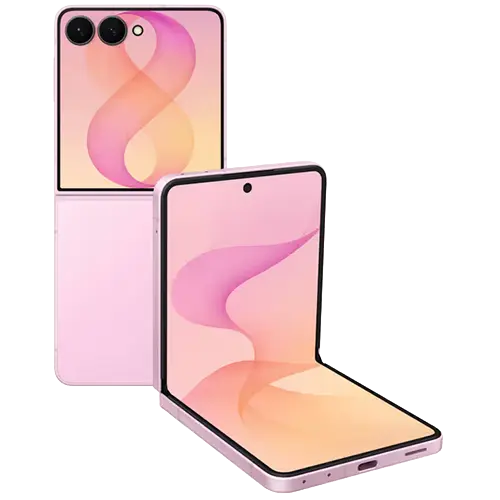
Galaxy Z Flip 8
Galaxy S26 Ultra
Ranked #26 of 61
Ranked #7 of 61
Overall
Overall
Samsung sells the Galaxy Z Flip 8 for $1,199.99 and the Galaxy S26 Ultra for $1,299.99. A hundred dollars separates a clamshell foldable from Samsung's most capable slab. Anyone considering the Z Flip 8 at full price is also, implicitly, cross-shopping the S26 Ultra. The Z Flip 8 is built around pocketability: it folds in half, slips into small pockets, and makes that compact form its central pitch. The S26 Ultra is Samsung's flagship, carrying a four-camera system, a large high-resolution display, and top-tier specs across the board.
The S26 Ultra pulls ahead in most measurable categories. Its camera system is substantially more capable. Its display is brighter and higher resolution. GPU performance sustains better under load, the speaker is more balanced, and charging is significantly faster. The Z Flip 8 has genuine advantages in battery efficiency, microphone quality, and data transfer speeds. And it folds in half.
Design
| Samsung Galaxy Z Flip 8 | Samsung Galaxy S26 Ultra | |
|---|---|---|
| Specifications | ||
| Dimensions (folded) | 85.7 x 75.4 x 13.1 mm | — |
| Dimensions (unfolded) | 166.9 x 75.4 x 6.1 mm | — |
| Weight | 180g | 214g |
| IP Rating | IP48 | IP68 |
| Frame | Aluminum | Aluminum |
| Front | Plastic (inner) / Gorilla Glass Victus 2 (outer) | Gorilla Armor 2 |
| Back | Gorilla Glass Victus 2 | Gorilla Glass Victus 2 |
| Screen-to-body ratio (inner) | 87.1% | — |
| Screen-to-body ratio (outer) | 83.9% | — |
| Dimensions | — | 163.6 x 78.1 x 7.9 mm |
| Screen-to-body ratio | — | 91.5% |
The Z Flip 8 folds to 85.7 x 75.4 x 13.1mm and opens to 166.9 x 75.4 x 6.1mm. It weighes 180g. The frame is aluminum, the inner display is plastic (necessary for the fold mechanism), the outer cover is Gorilla Glass Victus 2, and the back is Gorilla Glass Victus 2. Its IP48 rating means partial dust protection and water submersion resistance. The "4" for dust means it isn't fully sealed against fine particles, unlike IP6x ratings.
The S26 Ultra measures 163.6 x 78.1 x 7.9mm and weighs 214g. It uses an aluminum frame, Gorilla Armor 2 on the front, which adds scratch and glare resistance over standard glass, and Gorilla Glass Victus 2 on the back. Its IP68 rating provides full dust sealing and water submersion resistance.
The S26 Ultra's screen-to-body ratio is 91.5%, meaning thin bezels around its panel. The Z Flip 8's inner display sits at 87.1%, and its outer cover display at 83.9%. Both use aluminum frames, but the S26 Ultra's display is protected by glass on both sides, while the Z Flip 8's inner screen is plastic. Folded, the Z Flip 8 is roughly half the height and 34g lighter.
Bandicoot Lab doesn't formally test design or durability. These are on-paper specifications.
Display
| Samsung Galaxy Z Flip 8 (Inner) | Samsung Galaxy Z Flip 8 (Outer) | Samsung Galaxy S26 Ultra | |
|---|---|---|---|
524/ 881 | 427/ 881 | — | |
The S26 Ultra's 6.9-inch panel runs at 1440 x 3120 resolution (500 pixels per inch) with a 19.5:9 aspect ratio. The Z Flip 8's 6.9-inch inner display runs at 1080 x 2520 (397 PPI) in a 21:9 aspect ratio, and its 4.1-inch outer cover display at 948 x 1048 (342 PPI) in an 8.1:9 aspect ratio. All three panels support up to 120Hz refresh, though the Z Flip 8's outer display bottoms out at 60Hz rather than the 1Hz minimum of the inner panels.
The S26 Ultra is brighter. It reaches 976 nits of manual brightness versus 739 nits for the Z Flip 8's inner display, and peaks at 3,023 nits in HDR versus 2,828 nits. Both sustain brightness well over time, at 98.6% and 98.7% stability respectively. Across different HDR window sizes, the Z Flip 8's inner display is more consistent at 54.1% versus 48.8%, meaning its brightness drops less as bright areas change in size. Touch latency measures 21ms on the S26 Ultra and 28ms on the Z Flip 8's inner display. That 7ms gap is small enough that most people won't perceive it.
Color accuracy is close between the S26 Ultra and the Z Flip 8's inner display. Both sit in a similar range where casual use won't reveal much difference. The Z Flip 8 covers more of the DCI-P3 wide color gamut at 76.3% versus 72.4%, and nearly all of sRGB at 99.8% versus 97.9%. The Z Flip 8's outer display matches the inner panel's color accuracy by score but falls behind in brightness and resolution. The Z Flip 8's inner display follows the HDR tone mapping reference curve more closely, applying only a mild lift to highlights. The S26 Ultra pushes highlights more aggressively above their mastered brightness, making HDR content punchier but less faithful to the source. Both clip at the same input level.
Performance
| Samsung Galaxy Z Flip 8 | Samsung Galaxy S26 Ultra | |
|---|---|---|
844/ 1012 | 908/ 1012 | |
Both phones run the Qualcomm Snapdragon 8 Elite Gen 5 with 12GB of RAM. The S26 Ultra is also available with 16GB. CPU performance is nearly identical: the S26 Ultra scores 3,685 single-core and 11,198 multi-core in GeekBench 6, while the Z Flip 8 scores 3,644 and 10,900. You won't feel this difference in daily use.
GPU performance separates them. The S26 Ultra peaks at 7,802 in Wild Life Extreme versus 7,314 for the Z Flip 8, but the meaningful gap is sustained performance: 49.8% stability versus 37.8%. Solar Bay stability tells the same story, 56.2% versus 42.2%. The Z Flip 8's thin unfolded body leaves less room for heat dissipation, and it throttles more aggressively during extended gaming sessions. Browser performance goes the other way: the Z Flip 8 scores 54.5 in Speedometer versus 46 for the S26 Ultra.
Camera
| Samsung Galaxy Z Flip 8 | Samsung Galaxy S26 Ultra | |
|---|---|---|
470/ 587 | 558/ 587 | |
The S26 Ultra has the more versatile camera system by a wide margin. It carries a 200-megapixel f/1.4 main camera with a 1/1.3-inch sensor, a 50-megapixel ultrawide, two telephoto lenses (3x and 5x), and a 12-megapixel front camera. The Z Flip 8 has a 50-megapixel f/1.8 main camera with a 1/1.56-inch sensor, a 12-megapixel ultrawide, no telephoto, and a 10-megapixel front camera. The S26 Ultra's max digital zoom reaches 100x; the Z Flip 8 tops out at 10x.
The S26 Ultra's main camera is sharper across all lighting conditions by a wide margin. Its larger sensor and higher resolution resolve substantially more detail in bright, moderate, and dim scenes. The Z Flip 8 is competent at 1x but softens faster as you crop in. At extreme zoom, the gap becomes dramatic: the S26 Ultra retains usable detail well beyond 5x thanks to its dedicated telephoto lenses, while the Z Flip 8's 10x maximum is a pure digital crop that produces poor detail. Past the S26 Ultra's 5x native range, sharpness degrades steadily through digital crop, but even at distant zoom levels it maintains a clear advantage.
Both phones lean vivid in bright light. The S26 Ultra's main camera has a warm, pink-magenta cast that intensifies as lighting gets dimmer. This pattern is consistent with white balance overcorrection: as test lighting shifts from daylight to warmer indoor color temperatures, the processing pushes color further in the wrong direction. Saturation is punchy in bright light. Skin tones are inaccurate in bright light but improve considerably in moderate conditions. The Z Flip 8's main camera runs cooler, with a consistent slight blue cast across all lighting. That steadiness suggests a deliberate tuning choice rather than a white balance failure. Hue accuracy degrades gradually in dimmer light, pointing more toward a sensor-level limitation. Saturation is mildly boosted in bright light and drops below neutral in the dark, desaturating low-light shots. Skin tones are similarly inaccurate in bright light but better in moderate conditions.
Dynamic range on both main cameras is solid. Both clip highlights in high-contrast scenes, but the S26 Ultra preserves slightly more tonal depth across the frame. Shadow detail holds well on both.
Main
| Samsung Galaxy Z Flip 8 (Main) | Samsung Galaxy S26 Ultra (Main) | |
|---|---|---|
568/ 722 | 711/ 722 | |
The S26 Ultra's 200-megapixel main camera covers 1x through 3x before handing off to the telephoto. At 1x, it captures significantly more detail than the Z Flip 8 across all lighting. The 1/1.3-inch sensor gives it generous cropping headroom, so detail holds well through 2x and into 3x.
The Z Flip 8's 50-megapixel main covers its entire 1x through 10x zoom range with no optical help. At 1x it's capable, but it trails the S26 Ultra at every focal length. Detail softens noticeably by 3x to 5x and falls off sharply at 10x. Dynamic range is close to the S26 Ultra at 1x, with good shadow retention and only slightly more highlight clipping.
Color rendering follows the patterns described above. The S26 Ultra leans warm and vivid; the Z Flip 8 leans cool with milder saturation that fades in low light.
Ultrawide
| Samsung Galaxy Z Flip 8 (Ultrawide) | Samsung Galaxy S26 Ultra (Ultrawide) | |
|---|---|---|
522/ 722 | 542/ 722 | |
The Z Flip 8's 12-megapixel f/2.2 ultrawide is sharper than the S26 Ultra's 50-megapixel f/1.9 ultrawide across all lighting conditions, despite the smaller sensor and slower lens. Both hold detail reasonably in dim light, with the Z Flip 8 maintaining a slight edge.
Color is a weakness on the Z Flip 8's ultrawide. It's heavily saturated across all lighting, with a pink tint paired with a cool blue lean that creates an unnatural cast. Skin tones are quite inaccurate, particularly in bright light. The S26 Ultra's ultrawide is more neutral in daylight but develops an inconsistent warm push in moderate lighting. Its skin tone accuracy is better overall, especially in low light.
Dynamic range is where the S26 Ultra's ultrawide pulls ahead. Its larger 1/2.5-inch sensor captures more tonal information in high-contrast scenes, preserving shadow and highlight detail that the Z Flip 8's smaller sensor loses.
Telephoto
| Samsung Galaxy S26 Ultra (Telephoto Short) | Samsung Galaxy S26 Ultra (Telephoto Long) | |
|---|---|---|
589/ 722 | 676/ 722 | |
The Z Flip 8 has no telephoto lens. Everything beyond 1x is a digital crop from its main sensor.
The S26 Ultra carries two telephoto lenses. The 3x (67mm, 10 megapixels, f/2.4) delivers good sharpness in bright and moderate light, dropping in dim conditions as the small 1/3.94-inch sensor runs short. Stabilization is strong on this lens. Skin tones are among the most accurate of the S26 Ultra's cameras in well-lit conditions. Dynamic range is good for a telephoto.
The 5x lens (111mm, 50 megapixels, f/2.9, 1/2.52-inch sensor) is very sharp in bright and moderate lighting. Its larger sensor retains more usable detail in dim conditions than the 3x lens, despite the slower aperture. Skin tones are accurate in good light but shift significantly in the dark. Past 5x, the S26 Ultra continues through digital crop toward its 100x maximum. Detail holds reasonably through 10x and degrades steadily beyond.
These two telephoto lenses are the single largest practical advantage the S26 Ultra holds over the Z Flip 8. Subjects at moderate distance are simply unreachable for the Z Flip 8 at usable quality.
Front
| Samsung Galaxy Z Flip 8 (Front) | Samsung Galaxy S26 Ultra (Front) | |
|---|---|---|
399/ 722 | 415/ 722 | |
Both phones have 23mm f/2.2 front cameras. The S26 Ultra's 12-megapixel 1/3.2-inch sensor is marginally larger than the Z Flip 8's 10-megapixel 1/3.52-inch unit. Sharpness is close in bright and moderate light. The S26 Ultra holds a small edge in the dark.
Both front cameras are fairly neutral in good light and develop a warm push as conditions dim. The Z Flip 8 handles skin tones a bit better in moderate and low light; the S26 Ultra is more accurate in daylight. Dynamic range is limited on both, with highlights clipping in contrasty scenes. The S26 Ultra has a slight advantage there.
Battery
| Samsung Galaxy Z Flip 8 | Samsung Galaxy S26 Ultra | |
|---|---|---|
573/ 836 | 539/ 836 | |
The S26 Ultra has a 5,000mAh battery. The Z Flip 8 has a 4,300mAh cell. Despite the capacity gap, the Z Flip 8 is more efficient in several key scenarios.
Video playback favors the S26 Ultra: 31.57 hours versus 27.56 hours on the Z Flip 8's inner display and 24.87 hours on the outer. Both are strong runtimes. The S26 Ultra's 31.5 hours translates to comfortably two full days of typical mixed use. The Z Flip 8 isn't far behind.
Web browsing and gaming favor the Z Flip 8. It drains 21% over the five-hour web test versus 24% for the S26 Ultra, and loses just 18% during the gaming stress test versus 24%. The S26 Ultra's higher-resolution display likely contributes to the heavier draw under load. Standby is the starkest difference: the Z Flip 8 loses 3% overnight versus 10% for the S26 Ultra. If you leave the S26 Ultra unplugged at night, you're starting the day at 90%.
Charging
| Samsung Galaxy Z Flip 8 | Samsung Galaxy S26 Ultra | |
|---|---|---|
217/ 837 | 486/ 837 | |
The S26 Ultra charges at 60W wired and 25W wireless. The Z Flip 8 charges at 25W wired and 15W wireless.
The gap is large. On wired charging, the S26 Ultra reaches 34% in 10 minutes and 79% in 30 minutes. The Z Flip 8 manages 20% in 10 minutes and 57% in 30 minutes, despite having a smaller battery to fill. Wireless charging shows the same pattern: 18% and 44% at 10 and 30 minutes for the S26 Ultra, versus 8% and 20% for the Z Flip 8. If you rely on quick top-ups, the S26 Ultra delivers roughly twice the charge in the same window.
Speaker
| Samsung Galaxy Z Flip 8 | Samsung Galaxy S26 Ultra | |
|---|---|---|
706/ 897 | 857/ 897 | |
Maximum volume is nearly identical: 75.4 dBA for the Z Flip 8 and 75.3 dBA for the S26 Ultra. The character of each speaker system is not.
The S26 Ultra's speakers are fuller and more balanced. Bass extends lower and carries more weight. High-frequency clarity is markedly better, and the response is more even across the range. Distortion is lower at 3.26% total harmonic distortion versus 4.15% on the Z Flip 8. The Z Flip 8's speakers sound thinner, with weaker bass and more unevenness. For media, podcasts, or speakerphone calls, the S26 Ultra is the clearly better listen.
Microphone
| Samsung Galaxy Z Flip 8 | Samsung Galaxy S26 Ultra | |
|---|---|---|
694/ 1220 | 566/ 1220 |
The Z Flip 8 has a more balanced microphone with more even frequency response. It sits well above average. The S26 Ultra's microphone is below average, with more unevenness in its capture. For calls and voice recordings, the Z Flip 8 produces more natural-sounding audio.
Other
| Samsung Galaxy Z Flip 8 | Samsung Galaxy S26 Ultra | |
|---|---|---|
| Biometrics | 437/ 1181 | 764/ 1181 |
| Data Transfer | 806/ 943 | 737/ 943 |
| Specifications | ||
| Biometric type | Fingerprint | Fingerprint |
| Ports | USB-C 3.2 | USB-C 3.2 |
| Storage | 256GB, 512GB | 256GB, 512GB, 1TB |
The S26 Ultra's ultrasonic fingerprint sensor averages 138ms. The Z Flip 8's capacitive sensor averages 240ms. That's a perceptible gap. Neither phone has hardware-based face unlock.
Data transfer speeds are close. The Z Flip 8 reads at 351 MB/s and writes at 329 MB/s; the S26 Ultra reads at 332 MB/s and writes at 274 MB/s. Both use USB-C 3.2. The Z Flip 8 comes in 256GB and 512GB configurations. The S26 Ultra adds a 1TB option and is available with 16GB of RAM alongside the base 12GB.
Conclusion
The S26 Ultra is the more capable phone in most categories that Bandicoot Lab measures. Its camera system has a clear lead, anchored by a sharper main sensor and two telephoto lenses the Z Flip 8 simply doesn't have. The display is brighter and higher resolution. Speakers are fuller. Charging is much faster. The fingerprint sensor is quicker. GPU performance holds up better under sustained load. At $1,299.99, it gives up very little for a traditional flagship.
The Z Flip 8 at $1,199.99 wins in places that matter day to day. Battery efficiency is better across web browsing, gaming, and standby. The microphone is more consistent. The inner display follows HDR content more faithfully. And the form factor is something the S26 Ultra can't replicate: a 6.9-inch phone that folds small enough for a jacket's coin pocket.
If you don't care about the fold, the S26 Ultra is the stronger phone by most measures and costs only $100 more. If pocketability is a genuine priority and you can live without telephoto reach, the Z Flip 8 holds its own in the areas where phones spend most of their time.
FAQ
Does the Galaxy Z Flip 8 or Galaxy S26 Ultra have the better camera?
The S26 Ultra has the stronger camera system. Its 200-megapixel main camera is sharper in all lighting, and its 3x and 5x telephoto lenses keep detail at distances where the Z Flip 8 can't. The Z Flip 8 has no telephoto, and its 10x maximum is a digital crop with poor detail. The Z Flip 8's 12-megapixel ultrawide is sharper than the S26 Ultra's 50-megapixel one, but its colors look heavily saturated and unnatural.
Which has better battery life, the Z Flip 8 or the S26 Ultra?
It depends on the task. The S26 Ultra's 5,000mAh battery lasts longer in video playback, at 31.57 hours versus 27.56 hours on the Z Flip 8's inner display. The Z Flip 8 uses less power in other tests: it drains 21% in the web test versus 24%, 18% in the gaming test versus 24%, and 3% overnight in standby versus 10%.
Is the S26 Ultra or Z Flip 8 better for gaming?
The S26 Ultra holds its performance better in long sessions. Both phones use the same Snapdragon 8 Elite Gen 5 chip and score nearly the same on CPU tests. The S26 Ultra's Wild Life Extreme stability is 49.8% versus 37.8%, and its Solar Bay stability is 56.2% versus 42.2%. The Z Flip 8's thin unfolded body throttles sooner, though it uses less battery during gaming.
Which charges faster, the Galaxy S26 Ultra or the Z Flip 8?
The S26 Ultra charges much faster. At 60W wired it reaches 34% in 10 minutes and 79% in 30 minutes. The Z Flip 8 charges at 25W and reaches 20% and 57% over the same times. Wireless shows the same gap: 25W on the S26 Ultra versus 15W on the Z Flip 8.
Is the Z Flip 8 worth choosing over the S26 Ultra when they're only $100 apart?
Choose the Z Flip 8 if pocketability matters most. It folds to 85.7 x 75.4 x 13.1mm and weighs 180g, versus 214g for the S26 Ultra. It also has better microphone quality and lower battery drain in web, gaming, and standby use. If you don't need the fold, the S26 Ultra is stronger in camera, display brightness and resolution, speakers, charging speed, and sustained GPU performance.
Is the Galaxy S26 Ultra more durable than the Z Flip 8?
On paper, yes. The S26 Ultra is rated IP68, with full dust sealing and water submersion resistance. The Z Flip 8 is rated IP48, so it resists water but isn't fully sealed against fine dust. The Z Flip 8's inner display is plastic to allow folding, while the S26 Ultra's screen is glass. Bandicoot Lab doesn't test durability, so these are specification-based differences.
Related
Samsung
Galaxy Z Flip 8
Samsung
Galaxy S26 Ultra
Samsung
Galaxy S26+
Samsung
Galaxy Z Fold 8 Ultra
Samsung
Galaxy Z Fold 8
Samsung
Galaxy S26

Samsung Galaxy Z Flip 8 vs Motorola Razr+ (2026)

Samsung Galaxy Z Flip 8 vs Motorola Razr Ultra (2026)
Samsung Galaxy Z Flip 8 vs Google Pixel 11 Pro XL
Samsung Galaxy Z Flip 8 vs Apple iPhone 17 Pro Max

Poco F9 Ultra vs Samsung Galaxy S26 Ultra
Google Pixel 11 Pro XL vs Samsung Galaxy S26 Ultra