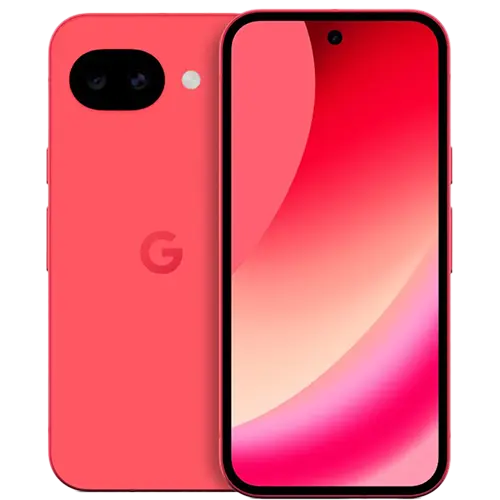
Samsung Galaxy Z Fold 8 vs Google Pixel 10 Pro Fold
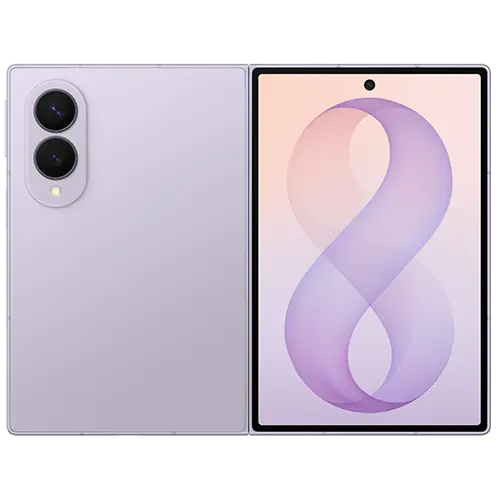
Samsung
Galaxy Z Fold 8
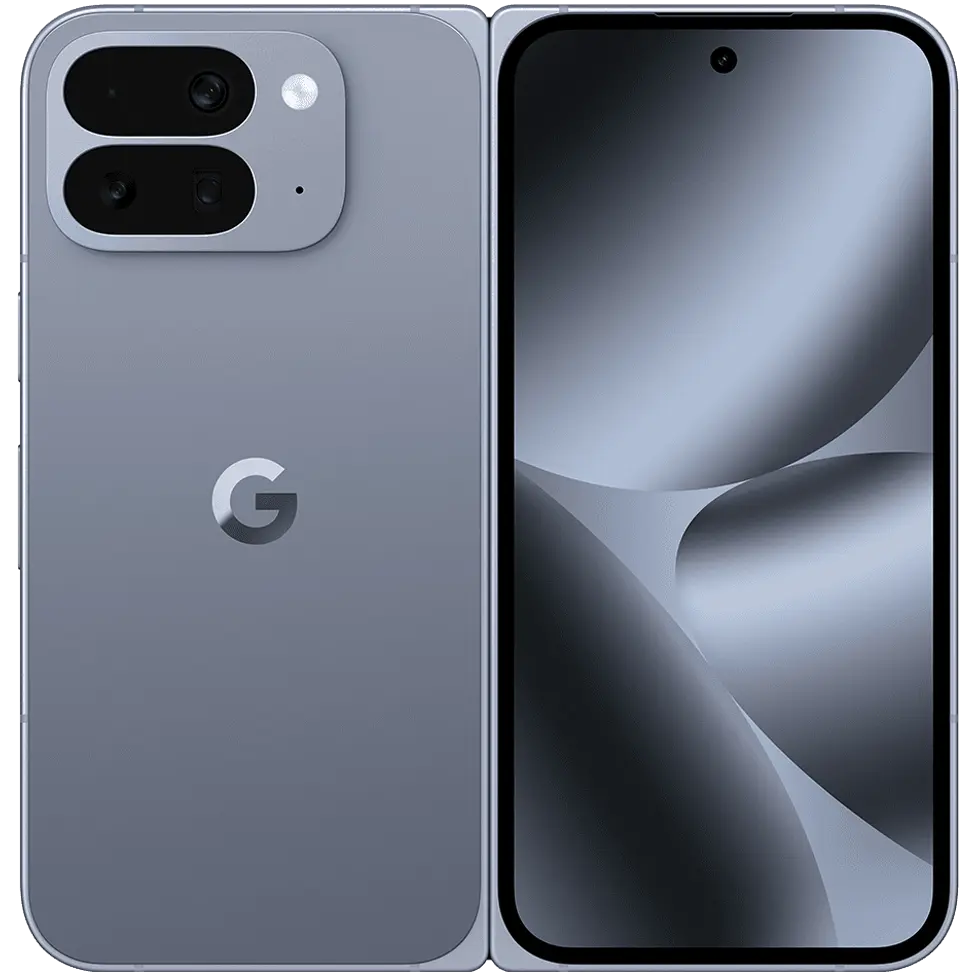
Pixel 10 Pro Fold
Ranked #19 of 61
Ranked #47 of 61
Overall
Overall
The Samsung Galaxy Z Fold 8 represents a change in form factory for Samsung foldables, offering a wider, passport-style build. The Pixel 10 Pro Fold is Google's 2025 answer, a foldable that leans on Google's camera reputation and software, and undercuts Samsung by $100 at $1,799 to the Fold 8's $1,899.99. Both are flagship-tier devices asking flagship-tier money, aimed at people who want a tablet in their pocket and are willing to pay for it.
The short version: the Fold 8 is the faster, lighter phone with much longer battery life, quicker charging, and quicker fingerprint unlock. The Pixel counters with a proper telephoto lens and longer zoom range, sharper cameras overall, full water and dust resistance, and a more color-accurate inner display. Neither has a clean sweep on camera quality. The Pixel captures more detail but its color tuning gets in the way, while Samsung's more neutral processing sits on softer images.
Here’s how the phones compare in our lab testing.
Design
| Samsung Galaxy Z Fold 8 | Google Pixel 10 Pro Fold | |
|---|---|---|
| Specifications | ||
| Dimensions (folded) | 81.9 x 123.9 x 9.7 mm | 155.2 x 76.3 x 10.8 mm |
| Dimensions (unfolded) | 161.4 x 123.9 x 4.5 mm | 155.2 x 150.4 x 5.2 mm |
| Weight | 201g | 258g |
| IP Rating | IP48 | IP68 |
| Frame | Aluminum | Aluminum |
| Front | Gorilla Glass Victus Ceramic 3 | Ultra Thin Glass (inner) / Gorilla Glass Victus 2 (outer) |
| Back | Gorilla Glass Victus 2 | Gorilla Glass Victus 2 |
| Screen-to-body ratio (inner) | 89.0% | 88.4% |
| Screen-to-body ratio (outer) | 86.9% | 84.3% |
The weight gap is the headline in the design. The Fold 8 is 201g, lighter than plenty of non-folding flagships, while the Pixel 10 Pro Fold is 258g. That 57g difference is roughly a AA battery. The Fold 8 is also dramatically thinner unfolded at 4.5mm versus the Pixel's 5.2mm, and folded it measures 9.7mm to the Pixel's 10.8mm. The two phones fold to different shapes as well. The Fold 8 is a shorter, wider slab at 81.9 x 123.9mm closed, opening to 161.4 x 123.9mm, while the Pixel is a conventional tall phone at 155.2 x 76.3mm closed, opening to a near-square 155.2 x 150.4mm.
Both use aluminum frames and Gorilla Glass Victus 2 on the back. Samsung puts Gorilla Glass Victus Ceramic 3 on its cover display; Google uses Victus 2 outside and Ultra Thin Glass on the inner panel. Screen-to-body ratios are close on the inner displays, 89% for Samsung and 88.4% for Google, so bezels are slim on both.
The Pixel wins on ingress protection. Its IP68 rating means it's dust-tight and submersible to the rated depth. The Fold 8's IP48 rating covers submersion but only blocks solid objects larger than 1mm, so it has no real dust protection. For a device with a hinge, that's a meaningful difference.
Bandicoot Lab doesn't formally test design or durability.
Display
Inner
| Samsung Galaxy Z Fold 8 (Inner) | Google Pixel 10 Pro Fold (Inner) | |
|---|---|---|
559/ 881 | 609/ 881 | |
The Fold 8's inner display is a 7.6" AMOLED at 2448 x 1848 and 404 PPI with a 4:3 aspect ratio. The Pixel's is larger at 8", but its 2076 x 2152 resolution works out to 373 PPI, so it's slightly less dense. Both run LTPO panels that scale from 1Hz to 120Hz.
Brightness splits by scenario. In manual mode the Pixel reaches 1288 nits to the Fold 8's 740, so the Pixel is considerably easier to read outdoors with auto-brightness off. With HDR content the Fold 8 pulls ahead at 3469 nits peak versus 3192, and it holds output better over time, keeping 98.7% of its brightness through a 30-minute sustained test against the Pixel's 96.5%. Both are strong there. The Pixel's brightness is steadier across different highlight sizes, though, dropping less as bright areas grow.
Color accuracy goes to the Pixel. Its inner panel renders colors close enough to reference that errors are essentially invisible, while the Fold 8 shows a mild but measurable drift. Tone mapping in HDR is a genuine difference in character: Samsung pushes highlights brighter than the content was mastered and starts clipping detail well before the top of the brightness range, while the Pixel stays near mastered levels and preserves highlight gradation all the way up. Samsung's approach looks punchier; Google's is more faithful. Touch latency favors Samsung at 16.3ms versus 25.3ms, a gap large enough to register in fast games.
Outer
| Samsung Galaxy Z Fold 8 (Outer) | Google Pixel 10 Pro Fold (Outer) | |
|---|---|---|
560/ 881 | 582/ 881 | |
The Fold 8's cover screen is a 5.5" panel at 428 PPI running 1 to 120Hz. The Pixel's is a bigger 6.4" screen at 408 PPI, but it's a standard OLED that only scales between 60 and 120Hz, so it gives up some battery efficiency at idle.
The Pixel's cover display is noticeably brighter than Samsung's, which is the Fold 8's weaker panel overall. Color accuracy on the cover screens is close between the two, with both showing modest drift. The Fold 8's outer screen is more accurate than its inner one, while the Pixel's is less accurate than its excellent inner panel.
Performance
| Samsung Galaxy Z Fold 8 | Google Pixel 10 Pro Fold | |
|---|---|---|
887/ 1012 | 423/ 1012 | |
The Fold 8 runs Qualcomm's Snapdragon 8 Elite Gen 5 with 12GB of RAM (16GB optional). The Pixel runs Google's Tensor G5 with 16GB across the board. The extra RAM doesn't close the gap. This is the most lopsided category in the matchup.
In GeekBench the Fold 8 scores 3646 single-core and 11070 multi-core against the Pixel's 2268 and 5986. The GPU gap is wider still: the Fold 8 peaks at 7126 in the Wild Life Extreme stress test where the Pixel manages 3241. The Pixel sustains its performance better under load, holding 77% of peak versus Samsung's 47.1%, but even fully throttled the Snapdragon is running well ahead of the Tensor's best. Browser performance follows the same line, with the Fold 8 scoring 53.3 in Speedometer to the Pixel's 20.3.
In daily use the Pixel is fine for messaging, browsing, and photos. The difference shows up in demanding games, heavy multitasking on the inner screen, and anything that leans on sustained compute. A gap this size is one you notice, and on a device pitched as a pocket tablet for doing more at once, it matters more than it would on a regular phone.
Camera
| Samsung Galaxy Z Fold 8 | Google Pixel 10 Pro Fold | |
|---|---|---|
430/ 587 | 384/ 587 | |
Neither foldable carries a flagship-grade camera system, and both trail camera-focused slab phones at similar or lower prices. The Pixel's lenses are consistently sharper, and its main camera in particular resolves clearly more detail than Samsung's across every lighting condition. Samsung's advantage is color and dynamic range: its processing is more neutral and more accurate, and its images hold depth in high-contrast scenes where the Pixel's flatten out.
Hardware explains part of it. The Pixel has three rear lenses including a 5x telephoto and zooms to 20x; the Fold 8 has only a main and ultrawide and stops at 10x. Past 5x the gap is stark. The Pixel's telephoto keeps deep-zoom shots usable well into its range, while the Fold 8's digital zoom falls apart quickly, with 10x shots too soft for much beyond documentation. If long zoom matters to you at all, this one's decided already.
On color character: the Pixel is tuned vivid and warm, pushing saturation hard, especially in reds and warm tones under good light. The Fold 8 is close to neutral, with saturation near true-to-life on the main camera. Vivid tuning is a preference, but the Pixel's tuning crosses into accuracy problems, particularly with skin tones.
Main
| Samsung Galaxy Z Fold 8 (Main) | Google Pixel 10 Pro Fold (Main) | |
|---|---|---|
517/ 722 | 421/ 722 | |
The Fold 8's main camera is a 50-megapixel f/1.8 with a 1/1.56" sensor, physically larger than the Pixel's 48-megapixel f/1.7 at 1/2.0". Despite the smaller sensor, the Pixel's main camera is the sharper of the two by a wide margin, and it barely loses detail as light drops. The Fold 8 starts behind in bright light and softens further in the dark.
Color reverses the result. The Fold 8 renders hues with moderate accuracy and near-neutral saturation, with skin tones reasonably close in most light, though they drift in very dim conditions. The Pixel oversaturates heavily and leans warm in bright light, which is a white balance choice rather than a sensor limit, and skin tones sit visibly off reference in every condition we test. In dim warm light the Pixel's white balance swings the other way and pulls a reddish cast. Dynamic range also favors Samsung clearly: high-contrast scenes keep tonal separation on the Fold 8, while the Pixel's tone curve stumbles in the midtones and both phones clip bright highlights.
Zoom range within the main lens matters here because the Fold 8 has no telephoto. Its main camera covers 1x to 10x digitally, and the softness that starts at 1x compounds as you crop. The Pixel's main lens only needs to stretch to 5x before the telephoto takes over, and its higher base sharpness gives 2x and 3x crops noticeably more to work with.
Ultrawide
| Samsung Galaxy Z Fold 8 (Ultrawide) | Google Pixel 10 Pro Fold (Ultrawide) | |
|---|---|---|
528/ 722 | 417/ 722 | |
Samsung's ultrawide is a 50-megapixel f/1.9; Google's is 10.5 megapixels at f/2.2. Both are, oddly, the sharpest lenses on their respective phones in bright light, and they're near-equal there. The difference is low light: the Fold 8's ultrawide barely softens in the dark, while the Pixel's drops off.
The Fold 8's ultrawide pushes saturation more than its main camera and skews slightly cool, with skin tones running well off in bright light. The Pixel's ultrawide holds together in daylight but falls apart in dim warm light, where its white balance fails badly and images take on a strong red shift. Dynamic range is a clear Samsung win again, with the Pixel's ultrawide showing the same flat, inversion-prone tone handling as its main lens.
Telephoto
| Samsung Galaxy Z Fold 8 (Telephoto) | Google Pixel 10 Pro Fold (Telephoto) | |
|---|---|---|
| — | 372/ 722 | |
Only the Pixel has one: a 10.8-megapixel f/3.1 at 5x (112mm), covering 5x through the 20x top of its zoom range. The Fold 8 has nothing here, and its main camera's digital crop is no substitute.
The telephoto's sharpness is moderate at 5x and almost identical across bright, mid, and dark conditions. Detail holds up reasonably as you push past 5x toward 10x and degrades gradually from there, staying more usable at 20x than the Fold 8 manages at 10x. Color is the telephoto's weak spot. Skin tones are the least accurate of any Pixel lens, saturation runs high, and in dim warm light the white balance drifts hard toward red, the same failure as the ultrawide. Stabilization is competent, in line with the Pixel's other rear lenses.
Front Inner
| Samsung Galaxy Z Fold 8 (Front Inner) | Google Pixel 10 Pro Fold (Front Inner) | |
|---|---|---|
332/ 722 | 380/ 722 | |
Both phones use 10-megapixel f/2.2 inner selfie cameras. The Pixel's is much sharper across all lighting, and it also has clearly better dynamic range, where the Fold 8's inner selfie camera clips backgrounds aggressively in high-contrast scenes. That's the Fold 8's weakest lens for dynamic range by a distance.
Samsung takes color again. Its inner selfie skin tones are moderately accurate and improve as light dims, while the Pixel's run oversaturated and warm-shifted in bright light and stay visibly off throughout.
Front Outer
| Samsung Galaxy Z Fold 8 (Front Outer) | Google Pixel 10 Pro Fold (Front Outer) | |
|---|---|---|
336/ 722 | 405/ 722 | |
Both outer selfie cameras are 10 megapixels at f/2.2. The Pixel's is sharper in bright and mid light, though the two converge in the dark. Samsung's color is more accurate; the Pixel's is vivid and warm with off skin tones. Dynamic range is weak on the Samsung and middling on the Pixel.
Stabilization is the notable split. The Pixel's outer selfie camera produces the steadiest handheld video of any lens on either phone, useful for cover-screen vlogging. The Fold 8's outer selfie footage stays visibly shaky.
Battery
| Samsung Galaxy Z Fold 8 | Google Pixel 10 Pro Fold | |
|---|---|---|
622/ 836 | 463/ 836 | |
The Pixel carries the bigger battery at 5015mAh versus 4800mAh, and loses anyway. On the inner display the Fold 8 ran 27.76 hours of video playback to the Pixel's 22.69. On the cover screen the gap widens dramatically: 37.67 hours for Samsung against 23.5 for Google, likely helped by the Fold 8's smaller cover panel and its ability to drop to 1Hz. Nearly 38 hours of video is comfortably two days of normal mixed use if you live on the cover screen.
The drain tests point the same way. Five hours of web browsing took 25% of the Fold 8's battery and 29% of the Pixel's. The gaming test is the widest gap: 20 loops of a GPU stress test drained 19% from Samsung and 26% from Google, and the Snapdragon was doing more than twice the work. Standby drain is identical at 2% overnight. In practice the Fold 8 is a solid full-day phone with reserve, while the Pixel will have heavy users watching the percentage by evening.
Charging
| Samsung Galaxy Z Fold 8 | Google Pixel 10 Pro Fold | |
|---|---|---|
313/ 837 | 319/ 837 | |
The Fold 8 charges at 45W wired against the Pixel's 30W, and the gap shows immediately. Ten minutes on the cable gets Samsung to 31% and Google to 19%; at 30 minutes it's 71% versus 52%. If you top up in short bursts, the Fold 8 is meaningfully more forgiving.
Wireless charging reverses it. Samsung's 20W wireless charging underdelivered in testing, reaching just 8% in 10 minutes and 20% in 30. The Pixel's 15W wireless hit 11% and 31% in the same windows, despite the lower rated wattage. The Pixel also has magnetic alignment compatible with Qi2 and MagSafe-style chargers and accessories, which Samsung lacks. Neither phone charges quickly by flagship standards, but each wins its own lane: Samsung on the cable, Google on the pad.
Speaker
| Samsung Galaxy Z Fold 8 | Google Pixel 10 Pro Fold | |
|---|---|---|
691/ 897 | 758/ 897 | |
The Fold 8 is the louder phone at 78.5 dBA maximum versus 72.8, with lower distortion at 5.47% average THD to the Pixel's 7.8%. If you watch video in noisy rooms, Samsung has more headroom.
The Pixel has the better-sounding speakers below that ceiling. Its frequency response is far more even across the range, and its high-end clarity is excellent, among the best we've heard from a phone, where the Fold 8's treble is comparatively dull. Bass is similar on both: present but thin, as foldable thinness dictates. The Pixel does roll off low frequencies a bit earlier. Pick loud and clean, or quieter and clearer.
Microphone
| Samsung Galaxy Z Fold 8 | Google Pixel 10 Pro Fold | |
|---|---|---|
719/ 1220 | 661/ 1220 |
The Fold 8's microphones test above average, with an even frequency response that keeps voice recordings natural. The Pixel is close behind, right around average to slightly above. Neither will disappoint for calls or casual video, but Samsung has the small edge.
Other
| Samsung Galaxy Z Fold 8 | Google Pixel 10 Pro Fold | |
|---|---|---|
| Biometrics | 707/ 1181 | 353/ 1181 |
| Data Transfer | 730/ 943 | 207/ 943 |
| Specifications | ||
| Biometric type | Fingerprint | Fingerprint |
| Ports | USB-C 3.2 | USB-C 3.2 |
| Storage | 256GB, 512GB, 1TB | 256GB, 512GB, 1TB |
Both phones use capacitive side-mounted fingerprint sensors, and neither offers hardware-based face unlock. The speed difference is large: the Fold 8 unlocks in 149ms on average, the Pixel in 297ms. Twice as long is the kind of gap you feel dozens of times a day.
Both carry USB-C 3.2 ports and come in 256GB, 512GB, and 1TB configurations. Actual transfer speeds diverge sharply: the Fold 8 hit 328 MB/s read and 284 MB/s write in our testing, while the Pixel managed 91 and 95. Moving a large video library off the Pixel takes real patience.
Conclusion
The Fold 8 is the stronger phone in most of the categories that define daily use. It's dramatically faster, lasts far longer on a charge, refills quicker on a cable, unlocks in half the time, and weighs 57g less. Its camera system, while short a telephoto, produces more accurate color and better dynamic range than the Pixel's. Its cover screen and its wireless charging are its main soft spots.
The Pixel 10 Pro Fold's case rests on specific strengths. It's the only one of the two with a telephoto lens and a usable long zoom, its lenses are consistently sharper, its inner display is more color-accurate with more faithful HDR rendering, it carries a proper IP68 rating where the Fold 8 has no dust protection, and it has magnetic Qi2 charging and clearer-sounding speakers. It's also $100 cheaper.
If you want the best all-around foldable of the two, the Fold 8 earns its premium; the performance, battery, and weight advantages compound into a phone that's simply easier to live with. The Pixel makes sense for someone whose priorities start with zoom photography and the Google software experience, and who'll accept slower everything else to get them. The camera advantage is narrower than the extra lens suggests, because the Pixel's color tuning gives back a good portion of what its sharpness wins.
FAQ
Does the Galaxy Z Fold 8 or Pixel 10 Pro Fold have better battery life?
The Fold 8 lasts longer on both screens, running 27.76 hours of inner-display video playback versus the Pixel's 22.69, and 37.67 hours on its cover screen versus 23.5 for the Pixel. It also drains less during web browsing and gaming tests despite the Pixel having the larger 5015mAh cell against the Fold 8's 4800mAh. For heavy daily use, the Fold 8 has noticeably more reserve by evening.
Is the Pixel 10 Pro Fold's camera actually better than the Galaxy Z Fold 8's?
It depends on what you're shooting. The Pixel's lenses are sharper across the board and it's the only one with a telephoto, giving it a real zoom advantage past 5x that the Fold 8 can't match. The Fold 8 counters with more neutral, accurate color and stronger dynamic range in high-contrast scenes, so neither phone wins outright on camera quality.
Which phone should I get for gaming, the Fold 8 or Pixel 10 Pro Fold?
The Galaxy Z Fold 8, without much competition. Its Snapdragon chip scores far ahead of the Pixel's Tensor G5 in both CPU and GPU benchmarks, and even when the Fold 8 throttles under sustained load it still outperforms the Pixel at full tilt. The Pixel is fine for everyday tasks but the gap shows clearly in demanding games and heavy multitasking.
Does the Fold 8 or Pixel 10 Pro Fold charge faster?
On a cable, the Fold 8 charges much faster thanks to its 45W wired charging versus the Pixel's 30W, reaching noticeably higher percentages at both the 10-minute and 30-minute marks. Wireless charging flips the result: the Pixel's 15W wireless charging outpaced Samsung's 20W wireless in testing, and it also supports Qi2 magnetic charging, which the Fold 8 lacks.
Is the Pixel 10 Pro Fold worth it over the Fold 8 just for the zoom lens?
If long-range zoom matters to you, yes — the Pixel has a dedicated telephoto lens that stays usable well into its 20x range, while the Fold 8's digital zoom gets too soft to rely on past 10x. Outside of zoom, the case is weaker: the Pixel's vivid color tuning introduces skin-tone and accuracy issues that eat into its sharpness advantage on the main and ultrawide cameras.
Which foldable is more durable, the Galaxy Z Fold 8 or Pixel 10 Pro Fold?
The Pixel 10 Pro Fold carries an IP68 rating, meaning it's dust-tight and rated for submersion. The Fold 8's IP48 rating only protects against solid objects larger than 1mm, so it has no real dust protection despite handling submersion similarly. For anyone worried about dust or sand getting into a hinge, the Pixel has a clear edge.
Related
Samsung
Galaxy Z Fold 8
Pixel 10 Pro Fold

Samsung
Galaxy S26 Ultra
Samsung
Galaxy S26+
Samsung
Galaxy Z Fold 8 Ultra
Samsung
Galaxy S26
Pixel 11 Pro XL
Samsung
Galaxy Z Flip 8
Pixel 11 Pro
Pixel 11
Pixel 11 Pro Fold