Samsung Galaxy Z Fold 8 vs Honor Magic V6
Samsung
Honor
Galaxy Z Fold 8
Magic V6
Ranked #19 of 61
Ranked #9 of 61
Overall
Overall
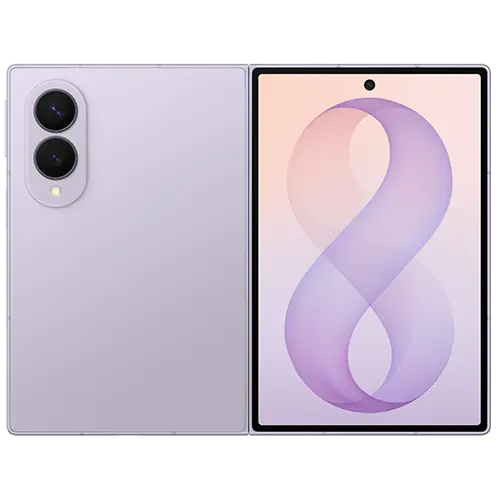
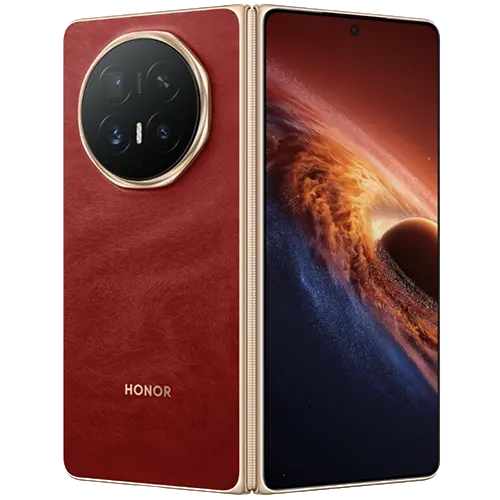
The Galaxy Z Fold 8 is the eighth generation of the phone that defined the book-style foldable, and Samsung's pitch hasn't changed much: a compact phone that opens into a tablet, backed by the most mature foldable software on the market. The Honor Magic V6 is built to beat it on hardware. It's thinner unfolded, carries a proper triple camera with a telephoto, and packs a battery half again the size of Samsung's. At $1,899.99 and $1,999.99 respectively, these two are shopping for exactly the same buyer, and the $100 gap won't decide anything on its own.
On our bench, the Magic V6 takes the camera comparison comfortably, charges much faster, and has the brighter pair of displays. The Z Fold 8 answers with stronger raw performance, better battery efficiency in day-to-day tasks, a louder speaker, and a clearly better microphone. Neither phone sweeps.
Design
| Samsung Galaxy Z Fold 8 | Honor Magic V6 | |
|---|---|---|
| Specifications | ||
| Dimensions (folded) | 81.9 x 123.9 x 9.7 mm | 156.7 x 74.5 x 8.8 mm |
| Dimensions (unfolded) | 161.4 x 123.9 x 4.5 mm | 156.7 x 145.6 x 4.1 mm |
| Weight | 201g | 219g |
| IP Rating | IP48 | IP68/IP69 |
| Frame | Aluminum | Aluminum |
| Front | Gorilla Glass Victus Ceramic 3 | NanoCrystal Shield |
| Back | Gorilla Glass Victus 2 | Glass |
| Screen-to-body ratio (inner) | 89.0% | 89.1% |
| Screen-to-body ratio (outer) | 86.9% | 87.3% |
Both phones use aluminum frames, but the glass differs. Samsung covers the front with Gorilla Glass Victus Ceramic 3 and the back with Victus 2. Honor uses its own NanoCrystal Shield up front and unbranded glass on the back. Folded, the Z Fold 8 measures 81.9 x 123.9 x 9.7mm at 201g; the Magic V6 is 156.7 x 74.5 x 8.8mm at 219g. Unfolded, the Honor is the thinner slab at 4.1mm versus Samsung's 4.5mm, though it carries 18g more weight. Screen-to-body ratios are effectively identical on the inner panels, 89% for Samsung and 89.1% for Honor, so both open into near-bezel-free tablets.
The bigger practical difference is ingress protection. The Magic V6 carries IP68/IP69, meaning it's rated for submersion and for high-pressure water jets. The Z Fold 8's IP48 rating protects against submersion but only against objects larger than 1mm, not dust. For a hinged phone that spends its life in pockets and bags, that's a real distinction on paper.
Aspect ratios shape how each phone is used. Samsung's inner display is 4:3 with a 10:16 cover screen; Honor's inner panel is nearly square at 9.75:9, with a 20.2:9 cover display that reads like a conventional candybar phone. You'll likely spend more time on the Honor's cover screen simply because it behaves like a normal phone.
Bandicoot Lab doesn't formally test design or durability.
Display
Inner
| Samsung Galaxy Z Fold 8 (Inner) | Honor Magic V6 (Inner) | |
|---|---|---|
559/ 881 | 632/ 881 | |
The Z Fold 8's inner panel is a 7.6" LTPO AMOLED at 2448 x 1848 (404 PPI). The Magic V6 goes bigger at 7.95", 2172 x 2352 (403 PPI). Pixel density is a dead tie, and both run 1–120Hz adaptive refresh.
Brightness splits in an unusual way. Samsung's panel reaches 740 nits in manual mode against Honor's 662, so Samsung is the better choice for cranking the slider outdoors. In HDR with auto brightness, Honor peaks at 4,734 nits to Samsung's 3,469. Honor's peak is less consistent across content: its brightness stability across window sizes is 28.2% versus Samsung's 45%, meaning small highlights hit those large numbers but larger bright areas dim considerably. Both panels hold their output over a 30-minute sustained test with essentially no fade.
Honor's inner panel is the more color-accurate of the two. Its best mode sits close enough to reference that errors are hard to spot by eye; Samsung's drifts a bit more, visible mainly in side-by-side viewing. Tone mapping follows the same pattern. The Magic V6 tracks the HDR reference curve closely and clips later, so HDR content looks the way it was mastered. The Z Fold 8 lifts highlights brighter than intended and starts clipping earlier, which reads as punchier but less faithful.
Touch latency is 16.3ms on Samsung and 15.3ms on Honor. You won't feel that gap.
Outer
| Samsung Galaxy Z Fold 8 (Outer) | Honor Magic V6 (Outer) | |
|---|---|---|
560/ 881 | 675/ 881 | |
The cover screens diverge more. Samsung's is 5.5" at 428 pixels per inch with a stubby 10:16 shape; Honor's is 6.52" at 406 PPI and stretched to 20.2:9. Both run 1–120Hz, which is still not a given on cover displays.
Honor's cover screen is the standout panel of the four. It's substantially brighter than Samsung's outer display in our testing, enough that the difference is obvious in sunlight, and its color accuracy is good. Samsung's outer panel is more accurate than its own inner display, with only slight drift from reference, but it can't match the Honor on brightness.
Performance
| Samsung Galaxy Z Fold 8 | Honor Magic V6 | |
|---|---|---|
887/ 1012 | 848/ 1012 | |
Both phones run the Qualcomm Snapdragon 8 Elite Gen 5. Samsung ships with 12GB of RAM in the base configuration, Honor with 16GB; both offer 12GB and 16GB options.
Samsung gets more out of the shared chip. GeekBench single-core is close at 3,646 versus 3,563, but multi-core opens up to 11,070 against 9,922, roughly a 10% gap. Browser performance follows: Speedometer scores 53.3 for the Fold and 46.8 for the Magic V6. On the GPU, Samsung posts the higher peak in Wild Life Extreme at 7,126 versus 6,737, but Honor throttles less under sustained load, holding 54.6% stability to Samsung's 47.1%. Solar Bay is effectively a tie.
Neither phone will feel slow at anything, and the benchmark gaps are mostly invisible in daily use. The one place the numbers might surface: Samsung wins a short burst of heavy work, Honor holds frame rates slightly better in a long gaming session.
Camera
| Samsung Galaxy Z Fold 8 | Honor Magic V6 | |
|---|---|---|
430/ 587 | 521/ 587 | |
This is the widest gap between these two phones. The Magic V6 fields a genuine flagship camera system with a 3x telephoto; the Z Fold 8 makes do with a main and ultrawide pair, leaving everything past 1x to digital crop. Honor's camera system scores well against conventional flagships. Samsung's sits near the bottom of the flagship field, which is a hard thing to accept at $1,899.99.
Sharpness tells most of the story. Honor's main camera resolves noticeably more detail than Samsung's in every lighting condition, and the gap grows as light falls. Its telephoto is nearly as sharp as its main. Samsung's sharpest lens is, oddly, its ultrawide.
Deep zoom is no contest. Samsung caps out at 10x digital and detail is largely gone before you get there. Honor's telephoto keeps zoomed shots usable well past where Samsung gives up, though its 100x maximum is a marketing number; output at that extreme is mush. If you shoot at 3x to 10x with any regularity, the Honor is the only real option here.
Main
| Samsung Galaxy Z Fold 8 (Main) | Honor Magic V6 (Main) | |
|---|---|---|
517/ 722 | 629/ 722 | |
Both phones use 50-megapixel main sensors of the same 1/1.56" size; Honor's lens is slightly faster at f/1.6 versus f/1.8. Honor's advantage is in processing and output. Its main camera holds high detail from bright light down to near-darkness, where Samsung's resolving power drops off meaningfully.
The zoom coverage question matters more on the Fold. Samsung's main camera has to cover 1x through 10x on its own, and detail softens steadily as you crop past 2x. Honor's main only needs to carry 1x to 3x before the telephoto takes over, and it handles that range cleanly.
Color is where Samsung claws something back. Both phones tune for near-neutral saturation, nothing garish. Honor's skin tones drift substantially from reference in bright light, enough that faces can look visibly off, and its white balance pulls increasingly warm and yellow as light dims, pointing to a correction issue rather than a sensor limit. Samsung's hue errors are moderate and steady across lighting, with a slight red push, and its skin tones are generally closer to right. Dynamic range goes back to Honor decisively: high-contrast scenes keep shadow detail and depth where Samsung's output clips highlights and flattens.
Ultrawide
| Samsung Galaxy Z Fold 8 (Ultrawide) | Honor Magic V6 (Ultrawide) | |
|---|---|---|
528/ 722 | 475/ 722 | |
Both carry 50-megapixel ultrawides. Samsung's is the brighter lens at f/1.9 versus f/2.2, and it's the sharper one, out-resolving even Samsung's own main camera. Honor's ultrawide is a step down from its main, though still respectable, and it holds its detail consistently as light drops.
Samsung tunes this lens cooler and more saturated than its main, and skin tones drift noticeably in bright light. Honor's ultrawide has a similar bright-light skin tone problem and shifts warm in dim conditions. Dynamic range is close, with Samsung retaining highlights slightly better. This is the one lens where the Fold 8 clearly earns its keep.
Telephoto
| Samsung Galaxy Z Fold 8 (Telephoto) | Honor Magic V6 (Telephoto) | |
|---|---|---|
| — | 638/ 722 | |
The Z Fold 8 has no telephoto. The Magic V6's 3x unit is a 64-megapixel f/2.5 lens at 70mm with a 1/2.0" sensor, and it's a strong one. Detail at 3x is nearly on par with the main camera, and it degrades gracefully as you push past the native length instead of falling off a cliff. Color accuracy is the best of any lens on either phone in mid and low light, though bright-light skin tones drift here too. Dynamic range is good, with no highlight clipping in our testing. For portraits, events, or anything across a room, this lens is the single biggest reason to pick the Honor.
Front Inner
| Samsung Galaxy Z Fold 8 (Front Inner) | Honor Magic V6 (Front Inner) | |
|---|---|---|
332/ 722 | 480/ 722 | |
Samsung uses a 10-megapixel f/2.2 selfie camera on the inner display; Honor uses 20 megapixels at the same aperture. Sharpness is effectively tied in bright light, but Honor holds detail better as light falls.
Dynamic range separates them completely. Samsung's inner selfie camera clips badly in high-contrast scenes, blowing out bright backgrounds behind your face. Honor's retains both the subject and the sky. Color accuracy is close overall; Honor's skin tones go well off-reference in bright light but are excellent in mid and low light, while Samsung is more consistent across conditions.
Front Outer
| Samsung Galaxy Z Fold 8 (Front Outer) | Honor Magic V6 (Front Outer) | |
|---|---|---|
336/ 722 | 435/ 722 | |
Honor uses the same 20-megapixel camera on both displays; Samsung's outer selfie shooter is another 10-megapixel unit at a slightly tighter 24mm. Honor is sharper here across all lighting and stabilizes video far better than Samsung's outer camera.
Dynamic range is weak on both outer selfie cameras, though Honor's is the less bad of the two. Samsung's clips highlights readily, and in low light its white balance drifts toward a pinkish-cool cast. Honor shows the same bright-light skin drift as its inner camera, with good accuracy once light drops.
Battery
| Samsung Galaxy Z Fold 8 | Honor Magic V6 | |
|---|---|---|
622/ 836 | 523/ 836 | |
On paper this looks like a rout: 6,660mAh in the Magic V6 against 4,800mAh in the Z Fold 8. The test results are far messier.
Honor wins video playback, as the capacity suggests. It ran 30.25 hours on the inner display and 40.97 on the cover screen, against Samsung's 27.76 and 37.67. Either phone will stream for multiple days of normal viewing; the difference is a few hours at the margin.
Everywhere else, Samsung's efficiency beats Honor's capacity. Five hours of web browsing drained 25% of the Fold 8 and 36% of the Magic V6. Overnight standby cost Samsung 2% and Honor 11%, which means the Honor can lose a tenth of its charge doing nothing while you sleep. There's no good reason for an idle drain that high, and it erases much of what the big cell buys you. Gaming drain was identical at 19% over the stress test. In practice, both are comfortable full-day phones, but the Fold 8 is the one more likely to start day two with usable charge, despite the smaller battery.
Charging
| Samsung Galaxy Z Fold 8 | Honor Magic V6 | |
|---|---|---|
313/ 837 | 640/ 837 | |
The Magic V6 charges at 80W wired and 66W wireless; the Z Fold 8 manages 45W wired and 20W wireless. The wired numbers overpromise. At 10 minutes, Samsung is actually ahead at 31% versus Honor's 25%, and at 30 minutes they're nearly level, 71% to 67%. The Honor is filling a battery nearly 40% larger, so it's moving more energy, but in minutes-to-usable-phone terms, wired charging is a wash.
Wireless is not. Honor hits 22% at 10 minutes and 57% at 30; Samsung manages 8% and 20%. If a wireless pad is your main charger, the Magic V6 is in a different class. A lunch break on a pad gets the Honor past half; the Fold 8 barely gets started.
Speaker
| Samsung Galaxy Z Fold 8 | Honor Magic V6 | |
|---|---|---|
691/ 897 | 706/ 897 | |
The Z Fold 8 is the louder phone at a maximum of 78.5 dBA against the Magic V6's 71.3, and the gap is audible. Samsung also digs deeper into the low end, giving music a fuller foundation.
Honor counters on quality. Distortion averages 4.11% versus Samsung's 5.47%, its frequency response is more even through the midrange, and its high-end clarity is better. The practical split: Samsung for filling a room with volume and bass, Honor for cleaner sound at the level most people actually listen.
Microphone
| Samsung Galaxy Z Fold 8 | Honor Magic V6 | |
|---|---|---|
719/ 1220 | 531/ 1220 |
Clear win for Samsung. The Z Fold 8's microphones capture voice evenly and naturally. The Magic V6 sits below average, with a less balanced response that leaves recordings sounding thinner. For calls, voice notes, or video, the Fold 8 is the phone you want talking for you.
Other
| Samsung Galaxy Z Fold 8 | Honor Magic V6 | |
|---|---|---|
| Biometrics | 707/ 1181 | 831/ 1181 |
| Data Transfer | 730/ 943 | 687/ 943 |
| Specifications | ||
| Biometric type | Fingerprint | Fingerprint |
| Ports | USB-C 3.2 | USB-C 3.1 |
| Storage | 256GB, 512GB, 1TB | 256GB, 512GB, 1TB |
Both phones use capacitive side-mounted fingerprint sensors, and both are quick. Honor unlocks in 126ms on average, Samsung in 149ms. The Honor is measurably faster; whether you'd notice 23ms is doubtful. Neither phone offers hardware-based face unlock, only the less secure camera-based kind.
Samsung ships USB-C 3.2 and posts slightly faster transfers at 328 MB/s read and 284 MB/s write; Honor's USB-C 3.1 port manages 302 and 275. Close enough not to matter. Both phones come in 256GB, 512GB, and 1TB configurations.
Conclusion
The Magic V6 is the stronger phone in the areas foldable buyers tend to care about most. Its camera system is in a different league, with a real telephoto, a sharper main sensor, and better dynamic range nearly everywhere, where the Fold 8's camera is the weakest part of an expensive phone. Honor also brings brighter displays, a more usable cover screen, far faster wireless charging, and proper IP68/IP69 water resistance. If photography or zoom range figures into your decision at all, the Honor is the obvious pick.
The Z Fold 8 wins on the quieter fundamentals. It's faster in CPU and browser benchmarks, dramatically more efficient browsing and idling despite a much smaller battery, louder through its speaker, and clearly better at capturing your voice. It's also lighter and $100 cheaper. The case for the Fold 8 is a buyer who treats the camera as an occasional tool, lives in calls and productivity apps, and values a phone that still has charge on the morning of day two.
Honor's standby drain and mediocre microphone are real annoyances, and Samsung's camera is a real compromise. Which flaw you can live with is the whole decision. For most people spending this much, the camera gap will weigh heaviest, and that points to the Magic V6. The Fold 8's efficiency and audio advantages aren't small, and for a work-first buyer they're the ones that show up every day.
FAQ
Does the Galaxy Z Fold 8 or Honor Magic V6 have the better camera?
The Magic V6 has the better camera system. It has a 3x telephoto the Z Fold 8 lacks, its main camera resolves more detail in every lighting condition, and it keeps more highlight and shadow detail in high-contrast scenes. The Z Fold 8 has the sharper ultrawide, and its skin tones are closer to accurate in bright light, but everything past 1x on the Fold is a digital crop.
Which has better battery life, the Z Fold 8 or the Magic V6?
It depends on how you use the phone. The Magic V6 (6,660mAh) lasts longer in video playback, with 30.25 hours on the inner display against 27.76 hours for the Z Fold 8 (4,800mAh). The Fold 8 is more efficient elsewhere: five hours of web browsing drained 25% on the Fold versus 36% on the Honor, and overnight standby cost 2% versus 11%. Gaming drain was identical at 19%.
Does the Magic V6 charge faster than the Z Fold 8?
Wirelessly, yes by a wide margin. The Magic V6 reaches 22% in 10 minutes and 57% in 30 on a wireless pad, while the Z Fold 8 reaches 8% and 20%. Wired charging is close despite 80W versus 45W on paper: the Fold 8 is ahead at 10 minutes (31% vs 25%) and the two are nearly level at 30 minutes (71% vs 67%).
Which is better for gaming, the Z Fold 8 or the Magic V6?
Both use the Snapdragon 8 Elite Gen 5 and neither will feel slow. The Z Fold 8 posts the higher peak GPU result in Wild Life Extreme, but the Magic V6 throttles less in long sessions, holding 54.6% stability against 47.1%. For extended gaming the Honor keeps frame rates slightly steadier, and for short bursts of heavy work the Samsung is faster.
Is the Magic V6 more water and dust resistant than the Z Fold 8?
Yes. The Magic V6 is rated IP68/IP69, covering dust, submersion, and high-pressure water jets. The Z Fold 8 is rated IP48, which covers submersion but gives only limited protection against solid objects and no dust protection.
Is the Z Fold 8 or Magic V6 better for calls and everyday work?
The Z Fold 8 is the better pick for calls and productivity. Its microphones capture voice more evenly and naturally than the Magic V6's, and its speaker is louder at 78.5 dBA versus 71.3 dBA. It also leads in multi-core and browser benchmarks and costs $100 less.
Related
Samsung
Galaxy Z Fold 8
Honor
Magic V6

Samsung
Galaxy S26 Ultra
Samsung
Galaxy S26+
Samsung
Galaxy Z Fold 8 Ultra
Samsung
Galaxy S26
Samsung
Galaxy Z Flip 8
Honor
600
Google Pixel 11 Pro Fold vs Samsung Galaxy Z Fold 8
Google Pixel 11 Pro Fold vs Honor Magic V6

Samsung Galaxy Z Fold 8 Ultra vs Samsung Galaxy Z Fold 8
Samsung Galaxy Z Fold 8 Ultra vs Honor Magic V6