Google Pixel 11 Pro Fold vs Honor Magic V6
Honor
Pixel 11 Pro Fold
Magic V6
Ranked #45 of 61
Ranked #9 of 61
Overall
Overall

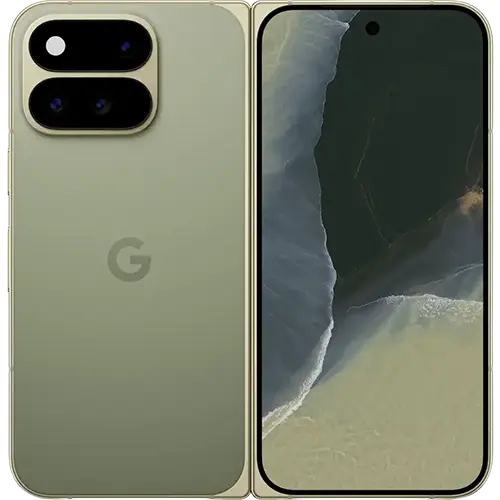
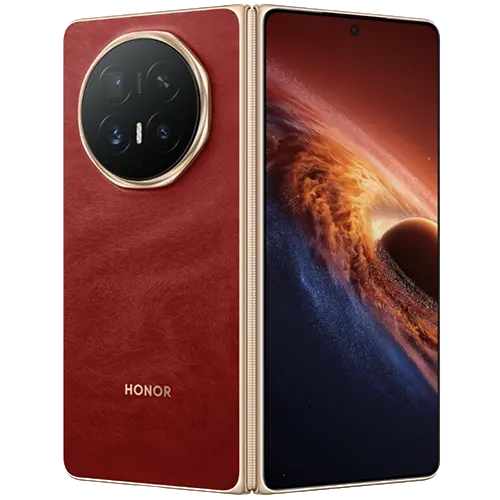
These two foldables sit close in price, with the Google Pixel 11 Pro Fold costing slightly less than the Honor Magic V6. Both unfold into roughly 8-inch tablet screens, aimed at buyers who want a phone that doubles as a compact tablet. Google's pitch centers on software and camera processing. Honor's is hardware-forward: raw performance, endurance, and a thinner profile.
The Honor pulls ahead in most areas we test — performance, camera system, battery life for media and gaming, charging speed, and fingerprint response. The Pixel's advantages are narrower: a much better microphone, a brighter display in manual mode, and lower standby drain. Its cameras have specific strengths in color accuracy and front-camera detail, but the Honor's camera system is stronger overall.
Design
| Google Pixel 11 Pro Fold | Honor Magic V6 | |
|---|---|---|
| Specifications | ||
| Dimensions (folded) | 155.2 x 76 x 10.1 mm | 156.7 x 74.5 x 8.8 mm |
| Dimensions (unfolded) | 155.2 x 150.4 x 5 mm | 156.7 x 145.6 x 4.1 mm |
| Weight | 239g | 219g |
| IP Rating | IP68 | IP68/IP69 |
| Frame | Aluminum | Aluminum |
| Front | Ultra Thin Glass (inner) / Glass ceramic (outer) | NanoCrystal Shield |
| Back | Composite matte | Glass |
| Screen-to-body ratio (inner) | 88.4% | 89.1% |
| Screen-to-body ratio (outer) | 87.9% | 87.3% |
Both phones use aluminum frames. The Pixel has ultra thin glass on the inner display, glass ceramic on the outer, and a composite matte back. The Honor uses NanoCrystal Shield glass and a glass back. Both carry IP68 water resistance, submersible to 1.5 meters for 30 minutes. The Honor adds IP69 for resistance to high-pressure, high-temperature water jets.
The Honor is lighter at 219 grams versus the Pixel's 239 grams, and thinner in both states: 8.8 mm folded versus 10.1 mm, and 4.1 mm unfolded versus 5 mm. It's slightly narrower when folded (74.5 mm versus 76 mm) and slightly taller (156.7 mm versus 155.2 mm). The 1.3 mm folded thickness difference adds up in a form factor where bulk is already a trade-off.
Inner screen-to-body ratios are close: 89.1% for the Honor, 88.4% for the Pixel, meaning similarly thin bezels on both. Outer displays are also close, with the Pixel at 87.9% and the Honor at 87.3%. Inner display aspect ratios differ slightly — the Pixel's 9.33:9 versus the Honor's 9.75:9, making the Honor a bit wider in proportion when unfolded. Outer displays run 19.5:9 (Pixel) and 20.2:9 (Honor).
Bandicoot Lab doesn't formally test design or durability. Everything in this section comes from published specifications.
Display
Inner
| Google Pixel 11 Pro Fold (Inner) | Honor Magic V6 (Inner) | |
|---|---|---|
584/ 881 | 632/ 881 | |
The Pixel's inner display is an 8-inch LTPO OLED at 2076 x 2152 (372 pixels per inch). The Honor's is a 7.95-inch LTPO2 AMOLED at 2172 x 2352 (403 PPI). Both run adaptive refresh from 1 to 120Hz, and touch latency is functionally identical: 15.4ms on the Pixel, 15.3ms on the Honor.
Brightness depends on the mode. In manual mode, where you control the slider, the Pixel reaches 1,427 nits — more than double the Honor's 662 nits. That gap matters outdoors or in bright rooms when auto brightness isn't getting it right. With HDR content in auto brightness, the Honor peaks higher at 4,734 nits versus the Pixel's 3,592 nits. The Honor's HDR peak drops sharply with larger bright areas: 28.2% brightness stability across window sizes, compared to the Pixel's 57.6%. A small HDR highlight on the Honor will look vivid; a full-screen bright scene won't maintain that intensity. Both hold brightness well over time — 99.5% sustained stability for the Honor and 97.7% for the Pixel across a 30-minute HDR test. At the dim end, the Honor goes lower: 0.93 nits minimum versus 1.77 nits.
Color accuracy on the inner panels is close, with both tracking targets well enough that drift won't be obvious in everyday use. The Pixel covers slightly more of the DCI-P3 wide color gamut — the extended range used in HDR and professional content — at 79.1% versus 75.3%. sRGB coverage is essentially complete on both. For HDR tone mapping, the Honor follows the reference curve more faithfully, rendering highlights close to their intended brightness with slight dimming. The Pixel lifts highlights above their mastered levels, making HDR content look punchier but less accurate. The Honor clips highlights earlier in the input range, losing gradation in the brightest parts of the image sooner, while the Pixel preserves more highlight detail before clipping.
Outer
| Google Pixel 11 Pro Fold (Outer) | Honor Magic V6 (Outer) | |
|---|---|---|
693/ 881 | 675/ 881 | |
The outer displays are similar in size — 6.5 inches (Pixel) and 6.52 inches (Honor) — and resolution: 1080 x 2342 at 399 PPI for the Pixel, 1080 x 2420 at 406 PPI for the Honor. Both run 1–120Hz. Touch latency remains close, with the Honor marginally quicker.
Brightness follows the inner-display pattern, with the Honor scoring higher for HDR peak brightness and the Pixel stronger in manual mode. The clearest divergence is color accuracy: the Pixel's outer display is substantially more accurate than both its own inner panel and the Honor's outer display. Neutral tones stay neutral, and colors track targets tightly. The Honor's outer screen drifts more visibly from reference — the kind of difference you'd notice in a side-by-side with the Pixel's cover screen.
Performance
| Google Pixel 11 Pro Fold | Honor Magic V6 | |
|---|---|---|
478/ 1012 | 848/ 1012 | |
The Pixel runs Google's Tensor G6; the Honor uses Qualcomm's Snapdragon 8 Elite Gen 5. Both are configured with 16GB of RAM. The Honor also offers a 12GB option.
The gap is large. In GeekBench 6, the Honor scores 3,563 single-core and 9,922 multi-core, compared to the Pixel's 2,706 and 6,648 — roughly 30% faster per core and 50% faster across all cores. Speedometer, a browser performance benchmark, shows the Honor at 46.8 versus the Pixel's 24.8. You'll feel these differences in app switching, web rendering, and anything that leans on sustained processing.
GPU performance follows the same pattern. The Honor peaks at 6,737 in Wild Life Extreme, nearly double the Pixel's 3,478. The Pixel's GPU is more stable under sustained load — 72.3% stability versus 54.6% — meaning the Honor throttles more during extended gaming sessions. Even after throttling, the Honor sustains more raw GPU output than the Pixel achieves at peak.
Camera
| Google Pixel 11 Pro Fold | Honor Magic V6 | |
|---|---|---|
426/ 587 | 521/ 587 | |
The Honor's camera system produces stronger results overall, driven by its rear cameras. The 50-megapixel main (f/1.6, 23mm, 1/1.56-inch) and 64-megapixel telephoto (f/2.5, 70mm, 3x, 1/2.0-inch) both outresolve the Pixel's 48-megapixel main (f/1.7, 24mm, 1/1.56-inch) and 10.8-megapixel telephoto (f/3.1, 112mm, 5x, 1/3.2-inch), and capture wider dynamic range in high-contrast scenes. The Honor's rear lenses hold detail well from bright through dark conditions, while the Pixel's lose sharpness more as light drops. The Pixel's ultrawide is the exception among rear cameras, outresolving the Honor's in bright and mid light despite having far fewer megapixels. For front cameras, the Pixel's 10-megapixel sensors are sharper than the Honor's 20-megapixel ones — resolution on paper doesn't always translate.
At deep zoom past 10x, neither phone excels. The Pixel maxes at 30x, the Honor at 100x, but the extra range doesn't produce usable detail. Both deliver heavily processed, soft results at the extremes. The Pixel holds a slight edge in resolved detail at its deep-zoom ceiling despite the lower maximum magnification.
The two phones render color differently. The Pixel pushes saturation well above neutral across its rear cameras, producing vivid, punchy images that intensify as light dims. Its main camera leans cool in bright light and cooler in dark conditions. We test camera color at three light levels — bright (1000 lux, daylight-balanced), mid (100 lux, warm), and dark (10 lux, warm) — which stresses both sensor accuracy and white balance correction. The Pixel's hue accuracy degrades in dimmer, warmer light. The Honor renders color close to neutral, with saturation near reference levels and a subtle warm drift under dimmer lighting as white balance compensates. Its hue accuracy stays consistent across conditions. Skin tones are a weak point for both phones: the Pixel's errors are moderate and steady across lighting, while the Honor's are large in bright light — well beyond what its neutral color balance would cause, pointing to processing-level choices in skin rendering — and drift again in dark conditions.
Main
| Google Pixel 11 Pro Fold (Main) | Honor Magic V6 (Main) | |
|---|---|---|
452/ 722 | 629/ 722 | |
The Honor's main sensor is sharper than the Pixel's across all three lighting conditions. Both share the same 1/1.56-inch sensor size, so the difference is in optics and processing. The Pixel's main covers 1x through 5x before its telephoto takes over; the Honor's covers 1x through 3x. Pushing the Pixel past 2x via digital crop softens the image progressively, and by 3–4x the detail loss is visible. The Honor hands off to its dedicated telephoto at 3x, avoiding that problem.
The Pixel produces vivid, cool-toned images with saturation pushed well above neutral, intensifying as light drops. Under warmer lighting, the processing pulls increasingly blue — a white balance tendency that drives hue accuracy loss in dark conditions. In mid light, hue degradation comes from a combination of white balance shifts and sensor-level accuracy limits. The Honor stays close to neutral saturation with a subtle warm drift in dimmer light. Hue accuracy holds steady — the warm drift is a controlled adjustment, not a source of error. Skin tones are a problem on both: the Pixel's are moderately off but consistent, while the Honor's are significantly off in bright light and shift again in dark.
Dynamic range is a decisive gap. The Honor retains substantially more detail in both shadows and highlights in high-contrast scenes. The Pixel compresses the tonal range more and clips highlights, which can flatten contrasty shots. Both clip at the bright end, but the Honor preserves much more of the scene before doing so.
Ultrawide
| Google Pixel 11 Pro Fold (Ultrawide) | Honor Magic V6 (Ultrawide) | |
|---|---|---|
407/ 722 | 475/ 722 | |
The Pixel's ultrawide (10.5 megapixels, f/2.2, 13mm, 1/3.4-inch) is sharper than the Honor's (50 megapixels, f/2.2, 13mm) in bright and mid light. In dark conditions, the Honor catches up and edges ahead. Both ultrawides are a step down in detail from their respective main cameras.
Color consistency is a specific weakness of the Pixel's ultrawide. It shows a strong cool, blue-tinted cast in bright light that swings toward warm under dimmer conditions — one of the larger white balance shifts across either phone's cameras. The Honor's ultrawide is more consistent, staying near neutral with a slight warm drift in lower light. Both have poor skin tone accuracy. The Pixel oversaturates moderately; the Honor is closer to neutral.
The Honor's ultrawide captures meaningfully wider dynamic range and avoids clipping highlights entirely, keeping sky detail and reflections intact. The Pixel's ultrawide clips highlights and compresses shadow detail more, losing information at both ends of the tonal range.
Telephoto
| Google Pixel 11 Pro Fold (Telephoto) | Honor Magic V6 (Telephoto) | |
|---|---|---|
524/ 722 | 638/ 722 | |
The Honor's telephoto (64 megapixels, f/2.5, 70mm, 3x, 1/2.0-inch) resolves significantly more detail than the Pixel's (10.8 megapixels, f/3.1, 112mm, 5x, 1/3.2-inch) at their respective native focal lengths. The Honor's larger sensor and higher megapixel count give it more headroom for digital cropping as both phones extend past their optical limits — the Pixel through 30x, the Honor through 100x. Detail degrades on both, but the Honor holds up better at moderate extensions. The Pixel's higher native magnification (5x versus 3x) gives it an advantage for distant subjects when you don't need to push further.
Color accuracy is the Pixel telephoto's standout trait. It produces the most accurate color of any lens on either phone, with skin tones close to reference in mid and dark conditions. The overall palette leans slightly cool with moderate saturation in bright light, easing to near-neutral in darker settings. The Honor's telephoto is accurate in bright and mid light, but hue accuracy drops in dark conditions as a warm drift sets in. Skin tones on the Honor telephoto are poor in bright light, matching the pattern across its other lenses, but improve in mid conditions.
The Honor preserves highlights better, keeping detail in bright areas where the Pixel clips. Stabilization is also stronger on the Honor's telephoto; the Pixel's 5x lens shows more visible shake, which matters at longer focal lengths where movement is amplified.
Front Inner
| Google Pixel 11 Pro Fold (Front Inner) | Honor Magic V6 (Front Inner) | |
|---|---|---|
404/ 722 | 480/ 722 | |
The Pixel's front inner camera (10 megapixels, f/2.2, 23mm) is sharper than the Honor's (20 megapixels, f/2.2, 22mm) across all lighting conditions. You'd notice the difference in fine details like hair and skin texture in selfies.
The Pixel produces slightly oversaturated images from the front inner camera, with a warm, magenta-leaning cast that becomes more pronounced in dark conditions and pulls hue accuracy down. In bright and mid light, hue accuracy is reasonable. The Honor's front inner camera maintains very neutral color balance across all three lighting conditions. Skin tones tell a different story: in bright light, the Honor's skin tone errors are large, well beyond what neutral bias alone would cause, pointing to processing-level intervention. In mid and dark light, the Honor's skin tones improve to near-accurate. The Pixel's are moderately off throughout.
The Honor captures substantially wider dynamic range from the front inner camera, preserving both shadow and highlight detail where the Pixel clips more readily. Neither camera offers effective video stabilization.
Front Outer
| Google Pixel 11 Pro Fold (Front Outer) | Honor Magic V6 (Front Outer) | |
|---|---|---|
444/ 722 | 435/ 722 | |
Both front outer cameras produce slightly less detail than their respective inner counterparts. The Pixel's outer front remains sharper than the Honor's, though the gap narrows compared to the inner cameras.
Color handling resembles the inner front cameras, with one difference: the Honor's outer front camera develops a cool shift in dark conditions that isn't present on its inner front camera. The Pixel's hue accuracy dips in mid light on the outer front, suggesting slight white balance overcorrection under warm lighting. Skin tones follow the same pattern as the inner cameras — the Honor's are significantly off in bright light, the Pixel's are moderately off throughout.
Dynamic range favors the Honor in measured range, but the Honor's outer front camera shows significant tonal inconsistencies that can affect smooth gradients and subtle transitions. The Pixel's outer front has narrower range and clips highlights. For video selfies, the Pixel's outer front camera offers more controlled stabilization.
Battery
| Google Pixel 11 Pro Fold | Honor Magic V6 | |
|---|---|---|
434/ 836 | 523/ 836 | |
The Honor's 6,660mAh battery dwarfs the Pixel's 4,806mAh, and the capacity shows in video playback. The Honor lasts 30.25 hours on its inner display and 40.97 hours on the outer, compared to the Pixel's 21.86 and 27.17 hours. The video test runs until the phone dies. The Honor's inner-display runtime comfortably stretches past a full day. The Pixel's 21.86 hours is solid for a long day of streaming but doesn't offer the same margin.
Gaming also favors the Honor. During the 3DMark Wild Life Extreme stress test — 20 loops of sustained graphics work — the Honor drains 19% to the Pixel's 25%. A bigger battery and a more power-efficient chipset under GPU load combine to give the Honor more playtime per charge.
Web browsing and standby favor the Pixel. Over five hours of active browsing, the Pixel drains 27% versus the Honor's 36%. Overnight standby over eight hours costs the Honor 11% compared to just 4% on the Pixel. If your phone spends long stretches idle — on a nightstand, in a bag — the Pixel is meaningfully more efficient. The Honor's background power draw is nearly three times the Pixel's at rest.
Charging
| Google Pixel 11 Pro Fold | Honor Magic V6 | |
|---|---|---|
336/ 837 | 640/ 837 | |
The Honor charges at 80W wired and 66W wireless; the Pixel at 30W wired and 25W wireless. The Pixel supports magnetic wireless charging, compatible with Qi2 chargers for snap-in alignment. The Honor doesn't offer magnetic alignment.
The Honor reaches 25% after 10 minutes on a wire, versus the Pixel's 19%. At 30 minutes, it's 67% versus 56%. The percentages understate the gap: the Honor is filling a 6,660mAh battery to those levels, so it's moving substantially more energy per minute. Wirelessly, the pattern holds — 22% at 10 minutes for the Honor versus 16% for the Pixel, and 57% versus 41% at 30 minutes.
The Pixel's magnetic wireless charging is a usability feature rather than a speed one. The charger locks into position without hunting for the sweet spot. The Honor charges faster by every measure; the Pixel makes wireless charging easier to initiate.
Speaker
| Google Pixel 11 Pro Fold | Honor Magic V6 | |
|---|---|---|
678/ 897 | 706/ 897 | |
The Pixel is louder at 74.8 dBA versus the Honor's 71.3 dBA — a modest gap, enough to notice in a quiet room.
The Pixel leans into clarity and treble, making dialogue and vocals more forward at the expense of thin bass. The Honor is more balanced, with fuller bass that extends lower and a more even frequency response across the range. The Honor also runs cleaner, with 4.11% total harmonic distortion versus the Pixel's 5.14%, though neither sounds harsh at normal volumes.
Overall speaker scores are close, with the Honor slightly ahead. If you need volume above all else, the Pixel wins. For a more natural, fuller sound, the Honor is the better speaker.
Microphone
| Google Pixel 11 Pro Fold | Honor Magic V6 | |
|---|---|---|
1220/ 1220 | 531/ 1220 |
The Pixel's microphone is far stronger, delivering an unusually flat frequency response — meaning it captures voice and ambient sound evenly without dropping or boosting any part of the range. Voice recordings and calls sound clear and natural. The Honor's microphone is below average, with a less consistent response that can make recordings sound thinner or more uneven. For video calls, voice memos, and content creation, the gap here is wider than in almost any other category.
Other
| Google Pixel 11 Pro Fold | Honor Magic V6 | |
|---|---|---|
| Biometrics | 270/ 1181 | 831/ 1181 |
| Data Transfer | 308/ 943 | 687/ 943 |
| Specifications | ||
| Biometric type | Fingerprint | Fingerprint |
| Ports | USB-C 3.2 | USB-C 3.1 |
| Storage | 256GB, 512GB, 1TB | 256GB, 512GB, 1TB |
The Honor's fingerprint sensor responds in 126ms; the Pixel's takes 389ms. That's the difference between an unlock that feels instant and one where you notice a brief pause. Both use capacitive sensors. Neither phone has hardware-based face unlock.
Data transfer speeds strongly favor the Honor, with read speeds of 302 MB/s and write speeds of 275 MB/s compared to the Pixel's 126 MB/s and 140 MB/s. The Pixel has a USB-C 3.2 port; the Honor uses USB-C 3.1. The speed difference comes down to storage performance, not port generation. Both phones are available in 256GB, 512GB, and 1TB configurations. The Honor also offers a 12GB RAM variant alongside the 16GB tested here.
Conclusion
The Honor Magic V6 is the stronger phone across more of the areas that shape daily use. It's faster by a wide margin, its rear cameras are sharper with better dynamic range, it lasts longer for video and gaming, it charges faster on both wired and wireless, and its fingerprint sensor responds in a third of the time. It does all of this while being 20 grams lighter and over a millimeter thinner. Despite the higher price, it delivers substantially more in core categories.
The Pixel 11 Pro Fold has genuine strengths in areas the Honor doesn't match. Its microphone quality is in a different class — if you record audio, take frequent calls, or create content, this alone could tip the decision. Manual display brightness is over twice the Honor's, a real advantage in direct sunlight. Standby efficiency is far better, and web browsing drains the battery less. The telephoto produces the most color-accurate images of any camera on either phone, the front cameras are sharper, and the outer display is significantly more accurate for color-critical work.
If your priorities lean toward performance, camera detail, battery endurance, and charging speed, the Honor covers more ground. If microphone quality, outdoor display brightness, standby efficiency, or telephoto color accuracy rank high on your list, the Pixel earns its place despite trailing in most other areas.
FAQ
Does the Pixel 11 Pro Fold or Honor Magic V6 have better battery life?
The Honor Magic V6 lasts much longer for video, at 30.25 hours on the inner display and 40.97 hours on the outer, versus 21.86 and 27.17 hours for the Pixel 11 Pro Fold. It also drains less during sustained gaming, 19% versus 25%. The Pixel is more efficient for web browsing (27% versus 36% over five hours) and standby (4% versus 11% overnight over eight hours).
Which charges faster, the Honor Magic V6 or the Pixel 11 Pro Fold?
The Honor charges faster by every measure, at 80W wired and 66W wireless against the Pixel's 30W and 25W. Wired, it reaches 25% in 10 minutes and 67% in 30 minutes, versus 19% and 56% for the Pixel. The Pixel's advantage is magnetic Qi2-compatible wireless charging, which snaps into alignment; the Honor has no magnetic option.
Is the Honor Magic V6 or Pixel 11 Pro Fold better for gaming?
The Honor Magic V6 is better for gaming. Its GPU peaks at nearly double the Pixel's in Wild Life Extreme, and it uses less battery during the stress test. It throttles more over a long session (54.6% stability versus the Pixel's 72.3%), but even throttled it sustains more GPU output than the Pixel reaches at its peak.
Which foldable has the better camera, the Pixel 11 Pro Fold or Honor Magic V6?
The Honor's rear system is stronger overall. Its main and telephoto cameras resolve more detail, hold up better as light drops, and capture noticeably wider dynamic range. The Pixel's ultrawide is sharper in bright and mid light, its telephoto has the most accurate color of any lens on either phone, and its front cameras are sharper. Skin tones are a weak point on both phones.
Is the Pixel 11 Pro Fold screen easier to see outdoors than the Honor Magic V6?
In manual brightness the Pixel 11 Pro Fold reaches 1,427 nits on the inner display, more than double the Honor's 662 nits, which helps in direct sunlight. The Honor peaks higher with HDR content (4,734 nits versus 3,592 nits), but that brightness drops sharply for large bright areas, with 28.2% stability versus the Pixel's 57.6%.
Is the Pixel 11 Pro Fold worth choosing over the Honor Magic V6?
It can be, depending on your priorities. The Honor is faster, has the better rear cameras, lasts longer for video and gaming, and charges faster, but it costs $1,999.99 versus the Pixel's $1,899. The Pixel's microphone is much stronger, which matters for calls and content creation. It also has better standby efficiency, a brighter manual display, and a more color-accurate outer screen.
Related
Pixel 11 Pro Fold
Honor
Magic V6
Pixel 11 Pro XL
Pixel 11 Pro
Pixel 11
Honor
600
Pixel 10a

Google Pixel 11 Pro Fold vs Samsung Galaxy Z Fold 8 Ultra
Google Pixel 11 Pro Fold vs Samsung Galaxy Z Fold 8
Google Pixel 11 Pro Fold vs Motorola Razr Fold
Google Pixel 11 Pro Fold vs Google Pixel 10 Pro Fold
Samsung Galaxy Z Fold 8 Ultra vs Honor Magic V6