Google Pixel 11 Pro Fold vs Motorola Razr Fold
Motorola
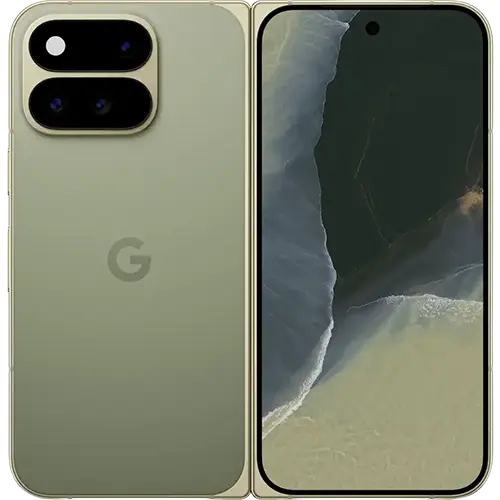
Pixel 11 Pro Fold
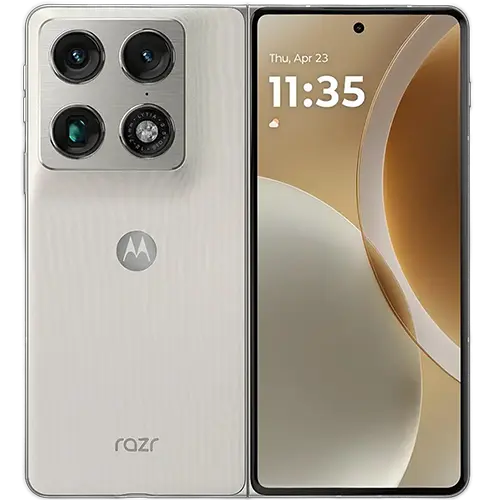
Razr Fold
Ranked #45 of 61
Ranked #27 of 61
Overall
Overall

Two book-style foldables, one dollar apart. The Google Pixel 11 Pro Fold sells for $1,899; the Motorola Razr Fold, $1,899.99. Google has been refining this form factor across multiple generations. Motorola, long defined by its flip-phone Razr line, is entering the book-fold segment for the first time. Both target the same buyer: someone who wants a phone that unfolds into a near-tablet and is willing to pay flagship money for one.
The Razr Fold is stronger across most categories that typically drive a purchase: camera system, processing power, display color gamut, and speaker output. The Pixel 11 Pro Fold has clear wins of its own, including an exceptional microphone, much brighter manual display output, faster wireless charging with magnetic alignment, and better telephoto color. Battery life is a weakness for both phones.
Design
| Google Pixel 11 Pro Fold | Motorola Razr Fold | |
|---|---|---|
| Specifications | ||
| Dimensions (folded) | 155.2 x 76 x 10.1 mm | 160.05 × 73.6 × 9.89 mm |
| Dimensions (unfolded) | 155.2 x 150.4 x 5 mm | 160.05 × 144.46 x 4.55 mm |
| Weight | 239g | 243g |
| IP Rating | IP68 | IP48/IP49 |
| Frame | Aluminum | Aluminum |
| Front | Ultra Thin Glass (inner) / Glass ceramic (outer) | Gorilla Glass Ceramic 3 |
| Back | Composite matte | — |
| Screen-to-body ratio (inner) | 88.4% | — |
| Screen-to-body ratio (outer) | 87.9% | — |
Both are aluminum-framed book-style foldables within 4g of each other. The Pixel weighs 239g; the Razr, 243g. Folded, the Pixel measures 155.2 x 76 x 10.1mm — shorter and wider than the Razr's 160.05 x 73.6 x 9.89mm. Unfolded, the Razr is thinner at 4.55mm versus 5mm.
The Pixel uses Ultra Thin Glass on its inner display, glass ceramic on the outer, and a composite matte back. The Razr uses Gorilla Glass Ceramic 3 up front; Motorola doesn't list a back material. Inner displays open to nearly square aspect ratios: 9.33:9 on the Pixel, 8:7.2 on the Razr. Outer displays run more conventional proportions: 19.5:9 (Pixel) and 21:9 (Razr). The Pixel's inner display has an 88.4% screen-to-body ratio and its outer sits at 87.9%; Motorola doesn't publish this figure for the Razr Fold.
Water and dust resistance differ. The Pixel is rated IP68: fully dust-tight and submersible to the rated depth. The Razr carries dual IP48/IP49 certification, which covers submersion and high-pressure jets but only protects against particles larger than 1mm. It isn't dust-sealed. For sandy or dusty environments, the Pixel offers more complete protection.
Bandicoot Lab doesn't formally test design or durability. Everything in this section reflects manufacturer specs.
Display
Inner
| Google Pixel 11 Pro Fold (Inner) | Motorola Razr Fold (Inner) | |
|---|---|---|
584/ 881 | 658/ 881 | |
Both inner displays are 8-inch class OLEDs running at 1-120Hz. The Razr's panel is sharper at 412 pixels per inch (2484 x 2232) compared to the Pixel's 372 PPI (2076 x 2152).
Brightness depends on what you're doing. In manual mode, the Pixel reaches 1,427 nits, nearly three times the Razr's 543 nits. That gap is noticeable in direct sunlight when auto-brightness isn't cooperating. In HDR content with auto-brightness, the Razr peaks higher at 4,142 nits versus 3,592 for the Pixel. The Pixel holds HDR brightness more evenly across different window sizes (57.6% stability versus 41.6%), meaning small highlights and large bright areas stay closer in output. Both sustain their brightness well over time: 97.7% and 97.9% respectively over the 30-minute sustained test.
Color accuracy favors the Razr on the inner panel. It covers 97.7% of the DCI-P3 color space (the wide color standard used for HDR video and modern displays); the Pixel manages 79.1%. That's a large gap. Vivid content, HDR video, and saturated photos will all look fuller on the Razr because it can reproduce more of the intended color range. Both cover sRGB almost entirely (99.8% and 99.9%). In their best display modes, both reach good overall color accuracy, with the Razr's lowest average color error slightly lower. The Pixel's inner panel is its weaker display for color; the Razr's inner panel is its stronger one.
Touch latency is 15.4ms on the Pixel and 15.1ms on the Razr. You won't feel the difference.
Outer
| Google Pixel 11 Pro Fold (Outer) | Motorola Razr Fold (Outer) | |
|---|---|---|
693/ 881 | 691/ 881 | |
The Razr's cover display refreshes up to 165Hz from a 30Hz floor. The Pixel's outer panel runs 1-120Hz. That 1Hz floor means the Pixel can drop much lower for static content like always-on displays, saving power. Sharpness is close: 415 PPI on the Razr, 399 PPI on the Pixel.
Color accuracy reverses on the outer panels. The Pixel's cover display is its stronger screen for color, rendering close to reference with very little visible drift. The Razr's outer panel is slightly less accurate than its own inner display, with colors drifting a bit more. Checking photos or previewing content on the cover screen favors the Pixel for color accuracy.
For HDR tone mapping, the Razr follows the reference brightness curve more faithfully with minimal highlight boosting, but begins clipping around the 80% input level. The Pixel lifts highlights well above their mastered brightness and extends the rendered range further, clipping near 95%. The Razr gives you truer mid-tone HDR; the Pixel preserves more highlight detail at the cost of accuracy.
Performance
| Google Pixel 11 Pro Fold | Motorola Razr Fold | |
|---|---|---|
478/ 1012 | 668/ 1012 | |
The Pixel 11 Pro Fold runs Google's Tensor G6 with 16GB of RAM. The Razr Fold uses Qualcomm's Snapdragon 8 Gen 5, also with 16GB.
Single-core CPU performance is close: 2,706 in GeekBench 6 for the Pixel, 2,628 for the Razr. A 3% gap isn't something you'll notice. Multi-core widens considerably. The Razr reaches 9,178 versus the Pixel's 6,648, about 38% higher. Threaded workloads like video exports and heavy multitasking are noticeably faster on the Razr.
The GPU gap is larger still. In Wild Life Extreme, the Razr peaks at 5,401 versus the Pixel's 3,478, roughly 55% more graphics headroom. The Razr also ran Solar Bay, a more demanding GPU benchmark, at 9,631 with 68.9% stability. Thermal management is similar: the Pixel sustains 72.3% of its Wild Life Extreme peak through the stress test, the Razr 68.6%. Both throttle under sustained load but neither collapses.
The Pixel leads in web browsing. It scores 24.8 in Speedometer versus the Razr's 16.9, a gap you'll feel on complex pages and web apps.
Daily responsiveness for app launches, UI scrolling, and general navigation is effectively tied thanks to similar single-core performance. The split is situational: games and GPU-heavy tasks favor the Razr; browsing favors the Pixel.
Camera
| Google Pixel 11 Pro Fold | Motorola Razr Fold | |
|---|---|---|
426/ 587 | 481/ 587 | |
The Razr Fold carries larger sensors at every rear camera position. Its main uses a 50-megapixel 1/1.28-inch sensor at f/1.6, its ultrawide a 50-megapixel 1/2.76-inch at f/2, and its telephoto a 50-megapixel 1/1.95-inch at f/2.4 (3x). The Pixel's sensors are smaller across the board: 48 megapixels on 1/1.56 inches for the main (f/1.7), 10.5 megapixels on 1/3.4 inches for the ultrawide (f/2.2), and 10.8 megapixels on 1/3.2 inches for the 5x telephoto (f/3.1).
The Razr resolves more detail from its main camera and telephoto, with its telephoto holding sharpness unusually well even in dark conditions. The Pixel's ultrawide is the one rear lens where it leads in detail. At extreme digital zoom beyond about 10x, the Razr maintains more usable output. It extends to 100x maximum versus the Pixel's 30x. Neither phone produces clean images at the far end of the zoom range, but the Razr degrades more gradually. The Pixel's camera system underperforms for a $1,899 phone; the Razr's is more respectable overall.
Color character splits these two cameras. The Pixel renders vivid, saturated images from its main camera, pushing colors well above neutral. The Razr stays close to accurate saturation across most of its system. The pattern doesn't hold uniformly across lenses: the Pixel's telephoto has excellent color accuracy while the Razr's drifts warm in lower light. Hue accuracy and skin tone reproduction generally favor the Razr on the main camera and front cameras.
Main
| Google Pixel 11 Pro Fold (Main) | Motorola Razr Fold (Main) | |
|---|---|---|
452/ 722 | 537/ 722 | |
The Pixel's main camera (48 megapixels, f/1.7, 1/1.56-inch) handles 1x through 5x digitally before handing off to its telephoto. The Razr's (50 megapixels, f/1.6, 1/1.28-inch) covers 1x to 3x.
The Razr resolves more detail at 1x in good light and maintains its advantage in dark conditions where the larger sensor pulls in more light. In mid-level lighting the gap narrows. Across the digital zoom range, the Razr hands off to a dedicated telephoto at 3x, so it doesn't need to crop aggressively. The Pixel stretches its main sensor all the way to 5x with pure digital crop, and detail softens noticeably past 3x. Shooting in the 3-5x range, the Pixel is relying on a crop while the Razr has optical help.
The Pixel produces vivid, punchy images with saturation elevated well above neutral, and this push increases as lighting dims. The Razr renders colors at nearly accurate saturation, producing images closer to the actual scene. For hue accuracy, the Razr is consistent from bright through dark lighting. The Pixel's hue accuracy degrades in warmer, dimmer conditions. Some of this comes from white balance overcorrection pushing cool tones too far, but a persistent warm-magenta processing lean contributes too. Skin tones are better on the Razr across all lighting. The Pixel's skin tone errors are moderate: visible in side-by-side comparison, not jarring on their own.
Dynamic range slightly favors the Pixel, which retains more detail in both shadows and highlights. Both cameras clip highlights in high-contrast scenes.
Ultrawide
| Google Pixel 11 Pro Fold (Ultrawide) | Motorola Razr Fold (Ultrawide) | |
|---|---|---|
407/ 722 | 422/ 722 | |
The Pixel's ultrawide (10.5 megapixels, f/2.2, 1/3.4-inch, 13mm) is smaller and lower-resolution than the Razr's (50 megapixels, f/2, 1/2.76-inch, 12mm). It's slightly sharper across all lighting conditions despite that hardware disadvantage. Google's processing pulls a lot of detail from the smaller sensor.
Both ultrawides struggle with skin tones. The Razr's errors are larger in well-lit conditions; the Pixel's persist more evenly. Both show white balance drift as lighting shifts from daylight to warm indoor light: colors swing from cool and slightly blue in bright conditions toward warmer tones in dim light, the kind of overcorrection common with smaller ultrawide sensors. The Razr's ultrawide stays close to neutral saturation. The Pixel's oversaturates moderately.
Dynamic range favors the Razr's ultrawide, which retains more shadow detail in contrasty scenes. Both clip highlights.
Telephoto
| Google Pixel 11 Pro Fold (Telephoto) | Motorola Razr Fold (Telephoto) | |
|---|---|---|
524/ 722 | 476/ 722 | |
The Pixel's telephoto (10.8 megapixels, f/3.1, 112mm, 1/3.2-inch) reaches 5x optically and crops digitally through 30x. The Razr's (50 megapixels, f/2.4, 71mm, 1/1.95-inch) reaches 3x optically and crops through 100x. The Razr's telephoto sensor is roughly six times larger.
Sharpness favors the Razr, particularly in lower light. Its telephoto maintains or even slightly improves detail as light drops, an unusual result. The Pixel's telephoto degrades more progressively as light dims, typical for a smaller sensor at f/3.1. Beyond each lens's native focal length, the Razr's pixel advantage keeps images more detailed as digital crop increases.
Color accuracy is the Pixel telephoto's standout. Hues are accurate from bright through dark lighting, and skin tones are handled well across conditions. The Razr's telephoto drifts noticeably warm in mid and low light, picking up a yellow-warm cast. The bias increases as the test lighting gets warmer, pointing to a white balance overcorrection rather than a sensor limitation. The Razr also desaturates progressively in dim light, producing muted images. The Pixel maintains more vivid rendering in bright conditions and settles to neutral in the dark.
Dynamic range strongly favors the Pixel telephoto, with meaningfully more shadow and highlight detail preserved in high-contrast scenes.
Front Inner
| Google Pixel 11 Pro Fold (Front Inner) | Motorola Razr Fold (Front Inner) | |
|---|---|---|
404/ 722 | 566/ 722 | |
The Pixel's inner front camera (10 megapixels, f/2.2, 23mm) and the Razr's (32 megapixels, f/2.4, 22mm) produce similar sharpness. The Pixel resolves slightly more detail in bright and dark conditions; the Razr edges ahead in mid-level lighting.
Color accuracy separates them more clearly. The Razr's inner front camera holds consistent hue accuracy from bright through dark. The Pixel's degrades in low light, developing a warm-magenta shift that skews colors. The Razr renders muted, slightly desaturated selfies; the Pixel pushes slightly more vivid. Skin tones are imperfect on both: the Razr produces noticeable skin tone errors in bright light but cleans up in dimmer conditions, while the Pixel drifts most in mid-level lighting.
Dynamic range heavily favors the Razr's inner front camera. High-contrast selfies retain substantially more detail in shadows and highlights. Neither phone offers meaningful stabilization on the inner front camera.
Front Outer
| Google Pixel 11 Pro Fold (Front Outer) | Motorola Razr Fold (Front Outer) | |
|---|---|---|
444/ 722 | 449/ 722 | |
The Pixel's outer front camera uses the same 10-megapixel f/2.2 sensor as its inner. The Razr uses a separate 20-megapixel f/2.4 sensor.
Sharpness goes to the Pixel across all lighting, with a particularly large gap in the dark. The Razr's outer front camera is its weakest lens for detail.
Both show white balance drift in warmer lighting, with colors shifting warm as the light temperature drops. The Razr's hue accuracy is slightly better overall. Skin tones are moderately inaccurate on both. The Razr is closer to reference in bright and mid conditions; the Pixel in dark.
Dynamic range favors the Razr. Video stabilization is significantly better on the Pixel: handheld footage stays noticeably steadier from the cover screen camera.
Battery
| Google Pixel 11 Pro Fold | Motorola Razr Fold | |
|---|---|---|
434/ 836 | 481/ 836 | |
The Razr Fold has a 6,000mAh battery; the Pixel 11 Pro Fold, 4,806mAh. That 25% capacity gap shows up most clearly in video playback. On the inner display, the Razr lasts 26.22 hours versus the Pixel's 21.86. On the outer display, the margin widens: 39.69 hours versus 27.17. Nearly 40 hours of video on the cover screen is enough for several days of moderate media use before reaching for a charger.
Active use is less flattering for the Razr. In the 5-hour web browsing test, the Razr drained 32% versus the Pixel's 27%. During the gaming stress test (3DMark Wild Life Extreme, 20 loops), the Razr lost 29% to the Pixel's 25%. The Snapdragon 8 Gen 5's higher power draw under load eats into the battery advantage. Standby drain is identical: both lost 4% over an 8-hour overnight idle.
Battery life is a weakness for both phones. The Pixel's roughly 22 hours of inner display video translates to a full day of mixed use without much margin. The Razr's larger battery gives it more headroom for media and idle time, but higher active drain narrows the practical gap between them.
Charging
| Google Pixel 11 Pro Fold | Motorola Razr Fold | |
|---|---|---|
336/ 837 | 394/ 837 | |
The Razr charges at up to 80W wired, more than double the Pixel's 30W. After 10 minutes on the cable, the Razr reaches 25% versus 19% for the Pixel. At 30 minutes: 65% versus 56%. Given the Razr's larger battery, the actual energy delivered at each interval is substantially more. Wired charging isn't close.
Wireless charging favors the Pixel. It supports 25W wireless with Qi2-compatible magnetic alignment, reaching 16% in 10 minutes and 41% in 30 minutes. The Razr's 15W wireless charging has no magnetic alignment: 11% at 10 minutes, 26% at 30 minutes. If wireless charging is part of your daily routine, the Pixel refills faster and snaps into position on compatible chargers automatically.
Speaker
| Google Pixel 11 Pro Fold | Motorola Razr Fold | |
|---|---|---|
678/ 897 | 749/ 897 | |
Loudness is nearly identical: 74.8 dBA on the Pixel, 74.5 on the Razr. The Razr sounds fuller, with more bass presence and a more even frequency response. Distortion is lower at 3.19% total harmonic distortion versus 5.14% for the Pixel. The Pixel pushes more high-frequency clarity, making vocals and treble detail more forward, but the low end is thinner as a result. For media and music, the Razr is the more balanced speaker. The Pixel's emphasis suits voice-heavy content like podcasts.
Microphone
| Google Pixel 11 Pro Fold | Motorola Razr Fold | |
|---|---|---|
1220/ 1220 | 364/ 1220 |
The Pixel 11 Pro Fold has an excellent microphone with an unusually even frequency response. Voice recordings come through natural and clean, without obvious emphasis on any range. The Razr Fold's microphone is well below average, with considerably less even reproduction. For video recording, calls, or any situation where audio capture quality matters, the Pixel has a large advantage. It's one of the widest gaps between these two phones.
Other
| Google Pixel 11 Pro Fold | Motorola Razr Fold | |
|---|---|---|
| Biometrics | 270/ 1181 | 641/ 1181 |
| Data Transfer | 308/ 943 | 612/ 943 |
| Specifications | ||
| Biometric type | Fingerprint | Fingerprint |
| Ports | USB-C 3.2 | USB-C 3.2 |
| Storage | 256GB, 512GB, 1TB | 512GB |
Both phones use capacitive fingerprint sensors. The Razr unlocks at 164ms, fast enough to feel instant. The Pixel takes 389ms, with a perceptible pause between touch and unlock. Neither phone has hardware-based face unlock.
Data transfer speeds favor the Razr: 273 MB/s read and 249 MB/s write versus the Pixel's 126 MB/s read and 140 MB/s write. Both use USB-C 3.2 ports. The Pixel offers more storage flexibility with 256GB, 512GB, and 1TB options. The Razr comes in 512GB only.
Conclusion
Performance, camera quality, display gamut, speaker output, fingerprint speed, wired charging, and data transfer all favor the Razr Fold. Its main camera is sharper with more accurate color. Its Snapdragon 8 Gen 5 pulls well ahead in GPU and multi-core work. Its inner display covers nearly the full P3 color space where the Pixel is missing about a fifth of it. Across the breadth of daily use, the Razr is the more capable device.
The Pixel 11 Pro Fold's advantages are narrower but genuine. Its microphone quality is in a class of its own. Manual display brightness is nearly three times higher. The telephoto produces more accurate color than the Razr's. Wireless charging is faster and magnetically aligned. Storage goes up to 1TB. And its IP68 rating provides dust protection that the Razr's IP48/IP49 doesn't match.
Battery life is weak on both phones, which is a hard pill at this price. If microphone quality, telephoto accuracy, wireless charging, or dust resistance aren't priorities for you, the Razr covers more of what matters. If any of those are central to how you use your phone, the Pixel earns its place.
FAQ
Does the Pixel 11 Pro Fold or Razr Fold have better battery life?
The Razr Fold lasts longer on video: 26.22 hours on the inner display and 39.69 hours on the outer, versus 21.86 and 27.17 hours for the Pixel 11 Pro Fold. The Pixel drains less under active use, losing 27% in the 5-hour web test and 25% in the gaming test against the Razr's 32% and 29%. Standby drain is the same at 4% overnight. Battery life is a weak point on both.
Which foldable has the better camera, the Razr Fold or the Pixel 11 Pro Fold?
The Razr Fold is the stronger camera overall. Its sensors are larger at every rear position, and it resolves more detail on the main and telephoto lenses, with more accurate color and skin tones on the main camera. It also zooms digitally to 100x versus 30x. The Pixel leads in ultrawide sharpness, telephoto color accuracy, and telephoto dynamic range.
Which charges faster, the Pixel 11 Pro Fold or the Razr Fold?
Wired charging goes to the Razr Fold, at 80W versus the Pixel's 30W. It reaches 25% in 10 minutes and 65% in 30, against 19% and 56% for the Pixel. Wireless goes to the Pixel, which charges at 25W with Qi2 magnetic alignment and hits 41% in 30 minutes. The Razr's 15W wireless, with no magnets, reaches 26% in the same time.
Is the Razr Fold or Pixel 11 Pro Fold better for gaming and heavy multitasking?
The Razr Fold's Snapdragon 8 Gen 5 is the better fit. It scores 9,178 in GeekBench 6 multi-core versus 6,648 for the Pixel, and peaks at 5,401 in Wild Life Extreme versus 3,478. Single-core performance is close, so everyday app launches and scrolling feel the same on both. The Pixel is faster in web browsing, scoring 24.8 in Speedometer to the Razr's 16.9.
Which foldable is better for use outdoors, the Pixel 11 Pro Fold or the Razr Fold?
The Pixel 11 Pro Fold is the better outdoor phone. Its inner display reaches 1,427 nits in manual brightness versus 543 nits for the Razr Fold, which matters in direct sun. It is also rated IP68 and sealed against dust, while the Razr's IP48/IP49 rating covers water but not particles smaller than 1mm. Sand and grit are a bigger risk for the Razr.
Is the Pixel 11 Pro Fold worth choosing over the Razr Fold for calls and video recording?
For audio capture, yes. The Pixel 11 Pro Fold's microphone records natural, even-sounding voice, while the Razr Fold's is well below average. This is one of the largest gaps between the two phones. The Razr wins on camera detail, performance, and speakers, so the Pixel makes sense mainly if recorded or call audio is a priority.
Related
Motorola
Razr Fold
Pixel 11 Pro Fold
Motorola
Razr Ultra (2026)
Pixel 11 Pro XL
Pixel 11 Pro
Pixel 11
Motorola
Razr+ (2026)
Pixel 10a
Motorola
Razr (2026)

Motorola
Moto G Power (2026)

Google Pixel 11 Pro Fold vs Samsung Galaxy Z Fold 8 Ultra
Google Pixel 11 Pro Fold vs Samsung Galaxy Z Fold 8