Google Pixel 11 Pro vs Apple iPhone 17 Pro
Apple
Pixel 11 Pro
iPhone 17 Pro
Ranked #31 of 61
Ranked #5 of 61
Overall
Overall

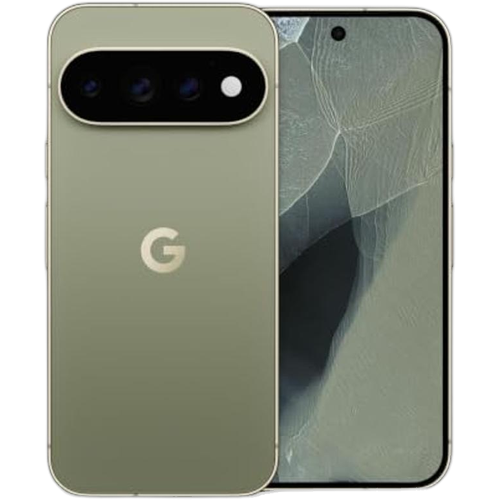
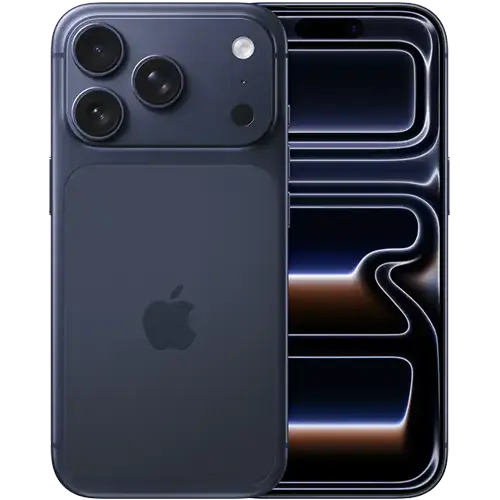
The Pixel 11 Pro and iPhone 17 Pro cost exactly the same $1099, share the same 6.3-inch footprint, and come from the only two companies that build both the chip and the software in their phones. That makes this one of the cleanest cross-platform matchups you can find. Google pitches the Pixel 11 Pro as the computational photography phone with the most capable display it has shipped. Apple pitches the iPhone 17 Pro as the performance flagship, with a camera system rebuilt around three 48-megapixel sensors.
In our testing, the split is unusually clean. The Pixel has the stronger display by a wide margin and renders more accurate color from its cameras, with a longer zoom reach. The iPhone wins on raw performance, camera sharpness and dynamic range, battery efficiency, charging speed, and speaker quality. Neither phone is a safe default over the other; which one makes sense depends heavily on whether you care more about the screen and color fidelity or about speed and detail.
Design
| Google Pixel 11 Pro | Apple iPhone 17 Pro | |
|---|---|---|
| Specifications | ||
| Dimensions | 152.7 x 71.9 x 8.4 mm | 150 x 71.9 x 8.8 mm |
| Weight | 204g | 206g |
| IP Rating | IP68 | IP68 |
| Frame | Aluminum | Aluminum |
| Front | Gorilla Glass Victus 2 | Ceramic Shield 2 |
| Back | Gorilla Glass Victus 2 | Ceramic Shield |
| Screen-to-body ratio | 87.0% | 90.3% |
The two phones are nearly identical in bulk: the Pixel 11 Pro measures 152.7 x 71.9 x 8.4mm at 204g, the iPhone 17 Pro 150 x 71.9 x 8.8mm at 206g. Both use aluminum frames and carry IP68 ratings, so both survive submersion to their rated depth. The glass differs: Gorilla Glass Victus 2 front and back on the Pixel, Ceramic Shield 2 on the iPhone's front with standard Ceramic Shield on the back.
The iPhone fits a slightly larger proportion of screen into that body, with a 90.3% screen-to-body ratio against the Pixel's 87%. In practice that means thinner bezels around the same 6.3-inch panel. The Pixel's 20:9 aspect ratio is marginally taller and narrower than the iPhone's 19.5:9, which accounts for the Pixel being about 3mm longer despite the identical width. Bandicoot Lab doesn't formally test design or durability, so this section covers what's on paper.
Display
| Google Pixel 11 Pro | Apple iPhone 17 Pro | |
|---|---|---|
881/ 881 | 679/ 881 | |
This is the Pixel's strongest category, and it isn't close. Both phones use 6.3-inch LTPO OLED panels with 1–120Hz adaptive refresh. The Pixel runs at 1280 x 2856 (495 pixels per inch) against the iPhone's 1206 x 2622 (460 PPI), a difference you'd struggle to see at normal viewing distance. The brightness numbers are where they separate. The Pixel reaches 1,398 nits in manual mode; the iPhone manages 885. With HDR content in auto brightness, the Pixel peaks at 3,594 nits to the iPhone's 3,043.
Sustained output tells the bigger story. Over our 30-minute HDR test, the Pixel held 98.2% of its brightness. The iPhone held 39.1%, meaning the panel dims substantially as it heats up. As the bright area of an HDR scene grows, the Pixel holds 67.7% of peak brightness; the iPhone holds 35.3%. You'll notice this watching HDR video on a warm day, where the iPhone's highlights visibly step down and the Pixel's don't.
Tone mapping follows suit. The Pixel tracks the HDR reference curve closely and only starts clipping at the very top of the signal range. The iPhone pushes highlights noticeably brighter than mastered and clips earlier, so bright detail in HDR content gets lifted and then flattened sooner than intended. Color accuracy is excellent on both; the Pixel is slightly closer to reference, but in both cases errors are below what most eyes can detect in the best mode.
Touch latency is the one gap worth flagging separately. The Pixel averages 13ms, the iPhone 52.7ms. That gap is large enough to feel in fast scrolling and competitive games.
Performance
| Google Pixel 11 Pro | Apple iPhone 17 Pro | |
|---|---|---|
429/ 1012 | 902/ 1012 | |
The iPhone 17 Pro runs Apple's A19 Pro with 12GB of RAM. The Pixel 11 Pro runs Google's Tensor G6, also with 12GB (a 16GB option exists). The benchmark gap is the widest in this comparison. GeekBench 6 puts the A19 Pro at 3,918 single-core and 10,158 multi-core; the Tensor G6 scores 2,551 and 4,846. The iPhone has more than double the multi-core throughput.
The GPU gap is similar. In the Wild Life Extreme stress test, the iPhone peaks at 5,865 against the Pixel's 3,278, with both throttling to roughly the same degree under sustained load (69.8% stability for the iPhone, 68.3% for the Pixel). Browser performance follows the CPU: a Speedometer score of 43.1 for the iPhone versus 25 for the Pixel.
How much this matters depends on your workload. For messaging, browsing, and camera use, the Tensor G6 is adequate and most people won't feel the gap day to day. For sustained gaming, video export, or anything that leans on the GPU, the iPhone is in a different class, and this is a gap you'll still feel three or four years from now.
Camera
| Google Pixel 11 Pro | Apple iPhone 17 Pro | |
|---|---|---|
468/ 587 | 567/ 587 | |
The iPhone 17 Pro scores higher overall, and the reason is consistent across every lens: it's sharper, dramatically better stabilized, and retains more dynamic range, while the Pixel renders color far more accurately. The Pixel's weak stabilization and dynamic range pull its overall score down despite its color accuracy advantage.
The color split deserves framing up front. The iPhone tunes vivid and warm-leaning; the Pixel tunes vivid on the main lens in bright light but closer to neutral elsewhere. Those are choices, not errors. The accuracy problems are the iPhone's: as lighting warms up, its processing pulls increasingly yellow, and hue errors climb with it. The pattern points to white balance correction rather than sensor limits, since the hue drift tracks the yellow shift almost exactly. Skin tones on the iPhone drift well away from reference in every lighting condition we test. The Pixel holds hues steady from bright daylight through dim warm light, with skin tone errors roughly half the iPhone's or better in most conditions.
Deep zoom reverses the sharpness story. The iPhone tops out at 40x digital zoom; the Pixel reaches 120x, and more usefully, it holds meaningfully more detail across the long end of the range. Past 10x, the Pixel's output stays legible where the iPhone's falls apart. If you regularly shoot distant subjects, this is the Pixel's clearest camera win.
Main
| Google Pixel 11 Pro (Main) | Apple iPhone 17 Pro (Main) | |
|---|---|---|
467/ 722 | 579/ 722 | |
The Pixel's main camera is a 50-megapixel f/1.68 lens on a 1/1.3-inch sensor; the iPhone's is 48 megapixels at f/1.78 on a 1/1.28-inch sensor. Nearly identical hardware, very different results. The iPhone resolves noticeably more detail at every light level, and its sharpness barely drops from bright light to dim. The Pixel is softer across the board, though it degrades gracefully in low light too.
Each main lens also covers the digital range below its phone's first telephoto: 1x–5x on the Pixel, 1x–4x on the iPhone. The iPhone's sharpness headroom means a 2x or 3x crop still looks clean. The Pixel softens earlier as you push past 2x, and by the top of its main-lens range the gap is visible.
Dynamic range favors the iPhone. High-contrast scenes keep depth in both shadows and highlights; the Pixel clips highlights and shows uneven tonal transitions, where gradients that should step smoothly from dark to light occasionally reverse. Color is the Pixel's answer: hues stay accurate across lighting, while the iPhone's skin tones run warm and orange, worst in bright light. Both push saturation in bright conditions, the Pixel somewhat harder.
Ultrawide
| Google Pixel 11 Pro (Ultrawide) | Apple iPhone 17 Pro (Ultrawide) | |
|---|---|---|
397/ 722 | 505/ 722 | |
The Pixel's ultrawide is 48 megapixels at f/1.7 on a 1/2.51-inch sensor; the iPhone's is 48 megapixels at f/2.8 on a 1/2.55-inch sensor. Despite the slower aperture, the iPhone's ultrawide is the sharper of the two in every condition, including low light, and it's sharper than you'd expect relative to its own main camera. The Pixel's ultrawide roughly matches its main lens for detail.
Dynamic range is weak on both ultrawides relative to their other lenses, with the iPhone retaining more usable scene depth. Color follows the established pattern: the Pixel is more accurate overall, though its ultrawide skin tones in bright light are its own worst result. The iPhone's ultrawide drifts yellow as light warms, same as its main camera.
Telephoto
| Google Pixel 11 Pro (Telephoto) | Apple iPhone 17 Pro (Telephoto) | |
|---|---|---|
629/ 722 | 628/ 722 | |
The Pixel carries a 5x telephoto: 48 megapixels, f/2.8, on a 1/1.95-inch sensor. The iPhone's is a 4x, also 48 megapixels at f/2.8, on a smaller 1/2.55-inch sensor. The sensor size difference shows. At native length in bright light they're close, but the Pixel's telephoto holds its sharpness almost unchanged into dim light while the iPhone's drops off steadily. Pushing past native length, the Pixel degrades more gracefully too, which feeds the deep-zoom advantage covered above.
The Pixel's telephoto is also its best lens for color, with accurate skin tones in mid and low light. The iPhone's telephoto is its worst for color, with large hue errors and strongly warm skin tones even in bright light. The iPhone answers with better dynamic range and markedly steadier stabilization; its telephoto video and handheld stills stay controlled where the Pixel's show more residual shake. Both stabilize telephoto better than their other lenses.
Front
| Google Pixel 11 Pro (Front) | Apple iPhone 17 Pro (Front) | |
|---|---|---|
463/ 722 | 703/ 722 | |
The Pixel's front camera is 42 megapixels at f/2.2; the iPhone's is 18 megapixels at f/1.9. The megapixel count is misleading here. The iPhone's front camera resolves far more detail than the Pixel's in every condition. Its dynamic range is also the best of any lens on either phone, so backlit selfies keep both face and sky. Stabilization for front-facing video is in another league; the Pixel's selfie video shows visible shake by comparison.
Color is the one place the Pixel's front camera wins. In bright light both phones miss skin tones badly, but in mid and low light the Pixel settles close to accurate while the iPhone stays warm and yellow-shifted.
Battery
| Google Pixel 11 Pro | Apple iPhone 17 Pro | |
|---|---|---|
515/ 836 | 670/ 836 | |
The Pixel carries a 4850mAh battery to the iPhone's 4252mAh, and the raw video numbers reflect it: 26.32 hours of continuous playback for the Pixel against 23.97 for the iPhone. Either figure translates to roughly two days of typical mixed use before you're hunting for a charger. At maximum brightness the order flips slightly, 20.2 hours for the iPhone versus 19.21 for the Pixel, which tracks with the Pixel's much brighter panel working harder.
The efficiency picture favors the iPhone. Over five hours of web browsing, the iPhone drained 17% to the Pixel's 20%. Overnight standby cost the iPhone 2% and the Pixel 4%; small numbers, but the Pixel loses roughly twice as much charge sitting on a nightstand. Gaming drain was 24% on the iPhone and 20% on the Pixel during the 20-loop stress test, though the iPhone was pushing nearly double the frame throughput for that charge, so per unit of work it's considerably more efficient.
Both phones are comfortable all-day devices, the Pixel stretches slightly further on passive video, and the iPhone does more with less battery everywhere else.
Charging
| Google Pixel 11 Pro | Apple iPhone 17 Pro | |
|---|---|---|
330/ 837 | 376/ 837 | |
The iPhone charges faster despite the smaller rating gap than you'd guess: 40W wired against the Pixel's 30W. From empty, the iPhone hits 31% in 10 minutes and 72% in 30; the Pixel manages 21% and 58%. For a quick top-up before heading out, the iPhone gives you roughly a third of a charge in the time it takes to find your shoes.
Both phones support 25W magnetic wireless charging that aligns to Qi2-style chargers, but the results diverge sharply. The iPhone reached 24% in 10 minutes and 49% in 30 wirelessly; the Pixel managed 11% and 34%. The Pixel's wireless pad performance is closer to overnight-charging territory than fast charging. If wireless is your primary charging method, the iPhone is clearly the better fit.
Speaker
| Google Pixel 11 Pro | Apple iPhone 17 Pro | |
|---|---|---|
699/ 897 | 823/ 897 | |
The Pixel plays slightly louder at 77.2dBA maximum against the iPhone's 75.2, but the iPhone has the better speaker everywhere else. Distortion at high volume averages 4.7% on the iPhone versus 6.77% on the Pixel, and the iPhone's frequency response is noticeably flatter through the critical midrange.
The iPhone sounds fuller, with real low-end presence and cleaner, more detailed highs. The Pixel has good clarity for voices and podcasts but thin bass, so music sounds comparatively hollow. For anything beyond spoken word, the iPhone is the one you'd rather listen to.
Microphone
| Google Pixel 11 Pro | Apple iPhone 17 Pro | |
|---|---|---|
659/ 1220 | 578/ 1220 |
The Pixel's microphones measure slightly better than the iPhone's, with a somewhat flatter response in recordings. Both land around the middle of the phones we've tested: the Pixel a touch above average, the iPhone a touch below. In practice, voice memos and video audio from either phone are perfectly usable, and neither will stand out as the weak link in a recording.
Other
| Google Pixel 11 Pro | Apple iPhone 17 Pro | |
|---|---|---|
| Biometrics | 501/ 1181 | 172/ 1181 |
| Data Transfer | 305/ 943 | 572/ 943 |
| Specifications | ||
| Biometric type | Fingerprint | Face Recognition |
| Ports | USB-C 3.2 | USB-C 3.2 Gen 2 |
| Storage | 256GB, 512GB, 1TB | 256GB, 512GB, 1TB |
Biometrics is the iPhone's worst category, and it's structural. The iPhone has no fingerprint sensor, relying entirely on hardware-based face unlock that averaged 610ms in our testing. The Pixel has an ultrasonic fingerprint reader that unlocks in 210ms, roughly three times faster, but no hardware-based face unlock of its own. If you unlock your phone in situations where face unlock fails, with gloves off in winter, or lying in bed at an angle, the Pixel's fingerprint reader is the more flexible tool. The iPhone's face unlock works hands-free but makes you wait for it.
Data transfer goes the other way. The iPhone's USB-C 3.2 Gen 2 port reached 286 MB/s read and 244 MB/s write; the Pixel's USB-C 3.2 managed 125 and 138. Offloading a vacation's worth of video is roughly twice as fast on the iPhone. Both phones come in 256GB, 512GB, and 1TB configurations.
Conclusion
At the same price, these two phones trade wins in almost alternating categories. The Pixel 11 Pro has the best display we've tested: brighter in every mode, dramatically more stable under sustained HDR load, and far more responsive to touch. Its cameras render more accurate color, especially skin tones, and its zoom range extends much further with usable results. It also has the faster, more reliable biometric unlock. The iPhone 17 Pro counters with roughly double the CPU and GPU performance, the sharper and better-stabilized camera system with stronger dynamic range, faster wired and wireless charging, a better speaker, quicker data transfer, and more efficient battery use despite the smaller cell.
If you choose based on the screen, the Pixel is the easy call; no amount of chip performance fixes a panel that dims to 39% of peak under sustained HDR. The Pixel also suits anyone who prioritizes color-accurate photos straight out of the camera, shoots at long zoom, or prefers a fingerprint reader. The iPhone suits anyone who games, keeps phones for many years and wants performance headroom, shoots a lot of handheld video, or charges in short opportunistic bursts. The camera decision is genuinely two-sided: the iPhone captures more detail and depth, the Pixel gets the colors right. Decide which of those bothers you more when it's wrong, and the rest of the matchup tends to fall in line behind it.
FAQ
Does the Pixel 11 Pro or iPhone 17 Pro take better photos?
It depends on what you value in a photo. The iPhone 17 Pro resolves more detail, keeps more highlight and shadow information in high-contrast scenes, and stabilizes much better. The Pixel 11 Pro renders more accurate color, with skin tone errors roughly half the iPhone's or better in most conditions, while the iPhone's skin tones drift warm and yellow. Pick the iPhone for detail and depth, and the Pixel for natural color.
Which is better for zoom, the Pixel 11 Pro or the iPhone 17 Pro?
The Pixel 11 Pro. It has a 5x telephoto against the iPhone's 4x, and its digital zoom reaches 120x versus 40x on the iPhone. Past 10x the Pixel's output stays legible while the iPhone's falls apart. In dim light the Pixel's telephoto also holds its sharpness while the iPhone's drops off steadily.
Is the iPhone 17 Pro better than the Pixel 11 Pro for gaming?
For graphics and sustained load, yes. The iPhone's GeekBench 6 multi-core score is 10,158 against 4,846 for the Pixel. Its Wild Life Extreme peak is 5,865 versus 3,278, and both phones throttle by a similar amount over time (69.8% stability for the iPhone, 68.3% for the Pixel). The Pixel's touch latency averages 13ms against 52.7ms on the iPhone, which helps in fast, competitive games, but it doesn't make up for the GPU gap.
Which phone has the better screen for watching HDR video, Pixel 11 Pro or iPhone 17 Pro?
The Pixel 11 Pro has the stronger display. It reaches 1,398 nits in manual brightness versus 885 for the iPhone, and its HDR peak is 3,594 nits versus 3,043. Over a 30-minute HDR test the Pixel held 98.2% of its brightness while the iPhone fell to 39.1%. On a warm day the iPhone's highlights visibly dim, and the Pixel's don't.
Does the Pixel 11 Pro or iPhone 17 Pro have better battery life?
Both last roughly two days of typical mixed use. The Pixel's 4850mAh cell gives it longer video playback, at 26.32 hours versus 23.97 for the iPhone. The iPhone is more efficient elsewhere: it drained 17% over five hours of web browsing versus 20% for the Pixel, and 2% overnight in standby versus 4%.
Which charges faster, the iPhone 17 Pro or the Pixel 11 Pro?
The iPhone 17 Pro charges faster both wired and wireless. With a cable (40W versus the Pixel's 30W), it reaches 31% in 10 minutes and 72% in 30, against 21% and 58% for the Pixel. On 25W magnetic wireless charging the iPhone hit 24% in 10 minutes and 49% in 30, while the Pixel managed 11% and 34%.
Related
Apple
iPhone 17 Pro
Pixel 11 Pro
Pixel 11 Pro XL
Apple
iPhone 17e
Pixel 11
Pixel 11 Pro Fold
Pixel 10a
Google Pixel 11 Pro vs OnePlus 15
Google Pixel 11 Pro vs Honor Magic8 Pro
Google Pixel 11 Pro vs Google Pixel 10 Pro
Google Pixel 11 vs Google Pixel 11 Pro
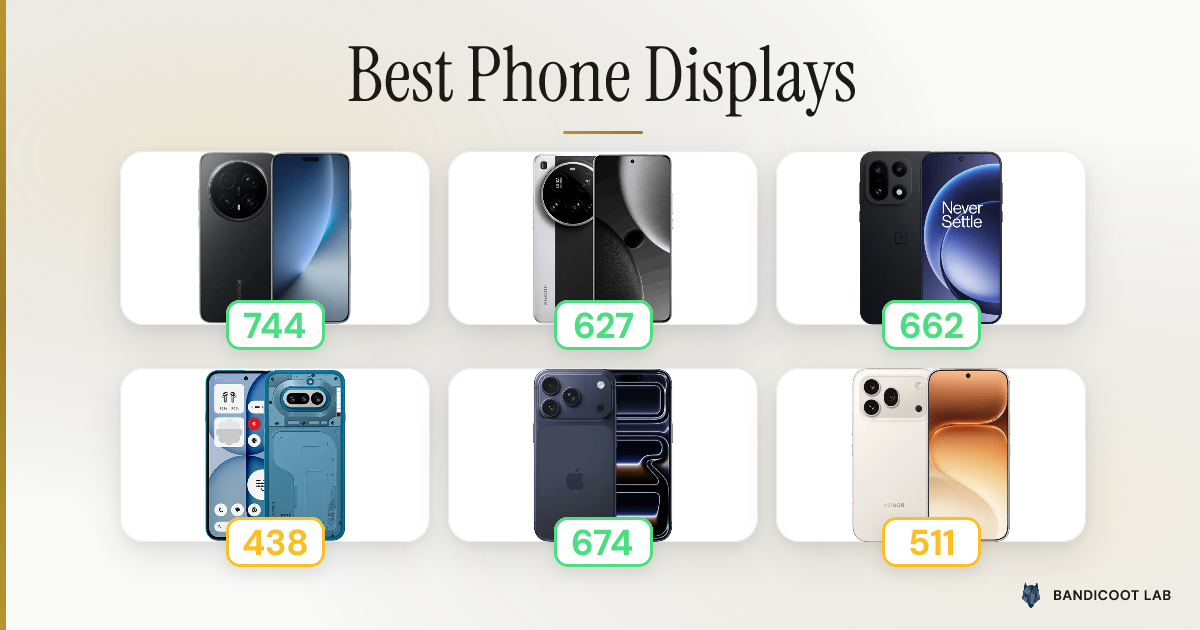
Best Phone Displays