Google Pixel 11 vs Google Pixel 11 Pro
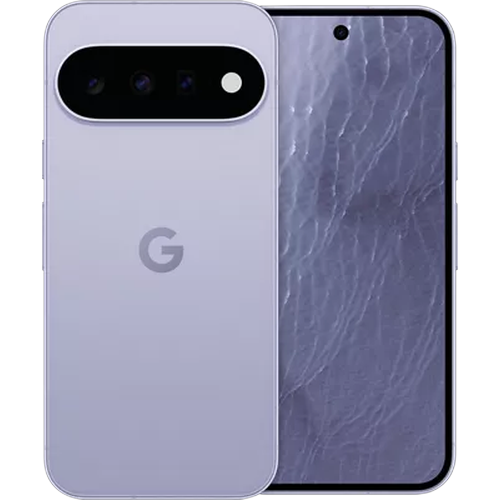
Pixel 11
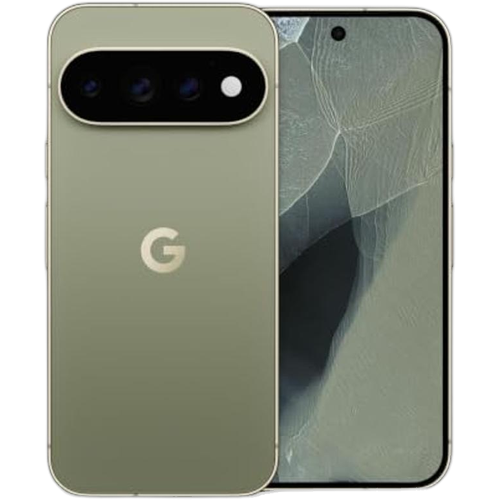
Pixel 11 Pro
Ranked #37 of 61
Ranked #31 of 61
Overall
Overall

The Google Pixel 11 and Pixel 11 Pro aren’t necessarily easy to decide between. The Pixel 11 at $899 is the mainstream phone: Google's full software experience, the Tensor G6 chip, and a complete triple-camera setup including a 5x telephoto. The Pixel 11 Pro at $1099 keeps the same 6.3-inch footprint and asks $200 more for upgraded hardware in specific places: a sharper LTPO display, larger camera sensors on every lens, and more storage and RAM headroom.
Where that $200 goes is narrower than the Pro branding suggests. The Pro has the better display and the stronger camera system, with the telephoto and long-range zoom being the clearest gap between the two. The standard Pixel 11 matches or beats it almost everywhere else: it benchmarks slightly faster, records cleaner audio, charges quicker wirelessly, and lasts about as long on a charge. If the camera and screen upgrades don't matter to you, the cheaper phone gives up very little.
Design
| Google Pixel 11 | Google Pixel 11 Pro | |
|---|---|---|
| Specifications | ||
| Dimensions | 152.8 x 72 x 8.6 mm | 152.7 x 71.9 x 8.4 mm |
| Weight | 197g | 204g |
| IP Rating | IP68 | IP68 |
| Frame | Aluminum | Aluminum |
| Front | Gorilla Glass Victus 2 | Gorilla Glass Victus 2 |
| Back | Gorilla Glass Victus 2 | Gorilla Glass Victus 2 |
| Screen-to-body ratio | 86.5% | 87.0% |
On paper, these are nearly the same phone. The Pixel 11 measures 152.8 x 72 x 8.6mm at 197g; the Pro is 152.7 x 71.9 x 8.4mm at 204g. The Pro is a fraction thinner and 7g heavier, differences you'd need a scale to confirm.
Materials are identical: aluminum frame, Gorilla Glass Victus 2 on front and back, IP68 rating, meaning both survive dust and submersion to the rated depth. Both use a 20:9 aspect ratio, and screen-to-body ratios are 86.5% for the Pixel 11 and 87% for the Pro, so bezels are thin and essentially equal on both. There's no build-quality case for the Pro here. The differentiation is all internal. Bandicoot Lab doesn't formally test design or durability, so this section describes what's on paper.
Display
| Google Pixel 11 | Google Pixel 11 Pro | |
|---|---|---|
756/ 881 | 881/ 881 | |
Both phones use a 6.3-inch OLED, but the panels diverge meaningfully. The Pro runs 1280 x 2856 at 495 pixels per inch with an LTPO panel that scales from 1Hz to 120Hz; the Pixel 11 runs 1080 x 2424 at 422 PPI and ranges from 60Hz to 120Hz. The resolution gap is visible if you look for it in fine text, and the LTPO panel lets the Pro drop its refresh rate much lower when the screen is static, which helps idle efficiency.
Manual brightness is a wash: 1,379 nits on the Pixel 11, 1,398 on the Pro. HDR peak brightness — the maximum the screen hits with bright content on screen — is where they separate. The Pro peaks at 3,594 nits with HDR content versus 2,943 on the Pixel 11. Both hold brightness almost perfectly over a 30-minute sustained test at 98.2%. Stability across HDR window sizes is nearly identical too, at around 67.5% for both, so each loses some punch as bright areas fill more of the screen.
Color accuracy is excellent on both. In their best modes, colors sit close enough to reference that you won't see drift in neutral tones or skin, and the two panels are effectively tied here. Tone mapping behavior matches as well: both push HDR highlights a bit brighter than mastered rather than tracking the reference curve faithfully, and both clip only at the very top of the signal, so highlight detail survives in practice.
Touch latency favors the Pro at 13ms versus 20.2ms. That gap is one of the larger ones measured between siblings, though it's at the edge of what most people notice outside fast-paced games.
Performance
| Google Pixel 11 | Google Pixel 11 Pro | |
|---|---|---|
459/ 1012 | 429/ 1012 | |
Both phones run the Google Tensor G6 with 12GB of RAM, though the Pro offers a 16GB option. Given identical silicon, you'd expect identical results. The cheaper phone actually comes out ahead. The Pixel 11 scores 2,658 single-core and 5,650 multi-core in GeekBench against the Pro's 2,551 and 4,846. That multi-core gap of about 15% points to the Pro throttling earlier in its slightly thinner body.
GPU results follow the same pattern. Peak Wild Life Extreme scores are close, 3,333 versus 3,278, but the Pixel 11 holds 73.6% of its peak under sustained load while the Pro holds 68.3%. Browser performance is identical, with Speedometer scores of 25.3 and 25.
In daily use, none of this will register. Both phones handle the same workloads with the same chip, and the differences only appear under extended stress. Neither is a gaming phone; Tensor's GPU trails Snapdragon flagships by a wide margin, and long sessions will see frame rates sag on both. Don't pay $200 extra expecting more speed.
Camera
| Google Pixel 11 | Google Pixel 11 Pro | |
|---|---|---|
414/ 587 | 468/ 587 | |
The Pro has the stronger camera system overall, and the gap is concentrated at the long end. Its 48-megapixel telephoto on a 1/1.95-inch sensor is the single biggest hardware difference between these phones, and it shows in testing: the Pro's telephoto is its sharpest lens, while the Pixel 11's 10.8-megapixel telephoto on a much smaller sensor is its softest. The Pro also reaches 120x digital zoom against the Pixel 11's 30x.
Deep zoom past 10x makes the clearest case. The Pro retains usable detail well into its digital range, while the Pixel 11 turns mushy quickly past its telephoto's native reach. If you shoot distant subjects regularly, this alone decides the matchup. Closer to 1x, the story flips in places: the standard Pixel 11 resolves more detail from its main and front cameras at their native focal lengths.
Against camera-focused rivals, neither phone leads. Both sit mid-pack overall, held back by dynamic range on the wider lenses and some skin tone accuracy issues in bright light. Color tuning on both is recognizably Pixel: moderately vivid, generally neutral white balance, with the Pro pushing saturation harder on its main camera.
Main
| Google Pixel 11 (Main) | Google Pixel 11 Pro (Main) | |
|---|---|---|
427/ 722 | 467/ 722 | |
The Pixel 11 uses a 48-megapixel f/1.7 main camera on a 1/1.56-inch sensor; the Pro steps up to 50 megapixels at f/1.68 on a larger 1/1.3-inch sensor. At 1x the Pixel 11 is actually the sharper camera across all lighting, with a visible edge in bright light. The Pro holds detail more evenly through the 1x to 5x digital range that both main cameras cover before the telephoto takes over, so a 2x or 3x crop looks cleaner from the Pro.
Dynamic range clearly favors the Pro. High-contrast scenes keep shadow detail and depth on the Pro, where the Pixel 11's main camera clips highlights earlier and flattens the same scenes. This is the larger sensor doing its job.
Color is a mixed result. The Pro's main camera is tuned noticeably vivid in bright light, pushing saturation well past neutral, while the Pixel 11 stays closer to accurate. Hue accuracy is slightly better on the Pixel 11 across lighting conditions, and both phones render skin tones with a visible shift in bright light that settles down as light dims. Neither drifts much in white balance as lighting warms; the errors that remain are sensor-level rather than correction failures.
Ultrawide
| Google Pixel 11 (Ultrawide) | Google Pixel 11 Pro (Ultrawide) | |
|---|---|---|
405/ 722 | 397/ 722 | |
The spec sheet suggests a blowout: 48 megapixels at f/1.7 on the Pro versus 13 megapixels at f/2.2 on the Pixel 11. Testing says otherwise. The Pixel 11's ultrawide is sharper in bright and moderate light, and only falls behind in dim conditions where the Pro's larger sensor keeps more detail. Overall the two ultrawides score within a rounding error of each other.
Both are the weak point of their respective systems for dynamic range, with clipped highlights and flat rendering in contrasty scenes. The Pro's ultrawide also pulls warm and yellow in moderate indoor lighting, a white balance issue rather than a sensor one, while the Pixel 11's ultrawide shifts reddish in very dim light. Relative to its own main camera, the Pixel 11's ultrawide holds up better than the Pro's does.
Telephoto
| Google Pixel 11 (Telephoto) | Google Pixel 11 Pro (Telephoto) | |
|---|---|---|
488/ 722 | 629/ 722 | |
Both phones carry a 5x telephoto, and this is where the Pro earns its price. Its 48-megapixel f/2.8 unit on a 1/1.95-inch sensor is dramatically sharper than the Pixel 11's 10.8-megapixel f/3.1 lens at every light level, and the gap widens as you push past 5x. The Pro stays usable deep into its 120x range; the Pixel 11 softens quickly on the way to its 30x cap.
The Pro's telephoto is also its best lens for dynamic range. It is the only lens on either phone that avoids clipping highlights, so backlit telephoto shots keep their depth. Both telephotos deliver each phone's most accurate color, with good skin tones in moderate and dim light, and both are the best-stabilized rear lens on their respective phones. The Pro holds slightly steadier, which matters more at long focal lengths than anywhere else.
Front
| Google Pixel 11 (Front) | Google Pixel 11 Pro (Front) | |
|---|---|---|
442/ 722 | 463/ 722 | |
The Pixel 11's 10.5-megapixel front camera outresolves the Pro's 42-megapixel unit across all lighting, which is a reminder that megapixel counts predict little. The Pro answers with better dynamic range: backlit selfies keep smoother tones and more highlight detail, the kind of difference you see shooting against a bright window.
Both front cameras share the same flaw: skin tones drift noticeably from reference in bright light, more so on the Pro, improving as light dims. Stabilization for front-facing video is mediocre on both, with the Pro marginally steadier.
Battery
| Google Pixel 11 | Google Pixel 11 Pro | |
|---|---|---|
528/ 836 | 515/ 836 | |
The Pixel 11 carries a 4,985mAh battery, the Pro 4,850mAh, and the results land about as close as the capacities. The Pixel 11 ran 25.6 hours of video playback; the Pro ran 26.32. Either figure translates to roughly two days of typical mixed use, or a full day of heavy use with margin to spare.
The other tests agree. A 5-hour web browsing session drained 21% of the Pixel 11 and 20% of the Pro. Twenty loops of a GPU stress test drained 20% of both. Overnight standby cost 3% on the Pixel 11 and 4% on the Pro. These are tie-level numbers, and both phones sit mid-pack rather than among the long-haul champions. You shouldn't pick between them on battery life.
Charging
| Google Pixel 11 | Google Pixel 11 Pro | |
|---|---|---|
354/ 837 | 330/ 837 | |
Both phones charge at 30W wired and 25W wireless, with magnetic alignment for Qi2-style chargers, so a magnetic puck snaps into place rather than requiring careful positioning.
Wired results are nearly identical: the Pro hits 21% at 10 minutes and 58% at 30, the Pixel 11 hits 19% and 56%. Wireless is where they split. The Pixel 11 reaches 14% at 10 minutes and 40% at 30 on a wireless pad, against 11% and 34% for the Pro. Neither is fast by flagship standards; 30W wired is modest when $700 phones from other brands exceed it comfortably. If you live on a wireless charger, the Pixel 11 has a small but consistent edge.
Speaker
| Google Pixel 11 | Google Pixel 11 Pro | |
|---|---|---|
735/ 897 | 699/ 897 | |
Max volume is effectively tied: 76.6 dBA on the Pixel 11, 77.2 on the Pro. Both get loud enough for a kitchen or a hotel room. Distortion at full volume averages 6.12% on the Pixel 11 and 6.77% on the Pro, which is audible on busy tracks at max output for both.
Character-wise, the Pixel 11 has slightly fuller bass and a cleaner, clearer high end, while the Pro sounds a touch thinner. Neither produces meaningful low-end below roughly 290Hz, so music skews toward mids and treble on both. The differences here are small; the Pixel 11 is modestly the better speaker.
Microphone
| Google Pixel 11 | Google Pixel 11 Pro | |
|---|---|---|
862/ 1220 | 659/ 1220 |
This is one of the quieter wins for the cheaper phone. The Pixel 11's microphones are well above average, with a flat, natural frequency response that keeps voice recordings and calls clean. The Pro is around average: perfectly serviceable, but with more coloration in the response. If you record voice memos, interviews, or video with speech regularly, the Pixel 11 is the better tool.
Other
| Google Pixel 11 | Google Pixel 11 Pro | |
|---|---|---|
| Biometrics | 481/ 1181 | 501/ 1181 |
| Data Transfer | 318/ 943 | 305/ 943 |
| Specifications | ||
| Biometric type | Fingerprint | Fingerprint |
| Ports | USB-C 3.2 | USB-C 3.2 |
| Storage | 256GB, 512GB | 256GB, 512GB, 1TB |
Both phones use an ultrasonic fingerprint sensor, and they unlock in essentially the same time: 218ms on the Pixel 11, 210ms on the Pro. Neither has hardware-based face unlock; the camera-based option exists but isn't as secure as dedicated depth hardware.
Both carry USB-C 3.2 ports. Measured transfer speeds are similar and unremarkable for the spec: 135 MB/s read and 137 MB/s write on the Pixel 11, 125 and 138 on the Pro. Storage is where the Pro stretches: it offers 256GB, 512GB, and 1TB plus a 16GB RAM option, while the Pixel 11 tops out at 512GB with 12GB of RAM.
Conclusion
The Pro's case rests on two things: the best display tested and a meaningfully better camera system. The telephoto and everything past 5x is a genuine generational gap, not a spec-sheet nicety, and the sharper LTPO panel with much brighter HDR is a daily-visible upgrade. If you shoot at a distance often or care about screen quality above all else, the $200 buys something real.
Everywhere else, the standard Pixel 11 either ties or wins. It benchmarks slightly faster despite the identical chip, sustains load better, has the better microphones, a marginally better speaker, faster wireless charging, and battery life within the margin of error. Its main, ultrawide, and front cameras trade blows with the Pro's rather than losing to them. For most people who shoot at 1x and 0.5x and want a great screen without needing the best one, the Pixel 11 is the smarter purchase, and the leftover $200 covers a case, a Qi2 charger, and most of a storage upgrade.
FAQ
Is the Pixel 11 Pro worth $200 more than the Pixel 11?
It depends on whether you use the telephoto or care about the screen. The Pro has a much stronger telephoto, a sharper LTPO display with brighter HDR, and more storage and RAM options. The Pixel 11 matches or beats it in benchmarks, microphones, speaker, wireless charging and battery life, so if you mostly shoot at 1x and don't need the best screen, the cheaper phone gives up very little.
Does the Pixel 11 or Pixel 11 Pro take better zoom photos?
The Pro is clearly better at zoom. Its 48-megapixel telephoto on a 1/1.95-inch sensor is far sharper than the Pixel 11's 10.8-megapixel telephoto at every light level, and the gap widens past 5x. The Pro also reaches 120x digital zoom against 30x on the Pixel 11, and the Pixel 11 turns soft quickly beyond its native 5x reach.
Is the Pixel 11 Pro's display noticeably better than the Pixel 11's?
Yes, in sharpness, HDR brightness and responsiveness. The Pro runs 1280 x 2856 with a 1–120Hz LTPO panel and peaks at 3,594 nits in HDR, against 1080 x 2424, 60–120Hz and 2,943 nits on the Pixel 11. Touch latency is 13ms on the Pro versus 20.2ms. Manual brightness, sustained brightness and color accuracy are essentially tied.
Which is faster for gaming, the Pixel 11 or the Pixel 11 Pro?
The Pixel 11 is slightly faster despite using the same Tensor G6 chip. It scores about 5,650 multi-core in GeekBench against 4,846 for the Pro, and it holds 73.6% of its peak GPU performance under sustained load versus 68.3% for the Pro. The Pro appears to throttle earlier. Neither is a strong gaming phone, and everyday use won't show a difference.
Does the Pixel 11 or Pro have better battery life?
Battery life is effectively a tie. Video playback ran 25.6 hours on the Pixel 11 and 26.32 hours on the Pro, and the web browsing, gaming and standby drain results are within a percentage point or so of each other. Both last about two days of typical mixed use, so battery shouldn't decide the purchase.
Which charges faster, the Pixel 11 or the Pixel 11 Pro?
Wired charging is close, with both at 30W. The Pro reaches 21% in 10 minutes and 58% in 30, and the Pixel 11 reaches 19% and 56%. Wireless favors the Pixel 11, which reaches 14% in 10 minutes and 40% in 30, against 11% and 34% for the Pro. Both support 25W wireless charging with magnetic alignment.
Related
Pixel 11 Pro
Pixel 11
Pixel 11 Pro XL
Pixel 11 Pro Fold
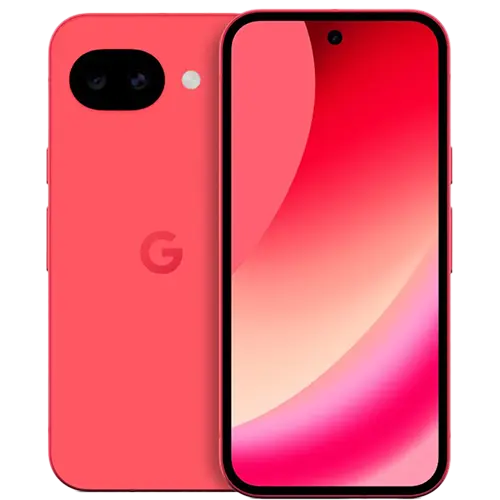
Pixel 10a
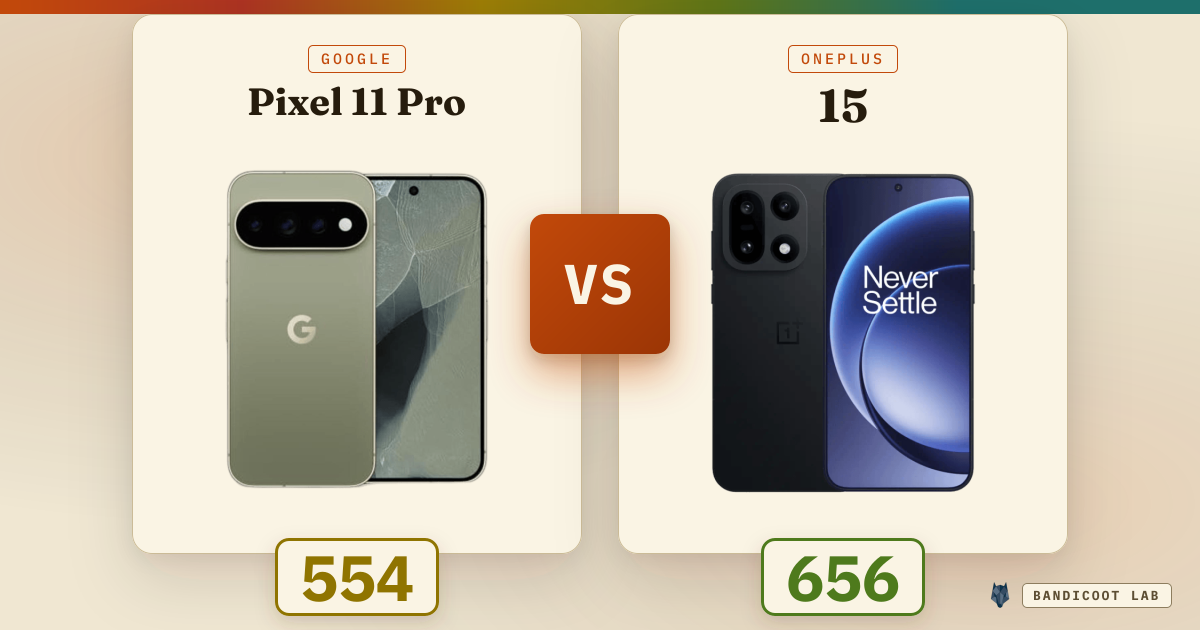
Google Pixel 11 Pro vs OnePlus 15
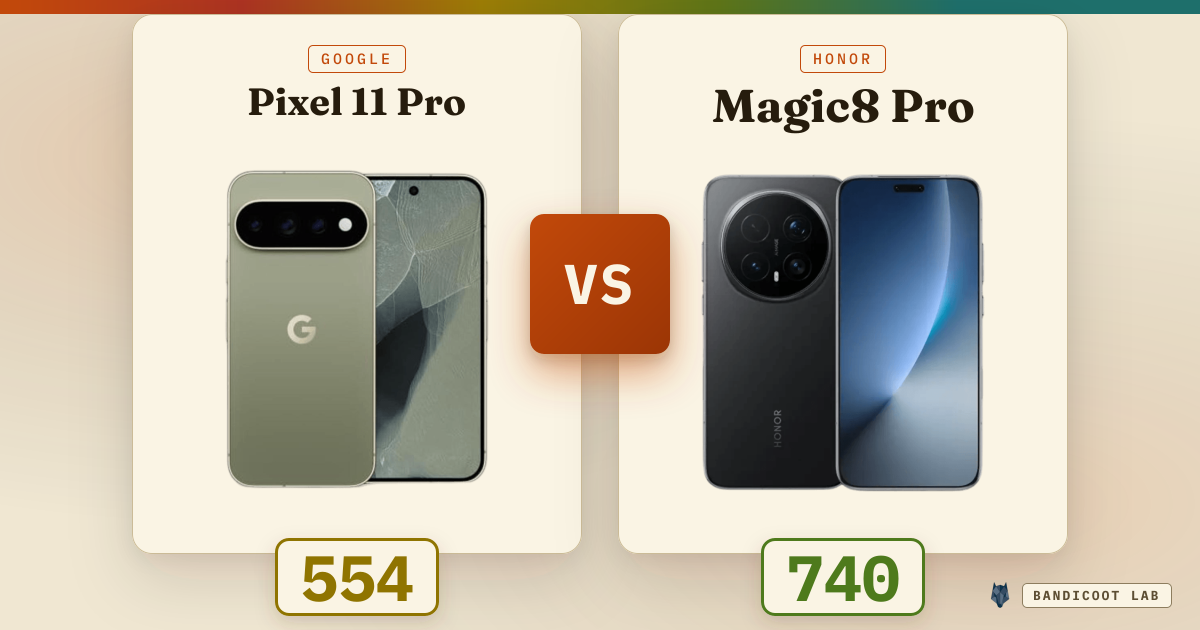
Google Pixel 11 Pro vs Honor Magic8 Pro
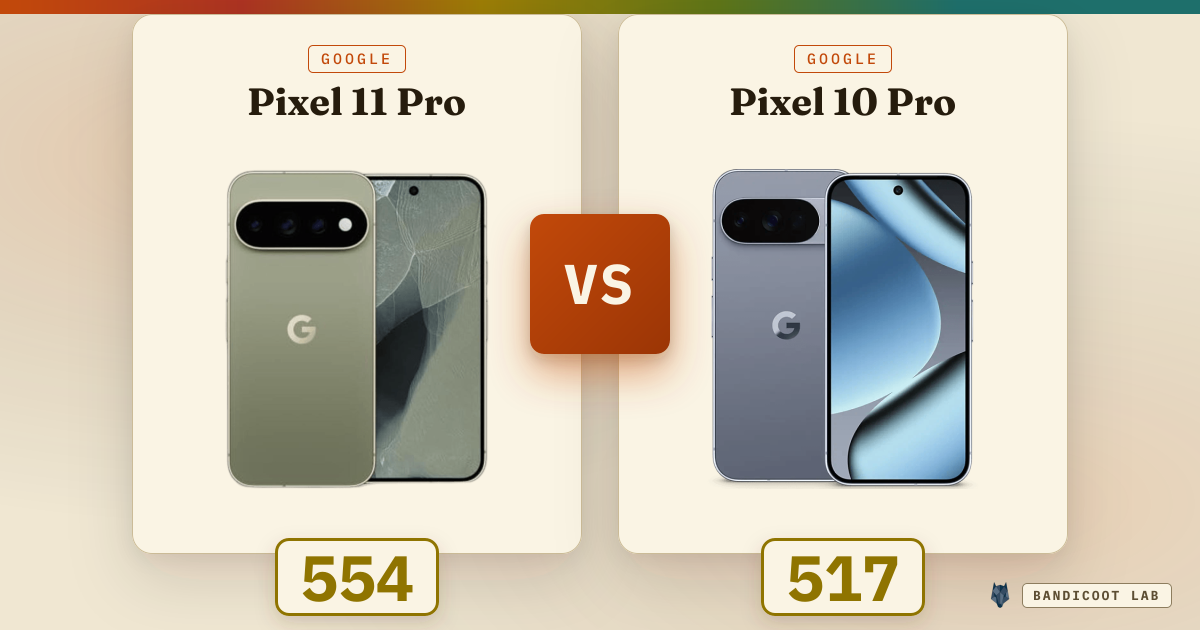
Google Pixel 11 Pro vs Google Pixel 10 Pro
Google Pixel 11 Pro vs Apple iPhone 17 Pro
Google Pixel 11 vs Samsung Galaxy S26
Google Pixel 11 vs Google Pixel 10a
Google Pixel 11 vs Google Pixel 10