Google Pixel 11 vs Google Pixel 10
Pixel 11
Pixel 10
Ranked #37 of 61
Ranked #48 of 61
Overall
Overall
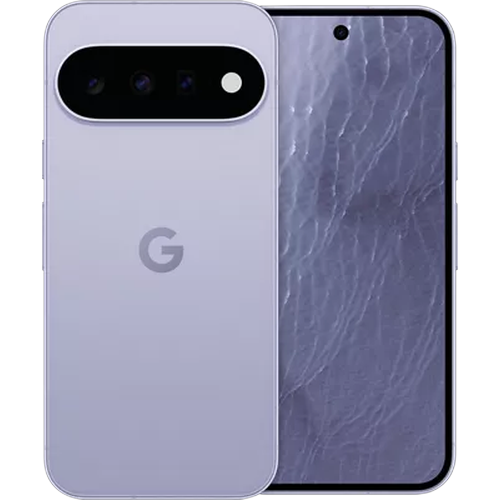
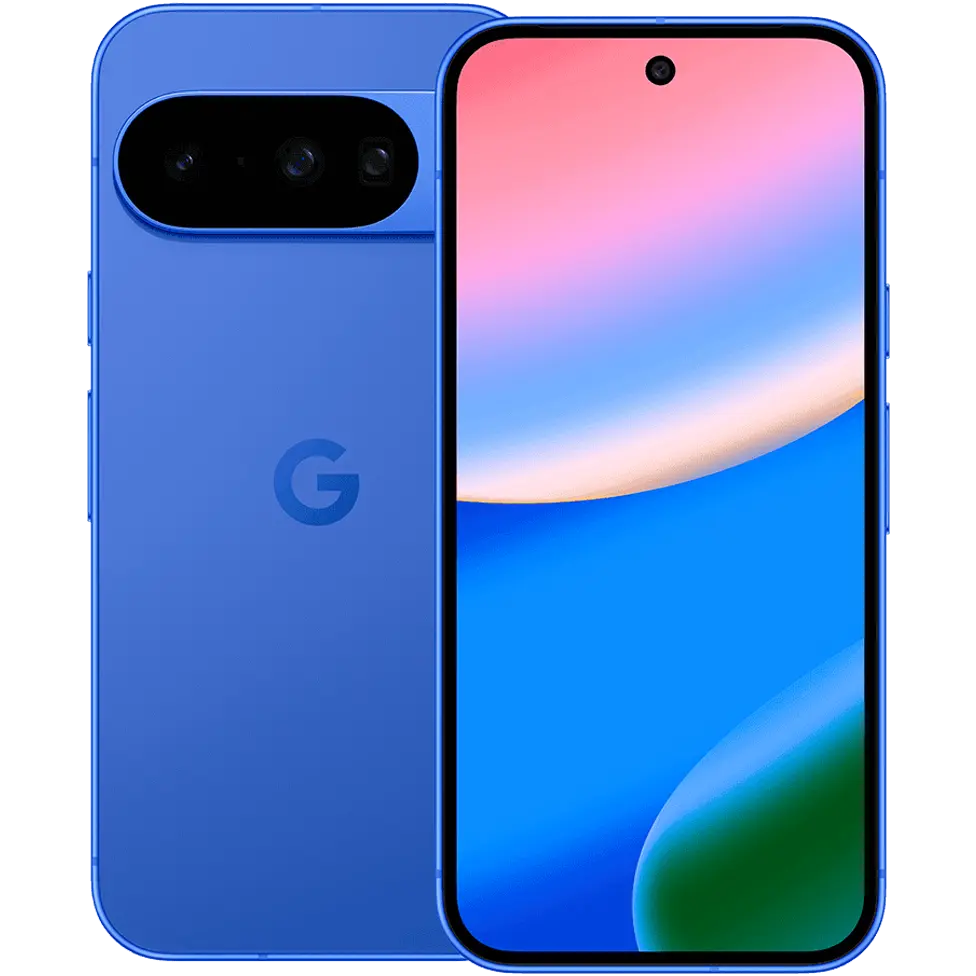
The Pixel 11 is the direct successor to the Pixel 10, and Google kept the formula intact: same compact footprint, same lens lineup, same position as the standard non-Pro Pixel. The price moved from $799 to $899, which turns this into a question most upgrade cycles force eventually. Is one generation worth a hundred dollars, or is the outgoing model the smarter buy while it's still on shelves?
The Pixel 11 is the stronger phone in most of the areas we test. It has the more accurate display, the better camera system on balance, longer battery life, faster wireless charging, and a quicker chip in daily use. The Pixel 10 pushes back in a few places: its screen gets slightly brighter, its speakers are a bit more refined, and its main camera resolves marginally more detail. None of those are decisive, but they keep this from being a clean sweep.
Design
| Google Pixel 11 | Google Pixel 10 | |
|---|---|---|
| Specifications | ||
| Dimensions | 152.8 x 72 x 8.6 mm | 152.8 x 72 x 8.6 mm |
| Weight | 197g | 204g |
| IP Rating | IP68 | IP68 |
| Frame | Aluminum | Aluminum |
| Front | Gorilla Glass Victus 2 | Gorilla Glass Victus 2 |
| Back | Gorilla Glass Victus 2 | Glass |
| Screen-to-body ratio | 86.5% | 86.5% |
These phones are nearly the same object. Both measure 152.8 x 72 x 8.6mm with an aluminum frame, Gorilla Glass Victus 2 up front, IP68 water resistance, and an 86.5% screen-to-body ratio. That IP rating means both survive submersion to the rated depth, and that screen-to-body figure means thin bezels on both.
The differences are small. The Pixel 11 weighs 197g to the Pixel 10's 204g, and its back panel is specified as Victus 2 where the Pixel 10 lists unspecified glass. The aspect ratios differ fractionally, 20:9 versus 20.2:9, which you won't notice. Seven grams at identical dimensions is a difference you might feel in direct comparison and won't think about otherwise. Bandicoot Lab doesn't formally test design or durability.
Display
| Google Pixel 11 | Google Pixel 10 | |
|---|---|---|
756/ 881 | 598/ 881 | |
Both phones use a 6.3" OLED at 1080 x 2424, which works out to 422 pixels per inch, with a 60–120Hz refresh rate. The panels diverge in tuning rather than hardware. The Pixel 10 is slightly brighter: 1,496 nits in manual mode against the Pixel 11's 1,379, and 3,089 nits peak HDR against 2,943. Both figures are high enough for direct sunlight, and both panels hold their HDR output almost perfectly over a 30-minute stress run, at 98.2% and 97.7% stability.
Color accuracy is where the Pixel 11 pulls ahead. Its best mode renders colors close enough to reference that errors aren't visible to the eye. The Pixel 10 is decent but drifts enough that a trained eye could spot deviations in side-by-side viewing. The Pixel 11 also covers slightly more of both the sRGB and P3 color spaces.
Tone mapping differs in character. The Pixel 11 pushes HDR highlights noticeably brighter than the content was mastered, while the Pixel 10 renders them slightly darker than reference. Both clip at the same point near the top of the signal range, so very bright highlight detail gets flattened equally on each. Touch latency is 20.2ms on the Pixel 11 and 22.6ms on the Pixel 10, a gap too small to feel.
Performance
| Google Pixel 11 | Google Pixel 10 | |
|---|---|---|
459/ 1012 | 403/ 1012 | |
The Pixel 11 runs the Tensor G6, the Pixel 10 the Tensor G5, both paired with 12GB of RAM. The G6 is clearly faster in single-threaded work: 2,658 in GeekBench single-core versus 2,271. Multi-core flips, with the Pixel 10 scoring 6,137 to the Pixel 11's 5,650. Single-core speed drives most of what you feel in daily use, app launches and UI response, so the Pixel 11 reads as the quicker phone in practice. Browser performance backs that up, with the Pixel 11 scoring 25.3 in Speedometer against 20.3.
Graphics favor the newer chip. The Pixel 11 peaks at 3,333 in the Wild Life Extreme stress test with 73.6% stability, against 2,955 and 68.6% for the Pixel 10. Stability here measures how much performance survives under sustained load, so the Pixel 11 both starts faster and throttles less. Neither is a gaming phone; flagship Snapdragon devices roughly double these GPU numbers.
For everyday use, both are fine. The Pixel 11's lead shows up in demanding games and in how long heavy workloads stay fast.
Camera
| Google Pixel 11 | Google Pixel 10 | |
|---|---|---|
414/ 587 | 372/ 587 | |
The hardware barely changed: 48-megapixel main, 13-megapixel ultrawide, 10.8-megapixel 5x telephoto, 10.5-megapixel front camera on both. The Pixel 11 gets a larger main sensor at 1/1.56" versus 1/2.0" and extends digital zoom to 30x from 20x. Despite the similar spec sheets, the Pixel 11 scores meaningfully higher overall, mostly on the strength of its ultrawide sharpness, telephoto color, and far more restrained color tuning. Neither phone competes with camera-focused flagships like the Galaxy S or iPhone Pro lines, and both trail the Pixel Pro models they sit beneath.
The tuning difference is the headline. The Pixel 10 pushes saturation hard across every lens, with greens and blues especially pumped, and leans warm and yellow in bright light. The Pixel 11 backs way off, producing near-neutral saturation that looks closer to life. Skin tone accuracy follows the same pattern: the Pixel 10's skin tones sit visibly off reference in all lighting, while the Pixel 11's improve substantially in mid and dim light, though bright-light skin tones still drift.
Deep zoom is weak on both. Past 10x, detail falls apart into processed mush on either phone, and the Pixel 11's extra reach to 30x doesn't produce usable results at that range. The Pixel 10 actually averages slightly better across its shorter 20x range. Treat anything past 10x as emergency framing on both.
Main
| Google Pixel 11 (Main) | Google Pixel 10 (Main) | |
|---|---|---|
427/ 722 | 421/ 722 | |
The Pixel 10's main camera resolves slightly more fine detail than the Pixel 11's at every lighting level, bright through dim. It's a modest edge, visible when pixel-peeping, and it holds when cropping toward 2x and 3x within the digital range below each phone's 5x telephoto. Both hold up reasonably well through that range in good light; both soften noticeably by 4x in dim conditions.
Color is where they split. The Pixel 10 oversaturates heavily and its hue accuracy degrades as light warms and dims, a mix of sensor limitation and white balance correction that overshoots red in dark scenes. The Pixel 11 keeps hues close to accurate across all three lighting conditions and its skin tones actually get better as light drops. The Pixel 10's main camera retains more shadow detail in high-contrast scenes, where the Pixel 11 flattens shadows and clips highlights earlier. The Pixel 10's main camera is also noticeably steadier for handheld video.
Ultrawide
| Google Pixel 11 (Ultrawide) | Google Pixel 10 (Ultrawide) | |
|---|---|---|
405/ 722 | 342/ 722 | |
Same 13-megapixel f/2.2 hardware on both, very different results. The Pixel 11's ultrawide is dramatically sharper at every lighting level, to the point that it out-resolves the Pixel 10's ultrawide by roughly half again in good light, and the gap widens in dim light where the Pixel 10's ultrawide gets genuinely soft. On the Pixel 11 the ultrawide is nearly as sharp as the main camera, which is unusual. On the Pixel 10 it's clearly the weaker lens.
The Pixel 10 counters with better dynamic range from its ultrawide, holding more shadow detail in contrasty scenes. Both ultrawides struggle with color in warm, dim light, shifting visibly red; that's mostly a white balance correction failure on each, worse on the Pixel 10.
Telephoto
| Google Pixel 11 (Telephoto) | Google Pixel 10 (Telephoto) | |
|---|---|---|
488/ 722 | 384/ 722 | |
Both phones carry the same 10.8-megapixel f/3.1 telephoto at 5x, covering 5x to 30x on the Pixel 11 and 5x to 20x on the Pixel 10. In bright light they resolve similar detail at 5x, and the Pixel 10 is actually a touch sharper in moderate light. In dim light the Pixel 11 holds together while the Pixel 10's telephoto falls off sharply, dropping to clearly soft results.
The Pixel 11's telephoto is its best lens for color: hues stay accurate, skin tones are close to right in most lighting, and dynamic range is the strongest of its rear cameras. The Pixel 10's telephoto oversaturates and shifts red in warm, dim light, with skin tones off in every condition. The Pixel 11's telephoto is also the steadier of the two for stabilized shooting at long focal lengths, which matters more at 5x and beyond than anywhere else. As zoom climbs past native, both degrade steadily, but the Pixel 11's cleaner 5x base gives its crops more to work with through about 10x.
Front
| Google Pixel 11 (Front) | Google Pixel 10 (Front) | |
|---|---|---|
442/ 722 | 380/ 722 | |
Both use a 10.5-megapixel f/2.2 front camera. The Pixel 11's is sharper across all lighting, and it keeps most of that detail even in dim light. It also handles high-contrast scenes better, holding onto bright backgrounds that the Pixel 10's front camera blows out. The Pixel 10's selfies lean warm and oversaturated in bright light, and in warm dim light its white balance fails badly, pushing faces strongly red. The Pixel 11's selfie color isn't perfect, with skin tones drifting in bright light, but it's the more accurate of the two overall.
One reversal: the Pixel 10's front camera is considerably steadier for handheld video. If you vlog from the selfie camera, that's worth knowing.
Battery
| Google Pixel 11 | Google Pixel 10 | |
|---|---|---|
528/ 836 | 467/ 836 | |
The capacities are effectively identical, 4,985mAh in the Pixel 11 and 4,970mAh in the Pixel 10, but the newer chip is more efficient. The Pixel 11 ran our video playback test for 25.6 hours against the Pixel 10's 23.1. Either figure translates to a comfortable two days of moderate use; the Pixel 11 just leaves more margin.
The pattern repeats under load. Five hours of web browsing drained 21% of the Pixel 11 and 23% of the Pixel 10. Twenty loops of the Wild Life Extreme stress test took 20% from the Pixel 11 and 22% from the Pixel 10. Overnight standby cost both 3% over eight hours. None of these gaps is dramatic on its own, but they all point the same direction and add up to roughly a few extra hours of real use per charge for the Pixel 11.
Charging
| Google Pixel 11 | Google Pixel 10 | |
|---|---|---|
354/ 837 | 322/ 837 | |
Wired charging is a wash. Both phones take 30W, and the results are nearly identical: 19% in ten minutes and 56% in thirty for the Pixel 11, 20% and 57% for the Pixel 10. Plan on a bit over an hour to full on either.
Wireless is where the Pixel 11 earns its spec bump. Both support magnetic charging that snaps onto Qi2 and MagSafe-style pads, but the Pixel 11 draws 25W to the Pixel 10's 15W. That shows up in testing: 40% in thirty minutes wirelessly versus 30%. If a magnetic pad on your desk is your primary charger, the Pixel 11 makes wireless charging fast enough to be your only charging.
Speaker
| Google Pixel 11 | Google Pixel 10 | |
|---|---|---|
735/ 897 | 781/ 897 | |
These speakers are closely matched in volume, 76.6 dBA max on the Pixel 11 and 76.0 on the Pixel 10, with similar distortion at full blast. The character differs. The Pixel 10's output is more even across the frequency range, with cleaner, better-defined highs; vocals and dialogue come through with a bit more clarity. The Pixel 11 reaches lower into the bass region but its overall response is less balanced, which makes it sound slightly less composed at the same volume.
Neither will surprise you. They're good phone speakers, and the Pixel 10's is the slightly better-tuned of the two.
Microphone
| Google Pixel 11 | Google Pixel 10 | |
|---|---|---|
862/ 1220 | 698/ 1220 |
The Pixel 11's microphones are a genuine strength, among the best we've tested, with a flat, natural response that makes voice recordings and calls sound close to the source. The Pixel 10 is also above average, just not at the same level. If you record interviews or video with the phone's own mics, the Pixel 11 is the better tool. For calls, you'd struggle to tell them apart.
Other
| Google Pixel 11 | Google Pixel 10 | |
|---|---|---|
| Biometrics | 481/ 1181 | 540/ 1181 |
| Data Transfer | 318/ 943 | 205/ 943 |
| Specifications | ||
| Biometric type | Fingerprint | Fingerprint |
| Ports | USB-C 3.2 | USB-C 3.2 |
| Storage | 256GB, 512GB | 128GB, 256GB |
Both phones use an ultrasonic under-display fingerprint reader and neither offers hardware-based face unlock. The Pixel 10's sensor is slightly quicker at 194ms versus 218ms, a gap you won't perceive.
Storage starts higher on the Pixel 11, with 256GB and 512GB options against the Pixel 10's 128GB and 256GB. That matters at these prices; the $899 Pixel 11 at 256GB versus the $799 Pixel 10 at 128GB narrows the effective gap. Both use USB-C 3.2, and the Pixel 11's storage is quicker over the wire, reading at 135 MB/s and writing at 137 MB/s against 106 and 77 for the Pixel 10. You'll notice that mostly when offloading large video files.
Conclusion
The Pixel 11 is the better phone in most of the ways that matter day to day. Its display is more color-accurate, its battery lasts noticeably longer on the same capacity, its wireless charging is meaningfully faster, its microphones are excellent, and its camera system produces more natural color with a far stronger ultrawide and a telephoto that survives dim light. The chip is quicker where you feel it, and the base storage doubles. For $100 more, you're getting real improvements rather than a spec-sheet refresh.
The Pixel 10 keeps a few honest wins: a slightly brighter screen, a more refined speaker, a touch more detail from the main camera, and better main-camera dynamic range and video stabilization. If your photography lives almost entirely on the main lens in good light, and you charge over a cable, the Pixel 10 at $799 gives up less than the scores suggest. At 128GB of storage, though, the price gap is smaller than it looks.
For most buyers, especially anyone who uses the ultrawide and telephoto regularly or charges wirelessly, the Pixel 11 is worth the extra money. The Pixel 10 is the value pick for main-camera-and-a-cable users who'd rather pocket the difference.
FAQ
Is it worth upgrading from the Pixel 10 to the Pixel 11?
For most owners the gains are modest but real: longer battery life, a more color-accurate display, much faster wireless charging, a stronger ultrawide and telephoto, and better microphones. The Pixel 11 also weighs 197g against 204g and starts at 256GB instead of 128GB. If you mostly shoot on the main camera and charge by cable, the Pixel 10 already covers most of what you need.
Does the Pixel 11 or Pixel 10 have the better camera?
The Pixel 11 has the better camera system overall. Its color is far more natural, its ultrawide is much sharper, its telephoto holds up better in dim light, and its selfies are sharper. The Pixel 10 keeps an edge on the main camera, with slightly more fine detail, better shadow detail in contrasty scenes, and steadier handheld video, but it oversaturates and its skin tones are visibly off.
Which lasts longer on a charge, the Pixel 11 or Pixel 10?
The Pixel 11 lasts longer despite near-identical capacity (4,985mAh vs 4,970mAh). It ran 25.6 hours in video playback against 23.1 hours for the Pixel 10. Five hours of web browsing used 21% on the Pixel 11 and 23% on the Pixel 10. Both lose 3% over eight hours of standby.
Is wireless charging faster on the Pixel 11 than the Pixel 10?
Yes. The Pixel 11 charges wirelessly at 25W against 15W on the Pixel 10, reaching 40% in 30 minutes versus 30%. Wired charging is effectively identical: both use 30W, and each reaches roughly 56–57% in 30 minutes. The Pixel 11's wireless advantage matters mainly if you charge on a magnetic Qi2 pad.
Is the Pixel 11 better than the Pixel 10 for gaming?
Modestly. The Pixel 11 posts a higher peak in the Wild Life Extreme graphics stress test and holds more of its performance under sustained load (73.6% stability vs 68.6%). The Pixel 10 scores higher in multi-core GeekBench, but single-core speed, which the Pixel 11 wins, matters more for app launches and UI response. Neither is a dedicated gaming phone, since flagship Snapdragon devices roughly double their GPU numbers.
Is the Pixel 10 at $799 still a good buy next to the $899 Pixel 11?
It suits buyers who shoot mainly on the main camera in good light and charge with a cable. It also has a slightly brighter screen and a better-tuned speaker. The gap is smaller than $100 suggests, though, because the Pixel 10 starts at 128GB and the Pixel 11 starts at 256GB. If you use the ultrawide, telephoto, or wireless charging often, the Pixel 11 is the better value.
Related
Pixel 11
Pixel 10
Pixel 11 Pro XL
Pixel 11 Pro
Pixel 11 Pro Fold
Pixel 10a
Google Pixel 11 vs Samsung Galaxy S26
Google Pixel 11 vs Google Pixel 11 Pro
Google Pixel 11 vs Google Pixel 10a
Google Pixel 11 vs Apple iPhone 17
Best Phone Displays
Google Pixel 10 vs Pixel 10 Pro vs Pixel 10 Pro XL