Google Pixel 11 vs Samsung Galaxy S26
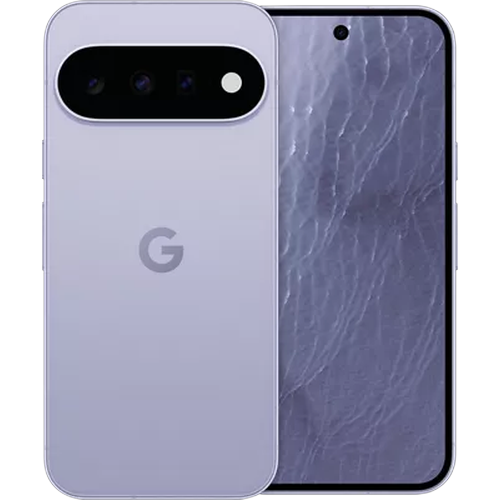
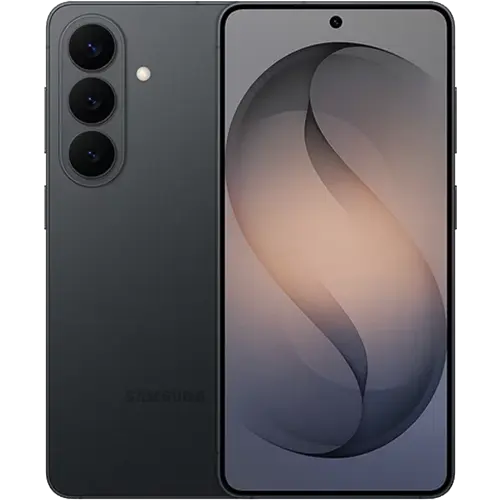
Samsung
Pixel 11
Galaxy S26
Ranked #37 of 61
Ranked #21 of 61
Overall
Overall
The Pixel 11 and Galaxy S26 are the base models of the two biggest Android flagship lines, and they're priced within a dollar of each other at $899. Both are the compact, non-Pro option: the phone for someone who wants the core flagship experience without paying for a larger screen or an extra telephoto lens. Google's pitch leans on its own Tensor silicon and computational photography; Samsung's leans on raw Snapdragon performance and a more mature all-around package. If you're shopping at this price in the Android world, these two are almost certainly both on your list.
The short version: the Galaxy S26 is the stronger phone in more places. It has the faster chip by a wide margin, the better overall camera system, longer battery runtimes, and better speakers, all in a lighter and thinner body. The Pixel 11 answers with a clearly better display, faster charging both wired and wireless, and one of the better microphone setups we've tested. Neither phone sweeps the board, but the areas where each one wins are different enough that your priorities will decide this quickly.
Design
| Google Pixel 11 | Samsung Galaxy S26 | |
|---|---|---|
| Specifications | ||
| Dimensions | 152.8 x 72 x 8.6 mm | 149.6 x 71.7 x 7.2 mm |
| Weight | 197g | 167g |
| IP Rating | IP68 | IP68 |
| Frame | Aluminum | Aluminum |
| Front | Gorilla Glass Victus 2 | Gorilla Glass Victus 2 |
| Back | Gorilla Glass Victus 2 | Gorilla Glass Victus 2 |
| Screen-to-body ratio | 86.5% | 90.8% |
On paper, these are very similar builds. Both use an aluminum frame with Gorilla Glass Victus 2 on the front and back, both carry an IP68 rating, meaning they're dust-sealed and submersible to the rated depth, and both have a 6.3-inch screen. The differences are in proportions. The Galaxy S26 measures 149.6 x 71.7 x 7.2mm at 167g; the Pixel 11 is 152.8 x 72 x 8.6mm at 197g. That's a 30g gap and 1.4mm of thickness between two phones with the same screen size, which you'd feel in a pocket if not necessarily in daily handling.
The S26 also fits its display more efficiently, with a 90.8% screen-to-body ratio against the Pixel's 86.5%. In practice that means visibly thinner bezels on the Samsung. Aspect ratios are close: 19.5:9 on the S26, a slightly taller 20:9 on the Pixel.
Bandicoot Lab doesn't formally test design or durability, so this section describes what's on paper.
Display
| Google Pixel 11 | Samsung Galaxy S26 | |
|---|---|---|
756/ 881 | 512/ 881 | |
This is the Pixel 11's clearest win. Both phones run 6.3-inch OLED panels at 1080p-class resolution, 422 pixels per inch on the Pixel and 411 PPI on the S26, and both top out at 120Hz. The S26's LTPO panel can drop to 1Hz for always-on content where the Pixel's floor is 60Hz, which gives Samsung a small efficiency edge. Everything else favors Google.
Manual brightness is the headline gap. The Pixel reaches 1,379 nits with the slider maxed; the S26 manages 641. Outdoors on a sunny day with auto-brightness off, that's the difference between comfortable and squinting. HDR peaks are close, 2,943 nits on the Pixel versus 2,791 on the S26, and both panels hold their output almost perfectly over a 30-minute stress run. The Pixel sustains its HDR brightness better across different window sizes, keeping 67.5% of peak against the Samsung's 51.7%. Large bright scenes dim more on the S26.
Color accuracy isn't close either. The Pixel's most accurate mode is effectively reference-grade; errors are below what most people can perceive. The S26's best mode drifts moderately, enough that a side-by-side against an accurate screen would show it. Tone mapping tells a more mixed story: the Samsung tracks the HDR reference curve closely but pushes highlights brighter than mastered and starts clipping at around 75% signal level, while the Pixel tracks less precisely but preserves highlight gradation almost to the very top. Touch latency is 20.2ms on the Pixel and 21.8ms on the S26, a gap nobody will feel.
Performance
| Google Pixel 11 | Samsung Galaxy S26 | |
|---|---|---|
459/ 1012 | 833/ 1012 | |
The Pixel 11 runs Google's Tensor G6 with 12GB of RAM; the Galaxy S26 runs Qualcomm's Snapdragon 8 Elite Gen 5, also with 12GB. This is not a competitive matchup. The S26 scores 3,709 single-core and 11,232 multi-core in GeekBench 6 against the Pixel's 2,658 and 5,650. The multi-core result is nearly double, and browser performance follows the same pattern, 36.7 versus 25.3 in Speedometer.
GPU results need a bit more reading. The S26's Wild Life Extreme peak of 7,740 is more than twice the Pixel's 3,333, but it only holds 45.8% of that under sustained load, where the Pixel holds 73.6%. Even fully throttled, the Snapdragon is still delivering more than the Tensor's peak. The S26 gets hot and slows down, and it's still the faster gaming phone.
In daily use, the Pixel 11 is fine. Scrolling, apps, and photography all feel responsive. The S26 has substantially more headroom for gaming and heavy multitasking, and the gap is large enough that it will matter over a multi-year ownership window.
Camera
| Google Pixel 11 | Samsung Galaxy S26 | |
|---|---|---|
414/ 587 | 497/ 587 | |
The Galaxy S26 has the stronger camera system overall. Across its main, ultrawide, and telephoto lenses, the S26 holds shadow detail and highlight information in high-contrast scenes where the Pixel 11 clips highlights and flattens out. That's an unusual result given the Pixel line's reputation, and it's the single biggest quality difference between these two phones.
Sharpness is more of a trade. The Pixel's main camera resolves more detail at 1x, and its front camera is clearly sharper. The S26's ultrawide is the sharpest lens on either phone, holding its detail even in dim light where the Pixel's ultrawide falls apart. At the long end, both phones offer 30x digital zoom, and both get rough out there, though the Pixel's 5x telephoto gives it a better starting point past 10x. Deep-zoom shots from the S26, working from a 3x lens, degrade faster. Neither phone is a match for camera-focused rivals at extreme zoom; treat 30x as an emergency option on both.
On color character: the Pixel leans slightly warm across lighting conditions with a modest saturation push, a consistent and pleasant look. The S26 is more neutral to cool, punchy in bright light, and it desaturates noticeably in very dim scenes. Both phones push skin tones visibly away from reference in bright light.
Main
| Google Pixel 11 (Main) | Samsung Galaxy S26 (Main) | |
|---|---|---|
427/ 722 | 594/ 722 | |
The Pixel 11's 48-megapixel f/1.7 main camera out-resolves the S26's 50-megapixel f/1.8 at 1x in every lighting condition, and the gap holds in the dark. Each main camera also has to cover the zoom range below its telephoto, and that's where the picture shifts. The S26 only needs to stretch to 3x before its telephoto takes over and crops cleanly within that range. The Pixel has to carry everything from 1x to 5x, and detail softens through the middle of that stretch. If you shoot a lot at 2x and 3x, the two end up closer than the 1x numbers suggest.
Dynamic range is where the S26 pulls decisively ahead. Its main camera retains highlight and shadow detail through high-contrast scenes with clean, consistent tonal gradation. The Pixel clips highlights earlier and shows some tonal inconsistency in its shadows, so backlit scenes and bright skies come out flatter. Color-wise, both phones overdo skin tones in bright light, with the S26 marginally worse there; both clean up as light dims. Hue accuracy is good on both, with the S26 slightly more accurate in daylight and slightly less in warm, dim light. That degradation on the Samsung reads as a sensor limitation rather than a white balance miss, since its overall cast stays neutral as the light warms.
Ultrawide
| Google Pixel 11 (Ultrawide) | Samsung Galaxy S26 (Ultrawide) | |
|---|---|---|
405/ 722 | 604/ 722 | |
The S26's 12-megapixel ultrawide is the better lens by a comfortable margin. It's sharper than the Pixel's 13-megapixel ultrawide in bright light and dramatically sharper in the dark, where the Pixel's resolution drops by more than a third while the Samsung barely moves. It also keeps most of the main camera's dynamic range advantage. On both phones the ultrawide is actually sharper than the main camera in good light, which is more than you'd expect at this tier.
Color is the S26 ultrawide's weak spot: it pushes saturation hard in bright light and renders skin tones well off reference there. The Pixel's ultrawide has its own problem in warm, dim light, where the image picks up a visible reddish cast. That's a white balance correction issue rather than a sensor one, and it's the Pixel ultrawide's worst-case scenario.
Telephoto
| Google Pixel 11 (Telephoto) | Samsung Galaxy S26 (Telephoto) | |
|---|---|---|
488/ 722 | 568/ 722 | |
Different philosophies here: the Pixel 11 carries a 10.8-megapixel 5x telephoto at 112mm, the S26 a 10-megapixel 3x at 67mm. The Samsung's lens is sharper at its native length and holds that advantage in mid and low light, plus it has outstanding dynamic range. It was the only lens in this matchup that didn't clip highlights in our testing, with perfectly consistent tonal gradation. The Pixel's telephoto is softer but reaches further, so at 10x and beyond it's cropping less aggressively and produces the more usable long-zoom shot.
The Pixel's telephoto is also its best lens for color, with accurate skin tones in mid and low light, and it's noticeably steadier handheld than the Samsung's. Blur from hand shake shows up less in Pixel telephoto shots, which matters more at 112mm than anywhere else in the system.
Front
| Google Pixel 11 (Front) | Samsung Galaxy S26 (Front) | |
|---|---|---|
442/ 722 | 398/ 722 | |
The Pixel's 10.5-megapixel front camera is the sharper of the two by a wide margin, and it stays sharp as light drops, where the S26's 12-megapixel unit softens considerably. The Pixel also captures meaningfully more dynamic range in selfies, so backlit shots hold up better.
The S26 answers on two fronts. Its selfie skin tones are much closer to accurate in bright light, where the Pixel pushes faces visibly off reference. And its front camera video is far steadier handheld; the Pixel's selfie stabilization is weak. The Samsung's front camera does pick up a reddish cast in warm, dim light, a white balance issue that gets worse as light drops. Pick based on use: detail and dynamic range favor the Pixel, color and video favor the Samsung.
Battery
| Google Pixel 11 | Samsung Galaxy S26 | |
|---|---|---|
528/ 836 | 579/ 836 | |
The Pixel 11 has the bigger battery at 4,985mAh against the S26's 4,300mAh, and it still loses the headline test. The S26 ran 30.25 hours of video playback before dying; the Pixel managed 25.6. Both are strong results. Either phone will get through two days of typical use, but the Samsung is squeezing considerably more runtime out of considerably less capacity.
The drain tests complicate the story. Over five hours of web browsing the Pixel lost 21% to the Samsung's 24%, and during the 20-loop gaming stress test the Pixel dropped 20% against the Samsung's 27%. Under CPU and GPU load, the Pixel's larger cell shows up. Overnight standby is a wash: 3% versus 2% over eight hours. If your days are mostly video and mixed use, the S26 lasts longer. If you game heavily, the Pixel's advantage under load counts for something.
Charging
| Google Pixel 11 | Samsung Galaxy S26 | |
|---|---|---|
354/ 837 | 263/ 837 | |
The Pixel 11 charges at 30W wired and the S26 at 25W, but the wired results are effectively tied. At 10 minutes the Samsung is at 21% to the Pixel's 19%; at 30 minutes it's 58% to 56%. The S26's smaller battery is doing the work there. Neither phone should be chosen over the other based on wired charging.
Wireless is a different matter. The Pixel supports 25W wireless with magnetic alignment, snapping onto Qi2 and MagSafe-style chargers, and reaches 40% in 30 minutes on a pad. The S26 tops out at 15W wireless with no magnets and hits 29% in the same window. If wireless charging is part of your routine, the Pixel is both faster and easier to align.
Speaker
| Google Pixel 11 | Samsung Galaxy S26 | |
|---|---|---|
735/ 897 | 817/ 897 | |
The two phones trade different strengths here. The Pixel 11 is louder, hitting 76.6 dBA at max volume to the S26's 72.5, with crisp high-end clarity. It distorts more as you push it, averaging 6.12% total harmonic distortion against the Samsung's 3.44%, and its frequency response is noticeably more uneven.
The S26 is the more pleasant listen. Its bass is fuller, its output is cleaner at any volume, and its response stays balanced across the range, extending further into the treble. Neither phone produces real low-end, which is true of nearly every phone speaker, but the Samsung gets closer. The Pixel's advantage is volume for a podcast in a noisy kitchen; the Samsung's is everything else.
Microphone
| Google Pixel 11 | Samsung Galaxy S26 | |
|---|---|---|
862/ 1220 | 739/ 1220 |
Both phones record above-average audio, and the Pixel 11 is the better of the two. It captures a flatter, more natural frequency response, and it sits near the top of everything we've tested. The S26 is still a strong performer; voice memos and video audio sound clean on both. If you record a lot of video or interviews, the Pixel has the edge.
Other
| Google Pixel 11 | Samsung Galaxy S26 | |
|---|---|---|
| Biometrics | 481/ 1181 | 464/ 1181 |
| Data Transfer | 318/ 943 | 736/ 943 |
| Specifications | ||
| Biometric type | Fingerprint | Fingerprint |
| Ports | USB-C 3.2 | USB-C 3.2 |
| Storage | 256GB, 512GB | 256GB, 512GB |
Both phones use ultrasonic fingerprint sensors, and they unlock in a dead heat: 218ms average on the Pixel 11, 226ms on the S26. Neither offers hardware-based face unlock, so secure authentication is fingerprint-only on both.
Storage is identical on paper, with 256GB and 512GB options and USB-C 3.2 on both. In practice the Samsung's storage is much faster, reading at 335 MB/s and writing at 271 MB/s against the Pixel's 135 and 137. You'll notice that when transferring large video files or installing big games. It's an odd gap given the matching port spec, and there's no real reason for the Pixel's numbers to be that low.
Conclusion
The Galaxy S26 wins more categories, and some of them by a lot. It has nearly double the multi-core CPU performance, a stronger camera system anchored by much better dynamic range, longer video runtimes from a smaller battery, cleaner speakers, faster storage, and a lighter, thinner body with slimmer bezels. For someone who wants the most capable all-around phone at $899, it's the safer pick, and the performance gap in particular will age well.
The Pixel 11's case rests on three things, and they're not small. Its display is better in almost every way that matters: twice the manual brightness, reference-grade color accuracy, and steadier HDR output. Its charging is more practical, with faster wireless speeds and Qi2 magnetic alignment that the Samsung doesn't have. And its microphones are among the best we've tested. It also holds up better under sustained gaming load and takes the sharper selfie.
If you live on your screen outdoors, charge wirelessly, or record a lot of audio, the Pixel 11 serves those habits better than the S26 does. For most other people, the Samsung's advantages in speed, camera, and battery life are the ones you'll run into daily.
FAQ
Does the Pixel 11 or Galaxy S26 have the better camera?
The Galaxy S26 holds highlight and shadow detail better in high-contrast scenes across its main, ultrawide, and telephoto lenses. The Pixel 11 clips highlights earlier, so backlit scenes and bright skies come out flatter. The Pixel's main camera resolves more detail at 1x, its front camera is sharper, and its 5x telephoto gives a better starting point past 10x. For general shooting the S26 is the safer pick.
Which has better battery life, the Pixel 11 or the Galaxy S26?
The Galaxy S26 lasted 30.25 hours in video playback against 25.6 hours for the Pixel 11, despite a smaller 4,300mAh battery versus the Pixel's 4,985mAh. Under load the Pixel does better: it lost 20% in the gaming stress test to the S26's 27%, and 21% versus 24% over five hours of web browsing. Video and mixed use favor the S26, and heavy gaming favors the Pixel.
Is the Galaxy S26 or Pixel 11 better for gaming?
The Galaxy S26 is the faster gaming phone. Its Snapdragon 8 Elite Gen 5 peaks at 7,740 in Wild Life Extreme against 3,333 for the Pixel's Tensor G6. The S26 throttles harder, holding 45.8% of its peak under sustained load versus 73.6% for the Pixel, but even throttled it still outpaces the Pixel's peak. The Pixel drains less battery during long gaming sessions.
Does the Pixel 11 or Galaxy S26 charge faster?
Wired charging is effectively tied. The S26 reaches 21% at 10 minutes and 58% at 30 minutes, against 19% and 56% for the Pixel 11. Wireless is where the Pixel wins: it supports 25W magnetic charging and reaches 40% in 30 minutes, while the S26 is limited to 15W without magnets and reaches 29%.
Which screen is better in sunlight, the Pixel 11 or the Galaxy S26?
The Pixel 11 is easier to read outdoors. With the brightness slider maxed it reaches 1,379 nits versus 641 on the Galaxy S26. HDR peak brightness is close, at 2,943 nits against 2,791. The Pixel's best color mode is also much closer to reference than the S26's.
Is the Galaxy S26 lighter and smaller than the Pixel 11?
Yes. Both have 6.3-inch screens, but the Galaxy S26 is 167g and 7.2mm thick, while the Pixel 11 is 197g and 8.6mm thick. The S26 also has a higher screen-to-body ratio, at 90.8% versus 86.5%, so its bezels are visibly thinner. Both have an aluminum frame and an IP68 rating.
Related
Pixel 11
Samsung
Galaxy S26

Samsung
Galaxy S26 Ultra
Samsung
Galaxy S26+
Samsung
Galaxy Z Fold 8 Ultra
Samsung
Galaxy Z Fold 8
Pixel 11 Pro XL
Samsung
Galaxy Z Flip 8
Pixel 11 Pro
Pixel 11 Pro Fold
Pixel 10a
Google Pixel 11 vs Google Pixel 11 Pro