OnePlus 15 vs Xiaomi 17
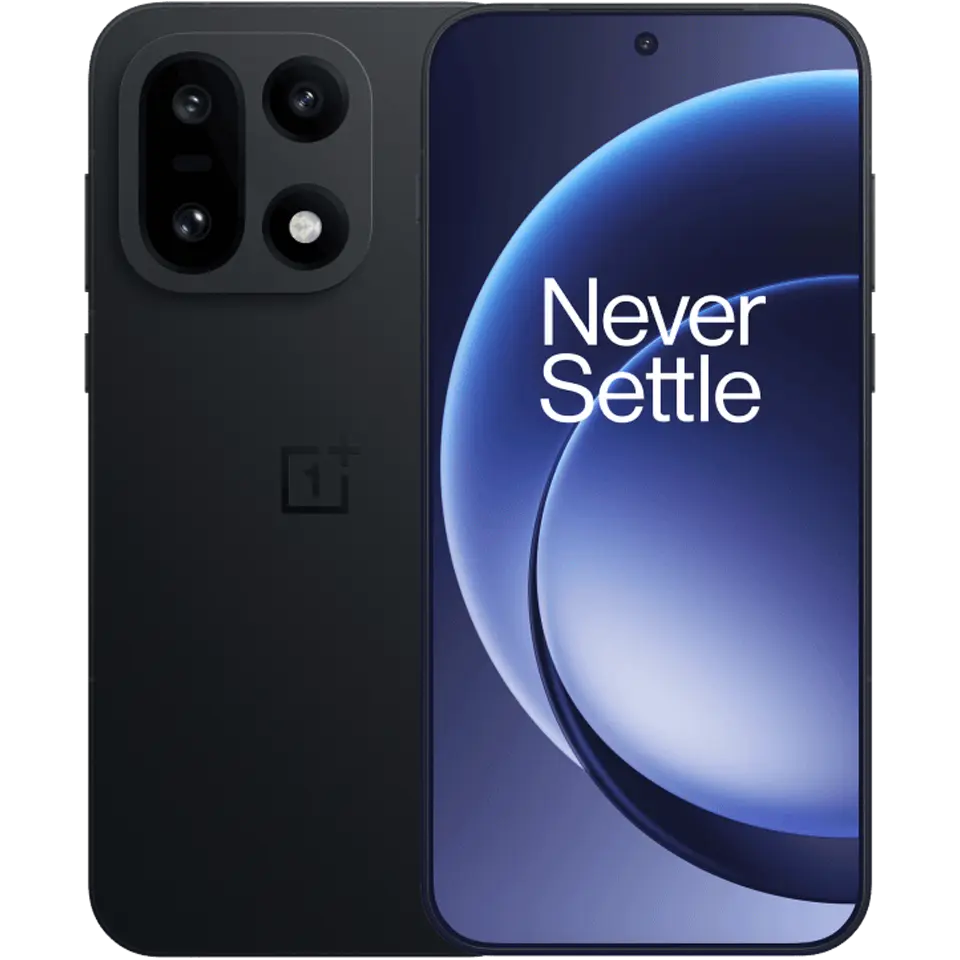
OnePlus
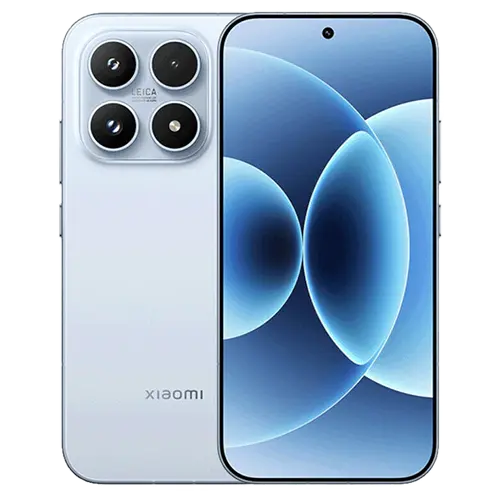
Xiaomi
15
17
Ranked #8 of 60
Ranked #15 of 60
Overall
Overall
The OnePlus 15 and Xiaomi 17 are both flagship Android phones powered by the same processor, aimed at buyers who want top-tier performance without stepping up to the ultra-premium tier. The OnePlus 15 starts at $899.99, a hundred dollars less than the Xiaomi 17's $999 entry point. The two differ meaningfully in size and philosophy though. The OnePlus 15 is a big phone with a big battery and aggressive charging. The Xiaomi 17 is more compact, built around a smaller display and lighter body.
In broad terms, the OnePlus 15 is the better pick for battery life and charging speed. It lasts significantly longer on a charge and refills faster. The Xiaomi 17 pulls ahead on display quality, speaker performance, camera color accuracy, and data transfer speeds. Performance is close, as you'd expect from identical silicon, though the OnePlus 15 has an edge in raw GPU output while the Xiaomi 17 is quicker in browser tasks.
Here’s how the OnePlus 15 and Xiaomi 17 compared in our testing.
Design
| OnePlus 15 | Xiaomi 17 | |
|---|---|---|
| Specifications | ||
| Dimensions | 161.4 x 76.7 x 8.1 mm | 151.1 x 71.8 x 8.1 mm |
| Weight | 211g | 191g |
| IP Rating | IP68/IP69K | IP68 |
| Frame | Aluminum | Aluminum |
| Front | Gorilla Glass Victus 2 | Xiaomi Shield Glass |
| Back | Gorilla Glass 7i / Crystal Shield Glass / Glass fiber | Glass |
| Screen-to-body ratio | 90.8% | 89.5% |
The OnePlus 15 is the larger phone by a wide margin, measuring 161.4 x 76.7 x 8.1 mm and 211g, compared to the Xiaomi 17's 151.1 x 71.8 x 8.1 mm and 191g. Both share the same 8.1 mm thickness, but the Xiaomi 17 is about a centimeter shorter and nearly 5 mm narrower. That 20g weight difference adds up. The OnePlus 15 weighs about as much as a billiard ball; the Xiaomi 17 is noticeably lighter in a pocket.
Both phones use aluminum frames. The OnePlus 15 uses Gorilla Glass Victus 2 on the front and offers several back material options including Gorilla Glass 7i, Crystal Shield Glass, and glass fiber depending on the variant. The Xiaomi 17 pairs Xiaomi Shield Glass on the front with a standard glass back. Screen-to-body ratios are close: 90.8% for the OnePlus 15 versus 89.5% for the Xiaomi 17, which translates to slightly thinner bezels on the OnePlus, but not noticeably so. Both share a 19.6:9 aspect ratio.
The OnePlus 15 carries an IP68/IP69K rating, meaning it's rated for submersion and high-pressure water jets. The Xiaomi 17 has a standard IP68 rating, covering submersion but not pressurized water. Both will survive a dunk, but the OnePlus 15 is rated for harsher conditions on paper.
Bandicoot Lab doesn't formally test design or durability.
Display
| OnePlus 15 | Xiaomi 17 | |
|---|---|---|
574/ 881 | 680/ 881 | |
The two displays differ in size and capability. The OnePlus 15 uses a 6.78-inch LTPO AMOLED running at 1272 x 2772 resolution (450 PPI) with a 1–165Hz adaptive refresh rate. The Xiaomi 17 has a smaller 6.3-inch LTPO AMOLED at 1220 x 2656 (460 PPI) with a 1–120Hz range. Pixel density is close enough that you won't see a difference in sharpness at normal viewing distances. The OnePlus 15's higher refresh ceiling of 165Hz versus 120Hz matters mostly for gaming. For scrolling and general use, both are smooth.
Brightness diverges sharply, though it depends what you measure. For manual brightness, which is what you get outdoors with auto brightness disabled, the OnePlus 15 reaches 798 nits and the Xiaomi 17 hits 632 nits. The OnePlus 15 will be easier to read in direct sunlight. For peak auto mode brightness, the Xiaomi 17 jumps to 3,583 nits versus the OnePlus 15's 1,958 nits. Small bright elements in HDR video, like specular highlights or a candle flame, will pop harder on the Xiaomi. That brightness does vary dramatically by window size though — the OnePlus 15 retains 99.5% of its brightness regardless of window size, while the Xiaomi 17 drops to 55.6%.
Color accuracy is better on the Xiaomi 17. In its best calibrated mode, colors stay very close to reference with only minor drift. The OnePlus 15's best mode shows moderate color deviation; you'll notice it most in neutral grays and skin tones, which can skew slightly from their intended targets. Both cover essentially 100% of the sRGB gamut, and both reach about 75% of Display P3 in their most accurate modes.
Touch latency is 15.5ms on the OnePlus 15 and 12.2ms on the Xiaomi 17. A 3.3ms gap is small enough that most people won't feel it in daily use or even in fast-paced games.
Performance
| OnePlus 15 | Xiaomi 17 | |
|---|---|---|
833/ 1012 | 811/ 1012 | |
Both phones run the Qualcomm Snapdragon 8 Elite Gen 5. The OnePlus 15 tested here has 16GB of RAM, while the Xiaomi 17 has 12GB, though both offer 12GB and 16GB configurations.
CPU performance is close. The OnePlus 15 scored 3,606 single-core and 11,442 multi-core in GeekBench 6. The Xiaomi 17 scored 3,612 single-core and 10,650 multi-core. Single-core is essentially identical. The OnePlus 15's multi-core advantage of about 7% may come partly from its higher RAM configuration, but either way it's a gap you'd struggle to notice outside of heavy multitasking or export-heavy workflows.
GPU results split in an interesting way. The OnePlus 15 posted a higher peak in Wild Life Extreme at 7,160 versus 6,333, and in Solar Bay at 13,230 versus 10,704. Raw graphical throughput is clearly higher on the OnePlus. Sustained performance is closer though — the OnePlus 15 held 63.7% stability in Wild Life Extreme and 60.6% in Solar Bay, while the Xiaomi 17 managed 66.8% and 68.1% respectively. The Xiaomi 17 throttles less aggressively but starts from a lower peak. The OnePlus 15 will deliver higher frame rates in demanding games, though it runs hotter under prolonged load.
Browser performance goes to the Xiaomi 17 with a Speedometer score of 23 versus 18.1. That's a meaningful gap. Web-heavy workflows, complex pages, and JavaScript-heavy apps should feel snappier on the Xiaomi.
Camera
| OnePlus 15 (Overall) | Xiaomi 17 (Overall) | |
|---|---|---|
| Specifications | ||
| Main | 50MP, f/1.8, 24mm, 1/1.56" | 50MP, f/1.7, 23mm, 1/1.31" |
| Ultrawide | 50MP, f/2, 16mm, 1/2.88" | 50MP, f/2.4, 17mm, 1/2.76" |
| Telephoto | 50MP, f/2.8, 80mm, 1/2.76" | 50MP, f/2, 60mm, 1/2.76" |
| Front | 32MP, f/2.4, 21mm, 1/2.74" | 50MP, f/2.2, 21mm, 1/2.88" |
The OnePlus 15 and Xiaomi 17 both carry triple 50-megapixel rear camera systems with a front camera, but the hardware differs in meaningful ways. The OnePlus 15's main sensor is a 1/1.56-inch unit at f/1.8, while the Xiaomi 17 uses a larger 1/1.31-inch sensor at f/1.7. The Xiaomi's larger sensor should collect more light, which generally helps in low-light shooting. Telephoto focal lengths differ too. The OnePlus 15 offers a 3.5x optical zoom, while the Xiaomi 17 provides 3x. The OnePlus 15 pushes digital zoom all the way to 100x, while the Xiaomi 17 tops out at 60x.
Overall camera scores are better on the Xiaomi 17, driven primarily by much better color accuracy across all lenses and stronger shadow and highlight retention on the main sensor. The OnePlus 15's strength is sharpness on certain lenses, particularly the main camera in bright light and the front camera. Deep zoom favors the OnePlus 15 as well, though neither phone produces great results past about 30x.
At extreme zoom levels, both phones lose detail quickly. The OnePlus 15 holds usable sharpness longer, particularly between 60x and 90x where it still resolves some detail. Past 100x, results are soft on both. Neither phone is a substitute for a proper telephoto in these ranges, but the OnePlus 15 gives you more reach before the image falls apart.
Main
| OnePlus 15 (Main) | Xiaomi 17 (Main) | |
|---|---|---|
441/ 722 | 569/ 722 | |
The OnePlus 15's main camera resolves high detail in bright light, dropping to moderate levels in mid and low light. The Xiaomi 17's main camera is less sharp in bright conditions but holds its sharpness more consistently as light drops. In dim scenes, the two are close, with the OnePlus 15 slightly ahead. The OnePlus 15 trades peak sharpness for less consistency, while the Xiaomi 17 maintains a more even performance across conditions.
Color is where the two diverge most. The Xiaomi 17's main camera produces a vivid, slightly saturated look across all lighting. Colors are punched up, but hue accuracy stays well controlled in bright and mid light, with only moderate drift in dark scenes. Skin tones are accurate in indoor and low light; in bright light, faces drift further from reference, which is unusual since bright conditions are typically easier for cameras to handle. The OnePlus 15 takes a different approach: saturation is close to neutral in bright light but the processing pushes a warm, yellow-toned cast across lighting conditions. Hue accuracy degrades noticeably as light gets dimmer, and the color shifts point to a white balance correction issue. In dark scenes, colors lean strongly warm and pink, suggesting the processing overcompensates for warm ambient light. Skin tones on the OnePlus 15 show large shifts from reference across all lighting conditions.
The Xiaomi 17's main camera retains more detail in both shadows and highlights in high-contrast scenes, with wider tonal separation. The OnePlus 15 clips highlights earlier and produces a more compressed look in challenging lighting.
Ultrawide
| OnePlus 15 (Ultrawide) | Xiaomi 17 (Ultrawide) | |
|---|---|---|
441/ 722 | 605/ 722 | |
The Xiaomi 17's ultrawide is a 50-megapixel f/2.4 lens at 0.7x, while the OnePlus 15 has a 50-megapixel f/2 at 0.5x, giving it a slightly wider field of view. Sharpness strongly favors the Xiaomi 17 here — it's high in bright light, stays good in mid light, and holds up reasonably in dark conditions. The OnePlus 15's ultrawide is moderate across all three lighting levels and doesn't vary much, but it sits well below the Xiaomi across the board. The Xiaomi 17's ultrawide is sharp enough to be genuinely useful for landscape and architecture work.
Color on the Xiaomi 17's ultrawide follows a similar pattern to its main camera — slightly vivid overall, with good hue accuracy in mid light that loosens somewhat in dark scenes. The yellow-warm drift that appears in dark conditions looks like a white balance overcorrection. The OnePlus 15's ultrawide shows increasing hue errors as light drops, with large warm and pink shifts in dark scenes. The pattern mirrors its main camera, pointing to a system-wide white balance tuning issue in warm lighting. Skin tones on both phones drift in bright light; the Xiaomi 17 is closer to accurate in mid and low light.
Both ultrawides handle high-contrast scenes reasonably well, with similar tonal performance.
Telephoto
| OnePlus 15 (Telephoto) | Xiaomi 17 (Telephoto) | |
|---|---|---|
446/ 722 | 499/ 722 | |
The OnePlus 15's telephoto reaches 3.5x (80mm) at f/2.8 with a 1/2.76-inch sensor. The Xiaomi 17's telephoto is 3x (60mm) at f/2 with the same sensor size but a brighter aperture. The OnePlus 15 gives you more reach, but the Xiaomi 17 collects more light per shot.
Sharpness goes to the Xiaomi 17's telephoto, which delivers good detail in bright light and maintains it fairly well into mid and dark scenes. The OnePlus 15's zoom-range performance shows solid results in the 6x–10x range before trailing off. At the 3x native focal length, the Xiaomi 17 is crisper.
Color accuracy is the widest gap across any lens in this comparison. The Xiaomi 17's telephoto keeps hue errors low in bright light and moderate in mid and dark scenes. Skin tones are close to accurate across all conditions. The OnePlus 15's telephoto pushes saturation higher in bright light and shows substantial skin tone shifts, particularly in bright and mid-light conditions. In dark scenes, the OnePlus 15's telephoto pulls back on saturation and skin tone errors decrease, but hue accuracy loosens.
Both telephoto lenses perform similarly in high-contrast scenes.
Video stabilization is worth noting here. The OnePlus 15's telephoto produces moderately shaky handheld footage. The Xiaomi 17's telephoto is considerably less stable, with noticeably more residual shake. If you plan to shoot handheld telephoto video, neither phone is great, but the OnePlus 15 is the better option.
Front
| OnePlus 15 (Front) | Xiaomi 17 (Front) | |
|---|---|---|
421/ 722 | 429/ 722 | |
The OnePlus 15 has a 32-megapixel f/2.4 front camera and the Xiaomi 17 uses a 50-megapixel f/2.2 sensor at the same 21mm focal length. The Xiaomi's brighter aperture and higher resolution don't automatically translate to better results.
In bright light, the OnePlus 15's front camera resolves more detail. As light drops, the gap narrows, and in dark conditions the Xiaomi 17 actually holds up slightly better. Both maintain reasonable sharpness across conditions, though neither matches what the best front cameras can do.
Color accuracy is stronger on the Xiaomi 17's front camera. Hue accuracy stays consistent across all three lighting levels, which is unusual and suggests the sensor and white balance both handle changing light well. Skin tones drift moderately from reference across conditions, but in a controlled, predictable way. The OnePlus 15's front camera has good hue accuracy in bright and mid light but degrades significantly in dark conditions, again showing the warm-pink shift seen across its rear cameras. Skin tones on the OnePlus 15's front camera are closest to accurate in mid light, where the processing hits a good balance.
Both front cameras handle selfie-typical contrast levels adequately.
Front camera video stabilization is poor on both phones. The Xiaomi 17 is worse, with more residual movement visible in handheld footage. Neither is suitable for walking-and-talking vlog-style shooting without a gimbal.
Battery
| OnePlus 15 | Xiaomi 17 | |
|---|---|---|
780/ 836 | 513/ 836 | |
The OnePlus 15 carries a 7,300mAh battery, while the Xiaomi 17 has a 6,330mAh cell. That's a significant capacity gap, and the test results reflect it.
In video playback, the OnePlus 15 lasted 46.1 hours at 200 nits. The Xiaomi 17 lasted 26.3 hours. The OnePlus 15 could play video continuously for nearly two full days. Most people won't watch that much, but it translates to comfortable multi-day use for typical mixed workloads. The Xiaomi 17's result is fine by normal standards but sits almost 20 hours behind.
Web browsing tells a similar story. After five hours of continuous browsing, the OnePlus 15 drained 16% of its battery versus 26% for the Xiaomi 17. That projects to roughly 31 hours of browsing on the OnePlus versus around 19 hours on the Xiaomi. Gaming drain over an hour is closer: 23% on the OnePlus 15 versus 25% on the Xiaomi 17. The OnePlus 15 still comes out ahead, but the gap shrinks under heavy GPU load. Standby drain is 4% over eight hours on the OnePlus 15 versus 7% on the Xiaomi 17. This is something that can change with updates, as background processes are optimized, but as tested, the OnePlus will drain less overnight.
The OnePlus 15 is one of the longest-lasting phones we’ve tested. The Xiaomi 17 is average. If battery life ranks high in your priorities, the OnePlus 15 is the clear pick.
Charging
| OnePlus 15 | Xiaomi 17 | |
|---|---|---|
700/ 837 | 415/ 837 | |
The OnePlus 15 supports 120W wired and 50W wireless charging. The Xiaomi 17 offers 100W wired and 50W wireless.
The wired charging gap is substantial. After 10 minutes, the OnePlus 15 reaches 37% versus 31% for the Xiaomi 17. After 30 minutes, the OnePlus 15 sits at 88% while the Xiaomi 17 reaches 74%. Given the OnePlus 15's larger battery, hitting higher percentages faster on a bigger cell is a strong result. A quick 10-minute charge on the OnePlus 15 gives you enough battery for a full day of light use.
Wireless charging splits differently. Both are rated at 50W, but the OnePlus 15 reaches 10% in 10 minutes and 28% in 30 minutes. The Xiaomi 17 manages only 4% in 10 minutes and 9% in 30 minutes, in our testing with Xiaomi’s official wireless charger. The Xiaomi 17's wireless charging is unusually slow for a 50W rating. If you rely on wireless charging overnight, either phone will be full by morning, but for quick wireless top-ups the OnePlus 15 is far more practical.
Speaker
| OnePlus 15 | Xiaomi 17 | |
|---|---|---|
669/ 897 | 845/ 897 | |
The OnePlus 15 gets louder, hitting 75 dBA versus the Xiaomi 17's 71 dBA. The Xiaomi 17 is the better speaker overall, and it's not particularly close.
The Xiaomi 17 produces much fuller bass, extending low enough to give music and video real depth. Its high-end is also slightly cleaner, and distortion is lower at 5.19% average THD compared to 7.87% on the OnePlus 15. The Xiaomi 17's frequency response is more even across the range, delivering a more balanced and natural sound. The OnePlus 15's speaker is more treble-forward with less bass presence, which gives it a thinner character. It gets loud, but the Xiaomi 17 sounds better at any volume.
Microphone
| OnePlus 15 | Xiaomi 17 | |
|---|---|---|
696/ 1220 | 467/ 1220 |
The OnePlus 15's microphone produces a more even frequency response, making voice recordings and calls sound more natural. The Xiaomi 17's microphone is below average, with more variation across frequencies that can make voices sound less consistent. For video recording and voice calls, the OnePlus 15 is the better pick.
Other
| OnePlus 15 | Xiaomi 17 | |
|---|---|---|
| Biometrics | 514/ 1181 | 646/ 1181 |
| Data Transfer | 622/ 943 | 762/ 943 |
| Specifications | ||
| Biometric type | Fingerprint | Fingerprint |
| Ports | USB-C 3.2 | USB-C 3.2 |
| Storage | 256GB, 512GB, 1TB | 256GB, 512GB, 1TB |
Both phones use ultrasonic fingerprint sensors. The Xiaomi 17 is faster at 163ms average unlock speed versus 204ms on the OnePlus 15. Both are quick enough that you won't be waiting, but the Xiaomi 17 feels more immediate. Neither phone has hardware-based face unlock.
Data transfer speeds are faster on the Xiaomi 17. It reached 323MB/s read and 341MB/s write versus 298MB/s read and 230MB/s write on the OnePlus 15. The write speed gap is especially large. If you regularly transfer large files to and from the phone, the Xiaomi 17 will save you time. Both phones use USB-C 3.2 ports and offer 256GB, 512GB, and 1TB storage configurations.
Conclusion
The OnePlus 15 is the endurance champion. Its 46-hour video playback time, low standby drain, and fast wired and wireless charging mean you can go longer between charges and recover faster when you do plug in. It also has an edge in GPU performance, a louder speaker, a sharper main camera in bright light, better microphone quality, and longer zoom reach. At $899.99, it costs $100 less than the Xiaomi 17.
The Xiaomi 17 wins on display quality with better color accuracy and dramatically higher HDR peak brightness, though it can't sustain those peaks over time. Its camera system produces more accurate colors across every lens and lighting condition, a major advantage if faithful reproduction matters to you. It has the better speaker despite being quieter, faster fingerprint unlocking, faster data transfer speeds, stronger browser performance, and a more compact, lighter body. The telephoto and ultrawide lenses are sharper than the OnePlus 15's equivalents.
If you value battery life, charging speed, and raw performance, the OnePlus 15 gives you more for less money. If you prioritize display quality, camera color accuracy, audio quality, and a more pocketable size, the Xiaomi 17 justifies its higher price.
Related
Xiaomi
17
OnePlus
15
Xiaomi
17 Ultra
Xiaomi
17T Pro

OnePlus
15R
Xiaomi
15T Pro
Best Phone Speakers
iPhone 17 Series vs Xiaomi 17 Series

Samsung Galaxy S26 Series vs Xiaomi 17 Series
How we test charging
Xiaomi 17 vs Honor Magic8 Pro
Samsung Galaxy S26 Ultra vs OnePlus 15