RedMagic 11 Air vs OnePlus 15
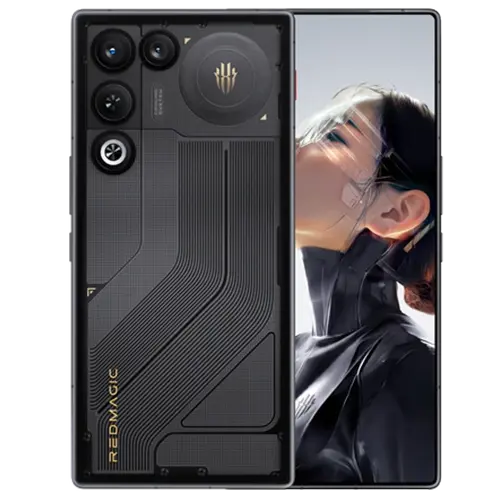
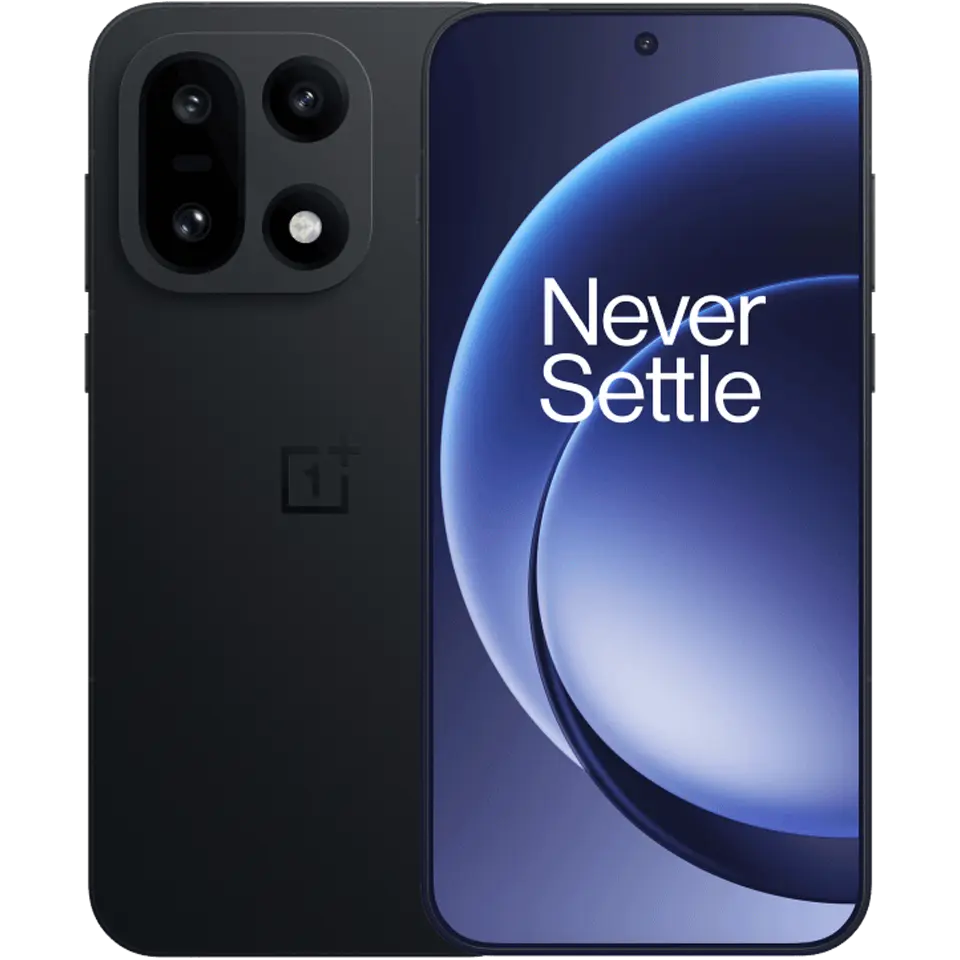
RedMagic
OnePlus
11 Air
15
Ranked #25 of 60
Ranked #8 of 60
Overall
Overall
The RedMagic 11 Air is a gaming-oriented phone sold at a midrange price. It's built around fast silicon and a high-refresh display, pitched at buyers who want flagship performance without flagship cost. The OnePlus 15 sits $370 higher and positions itself as a full-featured flagship: bigger battery, faster charging, a three-camera system with telephoto reach, and stronger water resistance. These two phones share more DNA than you'd expect given the price gap, but they target different buyers.
The OnePlus 15 is stronger in battery life, charging speed, camera versatility, and data transfer. It lasts significantly longer on a charge, charges far faster both wired and wirelessly, and carries a telephoto lens the RedMagic lacks entirely. The RedMagic 11 Air holds its own in raw GPU performance and actually edges ahead there, while costing substantially less. Its display gets closer to accurate color, and its main camera delivers better dynamic range. For most people evaluating overall capability, the OnePlus 15 covers more ground.
Here’s how the phones compared in our lab testing.
Design
| RedMagic 11 Air | OnePlus 15 | |
|---|---|---|
| Specifications | ||
| Dimensions | 163.8 x 76.5 x 8 mm | 161.4 x 76.7 x 8.1 mm |
| Weight | 207g | 211g |
| IP Rating | IP54 | IP68/IP69K |
| Frame | Aluminum | Aluminum |
| Front | Gorilla Glass 7i | Gorilla Glass Victus 2 |
| Back | Gorilla Glass 5 | Gorilla Glass 7i / Crystal Shield Glass / Glass fiber |
| Screen-to-body ratio | 90.7% | 90.8% |
The two phones are close in size. The RedMagic 11 Air measures 163.8 x 76.5 x 8mm and weighs 207g. The OnePlus 15 is slightly shorter at 161.4 x 76.7 x 8.1mm and a touch heavier at 211g. Both use aluminum frames. The RedMagic pairs Gorilla Glass 7i on the front with Gorilla Glass 5 on the back, while the OnePlus 15 uses Gorilla Glass Victus 2 up front with back panel options including Gorilla Glass 7i, Crystal Shield Glass, or glass fiber depending on the variant.
Water resistance is pretty different. The RedMagic 11 Air carries an IP54 rating: splash-resistant but not submersible. The OnePlus 15 is rated IP68/IP69K, meaning it can handle full submersion and high-pressure water jets. If you're around pools, rain, or just clumsy with drinks, that's a meaningful gap. Screen-to-body ratios are nearly identical at 90.7% and 90.8%, so bezel thickness is comparable.
Bandicoot Lab doesn't formally test design or durability, so design comparisons are based on specs alone.
Display
| RedMagic 11 Air | OnePlus 15 | |
|---|---|---|
550/ 881 | 574/ 881 | |
Both phones use AMOLED panels of similar size. The RedMagic 11 Air has a 6.85-inch display at 1216 x 2688 resolution (431 pixels per inch), while the OnePlus 15 runs a 6.78-inch panel at 1272 x 2772 (450 PPI). The OnePlus is slightly sharper, though the difference is marginal at normal viewing distances. Refresh rates diverge more meaningfully: the RedMagic goes from 60 to 144Hz, while the OnePlus uses an LTPO panel that ranges from 1 to 165Hz. The LTPO design lets the OnePlus drop to very low refresh rates during static content, saving power. The RedMagic's floor of 60Hz means it's always burning more energy when idle.
In manual brightness, the OnePlus 15 reaches 798 nits versus 665 nits on the RedMagic. The RedMagic dims lower at its minimum: 3.79 nits compared to 0.93 nits on the OnePlus, which is better for dark-room use. For HDR content, peak brightness is close: 1,896 nits on the RedMagic versus 1,958 nits on the OnePlus. The bigger difference is brightness stability across HDR window sizes. The OnePlus holds 91% of its peak across varying window sizes, while the RedMagic drops to 72.7%. The OnePlus maintains more consistent brightness whether you're watching a scene with small bright highlights or large bright areas. Both panels hold up well over sustained HDR playback: 96.6% for the RedMagic and 99.5% for the OnePlus over a 30-minute test.
Color accuracy is better on the RedMagic’s display. In its best display mode, colors stay closer to reference across the board. The OnePlus shows more visible drift from target colors, and its DCI-P3 gamut coverage is only 75.2% compared to 97.7% on the RedMagic. The OnePlus can't reproduce the full range of wide-gamut colors that HDR content and many apps use. Both panels cover sRGB effectively (99.8% and 100%).
For HDR tone mapping, both panels boost highlights above the mastered level, with the OnePlus pushing slightly harder. The OnePlus starts clipping HDR content earlier, around the 85% input level, while the RedMagic holds on a bit longer before clipping at 90%. Neither follows the HDR reference curve faithfully, but the RedMagic tracks it more closely. Touch latency is 11.1ms on the RedMagic and 15.5ms on the OnePlus. Both are responsive, and the difference isn’t perceptible.
Performance
| RedMagic 11 Air | OnePlus 15 | |
|---|---|---|
822/ 1012 | 833/ 1012 | |
The RedMagic 11 Air runs the Snapdragon 8 Elite, while the OnePlus 15 uses the newer Snapdragon 8 Elite Gen 5. Both are configured with 16GB of RAM in the units tested, with 12GB options available on each.
The generational chip difference shows up clearly in CPU benchmarks. The OnePlus 15 scores 3,606 single-core and 11,442 multi-core in GeekBench 6, compared to 3,147 and 9,961 on the RedMagic. That's roughly a 15% lead in both tests. Browser performance tells the same story — the OnePlus scores 18.1 in Speedometer versus 9.1 on the RedMagic, a gap that's wide enough to notice in heavy web apps and complex pages.
GPU results flip the picture. The RedMagic 11 Air posts a higher peak in Wild Life Extreme at 6,932 and maintains 79.5% stability across the stress test, thanks likely to its built-in fan. The OnePlus peaks at a higher 7,160 but drops to 63.7% stability. In Solar Bay, the pattern repeats — 12,053 peak with 78.9% stability on the RedMagic versus 13,230 peak with 60.6% stability on the OnePlus. The RedMagic's thermal management keeps the GPU running closer to its peak for longer, which matters in extended gaming sessions. You'll get more consistent frame rates from the RedMagic during long play sessions, even though the OnePlus has slightly higher burst performance.
Camera
| RedMagic 11 Air (Overall) | OnePlus 15 (Overall) | |
|---|---|---|
| Specifications | ||
| Main | 50MP, f/1.9, 23mm, 1/1.55" | 50MP, f/1.8, 24mm, 1/1.56" |
| Ultrawide | 8MP, f/2.2, 14mm, 1/4.0" | 50MP, f/2, 16mm, 1/2.88" |
| Telephoto | — | 50MP, f/2.8, 80mm, 1/2.76" |
| Front | 16MP, f/2, 1/2.77" | 32MP, f/2.4, 21mm, 1/2.74" |
The camera systems are structured differently. The OnePlus 15 carries three rear cameras, including a 50-megapixel f/1.8 main, a 50-megapixel f/2 ultrawide, and a 50-megapixel f/2.8 telephoto at 3.5x optical zoom, with digital zoom extending to 100x. The RedMagic 11 Air has a 50-megapixel f/1.9 main and an 8-megapixel f/2.2 ultrawide, with no telephoto and digital zoom capped at 10x. The OnePlus also has a higher-resolution 32-megapixel front camera versus 16-megapixel on the RedMagic.
Overall sharpness is where the OnePlus pulls ahead most decisively. Its main camera resolves considerably more detail in bright light and holds a meaningful lead in mid and low light too. The ultrawide gap is even wider: the OnePlus's 50-megapixel ultrawide sensor captures substantially more detail than the RedMagic's 8-megapixel unit. The front camera tells a similar story, with the OnePlus delivering noticeably sharper selfies in bright and mid-light conditions.
At deep zoom levels, the OnePlus is in a different league. With its dedicated telephoto and 100x digital zoom range, it resolves far more detail at distance than the RedMagic's purely digital crop from a main sensor, and the RedMagic limits digital zoom to 10x anyway.
Main
| RedMagic 11 Air (Main) | OnePlus 15 (Main) | |
|---|---|---|
460/ 722 | 441/ 722 | |
The OnePlus 15's main camera is sharper across all lighting conditions. The advantage is largest in bright light, where it resolves roughly twice the fine detail the RedMagic captures. In mid and low light, the OnePlus still leads, though the gap narrows. Both cameras maintain decent detail as light drops, but the RedMagic's output looks softer overall.
Dynamic range is the RedMagic's strength. It captures more usable range between shadows and highlights, keeping shadow detail visible while controlling bright areas. High-contrast scenes retain depth and separation. The OnePlus clips highlights similarly but recovers less shadow information, and occasional tonal inversions mean you can see slight banding in gradients. Both phones clip highlights in extreme backlit scenes, but the RedMagic holds onto more of the scene before that happens.
Color differences follow the pattern described above. The RedMagic's images look punchier and more saturated. The OnePlus looks more natural in good light but develops a warm-yellow cast as conditions get dimmer, with hue errors growing noticeably in low light. For social sharing where vivid color plays well, the RedMagic's look may actually be preferable despite being less accurate.
Ultrawide
| RedMagic 11 Air (Ultrawide) | OnePlus 15 (Ultrawide) | |
|---|---|---|
463/ 722 | 441/ 722 | |
The sensor gap here is stark. The OnePlus 15 uses a 50-megapixel ultrawide sensor that resolves much more detail than the RedMagic's 8-megapixel unit. Sharpness is high and consistent across lighting conditions on the OnePlus, and it comes much closer to matching its own main camera's output. The RedMagic's ultrawide is serviceable but visibly soft by comparison. It holds up better than you'd expect in low light, where the gap narrows slightly, but it's a fundamentally lower-tier sensor.
Dynamic range is substantially better on the OnePlus ultrawide. The RedMagic's ultrawide struggles with high-contrast scenes, losing shadow detail and showing tonal inversions that create visible artifacts in gradients. The OnePlus isn't immune to highlight clipping, but it renders a wider tonal range with fewer artifacts.
Color on the RedMagic ultrawide follows the same saturated character as its main camera, with moderate hue errors that grow as light dims. The OnePlus ultrawide shows bigger hue shifts in warmer, dimmer light. Like its main lens, the ultrawide develops a warm-yellow bias under indoor lighting that suggests incomplete white balance correction. Skin tones are closer to accurate on the OnePlus in mid and low light, but it also shows a growing warm cast.
Telephoto
| RedMagic 11 Air (Telephoto) | OnePlus 15 (Telephoto) | |
|---|---|---|
| — | 446/ 722 | |
The RedMagic 11 Air has no telephoto camera. Any zoom beyond its native ultrawide and main fields of view relies on digital crop, and at 10x the detail falls apart.
The OnePlus 15's 3.5x telephoto uses a 50-megapixel f/2.8 sensor at 80mm equivalent. It produces usable detail at its native magnification, and it's the only option between these two phones for any kind of distance shooting. Dynamic range is moderate, with highlight clipping in high-contrast scenes. Stabilization could be better; there's visible movement in handheld shots at longer focal lengths.
Color character on the telephoto leans warm with moderate saturation in bright light, pulling back to near-neutral or slightly muted as light drops. Hue accuracy is decent in bright and mid-light but degrades noticeably in low light, with a warm-magenta shift. Skin tones drift furthest from reference on this lens, particularly in bright light where they take on an oversaturated look.
If telephoto reach matters to you at all, the OnePlus is the only choice between the two.
Front
| RedMagic 11 Air (Front) | OnePlus 15 (Front) | |
|---|---|---|
480/ 722 | 421/ 722 | |
The OnePlus 15's 32-megapixel front camera resolves more detail than the RedMagic's 16-megapixel unit in bright light, and the gap is substantial. In mid and low light, the OnePlus maintains a lead, though both cameras soften considerably. The RedMagic's front camera holds relatively stable sharpness across lighting conditions, just at a lower baseline.
Dynamic range on the front camera is better on the RedMagic. It captures a wider range of tones and keeps shadow detail visible in backlit selfies. The OnePlus front camera shows more tonal inversions, which can create unnatural transitions in high-contrast situations.
The OnePlus front camera handles color more accurately overall. Skin tones in mid-light are close to reference, which is unusual and genuinely useful for selfies. In bright light, both phones shift skin tones away from accurate, with the OnePlus showing a slight warm bias and the RedMagic pulling cooler. In low light, the OnePlus develops a noticeable warm-magenta cast. The RedMagic's front camera shifts dramatically between lighting conditions: cool and muted in bright light, then progressively warmer and less saturated as light drops. Hue accuracy on the RedMagic front camera degrades significantly outside bright conditions.
Battery
| RedMagic 11 Air | OnePlus 15 | |
|---|---|---|
707/ 836 | 780/ 836 | |
The OnePlus 15 has a 7,300mAh battery; the RedMagic 11 Air carries 7,000mAh. The capacity difference is small, but the OnePlus uses that capacity much more efficiently.
In video playback, the OnePlus 15 lasts 46.11 hours. The RedMagic 11 Air manages 29.33 hours. That's a significant gap. The OnePlus's figure translates to roughly three full days of typical mixed use. The RedMagic's is closer to two days, which is still solid. The OnePlus's LTPO display, which can idle at 1Hz, likely accounts for much of this difference.
Web browsing drain over a 5-hour test shows 16% lost on the OnePlus versus 21% on the RedMagic. At that rate, the OnePlus could browse continuously for over 31 hours; the RedMagic would last about 24. Gaming drain widens the gap further: the OnePlus loses 23% during the stress test compared to 37% on the RedMagic. If you game for an hour, the RedMagic burns through roughly 60% more battery doing so. Standby is the one area where the RedMagic wins clearly — it lost just 1% in an 8-hour idle test, versus 4% on the OnePlus. If you leave your phone untouched overnight, the RedMagic barely moves.
Across active use scenarios, the OnePlus 15 will last meaningfully longer. The RedMagic 11 Air still delivers good battery life by any standard, but the OnePlus is exceptional.
Charging
| RedMagic 11 Air | OnePlus 15 | |
|---|---|---|
243/ 837 | 700/ 837 | |
The OnePlus 15 supports 120W wired and 50W wireless charging. The RedMagic 11 Air supports 80W wired with no wireless option.
The speed difference is significant. After 10 minutes on the charger, the OnePlus reaches 37% versus 25% on the RedMagic. At 30 minutes, it's 88% on the OnePlus and 52% on the RedMagic. If you need a quick top-up before heading out, 10 minutes on the OnePlus gives you enough for most of an afternoon. The RedMagic needs a full half-hour to reach roughly what the OnePlus achieves in ten minutes.
The OnePlus also offers 50W wireless charging, reaching 10% in 10 minutes and 28% in 30 minutes wirelessly. The RedMagic has no wireless charging at all. For anyone who uses a wireless charger on a nightstand or desk, this is a convenience the RedMagic can't match.
Speaker
| RedMagic 11 Air | OnePlus 15 | |
|---|---|---|
538/ 897 | 669/ 897 | |
The RedMagic 11 Air is louder, hitting 79.2 dBA maximum versus 75 dBA on the OnePlus 15. That's an audible difference; you'll notice it in a noisy kitchen or outdoors.
Sound character differs substantially. The OnePlus 15 has fuller bass and better high-frequency clarity. The RedMagic sounds thinner and more treble-forward, with weaker low-end presence. The OnePlus also produces cleaner audio with less distortion: 7.87% total harmonic distortion compared to 9.7% on the RedMagic. The RedMagic's higher distortion is audible at near-max volume as a slight harshness.
The OnePlus has a wider effective frequency range and more even response across the midrange, making it better for music and video. The RedMagic gets louder, which matters for speakerphone calls or alarm clocks, but the OnePlus sounds better doing just about everything else.
Microphone
| RedMagic 11 Air | OnePlus 15 | |
|---|---|---|
520/ 1220 | 696/ 1220 |
The OnePlus 15 has a more even and consistent microphone response. The RedMagic 11 Air's microphone shows more variation across frequencies, which means voice recordings and calls may sound less natural. Both are adequate for calls and voice messages, but the OnePlus sits comfortably above average while the RedMagic is below it.
Other
| RedMagic 11 Air | OnePlus 15 | |
|---|---|---|
| Biometrics | 402/ 1181 | 514/ 1181 |
| Data Transfer | 104/ 943 | 622/ 943 |
| Specifications | ||
| Biometric type | Fingerprint | Fingerprint |
| Ports | USB-C 2.0 | USB-C 3.2 |
| Storage | 256GB, 512GB | 256GB, 512GB, 1TB |
Both phones use under-display fingerprint sensors, but different types. The OnePlus 15 has an ultrasonic sensor that unlocks in 204ms on average. The RedMagic 11 Air uses an optical sensor at 261ms. The OnePlus is perceptibly faster, and ultrasonic sensors generally work better with wet or slightly dirty fingers. Neither phone has hardware-based face unlock.
Data transfer speeds are dramatically different. The OnePlus 15, with its USB-C 3.2 port, reads at up to 298 MB/s and writes at 230 MB/s. The RedMagic 11 Air's USB-C 2.0 port manages just 42 MB/s read and 37 MB/s write. If you transfer large files, game installs, or video clips between your phone and a computer, the OnePlus is roughly seven times faster. Both phones are available in 256GB and 512GB storage configurations. The OnePlus also offers a 1TB option.
Conclusion
The OnePlus 15 is the stronger phone in most measurable categories. It lasts longer on a charge, charges far faster, has a more versatile three-camera system, produces sharper photos from every lens, transfers data at seven times the speed, sounds better through its speakers, and carries IP68 water resistance. Its newer processor delivers higher CPU performance along with better browser speed.
The RedMagic 11 Air has its own strengths. Its GPU sustains higher performance over long sessions, making it genuinely better for extended gaming. Its display is more color-accurate and covers nearly all of the DCI-P3 gamut. Its main camera captures wider dynamic range, holding more detail in shadows and highlights. Standby drain is exceptionally low. And it costs $370 less, which is a substantial gap for performance that's competitive in many areas.
If you want the best overall phone between these two and budget allows, the OnePlus 15 covers more bases. If you're primarily a gamer who values sustained GPU performance and display color accuracy, and you'd rather save $370 in the process, the RedMagic 11 Air delivers where it counts for that use case. The camera gap is the hardest to overlook: if you take photos regularly, the OnePlus is meaningfully better, and the telephoto alone fills a role the RedMagic can't touch.
Related
RedMagic
11 Air
OnePlus
15

RedMagic
11S Pro
OnePlus
15R
RedMagic 11S Pro vs OnePlus 15
Xiaomi 17T Pro vs OnePlus 15
Best Phones For Any Budget
How we test charging
Samsung Galaxy S26 Ultra vs OnePlus 15
RedMagic 11 Air vs OnePlus 15R
RedMagic 11 Air vs Nothing Phone (3)
OnePlus 15 vs Xiaomi 17