Xiaomi 17T Pro vs Samsung Galaxy S26
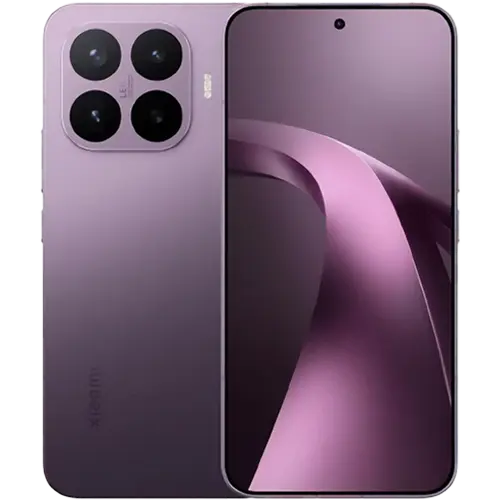
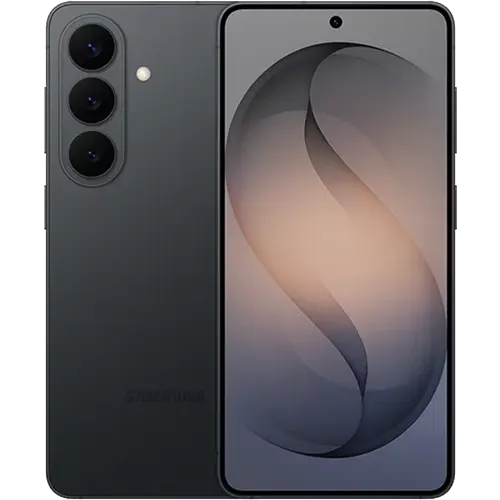
Xiaomi
Samsung
17T Pro
Galaxy S26
Ranked #12 of 60
Ranked #21 of 60
Overall
Overall
The Xiaomi 17T Pro and Samsung Galaxy S26 land at a similar price, but they're built around different priorities. The 17T Pro is a large-screen phone with a massive battery and aggressive charging speeds, pitched at people who want endurance and a versatile camera system with a long telephoto reach. The Galaxy S26 is Samsung's compact flagship: smaller, lighter, and leaning on processing power, speaker quality, and connectivity rather than sheer stamina.
The Xiaomi pulls ahead clearly on battery life and charging speed, and its display gets significantly brighter in HDR. Its camera system offers more reach with a 5x optical telephoto and 120x max zoom, and the main camera resolves more detail. The Samsung counters with a faster processor, dramatically better AI performance, a cleaner and fuller speaker, a noticeably better microphone, and far faster data transfer over USB. The two phones' overall camera scores are close, with the Galaxy S26 holding an edge in dynamic range across most lenses.
Design
| Xiaomi 17T Pro | Samsung Galaxy S26 | |
|---|---|---|
| Specifications | ||
| Dimensions | 162.2 x 77.5 x 8.25 mm | 149.6 x 71.7 x 7.2 mm |
| Weight | 219g | 167g |
| IP Rating | IP68 | IP68 |
| Frame | Aluminum | Aluminum |
| Front | Gorilla Glass 7i | Gorilla Glass Victus 2 |
| Back | Fiberglass | Gorilla Glass Victus 2 |
| Screen-to-body ratio | 91.1% | 90.8% |
The Xiaomi 17T Pro is the larger phone in every dimension: 162.2 x 77.5 x 8.25mm and 219g, compared to the Galaxy S26's 149.6 x 71.7 x 7.2mm and 167g. Both share an aluminum frame and IP68 rating, meaning submersion in freshwater to the rated depth. The front glass differs: Gorilla Glass 7i on the Xiaomi, Gorilla Glass Victus 2 on the Samsung. The backs diverge more. The S26 uses Gorilla Glass Victus 2 on both sides, while the 17T Pro uses fiberglass — a lighter material that trades the glass sandwich aesthetic for better impact resistance and a different texture.
Screen-to-body ratios are close: 91.1% for the 17T Pro and 90.8% for the S26, so bezels are similarly thin relative to each phone's footprint. Both use a 19.5:9 aspect ratio. The 17T Pro's 6.83-inch display makes it a definitively two-handed phone for most people, while the S26's 6.3-inch screen keeps it in one-hand territory.
Bandicoot Lab doesn't formally test design or durability, so build quality impressions beyond what the specs indicate aren't something we can verify.
Display
| Xiaomi 17T Pro | Samsung Galaxy S26 | |
|---|---|---|
609/ 881 | 512/ 881 | |
The 17T Pro has the higher-resolution panel: 2772 x 1280 at 447 pixels per inch versus the S26's 2340 x 1080 at 411 PPI. Both are sharp enough that you won't see individual pixels in normal use, though the Xiaomi's advantage shows up if you look closely at fine text. Both panels run at up to 120Hz, but the S26's LTPO display can drop as low as 1Hz for static content, which helps with power efficiency. The 17T Pro bottoms out at 30Hz.
Brightness is where the Xiaomi takes a commanding lead. In manual mode the two are close — 625 nits for the 17T Pro, 641 nits for the S26. But in HDR content with auto brightness, the 17T Pro peaks at 3,653 nits compared to the S26's 2,791 nits. The Xiaomi also holds brightness more evenly across different HDR window sizes: 56.3% stability versus 51.7%. Over a sustained 30-minute playback test, both hold up equally well at 98.7% stability. Minimum brightness is similar — 0.76 nits on the Xiaomi, 0.86 nits on the Samsung — so both are comfortable for late-night reading.
Color accuracy favors the Xiaomi. In its best display mode, colors stay close to reference with only minor drift. The S26 shows more visible deviation from target colors, enough that you'd notice slightly off whites or shifted pastels in side-by-side viewing. Both panels cover sRGB nearly fully (99% and 98.3%) and reach similar DCI-P3 coverage (74.3% and 73.2%).
The two phones handle HDR tone mapping differently. The S26 follows the HDR reference curve more closely but intentionally boosts highlights well above the mastered level and starts clipping at 75% of the input signal, meaning bright highlights lose detail earlier. The 17T Pro deviates more from the reference curve overall but boosts highlights less aggressively and clips later, at 90%. The S26 makes HDR content look punchier but sacrifices highlight detail sooner; the 17T Pro preserves more of the intended tone map.
Touch latency averages 16.3ms on the 17T Pro and 21.8ms on the S26. That 5.5ms isn’t something you’ll feel.
Performance
| Xiaomi 17T Pro | Samsung Galaxy S26 | |
|---|---|---|
753/ 1012 | 833/ 1012 | |
The 17T Pro runs a MediaTek Dimensity 9500 with 12GB of RAM. The Galaxy S26 uses Qualcomm's Snapdragon 8 Elite Gen 5, also with 12GB. Both are flagship-tier silicon, but they don't perform identically.
The S26 leads in CPU tasks. Its GeekBench 6 single-core score of 3,709 beats the 17T Pro's 3,331, and its multi-core score of 11,232 tops the Xiaomi's 10,150. These gaps are meaningful in burst workloads like app launches and heavy multitasking, though in everyday scrolling and messaging you're unlikely to feel the difference.
GPU performance is more nuanced. The S26 posts a higher peak in Wild Life Extreme (7,740 versus the 17T Pro's 7,062), but the 17T Pro holds up much better under sustained load: 62% stability versus 45.8%. The Solar Bay stress test tells the same story — the Xiaomi peaks at 13,185 to the Samsung's 13,860, but sustains 61% to 47.4%. For extended gaming sessions, the 17T Pro delivers more consistent frame rates because it throttles less.
Browser performance strongly favors the S26, with a Speedometer score of 36.7 compared to 9.1 on the 17T Pro. Web-heavy users will notice snappier page rendering on the Samsung.
Camera
| Xiaomi 17T Pro | Samsung Galaxy S26 | |
|---|---|---|
515/ 587 | 497/ 587 | |
Both phones carry a 50-megapixel main camera and a 12-megapixel ultrawide camera. Beyond that, the systems diverge. The 17T Pro pairs a larger main sensor (1/1.31-inch) with a 50-megapixel 5x telephoto and a 32-megapixel front camera, reaching up to 120x digital zoom. The S26 has a smaller main sensor (1/1.56-inch), a 10-megapixel 3x telephoto, and a 12-megapixel selfie camera, maxing out at 30x zoom.
The Xiaomi's sharpness advantage is its clearest strength — the main camera resolves visibly more detail in all lighting conditions, and the telephoto is sharper at its native focal length too. The Samsung's ultrawide is the exception, outresolving the Xiaomi's ultrawide by a clear margin.
At extreme zoom levels, both phones lose detail quickly once you push past their optical telephoto range. The 17T Pro's 5x lens gives it more to work with before digital cropping kicks in, and at 10x it still delivers more usable detail than the S26 at similar magnification. Past 30x, the Xiaomi is on its own — and by 120x, detail is heavily degraded. Neither phone excels at deep zoom, but the 17T Pro's higher starting point from its 5x lens gives it the edge in this range.
Main
| Xiaomi 17T Pro (Main) | Samsung Galaxy S26 (Main) | |
|---|---|---|
551/ 722 | 594/ 722 | |
The 17T Pro's 50-megapixel f/1.6 main camera with its 1/1.31-inch sensor resolves substantially more detail than the S26's 50-megapixel f/1.8 with its 1/1.56-inch sensor. The sharpness gap is wide in bright light and stays wide through mid and low light. The Xiaomi also holds detail well when cropping in. Across its 1x–5x digital crop range (before the telephoto takes over), the 17T Pro maintains usable detail even at 3x–4x crops. The S26 covers 1x–3x before its telephoto engages, and detail softens more noticeably as you crop toward the top of that range.
Color on both main cameras is mildly saturated. The S26 pushes saturation more aggressively in bright light and pulls back in dim conditions, creating inconsistency across lighting. The 17T Pro stays more even. Skin tones are off on both phones in bright light — neither nails accurate skin rendering under daylight-equivalent conditions. In mid and low light, both improve, with the S26 producing slightly more accurate skin tones in dim conditions.
Dynamic range clearly favors the S26's main camera. High-contrast scenes retain more shadow detail and more highlight information. The 17T Pro clips highlights and shows some tonal irregularities in challenging scenes. If you shoot a lot of backlit subjects or high-contrast landscapes, the Samsung's main camera handles those situations with more room.
Ultrawide
| Xiaomi 17T Pro (Ultrawide) | Samsung Galaxy S26 (Ultrawide) | |
|---|---|---|
533/ 722 | 604/ 722 | |
The S26's 12-megapixel ultrawide is sharper than the 17T Pro's 12-megapixel ultrawide across all lighting conditions. It's also one of the rare cases where the Samsung's ultrawide holds detail nearly as well as its own main camera. The Xiaomi's ultrawide drops off more significantly from its main camera's sharpness level.
Color behavior on the ultrawides diverges from each phone's main camera. The S26's ultrawide oversaturates noticeably in bright light — more than its main camera does — and skin tones in bright conditions drift the most of any lens on either phone. Hue accuracy on the S26's ultrawide also degrades substantially in mid light, suggesting a white balance overcorrection as the light gets warmer. The 17T Pro's ultrawide is more restrained in saturation and keeps hue accuracy more consistent across conditions, though skin tones in bright light are also pushed off-target.
Dynamic range again favors the S26. Its ultrawide retains more usable range in high-contrast scenes with fewer tonal issues. The 17T Pro's ultrawide clips highlights and shows more tonal inversions.
Telephoto
| Xiaomi 17T Pro (Telephoto) | Samsung Galaxy S26 (Telephoto) | |
|---|---|---|
522/ 722 | 568/ 722 | |
The 17T Pro has a 50-megapixel f/3 telephoto at 5x (115mm), while the S26 uses a 10-megapixel f/2.4 at 3x (67mm). These are fundamentally different lenses serving different use cases — the Xiaomi is built for reaching further, the Samsung for a moderate portrait-length zoom.
At their native focal lengths, the 17T Pro's telephoto resolves more detail in bright and mid light. The gap narrows in low light, where both lose sharpness but the Xiaomi drops off more steeply. As each phone zooms beyond its native telephoto length digitally, the S26 tops out at 30x while the 17T Pro stretches to 120x. Through the range where they overlap — roughly 5x to 30x — the Xiaomi holds a detail advantage thanks to its higher starting resolution and longer native length.
Color from both telephoto cameras is among the most accurate across each phone's lens lineup. Skin tone accuracy is good on both, especially in bright and mid light. The 17T Pro's telephoto does show increasing warm-yellow bias as lighting dims, which shifts colors in low light. The S26's telephoto keeps a slight cool bias across conditions but stays more consistent overall.
Dynamic range is the Samsung's strong suit here. The S26's telephoto preserves highlights without clipping — the only lens across both phones that manages this. The 17T Pro's telephoto clips highlights and covers less total range.
Both telephoto cameras show some stabilization jitter in handheld video, and neither is particularly well-stabilized compared to their respective main cameras.
Front
| Xiaomi 17T Pro (Front) | Samsung Galaxy S26 (Front) | |
|---|---|---|
542/ 722 | 398/ 722 | |
The 17T Pro's 32-megapixel front camera resolves more detail than the S26's 12-megapixel selfie camera across all lighting conditions. The difference is most pronounced in low light, where the Xiaomi holds up better.
Color handling splits. The 17T Pro's front camera produces the most accurate skin tones in bright light of any lens across both phones, and it desaturates slightly for a natural look. As lighting drops, skin tones drift more, and the image takes on a slightly warm tone. The S26's front camera runs into bigger problems in mid and low light — there's a strong pink-magenta push that intensifies under warm indoor lighting, pointing to a white balance overcorrection. Hue accuracy on the S26's front camera in low light is the weakest of any lens tested on either phone.
Dynamic range in selfies favors the 17T Pro. Its front camera retains more usable range without clipping. The S26's front camera clips highlights and covers less ground, which shows up as blown-out backgrounds or lost detail in mixed lighting selfies.
Battery
| Xiaomi 17T Pro | Samsung Galaxy S26 | |
|---|---|---|
695/ 836 | 579/ 836 | |
The 17T Pro's 7,000mAh battery is substantially larger than the S26's 4,300mAh cell, and test results reflect the difference — though not as dramatically as you might expect from a 63% capacity advantage.
Video playback is nearly identical: the 17T Pro lasted 30.63 hours to the S26's 30.25 hours. Both will get through more than a full day of continuous video, or several days of typical mixed use that includes some streaming. Where the Xiaomi's larger battery shows up more is in active use. During web browsing over a 5-hour test, the 17T Pro drained 18% while the S26 dropped 24%. That's meaningful over a full day of heavy phone use — you'd end the day with roughly a quarter more battery left on the Xiaomi. Gaming tells a similar story: the 17T Pro lost 23% during the stress test versus 27% on the S26. Standby drain is identical at 2% over 8 hours for both phones.
The 17T Pro is a comfortable two-day phone for moderate users and will survive a heavy day without anxiety. The S26 is a reliable one-day phone but will need a top-up if you're gaming or navigating heavily.
Charging
| Xiaomi 17T Pro | Samsung Galaxy S26 | |
|---|---|---|
718/ 837 | 263/ 837 | |
The difference in charging hardware is stark. The 17T Pro supports 100W wired and 50W wireless charging. The S26 offers 25W wired and 15W wireless.
After 10 minutes on a wire, the 17T Pro reaches 33% while the S26 hits 21%. At 30 minutes, it's 79% versus 58%. A quick morning top-up on the Xiaomi gets you through most of a day; you'd need to leave the Samsung plugged in noticeably longer for the same result. Wireless charging follows the same pattern — 19% at 10 minutes and 48% at 30 minutes for the 17T Pro, compared to 11% and 29% on the S26.
If you routinely charge in short bursts — grabbing a few minutes while getting ready in the morning — the 17T Pro's charging speed makes a practical difference.
Speaker
| Xiaomi 17T Pro | Samsung Galaxy S26 | |
|---|---|---|
636/ 897 | 817/ 897 | |
The S26 produces a cleaner, fuller sound. Its total harmonic distortion sits at 3.44% compared to the 17T Pro's 8.16%, meaning less harshness and breakup at higher volumes. The Samsung's frequency response is also significantly more even, delivering fuller bass and clearer highs. The 17T Pro's bass is thinner and its high-end less defined, with more variation across the frequency range.
The 17T Pro does get louder: 76.3 dBA max versus 72.5 dBA on the S26. If you need to fill a room or hear audio in a noisy environment, the Xiaomi has the edge. For music, podcasts, or video where quality matters more than raw volume, the S26 is the better speaker.
Microphone
| Xiaomi 17T Pro | Samsung Galaxy S26 | |
|---|---|---|
390/ 1220 | 739/ 1220 |
The S26's microphone is well above average, with smooth, even frequency response that reproduces voice naturally. The 17T Pro's microphone is below average, with more uneven frequency reproduction that can make recordings or calls sound less natural. If you use your phone for voice notes, video recording, or calls in tricky environments, the Samsung handles it better.
Other
| Xiaomi 17T Pro | Samsung Galaxy S26 | |
|---|---|---|
| Biometrics | 461/ 1181 | 464/ 1181 |
| Data Transfer | 108/ 943 | 736/ 943 |
| Specifications | ||
| Biometric type | Fingerprint | Fingerprint |
| Ports | USB-C 2.0 | USB-C 3.2 |
| Storage | 256GB, 512GB, 1TB | 256GB, 512GB |
Fingerprint unlock speeds are nearly identical: 228ms on the 17T Pro and 226ms on the S26. Both are fast enough that you won't perceive a difference. The 17T Pro uses an optical sensor; the S26 uses an ultrasonic sensor, which generally works better with wet or oily fingers. Neither phone has hardware-based face unlock.
Data transfer is a major gap. The S26's USB-C 3.2 port delivers read speeds of 335 MB/s and write speeds of 271 MB/s. The 17T Pro's USB-C 2.0 port manages 38 MB/s read and 36 MB/s write — roughly a tenth of the Samsung's throughput. If you transfer large files to a computer regularly, the S26 saves real time. The 17T Pro offers storage options up to 1TB; the S26 tops out at 512GB.
Conclusion
These two phones are well-matched on price and nearly tied in a few areas — video battery life, standby drain, fingerprint speed, biometrics — but they pull in opposite directions everywhere else.
The Xiaomi 17T Pro is the phone to pick if battery endurance, charging speed, and camera reach matter most to you. Its display gets significantly brighter for HDR content, its main camera is sharper, and its 5x telephoto gives it zoom capabilities the S26 can't match. It lasts longer under active use and charges fast enough that a 10-minute top-up is meaningful. The tradeoffs are a larger, heavier body, a weaker speaker, a slower USB port, and AI performance that isn't competitive.
The Samsung Galaxy S26 is the better choice if you want a compact phone with strong processing power, on-device AI, a quality speaker, and fast file transfers. Its camera system resolves less detail from the main lens but delivers substantially better dynamic range across all rear cameras, which matters in high-contrast scenes. It's also the more pocketable phone by a wide margin. You give up battery endurance, charging speed, zoom reach, and HDR brightness to get there. The decision comes down to whether you value stamina and camera reach or performance, sound quality, and a smaller footprint.
FAQ
Does the Xiaomi 17T Pro or Galaxy S26 have better battery life?
For video playback the two phones are essentially tied, both lasting just over 30 hours. The gap opens during active use: over a five-hour web browsing test the 17T Pro drained 18% versus 24% on the S26, and gaming drew 23% versus 27%. The 17T Pro is a comfortable two-day phone for moderate users; the S26 is a reliable one-day phone that may need a top-up on heavy days.
Is the Samsung Galaxy S26 worth the trade-off in zoom capability?
The S26's 3x telephoto tops out at 30x digital zoom, while the 17T Pro's 5x telephoto reaches 120x. Through the range where they overlap, the Xiaomi holds a detail advantage because its native telephoto length is longer and its starting resolution is higher. If zoom reach matters to you, the S26 can't close that gap — but if you rarely shoot beyond 3x, the difference is irrelevant to your daily use.
Which phone is better for gaming — the 17T Pro or the Galaxy S26?
It depends on how long your sessions are. The S26 posts a higher peak GPU score, but the 17T Pro sustains closer to its peak under load for much longer — its GPU stability in extended stress tests is around 62% versus roughly 46% on the Samsung. For short bursts the S26 may hit higher frame rates; for extended sessions the 17T Pro delivers more consistent performance because it throttles less.
How much better is the Galaxy S26's camera dynamic range compared to the 17T Pro?
The S26 holds a clear dynamic range advantage across all three rear cameras. Its telephoto is the most pronounced example — it preserves highlights without clipping, the only lens on either phone that manages this. The 17T Pro's main and telephoto cameras clip highlights and show tonal irregularities in high-contrast scenes. The one reversal is selfies: the 17T Pro's front camera retains more range than the S26's, which clips backgrounds in mixed lighting.
Does the Xiaomi 17T Pro or Samsung Galaxy S26 charge faster?
The 17T Pro charges substantially faster. After 10 minutes wired it reaches 33% versus 21% on the S26; at 30 minutes it's 79% versus 58%. Wireless charging follows the same pattern. The 17T Pro supports 100W wired and 50W wireless; the S26 supports 25W wired and 15W wireless. A short morning top-up is genuinely useful on the Xiaomi in a way it isn't on the Samsung.
Related
Xiaomi
17T Pro
Samsung
Galaxy S26

Samsung
Galaxy S26 Ultra
Xiaomi
17 Ultra
Samsung
Galaxy S26+
Xiaomi
17
Samsung
Galaxy Z Fold 8 Ultra
Samsung
Galaxy Z Fold 8
Xiaomi
15T Pro
Xiaomi 17T Pro vs OnePlus 15
Xiaomi 17T Pro vs Google Pixel 10 Pro
Best Samsung Phones