Xiaomi 17T Pro vs Google Pixel 10 Pro
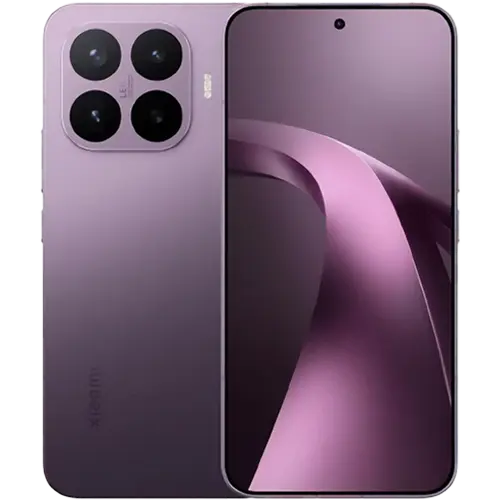
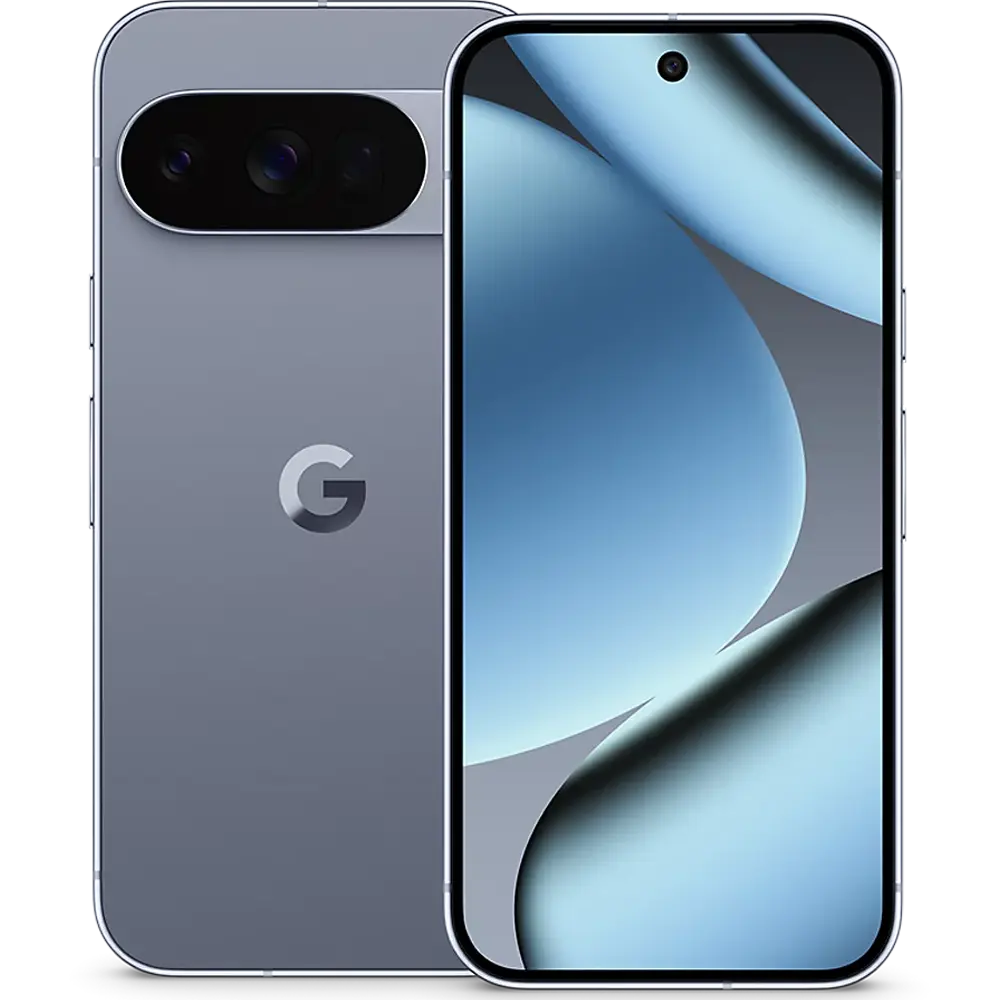
Xiaomi
17T Pro
Pixel 10 Pro
Ranked #12 of 60
Ranked #40 of 60
Overall
Overall
The Xiaomi 17T Pro and Google Pixel 10 Pro sit at a similar price and share a few surface-level similarities: both run 50-megapixel main cameras on the same sensor size, both offer 5x optical telephoto reach, and both top out at 1TB of storage. Beyond that, they're built around very different priorities. The 17T Pro is Xiaomi's upper-midrange flagship, leaning on a massive battery and fast charging. The Pixel 10 Pro is Google's compact flagship for 2025, built around software intelligence, display quality, and the Tensor platform's AI capabilities.
The Xiaomi pulls ahead in battery life and charging speed by a wide margin, and its raw GPU horsepower is substantially higher. The Pixel counters with a sharper, more accurate display, better speakers, stronger AI performance, and faster data transfer. Camera results are closer than you might expect given Google's reputation: the Xiaomi actually edges ahead on overall camera score, with better color accuracy across most lenses, while the Pixel produces sharper images from its main and telephoto sensors. Each phone has clear strengths, and which matters more depends on what you value.
Design
| Xiaomi 17T Pro | Google Pixel 10 Pro | |
|---|---|---|
| Specifications | ||
| Dimensions | 162.2 x 77.5 x 8.25 mm | 152.8 x 72 x 8.5 mm |
| Weight | 219g | 207g |
| IP Rating | IP68 | IP68 |
| Frame | Aluminum | Aluminum |
| Front | Gorilla Glass 7i | Gorilla Glass Victus 2 |
| Back | Fiberglass | Glass |
| Screen-to-body ratio | 91.1% | 87.1% |
The Pixel 10 Pro is the more compact phone: 152.8 x 72 x 8.5mm and 207g versus the Xiaomi's 162.2 x 77.5 x 8.25mm and 219g. That's a meaningful size difference. The Xiaomi is taller and wider, closer to a small tablet in hand, while the Pixel fits more naturally into a pocket.
Both use aluminum frames and carry IP68 ratings, meaning they're rated for submersion in fresh water. The front glass differs: the Pixel uses Gorilla Glass Victus 2, while the Xiaomi uses Gorilla Glass 7i. The backs diverge more. The Pixel has a glass rear panel; the Xiaomi uses fiberglass, which is lighter and less prone to shattering but doesn't carry the same premium feel. The Xiaomi's 91.1% screen-to-body ratio means thinner bezels relative to its display than the Pixel's 87.1%, though the Pixel's smaller 6.3-inch panel in a tighter body still looks clean. The Xiaomi's 19.5:9 aspect ratio makes it narrower relative to its height than the Pixel's 20:9, though in practice both are tall, narrow rectangles.
Bandicoot Lab doesn't formally test design or durability.
Display
| Xiaomi 17T Pro | Google Pixel 10 Pro | |
|---|---|---|
609/ 881 | 723/ 881 | |
The Pixel 10 Pro has the better display by a comfortable margin.
The Pixel's 6.3-inch LTPO OLED runs at 1280 x 2856 (495 pixels per inch) with a 1–120Hz adaptive refresh range. The Xiaomi's 6.83-inch AMOLED hits 2772 x 1280 (447 PPI) with a 30–120Hz range. The Pixel's LTPO panel can drop all the way to 1Hz for static content, which saves power. The Xiaomi's floor is 30Hz.
Manual brightness is where the Pixel pulls furthest ahead, hitting 1,450 nits versus 625 nits. That's more than double, and you'll feel it outdoors on a sunny day when auto-brightness isn't engaged. HDR peak brightness is closer — the Xiaomi actually reaches 3,653 nits versus the Pixel's 3,428 nits. The Pixel holds that brightness more consistently across different HDR window sizes (65.3% stability versus 56.3%), meaning full-screen bright scenes stay closer to peak output. Over a sustained 30-minute HDR session, both panels hold up well: the Xiaomi at 98.7% stability, the Pixel at 96.3%.
Color accuracy favors the Pixel. Colors stay tighter to reference across the board, with neutral tones reading clean and accurate. The Xiaomi drifts more, particularly in warm tones that can shift slightly from their intended targets. Both panels cover sRGB almost fully (99% and 98.7%), with similar DCI-P3 coverage around 73–74%.
For HDR tone mapping, the Pixel tracks the reference curve a bit loosely but applies only modest brightness boosting, and it doesn't clip highlights until 95% of the input range. The Xiaomi boosts highlights more aggressively and starts clipping earlier, at 90%. In practice, the Pixel renders HDR content more faithfully; the Xiaomi tends to push bright areas brighter than intended and loses detail in the brightest highlights sooner.
Touch latency is 11.6ms on the Pixel versus 16.3ms on the Xiaomi. That's a gap you won’t notice.
Performance
| Xiaomi 17T Pro | Google Pixel 10 Pro | |
|---|---|---|
753/ 1012 | 399/ 1012 | |
The Xiaomi 17T Pro runs the MediaTek Dimensity 9500 with 12GB of RAM. The Pixel 10 Pro uses Google's Tensor G5 with 16GB.
CPU performance splits depending on the workload. The Xiaomi scores 3,331 single-core and 10,150 multi-core in GeekBench 6. The Pixel manages 2,330 single-core and 6,364 multi-core. That's a 43% single-core lead and a 59% multi-core lead for the Xiaomi. You'll feel this in app launch times, export speeds, and anything that taxes the processor directly.
GPU performance widens the gap further. In Wild Life Extreme, the Xiaomi peaks at 7,062 versus the Pixel's 3,286. That's roughly twice the raw graphics throughput. Stability under sustained load is similar: 62% for the Xiaomi, 67.2% for the Pixel. Both throttle meaningfully during extended gaming sessions, but the Xiaomi starts from such a higher peak that it stays well ahead even after thermal limits kick in.
Browser performance favors the Pixel. It scores 15.2 in Speedometer versus the Xiaomi's 9.1. Neither result is particularly impressive.
Camera
| Xiaomi 17T Pro | Google Pixel 10 Pro | |
|---|---|---|
515/ 587 | 445/ 587 | |
Both phones share the same main sensor size (1/1.31") and similar telephoto reach (5x optical), but their processing pipelines produce distinct results. The Xiaomi scores higher overall at 536.1 versus the Pixel's 472.9, driven primarily by better color accuracy across most lenses. The Pixel counters with higher sharpness from its main camera and telephoto.
Sharpness at the extreme zoom end favors the Pixel. Its deep zoom score is higher, meaning detail holds up better as you push past the optical telephoto range into heavy digital crop territory. The Xiaomi reaches 120x max zoom versus the Pixel's 100x, but the extra reach comes at the cost of more aggressive quality falloff. Neither phone produces usable results at its maximum zoom. At 10x through about 30x, both are working from digital crops of their 5x telephoto sensors, and the Pixel retains more resolved detail through that range.
Main
| Xiaomi 17T Pro (Main) | Google Pixel 10 Pro (Main) | |
|---|---|---|
551/ 722 | 517/ 722 | |
Both main cameras use 50-megapixel sensors at 1/1.31", with the Xiaomi at f/1.6 and 23mm and the Pixel at f/1.7 and 25mm.
Sharpness is close. The Pixel resolves slightly less detail in bright light but the difference is small. Both hold sharpness well into mid-light conditions with minimal falloff, and both retain solid detail in low light. Through the 1x to 5x crop range, both degrade gradually as the digital crop increases, with comparable performance at 2x. Neither falls apart before handing off to the telephoto.
Color is where they diverge. The Pixel's main camera produces warm, saturated shots with a noticeable yellow-warm lean in bright light that persists into mid-light. The Xiaomi reads slightly cool in bright light and shifts mildly warm in mid-light, but the magnitude is smaller. Hue accuracy is similar between the two in bright and mid-light. In low light, the Pixel's hue errors roughly double, with a strong warm push in its white balance. The Xiaomi's low-light hue errors increase only modestly.
Skin tones from the Pixel drift across all lighting conditions. The Xiaomi's skin tones are more accurate in mid-light but drift more in bright conditions, where a mild cool cast pulls faces slightly off. Both struggle with skin tones in low light, with the Pixel's errors larger.
Dynamic range is a genuine differentiator. The Xiaomi retains more usable range in high-contrast scenes: shadows hold more detail, and the tonal curve is smoother. Both phones clip highlights, but the Xiaomi gives you more to work with in the midtones and shadows.
Ultrawide
| Xiaomi 17T Pro (Ultrawide) | Google Pixel 10 Pro (Ultrawide) | |
|---|---|---|
533/ 722 | 479/ 722 | |
The Xiaomi's ultrawide is 12 megapixels at f/2.2 and 15mm on a small 1/3.06" sensor. The Pixel's is 48 megapixels at f/1.7 and 13mm on a larger 1/2.55" sensor. On paper, the Pixel has significant advantages in sensor size, aperture, and resolution.
Sharpness confirms this. The Pixel resolves more detail in bright and mid-light conditions. In low light, both drop to similar levels. Relative to their own main cameras, both ultrawides are softer, but the Pixel's gap between main and ultrawide is smaller.
Color character matches each phone's overall tendency — the Pixel is warm and saturated, the Xiaomi is closer to neutral. The Xiaomi's ultrawide is less accurate than its main camera in bright light but improves in mid-light. The Pixel's ultrawide shows moderate hue accuracy in bright light that degrades substantially in mid and low light. In dark conditions, the Pixel's ultrawide develops large hue errors driven by a strong warm-yellow bias in white balance correction. The Xiaomi stays more controlled.
Dynamic range from the Pixel's ultrawide is better, with more usable tonal range in high-contrast scenes. The Xiaomi's ultrawide clips highlights and shows some tonal inversion artifacts.
Stabilization heavily favors the Xiaomi's ultrawide, which holds video noticeably steadier. The Pixel's ultrawide stabilization is adequate but looser.
Telephoto
| Xiaomi 17T Pro (Telephoto) | Google Pixel 10 Pro (Telephoto) | |
|---|---|---|
522/ 722 | 471/ 722 | |
Both phones offer 5x optical telephoto lenses with similar focal lengths: the Xiaomi at 115mm f/3, the Pixel at 113mm f/2.8. The Pixel uses a larger sensor (1/2.55" versus 1/2.76").
Sharpness in bright light is a clear win for the Xiaomi at the native 5x focal length. It resolves considerably more detail in good conditions. In mid-light, the gap narrows but the Xiaomi still leads. In low light, the Xiaomi falls off sharply while the Pixel holds up better, and the Pixel pulls ahead. As both phones crop digitally beyond 5x, the Pixel maintains more detail through 10x and beyond, consistent with its stronger deep zoom performance.
Color follows familiar patterns. The Pixel pushes saturation hard from the telephoto, well above neutral in bright light. The Xiaomi's telephoto is nearly neutral in saturation, even slightly undersaturated in mid and low light. Hue accuracy is close in bright and mid-light. In low light, the Pixel's telephoto hue errors nearly triple, driven by a large warm shift in white balance. The Xiaomi's low-light hue errors also increase but remain more contained.
Skin tones from the Xiaomi's telephoto are noticeably better in bright and mid-light. The Pixel's telephoto skin tone error is roughly twice the Xiaomi's in those conditions. In low light, both converge to similar error levels.
Dynamic range is limited on both, with highlights clipping. The Xiaomi retains slightly more tonal depth, and its tonal curve is cleaner with no inversion artifacts.
Front
| Xiaomi 17T Pro (Front) | Google Pixel 10 Pro (Front) | |
|---|---|---|
542/ 722 | 347/ 722 | |
The Xiaomi's front camera is 32 megapixels at f/2.2 and 21mm on a 1/3.44" sensor. The Pixel uses a 42-megapixel sensor at f/2.2 and 17mm.
Sharpness is close between the two. The Pixel resolves slightly more in bright and low light; the Xiaomi is slightly ahead in mid-light. Neither produces the kind of fine detail you'd get from a rear camera, but both are adequate for video calls and selfies.
Color is the decisive split. The Xiaomi's front camera renders colors with mild, controlled saturation, actually slightly undersaturated, producing a natural if somewhat muted look. The Pixel's front camera pushes saturation well above neutral, giving selfies a warm, vivid cast. In bright light, the Pixel's warm-yellow lean is strong enough to shift skin tones noticeably. In low light, the Pixel's front camera develops severe hue errors, driven by an extreme warm bias in white balance correction, and skin tones look significantly off. The Xiaomi's front camera also warms up in low light, but the shift is much smaller, and skin tones stay closer to accurate.
Dynamic range from the Pixel's front camera is better than the Xiaomi's, which is quite limited. The Xiaomi clips highlights and retains little shadow detail. The Pixel preserves more usable range in high-contrast selfie scenarios.
Battery
| Xiaomi 17T Pro | Google Pixel 10 Pro | |
|---|---|---|
695/ 836 | 490/ 836 | |
The Xiaomi 17T Pro's 7,000mAh battery is 44% larger than the Pixel 10 Pro's 4,870mAh cell, and the test results reflect that gap.
Video playback is 30.63 hours on the Xiaomi versus 21.83 hours on the Pixel. That's nearly nine extra hours. In practical terms, the Xiaomi can comfortably cover two full days of typical mixed use; the Pixel is a reliable one-day phone with some headroom.
Web browsing over five hours drained 18% on the Xiaomi versus 23% on the Pixel. Gaming drain during the stress test was 23% versus 25%. The Xiaomi's advantage in gaming drain is modest, but If you game for an hour, you've used roughly the same percentage on both phones, but the Xiaomi has far more left in the tank.
Standby drain is identical at 2% over eight hours. Both phones manage background processes efficiently overnight.
The battery gap is one of the largest practical differences between these two phones. If heavy use and multi-day battery life matter to you, the Xiaomi is in a different class.
Charging
| Xiaomi 17T Pro | Google Pixel 10 Pro | |
|---|---|---|
718/ 837 | 310/ 837 | |
The Xiaomi supports 100W wired and 50W wireless charging. The Pixel supports 30W wired and 15W wireless with Qi2-compatible magnetic alignment.
The speed difference is dramatic. After 10 minutes on a wire, the Xiaomi reaches 33% versus the Pixel's 19%. At 30 minutes, it's 79% versus 55%. The Xiaomi goes from dead to nearly full in half an hour; the Pixel needs roughly an hour to reach the same level.
Wireless charging follows the same pattern: 19% at 10 minutes and 48% at 30 minutes for the Xiaomi, versus 12% and 34% for the Pixel. The Pixel's magnetic alignment means it snaps cleanly onto Qi2 or MagSafe-compatible chargers, which is convenient even if the charging speed itself is slower.
If you're the type who plugs in for a few minutes before leaving the house, the Xiaomi's charging speed is genuinely useful. A 10-minute top-up gives you a third of a 7,000mAh battery.
Speaker
| Xiaomi 17T Pro | Google Pixel 10 Pro | |
|---|---|---|
636/ 897 | 774/ 897 | |
Both phones reach similar maximum volume levels: 76.3 dBA for the Xiaomi and 75.6 dBA for the Pixel. The difference is inaudible.
Beyond loudness, the speakers sound different. The Pixel scores higher overall at 774.3 versus 636.4, and the character data explains why. The Pixel produces fuller bass, cleaner high-frequency detail, and lower distortion (6.5% THD versus 8.16%). The Xiaomi's speakers sound thinner and harsher by comparison, with more emphasis on raw volume than balanced reproduction. The Pixel's frequency response is also more even across the midrange, which means vocals and dialogue sound more natural.
The Pixel has the better speaker system. If you watch a lot of video or listen to music without headphones, you'll notice the difference.
Microphone
| Xiaomi 17T Pro | Google Pixel 10 Pro | |
|---|---|---|
390/ 1220 | 667/ 1220 |
The Pixel 10 Pro's microphone produces more even, balanced recordings with less frequency variation. It sits comfortably above average. The Xiaomi 17T Pro's microphone is below average, with more uneven frequency response that can make voice recordings sound less natural. For video calls and voice memos, the Pixel will produce cleaner results.
Other
| Xiaomi 17T Pro | Google Pixel 10 Pro | |
|---|---|---|
| Biometrics | 461/ 1181 | 422/ 1181 |
| Data Transfer | 108/ 943 | 270/ 943 |
| Specifications | ||
| Biometric type | Fingerprint | Fingerprint |
| Ports | USB-C 2.0 | USB-C 3.2 |
| Storage | 256GB, 512GB, 1TB | 256GB, 512GB, 1TB |
Both phones use fingerprint sensors without hardware-based face unlock. The Xiaomi's optical sensor averages 228ms; the Pixel's ultrasonic sensor averages 249ms. Both are fast enough that you won't notice a meaningful difference in daily use.
Data transfer speeds strongly favor the Pixel. Its USB-C 3.2 port delivers read speeds of 105 MB/s and write speeds of 142 MB/s. The Xiaomi's USB-C 2.0 port manages just 38 MB/s read and 36 MB/s write. If you transfer large files, photos, or video to a computer, the Pixel is roughly three to four times faster. Both phones offer 256GB, 512GB, and 1TB storage configurations.
Conclusion
The Xiaomi 17T Pro and Pixel 10 Pro each do several things well, and they barely overlap in their strengths.
The Xiaomi's advantages are that it’s battery life stretches comfortably past two days, charging recovers 79% in half an hour, and raw CPU and GPU performance outpaces the Pixel by wide margins. Its camera system produces more color-accurate images with better dynamic range from the main sensor and telephoto, and skin tones land closer to reality across most conditions.
The Pixel 10 Pro earns its price with a visibly better display, brighter in manual mode, more color-accurate, with more faithful HDR rendering. Its speakers are noticeably better balanced. The Pixel's cameras resolve more detail from the main and telephoto lenses in good light and hold sharpness better at extreme zoom, though its aggressive color saturation and deteriorating hue accuracy in low light are real weaknesses. USB-C 3.2 and a better microphone round out the practical advantages.
If battery life, charging speed, and processing power drive your decision, the Xiaomi is the stronger choice and saves you money doing it. If display quality, speaker performance, and the Pixel software experience matter more, the Pixel 10 Pro justifies the premium.
FAQ
Does the Xiaomi 17T Pro or Pixel 10 Pro last longer on a charge?
The 17T Pro lasts substantially longer. In video playback testing it ran for 30.63 hours versus 21.83 hours for the Pixel 10 Pro — nearly nine hours more. The Xiaomi can cover two full days of typical mixed use; the Pixel is a reliable one-day phone with some headroom.
Which phone is better for gaming, the 17T Pro or the Pixel 10 Pro?
The 17T Pro is the stronger gaming phone. Its GPU produces roughly twice the raw graphics throughput of the Pixel 10 Pro in benchmark testing, and although both phones throttle under sustained load, the Xiaomi stays well ahead after thermal limits kick in. Its lower touch latency — 16.3ms versus 11.6ms on the Pixel — is a minor disadvantage, but the battery capacity advantage means longer gaming sessions without hunting for a charger.
Which phone takes better selfies?
In good light the two are close on sharpness, but their color tuning differs sharply. The Pixel 10 Pro pushes saturation and warmth strongly, which gives selfies a vivid look but shifts skin tones noticeably. In low light, the Pixel's front camera develops severe warm hue errors that make skin tones look significantly off. The Xiaomi 17T Pro also warms up in low light but the shift is much smaller, and skin tones stay closer to accurate across all conditions.
How much faster does the Xiaomi 17T Pro charge compared to the Pixel 10 Pro?
The 17T Pro charges dramatically faster. After 10 minutes wired it reaches 33% versus the Pixel 10 Pro's 19%; at 30 minutes it's at 79% versus 55%. The Xiaomi effectively recovers from empty to nearly full in the time it takes the Pixel to reach just over half. Wireless charging follows the same pattern, with the Xiaomi roughly 40% further along at each interval.
Related
Xiaomi
17T Pro
Pixel 10 Pro
Xiaomi
17 Ultra
Xiaomi
17
Pixel 11 Pro XL
Xiaomi
15T Pro
Pixel 11 Pro
Pixel 11
Pixel 11 Pro Fold
Pixel 10a
Xiaomi 17T Pro vs Apple iPhone 17 Pro
Is a weak telephoto worse than having no telephoto at all?