Google Pixel 11 Pro XL vs Honor Magic8 Pro
Honor
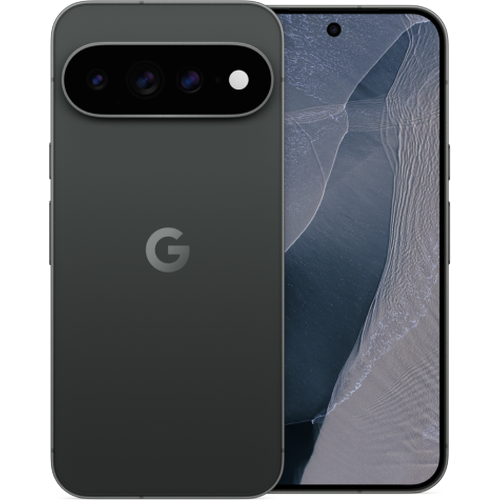
Pixel 11 Pro XL
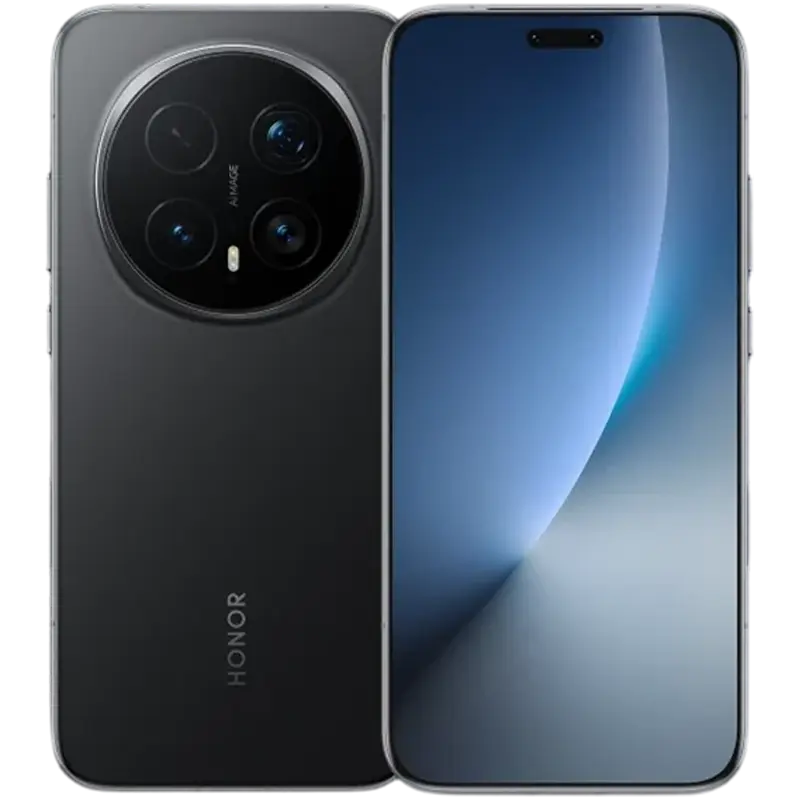
Magic8 Pro
Ranked #24 of 61
Ranked #2 of 61
Overall
Overall



The Pixel 11 Pro XL is Google's largest premium phone, built around its camera pipeline. The Honor Magic8 Pro sits in the same premium tier and leans into hardware scale: a 7100mAh battery, 120W charging, and the Snapdragon 8 Elite Gen 5. Both target the top of the Android market.
The Honor leads in battery life, charging speed, raw performance, and display quality. The Pixel's strengths are a clearly better speaker, cleaner microphones, and a camera system that produces significantly more accurate color. The performance and battery gaps are wide. The camera gap is more about color fidelity than resolution.
Design
| Google Pixel 11 Pro XL | Honor Magic8 Pro | |
|---|---|---|
| Specifications | ||
| Dimensions | 162.7 x 76.5 x 8.5 mm | 161.2 x 75 x 8.3 mm |
| Weight | 226g | 219g |
| IP Rating | IP68 | IP68/IP69K |
| Frame | Aluminum | Aluminum |
| Front | Gorilla Glass Victus 2 | NanoCrystal Shield |
| Back | Gorilla Glass Victus 2 | Fiber-reinforced plastic |
| Screen-to-body ratio | 89.6% | 89.6% |
The two phones are close in size. The Pixel 11 Pro XL measures 162.7 x 76.5 x 8.5mm and weighs 226g. The Honor Magic8 Pro is slightly more compact at 161.2 x 75 x 8.3mm and lighter at 219g. Both use aluminum frames. The Pixel uses Gorilla Glass Victus 2 on front and back. The Honor uses NanoCrystal Shield glass on the front and fiber-reinforced plastic on the back.
Both carry IP68 ratings, meaning they're rated for submersion in fresh water up to 1.5 meters for 30 minutes. The Honor adds IP69K certification, covering resistance to high-pressure, high-temperature water jets. Screen-to-body ratios are identical at 89.6%, so bezel proportions look similar despite the Pixel's larger 6.8-inch display versus the Honor's 6.71-inch panel. Aspect ratios are nearly identical at 20:9 and 20.1:9.
Bandicoot Lab doesn't formally test design or durability. Everything in this section is based on published specs.
Display
| Google Pixel 11 Pro XL | Honor Magic8 Pro | |
|---|---|---|
718/ 881 | 790/ 881 | |
Both phones use LTPO OLED panels with variable refresh from 1 to 120Hz. The Pixel runs at 1344 x 2992 (486 pixels per inch) across 6.8 inches; the Honor at 1256 x 2808 (458 PPI) across 6.71 inches. Both are sharp enough that individual pixels aren't visible at normal viewing distances, though the Pixel has a minor edge in fine-text clarity.
In manual brightness mode, the ceiling you can set without auto-brightness, the Pixel reaches 1,403 nits to the Honor's 759 nits. That's nearly double, and you'll feel the difference outdoors when you need to override auto-brightness. For HDR content with auto-brightness enabled, the Honor peaks higher at 4,969 nits versus the Pixel's 3,577 nits. The Honor's HDR brightness drops sharply as the bright portion of the screen gets larger, retaining only 33.4% of peak across window sizes. The Pixel holds 68.3%, delivering more consistent brightness in mixed HDR content. Over a 30-minute sustained HDR test, both hold steady: 99.5% for the Honor, 98.1% for the Pixel. Minimum brightness is 0.98 nits on the Honor and 1.9 nits on the Pixel, a meaningful difference for comfortable dark-room reading.
Color accuracy favors the Honor. In the best display mode, colors track closer to reference across the board, with neutral tones that sit right on target. The Pixel is accurate enough that most content looks natural, but the Honor's calibration is tighter in a side-by-side comparison. Gamut coverage is similar: the Honor covers 100% of sRGB and 75.2% of DCI-P3; the Pixel covers 98.9% and 74.4%.
The Honor's HDR tone mapping follows the mastering intent more closely, with minimal brightness boosting above the reference curve. The Pixel pushes highlights brighter than the HDR standard specifies, producing a punchier look that deviates from the creator's intent. The Pixel holds highlight detail up to 95% of the input signal before clipping; the Honor clips earlier at 85%.
Touch latency is 9.9ms on the Pixel and 17.2ms on the Honor. That 7ms gap is large enough to be perceptible in fast-paced gaming and rapid scrolling.
Performance
| Google Pixel 11 Pro XL | Honor Magic8 Pro | |
|---|---|---|
494/ 1012 | 938/ 1012 | |
The Pixel runs Google's Tensor G6 with 12GB of RAM. The Honor uses the Qualcomm Snapdragon 8 Elite Gen 5, also with 12GB. Both are available in 12GB and 16GB RAM configurations with 256GB, 512GB, and 1TB storage options.
The Snapdragon is faster across every workload. In GeekBench 6, it scores 3,721 single-core and 11,188 multi-core to the Tensor's 2,645 and 7,269. That's a 41% single-core gap and 54% multi-core gap. GPU performance is further apart: the Honor's Wild Life Extreme peak of 6,963 roughly doubles the Pixel's 3,425. Browser rendering tracks similarly, with the Honor's Speedometer score of 44.7 well clear of the Pixel's 26.2.
The Pixel sustains its GPU output better under extended load, holding 76.8% stability during the stress test versus the Honor's 64.1%. Even at its reduced sustained level, the Honor is delivering more raw GPU throughput than the Pixel at peak.
In daily use, the CPU gap shows up in app launches, multitasking, and anything computationally intensive. The GPU gap affects gaming frame rates in demanding titles. For everyday tasks like messaging and social media scrolling, both phones are fluid enough that the difference fades into the background.
Camera
| Google Pixel 11 Pro XL | Honor Magic8 Pro | |
|---|---|---|
468/ 587 | 447/ 587 | |
Both phones carry triple rear cameras with 50-megapixel main sensors on identically sized 1/1.3-inch sensors. The Pixel's telephoto is a 48-megapixel 5x lens (106mm, 1/1.95-inch sensor). The Honor's is a 200-megapixel 3.7x lens (85mm) on a larger 1/1.4-inch sensor. The Pixel reaches 120x maximum digital zoom; the Honor stops at 100x.
Sharpness is competitive between the two systems. The Honor's main and ultrawide cameras resolve slightly more detail, especially in low light. The Pixel's telephoto is the sharper lens, maintaining fine detail at its native 5x and holding up better as digital zoom increases past it. At extreme zoom ranges beyond 10x, the Pixel retains more usable detail despite pushing to a higher maximum magnification. Neither phone produces sharp images at the deep end of its zoom range, but the Pixel stays coherent longer.
The two cameras have different color characters. The Pixel's main camera renders with heavy saturation, pushing well above real-world color intensity in bright and mid-light conditions. The result is vivid, contrasty images. The Honor sits closer to neutral saturation across all lenses, producing a more naturalistic look.
Color accuracy separates them clearly. The Pixel's hue accuracy is moderate and stays consistent as lighting changes. Skin tones are reasonable across most conditions. The Honor's hue accuracy is weaker in all lighting and degrades substantially as conditions get dimmer and warmer. Skin tones drift significantly on every lens. The pattern is consistent across Honor's entire camera system: a warm, yellowish cast builds as ambient light gets warmer, with a pink shift layering on in the dimmest settings. This points to a white balance correction problem. The processing isn't compensating adequately for warmer artificial light. It's the most significant weakness of the Honor's camera system.
Main
| Google Pixel 11 Pro XL (Main) | Honor Magic8 Pro (Main) | |
|---|---|---|
467/ 722 | 526/ 722 | |
The Pixel's main camera (50 megapixels, f/1.68, 25mm) covers 1x through 5x before its telephoto takes over. The Honor's (50 megapixels, f/1.6, 23mm) covers 1x through 3.7x.
Sharpness is close at 1x in bright and mid-light conditions. The Honor pulls ahead in low light, retaining more fine detail. Both soften through their digital crop ranges, which is expected. The Pixel handles its longer 1x–5x span before handoff reasonably well.
The Pixel pushes saturation heavily in bright and mid-light conditions, producing vivid, contrasty images. In low light, the boost is more restrained. The Honor's saturation stays closer to neutral throughout. The Pixel holds better hue fidelity across lighting and produces more faithful skin tones, especially indoors. The Honor's warm color cast is already visible in well-lit scenes and becomes pronounced under warm indoor lighting.
Dynamic range favors the Honor. High-contrast scenes retain more shadow detail and smoother tonal gradients. The Pixel's main camera shows more highlight clipping and less consistent tonal transitions in demanding scenes.
Ultrawide
| Google Pixel 11 Pro XL (Ultrawide) | Honor Magic8 Pro (Ultrawide) | |
|---|---|---|
397/ 722 | 431/ 722 | |
The Pixel's ultrawide is 48 megapixels at f/1.7 (13mm, 1/2.51-inch sensor). The Honor's is 50 megapixels at f/2 (12mm, 1/2.88-inch sensor).
Sharpness is similar in bright conditions. The Honor resolves more detail in mid and low light. Both ultrawides are a step down from their respective main cameras, as expected with smaller sensors.
Color accuracy is better on the Pixel. The Honor's ultrawide suffers from the same warm shift seen on its main lens, and it's more pronounced here. Colors take on a strong yellow cast in warm indoor light. Skin tones are closer to reference on the Pixel, though even the Pixel's ultrawide produces noticeable skin tone errors in bright and mid-light. Dynamic range is wider on the Honor, with smoother tonal transitions. The Pixel's ultrawide has more limited range and less consistent tonal response in high-contrast scenes.
The Honor's ultrawide produces noticeably steadier handheld video.
Telephoto
| Google Pixel 11 Pro XL (Telephoto) | Honor Magic8 Pro (Telephoto) | |
|---|---|---|
629/ 722 | 449/ 722 | |
The Pixel's telephoto is 48 megapixels (1/1.95-inch) at 106mm (5x), f/2.8. The Honor's is 200 megapixels on a 1/1.4-inch sensor at 85mm (3.7x), f/2.6. The Honor's higher megapixel count and larger sensor give it more raw data at its native focal length, though the Pixel's longer 106mm reach means it starts at a tighter crop.
The Pixel resolves more detail at its native focal length and holds that advantage as digital zoom increases. Both degrade past their optical range, but the Pixel maintains a visible edge.
Color accuracy on the Pixel's telephoto is the best of any lens on either phone. Hue reproduction stays consistent across lighting, and skin tones are accurate even under warm indoor light. The Honor's telephoto has the weakest skin tone accuracy of any lens here, with substantial drift across all conditions. In low light, a strong pink shift becomes the dominant issue rather than the warm cast seen on other Honor lenses.
Both cameras capture similar dynamic range, but the Pixel's telephoto preserves highlights without clipping. It's the only lens on either phone that manages this. The Honor's telephoto clips highlights.
Front
| Google Pixel 11 Pro XL (Front) | Honor Magic8 Pro (Front) | |
|---|---|---|
463/ 722 | 400/ 722 | |
The Pixel's front camera is 42 megapixels at f/2.2 (17mm). The Honor's is 50 megapixels at f/2 (21mm, 1/2.93-inch sensor).
The Honor is sharper across all lighting conditions, with a clear lead in mid and low light. Color is more mixed. The Pixel maintains better hue accuracy overall, though it produces its own skin tone drift in bright outdoor light. In mid and low light, the Pixel's skin tones improve. The Honor's front camera performs reasonably in mid-light but breaks down in low light, where a severe warm and pink shift makes colors unreliable. The Honor also renders selfies with slightly muted saturation across conditions.
Dynamic range is similar, but the Pixel handles tonal transitions more cleanly, producing smoother gradients in contrasty selfie lighting. The Honor's front camera keeps handheld video steadier.
Battery
| Google Pixel 11 Pro XL | Honor Magic8 Pro | |
|---|---|---|
536/ 836 | 799/ 836 | |
The Honor Magic8 Pro's 7100mAh battery is 39% larger than the Pixel 11 Pro XL's 5115mAh cell.
The Honor runs for 35.5 hours in our video playback test; the Pixel reaches 28.75 hours. Both are strong results. The Pixel will comfortably get through a full day of heavy use; the Honor stretches well into a second day for most people. Over a 5-hour web browsing test, the Pixel drains 20% while the Honor loses just 11%. Scaled to a full day, that gap means the Honor could last roughly twice as long through a browsing-heavy workday.
Gaming narrows the gap. The Pixel loses 22% during the 3DMark Wild Life Extreme stress test (20 loops) compared to the Honor's 25%. The Snapdragon's higher GPU output draws more power, partially offsetting the bigger battery. Standby efficiency also favors the Pixel: 4% drain over an 8-hour overnight idle versus the Honor's 7%. Leave both on the nightstand without a charger, and you'll find more juice on the Pixel come morning.
For most usage patterns, the Honor's endurance advantage is substantial. Gaming and overnight standby are the only areas where the Pixel's smaller battery holds up better, and those margins are narrower.
Charging
| Google Pixel 11 Pro XL | Honor Magic8 Pro | |
|---|---|---|
456/ 837 | 837/ 837 | |
The Honor charges at 120W wired and 80W wireless. The Pixel supports 45W wired and 25W wireless with Qi2-compatible magnetic alignment.
Wired charging percentages are closer than the wattage gap suggests: the Honor reaches 30% in 10 minutes and 81% in 30 minutes; the Pixel hits 29% and 77%. The similarity comes down to battery size. The Honor's 120W is filling a 7100mAh cell while the Pixel's 45W fills a 5115mAh one. In absolute energy delivered per minute, the Honor is well ahead.
Wireless is where the gap opens. The Honor reaches 26% in 10 minutes and 67% in 30 minutes. The Pixel manages 13% and 44%. The Honor's 80W wireless charging delivers over three times the Pixel's 25W rating, and the results reflect it. The Pixel's Qi2-compatible magnetic alignment makes positioning on a wireless charger effortless, which is a daily convenience the Honor doesn't offer.
Speaker
| Google Pixel 11 Pro XL | Honor Magic8 Pro | |
|---|---|---|
897/ 897 | 680/ 897 | |
Both phones reach nearly identical maximum volume: 76.9 dBA for the Honor, 76.6 dBA for the Pixel.
Sound quality isn't close. The Pixel produces fuller bass that extends well below where the Honor's low end thins out. Clarity in vocals and high-frequency detail is noticeably better on the Pixel. Distortion at 3.79% THD is less than half the Honor's 8.63%, meaning the Pixel stays clean at volume levels where the Honor introduces audible harshness. The Honor's frequency response is more even within its operating range, but that range is narrower and the higher distortion undercuts the benefit.
For music, podcasts, or speakerphone calls, the Pixel is the better speaker by a clear margin.
Microphone
| Google Pixel 11 Pro XL | Honor Magic8 Pro | |
|---|---|---|
820/ 1220 | 601/ 1220 |
The Pixel's microphone is well above average, with even frequency response that captures voice and ambient sound naturally. The Honor's sits around average, with a less balanced profile. For video recording, the Pixel captures cleaner, more natural-sounding audio. For phone calls, both are fine.
Other
| Google Pixel 11 Pro XL | Honor Magic8 Pro | |
|---|---|---|
| Biometrics | 687/ 1181 | 614/ 1181 |
| Data Transfer | 323/ 943 | 680/ 943 |
| Specifications | ||
| Biometric type | Fingerprint | Fingerprint |
| Ports | USB-C 3.2 | USB-C 3.2 |
| Storage | 256GB, 512GB, 1TB | 256GB, 512GB, 1TB |
The Pixel uses an ultrasonic in-display fingerprint sensor and unlocks in an average of 153ms. The Honor's in-display sensor unlocks in 171ms. Both are fast enough that you won't notice the 18ms difference in daily use. Neither phone has hardware-based face unlock.
Data transfer speeds favor the Honor: up to 332 MB/s read and 230 MB/s write, compared to the Pixel's 128 MB/s read and 151 MB/s write. Both use USB-C 3.2 ports, so the gap comes from storage controller and memory differences rather than the port standard. You'll notice this when moving large files. Both phones come in 256GB, 512GB, and 1TB storage options.
Conclusion
The Honor Magic8 Pro leads in more categories and by wider margins. Its battery lasts substantially longer in sustained use, it charges faster on both wired and wireless, the Snapdragon 8 Elite Gen 5 outperforms the Tensor G6 by 40–50% on CPU tasks and roughly double on GPU workloads, and its display is better calibrated with higher peak HDR brightness. Data transfer speeds are also notably faster. For someone who prioritizes endurance, speed, and a well-tuned screen, the Honor is the more complete package in this tier.
The Pixel 11 Pro XL's advantages are narrower but real. Its speaker produces fuller, cleaner sound than nearly any phone on the market. Its microphones capture more natural audio. Its camera system produces meaningfully more accurate color, especially from the telephoto, where skin tones and hue fidelity are in a different class. If you regularly photograph people in mixed or warm lighting, the Pixel is the safer choice. The Honor's white balance issues are persistent enough to be a genuine frustration for anyone who cares about faithful color.
The choice tracks to priorities. The Honor gives you more headroom in performance and battery life. The Pixel gives you better audio and more trustworthy camera color. Most people will get more daily value from the Honor's strengths. Photographers and anyone who cares about speaker quality might feel differently.
FAQ
Does the Pixel 11 Pro XL or Honor Magic8 Pro have better battery life?
The Honor Magic8 Pro lasts longer in most uses. It ran 35.5 hours in video playback against 28.75 hours for the Pixel, and lost 11% over a 5-hour web test versus the Pixel's 20%. The Pixel drains less in the gaming stress test (22% vs 25%) and overnight standby (4% vs 7%), but those margins are small.
Which is better for photographing people, the Pixel 11 Pro XL or the Magic8 Pro?
The Pixel 11 Pro XL is the safer choice. Its skin tones and hues stay far more faithful, especially from the telephoto and under warm indoor light. The Magic8 Pro develops a warm, yellowish cast that turns pink in the dimmest scenes, and its telephoto has the weakest skin tones of any lens on either phone.
Is the Honor Magic8 Pro better than the Pixel 11 Pro XL for gaming?
The Honor has far more GPU power. Its Wild Life Extreme peak of 6,963 is roughly double the Pixel's 3,425, and even at its throttled sustained level it outputs more than the Pixel at peak. The Pixel holds its output more steadily (76.8% stability vs 64.1%) and has lower touch latency, 9.9ms vs 17.2ms. For demanding titles the Honor is still the stronger pick.
How much faster does the Magic8 Pro charge than the Pixel 11 Pro XL?
Wired charging is close in percentage terms: the Honor reaches 81% in 30 minutes and the Pixel 77%, even though the Honor charges at 120W to the Pixel's 45W. Wireless is where the gap opens, with the Honor at 67% after 30 minutes (80W) against the Pixel's 44% (25W). The Pixel's Qi2-compatible magnetic alignment is easier to line up on a charger.
Which screen is better, the Pixel 11 Pro XL or Honor Magic8 Pro?
The Honor's display is more accurately calibrated and its HDR tone mapping follows the content creator's intent more closely. It also reaches a higher HDR peak, 4,969 nits vs 3,577 nits. The Pixel gets much brighter in manual mode (1,403 nits vs 759 nits) and responds faster to touch, so it suits bright outdoor use and fast scrolling better.
Do the Pixel 11 Pro XL and Magic8 Pro differ much in speaker and microphone quality?
Yes, the Pixel is better on both. Its speaker has fuller bass, clearer vocals and less than half the distortion of the Honor (3.79% THD vs 8.63%), though both reach nearly the same maximum volume. The Pixel's microphone also records more natural, balanced audio, while calls sound fine on either phone.
Related
Pixel 11 Pro XL
Honor
Magic8 Pro
Honor
Magic V6
Pixel 11 Pro
Pixel 11
Honor
600
Pixel 11 Pro Fold
Pixel 10a
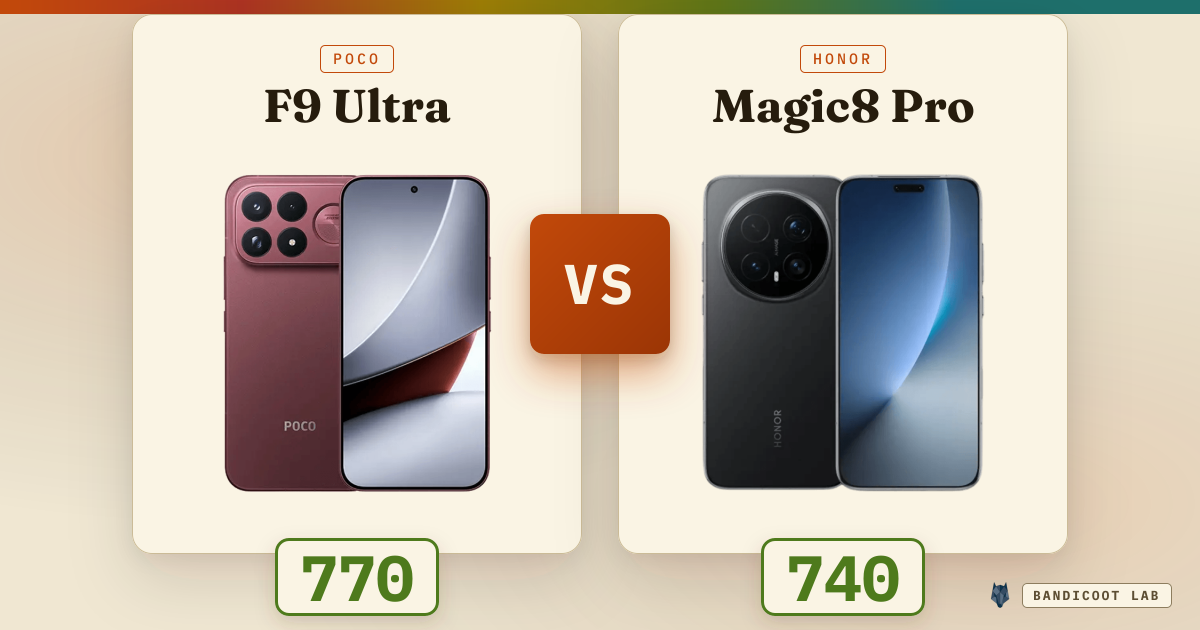
Poco F9 Ultra vs Honor Magic8 Pro
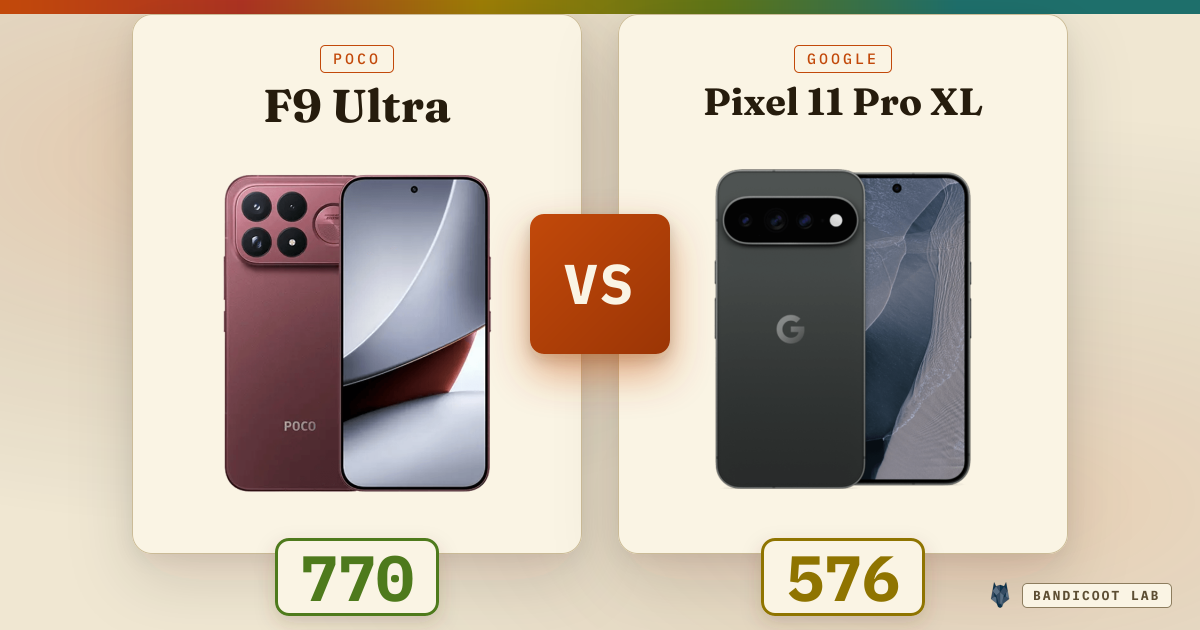
Poco F9 Ultra vs Google Pixel 11 Pro XL
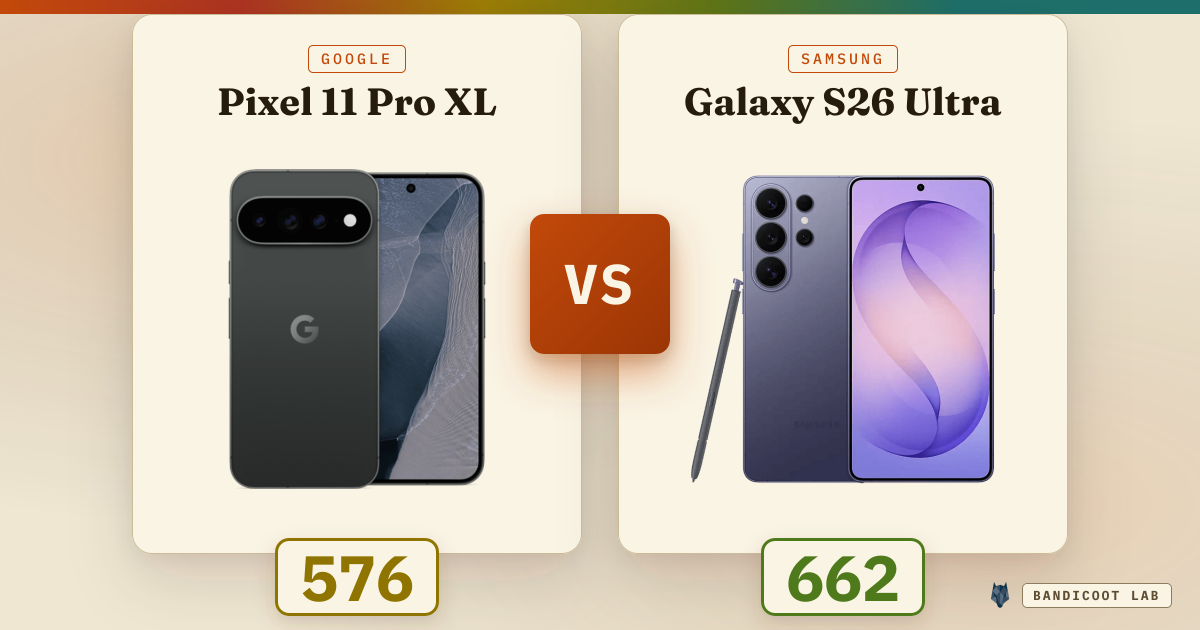
Google Pixel 11 Pro XL vs Samsung Galaxy S26 Ultra
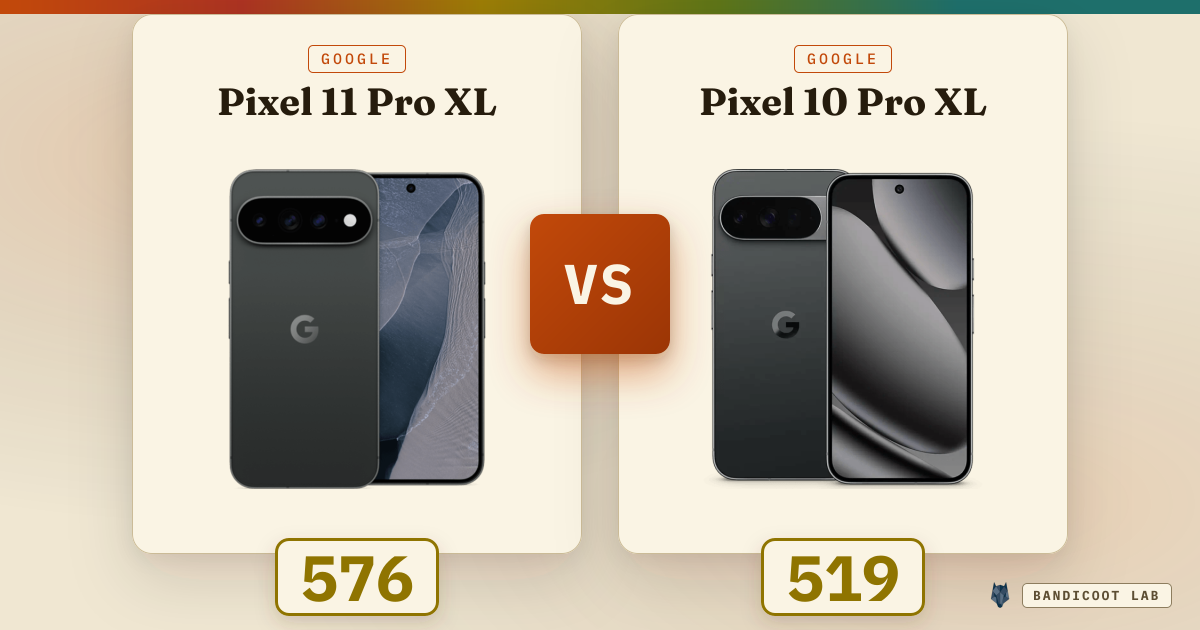
Google Pixel 11 Pro XL vs Google Pixel 10 Pro XL