Honor Magic V6 vs Motorola Razr Fold
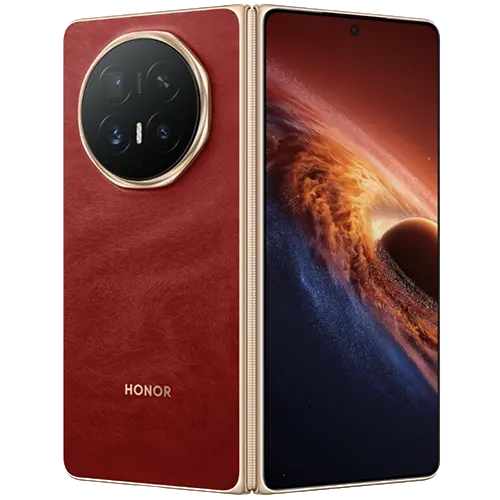
Honor
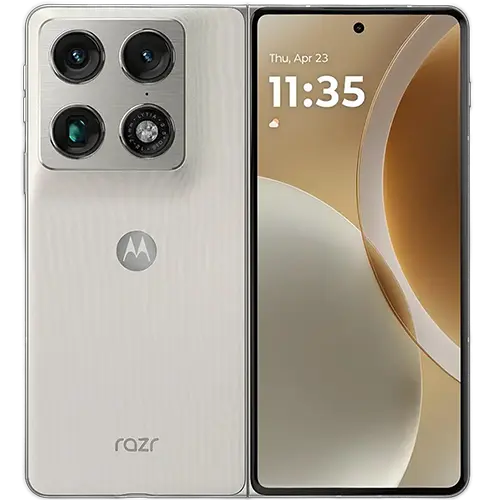
Motorola
Magic V6
Razr Fold
Ranked #9 of 61
Ranked #27 of 61
Overall
Overall
The Magic V6 and the Razr Fold are both book-style foldables aimed at the same buyer: someone who wants a tablet-sized screen in a pocketable body and is prepared to pay flagship-plus money for it. Honor's pitch is engineering-led, selling the thinnest and lightest take on the format it can manage. Motorola's pitch leans on its flip-phone heritage.
The Magic V6 is the stronger performer across most of our testing. It has the faster chip by a wide margin, longer battery life in most scenarios, far quicker wireless charging, and a camera system that resolves more detail with better dynamic range. The Razr Fold answers with more accurate camera color, better speakers, a wider-gamut inner display, and a faster outer screen. If you prioritize raw capability, Honor has the edge. If you care most about how photos and media actually look and sound, Motorola makes a genuine case.
Design
| Honor Magic V6 | Motorola Razr Fold | |
|---|---|---|
| Specifications | ||
| Dimensions (folded) | 156.7 x 74.5 x 8.8 mm | 160.05 × 73.6 × 9.89 mm |
| Dimensions (unfolded) | 156.7 x 145.6 x 4.1 mm | 160.05 × 144.46 x 4.55 mm |
| Weight | 219g | 243g |
| IP Rating | IP68/IP69 | IP48/IP49 |
| Frame | Aluminum | Aluminum |
| Front | NanoCrystal Shield | Gorilla Glass Ceramic 3 |
| Back | Glass | — |
| Screen-to-body ratio (inner) | 89.1% | — |
| Screen-to-body ratio (outer) | 87.3% | — |
The Magic V6 measures 156.7 x 74.5 x 8.8mm folded and opens to just 4.1mm thick, at 219g. The Razr Fold is larger and heavier in every dimension: 160.05 x 73.6 x 9.89mm folded, 4.55mm unfolded, and 243g. A 24g difference is roughly five sheets of glass-screen protector in your pocket; you'll feel it, especially on a phone you're holding open with one hand. Honor manages the lighter build while fitting a larger battery.
Both phones use aluminum frames. Honor covers the front with its NanoCrystal Shield glass and the back with standard glass; Motorola uses Gorilla Glass Ceramic 3 on the front and doesn't specify a back material in its listed specs. The bigger gap is ingress protection. The Magic V6 carries IP68/IP69, meaning full dust-tightness, submersion to the rated depth, and resistance to high-pressure water jets. The Razr Fold's IP48/IP49 covers submersion and jets but only limited dust protection, which matters on a foldable with a hinge.
The Magic V6's inner panel is nearly square at 9.75:9 with a 20.2:9 cover screen, while the Razr Fold runs 8:7.2 inside and a taller 21:9 outside.
Bandicoot Lab doesn't formally test design or durability.
Display
Inner
| Honor Magic V6 (Inner) | Motorola Razr Fold (Inner) | |
|---|---|---|
632/ 881 | 658/ 881 | |
The Magic V6's inner panel is a 7.95" LTPO2 AMOLED at 2172 x 2352 (403 PPI). The Razr Fold's is slightly larger at 8.1", 2484 x 2232 (412 PPI). Both run 1–120Hz adaptive refresh. At these pixel densities, neither looks sharper than the other in practice.
Brightness favors Honor. The Magic V6 reaches 662 nits in manual mode against the Razr Fold's 543, and peaks at 4,734 nits with HDR content versus 4,142. Those HDR peaks come at small window sizes; the Razr Fold holds its brightness better as the bright area grows, with 41.6% stability across window sizes against Honor's 28.2%. Over a 30-minute sustained HDR run, both are excellent, holding 99.5% and 97.9% of initial output respectively. Honor also dims lower at night, down to 0.93 nits versus 2.56.
Color accuracy is strong on both, with the Razr Fold's best mode measuring marginally more accurate. The bigger difference is gamut: the Razr Fold covers 97.7% of the P3 color space in its best mode while the Magic V6 manages only 75.3%, so wide-gamut content will look noticeably more saturated and correct on the Motorola. The Razr Fold tracks the HDR reference curve closely with slightly lifted highlights and starts clipping around the 80% input level; the Magic V6 renders highlights a touch dimmer than mastered but holds detail slightly longer before clipping at 85%. Touch latency is 15.3ms versus 15.1ms, which is a tie.
Outer
| Honor Magic V6 (Outer) | Motorola Razr Fold (Outer) | |
|---|---|---|
675/ 881 | 691/ 881 | |
The Magic V6's cover screen is a 6.52" LTPO2 OLED at 1080 x 2420 (406 pixels per inch), running 1–120Hz. The Razr Fold's is a 6.6" LTPO P-OLED at 2520 x 1080 (415 PPI) that reaches 165Hz, with a 30Hz floor. The higher ceiling gives Motorola's cover screen a smoothness edge in scrolling and gaming, though 120Hz versus 165Hz is a difference most people stop noticing quickly.
Both cover screens test slightly better than their inner counterparts for brightness, with Honor's holding the larger advantage outdoors. Color accuracy on the outer panels mirrors the inner story: both are well calibrated, drifting only slightly from reference, with no visible cast on neutral tones from either. Touch response is effectively identical between the two.
Performance
| Honor Magic V6 | Motorola Razr Fold | |
|---|---|---|
848/ 1012 | 668/ 1012 | |
The Magic V6 runs Qualcomm's Snapdragon 8 Elite Gen 5 with 16GB of RAM (a 12GB option exists). The Razr Fold uses the Snapdragon 8 Gen 5, also with 16GB. These names look close on paper. The results aren't.
In GeekBench, the Magic V6 scores 3,563 single-core and 9,922 multi-core against the Razr Fold's 2,628 and 9,178. Multi-core is reasonably close; single-core is a 36% gap, and single-core is what drives app launches and UI responsiveness. Browser performance is where it gets lopsided: the Magic V6 posts a Speedometer score of 46.8 to the Razr Fold's 16.9. That's nearly a 3x difference, and you'll feel it on heavy web apps.
GPU results are more interesting. The Magic V6's peak Wild Life Extreme score of 6,737 beats the Razr Fold's 5,401, but Motorola sustains better under load: 68.6% stability over the stress test versus Honor's 54.6%. The Magic V6 throttles to roughly where the Razr Fold runs steadily. For a short gaming session Honor is faster; over a long one they converge. For everything outside sustained gaming, the Magic V6 is the quicker phone, and the gap is big enough to notice day to day.
Camera
| Honor Magic V6 | Motorola Razr Fold | |
|---|---|---|
521/ 587 | 481/ 587 | |
Both phones carry a triple rear system with 3x telephotos plus two front cameras, one per display. The Magic V6 pairs a 50-megapixel f/1.6 main with a 50-megapixel ultrawide and a 64-megapixel 3x telephoto. The Razr Fold runs 50 megapixels across all three rear lenses, with a physically larger 1/1.28" main sensor against Honor's 1/1.56".
The sharpness story mostly favors Honor. Its main and telephoto lenses resolve more detail than Motorola's in every lighting condition, and its main camera actually gets sharper as light drops, which is unusual. The Razr Fold's advantage comes at the extremes: its ultrawide is slightly sharper in bright light, and it holds together far better at deep zoom. Past 10x, the Magic V6's output degrades badly, and at the 100x maximum it's effectively smeared color with no recoverable detail. The Razr Fold retains some usable structure much deeper into its range. Neither competes with the best camera-first slab flagships at long zoom, but Motorola's deep-zoom shots are at least recognizable.
Color is where the two systems diverge in character. The Razr Fold shoots close to neutral with accurate hues and skin tones that stay believable across lighting. The Magic V6 leans mildly vivid, pushing saturation on the ultrawide and telephoto in particular, and its skin tones on the main camera drift well off reference in bright light, a tuning issue rather than a white balance one, since the drift happens even when overall color balance is near-perfect. In warmer, dimmer light, Honor's processing also pulls visibly warm. Dynamic range flips the advantage back: the Magic V6's rear cameras retain far more shadow and highlight detail in high-contrast scenes, where the Razr Fold's main and telephoto flatten out and clip highlights.
Main
| Honor Magic V6 (Main) | Motorola Razr Fold (Main) | |
|---|---|---|
629/ 722 | 537/ 722 | |
In bright light the two main cameras resolve nearly identical detail. The difference shows as light drops: the Magic V6 holds and even improves its sharpness in dim conditions, while the Razr Fold softens noticeably once you leave bright light. Both mains cover 1x to 3x before the telephoto takes over, and Honor's higher resolving power means its 2x crop stays cleaner; the Razr Fold's 2x shots look softer, particularly indoors.
Color is Motorola's win, and a clear one. The Razr Fold's main camera is near-neutral in saturation with low hue error and skin tones that stay close to accurate in all three lighting conditions. The Magic V6 is mildly saturated with reasonable hues, but its skin tones in bright light are far off reference, and in warm dim light its white balance drifts warm. For photos of people, the Razr Fold's main camera is more trustworthy.
Dynamic range goes the other way. The Magic V6's main camera retains strong shadow detail and keeps high-contrast scenes looking deep, though it will clip the brightest highlights. The Razr Fold's main camera compresses contrast noticeably; backlit scenes lose depth, and highlights clip earlier.
Ultrawide
| Honor Magic V6 (Ultrawide) | Motorola Razr Fold (Ultrawide) | |
|---|---|---|
475/ 722 | 422/ 722 | |
The Magic V6's ultrawide sits at 0.6x (13mm equivalent); the Razr Fold's goes wider at 0.5x (12mm). In bright light the Razr Fold's ultrawide is modestly sharper, but it softens as light drops while Honor's holds steady, so they trade places by dim conditions. Both are a clear step down from their own main cameras.
Their tuning is opposite: Honor pushes the ultrawide noticeably vivid, while Motorola's runs slightly muted. Both have the same accuracy weakness, with skin tones drifting well off in bright and mid light, improving only in the dark. Dynamic range favors Honor here too; the Razr Fold's ultrawide clips highlights and loses scene depth faster.
Telephoto
| Honor Magic V6 (Telephoto) | Motorola Razr Fold (Telephoto) | |
|---|---|---|
638/ 722 | 476/ 722 | |
Both telephotos sit at 3x, around 70mm equivalent, and both carry the zoom range up to 100x digital. The Magic V6's 64-megapixel telephoto out-resolves the Razr Fold's 50-megapixel unit at every lighting level at its native length, and it holds that advantage through the early digital range. The relationship inverts at extreme zoom, where Motorola's output stays more coherent.
Honor's telephoto is also its best lens for color: vivid saturation, low hue error in good light, and accurate skin tones outside of bright conditions. The Razr Fold's telephoto has accurate skin tones throughout but its white balance pulls distinctly yellow in warmer light, which drags hue accuracy down in mid and dim conditions, and it desaturates visibly in the dark. Dynamic range is a wide gap: the Magic V6's telephoto keeps shadows and highlights intact while the Razr Fold's clips and flattens high-contrast scenes. Video stabilization is mediocre on both telephotos, slightly better on Honor's.
Front Inner
| Honor Magic V6 (Front Inner) | Motorola Razr Fold (Front Inner) | |
|---|---|---|
480/ 722 | 566/ 722 | |
The Razr Fold's 32-megapixel inner selfie camera resolves considerably more detail than the Magic V6's 20-megapixel unit in bright and mid light; they roughly converge in the dark. Both handle dynamic range well for front cameras, preserving backgrounds in backlit selfies.
Both cameras produce skin tones that sit well off reference in bright light and tighten up considerably as light drops. The Razr Fold desaturates noticeably in dim conditions, giving low-light selfies a slightly washed look; the Magic V6 stays closer to neutral.
Front Outer
| Honor Magic V6 (Front Outer) | Motorola Razr Fold (Front Outer) | |
|---|---|---|
435/ 722 | 449/ 722 | |
Using the cover screen, both phones shoot with 20-megapixel cameras. Sharpness is close in bright light; the Razr Fold falls off harder in the dark. Dynamic range favors Motorola here. The Magic V6's outer selfie camera clips highlights and shows uneven tonal handling, the weakest dynamic range result of its whole system, while the Razr Fold's holds up reasonably.
Skin tone accuracy follows the inner cameras: Honor is far off in bright light and good otherwise, Motorola is moderately off throughout. Honor's processing also pushes a visible blue cast in warm dim light on this camera. For video, the Magic V6's outer front camera is markedly steadier handheld; the Razr Fold's is the shakiest lens on either phone.
Battery
| Honor Magic V6 | Motorola Razr Fold | |
|---|---|---|
523/ 836 | 481/ 836 | |
The Magic V6 carries 6,660mAh to the Razr Fold's 6,000mAh, and the results mostly track the capacity gap. In video playback on the inner display, the Magic V6 ran 30.25 hours against the Razr Fold's 26.22. On the cover screens it's much closer: 40.97 hours versus 39.69. Either phone will get through two days of mixed use if you lean on the cover screen; the Magic V6 has more margin when you live on the big display.
Gaming is Honor's clearest win. Over a one-hour stress test, the Magic V6 drained 19% against the Razr Fold's 29%. A long gaming session costs the Motorola roughly half again as much battery.
Motorola claws some back elsewhere. In the 5-hour web browsing test the Razr Fold drained 32% to Honor's 36%, and its overnight standby drain was 4% against a surprisingly high 11% from the Magic V6. Leave the Honor off the charger overnight and you'll notice the missing charge in the morning. A modern flagship shouldn't idle that hard.
Charging
| Honor Magic V6 | Motorola Razr Fold | |
|---|---|---|
640/ 837 | 394/ 837 | |
Both phones charge at 80W wired, and the wired results are nearly identical: 25% at 10 minutes for both, then 67% versus 65% at 30 minutes. Factor in the Magic V6's larger battery and Honor is actually moving slightly more energy, but in practice you won't tell them apart on a cable.
Wireless is a different matter. The Magic V6 supports 66W wireless charging and it shows: 22% at 10 minutes and 57% at 30, close to its own wired pace. The Razr Fold's 15W wireless managed 11% and 26% at the same marks. If a wireless pad is your primary charger, the Magic V6 refills in roughly half the time.
Speaker
| Honor Magic V6 | Motorola Razr Fold | |
|---|---|---|
706/ 897 | 749/ 897 | |
The Razr Fold is the louder phone at 74.5 dBA maximum versus 71.3, and it's cleaner at volume, with average distortion of 3.19% against the Magic V6's 4.11%. Its sound is also fuller, with noticeably more bass presence and a frequency range that extends further into the treble.
The Magic V6 has a more even response through the midrange, where voices and most music live, and slightly better-defined highs despite the narrower range. The Razr Fold is the more enjoyable speaker for video and music; the Magic V6 is the more balanced one at moderate volume.
Microphone
| Honor Magic V6 | Motorola Razr Fold | |
|---|---|---|
531/ 1220 | 364/ 1220 |
Neither phone records well, but the gap between them is real. The Magic V6's microphone sits a bit below average, with a reasonably even response that keeps voices natural if slightly thin. The Razr Fold is well below average, with an uneven response that colors recordings noticeably. For voice memos and video audio, the Honor is the safer pick.
Other
| Honor Magic V6 | Motorola Razr Fold | |
|---|---|---|
| Biometrics | 831/ 1181 | 641/ 1181 |
| Data Transfer | 687/ 943 | 612/ 943 |
| Specifications | ||
| Biometric type | Fingerprint | Fingerprint |
| Ports | USB-C 3.1 | USB-C 3.2 |
| Storage | 256GB, 512GB, 1TB | 512GB |
Both phones use capacitive fingerprint sensors and neither offers hardware-based face unlock. The Magic V6's sensor is quicker, unlocking in 126ms on average against the Razr Fold's 164ms. Both are fast enough that this rarely matters; the Honor just feels a touch more instant.
Storage transfer speeds favor Honor slightly: 302 MB/s read and 275 MB/s write versus 273 and 249 for the Razr Fold. The Razr Fold carries a USB-C 3.2 port to the Magic V6's USB-C 3.1, though the measured speeds don't reflect the newer spec. Honor offers 256GB, 512GB, and 1TB configurations; Motorola sells the Razr Fold in 512GB only.
Conclusion
The Magic V6 wins more categories, and the ones it wins tend to be the ones you feel daily. It's substantially faster, especially in CPU and browser performance, lasts longer on video and under gaming load, charges wirelessly at four times the speed, unlocks quicker, and carries meaningfully better dust and water protection in a body that's thinner and 24g lighter. Its camera system resolves more detail and handles high-contrast scenes with far more depth, even if its color accuracy, skin tones in particular, is its weak spot.
The Razr Fold's case rests on output quality rather than output quantity. Its cameras produce more accurate, more natural color across the board, its inner display covers nearly the full P3 gamut where Honor's falls well short, its cover screen runs at 165Hz, and its speakers are louder, fuller, and cleaner.
For most buyers the Magic V6 is the more complete phone, and the price difference is too small to offset how much more it does well. The Razr Fold makes sense for someone whose priorities are specific: a people photographer who values true-to-life skin tones over resolving power, or a heavy media consumer who'll notice the wider gamut and better speakers more than the slower chip. Both are legitimate foldables. One just has fewer compromises.
FAQ
Does the Honor Magic V6 or Motorola Razr Fold have the better camera?
The Magic V6 resolves more detail on its main and telephoto lenses and keeps far more shadow and highlight detail in high-contrast scenes. The Razr Fold produces more accurate color and more believable skin tones, and its zoom output holds together better past 10x. Choose the Magic V6 for detail and tricky lighting, and the Razr Fold for photos of people.
Which has better battery life, the Magic V6 or the Razr Fold?
The Magic V6 lasts longer on inner-screen video playback at 30.25 hours against 26.22, and it drained 19% in the gaming stress test against the Razr Fold's 29%. The Razr Fold drained less in web browsing (32% versus 36%) and far less overnight on standby (4% versus 11%). Cover-screen video playback is close, at 40.97 hours versus 39.69.
Is the Magic V6 much faster than the Razr Fold for gaming and everyday use?
The Magic V6 is quicker in everyday use, with single-core GeekBench of 3,563 versus 2,628 and a Speedometer score of 46.8 versus 16.9. In gaming it peaks higher, with a Wild Life Extreme score of 6,737 against 5,401. The Razr Fold sustains its performance better over a long session, at 68.6% stability versus 54.6%, so the two end up closer in extended play.
Which charges faster, the Magic V6 or the Razr Fold?
On a cable they're effectively the same. Both charge at 80W wired and reach 25% in 10 minutes. Wireless is a big difference: the Magic V6 supports 66W and reaches 57% in 30 minutes, while the Razr Fold's 15W wireless reaches 26%.
Which is more durable, the Honor Magic V6 or the Razr Fold?
The Magic V6 is rated IP68/IP69, which means full dust protection. The Razr Fold is rated IP48/IP49 and has only limited dust protection, which matters on a phone with a hinge. The Magic V6 is also lighter at 219g versus 243g and thinner when unfolded, at 4.1mm versus 4.55mm.
Is the Razr Fold better for watching video and listening to music?
Yes, in most respects. Its inner display covers 97.7% of the P3 gamut compared with 75.3% for the Magic V6, and its speakers are louder, fuller, and cleaner at volume. The Magic V6 has the brighter inner screen in manual mode, at 662 nits versus 543, and a more even midrange at moderate volume.
Related
Motorola
Razr Fold
Honor
Magic V6
Motorola
Razr Ultra (2026)
Honor
600
Motorola
Razr+ (2026)
Motorola
Razr (2026)

Motorola
Moto G Power (2026)
Google Pixel 11 Pro Fold vs Motorola Razr Fold
Google Pixel 11 Pro Fold vs Honor Magic V6

Samsung Galaxy Z Fold 8 Ultra vs Motorola Razr Fold
Samsung Galaxy Z Fold 8 Ultra vs Honor Magic V6

Samsung Galaxy Z Fold 8 vs Motorola Razr Fold