Xiaomi 17 vs Honor Magic8 Pro
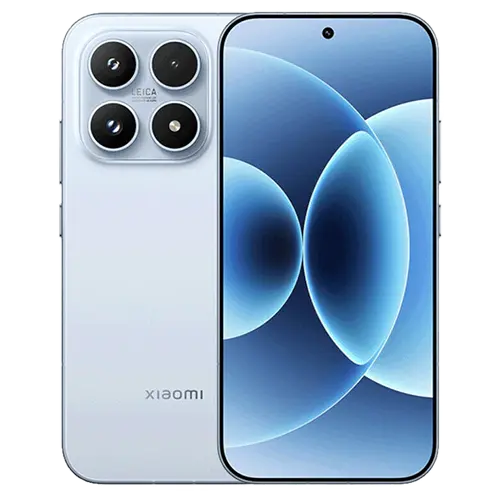
Xiaomi
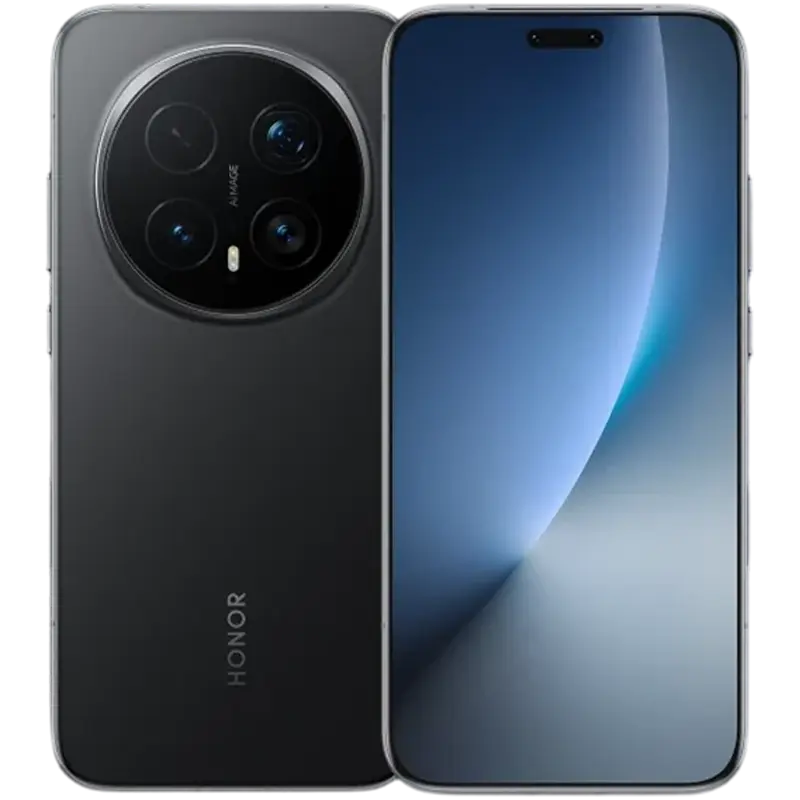
Honor
17
Magic8 Pro
Ranked #15 of 60
Ranked #2 of 60
Overall
Overall


The Xiamo 17 is designed to be a compact flagship phone that still offers things like a flagship processor and great camera. The Honor Magic8 Pro, on the other hand, is designed to go all-out, with a high-end chip, great display, and more.
The Honor Magic8 Pro leads in battery life, display quality, raw performance, and charging. Its larger screen, bigger battery, and stronger benchmark results make a clear case for the extra cost. The Xiaomi 17 fights back with a much better camera system, a superior speaker, a smaller and lighter body, and a $300 lower price. If photography or portability matters to you, the Xiaomi is the more compelling device. If endurance and screen quality are the priority, the Honor earns its premium.
Here’s how the two phones compared in our testing.
Design
| Xiaomi 17 | Honor Magic8 Pro | |
|---|---|---|
| Specifications | ||
| Dimensions | 151.1 x 71.8 x 8.1 mm | 161.2 x 75 x 8.3 mm |
| Weight | 191g | 219g |
| IP Rating | IP68 | IP68/IP69K |
| Frame | Aluminum | Aluminum |
| Front | Xiaomi Shield Glass | NanoCrystal Shield |
| Back | Glass | Fiber-reinforced plastic |
| Screen-to-body ratio | 89.5% | 89.6% |
The Xiaomi 17 is the smaller phone here: 151.1 x 71.8 x 8.1mm and 191g, compared to the Honor Magic8 Pro's 161.2 x 75 x 8.3mm and 219g. That's a 28g difference, which you'll notice in a pocket or during extended one-handed use. Both use aluminum frames and glass fronts, though Xiaomi calls its glass "Xiaomi Shield Glass" and Honor uses "NanoCrystal Shield." The backs are a little different — the Xiaomi 17 uses glass, while the Honor Magic8 Pro opts for fiber-reinforced plastic. Glass backs tend to feel more traditional and pick up fingerprints more readily; fiber-reinforced plastic is generally lighter and more resistant to cracking, though it can feel less premium to some.
Both phones carry IP68 ratings, meaning they're rated for submersion in fresh water up to a specified depth. The Honor Magic8 Pro adds IP69K certification, which covers resistance to high-pressure, high-temperature water jets. That's an edge for durability in specific conditions, though it's unlikely to matter in everyday use. Screen-to-body ratios are nearly identical: 89.5% for the Xiaomi 17 and 89.6% for the Honor Magic8 Pro, so bezel thickness is similar relative to each phone's size. The Xiaomi 17's 19.6:9 aspect ratio makes for a slightly wider-feeling display compared to the Honor's more elongated 20.1:9.
Bandicoot Lab doesn't formally test design or durability, so these observations are based on published specifications only.
Display
| Xiaomi 17 | Honor Magic8 Pro | |
|---|---|---|
680/ 881 | 790/ 881 | |
The Honor Magic8 Pro has the larger display at 6.71 inches versus 6.3 inches on the Xiaomi 17. Resolution is close: 1256 x 2808 at 458 pixels per inch for the Honor and 1220 x 2656 at 460 PPI for the Xiaomi. Both run LTPO panels with 1–120Hz adaptive refresh. Pixel density is essentially identical, and neither phone will look sharper than the other to the naked eye.
Brightness is where the two diverge though. The Honor Magic8 Pro reaches 759 nits in manual brightness mode; the Xiaomi 17 tops out at 632 nits. For outdoor readability without auto-brightness, the Honor has a clear advantage. In HDR content, the gap widens further: the Honor peaks at 4,969 nits versus 3,583 nits for the Xiaomi. The Honor's HDR brightness drops more steeply across larger window sizes. Its brightness stability across HDR window sizes is 33.4%, meaning large bright areas on screen are significantly dimmer than small highlights. The Xiaomi 17 holds better at 55.6%. For sustained brightness over time under HDR load, both phones are excellent: the Honor holds 99.5% and the Xiaomi holds 98.7% over 30 minutes. Neither panel thermally throttles its brightness in any meaningful way.
The Honor's HDR tone mapping tracks the reference curve more closely and applies only modest brightness boosting to highlights, with highlight clipping beginning at 85% of the usable HDR range. The Xiaomi 17 deviates more from the reference curve and pushes highlights brighter than they were mastered, which can make HDR content look punchier but less faithful. It clips later, at 90% of that range. If accurate HDR rendering matters to you, the Honor is the better panel.
Color accuracy is a clear win for the Honor Magic8 Pro. In its best calibrated mode, colors stay extremely close to reference across the board. The Xiaomi 17's best mode is good but not at the same level; you'd likely notice a slight drift in neutral tones and some mid-range colors if you placed the two side by side. Both cover sRGB nearly completely, with DCI-P3 coverage around 74–75%.
Touch latency averages 12.2ms on the Xiaomi 17 and 17.2ms on the Honor Magic8 Pro. That 5ms gap is small in absolute terms, and you won’t notice it.
Performance
| Xiaomi 17 | Honor Magic8 Pro | |
|---|---|---|
811/ 1012 | 938/ 1012 | |
Both phones run the Qualcomm Snapdragon 8 Elite Gen 5 with 12GB of RAM as the base configuration, and both offer 12GB and 16GB options across 256GB, 512GB, and 1TB storage tiers. Same chip, same RAM, but the results aren't identical. Tuning, thermal management, and software optimization all play a role.
The Honor Magic8 Pro leads in CPU benchmarks: 3,721 single-core and 11,188 multi-core in GeekBench 6, versus 3,612 and 10,650 for the Xiaomi 17. The single-core gap is small and unlikely to register in daily use. The multi-core difference is a bit wider and could show up in heavy multitasking or sustained workloads, though most apps won't push either phone hard enough for this to matter.
GPU performance shows Honor's tuning advantage more clearly. Its best loop score in Wild Life Extreme is 6,963 versus 6,333 for the Xiaomi 17, about a 10% lead. Stability under sustained load is similar: 64.1% for the Honor and 66.8% for the Xiaomi. In Solar Bay, the gap grows — the Honor's peak of 13,471 is roughly 26% ahead of the Xiaomi's 10,704, though the Xiaomi holds its performance better over time with 68.1% stability versus 59.8%. Both phones will run demanding games smoothly, but the Honor has more headroom for the most graphically intensive titles.
Browser performance shows a large gap. The Honor scores 44.7 in Speedometer versus the Xiaomi's 23. That's nearly double, and it's the kind of difference you'd feel in web-heavy workflows. Scrolling, page rendering, and JavaScript-heavy sites will all feel snappier on the Honor.
Camera
| Xiaomi 17 (Overall) | Honor Magic8 Pro (Overall) | |
|---|---|---|
| Specifications | ||
| Main | 50MP, f/1.7, 23mm, 1/1.31" | 50MP, f/1.6, 23mm, 1/1.3" |
| Ultrawide | 50MP, f/2.4, 17mm, 1/2.76" | 50MP, f/2, 12mm, 1/2.88" |
| Telephoto | 50MP, f/2, 60mm, 1/2.76" | 200MP, f/2.6, 85mm, 1/1.4" |
| Front | 50MP, f/2.2, 21mm, 1/2.88" | 50MP, f/2, 21mm, 1/2.93" |
The Xiaomi 17 and Honor Magic8 Pro both carry four-camera systems with 50 megapixel main and front sensors, but the designs differ. The Xiaomi 17 uses a 1/1.31" main sensor at f/1.7, a 50 megapixel ultrawide at 17mm, and a 50 megapixel 3x telephoto. The Honor Magic8 Pro pairs a 1/1.3" main sensor at f/1.6 with a 50 megapixel ultrawide at 12mm and a 200 megapixel 3.7x telephoto with a large 1/1.4" sensor. The Honor's telephoto hardware is the standout on paper, with its larger sensor and higher native resolution.
The Xiaomi 17 comes out ahead in overall camera scores. Its color reproduction, hue accuracy, and skin tone rendering are substantially better across all lenses. The Honor Magic8 Pro pushes colors warmer and more saturated, with large hue errors that grow worse as lighting drops. At deep zoom levels, the Honor's 200 megapixel telephoto sensor gives it a meaningful edge in reach and detail. At 50x, the Honor retains noticeably more detail than the Xiaomi. At 60x, both are soft, but the Honor is visibly cleaner. The Honor extends to 100x, where it still resolves some usable detail.
Main
| Xiaomi 17 (Main) | Honor Magic8 Pro (Main) | |
|---|---|---|
569/ 722 | 526/ 722 | |
Both main cameras produce high sharpness in bright light, and the results are close. The Honor Magic8 Pro is slightly sharper in bright conditions and pulls ahead more clearly in low light. In mid-light, the Xiaomi 17 has a small advantage.
Color is where the two phones diverge sharply. The Xiaomi 17's main camera produces a moderately saturated, slightly vivid look in bright light. Skin tones drift from reference in bright conditions but improve significantly in mid and low light, where they're reasonably close to accurate. Hue accuracy stays good across all three lighting levels, with only modest degradation in low light. The processing shows a slight warm shift as lighting drops, consistent with white balance correction pulling warm under tungsten-like light. This is relatively well-controlled behavior.
The Honor Magic8 Pro's main camera has a consistently warm, saturated character. Skin tones are pushed far from reference across all lighting conditions. It's a punchy look, but it's not accurate. Hue errors are large even in bright light and grow considerably in low light. The warm-yellow bias climbs steadily from bright to dark conditions, pointing to a white balance correction issue that compounds as color temperature drops. This is a systemic processing choice, not just a sensor limitation.
Dynamic range is better on the Honor Magic8 Pro on the main camera. High-contrast scenes retain more shadow detail and hold highlights longer before clipping. The Xiaomi 17 clips highlights earlier and compresses the tonal range more aggressively. Both phones apply noticeable computational processing to expand range beyond what the sensor captures natively, but the Honor stretches further.
Ultrawide
| Xiaomi 17 (Ultrawide) | Honor Magic8 Pro (Ultrawide) | |
|---|---|---|
605/ 722 | 431/ 722 | |
The Xiaomi 17's ultrawide is the sharper of the two in bright light, and the gap is meaningful. It maintains a clear lead in mid-light as well. In low light, the two are closer, with the Xiaomi still slightly ahead.
Color follows a similar pattern to the main cameras. The Xiaomi 17's ultrawide tends toward slightly desaturated output in mid and dark light, which reads as natural if a bit muted. Skin tones are off in bright light but reasonable in mid-light conditions. Hue accuracy degrades in low light, with a warm shift that again looks like a white balance issue. The Honor Magic8 Pro's ultrawide pushes saturation higher in bright light and produces large hue errors across all conditions. Skin tones are heavily off in bright and mid-light. In low light, the Honor's warm-yellow bias spikes dramatically, producing visibly orange-tinted images. This is the weakest color performance of any lens on either phone.
Video stabilization is much better on the Honor Magic8 Pro's ultrawide. Footage stays notably more controlled handheld, which makes a practical difference if you shoot video at the wide angle.
Telephoto
| Xiaomi 17 (Telephoto) | Honor Magic8 Pro (Telephoto) | |
|---|---|---|
499/ 722 | 449/ 722 | |
The Xiaomi 17 offers a 3x optical zoom reaching 60mm, while the Honor Magic8 Pro uses a 3.7x zoom at 85mm. The Honor's longer focal length and larger 1/1.4" sensor give it more reach and, in theory, more light-gathering ability. Both phones max out their digital zoom at 60x and 100x respectively.
At the native zoom level, the Xiaomi 17 delivers solid sharpness in bright light that drops in mid-light and recovers somewhat in dark conditions. The Honor's native telephoto sharpness data isn't available for standard chart testing, but its zoom performance at extended levels tells the story. At 20x in bright light, the Honor resolves roughly twice the detail of the Xiaomi. At 30x, the gap holds. At 50x, the Honor still produces usable detail while the Xiaomi is soft. If you regularly shoot at long zoom, the Honor's telephoto hardware is genuinely useful.
Color on the Xiaomi 17's telephoto is the best of any lens on either phone. Skin tones are much closer to accurate than on the Honor, with only modest hue drift in mid and dark conditions and a warm shift consistent with white balance behavior. The Honor Magic8 Pro's telephoto follows the same warm, saturated pattern as its other lenses. Skin tones are heavily off in bright and mid-light, with large hue errors across the board. In dark conditions, there's a strong pink-magenta shift that points to a sensor-level hue confusion rather than just white balance drift, since the warm-yellow bias actually drops while the pink bias spikes.
Dynamic range is similar between the two telephoto cameras. Both clip highlights at comparable points, and both retain reasonable shadow detail. The Xiaomi compresses the tonal range somewhat more, which can flatten high-contrast scenes slightly.
Video stabilization is better on the Honor's telephoto, though neither phone is exceptionally steady at telephoto focal lengths.
Front
| Xiaomi 17 (Front) | Honor Magic8 Pro (Front) | |
|---|---|---|
429/ 722 | 400/ 722 | |
The Honor Magic8 Pro's front camera is significantly sharper than the Xiaomi 17's across all lighting conditions. In bright and mid-light, the Honor resolves substantially more detail, and it holds up well in low light too. If selfie sharpness matters to you, the Honor is the clear pick.
Color on the Xiaomi 17's front camera tends slightly desaturated, particularly in mid-light, which gives selfies a natural, somewhat flat look. Skin tones carry a modest pinkish cast in mid and dark conditions. Hue accuracy is reasonable across all lighting levels, with no major breakdowns. The Honor Magic8 Pro's front camera is close to neutral in mid-light, with good skin tone accuracy there. In bright light, skin tones are pushed far from reference with a warm tint. Low light is where the Honor's front camera falls apart: hue errors spike severely, and there's a strong warm-pink cast that distorts skin tones and overall color. This looks like a combination of white balance overcorrection and sensor-level hue confusion in dim conditions.
Dynamic range is better on the Honor's front camera in terms of total range captured, with more shadow detail and better highlight separation. The Xiaomi clips highlights at a higher point. Video stabilization is also considerably better on the Honor's front camera, which stays much more composed when shooting handheld.
Battery
| Xiaomi 17 | Honor Magic8 Pro | |
|---|---|---|
513/ 836 | 799/ 836 | |
The Honor Magic8 Pro has a 7,100mAh battery, while the Xiaomi 17 packs 6,330mAh. The Honor's capacity advantage is about 12%, but the efficiency gap in testing is wider than that.
In video playback, the Honor Magic8 Pro lasts 35.5 hours versus 26.3 hours for the Xiaomi 17. That's over nine hours more. For the Honor, that translates to comfortably three days of moderate use on a single charge for most people. The Xiaomi is closer to two days, which is still solid but a different tier of endurance.
Web browsing drain tells a similar story. Over five hours, the Honor drains just 11% of its battery compared to 26% on the Xiaomi. Gaming drain is identical on both at 25% during the one-hour stress test. Overnight standby drain is also identical at 7%.
The Honor Magic8 Pro's battery life is exceptional. The Xiaomi 17 is respectable and will get most people through a full day with room to spare, but it can't match the Honor's endurance in anything other than gaming.
Charging
| Xiaomi 17 | Honor Magic8 Pro | |
|---|---|---|
415/ 837 | 837/ 837 | |
The Honor Magic8 Pro supports 120W wired and 80W wireless charging. The Xiaomi 17 offers 100W wired and 50W wireless. On paper, the Honor should charge faster, and in practice it does.
At 10 minutes on a wire, the two are nearly tied: 30% for the Honor and 31% for the Xiaomi. By 30 minutes, the Honor pulls ahead with 81% versus 74%. Given the Honor's larger battery, reaching 81% in 30 minutes means it's pushing more total energy in the same time. For a quick morning top-up, both phones get you most of the way to full in half an hour.
Wireless charging is where the gap widens substantially. The Honor reaches 67% in 30 minutes; the Xiaomi manages just 9% respectively. The Xiaomi's wireless charging is slow enough that it's essentially overnight-only. The Honor's is still not fast enough to replace wired charging for quick top-ups, but it's usable in a way the Xiaomi's isn't.
Speaker
| Xiaomi 17 | Honor Magic8 Pro | |
|---|---|---|
845/ 897 | 680/ 897 | |
The Honor Magic8 Pro is louder, reaching 76.9 dBA versus the Xiaomi 17's 71 dBA. That's a meaningful difference in volume, enough that you'd notice it immediately in the same room.
The Xiaomi 17's speaker sounds better though. It produces substantially fuller bass, which gives music and video audio more body and warmth. Distortion is lower at 5.19% THD compared to the Honor's 8.63%, so the Xiaomi stays cleaner at higher volumes. The Honor has slightly better clarity in the upper frequencies, but the Xiaomi's combination of bass depth, low distortion, and clean overall output makes it the more enjoyable speaker for media consumption. If you mostly need a speaker for speakerphone calls or quick notification checks, the Honor's extra volume is useful. For anything you'd actually want to listen to, the Xiaomi 17 sounds better.
Microphone
| Xiaomi 17 | Honor Magic8 Pro | |
|---|---|---|
467/ 1220 | 601/ 1220 |
Both phones are below average for microphone quality. The Honor Magic8 Pro's microphone produces a more even frequency response, which generally means voices sound more natural and balanced in calls and voice recordings. The Xiaomi 17's microphone has more variation across the frequency range, which can make recordings sound less consistent. Neither phone stands out as a strong pick for recording audio, but the Honor is the better of the two for calls.
Other
| Xiaomi 17 | Honor Magic8 Pro | |
|---|---|---|
| Biometrics | 646/ 1181 | 614/ 1181 |
| Data Transfer | 762/ 943 | 680/ 943 |
| Specifications | ||
| Biometric type | Fingerprint | Fingerprint |
| Ports | USB-C 3.2 | USB-C 3.2 |
| Storage | 256GB, 512GB, 1TB | 256GB, 512GB, 1TB |
Fingerprint unlock speed is close: 163ms on the Xiaomi 17 and 171ms on the Honor Magic8 Pro. Both are fast enough that you won't notice the difference in daily use. The Xiaomi 17 has no hardware-based face unlock. The Honor Magic8 Pro includes hardware face unlock, averaging 281ms. It adds a convenient second biometric option.
Both phones use USB-C 3.2 ports. Data transfer speeds are similar for reads: 323 MB/s on the Xiaomi and 332 MB/s on the Honor. Write speeds favor the Xiaomi at 341 MB/s versus 230 MB/s on the Honor. If you regularly transfer large files to external storage, the Xiaomi will finish those writes noticeably faster. Both offer 256GB, 512GB, and 1TB storage options.
Conclusion
The Honor Magic8 Pro is the stronger phone in battery life, display quality, performance benchmarks, and charging speed. Its battery endurance is in a different class, its screen is brighter and more color-accurate, and it leads in every processing benchmark. It also offers hardware face unlock, a sharper front camera, better video stabilization, and deeper zoom reach with its 200 megapixel telephoto.
The Xiaomi 17 is the better camera phone overall. Its color accuracy, hue fidelity, and skin tone rendering are substantially better across every lens. If you photograph people or care about getting colors right without heavy editing, the Xiaomi produces more trustworthy results. It also has a clearly superior speaker, a more pocketable size at 191g, faster write speeds, and costs $300 less. That price difference isn't trivial. It's the cost of a good pair of wireless earbuds.
If you want the best all-around phone and battery life is a priority, the Honor Magic8 Pro justifies its price with a package that's hard to beat on endurance, screen, and speed.
Related
Xiaomi
17
Honor
Magic8 Pro
Honor
Magic V6
Xiaomi
17 Ultra
Xiaomi
17T Pro
Xiaomi
15T Pro
Honor
600
Best Phone Speakers
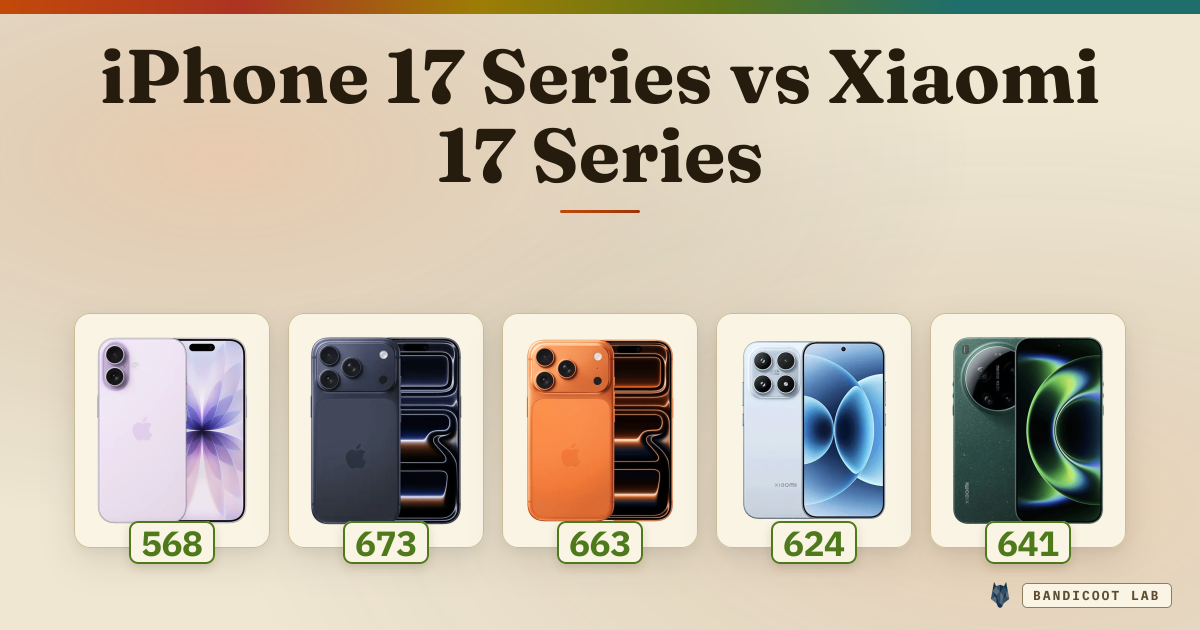
iPhone 17 Series vs Xiaomi 17 Series

Samsung Galaxy S26 Series vs Xiaomi 17 Series
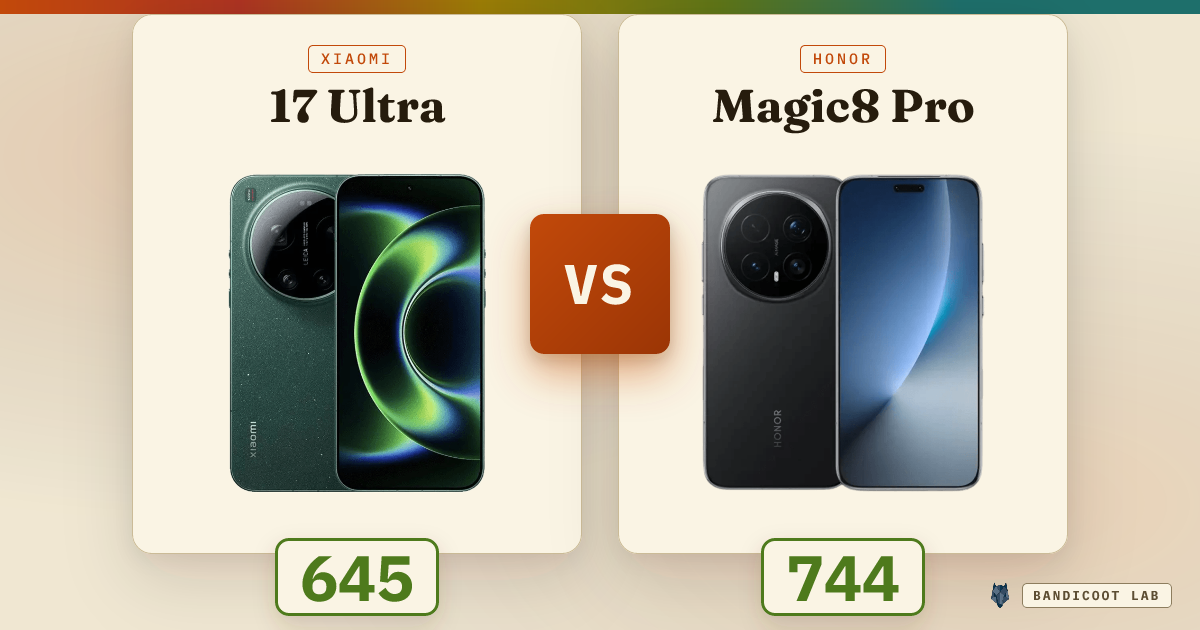
Xiaomi 17 Ultra vs Honor Magic8 Pro
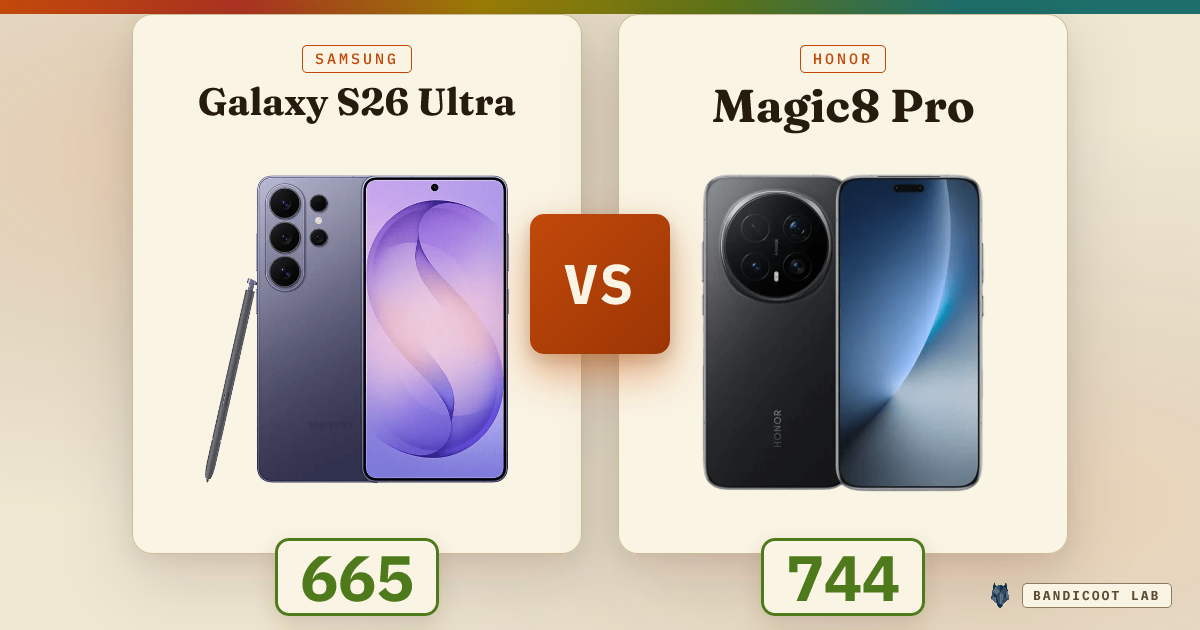
Samsung Galaxy S26 Ultra vs Honor Magic8 Pro