Xiaomi 17T Pro vs Apple iPhone 17 Pro
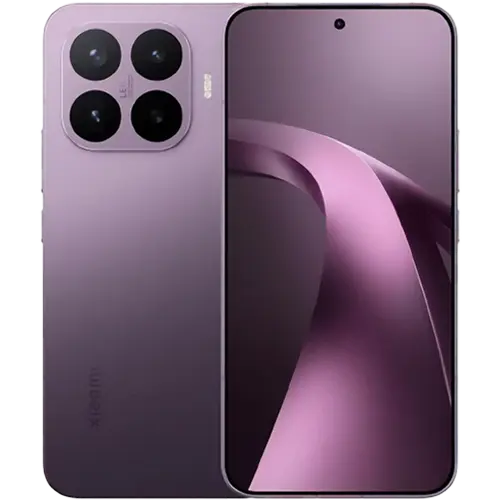
Xiaomi
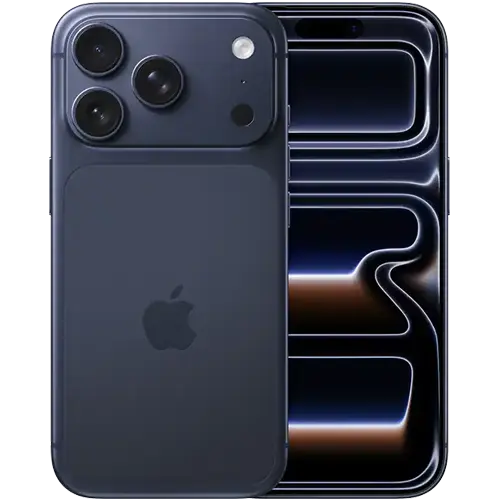
Apple
17T Pro
iPhone 17 Pro
Ranked #12 of 60
Ranked #5 of 60
Overall
Overall
The Xiaomi 17T Pro is a €899 flagship that leads with battery life and charging speed, pairing a massive 7000mAh cell with 100W wired charging. The iPhone 17 Pro, at $1099, is Apple's mainstream pro offering built around the A19 Pro chip, a refined camera system, and deep ecosystem integration. There's a pretty big price gap between them. Xiaomi, however, wins on raw endurance and charging muscle, Apple on processing power, camera consistency, and speaker quality.
The iPhone 17 Pro has the stronger camera system overall, with better dynamic range on most lenses, sharper front camera output, and more controlled stabilization. Its display is more color-accurate, and its speakers are meaningfully better. The Xiaomi 17T Pro counters with longer battery life, dramatically faster charging, a brighter HDR display, and a main camera that resolves more detail.
Here’s how the two phones performed in our testing.
Design
| Xiaomi 17T Pro | Apple iPhone 17 Pro | |
|---|---|---|
| Specifications | ||
| Dimensions | 162.2 x 77.5 x 8.25 mm | 150 x 71.9 x 8.8 mm |
| Weight | 219g | 206g |
| IP Rating | IP68 | IP68 |
| Frame | Aluminum | Aluminum |
| Front | Gorilla Glass 7i | Ceramic Shield 2 |
| Back | Fiberglass | Ceramic Shield |
| Screen-to-body ratio | 91.1% | 90.3% |
The Xiaomi 17T Pro is the larger phone at 162.2 x 77.5 x 8.25mm and 219g, compared to the iPhone 17 Pro's 150 x 71.9 x 8.8mm and 206g. Both share an aluminum frame and IP68 water resistance, rated for submersion to 1.5 meters for 30 minutes. The front glass differs — Gorilla Glass 7i on the Xiaomi, Ceramic Shield 2 on the iPhone. Apple uses Ceramic Shield on both sides, while Xiaomi uses fiberglass on the back.
The Xiaomi's 6.83-inch display with a 91.1% screen-to-body ratio means thinner bezels relative to its panel size than the iPhone 17 Pro's 6.3-inch screen at 90.3%. Both use a 19.5:9 aspect ratio.
Bandicoot Lab doesn't formally test design or durability.
Display
| Xiaomi 17T Pro | Apple iPhone 17 Pro | |
|---|---|---|
609/ 881 | 679/ 881 | |
Both displays run at 120Hz, but the iPhone 17 Pro's LTPO panel drops to 1Hz for always-on use, while the Xiaomi 17T Pro bottoms out at 30Hz. The iPhone has a slight resolution advantage at 460 PPI versus 447 PPI on the Xiaomi, though the difference isn't visible at normal viewing distances.
Brightness is somewhat split. The iPhone 17 Pro reaches 885 nits in manual mode, well ahead of the Xiaomi's 625 nits. In HDR content with auto-brightness enabled, however, the roles reverse — the Xiaomi peaks at 3,653 nits to the iPhone's 3,043 nits. The Xiaomi also holds its HDR brightness far more evenly across different window sizes, at 56.3% stability versus the iPhone's 35.3%. Over a sustained 30-minute HDR session, the Xiaomi barely drops at all (98.7% stability), while the iPhone throttles its brightness after only a few minutes.
Color accuracy is the iPhone's strongest display trait. Its best-case color calibration is excellent, with neutral tones and accurate saturation across the board. The Xiaomi isn't bad, but colors drift more visibly from reference, particularly in midtones. Both cover sRGB nearly completely (99.9% for the iPhone, 99% for the Xiaomi) and sit close on DCI-P3 coverage at around 75%.
The two phones handle HDR tone mapping differently. The iPhone aggressively boosts highlights well above what's mastered into the content, which makes HDR material look punchier but less faithful to the creator's intent. It also starts clipping earlier, losing detail in the brightest parts of an image sooner. The Xiaomi tracks the reference HDR curve more closely and clips later, delivering a more accurate rendition of highlights at the expense of that lifted, vivid look.
Touch latency is where a meaningful gap appears: the Xiaomi measures 16.3ms, the iPhone 52.7ms.
Performance
| Xiaomi 17T Pro | Apple iPhone 17 Pro | |
|---|---|---|
753/ 1012 | 902/ 1012 | |
The Xiaomi 17T Pro runs the MediaTek Dimensity 9500, and the iPhone 17 Pro runs the Apple A19 Pro. Both ship with 12GB of RAM.
On CPU tasks, the A19 Pro leads clearly. Its GeekBench 6 single-core score of 3,918 beats the Dimensity 9500's 3,331, and multi-core scores are effectively tied at 10,158 versus 10,150. The single-core lead translates to snappier app launches and faster single-threaded operations. Browser performance underscores the gap: the iPhone's Speedometer score of 43.1 dwarfs the Xiaomi's 9.1. Web-heavy workflows are noticeably faster on the iPhone.
GPU performance flips. The Dimensity 9500 posts a Wild Life Extreme peak of 7,062 to the A19 Pro's 5,865, and a Solar Bay peak of 13,185 versus 12,031. The iPhone holds its performance better under sustained load though, with 69.8% stability in Wild Life Extreme stress compared to the Xiaomi's 62%, though neither is exceptional. In practice, both phones handle demanding games, but the Xiaomi has more headroom for peak graphical workloads.
Camera
| Xiaomi 17T Pro | Apple iPhone 17 Pro | |
|---|---|---|
515/ 587 | 567/ 587 | |
The iPhone 17 Pro scores higher overall in our camera testing, driven by superior dynamic range on most lenses, better front camera sharpness, and stronger stabilization throughout. The Xiaomi 17T Pro's main camera is sharper in good and moderate light, and its telephoto resolves more detail at its native 5x focal length. Color handling splits along different lines: the Xiaomi is more accurate on skin tones and hue rendering, while the iPhone produces a more saturated, punchy look that some users will prefer even though it strays further from reality.
Sharpness at extreme zoom levels favors the Xiaomi, which reaches 120x digital zoom compared to the iPhone's 40x. At comparable deep zoom ranges, the Xiaomi holds more usable detail, though neither phone produces sharp images past about 10x. Beyond that, you're getting something identifiable rather than detailed. Both phones soften quickly once they're cropping past their telephoto's native reach.
Main
| Xiaomi 17T Pro (Main) | Apple iPhone 17 Pro (Main) | |
|---|---|---|
551/ 722 | 579/ 722 | |
The Xiaomi 17T Pro's 50-megapixel f/1.6 main camera is sharper than the iPhone 17 Pro's 48-megapixel f/1.78 sensor in bright and mid-level light, and holds a slight edge in low light too. Both maintain detail well when cropping in. The Xiaomi covers 1x through 5x before handing off to its telephoto, while the iPhone covers 1x through 4x. Through that crop range, the Xiaomi's advantage persists. At 2x, the Xiaomi still delivers clean detail, and the gap narrows only slightly at higher crop factors.
Dynamic range is the iPhone's strength here. The Xiaomi clips highlights and preserves less shadow detail in high-contrast scenes. The iPhone's main camera retains more information at both ends of the tonal range, keeping sky detail intact alongside shadowed foreground subjects. The Xiaomi's handling is decent but can lose bright highlights in contrasty outdoor scenes.
Color on the main camera follows the overall pattern. The iPhone produces punchy, saturated images in good light that desaturate noticeably in dim conditions. Skin tones carry a visible warm shift that increases as ambient light gets warmer. The Xiaomi stays more neutral throughout and renders skin tones with considerably less error, though faces can lean slightly warm in low light.
Stabilization on the main camera is significantly better on the iPhone. Handheld video stays controlled and steady, while the Xiaomi shows more movement in the frame.
Ultrawide
| Xiaomi 17T Pro (Ultrawide) | Apple iPhone 17 Pro (Ultrawide) | |
|---|---|---|
533/ 722 | 505/ 722 | |
The iPhone 17 Pro's 48-megapixel ultrawide is sharper than the Xiaomi 17T Pro's 12-megapixel unit in good light. In mid-level lighting the gap narrows, and in low light both resolve similar detail.
Dynamic range on the ultrawide is again stronger on the iPhone, which retains more usable shadow and highlight detail. The Xiaomi clips highlights and shows some tonal inconsistencies in challenging scenes.
Color accuracy on the Xiaomi's ultrawide is better than the iPhone's. The iPhone pushes saturation well above neutral in bright light and introduces a growing warm-yellow cast as lighting dims. Skin tones are particularly affected. The Xiaomi keeps saturation close to neutral and renders hues more consistently across lighting changes.
Ultrawide stabilization is solid on both phones, with the iPhone showing slightly better control.
Telephoto
| Xiaomi 17T Pro (Telephoto) | Apple iPhone 17 Pro (Telephoto) | |
|---|---|---|
522/ 722 | 628/ 722 | |
The Xiaomi 17T Pro's 5x telephoto (50 megapixels, 115mm) and the iPhone 17 Pro's 4x telephoto (48 megapixels, 100mm) take different approaches. The Xiaomi's lens sits at a longer native focal length, which matters for portraiture and distant subjects.
At native focal length in bright light, the Xiaomi's telephoto is clearly sharper, resolving fine detail that the iPhone's telephoto smooths over. In mid-light the Xiaomi still leads, though both soften. In low light the gap closes as both lose detail, though the Xiaomi holds a modest advantage. As each phone crops beyond its native reach, detail drops predictably. The Xiaomi's 120x maximum gives more reach than the iPhone's 40x, but neither produces sharp results past about 10x.
Dynamic range here is a clear iPhone advantage. The telephoto captures more highlight and shadow detail in high-contrast scenes, and its tonal transitions are smoother. The Xiaomi's telephoto clips highlights and compresses tones more aggressively.
Color and skin tone accuracy on the telephoto are much better on the Xiaomi. The iPhone's telephoto produces significant hue errors even in bright light, with a warm-yellow cast that intensifies in mid and low lighting. Skin tones are notably off. The Xiaomi's telephoto delivers more accurate hues and closer-to-life skin rendering, with saturation sitting right at neutral. In low light, the Xiaomi's colors start to shift warm, but to a far smaller degree than the iPhone.
Stabilization at telephoto distances is strong on both phones, with the iPhone showing tighter control on handheld video.
Front
| Xiaomi 17T Pro (Front) | Apple iPhone 17 Pro (Front) | |
|---|---|---|
542/ 722 | 703/ 722 | |
The iPhone 17 Pro's front camera is substantially sharper than the Xiaomi 17T Pro's across all lighting conditions. The gap is most visible in bright and mid-level light, where the iPhone resolves significantly more facial detail. In low light, the iPhone still leads clearly.
Dynamic range on the front camera is a decisive iPhone win. It preserves far more highlight and shadow information in selfies and video calls. The Xiaomi's front camera clips highlights and captures limited tonal range, producing flatter-looking selfies in mixed lighting.
Skin tone accuracy on the front camera is better on the Xiaomi in good light, where faces look close to life. The iPhone oversaturates and shifts skin tones warm. In lower lighting, both phones drift, but the iPhone's warm-yellow cast grows more pronounced. The Xiaomi desaturates in dim conditions, which can make skin look slightly flat but avoids the orange-tinted shift the iPhone produces.
Front camera stabilization is noticeably better on the iPhone. Handheld video calls and walking selfie footage stay steadier.
Battery
| Xiaomi 17T Pro | Apple iPhone 17 Pro | |
|---|---|---|
695/ 836 | 670/ 836 | |
The Xiaomi 17T Pro's 7000mAh battery dwarfs the iPhone 17 Pro's 4252mAh cell, and the test results reflect that gap. The Xiaomi delivers 30.63 hours of continuous video playback versus the iPhone's 23.97 hours. That's the difference between comfortably lasting a two-day trip with moderate use and needing to charge by evening on day two.
Web browsing drain over five hours is close — 18% on the Xiaomi, 17% on the iPhone. Both will get through a full workday of web-heavy use without concern. Gaming drain during the Wild Life Extreme stress test is similarly tight: 23% on the Xiaomi, 24% on the iPhone. Despite the Xiaomi's much larger battery, the iPhone's efficiency keeps pace during high-intensity GPU workloads. Standby drain over eight hours is identical at 2% for both phones. Neither will surprise you with a dead battery in the morning.
The Xiaomi's advantage is most visible in screen-on time for passive media consumption. Those extra seven hours of video playback translate directly to long flights, road trips, and days where you're away from a charger. The iPhone does well for its battery size but can't match that kind of endurance.
Charging
| Xiaomi 17T Pro | Apple iPhone 17 Pro | |
|---|---|---|
718/ 837 | 376/ 837 | |
The Xiaomi 17T Pro supports 100W wired and 50W wireless charging. The iPhone 17 Pro supports 40W wired and 25W wireless with MagSafe/Qi2 magnetic alignment.
Wired, the Xiaomi reaches 33% in 10 minutes and 79% in 30 minutes. The iPhone hits 31% in 10 minutes and 72% in 30 minutes. The 10-minute figures are surprisingly close given the Xiaomi's much larger battery; getting a third of 7000mAh in 10 minutes requires substantially more power delivery than a third of 4252mAh. At 30 minutes, the Xiaomi pulls further ahead proportionally. For the Xiaomi, 79% of 7000mAh is around 5,530mAh delivered in half an hour. For the iPhone, 72% of 4252mAh is around 3,060mAh.
Wireless charging shows a different split. The iPhone reaches 24% in 10 minutes versus the Xiaomi's 19%, and they're nearly tied at 30 minutes (49% versus 48%). The iPhone's MagSafe alignment ensures consistent coil positioning, which helps efficiency at lower wattage. The Xiaomi's 50W wireless spec is higher on paper, but the iPhone extracts nearly as much energy in the same timeframe from its smaller battery.
Speaker
| Xiaomi 17T Pro | Apple iPhone 17 Pro | |
|---|---|---|
636/ 897 | 823/ 897 | |
The iPhone 17 Pro is the better speaker in almost every respect. Distortion is lower at 4.7% THD compared to the Xiaomi's 8.16%. The iPhone produces fuller bass, clearer highs, and a more even frequency response. It sounds richer and more balanced at any volume.
The Xiaomi is slightly louder, peaking at 76.3 dBA versus the iPhone's 75.2 dBA. That's not a difference you'd notice without a meter. The Xiaomi's speakers lean toward loudness over quality. Bass is thinner, and the high end is less defined. For casual listening, both are fine. For anything you'd actually want to enjoy, podcasts or music without headphones, the iPhone is noticeably better.
Microphone
| Xiaomi 17T Pro | Apple iPhone 17 Pro | |
|---|---|---|
390/ 1220 | 578/ 1220 |
The iPhone 17 Pro's microphone produces a more even frequency response than the Xiaomi 17T Pro's, which shows more variation across the range. Both are adequate for voice calls and video recording, but the iPhone captures a more natural-sounding voice. The Xiaomi falls below average, while the iPhone sits closer to the middle of the pack.
Other
| Xiaomi 17T Pro | Apple iPhone 17 Pro | |
|---|---|---|
| Biometrics | 461/ 1181 | 172/ 1181 |
| Data Transfer | 108/ 943 | 572/ 943 |
| Specifications | ||
| Biometric type | Fingerprint | Face Recognition |
| Ports | USB-C 2.0 | USB-C 3.2 Gen 2 |
| Storage | 256GB, 512GB, 1TB | 256GB, 512GB, 1TB |
The two phones take opposite approaches to biometric security. The iPhone 17 Pro relies exclusively on hardware face unlock, which takes an average of 610ms. It's secure but can be slow. The Xiaomi 17T Pro uses an optical fingerprint sensor averaging 228ms, with no hardware-based face unlock. The Xiaomi's fingerprint reader is the faster unlock method, though neither phone offers both options.
Data transfer speeds are dramatically different. The iPhone 17 Pro's USB-C 3.2 Gen 2 port delivers read speeds of 286 MB/s and write speeds of 244 MB/s. The Xiaomi 17T Pro's USB-C 2.0 port manages just 38 MB/s read and 36 MB/s write. If you regularly transfer large files, photos, or video to a computer, the iPhone is roughly seven times faster. Both phones offer 256GB, 512GB, and 1TB storage configurations.
Conclusion
The Xiaomi 17T Pro and iPhone 17 Pro each have clear strengths, and the right choice depends on what you value most. The Xiaomi leads on battery life, charging speed, GPU performance, main camera sharpness, color accuracy across all lenses, display brightness in HDR content, and touch responsiveness. The iPhone leads on CPU and AI performance, camera dynamic range, front camera quality, stabilization, display color accuracy, speaker quality, and data transfer speeds.
If battery life and charging are priorities, the Xiaomi is hard to argue against. Over 30 hours of video playback and a 10-to-79% charge in half an hour give it a practical endurance advantage that the iPhone simply can't match. The camera story is nuanced: the Xiaomi resolves more detail on its main and telephoto lenses with more accurate color, but the iPhone captures more dynamic range and produces steadier video. The iPhone's front camera is the better selfie shooter by a wide margin.
The Xiaomi delivers flagship-grade performance and battery life at a lower price, with a camera system that's competitive and in some ways more accurate than the iPhone's. The iPhone justifies its premium through ecosystem, AI capability, speaker quality, and a more polished overall experience. You're paying more for refinement and consistency rather than for any single specification advantage.
FAQ
Does the Xiaomi 17T Pro or iPhone 17 Pro take better photos overall?
The answer splits by what you care about. The Xiaomi 17T Pro's main and telephoto cameras resolve more fine detail and render skin tones more accurately across all lighting conditions. The iPhone 17 Pro captures more dynamic range on nearly every lens, keeps highlights and shadows intact in high-contrast scenes, and produces steadier handheld video. The iPhone's front camera is sharper with significantly better tonal range for selfies, while the Xiaomi's front camera handles skin tones more faithfully in good light.
Is the Xiaomi 17T Pro's battery advantage big enough to matter in real life?
The gap is substantial. The Xiaomi 17T Pro delivers 30.63 hours of continuous video playback against the iPhone 17 Pro's 23.97 hours — roughly six and a half hours more. Day-to-day drain during browsing and gaming is similar between the two phones, so the advantage shows up most on long travel days or any stretch where you're away from a charger. The Xiaomi also charges 79% of its 7000mAh battery in 30 minutes wired, recovering far more usable capacity in a short plug-in than the iPhone does.
Which phone is better for gaming, the 17T Pro or the iPhone 17 Pro?
For raw graphical performance the Xiaomi 17T Pro has more headroom, with higher GPU benchmark peaks than the A19 Pro. Touch latency on the Xiaomi measures 16.3ms versus 52.7ms on the iPhone, a gap large enough to feel in fast-paced games. The iPhone holds its GPU performance more steadily under sustained load, at 69.8% stability versus the Xiaomi's 62%, so neither phone is exceptional at maintaining peak frames over time. If responsiveness and peak graphical output matter most, the Xiaomi has the edge.
Which phone has more accurate colors in photos, the 17T Pro or the iPhone 17 Pro?
The Xiaomi 17T Pro stays closer to reference across all lenses and lighting conditions. Its saturation is nearly neutral in bright light and barely elevated in dim settings, and skin tones are rendered with considerably less error — particularly on the telephoto and front camera. The iPhone 17 Pro pushes saturation hard in good light, producing a bolder look, but introduces a growing warm-yellow cast in mid and low light that affects skin tones across all lenses.
Related
Apple
iPhone 17 Pro
Xiaomi
17T Pro
Xiaomi
17 Ultra
Xiaomi
17
Xiaomi
15T Pro
Apple
iPhone 17e
RedMagic 11S Pro vs Xiaomi 17T Pro
Xiaomi 17T Pro vs Xiaomi 17
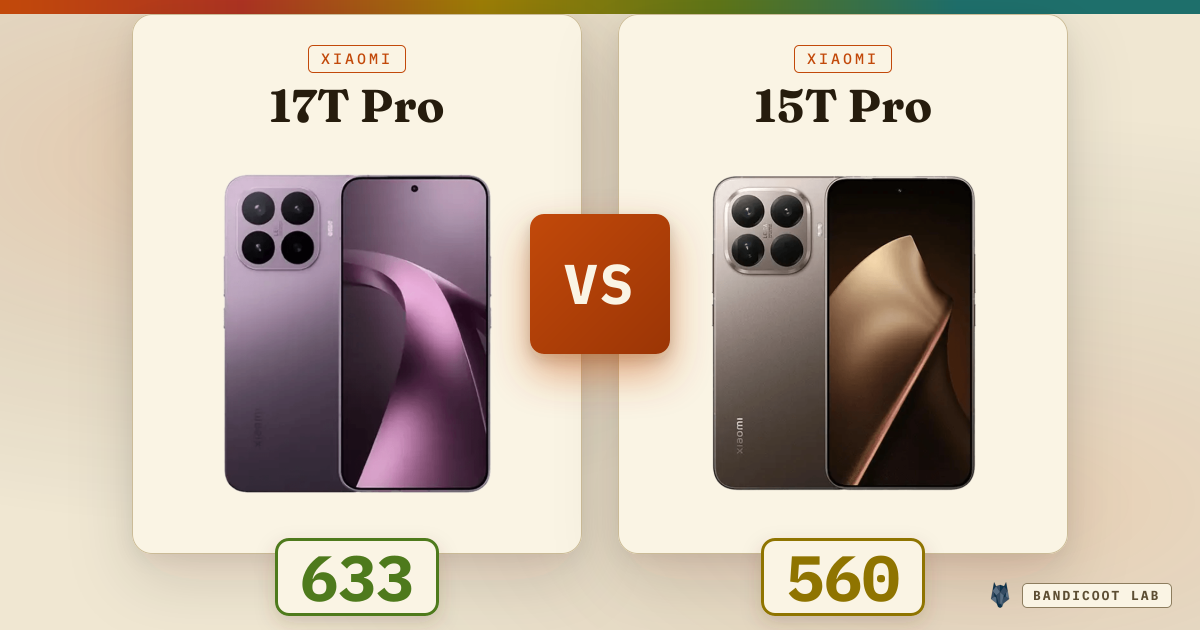
Xiaomi 17T Pro vs Xiaomi 15T Pro
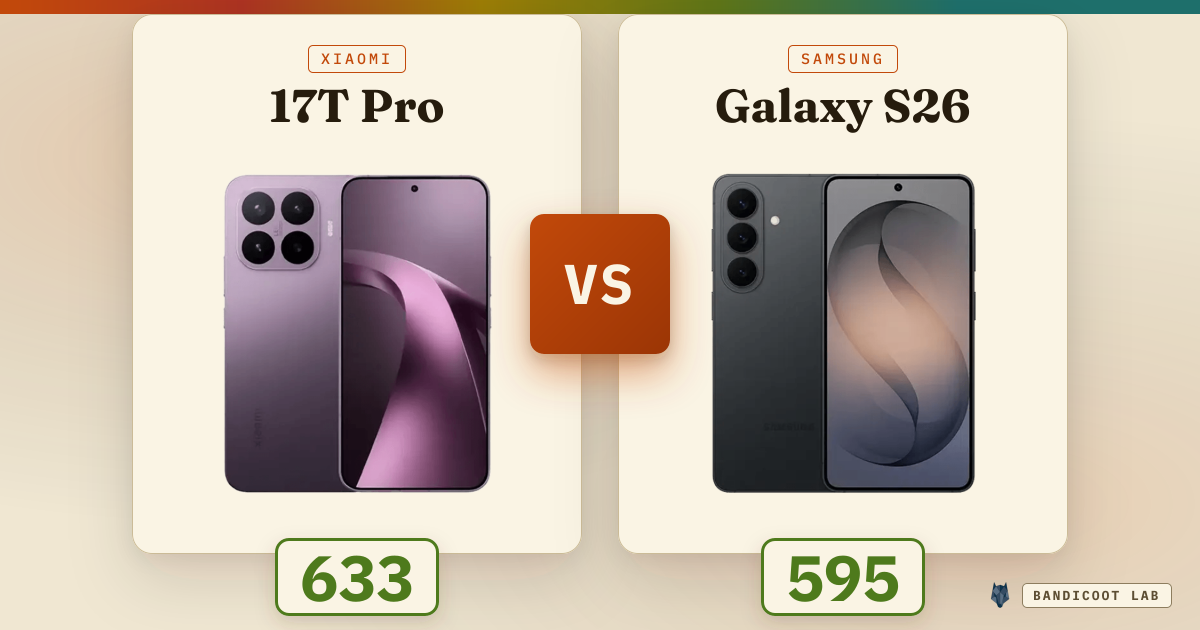
Xiaomi 17T Pro vs Samsung Galaxy S26
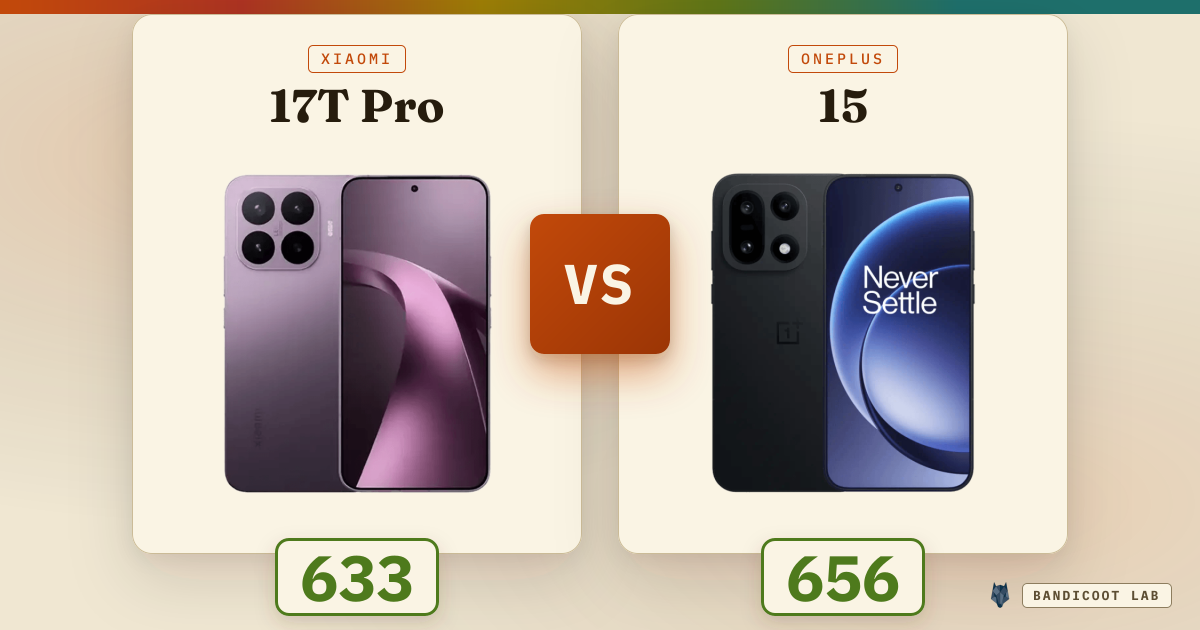
Xiaomi 17T Pro vs OnePlus 15
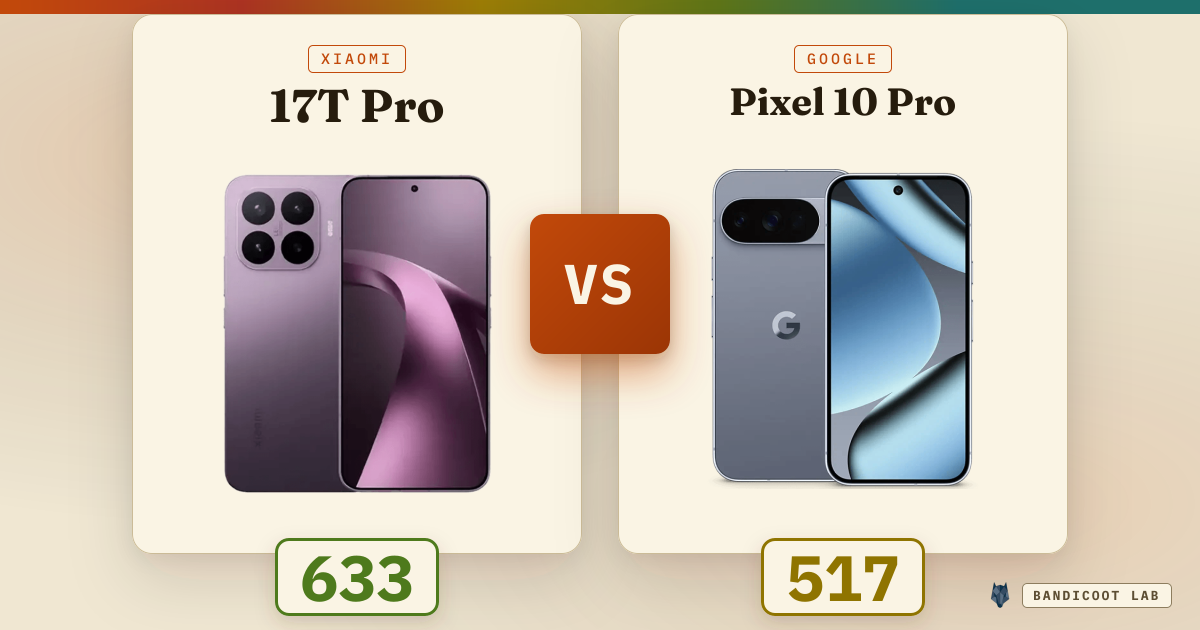
Xiaomi 17T Pro vs Google Pixel 10 Pro